


In space no one can hear you …
… scream!
Far more than a movie
“Pulp Fiction”, directed by Quentin Tarantino and released in 1994, is far more than just a movie – it became a milestone in film history and influenced an entire generation of filmmakers and viewers. With “Pulp Fiction”, Tarantino succeeded in combining elements of independent cinema with mainstream aesthetics while at the same time developing an unmistakable cinematic signature. The film impressed with its complex narrative structure, brilliant dialog and cross-genre staging. With his unmistakable style, Tarantino created a groundbreaking mixture of black humor, violence and profound philosophical dialogue that amused and shocked audiences in equal measure. The film won the Palme d’Or at the Cannes Film Festival and revolutionized American cinema in the 1990s by strengthening the influence of independent films and postmodern storytelling.
Plot
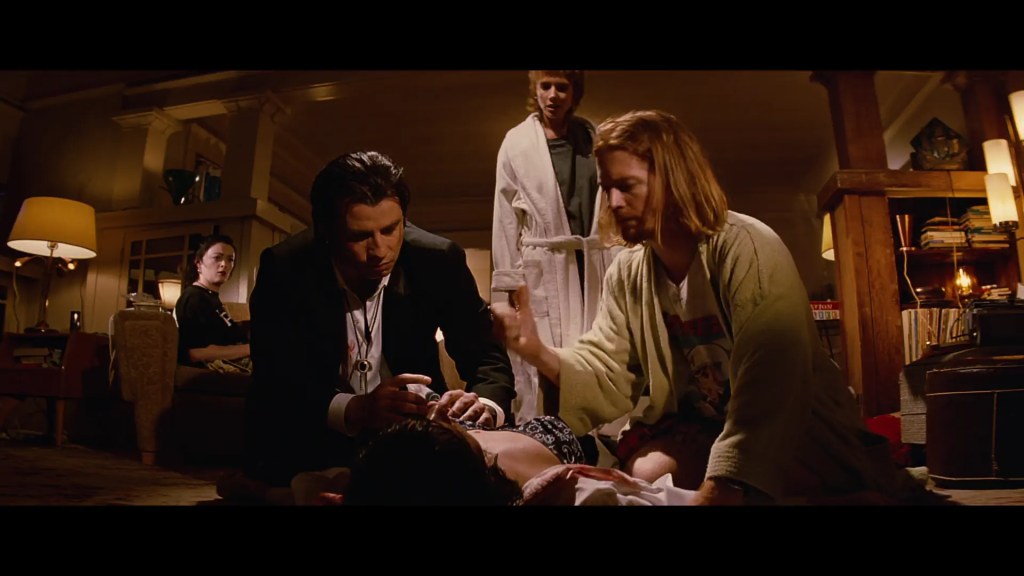
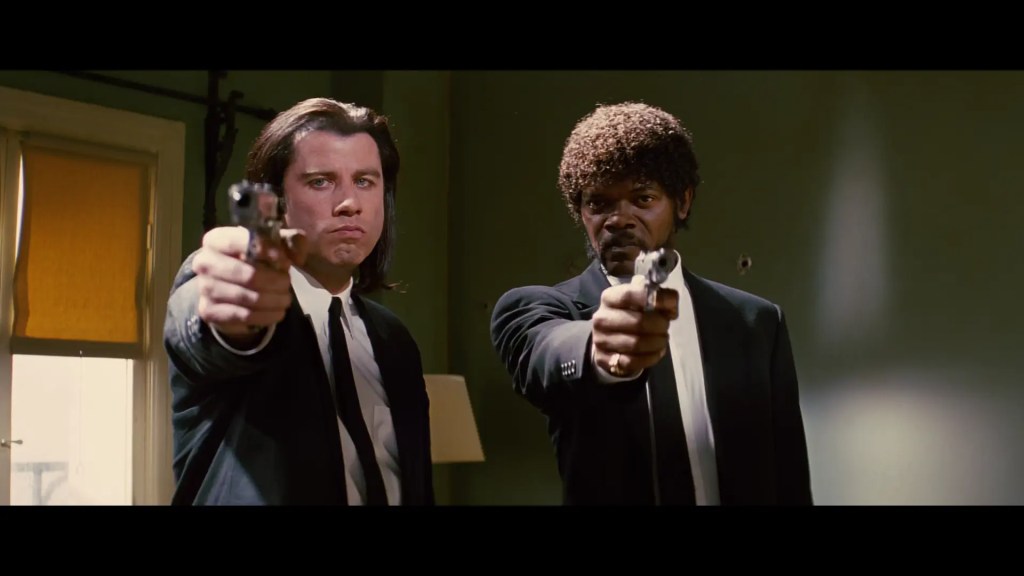
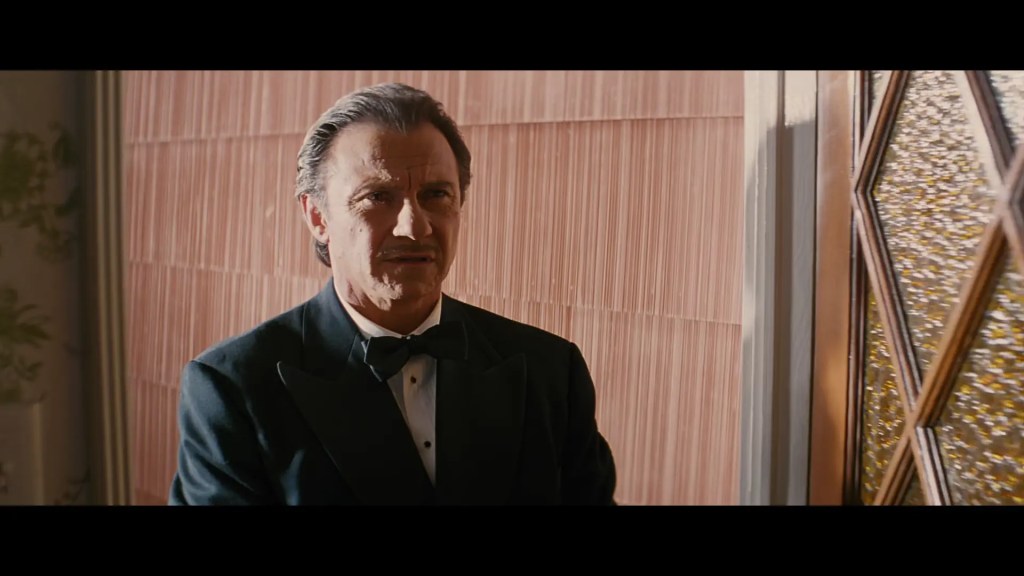
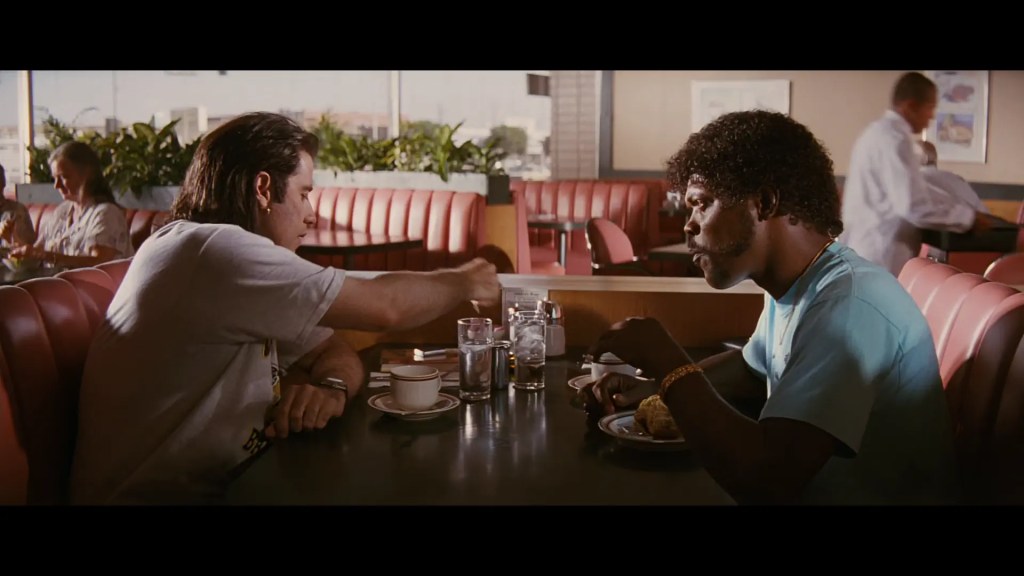
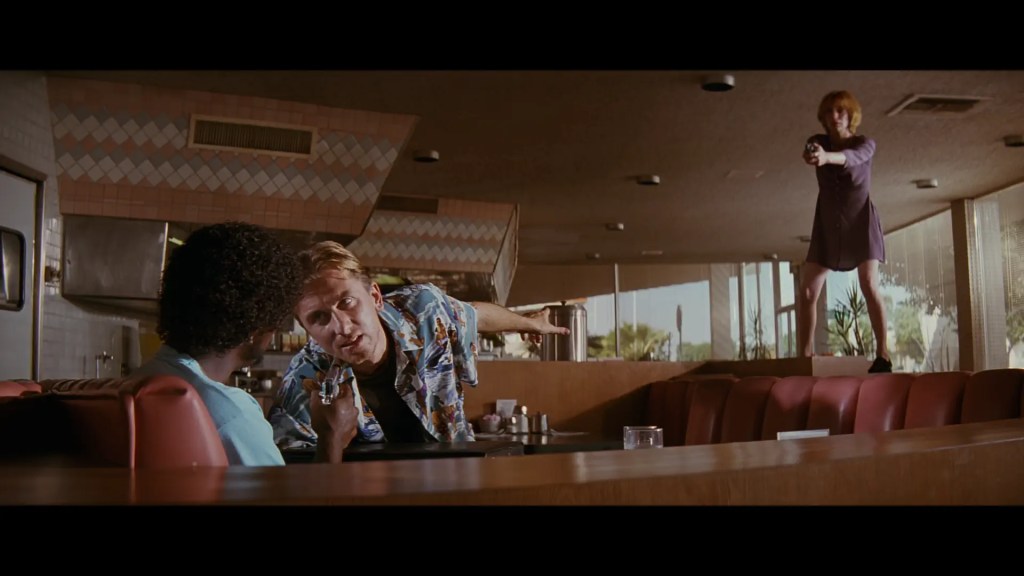
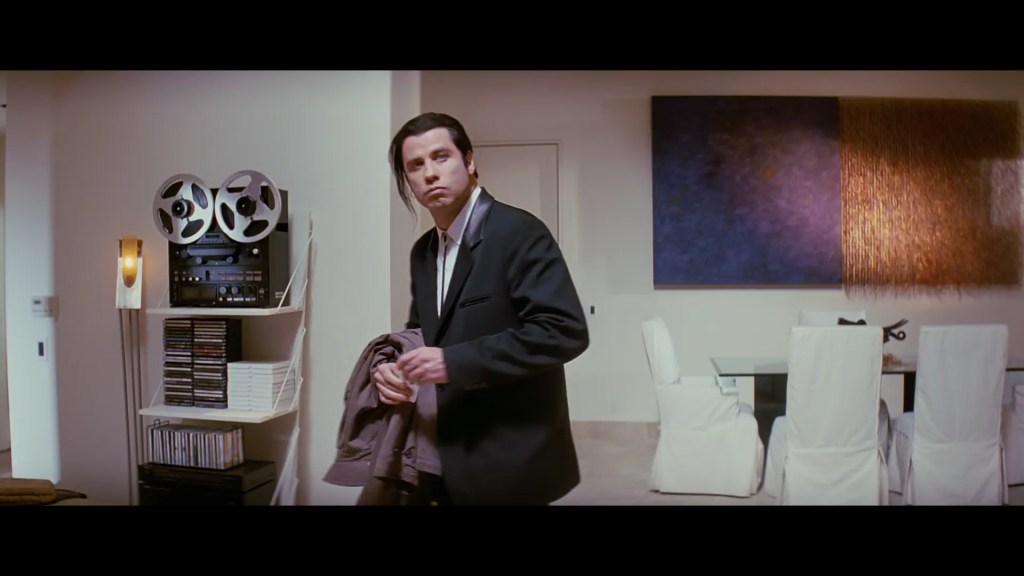
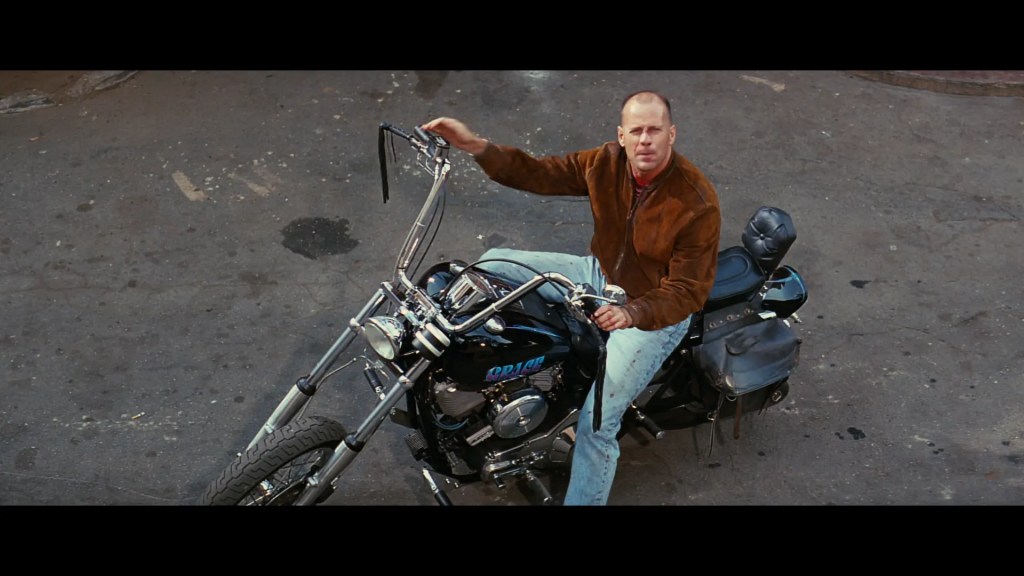
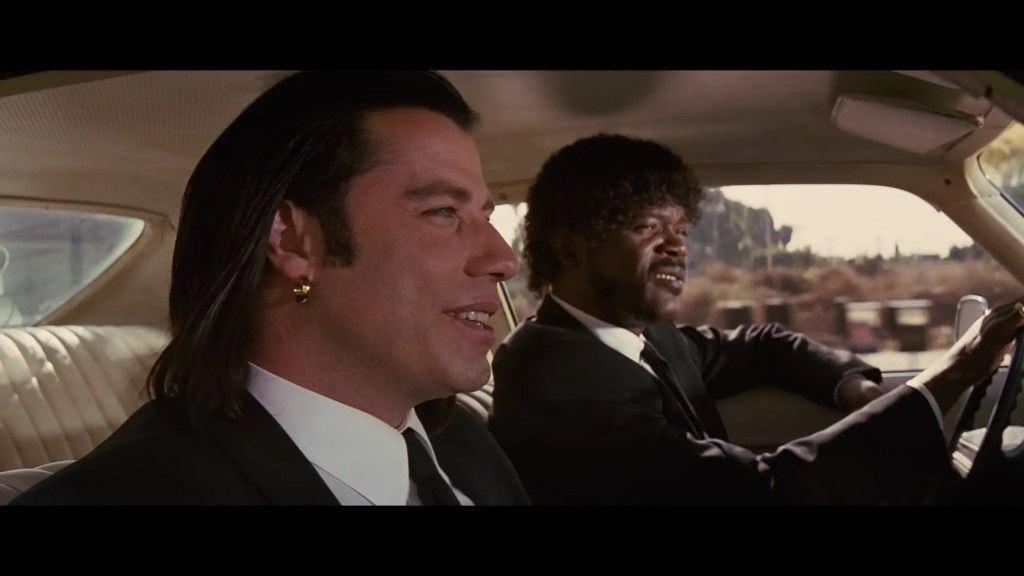
“Pulp Fiction” is a kaleidoscope of interwoven stories that illuminate the criminal underworld of Los Angeles. The narrative structure is fragmented and non-linear, allowing viewers to experience the events in non-chronological order. There are three main stories at the center of the film: The first revolves around hitmen Vincent Vega (John Travolta) and Jules Winnfield (Samuel L. Jackson), who are hired by gangster boss Marsellus Wallace (Ving Rhames) to retrieve a suitcase. During this mission, they find themselves in life-threatening situations that involve both existential questions and grotesque comedy. The second story is about Vincent, who takes care of Mia Wallace (Uma Thurman), his boss’s wife, and has an unforgettable but dangerous evening with her that almost ends in disaster. The third storyline revolves around boxer Butch Coolidge (Bruce Willis), who refuses to lose a scheduled fight and instead gets caught up in a spiral of betrayal and violence. The stories overlap in a clever way, leading to unexpected twists and a unique narrative tension. The movie begins and ends in a diner, where a robbery symbolically brings together the fates of all the characters.
Trivial
The title “Pulp Fiction” refers to the so-called “pulp magazines” of the early 20th century, which were known for their sensationalist, violent and often sexually charged stories. These cheap magazines served as entertainment for the masses and had no literary pretensions whatsoever – a concept that Tarantino skillfully transfers to the screen by combining seemingly trivial storylines with complex, profound characters. Interestingly, the working title of the film was “Black Mask”, a direct reference to one of the most famous “pulp” magazines of the 1920s, which published crime stories. Tarantino later opted for the more concise title “Pulp Fiction” to make the connection to trivial literature clearer.
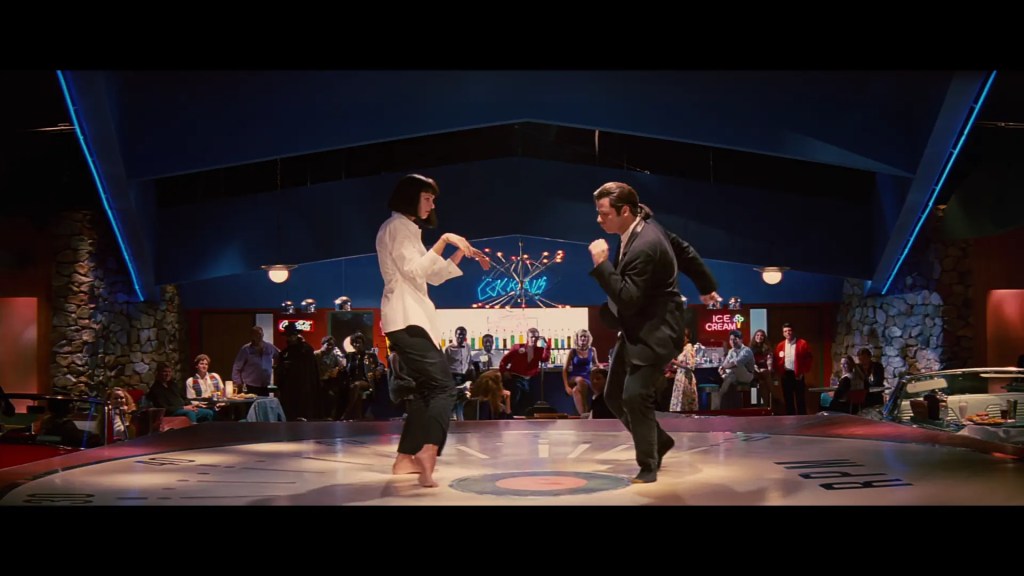
The film’s iconic scenes and dialog are also full of anecdotes: The famous dance scene between John Travolta and Uma Thurman at Jack Rabbit Slim’s restaurant, which is one of the most quoted scenes in the movie, was largely improvised. Tarantino only had a rough idea of the movements, but left it up to the actors to interpret their style freely. Another interesting fact: the clock, which plays a significant role in Butch’s storyline in the movie, was introduced by Christopher Walken in a memorable monologue as a valuable heirloom. This clock was an actual antique prop that was procured specifically for the movie, and its symbolic value is a common thread throughout the story.
Also of note is the infamous suitcase, the contents of which remain a mystery throughout the movie. Many theories surround what is inside this suitcase, from Marsellus Wallace’s soul to valuable diamonds. Tarantino himself has never confirmed what is actually in the suitcase, making the object one of the great cinematic mysteries. Visually, this uncertainty is reinforced by the striking golden glow that can be seen every time the suitcase is opened – a clever technique to further cultivate the myth.
Narrative style
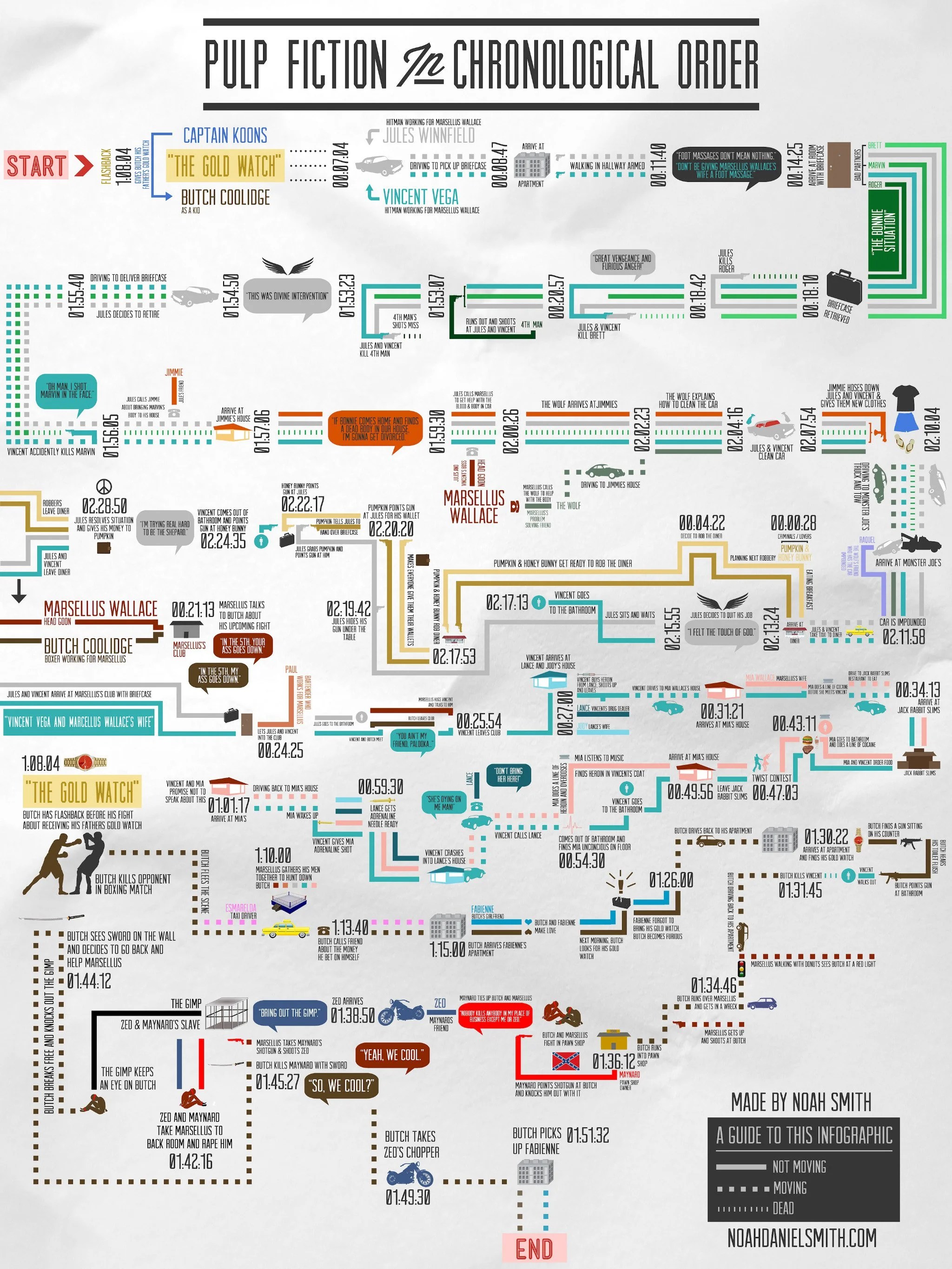
Quentin Tarantino’s narrative style in “Pulp Fiction” was revolutionary and a clear departure from traditional cinematic structures. The film uses a non-linear narrative style in which the individual storylines are presented in fragmented chapters. This deliberate playfulness with chronology allows the viewer to experience events from different perspectives and at different points in time, creating an intense arc of suspense, although the end is shown early on in some ways. The use of dialog is particularly innovative: Tarantino transforms everyday conversations into fascinating, philosophical digressions that often seem meaningless, but give a deep insight into the characters and their world view. For example, Vincent and Jules discuss fast food in Europe or foot massages, which seem trivial at first glance, but serve to develop the characters and create atmosphere. These seemingly banal conversations contribute significantly to the dynamics of the characters and create their own narrative world in which the line between existential themes and absurd humor becomes blurred. Furthermore, violence in “Pulp Fiction” is staged in a way that is both disturbing and stylized: it is simultaneously brutal, ironic and visually aesthetic, giving the film its characteristic blend of the grotesque and realism.
Reviews at the time
When it was released in 1994, “Pulp Fiction” was almost unanimously hailed by critics as a masterpiece. Tarantino’s ability to blend different genres was particularly praised, as was his unique narrative style, which broke conventional cinematic rules. Critics praised the brilliant dialog, the excellent acting performances and the way Tarantino made seemingly incidental conversations a central part of the film. The resurrection of John Travolta’s career was seen as a triumph for the film, and Samuel L. Jackson’s portrayal of philosophical hitman Jules Winnfield was singled out for particular praise. However, there was also controversy, particularly in relation to the depiction of violence: some critics accused Tarantino of aestheticizing violence and presenting a morally ambiguous view of the criminal milieu. Some saw the film as cynical and felt it glorified the dark side of human nature. Despite these debates, “Pulp Fiction” won numerous awards, including the Palme d’Or in Cannes and an Oscar for Best Original Screenplay. The combination of excellent storytelling, distinctive style and bold mise-en-scène made “Pulp Fiction” one of the most acclaimed films of the year.
Reputation today
Today, “Pulp Fiction” is considered a timeless classic and one of the most influential films in cinema history. The film is regularly included in lists of the best films of all time and has had an unprecedented influence on modern cinema. Tarantino’s work inspired an entire generation of filmmakers who tried to emulate its unconventional narrative style, dialogue-heavy approach and stylized violence. “Pulp Fiction” opened the doors wide for independent cinema and showed that films outside the mainstream could also achieve great commercial and artistic success. The film has become deeply engraved in pop culture – numerous scenes, quotes and images have achieved cult status. The dance scene between John Travolta and Uma Thurman and Jules‘ recitation of Bible verses are just two examples of moments that have gained significance far beyond the film itself. In academic and film studies circles, “Pulp Fiction” is studied as a prime example of postmodern film art. The film’s influence can be felt in countless works, from independent productions to major Hollywood blockbusters, which have been inspired by Tarantino’s style.
Conclusion
“Pulp Fiction” is a cinematic masterpiece that shines far beyond its time. Tarantino not only succeeded in bringing about a profound revolution in cinema with this film, but also in creating a work that continues to fascinate to this day with its innovative narrative style, brilliant dialog and powerful characters. Despite the controversy surrounding its depiction of violence, “Pulp Fiction” remains a prime example of the creative power of cinema. The film has shown that with the courage to innovate and an unconventional approach, you can both inspire audiences and gain critical acclaim. “Pulp Fiction” remains an integral part of film history and will continue to be revered as one of the most influential and stylistically defining productions of modern cinema for decades to come.







Kommentar verfassen