

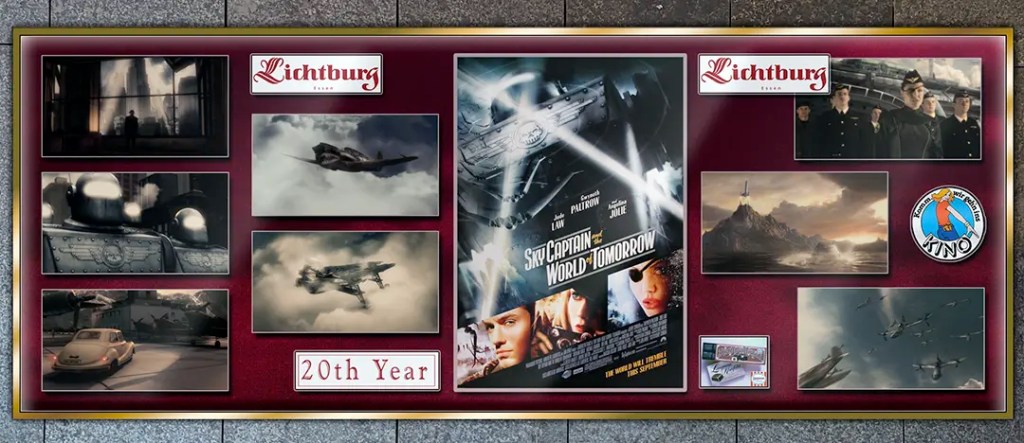
Calling Sky Captain, come in Sky Captain!
Dieselpunk adventure
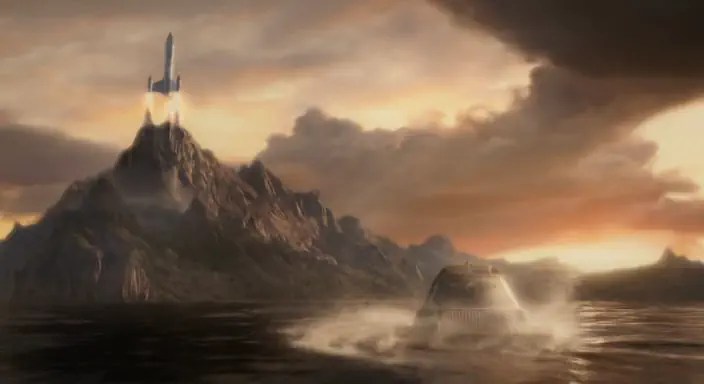
“Sky Captain and the World of Tomorrow” is a 2004 Dieselpunk science fiction adventure film that marks the directorial debut of Kerry Conran. The film features a unique fusion of retro aesthetics and modern technology, paying homage to the classic pulp science fiction serials of the 1930s and 1940s. With an impressive cast, including Jude Law as a charismatic pilot, Gwyneth Paltrow as a determined reporter and Angelina Jolie as a battle-hardened commander, the film attempts to revive the golden age of cinema. Known for its pioneering use of digital sets and visual effects, the film was shot almost entirely in front of bluescreens, with the environments and backgrounds added digitally later. This innovative approach made it a pioneer in the use of Computer Generated Imagery (CGI) and virtual sets in feature films. Although the film fell short of expectations at the box office, it has since gained a cult following and is appreciated for its visionary aesthetic and contribution to the advancement of film technology.
Plot
In an alternate reality of the late 1930s, where the world is characterized by technological marvels and scientific achievements, New York City is rocked by a series of mysterious events. Ambitious and intrepid reporter Polly Perkins (Gwyneth Paltrow) investigates the disappearance of several prominent scientists, all of whom were involved in a mysterious project. During her research, she receives cryptic clues that point to an impending catastrophe.
At the same time, giant flying robots appear in the skies over New York, attacking the city and causing panic. In the midst of the chaos, Polly calls on her former lover and legendary aviator Joseph “Sky Captain” Sullivan (Jude Law) for help. Sky Captain, known for his heroic deeds and his state-of-the-art airplane, takes up the fight against the mechanical giants. He is supported by his faithful mechanic Dex (Giovanni Ribisi), a technical genius who assists him with inventions and innovations.
Together, Polly and Sky Captain discover that the attacks and the disappearance of the scientists are linked to the mysterious Dr. Totenkopf, a brilliant but insane inventor who plans to destroy the Earth and create a new world order. Their dangerous mission takes them from the neon-lit streets of New York to the snowy peaks of the Himalayas, through exotic jungles and to a hidden island base.
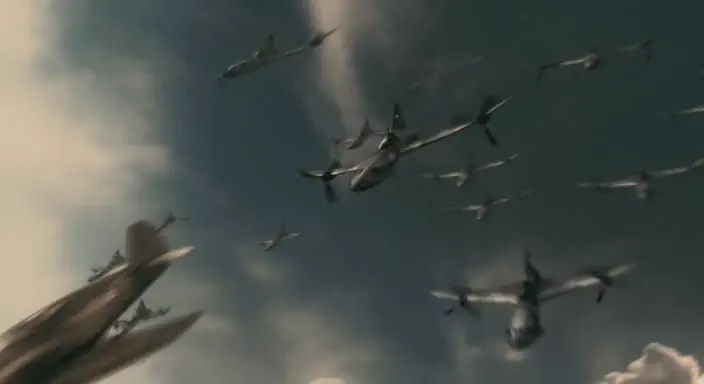
Along the way, they meet Commander Franky Cook (Angelina Jolie), the leader of a flying British air fleet and a former comrade of Sky Captain. With her help and an armada of airships, they take up the fight against Dr. Totenkopf. In a final confrontation, they reveal the shocking truth about Dr. Totenkopf and must decide how far they will go to save the world from total annihilation.





Trivia
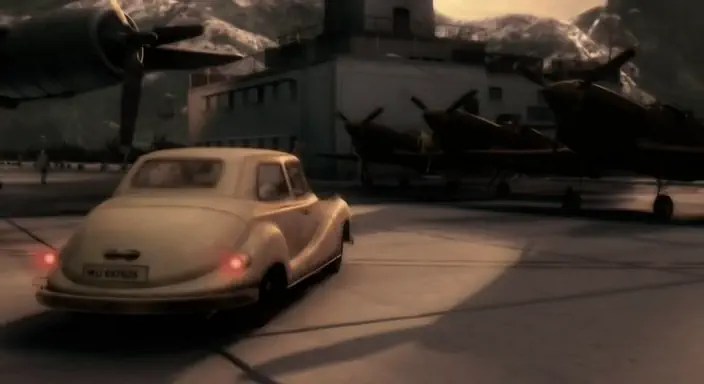
- Dieselpunk aesthetic: “Sky Captain and the World of Tomorrow” is considered one of the most prominent examples of the Dieselpunk genre. Dieselpunk is a subgenre of science fiction characterized by its blend of technology and 1920s to 1940s aesthetics, often with a futuristic or alternate history twist. The film embodies this style through its depiction of retro-futuristic machines, airplanes and robots, as well as its atmosphere inspired by the interwar period. The combination of art deco designs, industrial technology and a dystopian worldview are characteristic features of Dieselpunk that are clearly evident in the film.
- Digital pioneer: “Sky Captain and the World of Tomorrow” was one of the first feature films to be shot entirely in front of bluescreens, with sets and environments created digitally in post-production. This process later influenced other films such as “Sin City” (2005) and “300” (2006), which used similar techniques to create stylized worlds.
- Laurence Olivier as Dr. Totenkopf: The antagonist Dr. Totenkopf is portrayed through a combination of archival footage and digital manipulation, as the actor Laurence Olivier had already passed away in 1989. This was one of the first times a deceased actor was digitally “resurrected” in a new movie, sparking discussions about ethics and technology in the film industry.
- Origin story: Director Kerry Conran spent several years in his apartment creating a six-minute animated short film called “The World of Tomorrow.” With this short film, he impressed producers and secured funding for the feature film. His perseverance and innovative approach is an example for independent filmmakers who want to realize their visions.
- Visual influences: The film is heavily influenced by various artistic movements and films, including Art Deco, German Expressionism and Film Noir. Elements from classics such as “Metropolis” (1927) by Fritz Lang and the Superman cartoons by Fleischer Studios are reflected in the aesthetics. The use of shadows, high-contrast images and futuristic designs creates a unique visual experience.
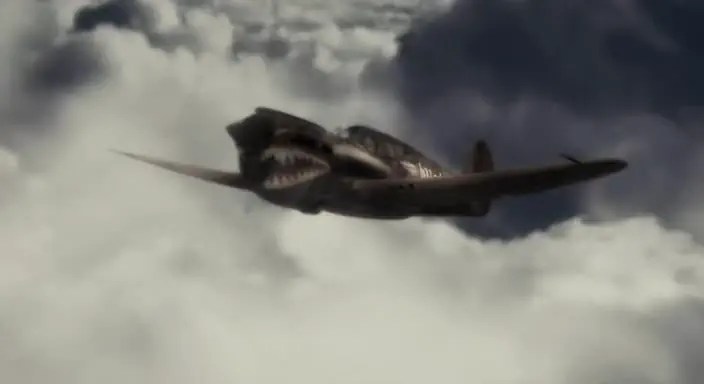
- Special props and designs: The vehicles and gadgets in the movie, such as Sky Captain’s P-40 Warhawk aircraft with its futuristic modifications and the giant robots, are inspired by retro-futuristic designs and the technological ideas of the time. These designs contribute to the immersive world of the movie and lend it authenticity.
- Musical soundtrack: The orchestral soundtrack by Edward Shearmur enhances the epic and nostalgic atmosphere of the movie. The music combines classical compositions with modern elements and contributes significantly to the emotional impact.
- Easter eggs and allusions: The movie contains numerous allusions to other works of pop culture and literature, including references to “King Kong,” “The Wizard of Oz” and the adventures of Flash Gordon. These references serve as homage to the film’s sources of inspiration and enrich the experience for attentive viewers.
Reviews at the time
Upon its release, “Sky Captain and the World of Tomorrow” divided the opinions of critics and audiences alike. Many praised the film for its technical innovation and its courage to break new ground. Roger Ebert, a respected film critic, gave the movie three out of four stars and wrote: “This movie is a triumph of imagination that shows how technology can be used to create a whole new world.”
However, other critics criticized the lack of depth in the characters and the weak plot. The New York Times described the movie as “visually stunning but emotionally empty”. Some felt the dialog was wooden and the chemistry between the lead actors was inadequate. Despite the impressive images, some viewers did not feel emotionally involved and criticized the lack of a gripping story.
This mixed reaction was reflected at the box office. With a production budget of around 70 million US dollars, the film only achieved around 58 million US dollars worldwide. The reasons for this were seen in the unconventional aesthetics, the lack of mass appeal and the strong competition from other blockbusters of the time.
Reputation today
Over the years, “Sky Captain and the World of Tomorrow” has built up a loyal fan base and is often referred to as a cult classic. Film scholars and enthusiasts recognize it as an important milestone in the development of digital film techniques and an example of visionary filmmaking. At a time when CGI and virtual sets have become the norm, the film is retrospectively recognized as a pioneer that paved the way for future productions.
Modern critics view the film more favorably, highlighting its aesthetic qualities and innovative spirit. The blend of retro charm and futuristic technology is seen as unique and inspiring. Although narrative weaknesses continue to be acknowledged, recognition for the creative risks taken and the impact the film had on the industry outweighs this.
The film is often analyzed in academic discussions and film courses to examine the evolution of CGI and digital production methods. Its importance lies less in its commercial success than in its contribution to expanding cinematic possibilities and providing inspiration for future filmmakers.
Conclusion
“Sky Captain and the World of Tomorrow” is more than just a movie; it is a testament to the power of imagination and the courage to push conventional boundaries. Although it did not achieve the commercial success hoped for on its release, it has secured a place in movie history. Its innovative use of CGI and virtual sets has influenced the way films are made today.
The film offers a unique visual experience that combines the nostalgia of the past with the technical possibilities of the present. For viewers who are open to unusual and creative cinematic approaches, it is an inspiring work that explores the possibilities of the medium. “Sky Captain and the World of Tomorrow” is a reminder that vision and passion are crucial in filmmaking and that true innovation often takes time to be fully appreciated.
As a cinematic experiment, the film remains an important reference point for the development of digital filmmaking techniques and an inspiring example of what can be achieved when artists are willing to take risks and bring their wildest dreams to the screen.








 McHenry's Lair
Kommentar verfassen :