

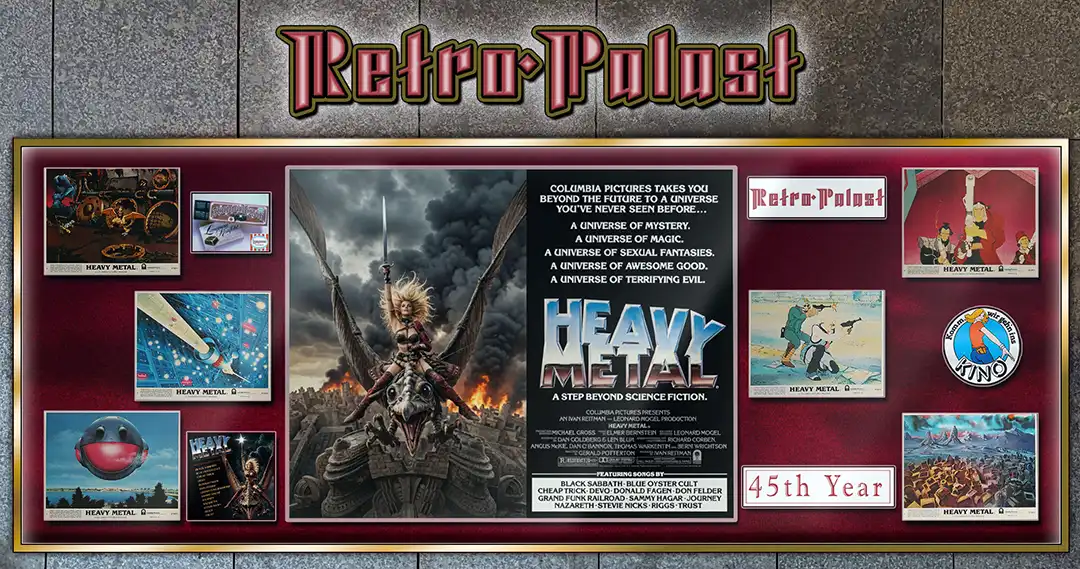
Look at me: I am the sum of all evils. Look carefully.
My power infests all times, all galaxies, all dimensions.
A Wild First Encounter
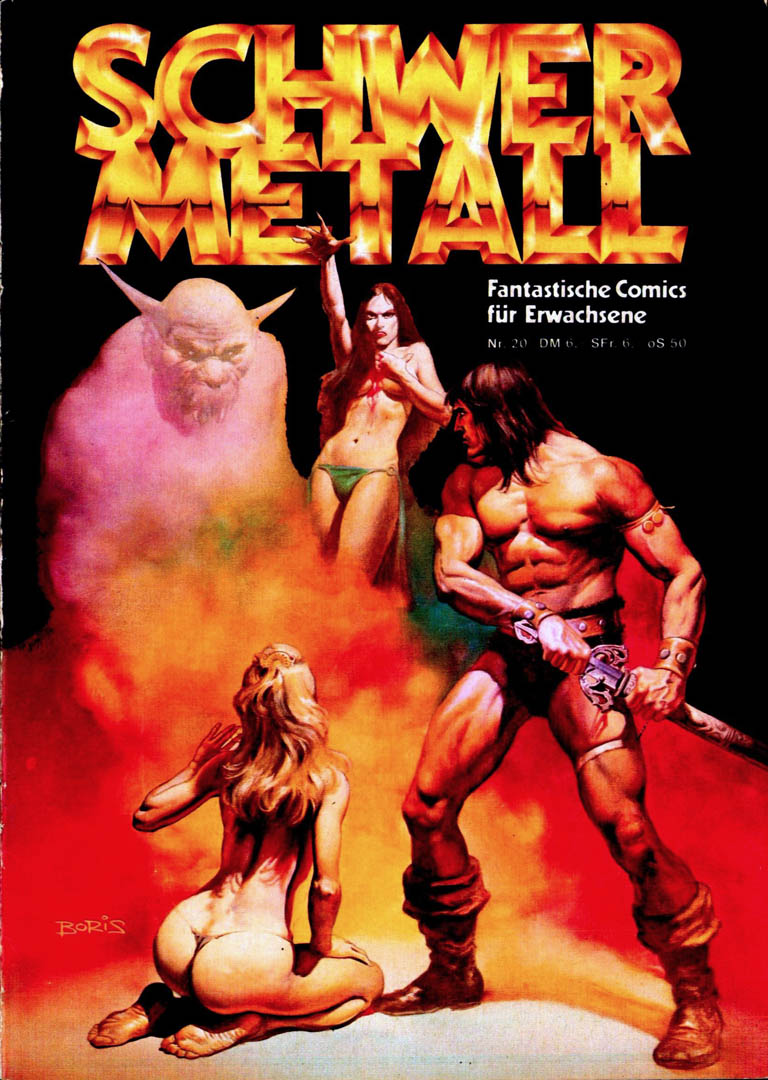
Some movies aren’t just watched—they’re discovered like a forbidden door to a new world. My encounter with Heavy Metal, also known in Germany as Schwermetall, began in late 1981, when I first read about the film in the Cinema Jahrbuch 1982. I immediately recalled the eye-catching cover art of the German Schwermetall edition, which was available at newsstands: mysterious worlds, fantastical bodies, spaceships, female warriors, monsters, and a visual language that had nothing to do with the familiar Disney comics. As a fifteen-year-old, I naturally reacted first and foremost to the visual appeal. It wasn’t until much later that I grasped the artistic significance of the magazines, their artists, and their French counterpart, Métal Hurlant. But the movie was the decisive catalyst that prompted me to engage with adult comics beyond the usual youth entertainment in the first place.

When Heavy Metal finally hit German theaters, I knew I had to see it. There was just one problem: The film was rated 16 and up, and I was only fifteen and a half. So I went to the box office with as much convincing confidence as I could muster—and actually got in. The experience lived up to all my expectations. I didn’t like every episode equally well, but that’s precisely part of the appeal of an anthology: It doesn’t offer a uniform narrative, but rather a collection of distinct moods, styles, and ideas. Over the years, my perspective on individual segments—and ultimately on the film as a whole—changed. What initially seemed primarily like a spectacular mix of violence, eroticism, and rock music later proved to be an astonishingly rich total work of art combining comic-book aesthetics, the history of animation, music, dark humor, and a fantastical world-building.
Gerald Potterton’s 90-minute film was released on August 7, 1981, and blends science fiction, fantasy, horror, comedy, and adventure into a deliberately over-the-top vision. Several directors and studios created different sequences, while the mysterious green Loc-Nar, as the embodiment of evil, ties the stories together. This structure alone makes Heavy Metal special: the film doesn’t aim to create a smooth, uniform world. It aims to bring a magazine to life—page by page, style by style, dream by dream.
Seven Worlds, One Evil
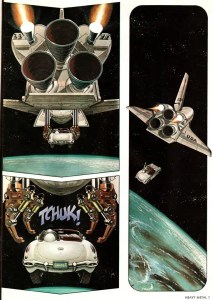
The opening sequence, “Soft Landing,” is one of the greatest openings in the history of animated cinema. An astronaut exits a spaceship not in a capsule, but in a Corvette convertible, and races through the atmosphere toward Earth, accompanied by “Radar Rider” by Riggs. This short sequence needs hardly any plot to set the tone for the film: logic is secondary; style is everything. The scene combines a passion for technology, youthful freedom, and rock ’n’ roll energy.

This is followed by “Grimaldi,” the actual framing narrative. The returning astronaut shows his daughter a glowing green orb. It turns out to be Loc-Nar, which dissolves the father and forces the girl to witness visions of its destructive power. The Loc-Nar is less a psychologically developed villain than a mythical principle: greed, violence, corruption, and abuse of power take on a visible, eerily glowing form.

“Harry Canyon” takes us to New York in the year 2031. The city is dirty, overcrowded, and morally decayed—a futuristic variation on film noir. Harry is a cynical taxi driver whose car is equipped with a lethal defense system. When a young woman gets caught up in a hunt for the Loc-Nar, he helps her—at first reluctantly. What follows are chases, betrayal, sex, bribery, and a bittersweet ending.
The episode is compact, gritty, and wonderfully efficiently told. Its vision of the future doesn’t feel sterile, but lived-in: billboards, ruins, corrupt cops, alien criminals, and a hard-boiled hero create a world that seems to reek of oil, smoke, and hot asphalt. Richard Romanus lends Harry just the right amount of weary coolness, while Susan Roman voices the mysterious young woman.

“Den” is the film’s most exuberant sword-and-sorcery fantasy. The scrawny teenager Dan finds a green meteorite, experiments with it, and is hurled into an alien world. There, he suddenly finds himself in the muscular body of the hero Den. In a landscape filled with temples, queens, sacrificial cults, monsters, and erotic adventures, he finds himself caught between two rival powers, both of which want to possess the Loc-Nar.
The segment is based on the art and story by Richard Corben and adopts his distinctive blend of exaggerated bodies, rich colors, the grotesque, and a spirit of adventure. Particularly charming is the tension between Den’s imposing appearance and his inner voice: he looks like an invincible barbarian but still thinks like a bewildered teenager. John Candy turns this discrepancy into a major comedic strength.
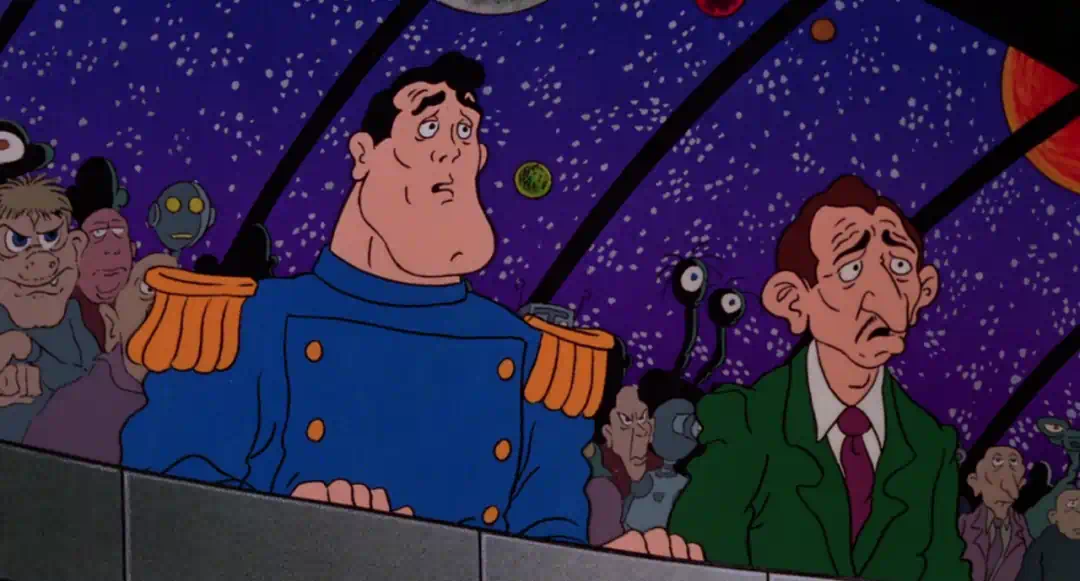
“Captain Sternn” is shorter but hardly any less memorable. The eponymous space captain stands trial for an impressive list of crimes yet still presents himself as a smug charmer. He has bribed the witness Hanover Fiste, but the Loc-Nar transforms Fiste’s testimony into a frenzied outburst of suppressed rage. Fiste grows into a gigantic monster and chases Sternn through the space station.
The episode thrives on its pace, grotesque transformation, and dark humor. Eugene Levy voices Sternn with slick self-assurance, while Roger Bumpass gives Fiste the perfect blend of nervousness and explosive energy. The ending shows just how ruthlessly the film treats its characters: In this world, it’s not the morally superior who survive, but often the most cunning con artist.

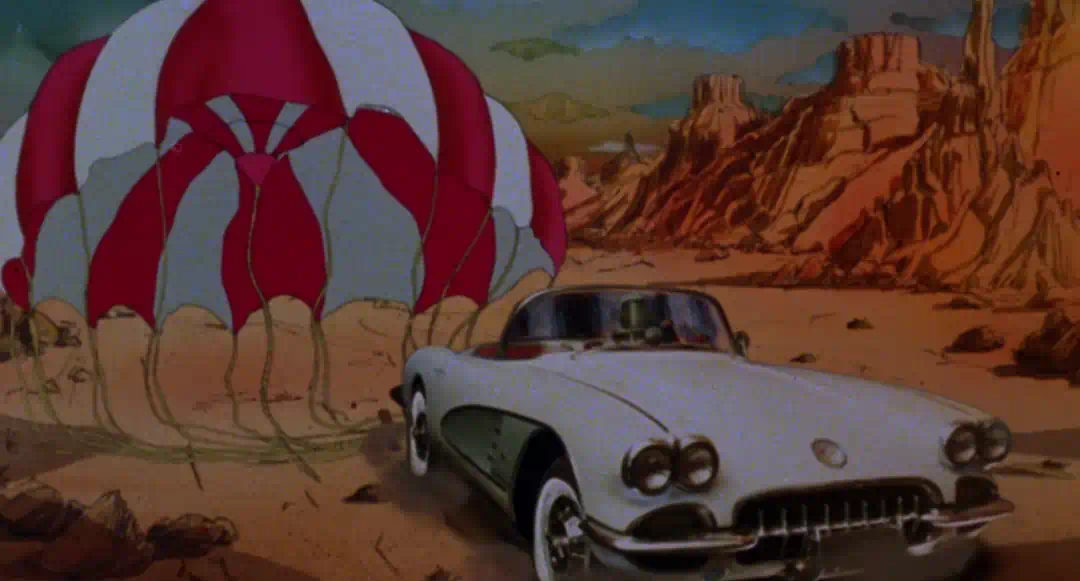
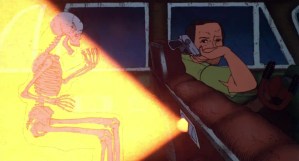
With “B-17,” Heavy Metal makes a radical shift into horror. During a dogfight in World War II, an American bomber is severely hit. The Loc-Nar revives the fallen crew members as undead creatures. The pilot escapes by parachute but lands in an eerie aircraft graveyard, where the horror simply takes on a new form.
The story was written by Dan O’Bannon and showcases his talent for claustrophobic situations in which technology doesn’t save the day but instead becomes a coffin. The dark colors, the cramped interiors, and the pilot’s gradual realization create an atmosphere that, within minutes, gives rise to a full-fledged war and zombie horror film.
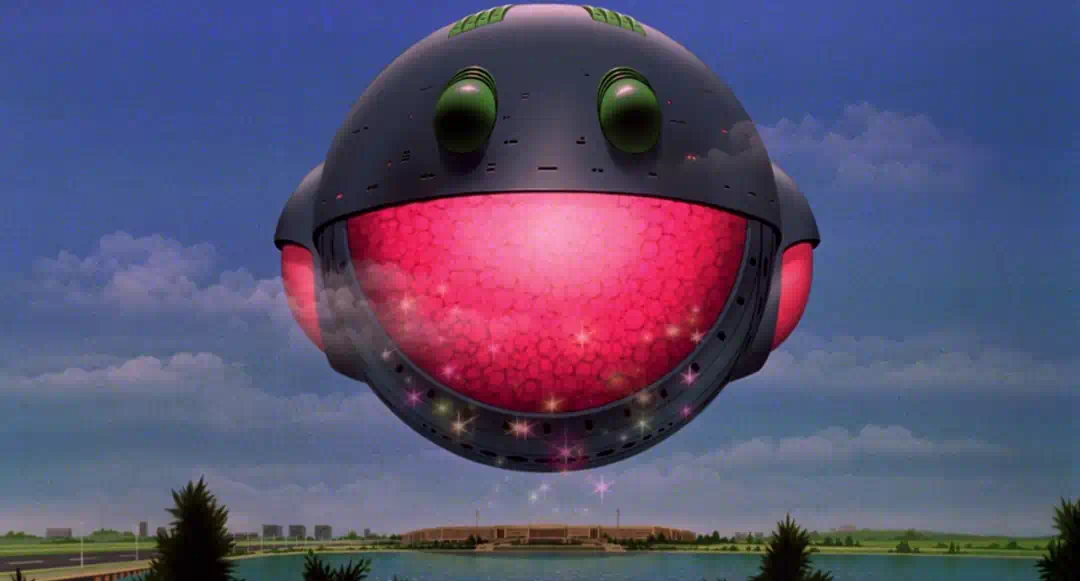
“So Beautiful & So Dangerous” then shifts back into uninhibited comedy. A secretary named Gloria is abducted by a spaceship during a political meeting. On board, she encounters a nervous robot and the alien pilots Edsel and Zeke, whose behavior is less reminiscent of disciplined astronauts and more of a chaotic rock band.
The segment by Angus McKie is colorful, silly, sexual, and deliberately irreverent. It possesses the energy of an improvised late-night comedy and is an excellent example of how the film doesn’t cautiously blend its tonal elements but deliberately lets them clash. Alice Playten, John Candy, Eugene Levy, and Harold Ramis transform the episode into a small ensemble fireworks display.

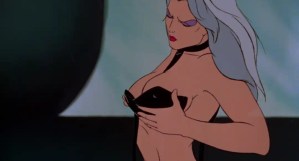
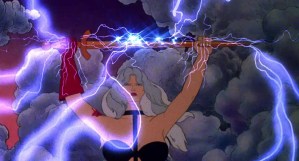
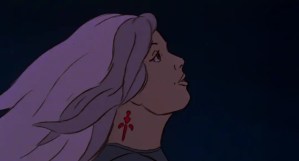
The finale, “Taarna,” ultimately elevates the film to an almost operatic level. The Loc-Nar corrupts a horde of barbarians who destroy a peaceful town. The elders summon the last warrior of the Order of Taarak. Taarna barely speaks, yet her presence dominates every scene: silver hair, sword, black leather, and her enormous bird-like companion form one of the film’s most powerful visual icons.
Her mission is not conquest, but retribution and protection. She is wounded, loses almost everything, and yet decides to sacrifice herself to destroy the Loc-Nar. The animation combines painted backgrounds, models, special effects, and footage of a real actress as a motion reference. This creates a physical, almost dreamlike effect.
The ending brings us back to the daughter from the overarching narrative and transforms her into the next Taarak warrior. Thus, the seemingly loose anthology is given an emotional conclusion: Evil may wander through time and worlds, but resistance is also passed on.
Blood and Tits as a Visual Language

One aspect that sets Heavy Metal apart from nearly all animated films of its time is its uncompromising visual directness—often summed up in the provocative phrase “Blood and Tits.” This blend of explicit violence and overt sexuality was virtually unprecedented in Western animated cinema of the early 1980s.
But what is crucial is that these elements in the film are never mere provocation for its own sake. They are part of an aesthetic language that deliberately opposes the childlike coding of animation.

Here, blood does not serve as a shock effect, but as a symbol of consequence: battles carry weight, bodies are vulnerable, and violence has visible consequences. Similarly, sexuality is not an isolated gimmick, but rather an expression of an adult, often exaggerated world in which desire, power, and physicality are inextricably linked.
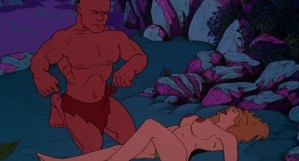
It is particularly clear in segments such as “Harry Canyon” or “Den” that eroticism and violence are part of the same narrative logic—a world that is raw, exaggerated, and deliberately stylized. The visual language draws heavily on the works from Métal Hurlant and Schwermetall, in which physicality, fantasy, and brutality are treated as equal artistic devices.

What may seem shocking at first glance takes on an almost painterly quality in the context of animation: blood becomes paint, bodies become sculptures, and eroticism becomes iconic exaggeration. It is precisely this combination that makes Heavy Metal a work that does not hide its boundaries but rather deliberately exhibits them as part of its artistic identity.
From Comic to Film
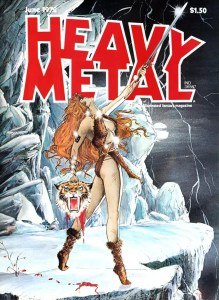
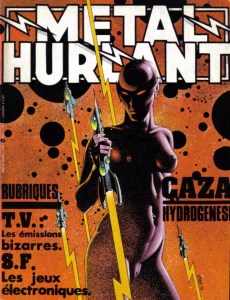
The roots of Heavy Metal lie in the European comic revolution of the 1970s. The French magazine Métal Hurlant emerged from a desire to tell science fiction and fantasy stories in a freer, more mature, and graphically radical way. Artists such as Jean “Moebius” Giraud, Philippe Druillet, Enki Bilal, and numerous other illustrators created worlds that did not conform to the traditional boundaries of youth comics.
In the U.S., the English-language sister publication Heavy Metal began appearing in 1977, bringing together French material, international works, and American contributions. The magazine became a platform for artists such as Richard Corben, Guido Crepax, Caza, Jean-Claude Forest, and later Milo Manara.

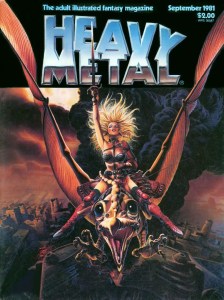
Leonard Mogel, co-founder of National Lampoon, recognized the cinematic potential of this visual universe. Initial attempts with Universal and 20th Century Fox proved difficult; rights issues, shifting studio plans, and rising budgets jeopardized the project. After Fox pulled out, Mogel and National Lampoon producer Matty Simmons turned to Ivan Reitman.
Reitman took over the project, hired new writers, and developed the idea of linking several standalone adventures through the Loc-Nar. Funding came in part from Canadian tax incentives, which required that a large portion of the expenses be incurred in Canada. Montreal became the hub of an unusually international production.

It was precisely this complicated production process that became the project’s artistic strength. Instead of imposing a single style across all the stories, various studios in Montreal, Ottawa, New York, Los Angeles, and London worked simultaneously on individual segments. According to contemporary production reports, hundreds of artists, animators, and technicians from seventeen countries were involved.
Each sequence was assigned its own director: Pino Van Lamsweerde directed “Harry Canyon,” Jack Stokes “Den,” Paul Sabella and Julian Szuchopa “Captain Sternn,” Barrie Nelson and Lee Mishkin “B-17,” John Halas “So Beautiful & So Dangerous,” and John Bruno “Taarna,” while Gerald Potterton oversaw the entire project.


Several segments are based directly or indirectly on the magazine: “Den” is based on Richard Corben’s work, “Captain Sternn” on Berni Wrightson’s story, “B-17” on Dan O’Bannon’s, and “So Beautiful & So Dangerous” on Angus McKie’s. Other segments, including “Harry Canyon” and “Taarna,” were developed specifically for the film but are clearly inspired by the spirit of the source material.
That is precisely why Heavy Metal doesn’t feel like a typical comic book adaptation. The film adapts less a single plot than an attitude: boundless imagination, adult themes, artistic individuality, and the conviction that science fiction can be beautiful, funny, erotic, brutal, and philosophical all at once.
Voices Full of Character

The English-language version is a showcase of Canadian and American comedians and character actors. John Candy, in particular, leaves a lasting impression on the film. As Dan—or Den—he combines youthful amazement with heroic enthusiasm; as a robot in “So Beautiful & So Dangerous,” he delivers a completely different, nervously romantic comedic character.
Eugene Levy voices the corrupt Captain Sternn as well as Edsel, one of the alien pilots. Harold Ramis voices Zeke, and Joe Flaherty takes on several roles, including Sternn’s lawyer and a general. Roger Bumpass voices Hanover Fiste and Dr. Anrak, among others.

Richard Romanus gives Harry Canyon a harsh, disillusioned voice that fits the futuristic noir perfectly. Susan Roman voices the young woman and the satellite voice; Marilyn Lightstone voices the queen in “Den”; Jackie Burroughs voices Katherine; and John Vernon voices the prosecutor in “Captain Sternn.” Don Francks not only appears in several supporting roles but also voices the astronaut Grimaldi.

This multiple casting does not give the impression of cost-cutting, but rather of ensemble artistry: the same voices appear in new worlds, bodies, and pitch ranges, thereby reinforcing the idea of a connected cosmic narrative space.
It is also noteworthy that Taarna herself remains almost silent. Her impact comes primarily from her posture, movement, music, and visual composition. In a film full of rapid-fire dialogue, jokes, and pithy one-liners, silence becomes a source of strength. Taarna doesn’t need to explain who she is. Her determination is evident in every step she takes.
Rock Music Meets Orchestral Sound

The soundtrack is not merely background music but a central narrative element. Even “Radar Rider” transforms the atmospheric crash of the convertible into a musical promise. Later, Black Sabbath, Blue Öyster Cult, Cheap Trick, DEVO, Journey, Nazareth, Sammy Hagar, Don Felder, Stevie Nicks, Donald Fagen, Grand Funk Railroad, Riggs, and Trust deliver a cross-section of hard rock, heavy metal, AOR, new wave, and melodic rock from the early 1980s.
The selection is broader than the film’s title suggests, and that’s precisely what makes it so vibrant. Heavy Metal is not a narrow genre-specific program but rather a rock album brought to life through moving images.
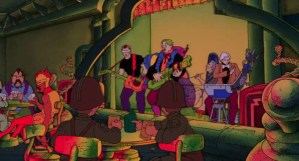
Highlights include Blue Öyster Cult’s “Veteran of the Psychic Wars,” Don Felder’s “Heavy Metal (Takin’ a Ride),” Sammy Hagar’s “Heavy Metal,” Black Sabbath’s “The Mob Rules,” Cheap Trick’s “Reach Out,” Stevie Nicks’ “Blue Lamp,” and DEVO’s “Through Being Cool” as well as “Workin’ in a Coal Mine.”

Some tracks drive the action forward, while others open up a floating, melancholic space. “Veteran of the Psychic Wars” lends Taarna a tragic dignity, while “The Mob Rules” infuses the barbaric violence of the finale with elemental power.

At the same time, Elmer Bernstein composed a symphonic score performed by the Royal Philharmonic Orchestra. London Voices and Jeanne Loriod on the ondes Martenot expanded the sound with choral and electronic textures. This combination is crucial: the rock songs give the film immediacy, physicality, and rebellion; Bernstein’s music gives it myth, grandeur, and emotional continuity.
Where the anthology structure might threaten to fall apart, the music creates a shared cosmic atmosphere.
The soundtrack even influenced the film’s release history. Due to complicated music rights, the film was not released on home video for many years. It wasn’t until 1996 that an official video release and a re-release in theaters took place. Ironically, the very music that made the film so distinctive kept it out of living rooms for a long time—and thus unwittingly contributed to its mysterious cult status.
Trivia from Production
The making of Heavy Metal was an adventure in itself. Production began in August 1980, and various reports cited budgets ranging from about $7.5 million to $10 million. Columbia Pictures handled worldwide distribution and treated the film as a major summer release. In its first few weeks, it had already recouped a significant portion of its costs.
For an adult animated film that was neither family entertainment nor a classic studio brand, that was a remarkable success.
The stylistic diversity did not arise by chance, but rather through the parallel work of numerous teams. “Soft Landing” combined animation and models; “B-17” used stop-motion footage; “Taarna” utilized a live-action actress as a motion reference, as well as elaborate camera, model, and multi-layer techniques.
The result is technically uneven, but that is precisely where its charm lies. Each episode has its own visual texture, as if you were actually switching illustrators while flipping through the pages of a magazine.
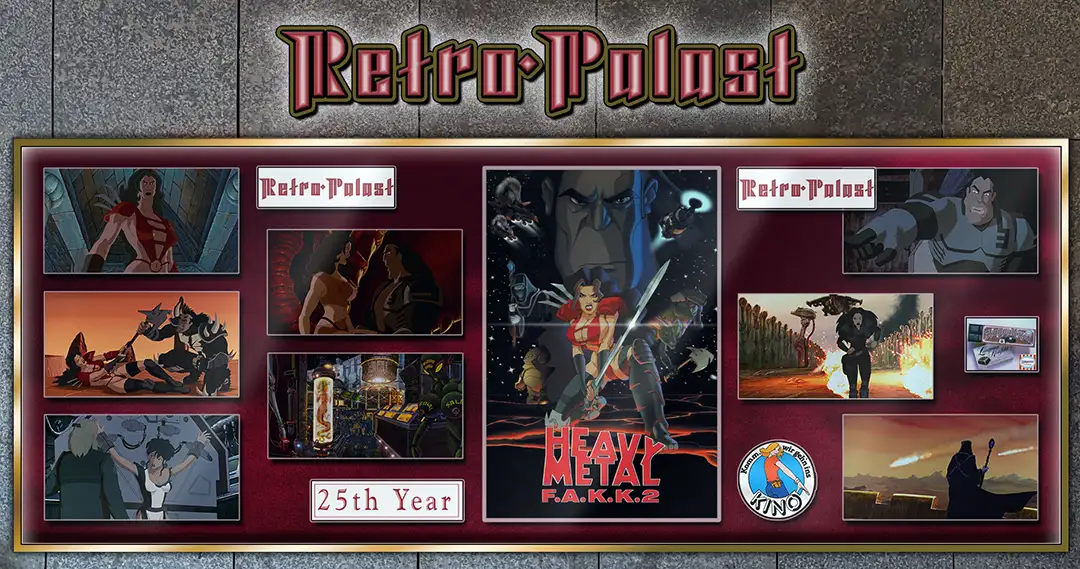
The promotional poster also became legendary. British artist Chris Achilleos designed the famous poster featuring the armed, silver-haired warrior riding a bird-like creature. The image encapsulates the film’s entire promise in a single frame: danger, eroticism, alien worlds, and heroic fantasy. Although Taarna does not appear until the final major segment, she became the visual face of the entire work.
Between Ridicule and Admiration

Upon its initial release, Heavy Metal received mixed reviews. Some critics took issue with the uneven quality of the episodes, the overt sexualization of female characters, and the juvenile, provocative humor. A contemporary review in the Washington Post criticized, among other things, the artistic inconsistency and the strong fixation on sexualized images of women.
These objections are understandable, as the film openly embodies the male-dominated counterculture of the era in which it was created.
Yet even many critical retrospectives acknowledge its visual and musical strengths. The current consensus on Rotten Tomatoes describes the film as sexist, juvenile, and dated, but at the same time highlights the striking animation and the superbly used classic soundtrack.
It is precisely this tension that explains its enduring fascination: Heavy Metal is not a flawless museum piece, but a living, contradictory work whose exaggerations are just as much a part of its identity as its artistic triumphs.

Its greatest quality lies in its audacity. The film never apologizes for being loud, tasteless, poetic, erotic, dark, or silly. It shifts from noir to barbarian saga, from zombie horror to space comedy, and from rock video to tragic heroic opera. Where a conventional film would strive for tonal unity, Heavy Metal makes incompatibility its guiding principle. This can be jarring, but it also creates a freedom that has become rare in major studio productions.
It was therefore no coincidence that the film later came to be regarded as a cult classic. In the mid-1990s, it was described as one of the most requested titles in the Columbia archive. Its long absence from the home video market turned theater screenings and passed-along copies into special events. By the time the official re-release came out, the film had long since become more than just a product of 1981: it had become a generational ritual.
A Lasting Cult Impact

Heavy Metal proved to a broad audience that feature-length Western animation did not necessarily have to be family entertainment. The film treated animation as a medium, not a genre: it could incorporate horror, eroticism, satire, war, science fiction, and fantasy without having to explain itself in a child-friendly way. This approach seems self-evident today, but it was remarkably striking in the American cinematic context of the time.

Its influence is evident not only in direct sequels or remakes. In 2000, Heavy Metal 2000 was released, this time with a continuous storyline. Even more evident is the homage in the 2008 South Park episode “Major Boobage.” The official episode description explicitly calls it a tribute to the film, whose fantastical landscapes and visual language are directly referenced. A parody of this magnitude only works if the original is firmly anchored in the cultural memory.

The modern anthology series Love, Death + Robots also follows a recognizable tradition. Tim Miller and David Fincher initially developed plans for a new Heavy Metal project; ideas from that development later found their way into the Netflix series. The basic premise is familiar: adult short stories, international animation teams, shifting styles, and the freedom to tell science fiction stories that are simultaneously brutal, funny, sensual, and philosophical.
Love, Death + Robots is not merely a remake, but it demonstrates just how fruitful the format popularized by Heavy Metal remains to this day.

Love, Death + Robots is not merely a remake, but it demonstrates just how fruitful the format popularized by Heavy Metal remains to this day.
Furthermore, the film lives on in posters, album covers, tattoos, fan art, cosplay, and the aesthetics of countless fantasy and science fiction works. Taarna has become an icon in her own right. The Loc-Nar is one of the most memorable MacGuffins in fantasy film. And the mix of futuristic vehicles, superhuman bodies, cosmic horror, and guitar music has become a visual shorthand for an entire genre of rebellious pop fantasy.
More Than Just a Childhood Memory

When I saw Heavy Metal for the first time in the theater at the age of fifteen and a half, what I wanted most of all was the spectacle. Violence, eroticism, monsters, spaceships, and loud music were the immediate attractions. Back then, I had little interest in narrative structure, art history, different animation techniques, musical dramaturgy, or the meta-level of the Loc-Nar.
It was only over the years that it became clear just how many talents, traditions, and ideas come together in this film. It is precisely this shift in perception that makes my personal connection to Heavy Metal so valuable: The film has grown with me.
Today, it strikes me not only as a memory of an exciting night at the movies, but as a gateway to a larger world. Through it, I discovered the art of Métal Hurlant and Schwermetall, the works of Richard Corben and other visionary artists, as well as the idea that comics and animation can be fully mature, individual, and experimental.
Not every episode is equally strong, and some aspects are clearly products of their time. Yet it is precisely the discontinuities, exaggerations, and stylistic leaps that give the film its personality.

Heavy Metal is a work that would rather take too many risks than too few. It possesses the courage of an underground comic, the power of a rock concert, the colors of a fever dream, and the grandeur of an ancient heroic saga. “Harry Canyon” delivers futuristic noir, “Den” pure thirst for adventure, “Captain Sternn” dark humor, “B-17” concentrated horror, “So Beautiful & So Dangerous” cosmic anarchy, and “Taarna” a truly mythical conclusion.
Together, they form not a perfectly polished whole, but something better: a passionate, unmistakable experience.
More than four decades after its premiere, Heavy Metal has lost none of its ability to surprise new viewers and transport longtime fans back to their first encounter with it. It is both a time capsule and a timeless dream. For me, it remains the film that turned a fifteen-year-old comic book fan’s curiosity into a lifelong appreciation for fantastic art.
And that is why Heavy Metal deserves not only the status of a cult classic, but also a permanent place in the history of adult animation.
More
Magazine Scans
Cinema 1984/09


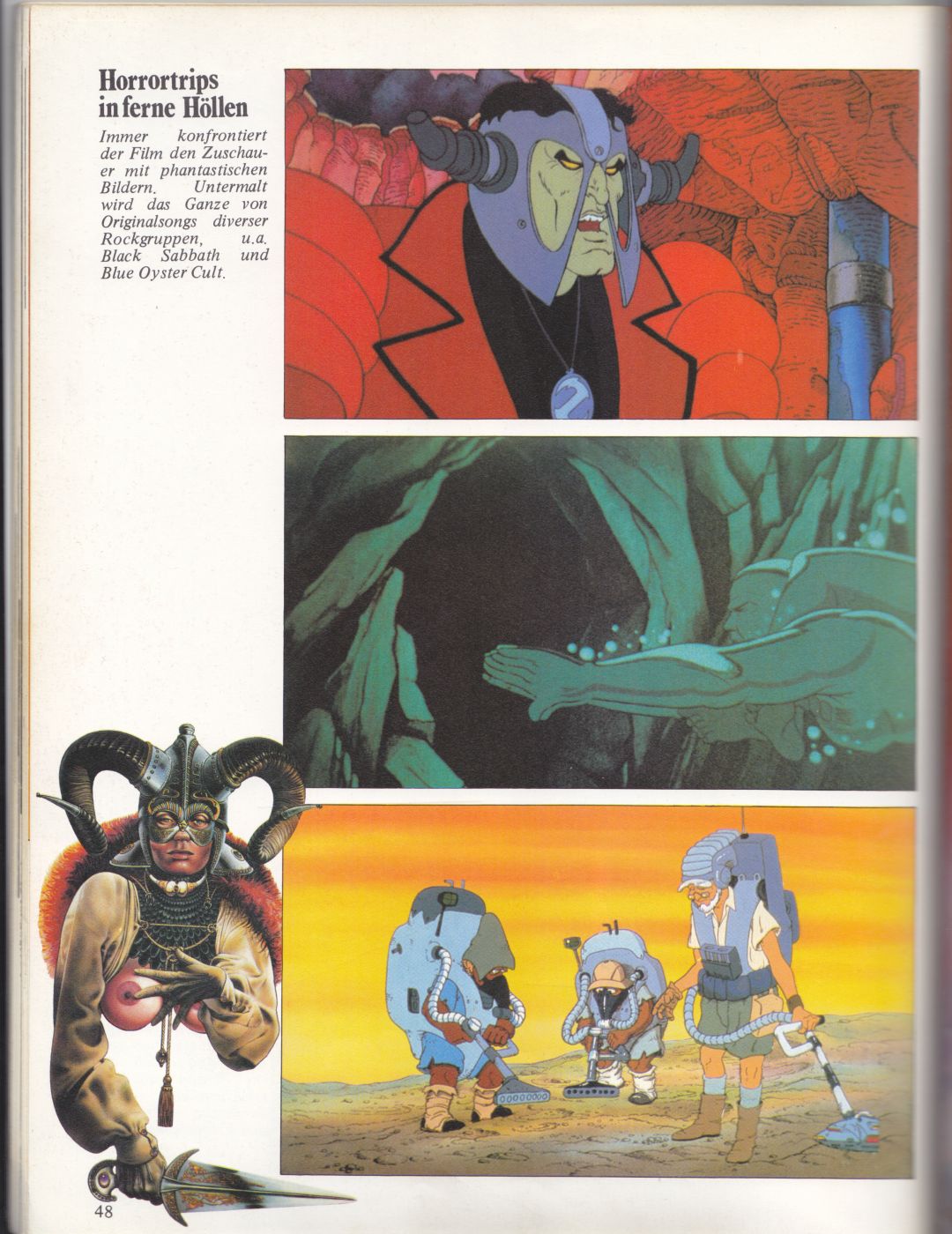

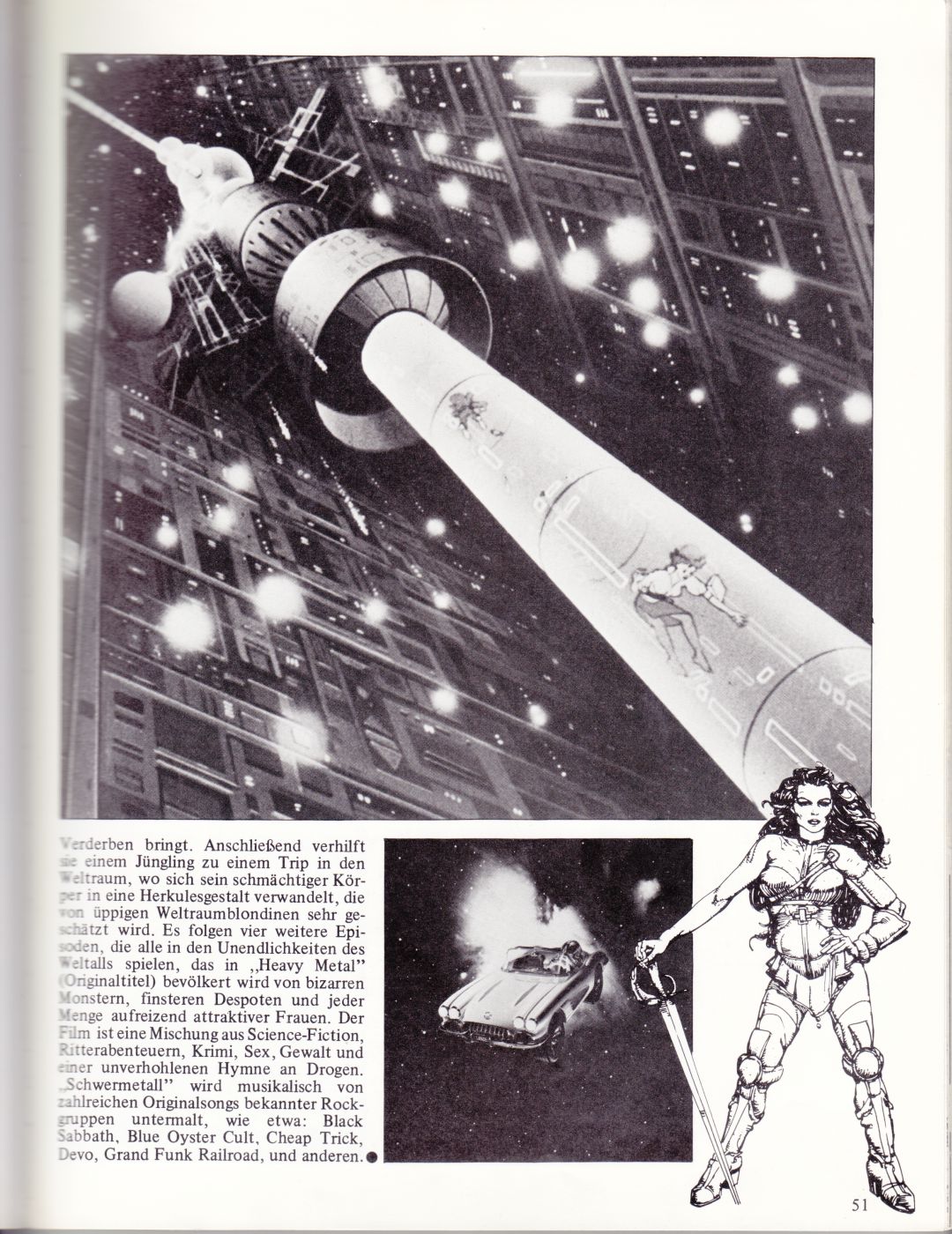
Bravo 1984/41
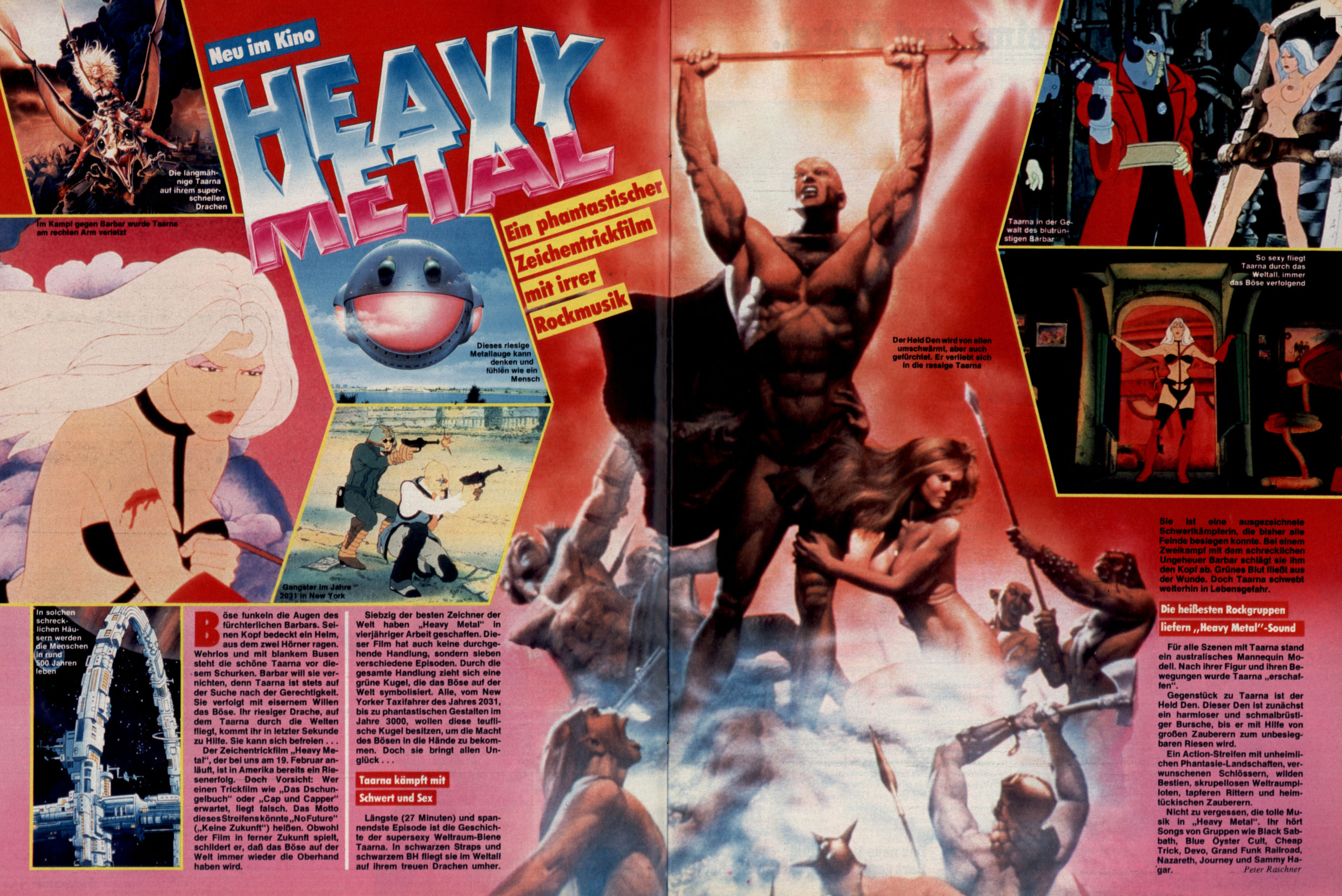
Trailer
External links
Notice Regarding Image Rights and Copyrighted Material
All images, film stills, posters, logos, trailer excerpts and other copyrighted materials used in this article are used solely for editorial reporting, film criticism, review and illustrative purposes related to the respective content.
Unless otherwise stated, all copyrights, trademark rights and other intellectual property rights in the materials used remain with their respective rights holders, including film studios, distributors, production companies, photographers, artists or other licensors.
The materials are used in good faith and with regard to applicable legal limitations, licence terms and source attributions. If, despite careful review, any rights have been infringed or any attribution is incomplete, please contact me. Upon review, the relevant content will be removed or corrected promptly.






Kommentar verfassen