

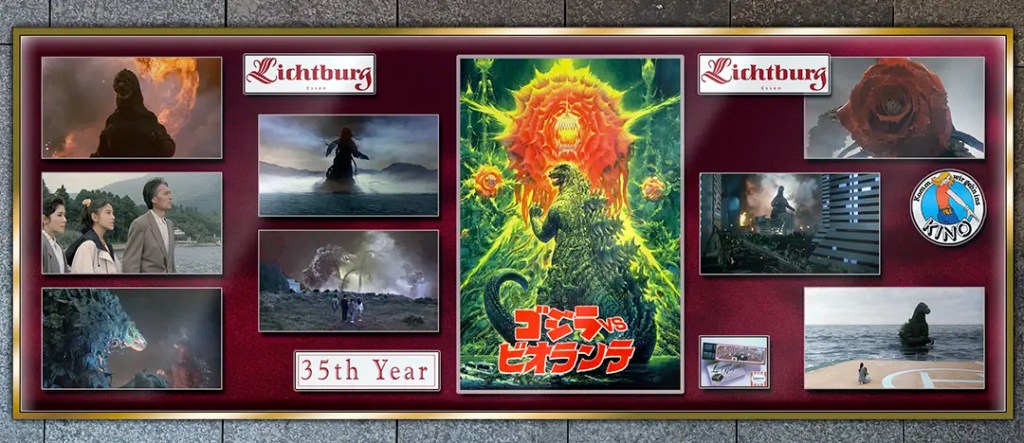
Godzilla and Biollante aren’t monsters.
It’s the unscrupulous scientists who create them that are monsters.
Epic Battle of the Giants
Released in 1989, Gojira vs. Biorante (English title: Godzilla vs. Biorante) is a unique work within the long-running Godzilla franchise, which began in 1954 with the original film of the same name. Directed by Kazuki Ōmori, who also co-wrote the screenplay, the film adds a new depth and thematic gravity to the series that had rarely been explored before. The film is characterised by its combination of classic monster battles and contemporary themes such as genetic engineering, environmental protection and the ethical implications of scientific progress. This sets a new tone that sets it apart from its predecessors and makes it one of the most remarkable films in the series.
Plot
The plot of Gojira vs. Biorante begins immediately after the events of The Return of Godzilla (1984), the film that revived the franchise after almost a decade of dormancy. Godzilla was sealed inside a volcano and the world seems safe from his destructive wrath for the time being. But the G-cells, remnants of Godzilla’s destructive rampage, are coveted by various interest groups, all of whom have their own agendas.
The central figure of the story is Dr Genshiro Shiragami, a brilliant bioscientist but one who is haunted by personal tragedies. After his daughter Erika was killed in a terrorist attack at a scientific laboratory in Saradia, Shiragami retires from public life. He decides to merge his daughter’s cells with those of a rose to preserve her memory. He is later contacted by the Japanese government to work on an experiment that will use the G-cells to create an indestructible plant that can thrive in desert areas. Driven by his pain and ambition, Shiragami combines the G-cells with the rose that contains Erika.
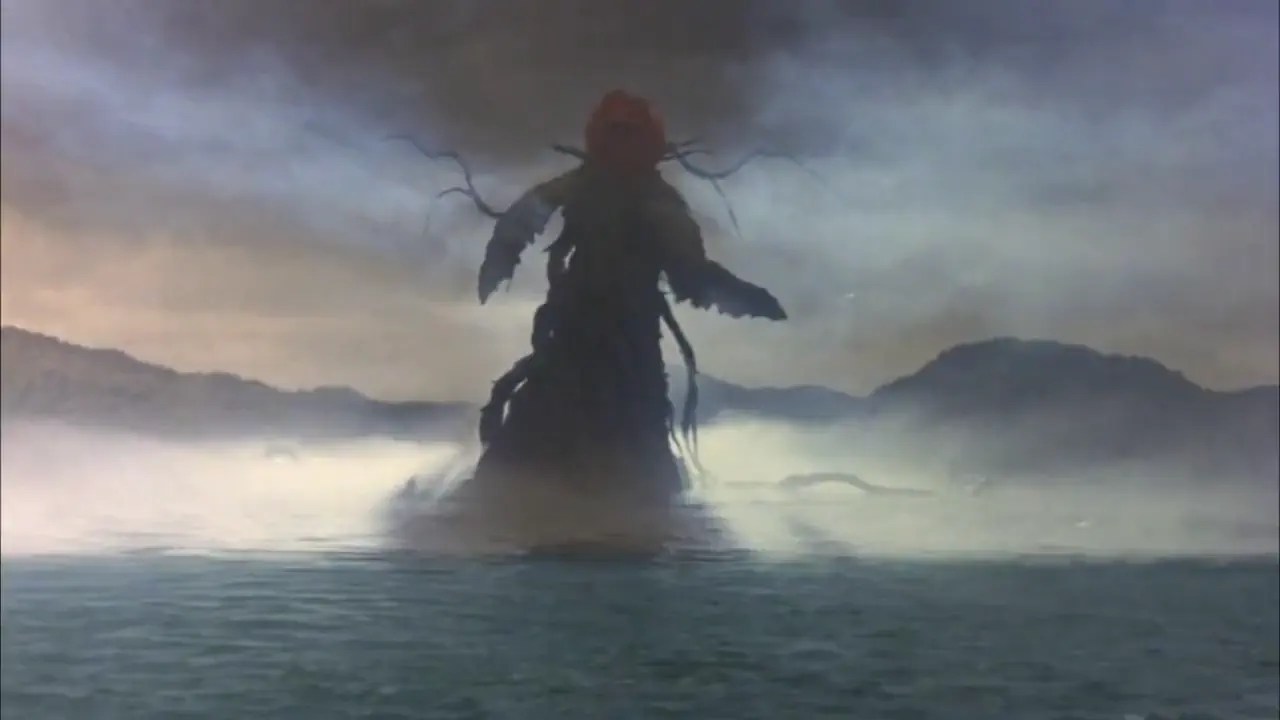
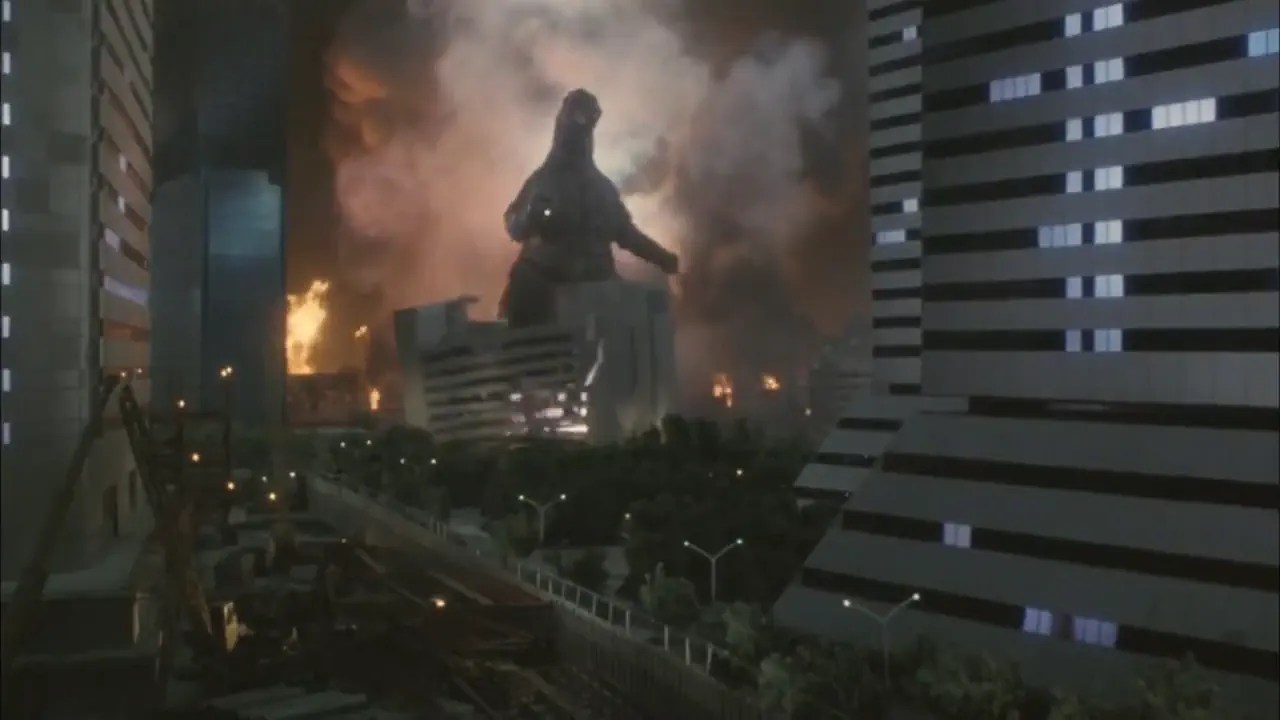
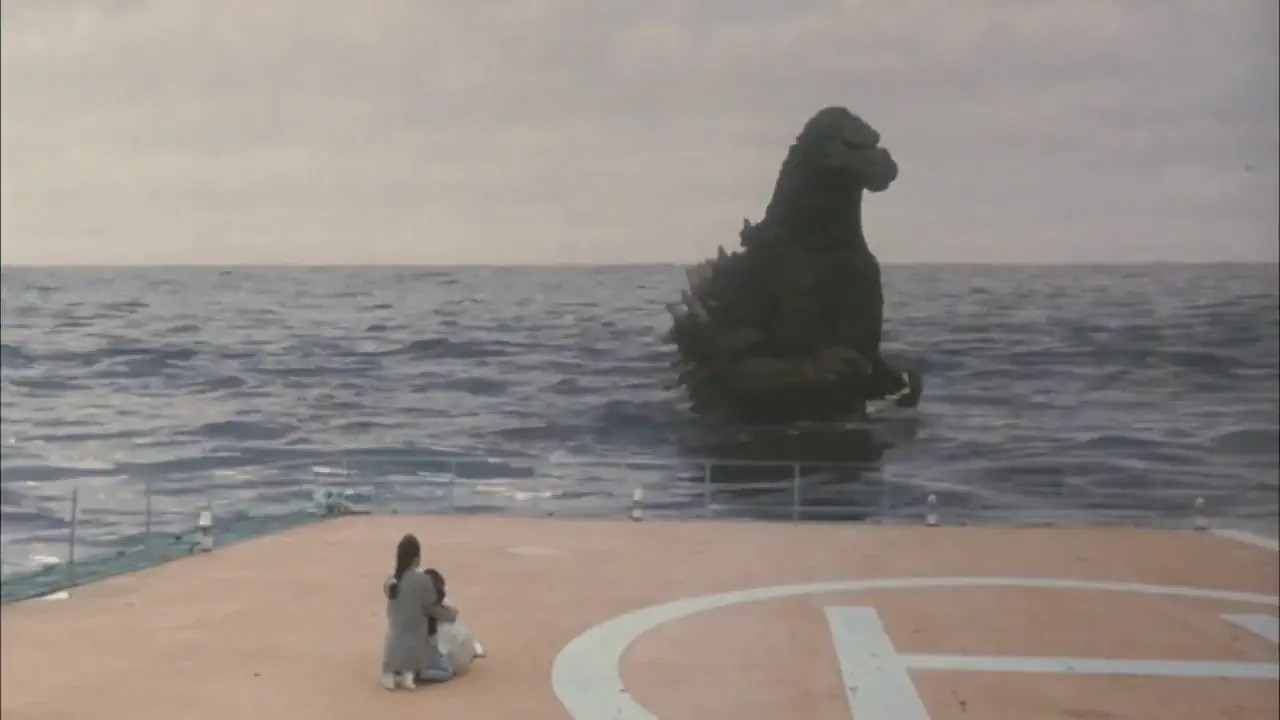
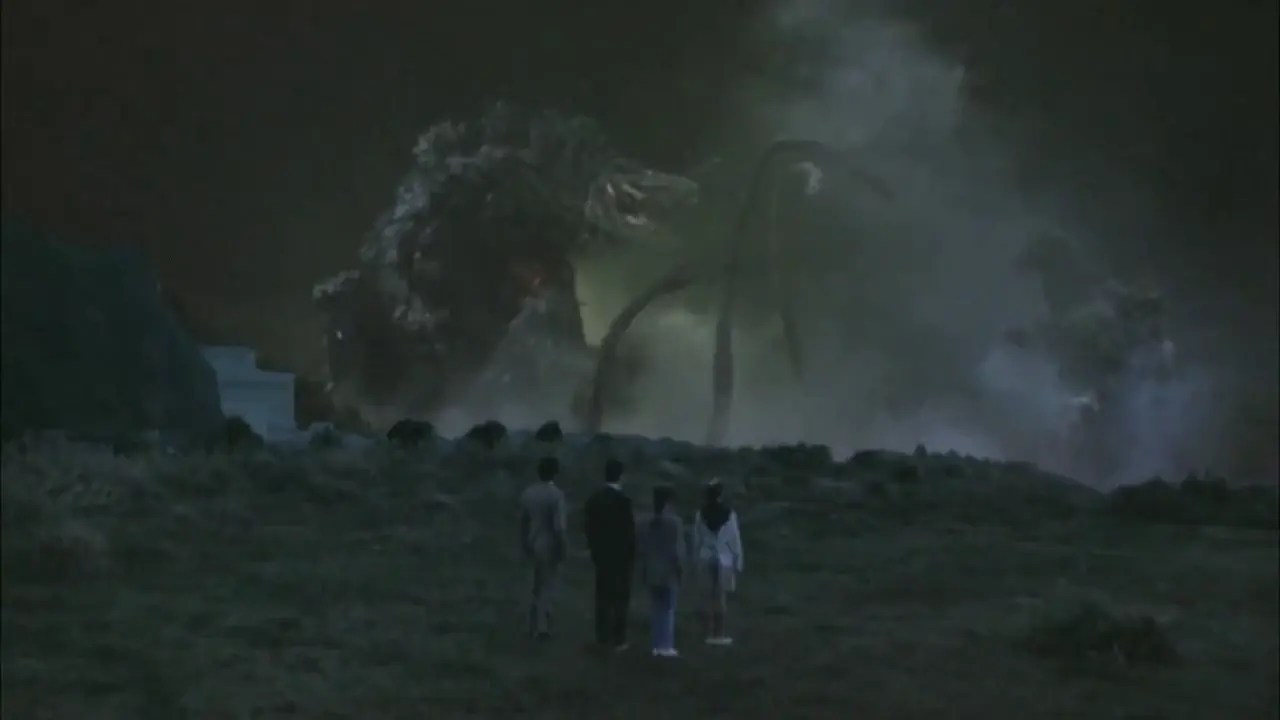
However, the experiment takes an unforeseen turn. The combination of the different DNA strands creates Biorante, a monstrous, plant-like creature of gigantic proportions. Biorante possesses both the power and resilience of Godzilla and an emotional connection to Erika, making it a unique and deeply tragic being. Meanwhile, Godzilla awakens from his volcanic prison and begins to devastate Japan once again. The conflict escalates as Godzilla and Biorante cross paths and an epic battle between the two giants ensues. Godzilla is eventually able to defeat Biorante, but the monster does not disintegrate, instead transforming into golden pollen that rises into the sky, leaving the possibility that Biorante could return one day.





Trivias
- Gojira vs. Biorante was the first Godzilla film to have its script chosen through a public competition. Over 5,000 submissions were received by Toho Studios, but it was the script by dentist Shinichiro Kobayashi that ultimately won over the judges. This was notable because Kobayashi had no previous screenwriting experience. His victory brought a fresh perspective to the series, which was both praised and questioned by critics.
- Biorante, the main monster of the film, is one of the largest and most complex monsters to ever appear in the Godzilla series. The creature’s design combines elements of a rose, a crocodile and Godzilla himself. It took a combination of traditional puppetry, advanced animatronics and complex miniature models to bring Biorante to life. Particularly impressive was the monster’s final form, a gigantic flower-like creature over 85 metres tall with massive tentacles.
- The film also marked the return of legendary composer Akira Ifukube to the series. Ifukube, who composed the iconic music for the first Godzilla film (1954), had retired from working on the series for a while. With Gojira vs. Biorante, he returned triumphantly, delivering a dark, atmospheric soundtrack that emphasises the emotional depth and epic nature of the film.
- In a special trivia aspect, the film’s influence on popular culture is evident: Biorante has achieved cult status despite his one-time appearance, appearing in various Godzilla video games, comics and even fan art. This popularity shows how deeply the monster has penetrated cultural memory, even though it only appeared in a single film.
Critics at the time
When Gojira vs. Biorante was released in Japanese cinemas in December 1989, the reaction of the public and critics was mixed. Many welcomed the return to more serious themes after the more family-friendly Godzilla films of the 1970s, but the film was also a clear departure from the usual narrative patterns of the series. The mix of life science and ethical dilemmas was met with approval by some critics, who saw the film as a more intellectually challenging addition to the series.
However, the general reaction was rather restrained. Some critics criticised that the film, despite its ambitious approach, seemed difficult to access and thematically overloaded. The action sequences, which are traditionally a highlight of the Godzilla films, were sometimes felt to be too slow and confusing. The design of Biorante was also received differently: While some praised the creature’s creativity and eeriness, others criticised the monster as being too unconventional and less fearsome than Godzilla’s classic opponents, such as King Ghidorah or Mothra.
Financially, the film achieved moderate success, but fell short of Toho’s expectations. This led to the future of the Godzilla series being called into question again, as the film failed to appeal to the wider audience that the studio had hoped for.
Reputation today
Over time, the perception of Gojira vs. Biorante has changed significantly. Today, the film is often considered one of the best and most creative films of the Heisei era (1984–1995), a period known for its complex and dark Godzilla stories. Fans and critics praise the film for its unconventional plot, its profound themes and its atmospheric density.
The special effects, which received mixed reviews at the time of release, are now considered remarkable achievements for their time. The craftsmanship behind the creation of Biorante is now recognised as groundbreaking and visionary. In particular, the use of puppetry and animatronics to portray the gigantic and yet very emotional nature of Biorante is often cited as a highlight of the film.
Another aspect that has earned the film recognition over the years is its subject matter. In an era where films are increasingly tackling issues such as environmental destruction and the ethical boundaries of science, Gojira vs. Biorante feels surprisingly modern and relevant. The film’s story, which revolves around the potential dangers of uncontrolled scientific experiments, reflects concerns that are more relevant today than ever.
In fan circles, Gojira vs. Biorante has earned a special place. The film is often considered one of the most unique Godzilla films, and Biorante has become one of the most popular monsters in the series. The fact that Biorante only appeared in a single film and yet generated such a strong response speaks to the character’s creativity and emotional power.
Position in the series
Within the Godzilla series, Gojira vs. Biorante occupies a special position. The film marked a turning point in the series, moving away from the more lightweight and child-oriented films of the 1970s and returning to a more serious and dark narrative style. This development would set the stage for the Heisei era films, which were all characterised by deeper themes and more complex storylines.
The film is often considered a transitional film that bridged the old and new storytelling styles of the series.
It showed that the series was still able to be relevant and evolve by taking on contemporary themes and integrating them into the Godzilla universe.
Overall, Gojira vs. Biorante is considered one of the most innovative and influential films in the Godzilla series today. Despite its initial commercial failure, the film has gained in importance over time and is considered by many to be a masterpiece of the series. It shows that the Godzilla series is far more than just a series of monster movies, but is also able to tell profound and relevant stories that go far beyond what one would expect from a typical kaiju film.
Summary
Gojira vs. Biorante is a film that stands out from the long line of Godzilla films in many ways. It offers a dark and profound story that explores the ethical boundaries of science while also presenting some of the most impressive and innovative special effects of its time. The film marked a turning point for the series, laying the groundwork for the later, more complex and darker narratives of the Heisei era.
While the film did not receive the widespread acclaim it may have deserved upon its release, it has gained in importance and recognition over the years. Today, Gojira vs. Biorante is considered one of the best films in the series and a cult classic that shows the creativity and potential of the Godzilla franchise in a new light. For fans and newcomers alike, this film offers a fascinating and emotionally gripping insight into the Godzilla universe and is a must-see for anyone who wants to experience the series in all its depth and diversity.







 McHenry's Lair
Kommentar verfassen :