

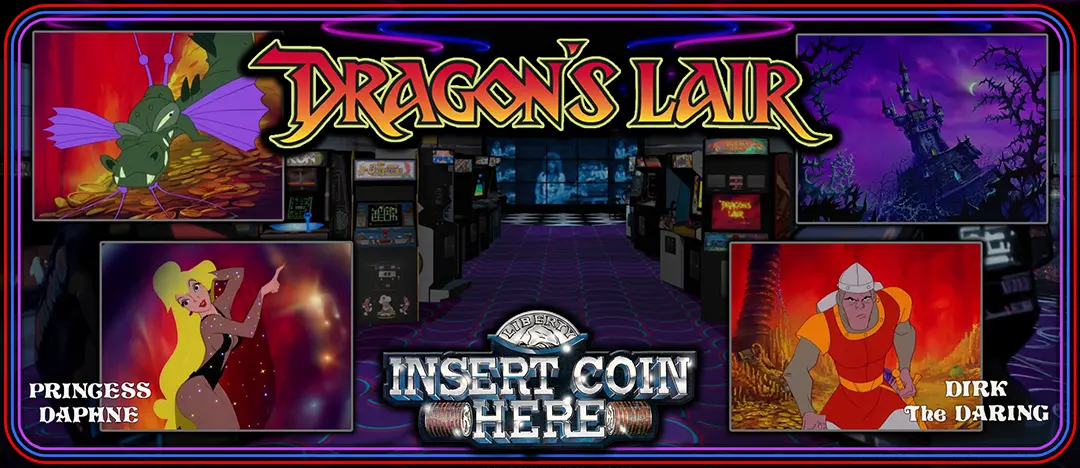
Welcome to the Arcade
„Lead on, adventurer. Your quest awaits!“
An iconic arcade adventure
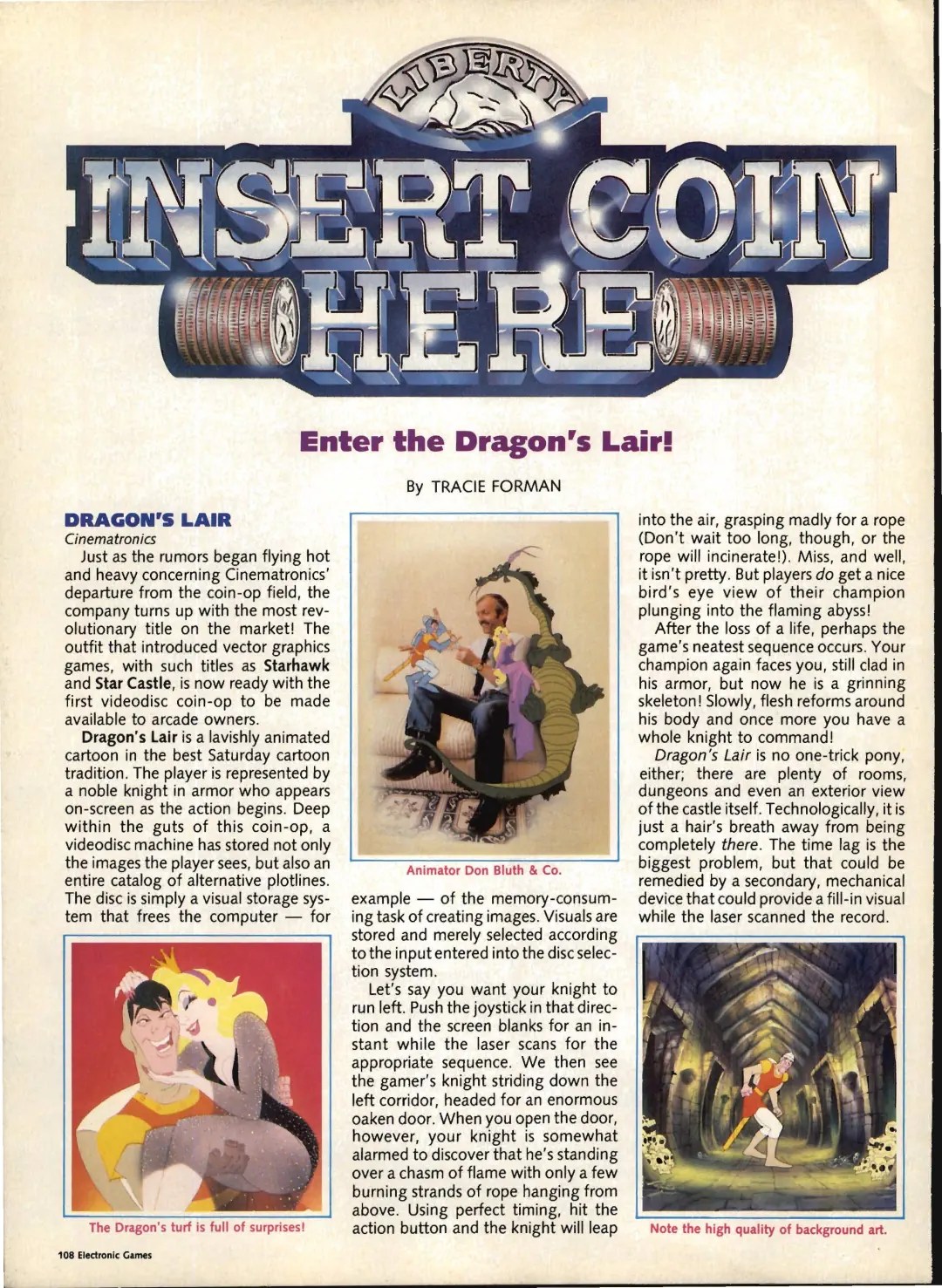
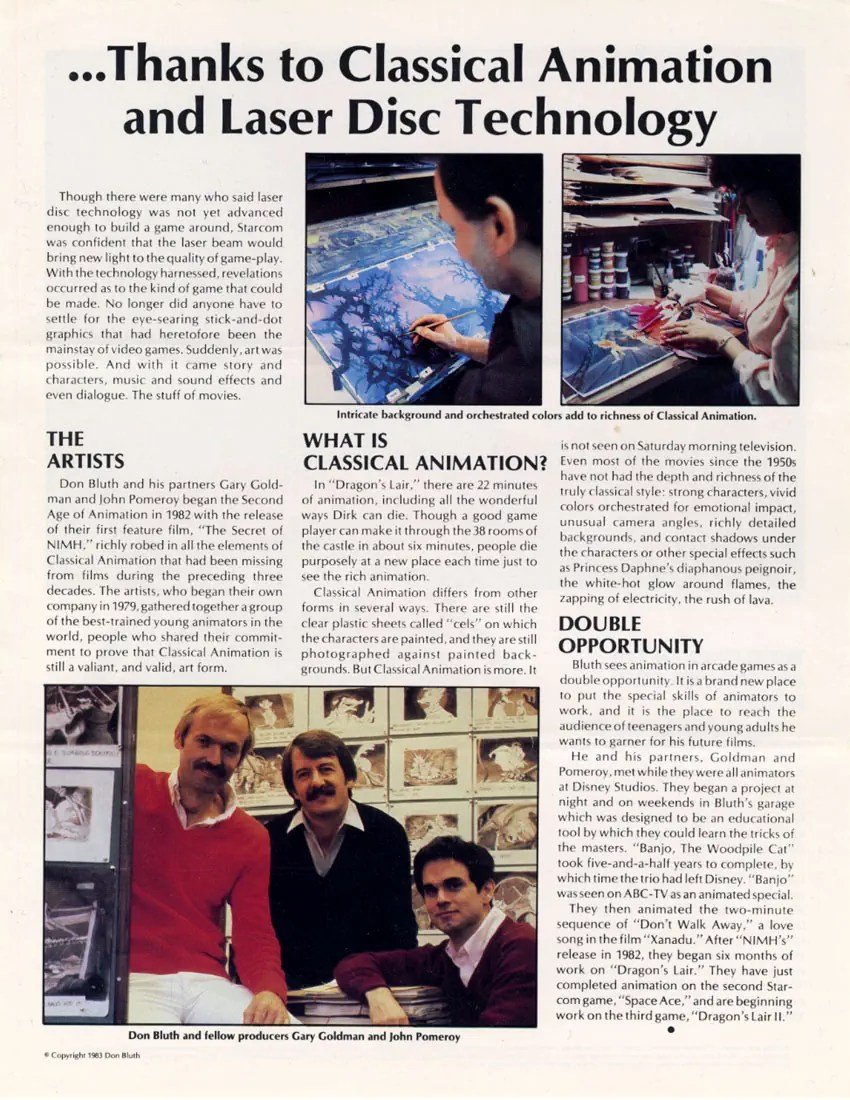
When “Dragon’s Lair” hit the arcades in 1983, it fundamentally changed the gaming experience. While other games of the era were defined by simple pixel graphics and mostly rudimentary gameplay, “Dragon’s Lair” offered an interactive experience on a whole new level. For the first time, the game combined hand-drawn animations created by Disney animator Don Bluth and his team with the then-innovative laserdisc technology, which made fluid, almost movie-like sequences possible. Players controlled the knight Dirk through a castle full of deadly traps and experienced a graphic quality that was unthinkable until then. The impact of “Dragon’s Lair” was so strong that it captivated not only arcade visitors but also the general public and set new standards for visual and narrative quality in video games. To this day, “Dragon’s Lair” remains a monument in video game history and a significant step towards interactive stories in games.
Plot
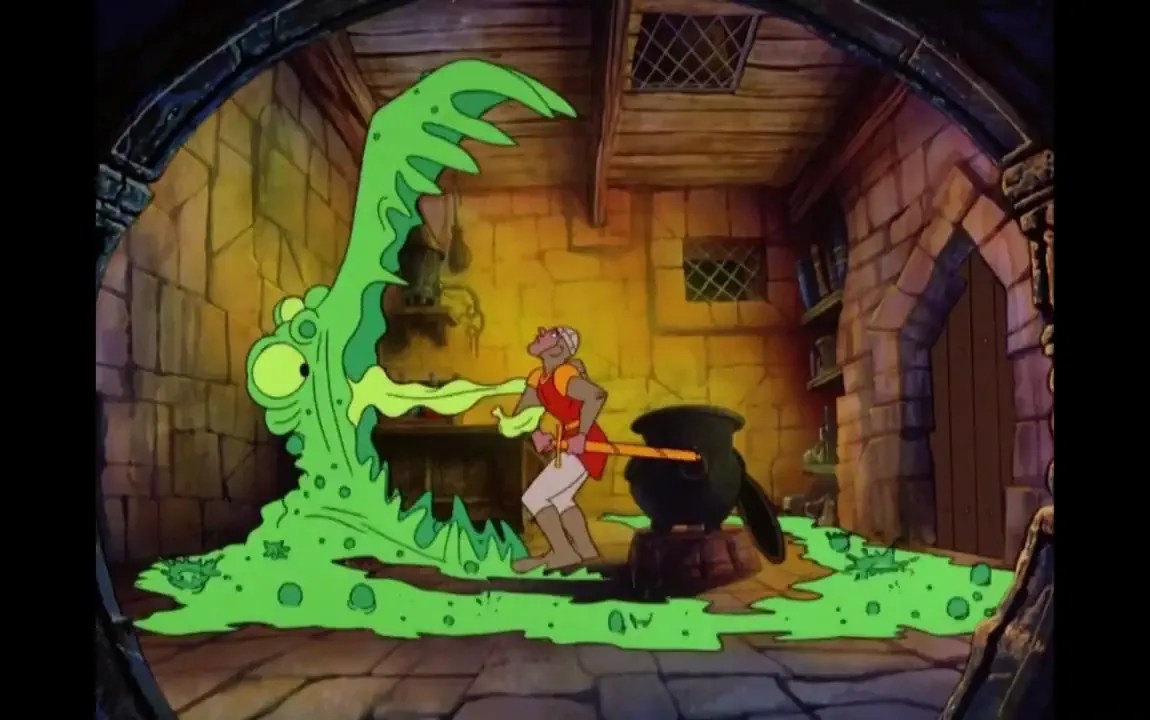
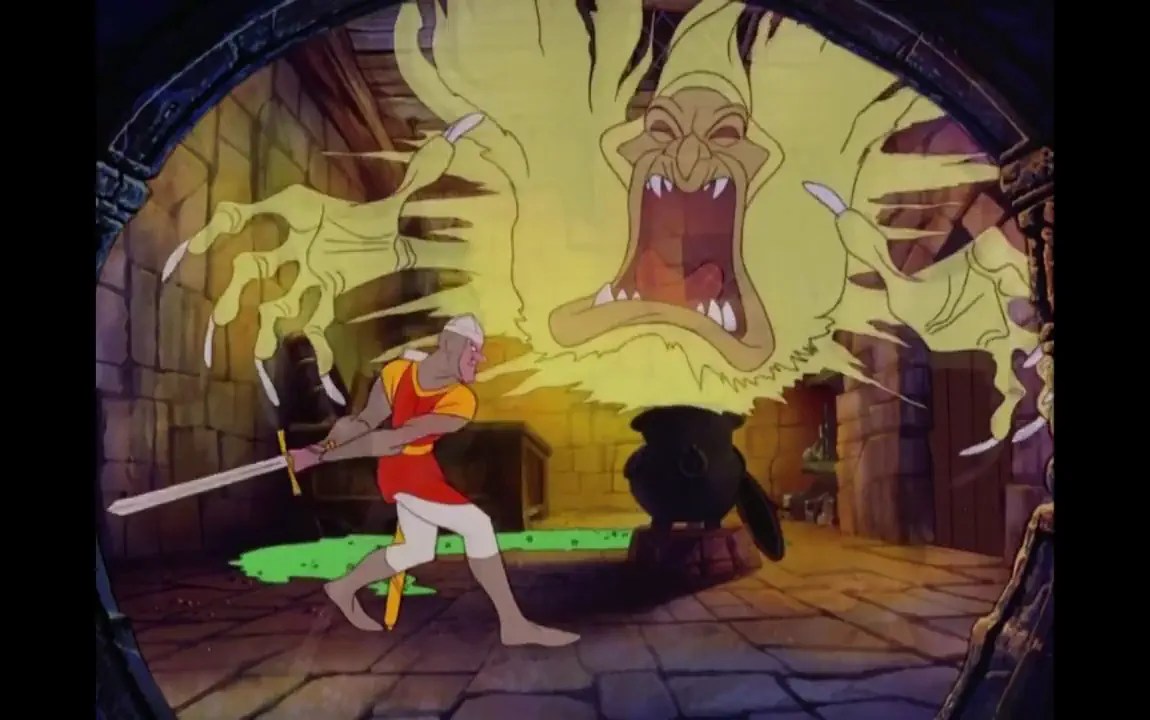
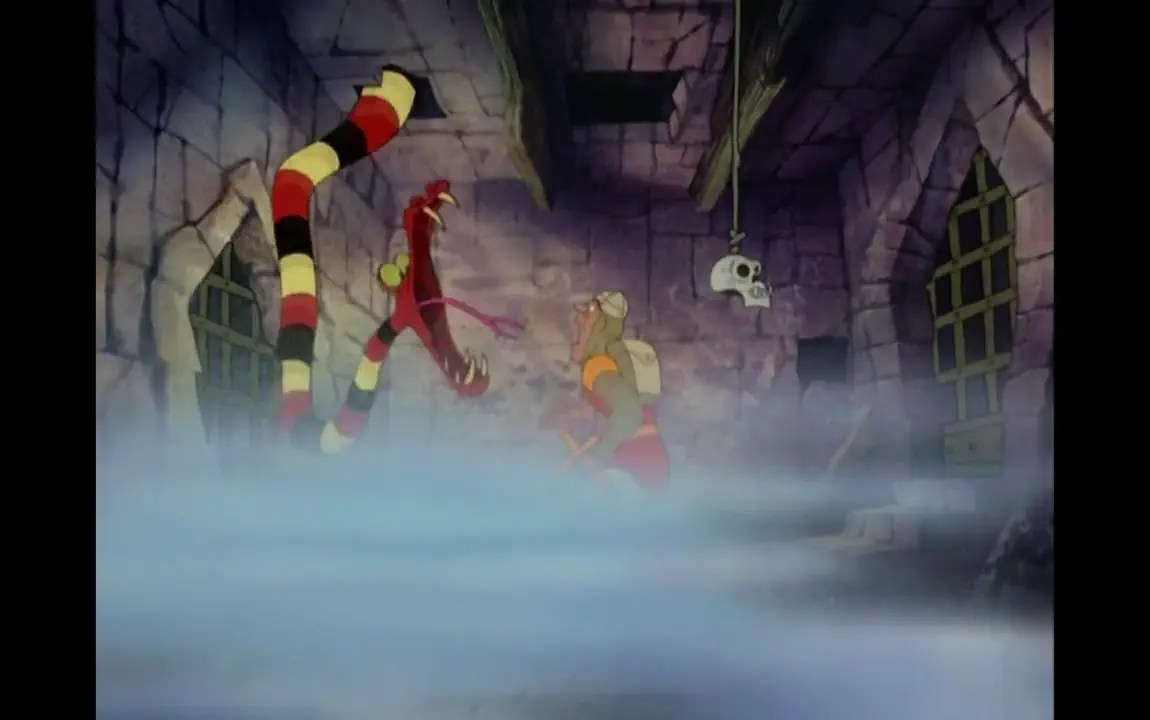
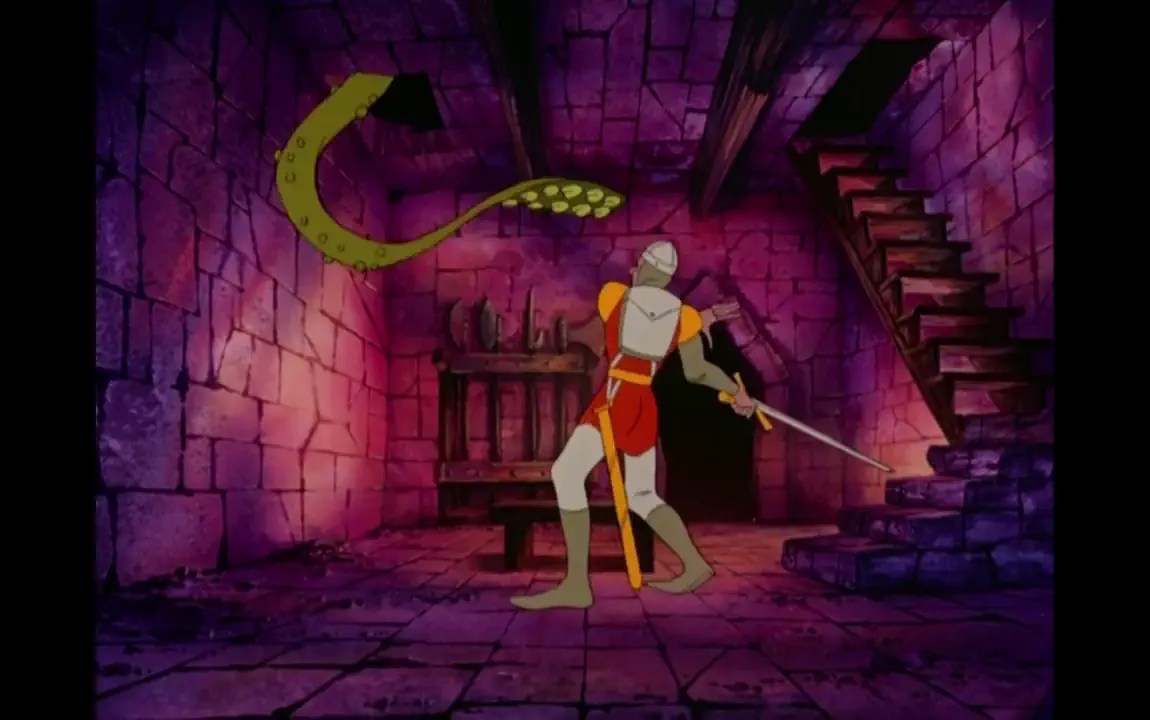
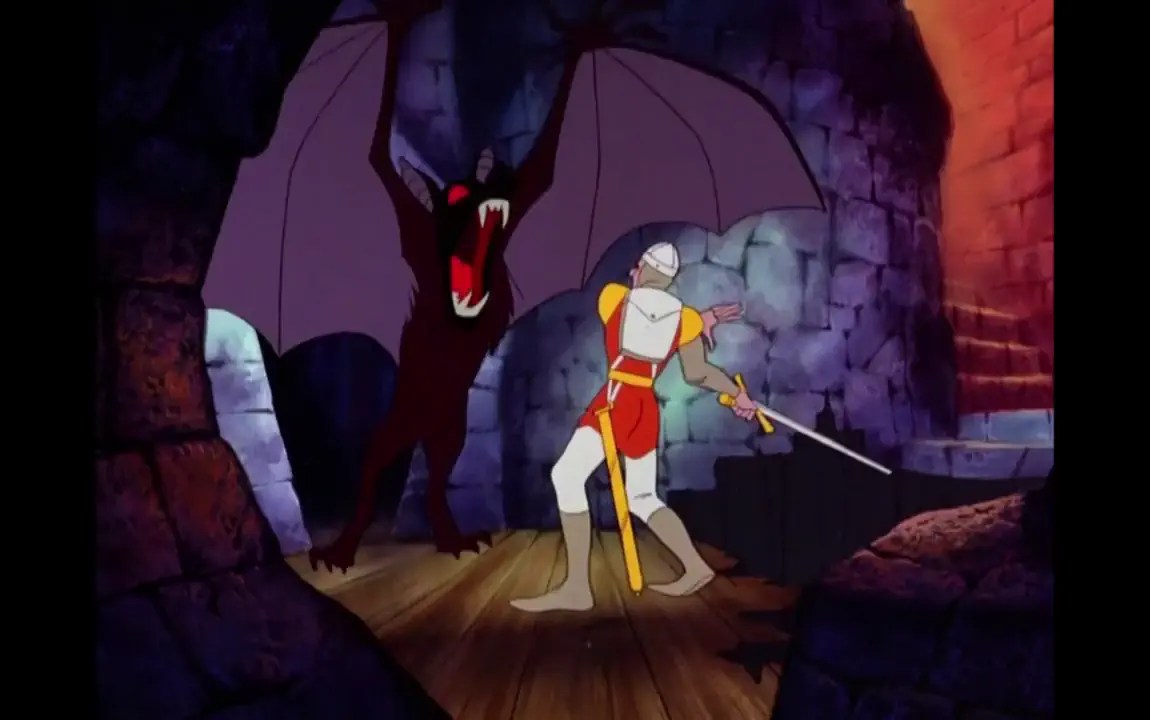
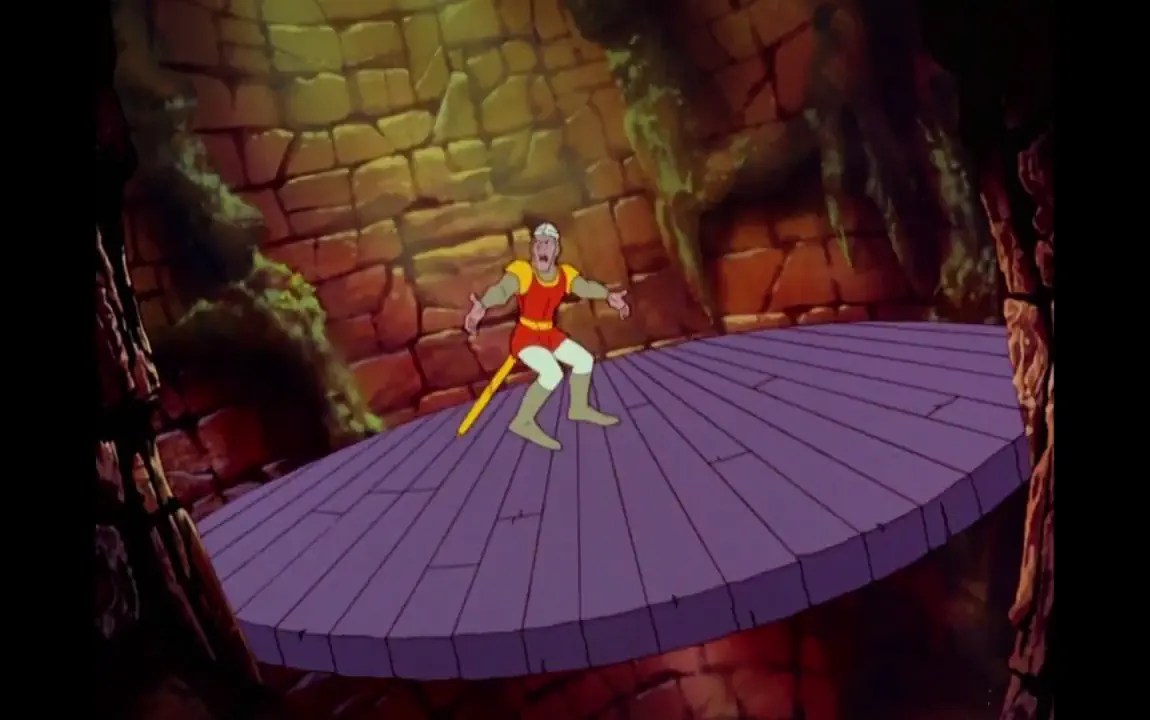
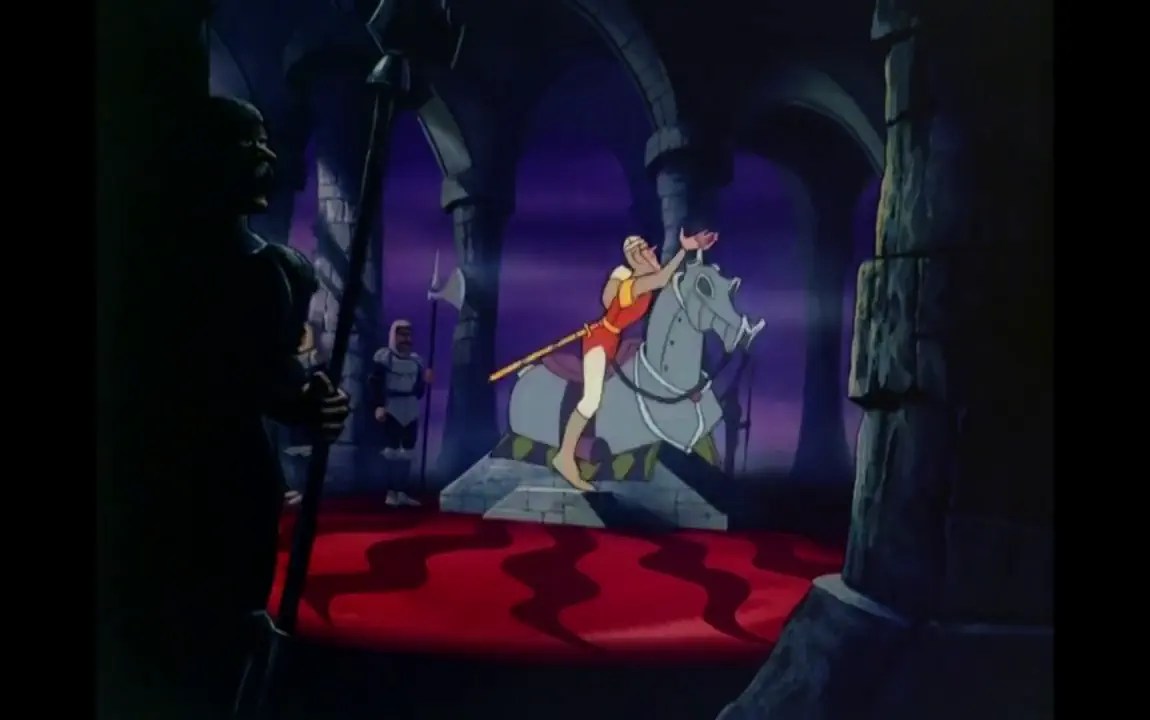
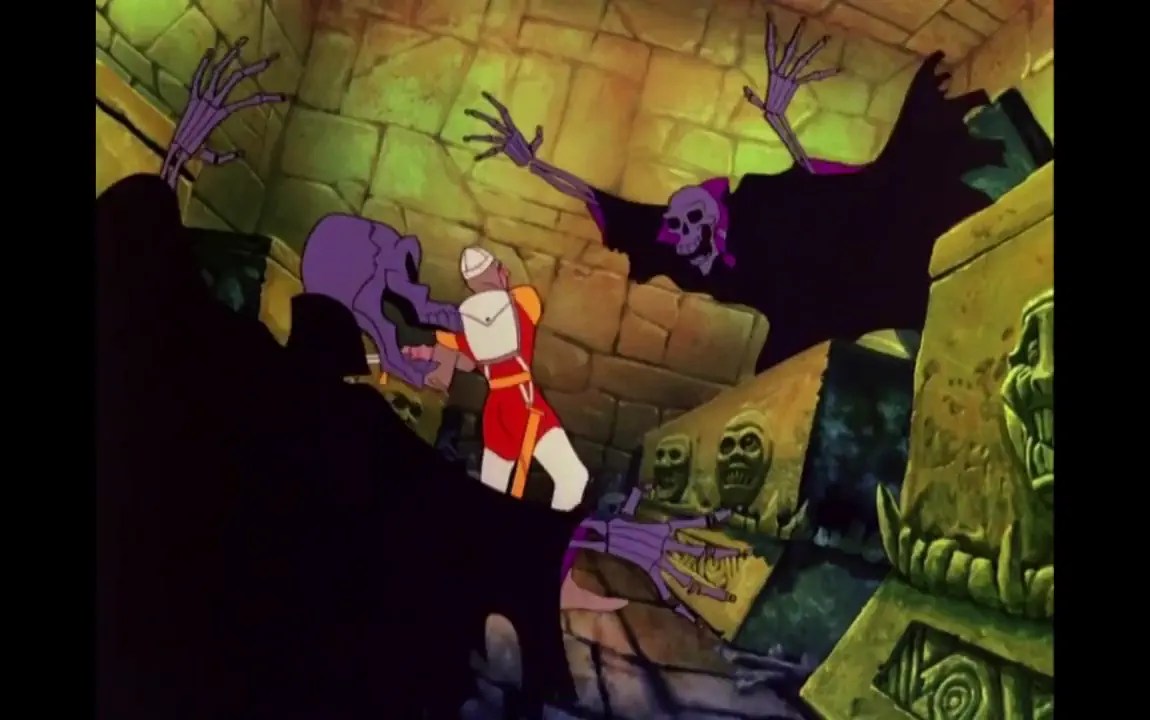
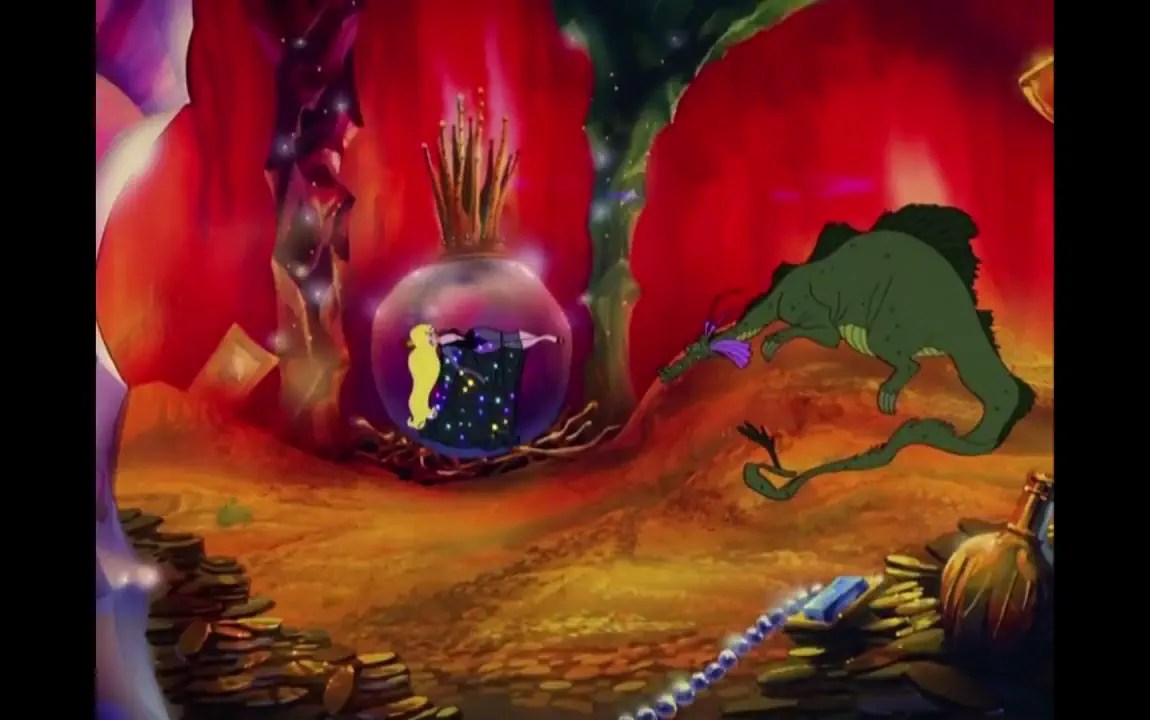
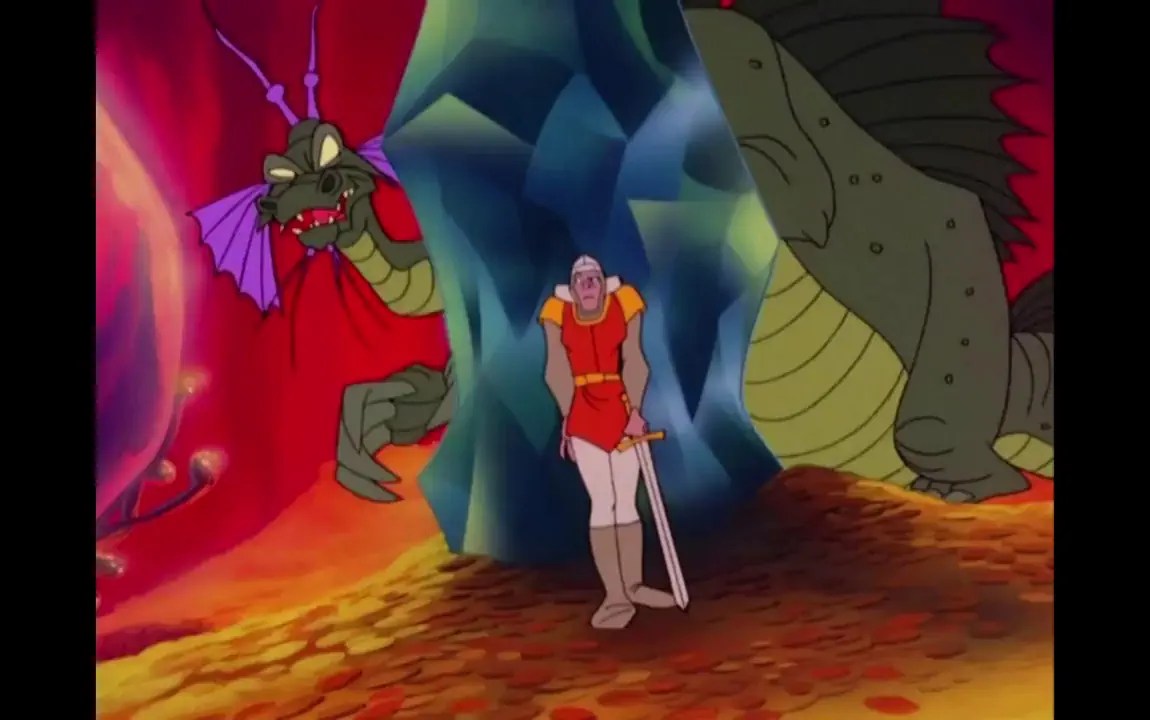
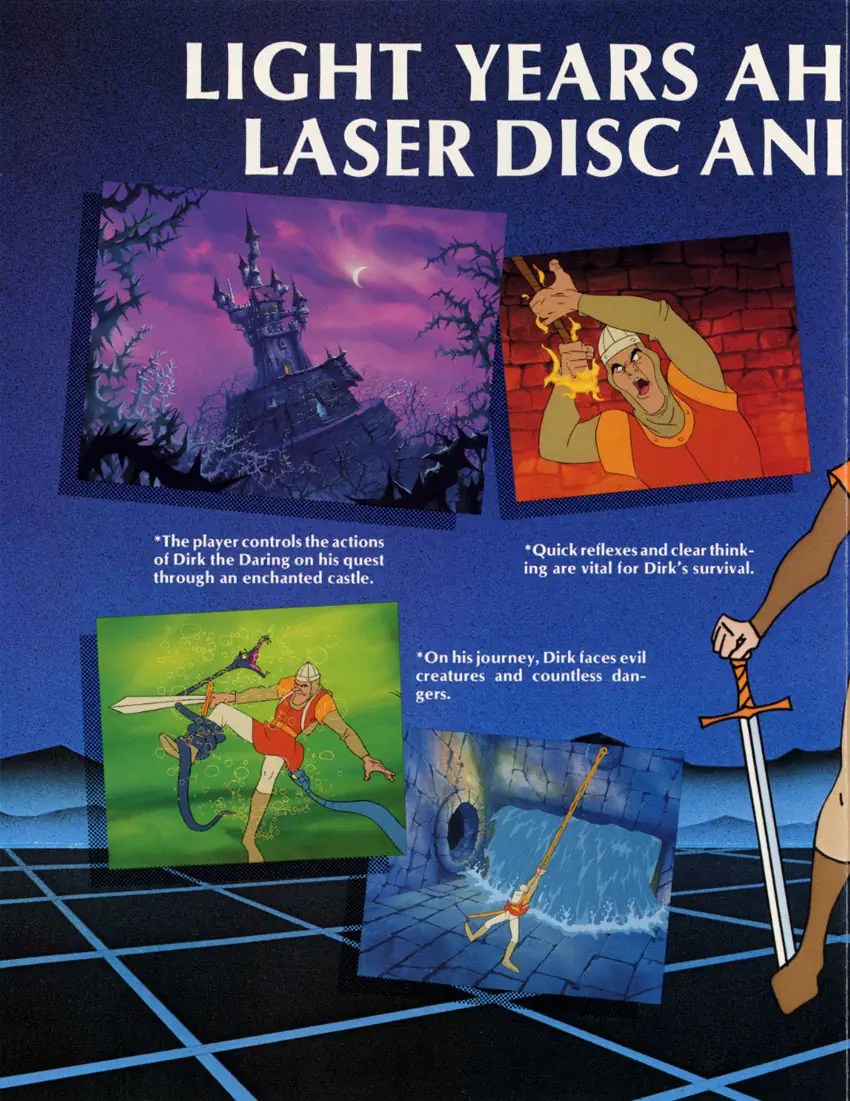
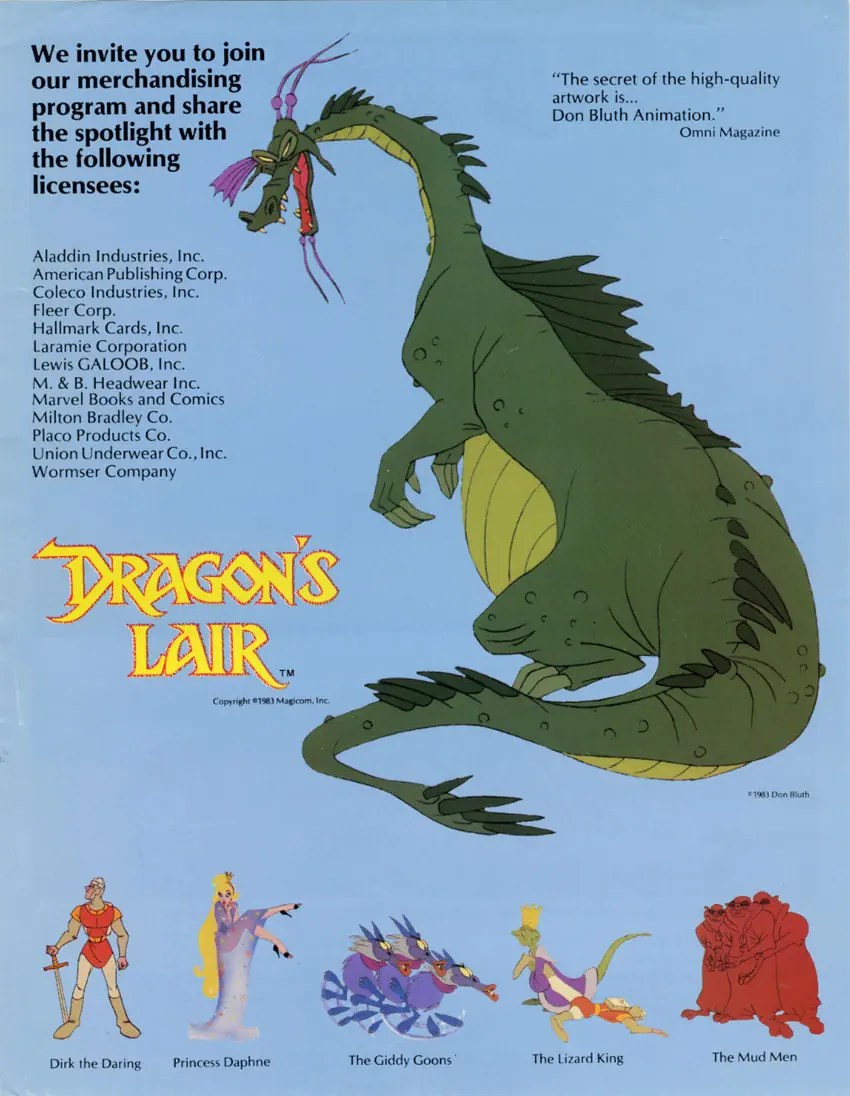
“Dragon’s Lair” tells the epic story of the knight Dirk, who tries to rescue the beautiful princess Daphne from the clutches of the dragon Singe, who is holding her captive in his dungeon. But Dirk is no superhuman hero: his clumsiness and occasional cockiness often lead him into precarious situations. The gameplay is based on a sequence of quick-time events in which the player has to make lightning-fast decisions to guide Dirk through various scenes. Each scene is a separate animated picture and presents the player with dangerous challenges, including deep chasms, burning platforms, fierce monsters and treacherous traps. The challenge is to choose the right direction or action in a split second; one wrong step inevitably ends in Dirk’s tragic death, which is usually illustrated with a humorous animation clip. This mechanic, which requires precise input, forces the player to memorize the sequence of scenes and master them in a kind of dance of reaction speed and memory. This structure created an almost hypnotic challenge, with players often trying to master the scenes down to the smallest detail in order to successfully complete the adventure.















Trivial
- At around 1.3 million US dollars, the production costs of “Dragon’s Lair” were extremely high for a game of the time. This sum reflected the high demands on the animation and the innovative technology that Don Bluth and his team put into the project.
- Due to the elaborate laserdisc technology, the game was twice as expensive as most other arcade games: One try cost 50 cents, which was a big investment for players at the time and made the game a “premium experience.”
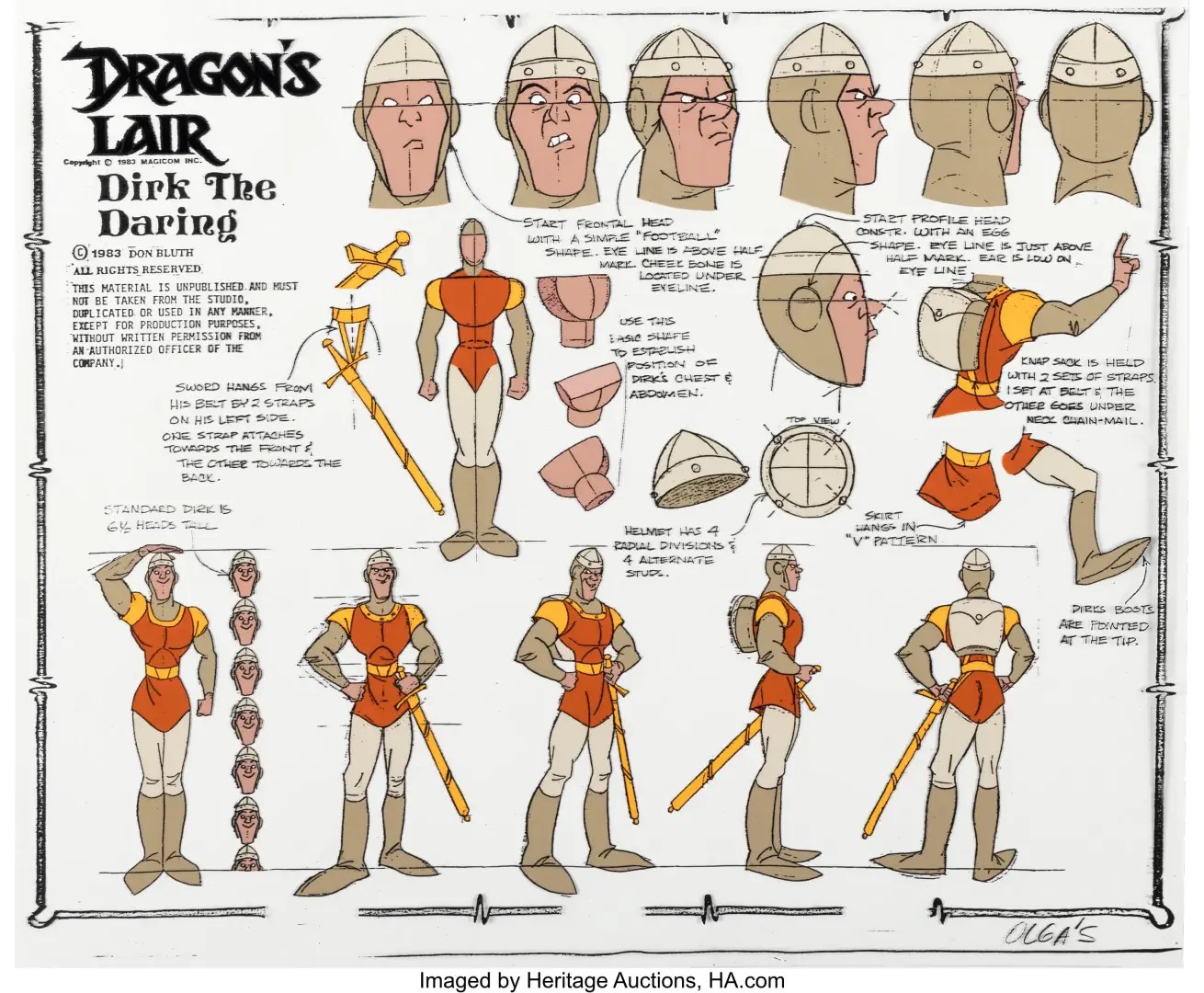
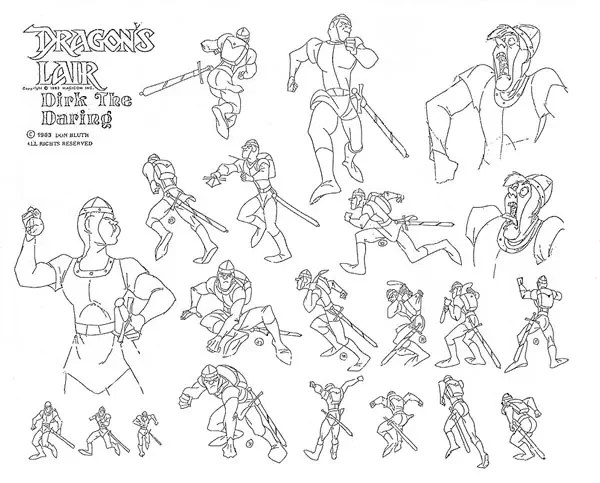
- Every image, background and animation was hand-drawn, giving the game a unique, almost cinematic quality and setting Dragon’s Lair apart from other pixel-based games of its time.
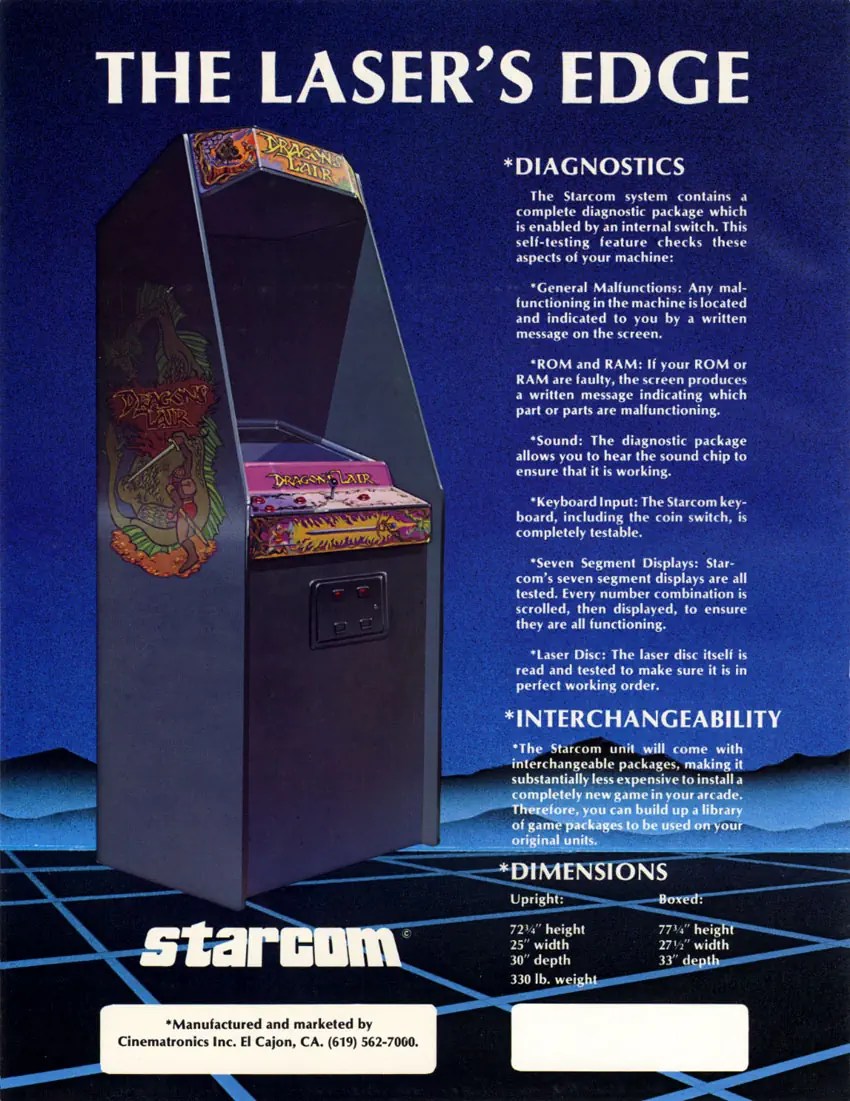
- However, due to the delicate technology and the laserdisc, the game was prone to hardware problems. Arcade operators often had to repair the consoles as the laserdisc players could overheat or wear out.
- The popularity of “Dragon’s Lair” not only brought it worldwide fame, but also numerous pop culture references. The game appeared in TV series such as “Stranger Things” and films as a symbol of 80s gaming culture and still epitomizes the golden age of arcade games.
Development
Rick Dyer, an up-and-coming developer and innovator, was behind the idea of “Dragon’s Lair”. Inspired by the text-based adventure games that were popular at the time, Dyer wanted to combine the immersive worlds of these games with vivid, visual storytelling. Working with animation artist Don Bluth and his experienced team, he brought this visionary project to life. Bluth’s team delivered a quality reminiscent of Disney films and was able to create a vibrant and colorful fantasy world that had never been seen before in the gaming world. The innovative laserdisc technology made it possible to store the animated sequences in high quality and play them back on demand, giving “Dragon’s Lair” a cinematic experience. But the project was risky: the laserdisc players were fragile and required frequent maintenance, and the game’s production costs were high. Despite these challenges, “Dragon’s Lair” was a resounding success upon its release, filling arcade halls and quickly establishing itself as a pioneering work. The breakthrough of “Dragon’s Lair” showed that video games could be visually and narratively sophisticated and opened the door for more complex narrative forms in the gaming industry.
Artwork



Impact on the gaming industry
“Dragon’s Lair” had a profound impact on the gaming industry, shaping both the visual and narrative direction of future games. It showed developers and gamers alike that video games could be more than simple exercises in skill; they could tell stories and evoke real emotion through cinematic means. The introduction of quick-time events, which rely on precise timing and fast reactions, was later adopted in many modern games and is now one of the most important mechanics in the action-adventure genre. “Dragon’s Lair” also created the concept of the ‘interactive movie’, which spawned a new wave of narrative gameplay and paved the way for genre classics such as ‘Heavy Rain’, ‘Until Dawn’ and ‘The Walking Dead’, which also rely on story and decision-making. It also inspired developers to raise the artistic standards of games and make the visual experience even more intense for players. Through its experimental approach, “Dragon’s Lair” laid the foundation for today’s acceptance of video games as an art form and showed that games can offer a wide emotional and aesthetic range.
Reviews at the time
At the time of its release, “Dragon’s Lair” was a polarizing experience. The arcades were packed with people marveling at the game’s graphics and animations – for many, it was the first time a game had almost looked like an interactive movie. Most reviews praised the stunning graphical quality, precise animation and unique visual presentation. But the gameplay itself drew mixed opinions. The quick-time event mechanics, which required quick and precise inputs, were considered frustrating by many, as the game left little room for error. A wrong keystroke often meant instant failure and the loss of a precious attempt. For some players, the high level of difficulty and repetitive scenes were a hindrance; others, however, appreciated the challenge and the opportunity to prove themselves in the complex scenes. The high price and the technical fragility of the game also led to criticism, but despite these points, the positive feedback outweighed the negative. “Dragon’s Lair” was quickly regarded as groundbreaking and quickly gained a large fan base with its uniqueness.
Reputation today
Today, “Dragon’s Lair” is considered a timeless classic and is celebrated as a milestone in video game development. The game has seen numerous re-releases on modern consoles and has gained an enduring fanbase that appreciates its innovations and recognizes its influences on today’s gaming world. Dragon’s Lair has taken center stage in the retro gaming community, inspiring developers and gamers alike. It is often cited as the first example of a successful attempt to combine a cinematic aesthetic with interactive gameplay. The hand-drawn animation and cinematic atmosphere remain impressive and evoke nostalgia while being considered a work of art. Pop culture references and numerous allusions in TV series and films underline how deeply “Dragon’s Lair” is anchored in the collective memory and how important its contribution to the history of video games is. Even decades later, it is recognized as a pioneering work that redefined the potential and versatility of video games.
Summary
“Dragon’s Lair” is more than just a game; it is a groundbreaking creation that redefined video games as an interactive medium and form of artistic expression. Through its hand-drawn animation, innovative technology and unusual gameplay, it offered an experience that transported players into a fantasy filled and dangerous world. The difficulty and intense quick-time events tested players‘ patience, but the challenge helped etch the game into arcade history. “Dragon’s Lair” not only shaped the arcade era, but also showed that video games could tell stories in a visual and emotional way on par with cinematic art. Today, “Dragon’s Lair” is considered a cult classic and a pioneer for many narrative and cinematic elements that characterize modern games. It is considered a timeless masterpiece and remains a monument to the innovation that has driven the gaming industry since its early days. In an ever-evolving gaming landscape, “Dragon’s Lair” remains a shining example of the courage to break new ground and the infinite possibilities that lie within the medium of video games.
More
Magazine Scans
Electronic Games 08 1983 / Electronic Games 09 1983


Arcade Flyer Archive












Kommentar verfassen