

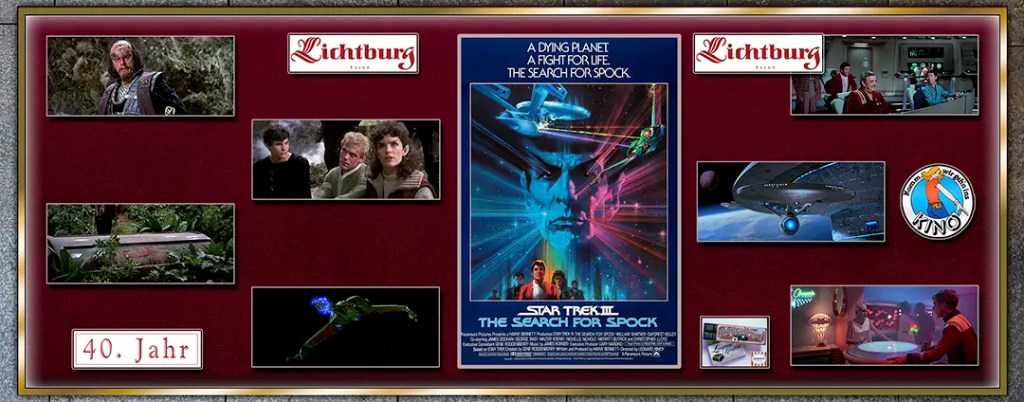
My God, Bones… what have I done?
What you had to do, what you always do. Turn death into a fighting chance to live.
The Search for Spock
“Star Trek III: The Search for Spock” is the third film in the iconic Star Trek film series and was released in 1984 under the direction of Leonard Nimoy. This movie marked a crucial turning point in the series as Nimoy, the actor behind the popular character Spock, took over as director for the first time. As the direct sequel to “Star Trek II: The Wrath of Khan” and predecessor to “Star Trek IV: The Voyage Home”, this film forms a narrative bridge and plays a crucial role in the development of the Star Trek saga. The film explores deep themes of friendship, sacrifice and rebirth that are central to the Star Trek universe.
Plot
The movie picks up immediately after the events of “Star Trek II: The Wrath of Khan”. After Spock (Leonard Nimoy) has sacrificed his life to save the crew of the USS Enterprise, his body is interred on the newly created planet Genesis. Genesis is a Federation experiment designed to transform a lifeless planet into a living world, but the project is fraught with unforeseen dangers and complications. Admiral James T. Kirk (William Shatner) and his crew mourn the loss of their friend when they learn that Spock’s katra (his soul) has passed into Dr. Leonard McCoy (DeForest Kelley). Driven by this realization, Kirk decides to find Spock’s body and take it to Vulcan to perform the ritual to reunite body and soul.
The mission proves to be extremely dangerous, as they have to act against Starfleet orders. Kirk and his crew steal the decommissioned Enterprise to get to Genesis. There they encounter Klingon enemies, led by Kruge (Christopher Lloyd), who want to use the secrets of the Genesis project for their own purposes. The movie culminates in a dramatic showdown in which the Enterprise is destroyed, but Kirk and his crew manage to rescue Spock and take him to Vulcan, where the ritual is successfully performed.
Comparison with Star Trek II and IV
Compared to “Star Trek II: The Wrath of Khan”, “The Search for Spock” is more introspective and focuses more on the emotional relationships within the crew, especially the deep friendship between Kirk and Spock. While the second film is characterized by action-packed scenes and the iconic conflict with Khan, the third film is more about loss, rebirth and loyalty. “Star Trek II” is known for its intense and dramatic storytelling style, as well as the death of Spock, which places an enormous emotional burden on viewers and characters alike.
“Star Trek IV: The Voyage Home,” on the other hand, offers a drastic change in tone by focusing on humorous elements and a contemporary environmental theme. The fourth film, set in San Francisco in the 1980s, uses time travel as a central element and deals with saving the whales in order to secure the future of Earth. This film is much lighter and more optimistic in tone, which is a deliberate contrast to the more somber and serious themes of the third film. Together, the three films form a cohesive trilogy that explores different facets of the characters and the Star Trek universe, with deep emotional and narrative continuity.
Reactions at the time
Upon its release, “Star Trek III: The Search for Spock” received mixed reviews. Many fans and critics appreciated the emotional depth and development of the characters, particularly the depiction of Kirk’s personal journey and the special role of Spock’s rebirth. The decision to hire Leonard Nimoy as director was generally well received, as he was seen as someone who understood the subject matter and the characters very well. However, some critics complained that the film was less exciting and innovative than its predecessor. The plot was perceived as less taut and the conflicts as less intense, which some saw as a weakness. Nevertheless, the performance of the actors, especially William Shatner and DeForest Kelley, was praised, and the special effects and music by James Horner added to the atmosphere of the film.
Reactions today
Nowadays, “Star Trek III: The Search for Spock” is often viewed more favorably. Many fans see it as an essential part of the Star Trek saga and appreciate the deep emotional resonance and character development that the film offers. The film’s historical significance and creation of a coherent narrative arc between films II, III and IV is increasingly recognized. Christopher Lloyd’s performance as Klingon Kruge is often highlighted, as are the technical effects and score by James Horner. Contemporary perceptions of the film recognize the bold choices and complexity of the story, which deepens the relationship between the characters and raises important questions about identity and sacrifice.
Conclusion
“Star Trek III: The Search for Spock” may not have received the same acclaim as some of its predecessors or sequels, but it remains an essential film within the Star Trek canon. It combines emotional depth with an exciting narrative and shows the unwavering loyalty and friendship of the Enterprise crew. Despite initial mixed reactions, the film has grown in stature over the years and is now considered an important and cherished part of Star Trek history. The film is a significant milestone that captures the essence of the Star Trek philosophy: the importance of friendship, the power of sacrifice and the hope of rebirth.
More
Magazine Scans
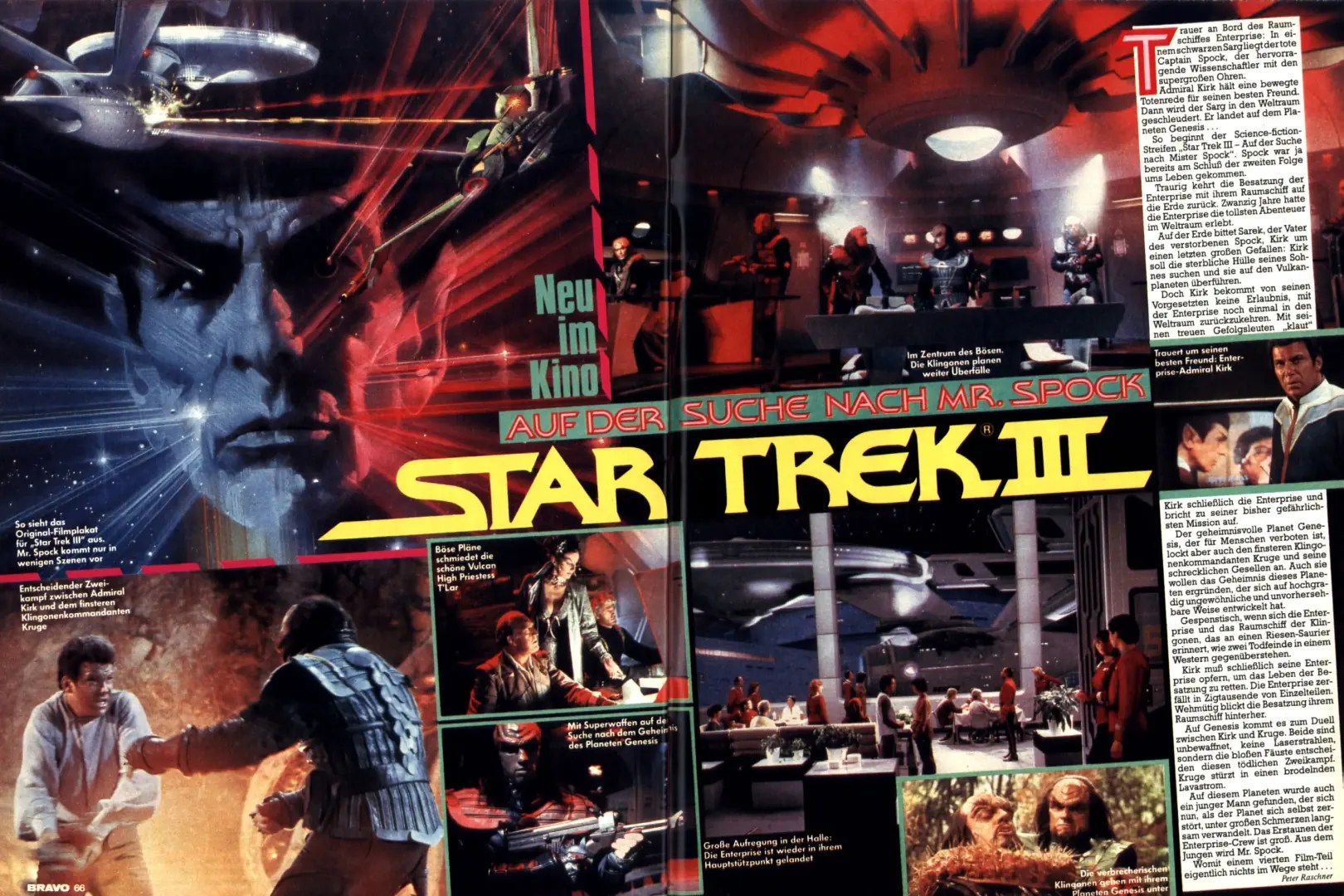
Bravo 1984/47
Trailer
External links
- Official website
- Star Trek III: The Search for Spock at Memory Alpha
- Star Trek III: The Search for Spock at IMDb
- Star Trek III: The Search for Spock at AllMovie
- Star Trek III at Rotten Tomatoes
- Star Trek III: The Search for Spock at Wikipedia (en)
- Star Trek III: The Search for Spock at Wikipedia (de)








 McHenry's Lair
Kommentar verfassen :