

NEW : Prefer to listen? Explore this article as a slideshow video.
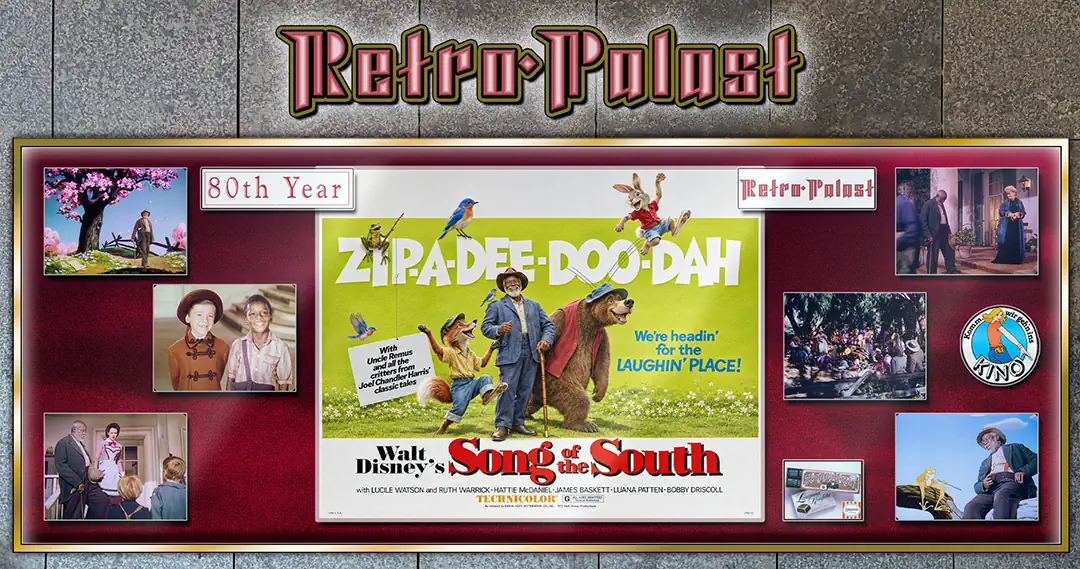
80 Years of Song of the South
Who Owns the Story of the Rabbit?
A Blue Bird
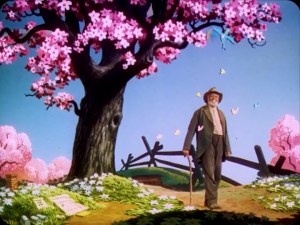
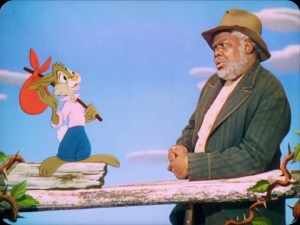
A little blue bird perches on James Baskett’s shoulder. The man sings “Zip-A-Dee-Doo-Dah,” the bird seems to have all the time in the world, and for a moment, it’s easy to believe that a cartoon bird and a real-life actor are experiencing the same beautiful morning. November 12, 2026, marks the eightieth anniversary of the premiere of Song of the South, known in Germany as Onkel Remus’ Wunderland. Anyone who has the song stuck in their head might even remember the bird. Fewer people probably remember the boy for whom Baskett sings and tells stories. Yet it is only through him that one understands why this film can be so moving and why it provoked controversy so early on.
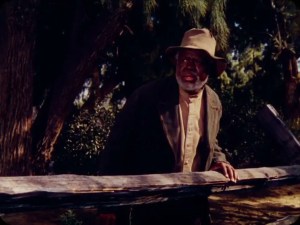
The boy’s name is Johnny. He has just learned that his father is leaving, and the adults in his family can’t quite find the right words for it. He gets them from Uncle Remus, a Black storyteller on his grandmother’s plantation. What might this man himself have lost, what frightens him, who listens to him when he needs comfort? As long as Baskett is on screen, you want to learn all of that from him. Disney found a storyteller you could listen to for an entire evening—and yet, of all people, they withheld the story of his own life from him.
Johnny’s Secret Escape
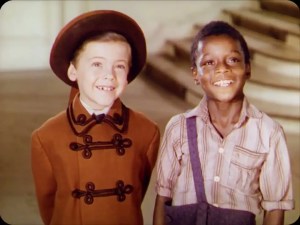
At first, Johnny is looking forward to visiting his grandmother in Georgia. Then his father returns to Atlanta alone, and the trip takes on a different meaning for the child. Johnny packs his things. When Remus tells him about little Brer Rabbit, who also wanted to leave home, the boy is able to think about his plan for the first time without having to defend it to an adult. The rabbit is allowed to get himself into trouble, be vain, and bite off more than he can chew. For Johnny, it’s a relief that this very unreasonable animal still manages to come up with something.
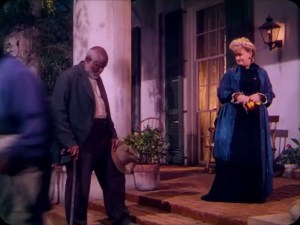
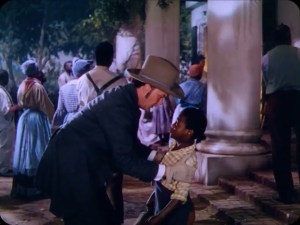
His friendship with the girl Ginny and the Black boy Toby soon leads Johnny down his own path on the plantation. His worries now include Ginny’s rough brothers and the fate of a little dog. His mother, Sally, watches with growing unease as she sees how much influence Remus has on her son, and eventually forbids him from associating with Johnny. When Remus then tries to leave, Johnny runs after him across a pasture and is seriously injured by a bull. At his sickbed, the child calls out for the narrator. The fact that Remus’s family ultimately calls him to Johnny’s bedside is the true moment of truth in this family fairy tale. Johnny had long known whom he could trust.
A Rabbit Travels
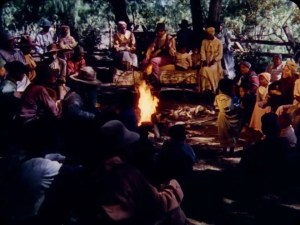
Brer Rabbit had already lived a long life before Walt Disney acquired the film rights. Black storytellers in the American South passed down tales of a rabbit who outwits stronger opponents with wit. One of his most delightful tricks is to implore the fox not to throw him into the thorns under any circumstances. Of course, the fox does exactly that. Those who are at home in the thornbushes know a way out. As a child, you understand the punchline immediately. Those who have frequently depended on the goodwill of those stronger than themselves may have heard something else in it as well.
The white journalist Joel Chandler Harris had heard such tales and published his first Uncle Remus volume in 1880. For the various voices in his memory, he invented a single narrative figure. So when Disney purchased the rights from the Harris family in 1939, it was already acquiring a literary adaptation of this oral tradition. Between the people who kept the rabbit alive across generations and the movie audience now stood two highly successful intermediaries. Their names could easily be featured on book covers and movie posters. The names of the people Harris had listened to are nowhere to be found there.
Animated Encounters
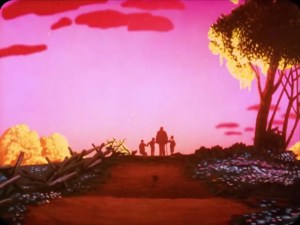
Harve Foster directed the live-action scenes, while Wilfred Jackson directed the animated sequences. Gregg Toland was behind the camera. About two-thirds of the film consists of live-action footage, but it is the transitions that are particularly memorable. When Remus enters the animated landscape while singing, the possibilities of his body suddenly change. A bird can alight exactly where the actor is looking at just the right moment. A tiny deviation in the direction of his gaze would suffice, and one would see a man looking past a bird. Baskett captures the gaze so casually that you hardly notice the precision required to achieve it.

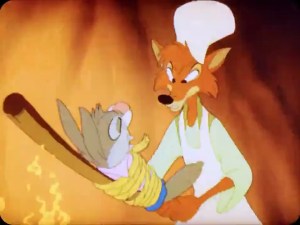
Even within the purely animated scenes, it’s worth paying attention to the pauses. Brer Rabbit greets a motionless figure made of tar and waits for a response. The figure does exactly what the fox built it to do: absolutely nothing. With every second the rabbit waits, his indignation at the supposed rudeness grows. By the time he finally strikes and gets stuck, the audience has long since figured out the trap—yet remains eager to see if he’ll use his other paw as well. Moments like these reveal just how well these animators understood comedy. Their best punchline begins with a character they don’t have to move a single millimeter.
Baskett’s Two Voices
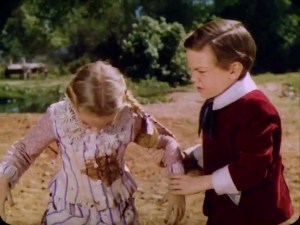
James Baskett was an experienced stage and radio actor. Anyone who wants to hear just how much skill lies behind his seemingly effortless friendliness should pay close attention to Brer Fox right afterward. Baskett also voices the fox. As Remus, he gives his counterpart space; with the fox, you can literally hear one thought cutting off another. In the conversations between Remus and Johnny, this mastery of pacing particularly benefits the young Bobby Driscoll. He’s allowed to listen and hesitate. Baskett gives him the time a child needs to take something away from a story for himself.
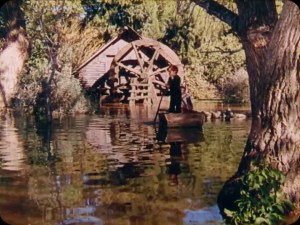
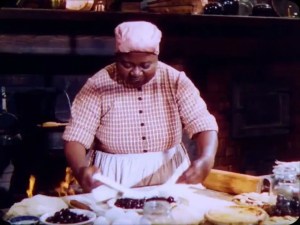
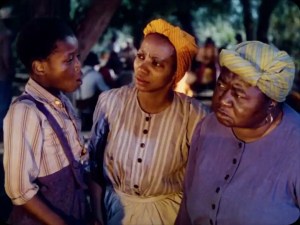
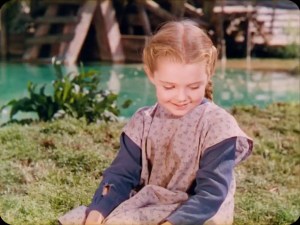
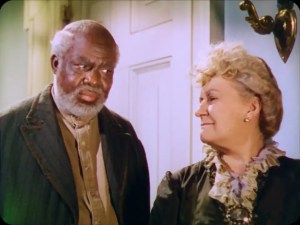
Luana Patten plays Ginny, and Glenn Leedy plays the bright Toby. Just how differently the screenplay treats its child characters is particularly noticeable in Leedy’s case. Toby knows his way around the plantation and could tell us a lot about this place. As soon as Johnny needs help, his troubles take center stage again. Hattie McDaniel, as Aunt Tempy, faces a similar fate. The actress, who had already won an Oscar for Gone with the Wind, possesses a presence that makes one curious about any interaction with her. For such an encounter, someone would have to ask Tempy what she thinks of this family’s decisions.
Small Surprises
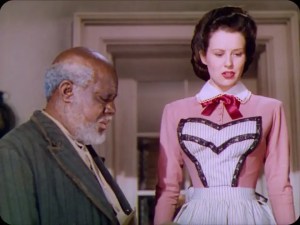
During filming, the estranged on-screen couple had a surprising real-life counterpart. Ruth Warrick and Erik Rolf, who play Johnny’s parents, were actually married at the time. By the time the film premiered, they were divorced. The two never appeared together on camera in another movie. Georgia also played a role, so to speak, because part of the American South that audiences saw on the big screen was filmed in Phoenix, Arizona. So you have to imagine this landscape as a composite of several elements, even before the first animated bird appears.
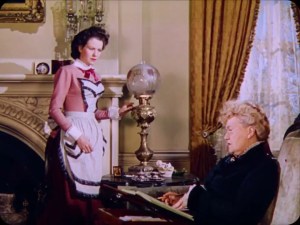
The Oscar chronicle also holds a little surprise. In 1948, the award for “Zip-A-Dee-Doo-Dah” went to composer Allie Wrubel and lyricist Ray Gilbert. Baskett himself received an Honorary Oscar at the same ceremony for his portrayal of the narrator. He was absent from the premiere in Atlanta, as were the other Black members of the cast. A local columnist cited racial segregation as the reason at the time. The mayor asked Walt Disney to send a telegram to Baskett expressing how much the city appreciated his performance. One might have wished that telegram had included a simple counter-question: Where in the auditorium would the man to whom the applause was directed have been allowed to sit?
Controversy Over Timeline
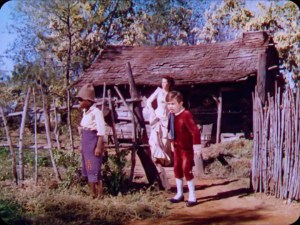
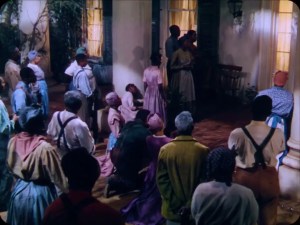
Even before the film’s theatrical release, those involved were arguing over a question that could have been resolved with a single year. Does the story take place before or after the abolition of slavery? Disney believed it was set in the years following the Civil War. The body responsible for Hollywood’s Production Code therefore advised the studio to explicitly mention the 1870s in the open book shown at the beginning of the film. That reference is missing. What the audience sees instead are Black workers singing as they return home from the fields and a white child spending his vacation at the plantation house. For Johnny, the plantation may be the place where he feels understood for the first time. We learn almost nothing about what it means to the people who work there. catalog.afi.com
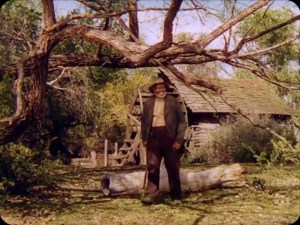
Just how significant this omission is becomes clear through Sally’s ban. She can forbid Remus from spending time with her son. He can pack his things and leave. This decision holds a whole second story within it. Where does he intend to go? What is he giving up by leaving his home? As soon as Johnny runs out into the pasture, these questions disappear from the film. Now we worry about the injured child, and when Remus returns to his bedside, we feel relief. The fact that his return might come at a price for him personally is barely mentioned in the family’s happy ending. Precisely because Baskett takes the boy’s pain so credibly seriously, it’s easy to overlook how little room the screenplay leaves for his own. catalog.afi.com
On November 27, 1946, Walter White, executive director of the civil rights organization NAACP, sent a telegram to the press. He praised the film’s technical achievement but accused it of spreading a dangerously romanticized image of slavery. A Disney spokesperson pointed out that the story was set after the Civil War and that its most endearing character was a Black man. Both points missed the core of the objection. White had described the impression the images left. Anyone who only learned the time period of the plot from a statement by the studio had long since seen the film. catalog.afi.com
Black and white citizens demonstrated together outside movie theaters in New York, Los Angeles, Boston, and other cities. On a flyer in Los Angeles, the National Negro Congress warned that such roles reinforced the public’s perception of Black Americans as second-class citizens. The protest itself was also a subject of controversy. In New York, the NAACP refused to participate in a protest outside a movie theater. Its local chapter in Boston, however, did join the demonstration. Hattie McDaniel, for her part, stated in a 1947 interview that she would have turned down any role she considered degrading or harmful. Anyone who takes McDaniel seriously must acknowledge her judgment regarding her own work. Anyone who listens to the protesters will also understand why an actress’s approval could not settle the debate over a film’s impact. catalog.afi.com
Decades later, the issue revolved around a different form of influence. Disney repeatedly re-released the film in American theaters until 1986. Atlanta even celebrated a re-release on its fortieth anniversary. In 2020, however, Bob Iger stated that he considered a release on Disney+—even with an explanatory note—inappropriate. That was a rights holder’s decision regarding its programming. Government censorship would be a different matter, and the people who demonstrated outside movie theaters in 1946 were also exercising their right to public criticism. Nevertheless, one might ask Disney whom today’s decision not to release the film actually helps. Anyone who wants to examine White’s accusation or understand McDaniel’s defense needs access to the work over which the two were arguing.
Voices from Back Then
The reviews from 1946 read as more lively than the phrase “controversial classic” might suggest. Time magazine admired the technical achievement and the animation, but found the live-action scenes mediocre. Bosley Crowther of the New York Times took issue with the distorted portrayal of the Old South. In Atlanta, on the other hand, reviews—even in the Black newspaper Atlanta Daily World—were favorable. James Baskett’s performance garnered praise across the spectrum of differing opinions. One could be delighted by this actor and still wonder why the adults around him were given so little of interest to do.
The verdict from the Black magazine Ebony was even harsher; it recognized familiar racist caricatures in the characters. Particularly revealing is the open letter from a moviegoer that the Atlanta Constitution printed. The author addressed Walt Disney directly and described how embarrassed he had been to read about Baskett’s exclusion from the premiere. Anyone today who insists that the film should be viewed through the lens of 1946 should make room in the theater for this viewer. He was alive back then. His sense of alienation is just as much a part of history as the applause on opening night.
A Second Life at the Theme Park
A peculiar second career began for the rabbit at the Disney Parks. The Splash Mountain whitewater ride incorporated characters and music from the film. Anyone riding it could encounter Brer Rabbit and go home with “Zip-A-Dee-Doo-Dah” ringing in their ears, without ever having heard of Johnny’s parents or Uncle Remus. Ironically, the narrator himself became dispensable for the continued life of his own story. For some families, therefore, the memory of a boat ride together is likely to be much more concrete than any image of the plantation where Disney originally had the song sung.

In Florida and California, the rides were given a new story in 2024 with Tiana’s Bayou Adventure, centered on the Black heroine from The Princess and the Frog. A theme park is, of course, free to decide who its next adventure belongs to. For film history, however, it would still be a loss if Disney, of all entities, were to determine the final impression of what remains of this old hand. Those who wish to follow him further can turn to the oral storytelling traditions from which Harris drew inspiration. There, they’ll find variations, different voices, and the gratifying realization that Brer Rabbit was doing just fine on his own long before his first Disney contract.
The Full Picture
Disney should make *Song of the South* available in its uncut version. Art must face criticism, and an honest judgment always takes into account the era in which it was created. In the case of this film, that means watching James Baskett and taking Walter White at his word. I want to be able to see the moment when Remus persuades a desperate boy to stay. I also want to be able to see which scenes prompted White to reach out to the newspapers just a few days after the premiere. A studio that omits both of these from its publicly accessible body of work leaves us with, of all things, the most convenient part of its history—the tune that everyone can hum along to.
I reject the censorship of art. An unabridged edition featuring the protest letters from that time and the voices of those involved would demand more from Disney than a warning label. The studio would have to reveal what objections it was already aware of in 1946 and what decisions it made despite them. That is precisely where the value of such a publication would lie. In 1905, the philosopher George Santayana wrote in *The Life of Reason* that those who cannot remember the past are condemned to repeat it. gutenberg.org When it comes to Disney’s handling of its own history, I would phrase this idea even more sharply: Those who repress the past repeat it.
More
Trailer
External links
Notice Regarding Image Rights and Copyrighted Material
All images, film stills, posters, logos, trailer excerpts and other copyrighted materials used in this article are used solely for editorial reporting, film criticism, review and illustrative purposes related to the respective content.
Unless otherwise stated, all copyrights, trademark rights and other intellectual property rights in the materials used remain with their respective rights holders, including film studios, distributors, production companies, photographers, artists or other licensors.
The materials are used in good faith and with regard to applicable legal limitations, licence terms and source attributions. If, despite careful review, any rights have been infringed or any attribution is incomplete, please contact me. Upon review, the relevant content will be removed or corrected promptly.






Schreibe einen Kommentar