


Martin Scorsese’s stylish journey through ambition, pride and second chances.
Green Felt Dreams

There is something strangely cinematic about the game of pool. The sharp crack of a breaking shot, the quiet concentration before a difficult combination, the movement of polished balls across green felt and the psychological tension between two opponents can transform an ordinary bar into a battlefield. Martin Scorsese is one of the few directors to have understood this potential, as demonstrated by his 1986 film The Color of Money, which transforms the world of professional pool hustling into an energetic drama about ambition, manipulation, ageing, and the possibility of rediscovering a lost passion.

Starring Paul Newman, Tom Cruise, and Mary Elizabeth Mastrantonio, the film was released at an interesting time in American cinema. Newman was already one of Hollywood’s most respected actors, while Cruise was rapidly becoming one of its biggest young stars. Bringing them together under Scorsese’s direction created a fascinating clash of generations, both within the story and onscreen.
Although The Color of Money is technically a sequel to Robert Rossen’s 1961 classic The Hustler, it has a distinct personality. While the earlier film was a bleak, black-and-white examination of self-destruction, Scorsese’s sequel is colourful, restless and unmistakably rooted in the 1980s. Beneath its glossy surfaces, however, lies a surprisingly thoughtful story about the difference between being good at something and understanding why it matters.
A Dangerous Partnership

Twenty-five years after the events of The Hustler, former pool champion Eddie ‚Fast Eddie‘ Felson (Paul Newman) has largely abandoned competitive play. He now sells liquor and occasionally finances younger pool players, taking a percentage of their winnings without exposing himself to the risks of the game. Eddie remains confident, observant and skilled at reading people, but the fire that once drove him appears to have faded.

Everything changes when he meets Vincent Lauria (Tom Cruise), a highly talented young player whose natural ability is matched only by his enormous ego. Vincent has extraordinary instincts at the table, but lacks discipline and understands little of the psychological manipulation that makes a successful hustler. To Eddie, the young man’s combination of talent and innocence is an opportunity that he cannot ignore.

Together with Vincent’s street-smart girlfriend, Carmen (played by Mary Elizabeth Mastrantonio), Eddie sets out on a journey through American pool halls with Vincent, gradually preparing him for a major nine-ball tournament in Atlantic City. His plan is not simply to teach the young player how to win. Rather, he wants Vincent to grasp the importance of losing occasionally, concealing his abilities and encouraging opponents to underestimate him before taking their money.
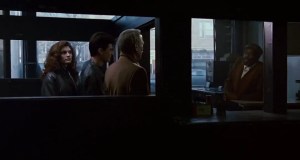
Naturally, this approach clashes with Vincent’s personality. The young man enjoys performing, attracting attention and demonstrating his superiority. One of the film’s most memorable scenes shows him dancing around a pool table to Warren Zevon’s ‚Werewolves of London‘, turning a potentially profitable hustle into an extravagant exhibition of showmanship.

As their journey continues, the relationship between mentor and student becomes increasingly complicated. Eddie realises that controlling Vincent is much harder than he anticipated, while Carmen develops her own understanding of how to exploit the tensions between them. Meanwhile, Eddie’s renewed proximity to the game awakens something he believed he had left behind.
His eventual humiliation at the hands of another hustler forces him to confront an uncomfortable truth: he has become so accustomed to manipulating others that he has forgotten how to trust his own abilities. The story gradually shifts from Vincent’s education towards Eddie’s personal redemption, culminating in a confrontation where professional pride becomes more important than money.
An Unlikely Sequel
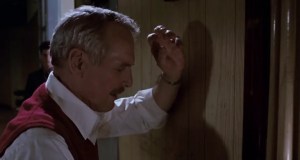
The origins of The Color of Money stretch back to Walter Tevis, whose 1959 novel The Hustler introduced readers to Eddie Felson. The subsequent 1961 film adaptation established Paul Newman as one of American cinema’s most compelling antiheroes, although the actor did not receive the Academy Award that many believed he deserved.
In 1984, Tevis published a sequel entitled The Color of Money, returning to Eddie’s life decades after his earlier adventures. Newman became interested in revisiting the character and approached Scorsese about directing a new film. Scorsese initially had reservations, particularly about making a conventional sequel that relied too heavily on viewers‘ memory of the original film.

The project changed significantly when novelist and screenwriter Richard Price became involved. Instead of faithfully adapting Tevis’s book, Price, Scorsese and Newman developed a new storyline centred on an older Eddie mentoring a younger player. The important character of Minnesota Fats, who was memorably portrayed by Jackie Gleason in The Hustler, was ultimately left out of the film.
Scorsese’s involvement was also influenced by his professional circumstances. During the mid-1980s, he struggled to finance personal projects, particularly The Last Temptation of Christ, whose production had previously collapsed. The Color of Money offered him the chance to work with major stars on a comparatively commercial production while retaining a considerable degree of creative freedom.
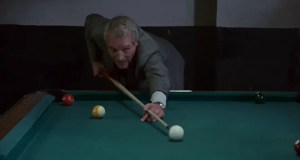
However, even with Newman and Cruise on board, securing studio backing proved to be a significant challenge. After earlier studio arrangements failed, the project eventually found a home at Disney’s Touchstone Pictures label. Filming took place primarily around Chicago in early 1986, with many scenes shot in real pool halls and bars rather than elaborate studio sets.
The production was completed efficiently and below budget. Released in October 1986, the film earned approximately $52 million at the North American box office, becoming Scorsese’s most commercially successful feature film to date. Its success also helped to strengthen his position within the Hollywood studio system.
Two Screen Generations
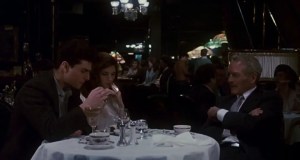
At the heart of the film is Paul Newman’s remarkable return to the role of Fast Eddie Felson. Rather than simply recreating his earlier performance, Newman portrays a man who has learned to hide disappointment behind expensive clothes, polished manners and professional confidence. His portrayal of Eddie is both charming and occasionally ruthless, but an unmistakable sadness lurks behind his carefully maintained composure.

Newman’s greatest achievement lies in the small moments. A hesitant glance, a sudden change of expression or an awkward pause can reveal more about Eddie than an entire conversation. Impressively, he portrays a proud man realising that age and experience do not necessarily protect him from humiliation. This performance earned him the Academy Award for Best Actor — his first competitive Oscar after decades of distinguished work.

Tom Cruise provides an almost perfect contrast. Regardless of one’s opinion of Cruise’s later public image, private life, or controversial personal associations, his early career demonstrated genuine acting ability, and The Color of Money remains a convincing example of this. Long before he became primarily associated with spectacular action sequences and blockbuster franchises, he was capable of delivering energetic and surprisingly vulnerable performances as a character actor.
His Vincent is arrogant, impulsive, occasionally ridiculous and deeply insecure. Cruise does not merely play a confident young star; he portrays someone who desperately wants the world to recognise his talent, yet has no idea how to handle the responsibilities that come with it. From the way he circles the table to his exaggerated celebrations, his physical performance becomes an essential part of the characterisation.

Mary Elizabeth Mastrantonio is equally important as Carmen. Far from being a mere ornamental love interest, she is intelligent, calculating and often more perceptive than either of the men realise. Her presence stops the central relationship from becoming a simplistic tale of an older mentor teaching a younger apprentice, and her performance earned her a well-deserved Academy Award nomination.
The supporting cast adds considerable texture. John Turturro appears as the pool player Julian; Helen Shaver brings understated warmth to Eddie’s relationship with Janelle; and a young Forest Whitaker delivers a particularly memorable performance as Amos, whose seemingly harmless behaviour conceals a formidable talent for deception. These characters help to create a convincing world in which almost everyone is playing some kind of game.
The Moving Camera

One of the film’s greatest achievements is the cinematography of Michael Ballhaus. The German-born cameraman had already established a reputation for expressive camera movement through his earlier collaborations with Rainer Werner Fassbinder. Having already worked with Scorsese on After Hours (1985), Ballhaus found in The Color of Money an ideal opportunity to experiment with movement, perspective, rhythm and lighting.

Filming pool presents a particular challenge. Much of the action takes place around a relatively small, rectangular surface, with players performing similar movements and balls travelling along predictable paths. Rather than treating these limitations as obstacles, Scorsese and Ballhaus transformed the billiard table into a dynamic visual landscape.
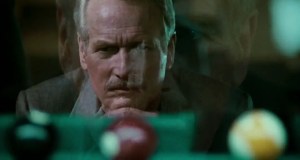
The camera circles the players, races alongside shots, approaches the balls from extremely low angles and suddenly pulls away to reveal the surrounding spectators. Close-ups emphasise the polished surfaces and violent collisions, while sweeping camera movements transform even ordinary shots into dramatic events. The effect sometimes resembles an elaborate dance, with the players, cues, balls and camera all participating in the same carefully choreographed performance.

Achieving these images demanded considerable mechanical ingenuity. Dolly tracks, adjustable camera supports and carefully arranged shooting positions enabled the filmmakers to create movements that would have been challenging to achieve with conventional static setups. In this context, the idea of placing a billiard table on a hydraulic platform is particularly interesting, since raising or shifting the playing surface alters the camera’s apparent relationship to the action. While the exact hydraulic arrangement used for the film is unclear in the published technical accounts, behind-the-scenes material documents the elaborate table-and-dolly techniques employed during production.
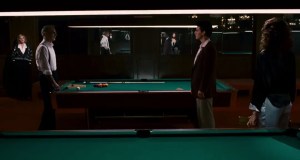
Ballhaus also recognised that movement alone was insufficient. His lighting preserved the atmosphere of real snooker halls, illuminating the green playing surfaces while allowing the surrounding interiors to disappear into darkness. This contrast isolates the players and makes the table resemble a theatrical stage surrounded by an audience.
Thelma Schoonmaker’s editing complements this, combining elegant tracking shots with rapid cuts, sudden changes in perspective and carefully timed sound effects. Under Scorsese’s direction, even the simple movement of a billiard ball becomes as exciting as a car chase. The American Society of Cinematographers has subsequently highlighted Ballhaus’s work on the film as a particularly inventive example of his moving-camera style.
Behind the Shots

Several interesting details surrounding the production reveal how seriously the filmmakers approached the game itself. Both Newman and Cruise practised extensively before filming, working with professional pool champion Mike Sigel to perfect their performances. Cruise was particularly dedicated, reportedly installing a pool table in his apartment and spending a lot of time practising.Remarkably, the actors performed almost all of the pool shots visible in the finished film. One especially difficult jump shot, which required the cue ball to clear other balls before pocketing its target, was performed by Sigel, as teaching Cruise the manoeuvre would have taken up too much production time.

Another memorable detail concerns the famous Balabushka cue that Eddie presents to Vincent. In the film, the cue symbolises prestige, craftsmanship and the near-mythical status of a legendary player. In reality, however, the production team used a specially prepared Joss cue designed to resemble a valuable Balabushka, rather than risking an original collector’s item.

The film also features cameo appearances by real-life figures from the world of pool, including Keith McCready, who plays Grady Seasons. His presence lends authenticity to the competitive atmosphere, particularly during the Atlantic City tournament sequences.
Music is another essential ingredient. Robbie Robertson composed the original score, and the soundtrack features Eric Clapton, B.B. King and other renowned musicians. Although Clapton’s „It’s in the Way That You Use It“ became closely associated with the film, the sequence featuring Vincent’s flamboyant performance to „Werewolves of London“ remains its most instantly recognisable musical moment.
One final curiosity concerns the film’s title, which works on several levels. It refers not only to the green colour of American currency, but also to the green cloth covering the pool tables. This visual connection reinforces the story’s central idea: in Eddie’s world, the game and the money have become almost impossible to separate.
A Divided Reception
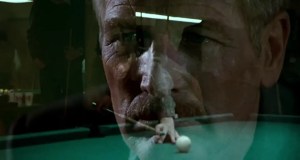
When The Color of Money was released in October 1986, the critical response was generally favourable, but far from unanimous. Much of the disagreement stemmed from expectations surrounding Scorsese and the legacy of The Hustler. Some critics considered the new film to be a welcome source of entertainment, featuring accomplished performances and outstanding visual craftsmanship. Others considered it an overly commercial exercise that lacked the psychological depth of its predecessor.

Roger Ebert, writing for the Chicago Sun-Times, admired the performances and recognised Scorsese’s technical abilities, but was disappointed by the conventional storyline. He argued that the familiar mentor-protégé relationship prevented the film from achieving the intensity of Scorsese’s finest work.
Gene Siskel also criticised the predictability of the narrative, comparing its basic structure to a poolroom version of The Karate Kid. Pauline Kael, writing in The New Yorker, appreciated aspects of Newman’s performance and the film’s playful energy, but felt that the later emphasis on Eddie’s moral awakening weakened its initial excitement.

Other reviewers were considerably more enthusiastic. Sheila Benson of the Los Angeles Times praised Newman’s performance and the film’s characterisation, while Vincent Canby of the New York Times responded positively to its central relationships and contemporary identity.
The awards season ultimately provided substantial recognition. Newman won the Best Actor award at the 1987 Academy Awards, while Mastrantonio, screenwriter Richard Price and the production design team received nominations. While the film never achieved the near-universal critical acclaim of Raging Bull or Taxi Driver, its blend of commercial success and artistic merit showed that Scorsese could work effectively within a more mainstream genre.
The Pool Renaissance

Beyond its commercial achievements, The Color of Money had a measurable influence on American popular culture, particularly in the world of billiards. Just as The Hustler had encouraged renewed interest in pool during the early 1960s, Scorsese’s film contributed to another wave of enthusiasm during the late 1980s.
Pool halls received more attention from the public, and cue and table manufacturers reported increased demand. Younger audiences began to associate the sport with the fashionable confidence of Tom Cruise rather than with smoky bars and ageing gamblers. Contemporary industry reports described significant increases in equipment sales following the film’s release, with participation and consumer spending continuing to grow in the years that followed.

The film also played an important role in popularising nine-ball. Unlike the more familiar eight-ball variation, nine-ball is fast and aggressive, making it particularly suitable for dramatic competition. The rules create opportunities for sudden reversals, meaning that even a seemingly hopeless situation can be turned around with one carefully executed shot.
Culturally, the film became a recognisable expression of the 1980s fascination with style, individual talent, competition and financial success. Its soundtrack, clothing, flashy camera movements and Cruise’s exuberant performance all strongly reflect the decade. However, these qualities are balanced by the older perspective represented by Newman, whose character has already experienced the disappointment that can accompany excessive ambition.

From a cinematic perspective, The Color of Money also helped to establish the potential for revisiting an iconic character decades after the original story. Rather than simply repeating familiar adventures, it examines how a person changes with age and what happens when youthful confidence confronts accumulated experience. This approach would become increasingly familiar in Hollywood’s later generation of legacy sequels.
The film’s influence on Scorsese’s career is also worthy of note. Its success reinforced his professional relationship with Ballhaus and demonstrated the commercial potential of his energetic visual style. Elements of this style, particularly the elaborate tracking shots and the close attention paid to characters moving through carefully constructed environments, became even more prominent in subsequent films such as Goodfellas.
One Final Break

Nearly four decades after its release, The Color of Money remains an entertaining and visually distinctive addition to Martin Scorsese’s filmography. While it may not possess the devastating emotional weight of The Hustler or the uncompromising intensity of his most celebrated dramas, judging it solely by those comparisons would be to overlook its considerable achievements.
The film succeeds because it understands that pool is never merely about pocketing balls. It’s about confidence, observation, deception and understanding your opponent before they understand you. Eddie and Vincent embody two contrasting approaches to these qualities: one forged through painful experience and the other fuelled by innate talent and youthful arrogance.

Newman’s beautifully restrained performance provides the story with an emotional foundation, while Cruise brings youthful energy to the film. Mastrantonio ensures that their relationship never becomes too straightforward, and Scorsese, Ballhaus and Schoonmaker transform what could have been a modest character drama into a remarkably stylish cinematic experience.
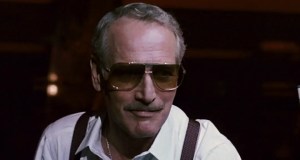
Most importantly, The Color of Money offers an unexpectedly optimistic perspective on ageing. Eddie Felson cannot regain his youth, undo his mistakes, or ensure that he will become the best player again. However, he can rediscover his willingness to compete and accept humiliation for the sake of the pleasure he derives from playing.
This is why the film’s famous final declaration, ‚I’m back,‘ has considerably more depth than a conventional triumphant ending. Eddie has not necessarily defeated his younger rival, nor has he overcome all his personal weaknesses. Instead, he has regained something far more valuable than money: the desire to participate in life rather than observe it from a safe distance.
Despite its spectacular billiard shots, memorable performances and unmistakable 1980s atmosphere, this simple idea remains the film’s greatest achievement. The Color of Money is ultimately less about winning the game than finding the courage to pick up the cue and play again.
More
Trailer
External links
Notice Regarding Image Rights and Copyrighted Material
All images, film stills, posters, logos, trailer excerpts and other copyrighted materials used in this article are used solely for editorial reporting, film criticism, review and illustrative purposes related to the respective content.
Unless otherwise stated, all copyrights, trademark rights and other intellectual property rights in the materials used remain with their respective rights holders, including film studios, distributors, production companies, photographers, artists or other licensors.
The materials are used in good faith and with regard to applicable legal limitations, licence terms and source attributions. If, despite careful review, any rights have been infringed or any attribution is incomplete, please contact me. Upon review, the relevant content will be removed or corrected promptly.







Schreibe einen Kommentar