

No, you’re wrong Stanley.
Thousands die every day for no reason at all, where’s your bleeding heart for them?
You give your twenty dollars to Greenpeace every year thinking you’re changing the world?
Finally, “Evil” Wins
Hollywood loves a clear-cut resolution. The hero suffers, the villain goes overboard, something explodes at the end, and the moral order is restored. The classic Hollywood narrative is based on the idea that, after two hours of suspense, the audience should leave the theater with a sense of justice. Even if the heroes make mistakes or make morally questionable decisions, it’s usually made clear in the end who’s on the “right” side. The good guys win, the bad guys lose, and the world returns to a state of order—at least for a moment.
Swordfish from 2001 initially plays precisely on this expectation: a brilliant hacker, a shady client, a beautiful seductress, a bank, a secret account, and a plan so megalomaniacal that it can only work in a glossy action thriller. At first glance, the film seems like a mix of cyberthriller, heist movie, and classic cat-and-mouse game between law enforcement and criminals. The ingredients are familiar, the characters seem clearly defined, and the plot initially suggests that Stanley Jobson will eventually regain control of his life and bring down his manipulative client.
Yet the film’s appeal lies, even today, in the fact that it does not neatly restore this order. Instead, it repeatedly subverts the audience’s expectations. Almost every major character hides their true intentions, loyalties seem to shift by the minute, and the plot thrives on information being deliberately withheld or distorted. The viewer finds themselves in a similar situation to Stanley: you think you understand what’s going on, only to realize a few minutes later that you’ve been deceived once again.
Because in the end, it’s not the classic hero who wins. Stanley Jobson survives, gets his daughter back, and is allowed to start a new life of sorts. For many films, that would already be the definitive happy ending. But Swordfish isn’t particularly interested in classic hero stories. While Stanley achieves his personal goal, he ultimately remains a character driven by events. He doesn’t solve the central problem himself, but is pushed around the entire board by far more powerful players.

The real winner is Gabriel Shear: a man who lies, manipulates, takes hostages, risks human lives, and still walks away with the money. Even more provocative: the film doesn’t simply frame him as an ordinary gangster, but as a charismatic, amoral anti-terror crusader. Gabriel presents himself as someone willing to use dirty methods to combat supposedly greater threats. His reasoning is dangerous, yet formulated in such a way that it at least appears plausible. This is precisely what makes the character so fascinating. He is not a mad villain bent on destroying the world, but a man convinced that his ends justify the means.
Gabriel is not a good person. The film makes no serious attempt to morally excuse his actions. Yet he possesses a charisma that many classic film heroes lack. He is intelligent, self-assured, always several steps ahead, and in control of nearly every situation in which he appears. Even his defeats often turn out to be part of a larger plan. This creates the impression that all the other characters are merely reacting to his moves, while he alone oversees the entire game.
But Swordfish lets him win because he is the only one who has fully understood the film’s rules: Nothing is as it seems. Everything is a distraction. And morality is just another tool. While other characters are still trying to distinguish between right and wrong, Gabriel has long since left these categories behind. He views people, institutions, and even ideologies as resources to be exploited. This makes him dangerous, but also extraordinarily effective.
This is precisely why Swordfish remains remarkable to this day. The film may be exaggerated, stylized, and at times absurd in many respects, yet it has the courage to actually let its antagonist win. Not as a tragic exception, not as a bitter compromise, but as a deliberate punchline. The viewer leaves the film with the uncomfortable feeling that the man who caused the most damage is also the one who, in the end, gets everything he wanted. And it is precisely this decision that sets Swordfish apart from many comparable action thrillers of its time.
Hackers, Money, and Misdirection

At the center is Stanley Jobson, played by Hugh Jackman. Stanley is a brilliant hacker, but not a glamorous cyberhero. He has a criminal record, is broke, separated from his daughter Holly, and, according to his probation terms, isn’t even allowed near a computer. He used to be considered one of the best hackers in the country, but a run-in with the law has ruined him socially and financially. He lives in a run-down trailer, makes a living doing odd jobs, and struggles above all to keep from losing contact with his daughter entirely. It is precisely this vulnerability that makes him the perfect target. Stanley is not a man who acts out of a thirst for adventure. He acts out of desperation. This makes him an unusual protagonist for an action film, because his motivation is not fame or justice, but simply the hope for a normal life.
Ginger Knowles, played by Halle Berry, enters his life. She lures Stanley to Gabriel Shear, a mysterious man with a lot of money, dangerous connections, and a plan that sounds like a mix of terrorism, patriotism, and bank robbery. Even their first encounter makes it clear that Ginger knows more than she lets on. She moves confidently between seduction, manipulation, and genuine sympathy for Stanley, so that it remains unclear for a long time which side she’s actually on.

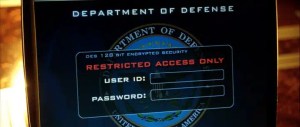
Gabriel wants to get Stanley to hack into a secret government account. It allegedly contains dirty money from past operations that is now worth billions. Stanley is supposed to siphon off this money using a digital worm. Gabriel does not present himself as an ordinary criminal. He claims he needs the money for a higher purpose. According to his account, the United States has built up secret funds over decades to finance covert operations. Now he wants to use these resources to fight terrorists with their own methods. Whether Gabriel is telling the truth or merely constructing a justification for his crimes remains unclear for a long time. It is precisely this ambivalence that makes the character interesting.
Stanley initially rejects the offer, but Gabriel knows his weaknesses. Using money, pressure, and the promise to help him get his daughter back, he draws the hacker deeper and deeper into his plan. At the same time, Stanley realizes that Gabriel has enormous resources at his disposal. His organization seems like a mix of intelligence agency, mercenary group, and criminal network. No one seems to know exactly who Gabriel really is or where his power comes from.

What begins as a cyber heist quickly escalates into a game of blackmail and deception. Gabriel forces Stanley further and further into the scheme, exploiting his longing for his daughter and turning the bank robbery into a public hostage situation. In the process, it becomes clear that the actual heist is only part of a much larger diversionary tactic. Time and again, the film presents information that later turns out to be false or incomplete. Characters seemingly switch sides; allies become enemies and enemies become allies.
At the same time, FBI agent J.T. Roberts, played by Don Cheadle, attempts to uncover Gabriel’s network. Roberts is one of the few characters who consistently seeks the truth. But even he is repeatedly led astray by Gabriel’s deceptions. This creates a cat-and-mouse game in which it is never entirely clear who is in control.
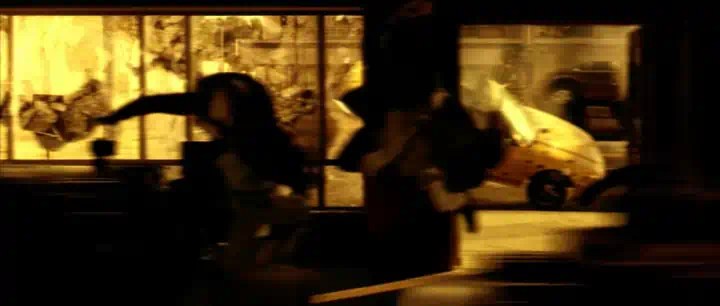
The famous opening scene with the explosion on the street already shows how this film works: violence is not portrayed realistically, but staged as a choreographed spectacle. The camera circles around a frozen moment of destruction. People, shards of glass, and debris seem to float in the air before the explosion unleashes its full force. Even here, the film makes its point: it’s not about plausibility, but about impact. This aesthetic runs throughout the entire film. Almost every major action sequence feels like a demonstration of technical prowess and stylistic exaggeration.
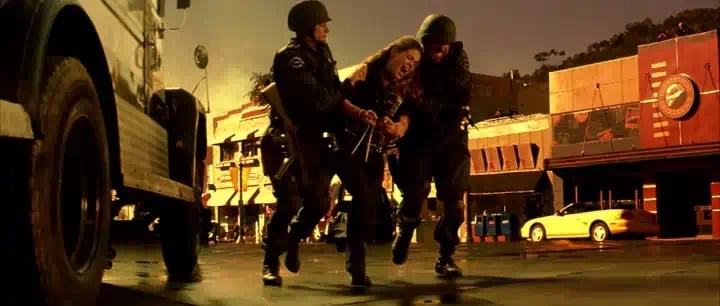
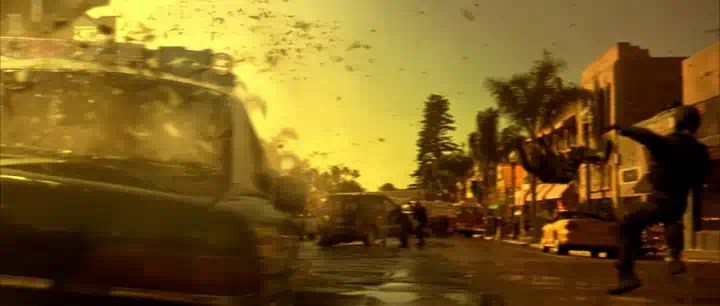
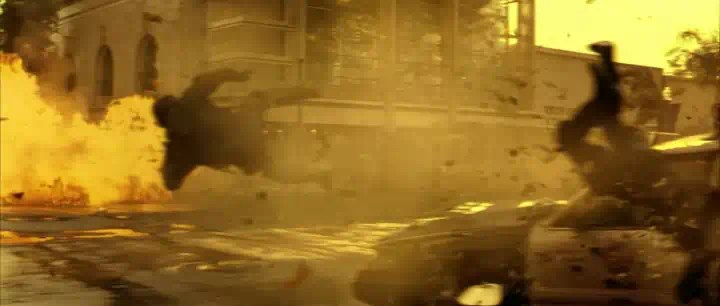
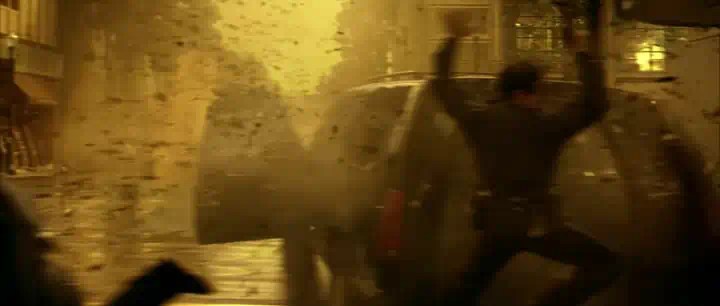
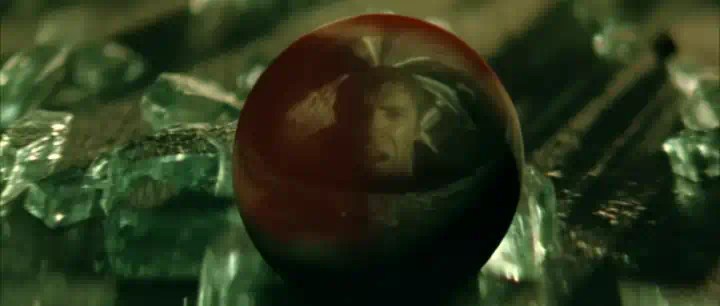
Things get particularly spectacular during the actual bank robbery. Gabriel and his men take hostages, strap explosives to them, and turn downtown into a chaos of police operations, shootouts, and car chases. The climax is the infamous scene in which a city bus is carried through the air by a helicopter—a moment that makes little physical sense but fits perfectly with the film’s over-the-top logic.

As Stanley increasingly realizes that he is merely a pawn in Gabriel’s grand scheme, he nevertheless tries to maintain his own moral compass. He wants to save his daughter without becoming an accomplice to a mass murderer. But the closer the finale draws, the clearer it becomes that Gabriel is always several steps ahead. Even when Stanley believes he has found a way out, it turns out that Gabriel had anticipated exactly that.
The big twist comes at the end. Gabriel appears to be dead, Ginger seems to be out of the picture as well, and Stanley seems to be saved—at least morally. The authorities believe they have closed the case. For a brief moment, it seems as though the film will take the classic route after all and punish the villain.
But then it becomes clear: Gabriel and Ginger are alive. The corpse was part of the deception. Several clues that previously seemed inconsequential suddenly make sense. Gabriel staged his own death, thereby successfully deceiving both the FBI and his opponents. Ginger was part of this plan the whole time.

Gabriel escapes with the money and apparently actually uses it to take out terrorists. In the final scene, he is seen on a luxurious yacht while news reports speak of targeted operations against terrorist networks. The film never clearly answers whether Gabriel is actually making the world a better place or merely enforcing his own version of justice. It is precisely this uncertainty that makes the ending so unusual.
The “villain” doesn’t just win financially. He also wins narratively. He let all the other characters play their parts in his film. While Stanley does get his daughter back and is given the chance for a fresh start, the actual control over the story lay with Gabriel from start to finish. While most thrillers punish their villains in the end, Swordfish rewards its antagonist with success, freedom, and the final punchline. That is precisely why the finale remains memorable to this day.
Travolta Steals the Show

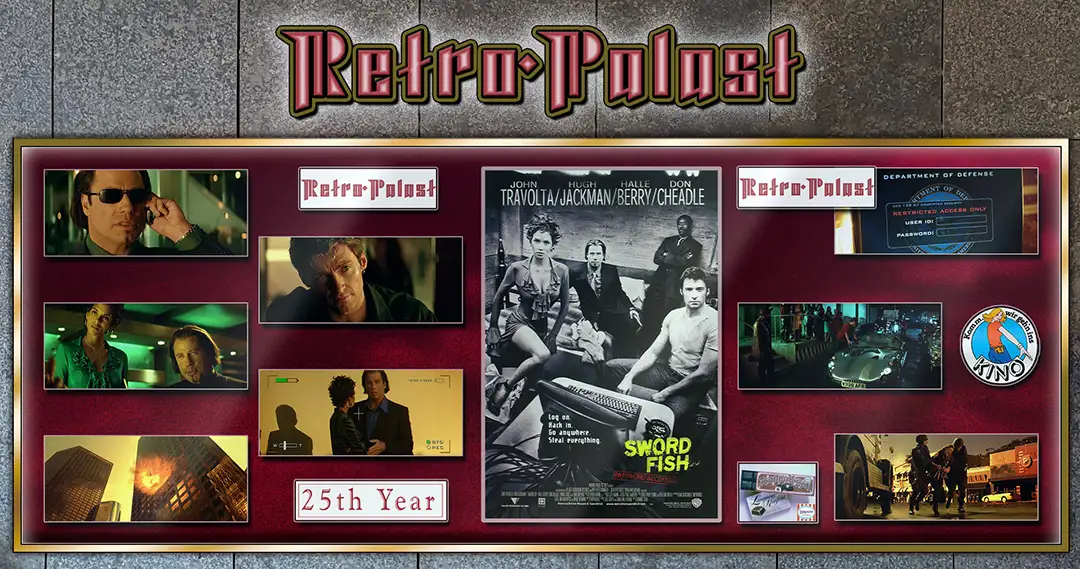
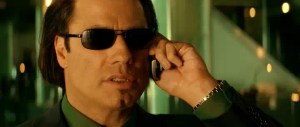
John Travolta plays Gabriel Shear as a mix of Bond villain, cult leader, playboy, and political fanatic. His hairstyle, his beard, his sunglasses, and his smug monologues are completely over-the-top, but that’s exactly why the character works. Gabriel isn’t subtle. He’s a pose. But he’s a pose with magnetism. Travolta had already proven on multiple occasions in the late 1990s and early 2000s that he could play eccentric characters with a strong screen presence, and in Swordfish, he leverages exactly that strength. Even when the plot occasionally veers into the absurd, Gabriel remains credible enough—thanks to Travolta’s charisma—to hold the story together. Many viewers today remember less the details of the plan than the way Travolta dominates every scene.

Hugh Jackman brings a different energy to the role of Stanley Jobson. Shortly after his breakthrough as Wolverine, he comes across here less as an action star and more as a man constantly torn between panic, guilt, and technical genius. His character is the emotional anchor of the film, even though the script gives him little real control over the plot. It is precisely this contrast that makes Stanley interesting: he is not an invincible hero, but someone who is constantly manipulated by stronger personalities. Jackman manages to keep the character likable, even though Stanley often reacts rather than acts. In retrospect, the film also showcases an early facet of Jackman’s versatility, long before he established himself as one of Hollywood’s most versatile actors.

Halle Berry plays Ginger Knowles as an enigmatic femme fatale. Her character is deliberately elusive: Is she a victim, an accomplice, an agent, or a traitor? The film doesn’t answer this question until late in the film, and even then, Ginger remains more of a symbol than a human being. This is less due to Berry than to a screenplay that defines her largely through her impact. Nevertheless, Berry lends the role a certain independence and presence. She manages to ensure that, despite limited character development, Ginger never completely degenerates into mere decoration. Her scenes with Jackman and Travolta thrive above all on the uncertainty about whose side she is actually on.

Don Cheadle as FBI Agent J.T. Roberts brings a much-needed sense of grounding to the film. While Travolta plays the madman and Jackman is chased through the plot, Cheadle comes across as a character from a more sober thriller who has accidentally landed in a glossy comic book. His calm, controlled performance provides an important counterpoint to the over-the-top staging. Roberts is one of the few characters who consistently tries to view events rationally, and that is precisely why he often comes across as the audience’s representative.
Vinnie Jones as Gabriel’s enforcer and Sam Shepard as Senator Reisman round out the ensemble, though they remain clearly in supporting roles. Jones benefits from his natural presence as a taciturn enforcer, while Shepard lends his authority to make the political dimension of the story seem credible. Even though both characters receive limited screen time, they help convincingly portray Gabriel’s network of power, influence, and violence. Overall, Swordfish thrives less on deeply developed characters than on an ensemble that fills its archetypal roles with enough charisma to carry the audience through the numerous twists and deceptions.
Trivia
Swordfish is a prime example of early 2000s tech fantasies. Computers here don’t look like work tools, but rather like DJ consoles for superhackers. Monitors glow, code flies across the screen, and terms like “worm,” “Trojan,” “Vernam cipher,” and “logic bomb” are thrown around until they sound cool. One of the most famous technical errors: The film shows IP addresses whose numerical fields exceed the maximum of 255 allowed for classic IPv4 addresses. For ordinary viewers, it doesn’t matter; for IT folks, it’s a delightful mistake.

The film’s proximity to 9/11 is also part of its strange afterstory. Swordfish hit U.S. theaters in June 2001, just a few months before the September 11 terrorist attacks. The film deals with terrorism, counterterrorism, bombs, public panic, and a man who sells violence as a necessary response to greater violence. After the attacks, the film was pulled from theaters in the UK because its imagery and themes suddenly felt too close to reality. The film hadn’t predicted anything, but in hindsight it seemed like a product from the final moment before a cultural turning point.

Halle Berry’s brief topless scene received a lot of press coverage. Even back then, there was debate over whether it served any purpose for the plot or was merely a marketing tool. Berry herself later described the nudity as unnecessary, but also said that it had helped her overcome personal inhibitions. Interestingly, many viewers and critics found her later lingerie scene to be significantly more effective and sensibly staged, as it better suited the character and the seductive dynamic between the characters without relying solely on the surprise effect of nudity.

Gabriel’s car, a TVR Tuscan, became a minor cult object. The car looks as if it had fallen straight out of a turn-of-the-millennium vision of the future: loud, alien, curvy, with eye-catching paintwork. At the same time, it was exotic to American viewers because TVR vehicles were not sold regularly in the U.S. The car is a perfect fit for Gabriel: beautiful, risky, over-the-top, and not exactly by the book.
The first hacker arrested in the film is named Axl Torvalds. This is generally considered a reference to Linus Torvalds, the Finnish software developer and creator of the Linux kernel. The choice of name fits the hacker and computer scene, from which the film draws many of its characters and terms. While there is no official confirmation from the filmmakers regarding this reference, the similarity of the last name is often interpreted as a deliberate nod to the well-known programmer.
Style Over Substance

Reviews at the time were mostly lukewarm to negative. Many critics acknowledged that Swordfish has a few strong set pieces, particularly the opening explosion and the absurd bus-on-helicopter sequence. Yet it was precisely these scenes that were often seen as proof that the film is more interested in surface spectacle than in logic. While the spectacular visuals were impressive, for many critics they could not hide the fact that the plot repeatedly takes huge leaps and is guided more by style than by plausibility.
Roger Ebert praised the effects and Travolta’s over-the-top performance, but remained skeptical of the convoluted plot and the characters’ constant ambiguity. Other critics were harsher in their judgment of the film. A particularly common criticism was that Swordfish doesn’t really think through its moral provocation. The film pretends to ask big questions about terrorism, surveillance, counter-violence, and covert government operations. In reality, it uses these questions primarily as fuel for coolness.

The depiction of hacking was also viewed critically as early as 2001. Even back then, many of the computer sequences looked more like music videos than credible cybercrime. While tech fans chuckled at the numerous errors, some critics saw this as symptomatic of the entire film: everything had to look spectacular, even if it meant losing credibility. Added to this was the fact that the characters often seem less like real people and more like chess pieces being moved from one twist to the next.
That is perhaps the central contradiction: Swordfish wants to appear intelligent, but behaves like a film that would rather pile on sunglasses, explosions, techno music, and provocative dialogue than seriously develop its ideas. But that is precisely where part of its appeal lies. The film is not a good political thriller. It is an over-the-top action movie that thinks it’s a political thriller.
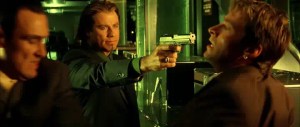
Interestingly, perceptions of the film have shifted somewhat over the years. While many critics dismissed it as a superficial spectacle upon its release, it is now more often viewed as a typical product of its time. It is precisely its exaggerations, its over-stylized visuals, and its almost naive conception of digital crime that, in retrospect, make it a fascinating document of the early 2000s. What was considered a weakness back then is now partly perceived as nostalgic charm.
Nevertheless, the consensus has largely remained: Swordfish is a film that makes a much bigger impression than it makes sense. Anyone looking for an intelligent thriller will be disappointed. However, those who embrace the mix of glossy action, absurd twists, and a delightfully self-assured John Travolta will find a film that, despite all its flaws, possesses a surprisingly high entertainment value.
A Time Capsule Film of the Early 2000s

Today, Swordfish feels less like a timeless classic and more like a perfectly preserved time capsule. It openly displays the DNA of its era: post-Matrix effects, yellow-tinged images, club aesthetics, a techno soundtrack, morally cynical antiheroes, hackers as rock stars, and a villain who justifies his crimes with geopolitical realism. Anyone watching the film today gets not only an action thriller but also a surprisingly precise glimpse into the fantasies and fears that shaped the early digital age. The internet was ubiquitous, yet still mysterious to many people. Hackers were seen as modern-day outlaws who could plunge governments, banks, or entire nations into chaos with just a few keystrokes.
The hacking scenes, in particular, have developed a reputation of their own. They are technically absurd, but cinematically memorable. Swordfish is one of those films that helped shape the cliché of the “Hollywood hacker”: a genius who cracks systems in seconds under extreme pressure, while meaningful animations run on multiple monitors. This is hardly realistic. But visually, it’s instantly recognizable. To this day, the film is regularly cited in internet forums and on tech sites as an example of how Hollywood dramatizes computer technology. At the same time, however, this also highlights one of the film’s strengths: it understands that cinema is not a documentary. The hacking sequences aren’t meant to explain how computers work, but to convey what power and control feel like.

The opening explosion also left a lasting impression. It is a prime example of the brief phase in which, following The Matrix, Hollywood was determined to show that action could not only be fast but also frozen, rotated, stretched, and technically dissected. Swordfish didn’t invent this style, but it incorporated it with maximum intensity into a summer action film. The scene has been mentioned in numerous making-ofs, film articles, and retrospectives on early 2000s action films because it exemplifies the belief at the time that digital effects could make any spectacle even bigger.
And then there’s Gabriel Shear himself. His victory at the end isn’t just a twist—it’s the reason the film sticks in the memory. Many action films claim to be morally complex, but in the end they sweep everything clean again. Swordfish leaves the mess as it is. Gabriel gets away with it. Ginger gets away with it. Stanley gets his child back, but not the truth. The government seems helpless, the FBI is playing catch-up, and the man with the most blood on his hands disappears into luxury and ideology.
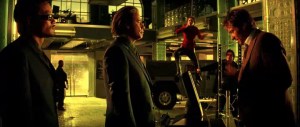
That is precisely why the character has developed a small cult following over the years. Gabriel is not a classic villain who acts out of greed or madness. He presents himself as someone pursuing a higher goal and accepting any means to achieve it. This blend of charisma, intelligence, and moral ruthlessness makes him more interesting than many of the interchangeable action villains of his time. Even viewers who are critical of the film as a whole often remember Travolta’s performance first. In an era full of heroic figures, it was the antagonist, of all people, who left the most lasting impression. This is precisely where the cultural resonance of Swordfish lies: it is not the technology, the explosions, or the conspiracy that stick most firmly in the memory, but the rare instance of a film that actually allows its charismatic villain to walk off the stage as the victor.
The charismatic villain wins

Swordfish is not a subtle film. It is loud, over-stylized, at times silly, and often technically nonsensical. From today’s perspective, its female characters seem problematically written, its politics questionable, and its hacker fantasy more like a nightclub than network reality. And yet it remains fascinating.
Because Swordfish possesses something that many cleaner thrillers lack: a genuine consistency in its amorality. Gabriel Shear talks about deception, power, and instrumental rationality throughout the entire film. In the end, he proves that he’s not just talking. He wins because he’s willing to go further than everyone else. He wins because he sees the other characters’ moral scruples as weaknesses. And he wins because the film itself depends on his energy.

Stanley is the hero, but Gabriel is the driving force behind the entire story. While Stanley ultimately gets his daughter back and thus achieves his personal happy ending, Gabriel reaches his true goal: he escapes with the money, deceives friends and foes alike, and stays several steps ahead until the very end. The film rejects the usual Hollywood justice and instead rewards the man who acts with the greatest ruthlessness, intelligence, and determination.
That is precisely why Swordfish remains memorable to this day. Not because of its hacker fantasies or its explosions, but because it has the courage to let the charismatic antagonist triumph. Gabriel Shear is no ordinary villain, but a character who dominates every scene with charm, intelligence, and complete moral ruthlessness. One must reject his methods, yet can hardly escape his charisma. This undoubtedly places Gabriel Shear among the greatest figures in the pantheon of cinematic villains.
More
Trailer
External links
Notice Regarding Image Rights and Copyrighted Material
All images, film stills, posters, logos, trailer excerpts and other copyrighted materials used in this article are used solely for editorial reporting, film criticism, review and illustrative purposes related to the respective content.
Unless otherwise stated, all copyrights, trademark rights and other intellectual property rights in the materials used remain with their respective rights holders, including film studios, distributors, production companies, photographers, artists or other licensors.
The materials are used in good faith and with regard to applicable legal limitations, licence terms and source attributions. If, despite careful review, any rights have been infringed or any attribution is incomplete, please contact me. Upon review, the relevant content will be removed or corrected promptly.







Schreibe einen Kommentar