

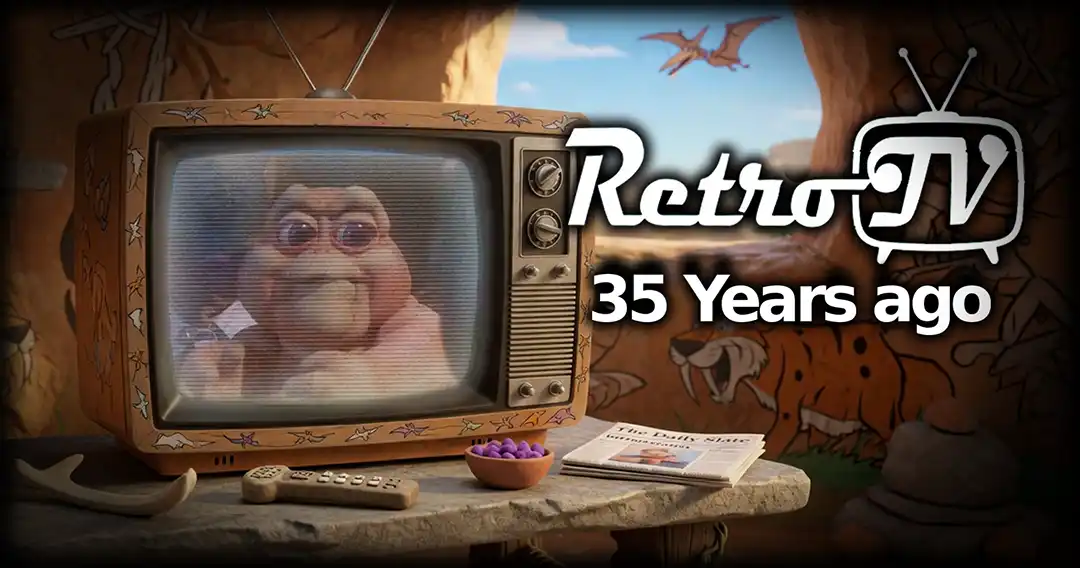
“I’m the baby. Gotta love me.”
“Not the mama!”
A 90s satire that Has lost none of Its edge
Dinosaurs – just a nostalgic relic of the early ’90s? No: a clever, scathing, and astonishingly precise satire whose alarming relevance has not faded in the 35 years since its premiere, but has rather intensified—especially in today’s chaotic world of 2026, where political short-sightedness, media hysteria, social division, and ecological self-destruction often seem as though this series had already accurately foreseen them back then.
On April 26, 1991, the first episode of the U.S. series Dinosaurs aired on ABC. It was produced by Jim Henson Productions and Walt Disney Television. The basic concept originated with Jim Henson himself, who laid the creative groundwork for the project shortly before his death in 1990. The series was subsequently brought to life by Brian Henson and producer Michael Jacobs. Using groundbreaking puppetry techniques from Jim Henson’s Creature Shop, elaborate animatronics, and—according to reports—a production budget of around one million dollars per episode, something was created that is virtually unparalleled in this form: a series spanning four seasons and 65 episodes that, on the surface, appears to be a quirky family sitcom featuring dinosaurs, but is in reality a merciless reflection of our society.
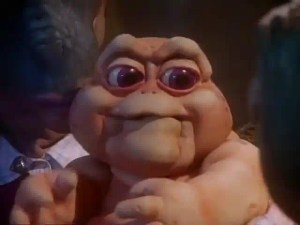
Back when Dinosaurs first aired, of course, people initially perceived something entirely different: Baby Sinclair, his one-liners, the chaotic family, the slapstick, the over-the-top characters. It wasn’t until many years later—especially upon rewatching the original English version—that it became clear just how sharp this series’ writing actually is. Behind the slapstick lies a satire that is, at times, astonishingly precise, bold, and mature. In retrospect, Dinosaurs almost seems like a precursor to later shows like South Park or The Orville—only as a family series with animatronic dinosaurs.
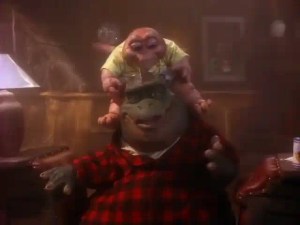
And that is exactly what makes the series so special: every episode revolves around a socially relevant topic. Not just in a general sense, but very specifically around debates, conflicts, and injustices that were highly topical in the late ’80s and early ’90s. What is truly alarming, however, is how little of it seems outdated today. On the contrary: many of these problems are just as relevant today as they were back then—some are even worse.
The series thus inadvertently shows how little humanity has actually learned in 35 years. The world of Dinosaurs is patriarchal, consumer-oriented, politically manipulable, economically ruthless, and ecologically self-destructive. That is precisely why it still works so well today: The dinosaurs are not merely an absurd TV family—they are a reflection of us.
An sitcom with major themes
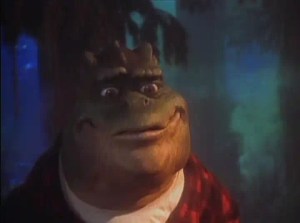
The episodes address, among other things—and often far more pointedly than one would expect from a supposed family sitcom—a whole panorama of social conflicts. The series uses its episodes not merely as vehicles for harmless moral messages, but as satirical experiments: What happens when everyday fallacies, social role models, or political mechanisms are reenacted in a dinosaur world? The answer is usually at once funny, bitter, and uncomfortably accurate.
- Marriage and Relationships – The Mating Dance, Unmarried… With Children
This isn’t just about partnership, but about possessiveness, role expectations, emotional comfort, and the question of how much true equality is actually built into traditional marriage models. - Parenting and Family – The Terrible Twos, License to Parent, Little Boy Boo, Nature Calls, Into the Woods
These episodes dissect the pressure to be “proper” parents, the helplessness of everyday family life, and the tendency to approach parenting issues either dogmatically or with complete overwhelm. - Child Stars and Media Hype – Out of the Frying Pan
Here, the series shows how quickly children are marketed, exploited, and turned into short-term media products by the entertainment industry. - Blindly Following Traditions – Hurling Day, The Howling
Rituals are not portrayed as harmless customs, but as social tools used to legitimize cruelty, pressure to conform, and intellectual laziness. - Religion and Worldviews – The Golden Child, Last Temptation of Ethyl, Charlene’s Flat World, Greatest Story Ever Sold
These episodes explore faith, dogma, promises of salvation, and the question of how institutions shape worldviews—often at the expense of reason, self-determination, and critical thinking. - Teenagers and Society – I Never Ate for My Father, Career Opportunities, Leader of the Pack
Here, youth is not romanticized, but rather portrayed as a phase of life in which the pressure to conform, questions of status, and fears about the future collide with particular brutality. - Images of Girls and Women / Gender Roles – Charlene’s Tale, Getting to Know You, Scent of a Reptile, Working Girl, Wilderness Weekend, Fran Live, Honey, I Miss the Kids
The series dismantles traditional role models, beauty standards, and the expectation that women must be lovable, attractive, and competent all at once—yet never “too much.” - Images of Boys and the Pressure of Expectations – How to Pick Up Girls, Hungry for Love, The Son Also Rises
Images of masculinity are also critically examined: strength, dominance, success, and coolness are presented here not as natural ideals, but as socially imposed burdens. - Sex Education and Sexual Awareness – Dirty Dancin’
Instead of awkwardly skirting around the topic, the series highlights how poorly many societies handle sexuality, shame, and honest sex education. - Environmental Protection and the Climate Crisis – Endangered Species, Power Erupts, If I Were a Tree, We Are Not Alone
Environmental issues are not treated as a side issue, but as the core problem of a reckless civilization that only takes nature seriously when its own comfort is threatened. - Capitalism and Corporate Power – Employee of the Month, WESAYSO Knows Best, The Discovery, Swamp Music
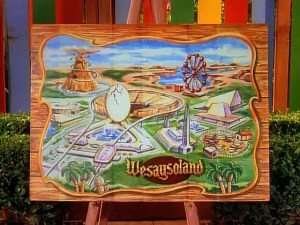
WESAYSO symbolizes a system in which profit replaces all morality and corporations are simultaneously employers, purveyors of truth, and centers of political power. - Factory Farming and Food Systems – When Food Goes Bad
Behind the humor lies a rather biting satire on industrialized food production, displacement, and the moral disconnect between consumption and the origin of food. - Consumer Behavior and Status-Seeking – Refrigerator Day, Slave to Fashion, Georgie Must Die!, Life in the Faust Lane
These episodes show how closely identity in modern societies is tied to possessions, trends, appearances, and social recognition. - Sexual Harassment – What ‘Sexual Harris’ Meant
Remarkably early on, the series addresses abuse of power in the workplace and exposes the excuses used to downplay or normalize abusive behavior. - Drug Abuse and Pressure to Perform – A New Leaf, Steroids to Heaven
These episodes intertwine addiction, self-optimization, and societal pressure to succeed into a critique of a culture that often values performance over health or dignity. - Elections, Politics, and Propaganda – And the Winner Is…
Politics is portrayed here not as an honest contest of the best ideas, but as a stage for manipulation, symbolism, media packaging, and calculated simplification. - Racism and Exclusion – Green Card
The series reveals how prejudices are constructed, socially inherited, and perpetuated by fear of the “other.” - The Influence of Television – Network Genius
Media are portrayed not merely as entertainment, but as machines for shaping perception, attention, and social reality. - Modern Medicine vs. Traditional Medicine – Germ Warfare
Here, faith in progress, superstition, and mistrust of science collide—a conflict that seems almost more relevant today than it did back then. - “Animals” in the Circus – Charlene and Her Amazing Humans
By flipping the perspective, the series shows how easily cruelty is disguised as spectacle and accepted as normal by mainstream society. - Superhero Cult – Earl, Don’t Be a Hero
This episode dissects the urge to solve complex problems through exaggerated heroic figures and simplistic tales of courage. - Family Vacations and Escapism – Variations on a Theme Park
Even vacations become a satire on overplanned leisure time, artificial happiness, and the idea that one can simply “switch off” social stress through consumption.
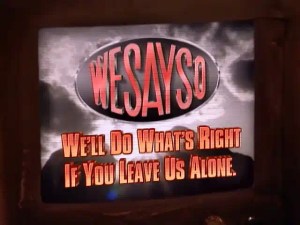
What’s impressive here isn’t just the choice of topics, but also the consistency with which the series tackles them. Dinosaurs isn’t a harmless sitcom that occasionally throws in “a serious topic” and then immediately returns to everyday life. Rather, the impression is that the series deliberately uses its comedic format as a cover: It lures the audience into a seemingly safe comfort zone with familiar sitcom tropes, running gags, family chaos, and quirky characters—only to then pose uncomfortable questions all the more pointedly. It is precisely this strategy that makes it so effective. For the social critique does not come across as a wagging finger, but as something that emerges from the midst of everyday life.
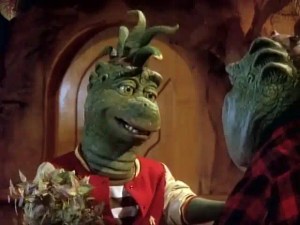
The series takes its social criticism surprisingly seriously—even when it packages it in jokes, exaggeration, quirky characters, and absurd dialogue. And it is precisely in this combination of slapstick and clarity that its true uniqueness lies. Many productions fail by becoming either too tame or too didactic as soon as they tackle serious topics. Dinosaurs, on the other hand, achieves something much more difficult: the episodes are entertaining enough to never come across as preachy, yet sharp enough to strike with uncomfortable precision. The humor doesn’t simply cushion the weight of the subject matter; it often makes it even more visible. Because you’re laughing, you sometimes only realize a moment later just how bitter what was just said or shown actually was.
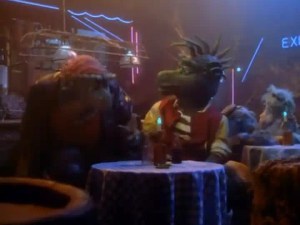
Added to this is the fact that the series gives its characters an astonishing amount of space to reveal precisely the fallacies and contradictions it criticizes. Earl is particularly important in this regard: he is not simply the dim-witted father as a sitcom caricature, but the personification of the complacency of a society that would rather cling to habits than honestly confront its own problems. Fran, Robbie, Charlene, and even supporting characters like Richfield or Roy complement this picture because they embody different attitudes toward authority, progress, morality, conformity, and resistance. As a result, the criticism doesn’t remain abstract but becomes tangible in family conflicts, arguments, and everyday decisions.
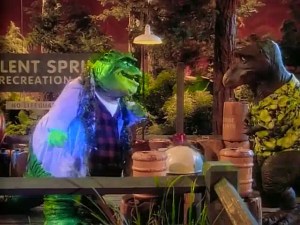
Often, there is no cozy happy ending in the end, but rather a bitter aftertaste, sometimes even the feeling that the series understood more about our real world than many supposedly mature productions. This is precisely what distinguishes Dinosaurs from many nostalgically romanticized family series of its time: it does not merely seek to reconcile, but to expose. It shows how deeply ideologies, consumerism, subservience to power, and self-deception have seeped into everyday life—and how naturally people learn to function within such structures. That all of this is explored in a series featuring dinosaur puppets seems absurd at first, but it often makes the messages even clearer, because the satirical distancing allows our own world to stand out all the more clearly.
And that is precisely why it still works so astonishingly well today. Perhaps even better than some of its contemporaries. For while other series have remained interesting primarily as products of their era, Dinosaurs, in its best moments, seems almost eerily timeless. It is funny, yes—but not only that. It is clever, biting, formally original, and often astonishingly accurate in its diagnosis of societal missteps. That’s exactly why, when you watch it again, it doesn’t feel like a nice piece of pop culture history, but like a satire that, unfortunately, still knows exactly what it’s talking about.
When satire really hurts: Nuts to War
Two—or rather three—episodes stand out for me in particular. The first is the two-part episode “Nuts to War”—and it is nothing less than an anti-war film in sitcom form. More than that: it’s one of those moments when Dinosaurs finally shows that the series wants to be far more than clever family entertainment with satirical undertones. Here, the series definitively leaves the realm of mere everyday parody and tackles a theme that remains highly dangerous in every era: the public staging of war as a morally clean, necessary, and unavoidable act.
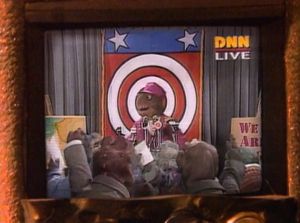
This episode responded very clearly to the Gulf War of 1991, but at the same time also processes the traumas, lies, and contradictions of the Vietnam War. It is precisely this dual movement that makes it so powerful. Nuts to War is not only a satirical reaction to a specific historical moment, but also a commentary on how modern societies repeatedly frame wars with the same images, the same linguistic patterns, and the same justifications. The series practically dismantles everything that constitutes modern war propaganda: media manipulation, censorship, patriotic “We Are Right” rhetoric, the greedy arms industry, media staging of war, USO shows, counter-demonstrations, and later the familiar narrative: “Without politics, we would have won.” It’s all there. And what’s remarkable is how effortlessly the episode weaves these elements together without losing its satirical edge.
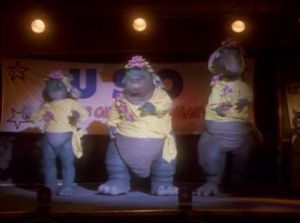
Even more impressive is that the episode doesn’t portray this critique as a state of emergency, but as an almost routine social mechanism. War appears here not as a historical accident, but as something that is politically prepared, media-packaged, and economically supported. This is precisely where the episode’s true bitterness lies: it shows how easily the public can be persuaded to reduce complex conflicts to simple good-versus-evil narratives. Anyone who doubts is quickly labeled disloyal. Anyone who disagrees disrupts national solidarity. And those who profit usually remain in the background.
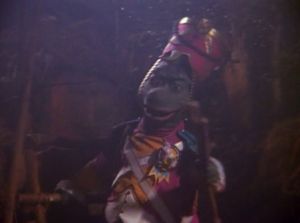
Precisely because of this, Nuts to War does not come across as a single political exception, but rather as a surprisingly precise analysis of the mechanisms used to sell wars to the public. The series shows how quickly enemy stereotypes are constructed, complex contexts are reduced to simple slogans, and economic interests are disguised as moral necessities. It also exposes language itself as a weapon: Euphemisms, pathos, and patriotic clichés create an emotional backdrop in which violence appears reasonable, necessary, or even noble. The fact that all of this is explored in a sitcom featuring dinosaur puppets does not weaken the message; on the contrary, it makes it even more effective. This alienation reveals just how absurd many of these mechanisms actually are—and how normal they often seem to us nonetheless.
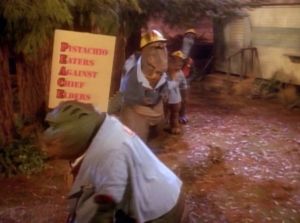
Particularly clever is the backstory involving the pistachios, which can hardly be misread as anything other than an allusion to the famous “War for Oil.” This satirical shift is brilliant because it lays bare the economic core of the whole thing: Behind grand words about honor, duty, security, and national interests often lie very tangible material motives. And that is precisely where the strength of this episode lies: it doesn’t just make fun of war, but exposes the economic, media, and political mechanisms behind it. That a supposed “children’s series” from the early ’90s tackles such a subject with this level of sharpness, clarity, and consistency remains remarkable to this day. Perhaps even more than remarkable—it is a small satirical feat.
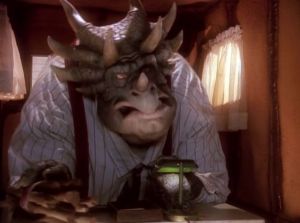
Furthermore, the episode not only criticizes institutions but also highlights the role of ordinary people in the discourse on war. It shows how quickly fear, peer pressure, outrage, and the need for clear-cut sides can lead people to adopt simplistic narratives. No one in it needs to be portrayed as one-dimensionally evil; that is precisely what makes the satire so uncomfortably accurate. The most dangerous dynamics often arise not from malice alone, but from convenience, habit, media-shaped perception, and the desire to feel on the “right” side.
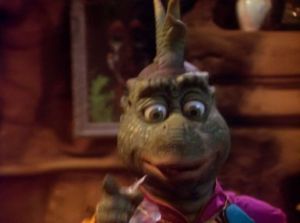
It still feels disturbingly relevant today and fits alarmingly well with current geopolitical escalations, in which it becomes clear once again how wars are hyped by the media, morally simplified, and sold politically and economically, while the actual consequences are borne by the people who have the least influence over any of it. That is precisely why Nuts to War is so much more than just a clever political episode within an unusual sitcom. The episode is a brutal reminder of how vulnerable modern societies remain to the rhetoric of war—and how little has changed in the fundamental mechanisms by which violence is publicly legitimized.
The series finale: Changing Nature
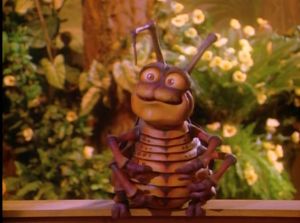
The other truly special episode is, of course, the finale: “Changing Nature”. For me, this is not only one of the strongest episodes of the series, but one of the darkest and boldest endings a sitcom has ever had. If Nuts to War shows how sharply Dinosaurs can comment on the political present, then Changing Nature shows how uncompromisingly the series is willing to play out its core ideas to the bitterest conceivable end. The finale isn’t merely sad or unusual; in its consistency, it’s downright devastating. It defies every familiar sitcom logic—where everything somehow turns out okay in the end—and instead opts for something far more radical: it lets the world of its characters collapse under the very structures the series had been criticizing for years.

What makes this episode special is that it literally shows how and why the dinosaurs go extinct. No meteorite, no higher fate, no magical last-minute rescue—but a self-inflicted chain reaction of environmental destruction, greed, and blind crisis management. That is precisely what makes the episode so extraordinary. It takes an ancient myth of extinction and interprets it not as a natural fate, but as the consequence of political, economic, and cultural missteps. This is not merely a narrative device, but a very deliberate satirical reinterpretation: it is not nature that destroys society, but society that destroys itself.
Here’s how it plays out in detail:
- A WESAYSO factory wipes out the Bunch Beetles.
- Without these beetles, the Cider Poppies spread unchecked and become a plague.
- To get rid of these plants, massive amounts of poison are sprayed.
- However, the poison destroys not only the plague but all plants.
- Rain is needed to enable new plant growth.
- For rain, you need clouds.
- So volcanoes are triggered to erupt with bombs to create a dense cloud cover.
- This cloud cover ultimately leads to an ice age.
- And so the dinosaurs go extinct.
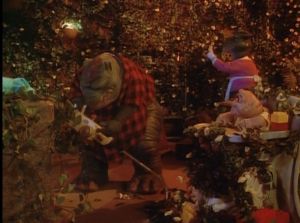
This sequence alone reads like the perfect parody of technocratic crisis management: every problem is met with an even bigger, even more invasive, and even more short-sighted measure. Nothing is solved at the root; everything is merely postponed, magnified, or transformed into a new catastrophe. This is precisely where the brilliance of the finale lies. The episode does not simply depict an ecological catastrophe, but a way of thinking. It dissects the reflex of modern societies to view every crisis in isolation, to aggressively combat symptoms, and in doing so, to consistently ignore the systemic causes.
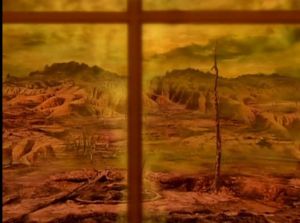
The sequence is absurd—and precisely for that reason, terrifyingly credible. Every measure is supposed to solve a problem, but in reality only creates the next, even bigger one. Short-term interventions, economic interests, and technocratic quick-fixes drive the catastrophe ever further. The result is not simply a bleak series finale, but a scathing critique of a society that prioritizes profit over responsibility. What is particularly painful is that no one seems truly surprised by this. Right up to the very end, the system functions exactly as it always has: decisions are made from above, consequences are downplayed, damages are externalized, and moral responsibility is diluted. As a result, the apocalypse does not appear as an exception, but as the logical final stage of a way of thinking that has long since become the norm.

This is precisely why Changing Nature resonates far beyond its specific plot. The episode tells of ecological destruction, but also of political cowardice, bureaucratic inertia, and the belief that any crisis can be controlled with enough power, technology, or force. It dismantles the illusion that growth, efficiency, and emergency measures automatically produce solutions. Instead, it depicts a culture that prioritizes control over understanding—and which ultimately fails due to the complexity of the world it constantly seeks to simplify.
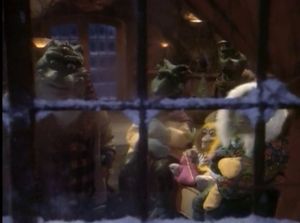
It is particularly bitter that the greedy industrialist B.P. Richfield, even in the final moments of his life, looks back on his profits with satisfaction. And Earl Sinclair only recognizes his own complicity once everything is long lost. It is precisely these two characters who carry the finale emotionally: Richfield embodies the cold, systemic mindset of a capitalism that clings to balance sheets and power even in the face of ruin, while Earl represents broad societal complicity—the realization that came too late, the participation that lasted too long, the convenient turning away. The news anchor’s final words—“Good night… and goodbye.”—rank among the harshest conclusions ever delivered in a family drama. No happy ending. No consolation. No way out. Only the bitter realization: We have only ourselves to blame.
„The world may be coming to an end!“ „Well, that’s a fourth quarter problem.“
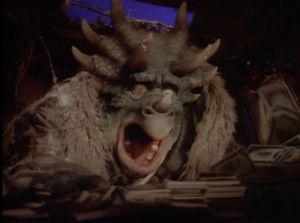
And perhaps that is precisely why this episode has an even stronger impact today than it did back then. Climate change, species extinction, corporate lobbying, political short-sightedness, and the belief that every self-created problem can be solved with an even greater technological force—all of this is terrifyingly real today. Some 35 years later, Changing Nature is no longer an exaggerated dystopia, but almost a documentary on the mindset of modern societies. Perhaps that is the true greatness of this finale: it is not merely bold because it ends sadly, but because it denies its audience the most convenient excuse. It doesn’t claim that, in the end, someone will save what has been destroyed. Rather, it states with almost cruel clarity that societies can be destroyed by the very beliefs they consider reasonable, successful, and without alternative. And that is precisely why Changing Nature stays with you for so long—not just as a moment of shock, but as a devastating conclusion drawn from everything Dinosaurs has told us up to that point.
More Than Nostalgia
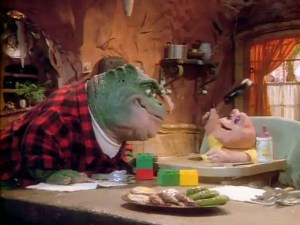
Dinosaurs was never “just” a funny puppet show for kids. Yes, the series is funny. Yes, it’s entertaining. Yes, it created a character in Baby Sinclair that everyone still knows today. But beneath that surface lies one of the most intelligent and biting satirical series of its time. That’s precisely what makes it so remarkable: it works on multiple levels at once. You can view it as a charming, quirky, over-the-top family series, as a technical masterpiece of puppet television, or simply as an astonishingly precise social satire. And the older you get, the more clearly this third level usually emerges. What seemed like colorful slapstick as a child suddenly appears, upon later rewatching, as a surprisingly astute diagnosis of social, political, and cultural missteps.
For me, Dinosaurs is therefore much more of a socially critical satire with sitcom elements than merely a classic family series. It combines humor, media criticism, politics, criticism of capitalism, family comedy, and an ecological warning in a way that still works surprisingly well even decades later. In this sense, it is indeed something of a spiritual forerunner to later series that combine entertainment and social criticism much more openly. At the same time, however, it possesses something that many later formats fail to achieve in the same way: an almost old-fashioned accessibility. Dinosaurs is never so cynical that it feels cold, but also never so gentle that its criticism becomes blunt. It is precisely this balance of warmth and bite, of family closeness and social critique, that makes it so unique to this day.
Perhaps its particular strength also lies in the fact that it does not comment on its themes from the outside, but weaves them directly into the everyday lives of its characters. Politics, consumerism, gender roles, environmental destruction, or media manipulation do not appear as abstract discourses, but as part of everyday life. As a result, the series does not feel like a didactic piece, but like a world in which all these problems have long since become a matter of course. And that is precisely the true essence of good satire: it shows not only that something is wrong, but how normal that wrongness feels in everyday life.
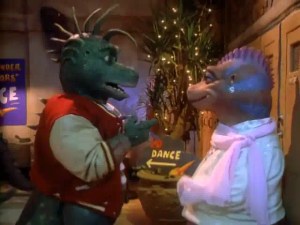
Anyone who only knows the series from their childhood should definitely watch it again today—ideally in the original English. And anyone who has never seen it should urgently catch up. Not out of pure nostalgia, nor because Disney makes it easily accessible today, but because Dinosaurs is simply a damn good series: clever, technically impressive, bold, and, in many moments, frighteningly accurate. Upon rewatching, it’s particularly striking how carefully many of the dialogues are written, how much satirical bite lies in seemingly casual scenes, and how consistently the series pursues its themes right to the end. It hasn’t merely aged curiously or charmingly; in many ways, it has actually improved, because today we recognize more of what may have remained hidden back then behind the puppet effects and the family-friendly image.
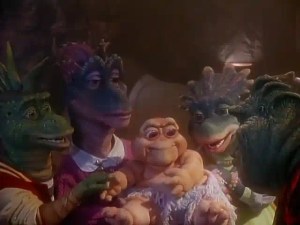
No, I’m not being paid by Disney, and no, this isn’t meant to be a clumsy advertisement for the Mouse. But sometimes a work is simply exactly what it is: underrated. And Dinosaurs certainly falls into that category. Perhaps even more so than ever before. Because in an era where many series either rely purely on nostalgia or ostentatiously flaunt social criticism, Dinosaurs comes across as almost surprisingly elegant. The series doesn’t need to loudly assert its relevance—it unfolds on its own as soon as you listen closely.
Or to put it another way: 35 years later, “Not the mama!” still holds true—and unfortunately, so does nearly every social commentary in this series. That is precisely why Dinosaurs endures not only as a pop-cultural memory, but as a work that was far more than it seemed at first glance: funny, dark, perceptive, and, at its core, alarmingly modern.





Kommentar verfassen