


The most precious substance in the Universe is the spice melange.
The spice extends life. The spice expands consciousness.
The spice is vital to space travel.
The Spice must flow!
Between vision and criticism
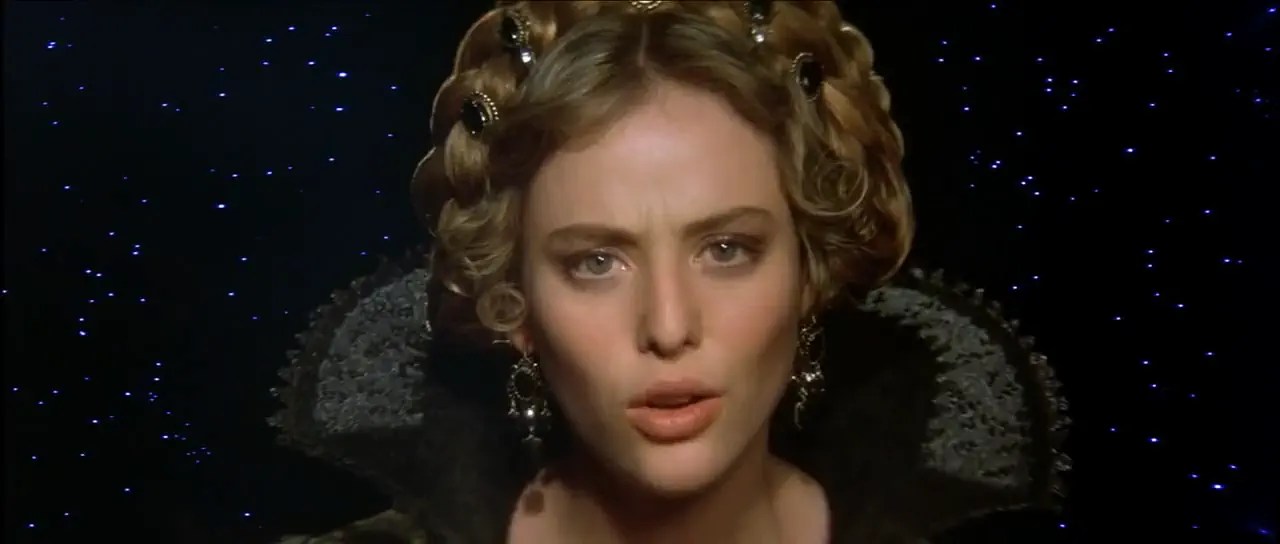
David Lynch’s 1984 film adaptation of Frank Herbert’s science fiction epic “Dune” is a film that divides opinion. With a budget of around 40 million US dollars, the film was one of the most ambitious projects of its time. The film was not only intended to bring Herbert’s complex novel world to life, but also to set new standards in science fiction. Lynch’s visionary and often experimental style produced a unique but polarizing interpretation of the material. The combination of epic action, experimental elements and top-class actors made “Dune” a bold, if flawed, film. But despite high expectations and a loyal book readership, “Dune” experienced a rocky road – both at the box office and in the reviews. This article examines the various facets of the film: its content, its special features, the comparison with the literary original, its cultural influence and its reputation then and now.
Plot
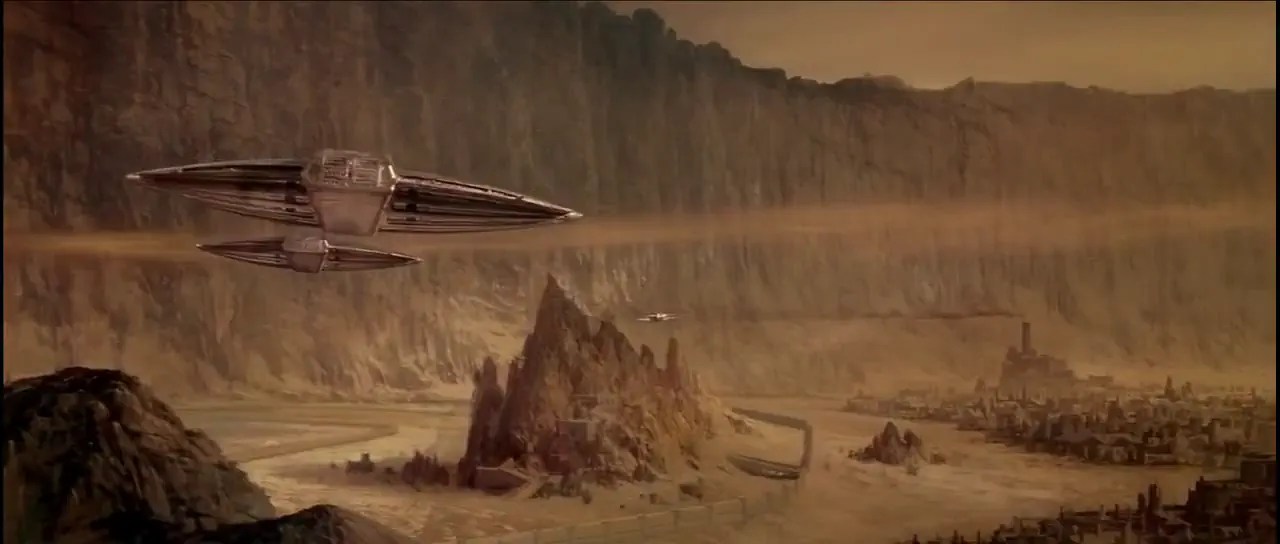
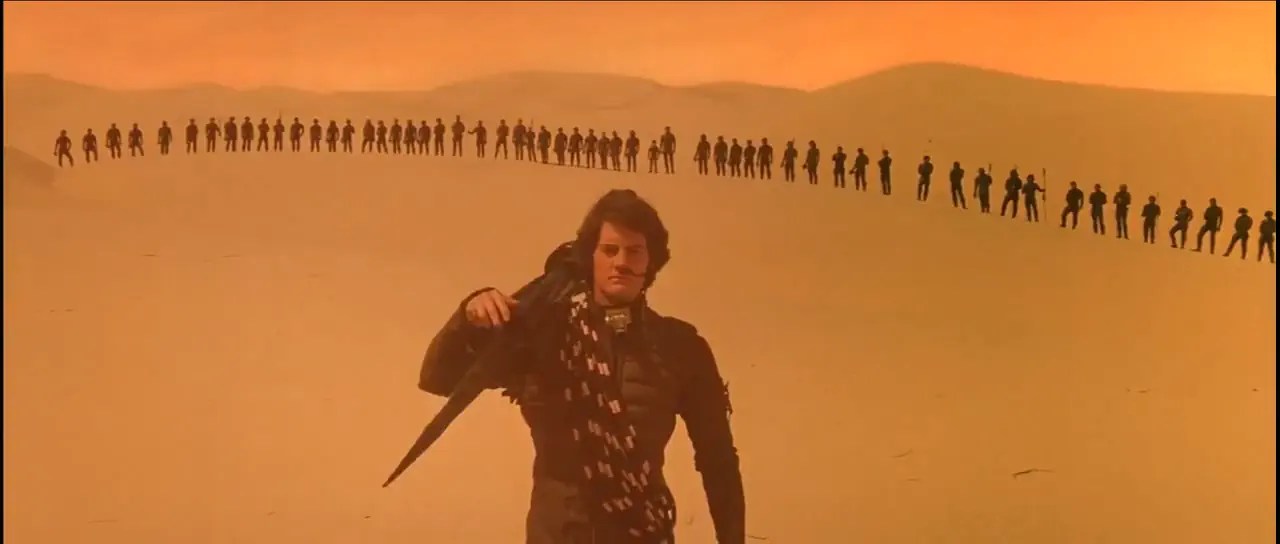
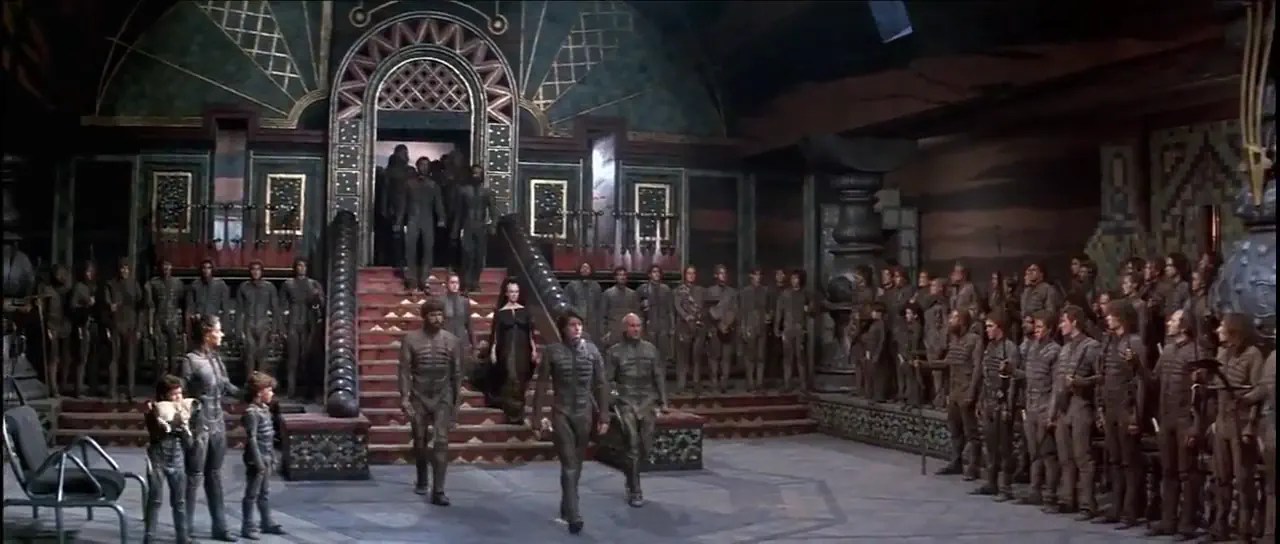
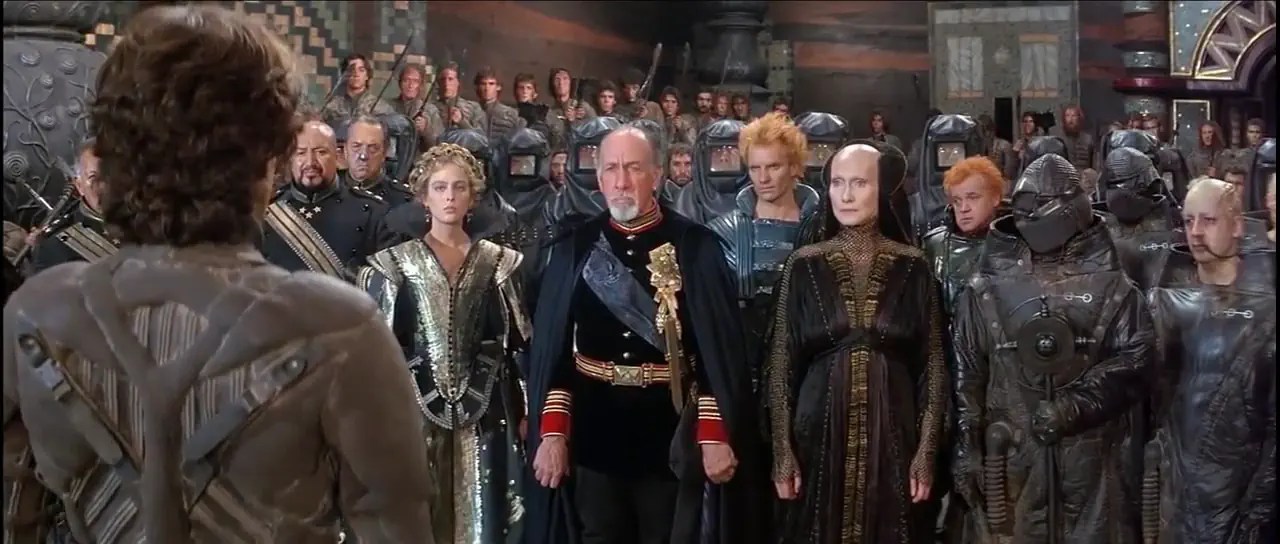
The story of “Dune” is set in a distant future in which intergalactic noble houses fight for control of the desert planet Arrakis. Arrakis is the only source of “Spice Melange”, a substance that enables travel through hyperspace and thus interstellar trade. Spice also has life-prolonging and mind-expanding properties, which further increases its importance. The story centers on Paul Atreides, the heir to House Atreides, which is betrayed by its arch-enemy, House Harkonnen, through a conspiracy with the Emperor. After the destruction of his house, Paul flees into the desert with his mother Jessica and joins the Fremen, the native inhabitants of Arrakis.
Paul discovers that through his Bene Gesserit ancestry and the influence of the Spice, he develops unique abilities, including visions of the future and control over others through the “Voice”. In time, he becomes the leader of the Fremen and plots an uprising against the Harkonnen and the Emperor to gain control of Arrakis. The action culminates in a spectacular battle in which Paul uses the giant sandworms of Arrakis to defeat the enemy forces. The final confrontation with the Emperor reveals Paul’s true power and destiny, not only becoming the ruler of Arrakis but also marking the beginning of a new galactic era. The dark undertones of his prophesied reign hint at a profound change in the universe.









Actors
The cast of “Dune” is an impressive ensemble of talented actors who breathed life into the complex characters of the novel. Kyle MacLachlan debuted as Paul Atreides, bringing a mix of youthful insecurity and messianic determination to the role. Francesca Annis played Lady Jessica, Paul’s mother, with a fascinating combination of warmth and authority. Jürgen Prochnow was convincing as Duke Leto Atreides, a strong and honorable leader who nevertheless left a lasting impression in his brief screen time. Kenneth McMillan as Baron Harkonnen embodied a grotesque and menacing version of the antagonist, whose disgusting appearance was deliberately exaggerated to emphasize his malevolence. Sting as Feyd-Rautha brought a charismatic and diabolical flavor to the role of the young Harkonnen heir that lingers in the memory.
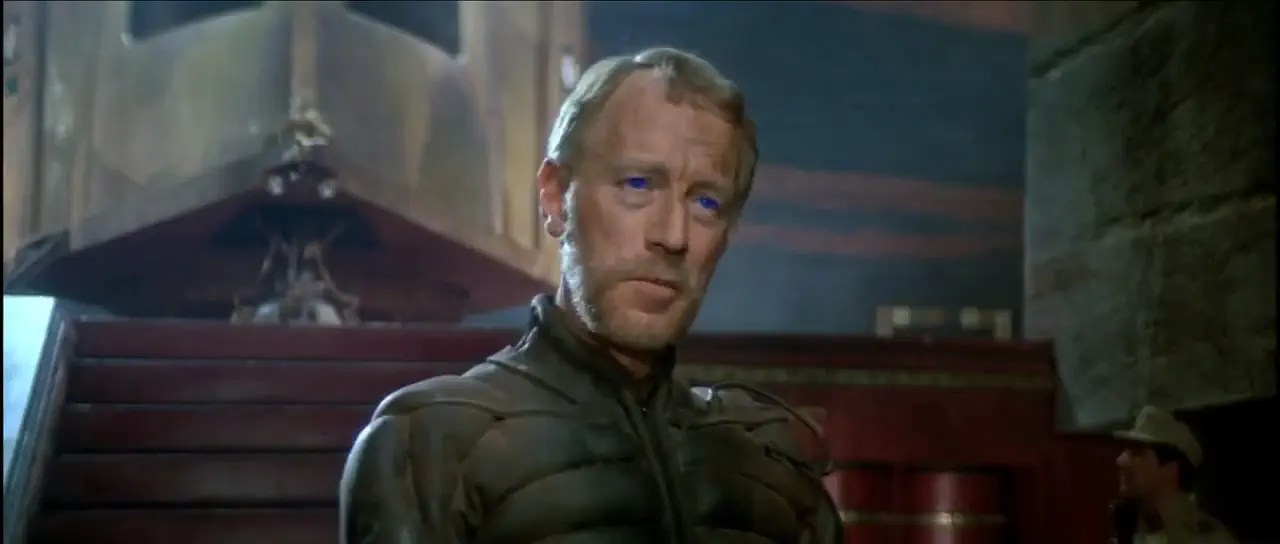
Other notable performers include Patrick Stewart as Gurney Halleck, the loyal weapons master whose portrayal was marked by integrity and experience, and Max von Sydow as Dr. Kynes, the planetary ecologist who symbolized the vision of a green Arrakis. Everett McGill as Stilgar, the leader of the Fremen, and Sean Young as Chani, Paul’s love interest, rounded out the ensemble cast and brought important emotional and cultural dimensions to the story.







Trivia
Some interesting facts about the production of “Dune”:
- Filming took place mainly in Mexico, where elaborate sets were constructed to bring the world of Arrakis to life. Among other things, huge sets were built for the Emperor’s Palace and the Fremen Caves.
- The soundtrack was composed by the rock band Toto, giving the film a unique musical flavor. The epic main theme of the movie is still a highlight for fans today.
- The famous “desert mouse” Muad’Dib, after whom Paul Atreides takes his Fremen name, was portrayed by trained animals and animatronic models. This portrayal ensured particular authenticity.
- Director David Lynch later refused to make a directors‘ cut of the film as he was dissatisfied with the final version, which had been severely shortened by producer intervention. He publicly distanced himself from the final product.
- “Dune” was originally intended to be filmed by Alejandro Jodorowsky, whose failed project itself achieved cult status and provided a template for Lynch’s epic approach.
Comparison to the book
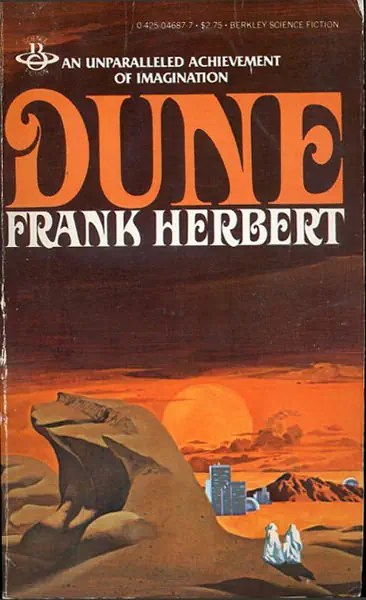
The film adaptation of “Dune” remains roughly faithful to the literary original, but struggles with the complexity of Herbert’s work. The novel is rich in political intrigue, philosophical ideas and detailed descriptions of the world, which posed a challenge for the adaptation. Many of the book’s more subtle themes, such as environmental issues, the influence of religion and the dynamics of messianism, were only dealt with superficially in the film. In particular, the detailed description of the relationships between the noble houses and the effects of Spice’s addiction were lost in the cinematic realization. In addition, significant parts of the plot had to be shortened in order to keep to the running time of around two hours, which led to an often hectic narrative pace.
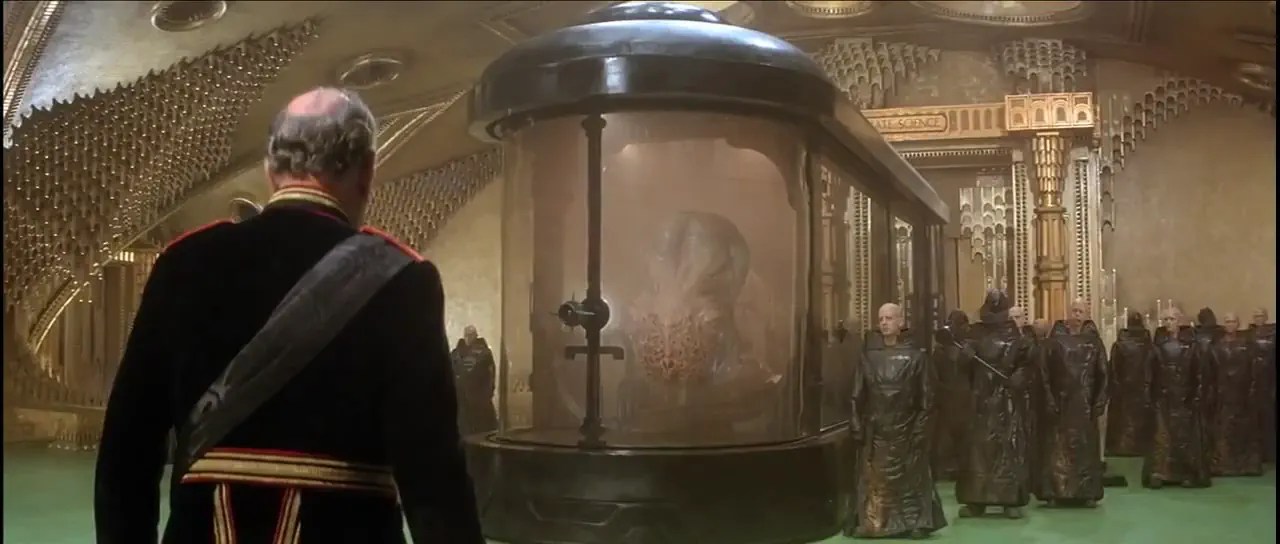
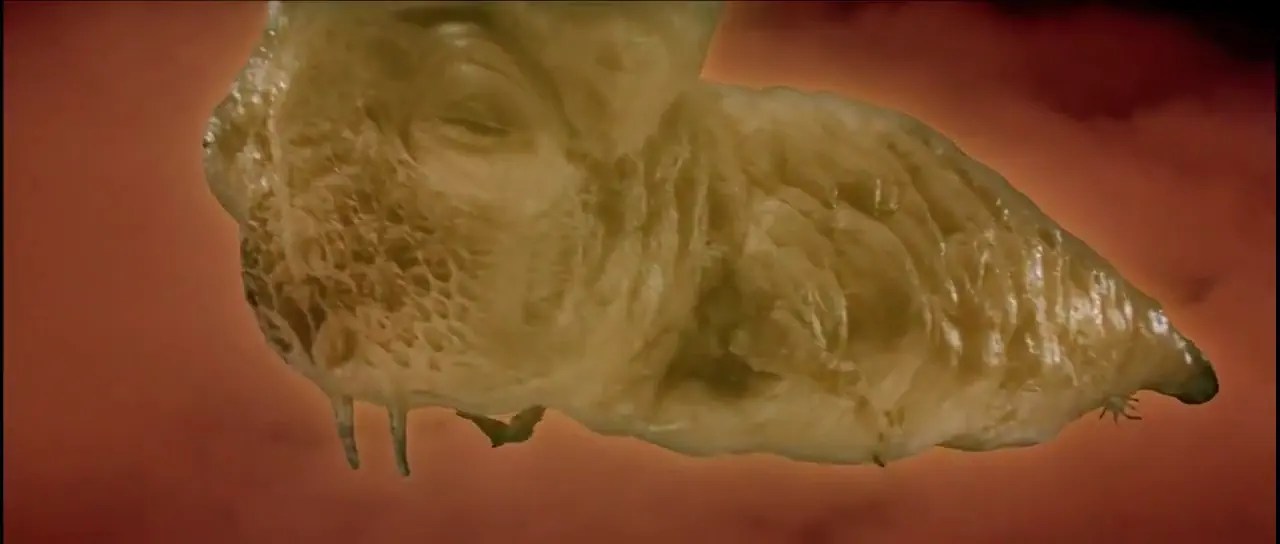
The inner monologues of the characters, which take up a lot of space in the book, were replaced by voice-over inserts that were not always convincing. Another major mistake concerns the portrayal of the “navigators”. In the book, they are described as mysterious beings who, through excessive consumption of Spice, are able to bend space-time and enable interstellar travel. In the movie, this essential ability is only hinted at as a vague idea, which means that the Navigators‘ central influence on galactic politics and trade is lost. Readers of the book therefore missed the depth and complexity of the original, while newcomers found the plot confusing and difficult to access.
Cultural influence
Despite its initial weaknesses, “Dune” achieved cult status in the years following its release. The aesthetic design of the film – from the elaborate costumes to the monumental sets – has inspired numerous works of science fiction. The depiction of the gigantic sandworms became an iconic image and influenced later adaptations of the material as well as other science fiction films. The vision of Spice-induced dreams and the concept of the “Bene Gesserit” as a manipulative religious organization have also left deep traces in pop culture. Elements of Lynch’s “Dune” can be found in films, series and even video games inspired by his unique visual language. Denis Villeneuve’s highly acclaimed 2021 film adaptation has adapted many aspects of the book more faithfully, but also draws in part on the visual language of Lynch’s version.
Reviews at the time
“Dune” was harshly judged by critics on its release. Many criticized the complex plot, which was often described as confusing, and the fragmented narrative style, which made access difficult. Character development was also criticized, as the running time offered little room for in-depth relationships. The producers‘ recent interventions and the resulting shortened version were seen as particularly problematic. Nevertheless, the visuals – particularly the elaborate set designs and special effects – were praised. David Lynch’s personal vision and experimental approach met with mixed reactions: While some found them inappropriate, others recognized them as bold approaches to interpreting the novel. Despite these controversies, some critics praised the ambitious approach and described “Dune” as a film ahead of its time.
Reputation today
Today, “Dune” is considered an underrated classic by many fans of the science fiction and fantasy genres. The film has found a loyal following who appreciate its unique atmosphere, aesthetic design and unconventional style. The film is frequently praised in fan forums and at retro film festivals, and serves as a starting point for discussions about the possibilities and limitations of literary adaptations. Compared to more recent adaptations, Lynch’s work is often described as “stylistically daring but narratively flawed”. Nevertheless, “Dune (1984)” remains a polarizing work – both celebrated for its ambition and criticized for its flaws. The film has managed to create its own niche within science fiction film history.
Summery
“Dune (1984)” is a film that, despite its flaws and harsh criticism at the time, has left an unmistakable mark on film history. David Lynch’s visionary approach produced a unique, if imperfect, adaptation of Frank Herbert’s masterpiece. The film is a fascinating example of the challenges and possibilities associated with adapting a literary classic. Today, “Dune (1984)” is seen as a mixture of ambitious experiment and cinematic curiosity that, despite its flaws, maintains a firm place in science fiction history.
More
Magazine Scans
Bravo 1984/50

Trailer
External links
- Dune at IMDb
- Dune at AllMovie
- Dune at Rotten Tomatoes
- Dune at Wikipedia (en)
- Dune at Wikipedia (de)
Keywords: David Lynch, Dune 1984, Frank Herbert, Science fiction films, Cult classics, Film adaptation, Arrakis, Spice Melange, House Atreides, House Harkonnen
Hashtags: #DavidLynch #Dune1984 #FrankHerbert #SciFiFilms #CultClassic #FilmAdaptation #Arrakis #SpiceMelange #HouseAtreides #HouseHarkonnen








 McHenry's Lair
Kommentar verfassen :