

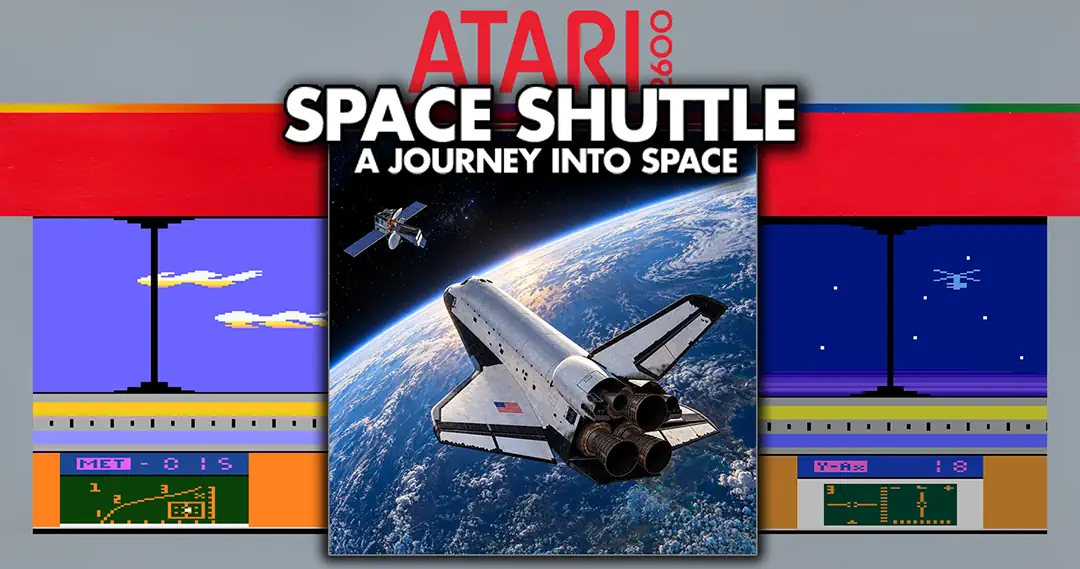
Serious Simulation
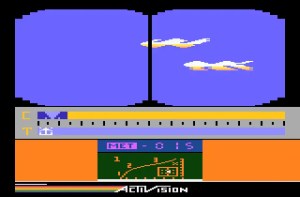
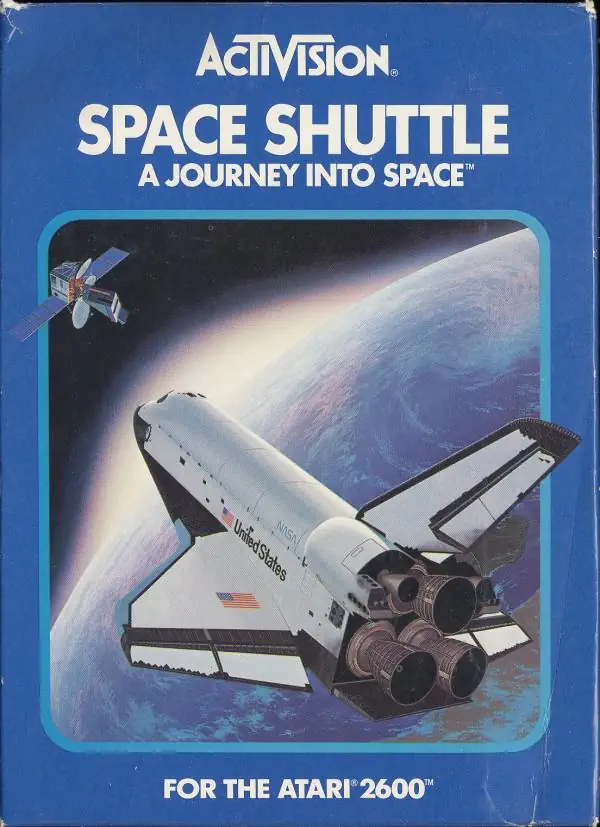
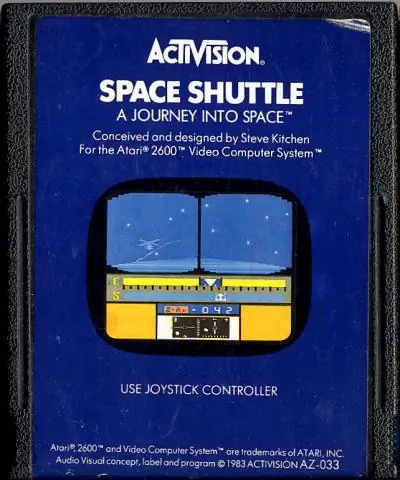
When Space Shuttle: A Journey into Space appeared for the Atari 2600 in 1983, it looked almost like a visitor from another world. The console was famous for fast, immediately understandable games such as Pitfall!, River Raid, and countless arcade conversions. Activision’s Space Shuttle, by contrast, asked players to read instruments, follow checklists, conserve fuel, control pitch and trajectory, perform orbital rendezvous procedures, survive atmospheric reentry, and finally land the spacecraft safely.
Designed by Jessica Stevens, credited at the time as Steve Kitchen, Space Shuttle was conceived less as an arcade game than as an attempt to compress the experience of operating NASA’s Space Shuttle into a home videogame. Stevens conducted extensive research, obtaining technical information from NASA, Rockwell, IBM and other sources and even spending time with a shuttle simulator. In a 1984 interview, the designer described studying detailed shuttle documentation and visiting Edwards Air Force Base while researching the project.
The timing could hardly have been better. NASA’s Space Shuttle program was still new, spectacular and highly visible. The first orbital shuttle flight had taken place only in 1981, and the spacecraft represented an optimistic vision of reusable space travel. Instead of turning that subject into another game about shooting aliens, Activision tried to reproduce the procedures, terminology and responsibilities of an actual mission.
That decision made Space Shuttle one of the strangest and most ambitious cartridges released for the Atari 2600. It was demanding, occasionally intimidating and certainly not designed for players looking for instant action. Yet those same qualities made it remarkable.
Flying Missions
The objective sounds straightforward: launch the shuttle, reach orbit, rendezvous and dock with a malfunctioning satellite, return through the atmosphere and land safely. Actually accomplishing those tasks is another matter.
The game divides the flight into six principal stages: launch, orbit stabilization, docking, deorbit burn, reentry and landing. Each stage requires different procedures. During launch, for example, the player must activate the engines at the correct moment, regulate thrust and follow the computer-generated trajectory. Reaching orbit too inaccurately wastes fuel and makes the later rendezvous considerably harder.
Once in orbit, the player pitches the shuttle into the correct orientation and opens the cargo bay doors. The simulation then becomes a lesson in relative motion. Docking is not simply a matter of steering toward the satellite. Position and velocity have to be corrected across several axes, using the shuttle’s Reaction Control System or Orbital Maneuvering System. The official manual emphasizes that speed is just as important as position—a surprisingly sophisticated concept for a console game released in 1983.
Returning to Earth is equally procedural. The player performs a deorbit burn, survives reentry and eventually lines the shuttle up with the runway. During final approach, instruments must be monitored while horizontal and vertical alignment are continuously corrected. The landing gear has to be lowered at the appropriate moment before touchdown. A successful mission concludes with the welcome sight of “WELCOME HOME.”
Recognizing that this was a lot to learn, Activision provided three flight modes. Flight 1, the Autosimulator, largely demonstrates the mission while allowing limited player intervention. Flight 2 removes fuel consumption and lets the onboard computer compensate for some errors. Flight 3, designated STS 101, is the full simulation, with fuel management and mission-ending failures enabled.
Successful pilots are evaluated according to both their number of satellite dockings and the amount of fuel remaining. Rankings range from Payload Specialist and Mission Specialist to Pilot and Commander. Achieving Commander requires at least six dockings while retaining 7,500 fuel units—a formidable challenge.
Technical Ambition
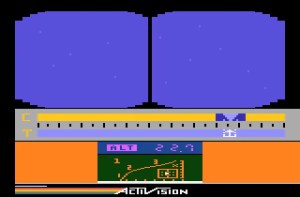
The technical achievement is arguably even more impressive than the game design. The Atari 2600 contains only 128 bytes of system RAM and a roughly 1.19 MHz processor. It also lacks a conventional framebuffer: software has to construct the television image line by line while the display is being generated.
Within those severe restrictions, Space Shuttle presents a cockpit-like instrument display, an external view, changing flight phases, numerical information, warning systems, sound effects and a simulation model responsive to the player’s actions. Rather than attempting detailed graphics of every component, the game relies on abstraction. Dots, lines, bars and numerical readouts communicate information that modern games might represent with elaborate three-dimensional instruments.
Its most ingenious feature, however, exists outside the television screen. The normal Atari joystick has only one button, clearly insufficient for a spacecraft simulation. Instead of abandoning complexity, Activision transformed the switches on the Atari console itself into part of the cockpit.
The Color/B&W switch controls the primary engines. The left difficulty switch operates backup engines. The right difficulty control handles functions associated with the cargo doors and landing gear. Game Select becomes a status control, while Game Reset activates the countdown. Even the console’s power control is identified as internal spacecraft power. The boxed game therefore included a “Flight Deck Console” overlay placed over the Atari’s switches so that their new functions could be identified.
The result is a clever piece of interface design. Hardware normally used only before a game began suddenly becomes an active control panel. Players physically reach away from the joystick to operate different systems, creating a primitive but surprisingly effective impression of managing a cockpit. Contemporary magazines specifically noticed this transformation of the console into part of the simulation.
Shuttle Trivia
The extraordinary complexity of Space Shuttle produced several memorable details. Its manual was not an afterthought but an essential component of the experience. Rather than a few pages explaining basic controls, players received what was effectively a miniature flight manual full of terminology, procedures, diagrams and checklists. Starting the cartridge without studying those instructions could leave a new pilot wondering how to get off the launch pad.
The designer’s research was unusually extensive for an early console game. In interviews, Stevens described collecting technical documentation from NASA and aerospace contractors and studying the real shuttle program before reducing its essential ideas into something the Atari could reproduce.
The simulation even contains an exceptionally difficult hidden reward. Players capable of docking six times and returning with at least 7,500 units of fuel can achieve the top Commander qualification. The feat became famous among Atari enthusiasts precisely because normal play makes conserving that much fuel extremely difficult.
The concept was not confined to the Atari 2600 either. Versions later appeared for systems including the Atari 5200, Atari 8-bit computers, Commodore 64, ZX Spectrum, Amstrad CPC and MSX. Those machines could offer different control arrangements and improved technical capabilities, but the original remains particularly distinctive because the physical Atari console itself forms part of the spacecraft interface.
Contemporary Reviews
Critics at the time understood that Space Shuttle was unusual. Their reactions repeatedly combined admiration for its ambition with warnings about its difficulty.
The November 1983 issue of The Video Game Update, later known as Computer Entertainer, greeted the game enthusiastically, calling it “a sure winner.” The magazine even featured the designer demonstrating the simulation to its staff.
Electronic Games was similarly impressed. In January 1984 it argued that anyone still dismissing the Atari 2600 as merely a toy should look at Space Shuttle, praising both the simulation concept and the way the console switches had been transformed into flight controls.
Other critics identified the price of that sophistication. Writing in Video Games in April 1984, Dan Persons observed that Space Shuttle was “not a game for everybody.” Players accustomed to straightforward shoot-’em-ups could find its complexity frustrating, while those prepared for a deeper experience might see it as a “monumental achievement.”
That tension remains central to the game’s reputation. By conventional arcade standards, Space Shuttle can feel slow and unforgiving. Learning the procedures requires considerable effort before the player even becomes competent. But judged as a simulation, those same characteristics become part of its appeal. Success feels meaningful precisely because the game refuses to hand it over easily.
Its critical reputation ultimately became impressive enough for Electronic Games to name Space Shuttle its Videogame of the Year in the magazine’s 1985 Arkie Awards. The accompanying description praised what its designer had accomplished with the aging Atari hardware.
Lasting Influence
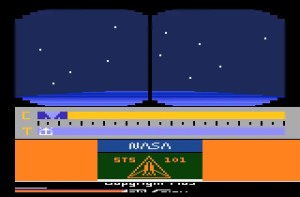
Space Shuttle did not create a long-running franchise, nor did it become the model that every console game immediately followed. Its cultural importance is subtler. It demonstrated that a home videogame console associated primarily with arcade entertainment could support something resembling a serious simulation.
That was significant in the early 1980s. Flight simulation was more naturally associated with home computers, whose keyboards offered many controls and whose audiences were accustomed to more complicated software. Space Shuttle tried to deliver comparable complexity through a console built around a one-button joystick. Its solution—turning every available physical switch into part of the interface—was both practical and theatrical.
The game also occupied an interesting territory between entertainment and education. Players inevitably encountered ideas such as orbital velocity, trajectory correction, fuel conservation, reaction-control thrusters, deorbit procedures and glide-based landing. The 1985 Electronic Games award commentary specifically noted that schools were using the simulation to introduce concepts and provide students with a form of vicarious space-flight experience.
Today, Space Shuttle is also valuable as an example of constraint-driven game design. Modern simulations can rely on gigabytes of data, complex physics engines and dozens of controller inputs. Activision had 128 bytes of console RAM, extremely limited graphics hardware and a single-button joystick. Instead of eliminating complexity, the designers found unconventional ways to communicate it.
For historians of videogames, that makes Space Shuttle more than an eccentric Atari cartridge. It illustrates how developers were already experimenting with realism, specialized interfaces and simulation decades before such features became common on home consoles.
Final Approach

More than four decades after its release, Space Shuttle: A Journey into Space remains one of the Atari 2600’s most fascinating technical experiments. It is not the system’s most immediately entertaining game, nor its easiest to recommend to someone seeking a few minutes of casual retro gaming. It expects patience, study and repeated failure.
Yet that is exactly what gives the cartridge its identity.
Activision attempted to transform one of the simplest successful videogame machines ever sold into a miniature spacecraft simulator. The developers turned console switches into cockpit controls, transformed primitive pixels into instruments and orbital indicators, and replaced the familiar pursuit of a high score with the much more intimidating objective of completing an entire shuttle mission.
The simulation obviously cannot reproduce the true complexity of operating a spacecraft. What matters is that it tries to communicate the logic of that experience: preparation, procedures, instrument monitoring, precision and the constant possibility that a small error early in the mission will become a serious problem later.
Contemporary critics recognized the audacity of that goal, and the game’s eventual Videogame of the Year award confirmed that its ambition was appreciated even during the arcade-dominated early 1980s.
For most Atari games, mastery means learning enemy patterns or improving reflexes. In Space Shuttle, mastery means understanding a system. When the runway finally appears after launch, orbital maneuvering, docking and reentry, the simple words “WELCOME HOME” feel less like the end of another videogame level and more like the conclusion of a small personal space mission.
That was an extraordinary thing for an Atari 2600 cartridge to achieve in 1983.
More
Box and Cartridge









Kommentar verfassen