

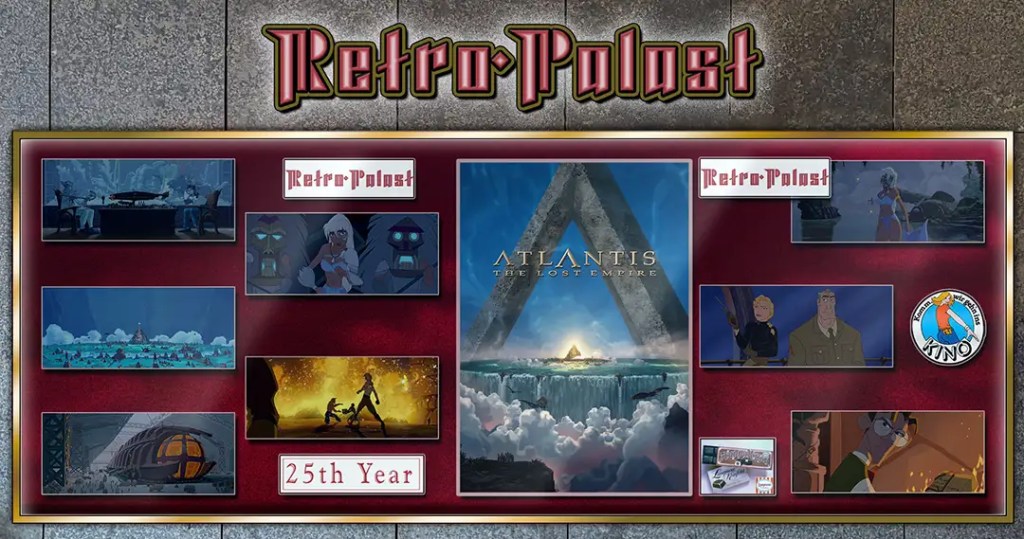
„Mercenary“?
I prefer the term „adventure capitalist“.
Underrated Masterpiece

There are Disney films that immediately become part of the official canon of all-time audience favorites. And then there are those works that only reveal their true greatness over the years. Atlantis: The Lost Empire—released in Germany as Atlantis – Das Geheimnis der verlorenen Stadt—clearly belongs to the second category. The film was released in 2001 and remains one of the most unusual entries in the Disney catalog to this day. Even at first glance, it becomes clear that the focus here is not on fairy-tale magic or musical formulas, but on exploration, adventure, science fiction, and a vast sunken mythology.

That is precisely what gives it its special status. Atlantis is not a “typical” Disney film—and that is exactly why it is one of the most exciting. Where other productions rely on songs, cute sidekicks, and romantic familiarity, this film dares to do something different: pulp-style exploration cinema, retro technology, mysterious languages, ancient civilizations, moral gray areas, and a sense of adventure that is surprisingly mature for Disney. Looking back, it seems almost tragic that the film wasn’t immediately hailed as a great classic at the time. Because from today’s perspective, Atlantis doesn’t seem like a failed attempt, but rather a bold outlier—one of the best Disney animated films ever made and an underappreciated masterpiece.

What’s fascinating about Atlantis is that it still feels fresh today. Not despite its age, but because of its originality. This film has edge, character, and a pulse all its own. It doesn’t feel like a product churned out from a template, but rather the result of a genuine artistic passion for world-building, form, pacing, and atmosphere. Many Disney films are popular. Atlantis, however, is one that you defend, discover, rediscover—and eventually love. Not as a guilty pleasure, but as grand, earnest adventure cinema in animated form.
The Great Adventure

At the center is Milo James Thatch, a young linguist and cartographer who works at the Smithsonian and has dreamed of finding Atlantis for years. To those around him, he’s a nutcase, a friendly oddball who clings to a legend instead of coming to terms with reality. Yet it is precisely this obsession that makes him the ideal hero. Milo isn’t one of those polished Disney protagonists who are immediately cast as heroes. He’s nervous, awkward, bookish, a bit socially awkward—and precisely because of that, wonderfully human. When he gets the chance to set off on an expedition to Atlantis, the adventure he’s been working toward his whole life finally begins.

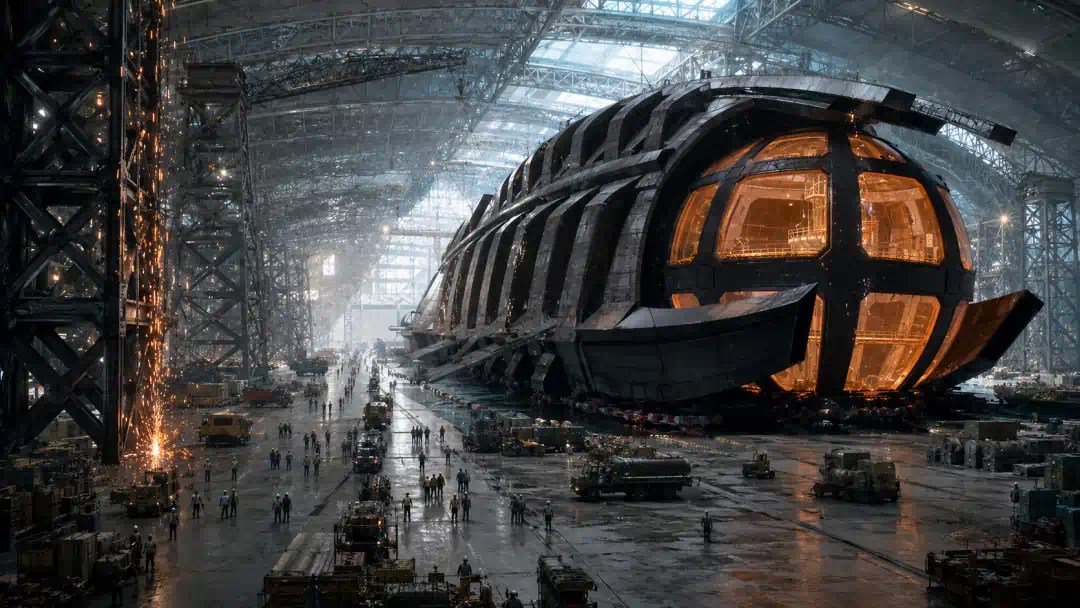
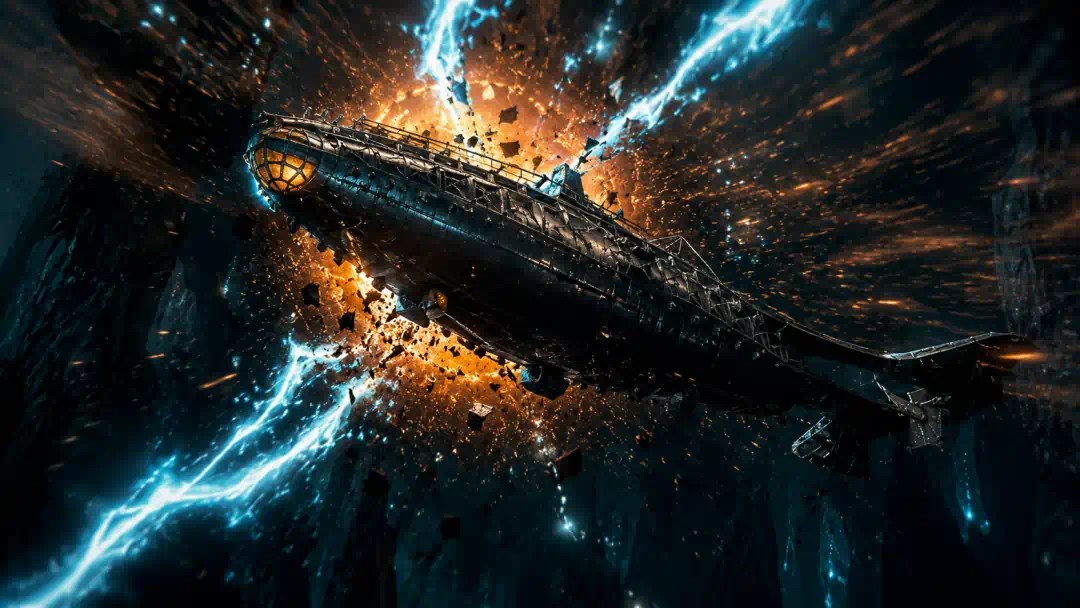
What follows is, at first, a classic exploration adventure in its purest form. Aboard the massive submarine Ulysses, Milo travels into the depths of the ocean with a motley but highly specialized crew. This first section alone is pure gold: the majestic technology, the pressure of the mission, the underlying danger, and the feeling that an ancient secret could be waiting around every corner. The journey to Atlantis is not merely a change of location, but a descent into another world. The film excels at turning myth into tangible suspense. Here, Atlantis is not a postcard backdrop, but a destination one must earn.

When the expedition actually reaches the sunken city, the film shifts into a second, even more intense phase. There, Milo meets Princess Kidagakash “Kida” Nedakh, the daughter of the Atlantean king. With her, the film opens up not only visually but also emotionally. Suddenly, it is no longer just about finding a lost empire, but about preserving it. Atlantis is not a dead ruin, but a wounded yet living culture. Milo realizes sooner than many others that knowledge does not mean ownership and that discovery does not automatically grant the right to appropriation. This is precisely where the film proves itself far wiser than it was often given credit for at the time.

For Atlantis is, at its core, also a film about greed, imperialism, and betrayal. The expedition, which initially appears to be a collaborative quest for knowledge, increasingly turns out to be a plundering expedition. Commander Rourke, initially portrayed as a tough, reliable expedition leader, reveals a destructive logic: for him, Atlantis is not a wonder, but a resource. Milo, on the other hand, evolves from a ridiculed bookworm into the moral center of the film. He defends Atlantis not because he wants to find glory there, but because he realizes that some things must be protected, not conquered. The finale combines precisely this ethical decision with a grand, operatic action climax—and is one of the reasons why the film resonates so long after viewing.
Powerful Voices

The original cast is also a major reason why the film still works so well today. Michael J. Fox gives Milo a perfect blend of intelligence, nervousness, warmth, and enthusiasm. He doesn’t portray the character like an archetypal hero, but like someone who draws all his energy from passion rather than posturing. This makes Milo instantly likable. James Garner gives Commander Rourke that rugged authority that makes the character initially credible and charismatic before he reveals his darker side. Cree Summer, in turn, imbues Kida with strength, dignity, and a presence that goes far beyond the typical Disney princess role. Kida never comes across as merely a love interest, but as a historical, spiritual, and political figure with real weight.

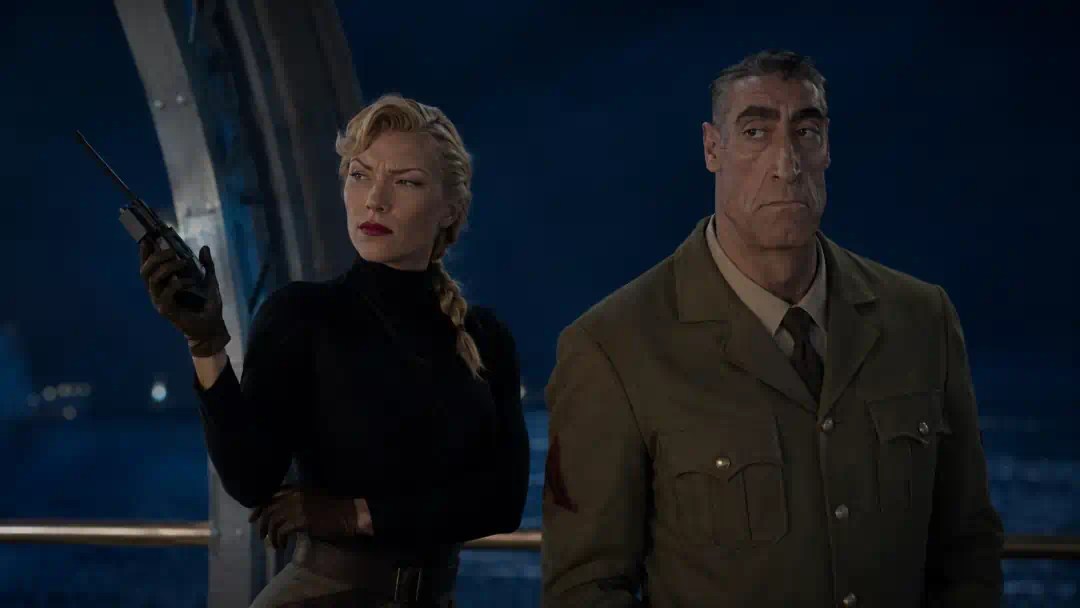
Added to this is an ensemble cast that brings the film to life: Don Novello as explosives expert Vinny, Phil Morris as Dr. Sweet, Claudia Christian as Helga Sinclair, Jacqueline Obradors as Audrey Ramirez, Florence Stanley as Packard, John Mahoney as Whitmore, Leonard Nimoy as King Kashekim Nedakh, Corey Burton as Molière, and Jim Varney as Cookie. It is precisely these supporting characters that make Atlantis so memorable. They have quirks, professions, temperaments, dialects, little quirks, and above all, the sense that they come from a larger world. You immediately believe that this crew has been living, working, and arguing even before the film began. Many animated films have side characters. Atlantis has a team.

What’s particularly strong is that the voices never feel like celebrity showcases. Of course, you recognize the names, but the cast isn’t an end in itself. It carries the characters. That’s an important difference. In an era when many animated films market their casts almost like marketing campaigns, Atlantis feels pleasantly unobtrusive. The voice actors help build a world instead of pushing themselves into the foreground. That is often a sign of class.
Unique Look

If one had to name just one reason why Atlantis still looks so distinctive today, it would be its art style. The film features an angular, graphic, almost comic-book-like visual language that immediately sets it apart from many other Disney films. Atlantis doesn’t look soft and rounded, but sharp, striking, and deliberately shaped. This visual world isn’t just meant to be cute. It’s meant to make an impression.

The result is breathtaking. The machines, the submarine, the Leviathan, the architecture of Atlantis, the crystal energy, the rock formations, the symbols, and the color palette all come together to create a world that feels both ancient and futuristic. The film blends Jules Verne-style adventure, dieselpunk aesthetics, science fiction, and archaic mythology into a style that feels neither entirely classic nor entirely modern. That is precisely why it ages so well. Many CGI films of its era look technically outdated today. Atlantis, on the other hand, possesses a stylized visual language that relies not on short-term realism but on design. And good design lasts longer.

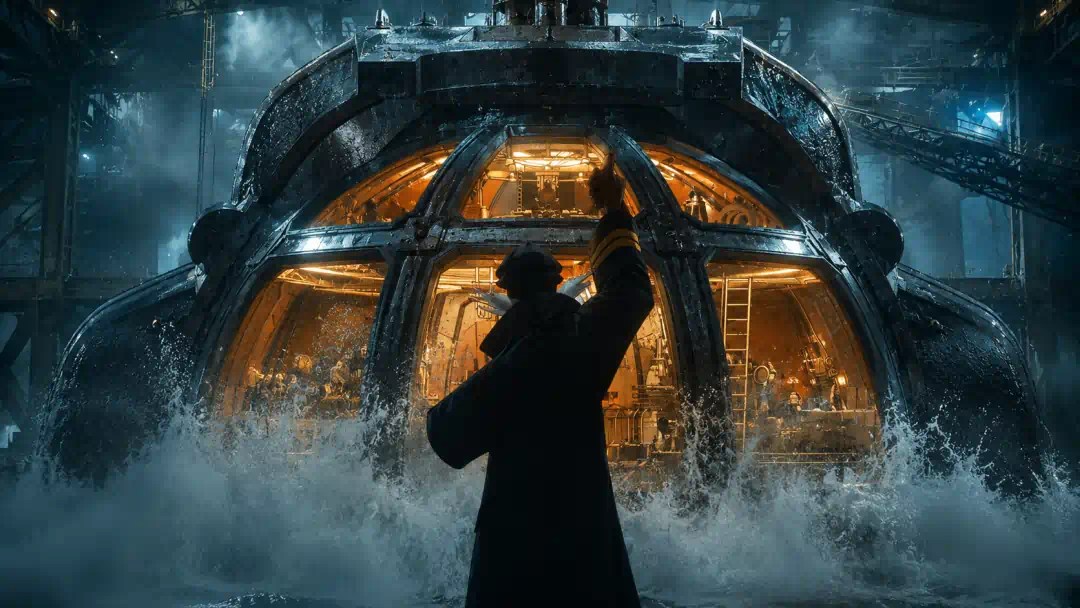
The dieselpunk aesthetic, in particular, is a crucial part of its appeal. Atlantis thrives on heavy machinery, industrial forms, metallic surfaces, massive vehicles, and a design that radiates both the future and the past. The submarine, the expedition’s equipment, and the entire technical visual language do not come across as whimsical or Victorian-dreamy, but rather as robust, functional, and full of weight. It is precisely this slightly rough, industrial flair that gives the film its unique identity and makes it stylistically so much more distinctive than many other Disney productions.

Added to this is the cinematic direction. Atlantis often feels less like a typical animated musical and more like an animated adventure blockbuster in widescreen. The action is spatial, the images have depth, the sets carry weight, and even dialogue scenes possess a dynamism that is more reminiscent of big-screen cinema than of pure family entertainment. What some critics at the time saw as a departure from the Disney standard is, from today’s perspective, one of the film’s greatest strengths.
Special Details

One of the film’s most delightful details is that Atlantis deliberately breaks with Disney conventions. The film dispenses with songs and the typical cute sidekicks, focusing instead more heavily on adventure, action, and a dynamic that is more reminiscent of pulp science fiction. At first, this sounds like a simple production decision, but it’s actually a statement: Back then, Disney could still experiment with what else an in-house animated film was allowed to be. Atlantis is thus not just a film, but also a glimpse into an alternative Disney future—a future in which the studio might have ventured into such daring genres more often.

Equally wonderful is the attention to world-building. In the film, Atlantis doesn’t just feel like a backdrop, but like a culture with its own language, symbolism, history, and spirituality. You might not always consciously notice such details, but you can feel them. They give Atlantis the feel of a real, historically developed civilization. The overall rougher tone, the military expedition, the technology, and the moral conflicts also make the film a special case within the Disney universe.

And then, of course, there’s perhaps the most wonderful piece of trivia of all: Atlantis still feels like a film that cries out for more. For sequels, for series, for art books, for games, for a deeper immersion into this world. When a work still evokes this desire decades later, it’s usually because it left the audience with more than just entertainment. It left them with imagination.
Underestimated at the Time

The contemporary reaction was mixed. While many critics praised the pacing, visual spectacle, and ambition, they criticized the character development or plot coherence. This explains why Atlantis wasn’t immediately hailed as a great Disney classic in 2001.

At the same time, it would be unfair to describe the response at the time as unanimous rejection. There were certainly voices that praised precisely the qualities that define its reputation today: visual impact, a sense of adventure, originality, and the courage to break the mold. Atlantis straddled these two poles back then: a film that some saw as an exciting experiment and others as a strange detour.

In retrospect, however, it becomes clear that many judgments were heavily influenced by the era in which the film was released. In the early 2000s, animated cinema was shifting significantly toward CGI, and Atlantis resembled neither the familiar Disney musical style nor the new, fully digital mainstream. It was, in a sense, caught between two stools. That is precisely why it may have been judged by the wrong criteria. Those expecting a classic Disney sing-along got a pulp-style science-fiction adventure. Those looking for the next CGI milestone got stylized 2D imagery with a character all its own. Back then, that was a problem for some; today, it’s the reason the film feels so special.
Later Became a Cult Classic

The true triumph of Atlantis is therefore not its initial release, but its lasting impact. Over the years, the film has undergone a significant reevaluation. Many viewers who loved the film as children or discovered it later now see more clearly how unusual it is within the Disney canon: more mature, edgier, more visual, more genre-driven, bolder. Atlantis is no longer a fringe product, but a cult classic with a loyal fan base.

The fact that this world still holds cultural significance is also evident in how the film continues to inspire discussions, fan art, rankings, and wish lists for potential reinterpretations. This is more than mere nostalgia. It is a sign that Disney created a story here that still has life in it. If a film still sparks new enthusiasm a quarter-century later, then it is no fossil. Then it is a world that has never quite disappeared.

And this is perhaps where its greatest cultural value lies: Atlantis represents a phase in Disney’s history when the studio was willing to take risks. For many fans, the film embodies a longing for a style of Disney that focuses more on adventure, myth, science fiction, and bold stylistic choices, rather than tailoring everything for maximum appeal. That’s why Atlantis is defended so passionately today. Not just because it’s underrated, but because it remains proof of how exciting Disney can be when the studio, for once, takes the most interesting route rather than the safest one.
A Disney Masterpiece
Atlantis: The Lost Empire is, for me, one of the best Disney animated films ever made. Not despite its uniqueness, but because of it. It is bigger, edgier, more atmospheric, and bolder than much of what is commonly associated with Disney. It possesses a distinctive look, a great ensemble cast, a fantastic adventure premise, and a genuine sense of world-building, scale, and tragedy. What some interpreted as a flaw in 2001—its departure from the formula—now appears to be its greatest strength. A misunderstood masterpiece is exactly the right description.
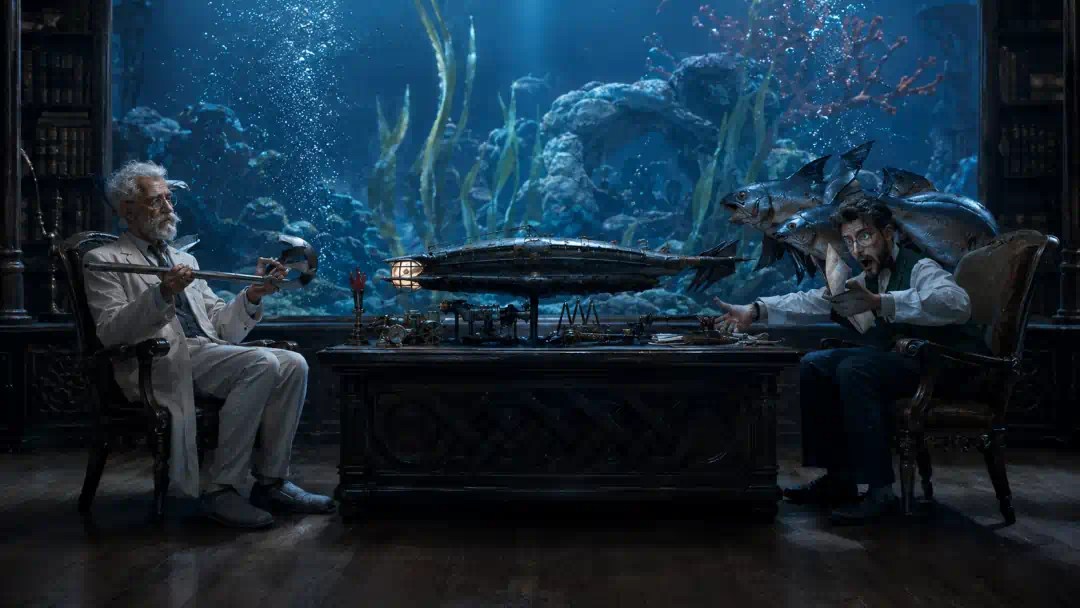
And yes: A 1:1 live-action adaptation of Atlantis would actually be exactly the kind of material that begs to be made. Not as an ironic reimagining, not as a sanitized reinterpretation, but as a serious, grand adventure epic with a genuine sense of myth, danger, and wonder. But given the direction Disney often seems to be heading in today, it unfortunately seems rather unlikely that Atlantis, of all films, will get the uncompromising, worthy live-action adaptation it deserves. Perhaps that’s a shame. But perhaps it’s also a quiet advantage. Because that way, Atlantis: The Lost Empire remains what it has long been: a unique animated film that doesn’t need to be replaced, but should finally be honored for what it has always been—a lost empire, yes, but above all a lost treasure.
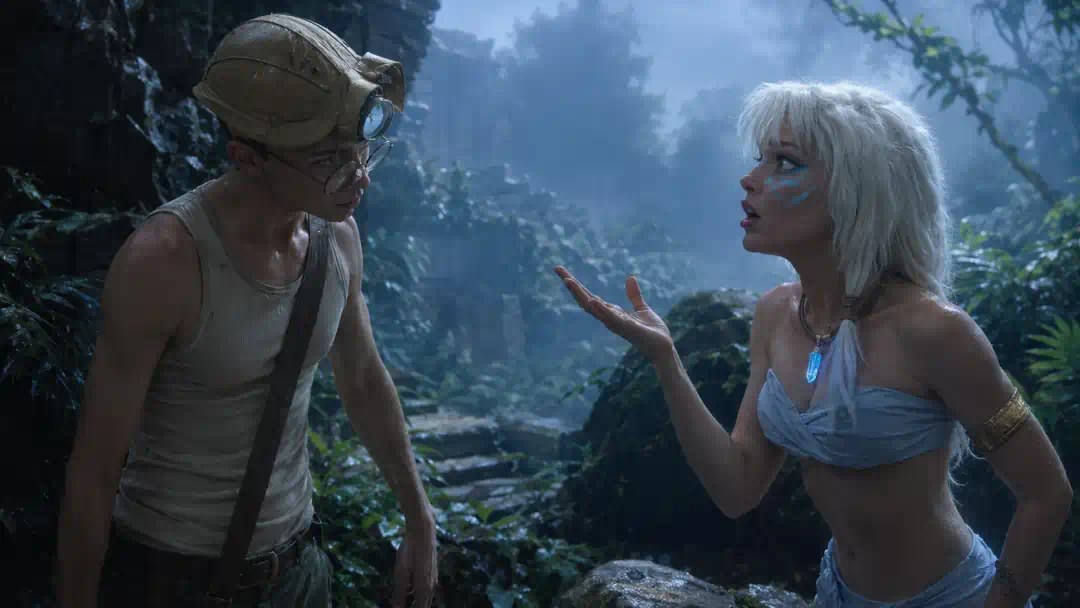
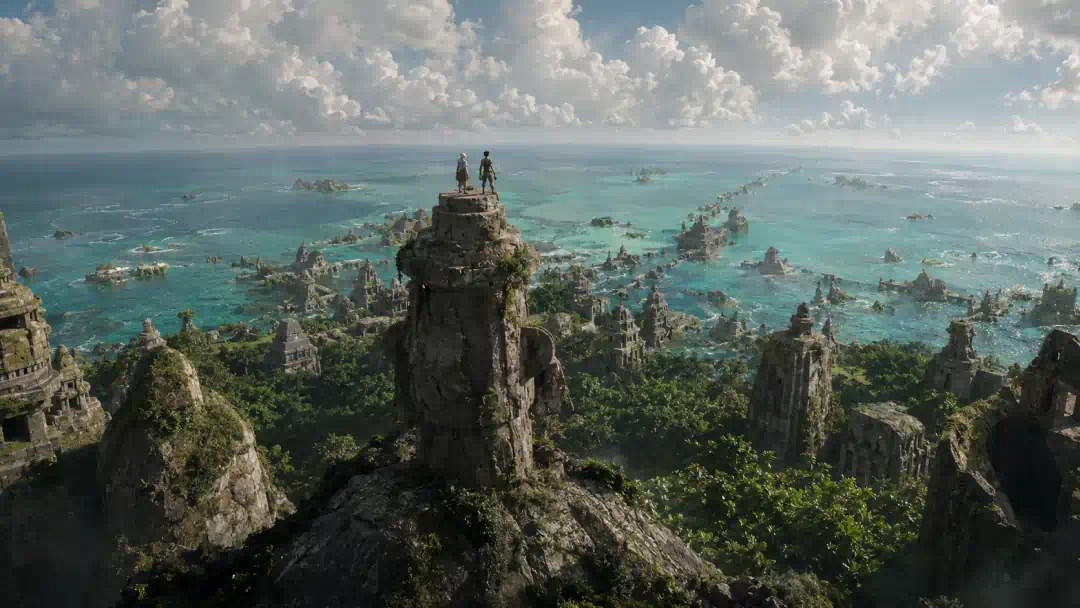
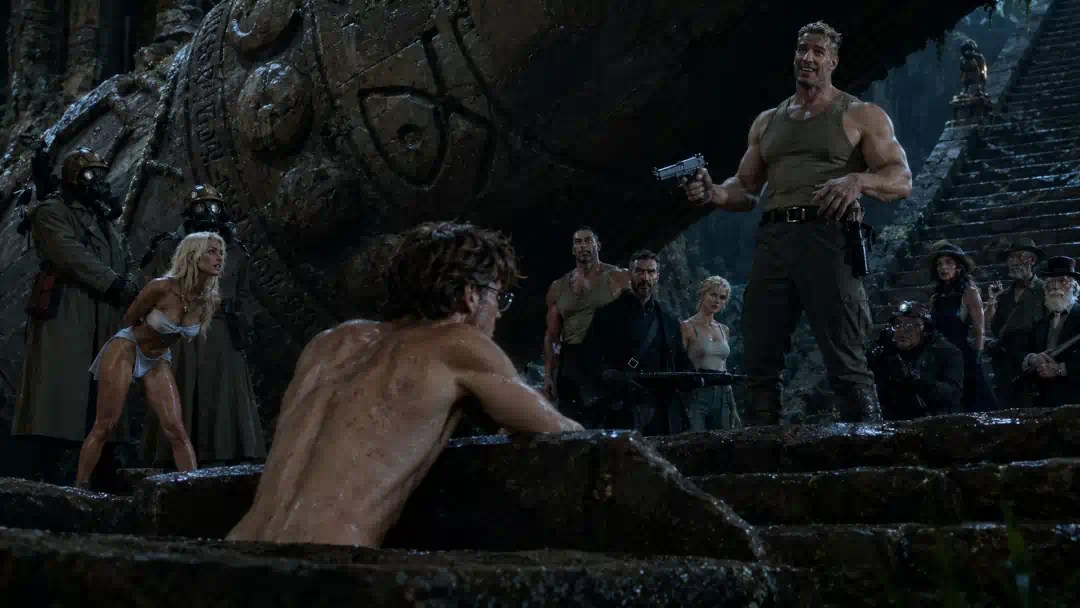
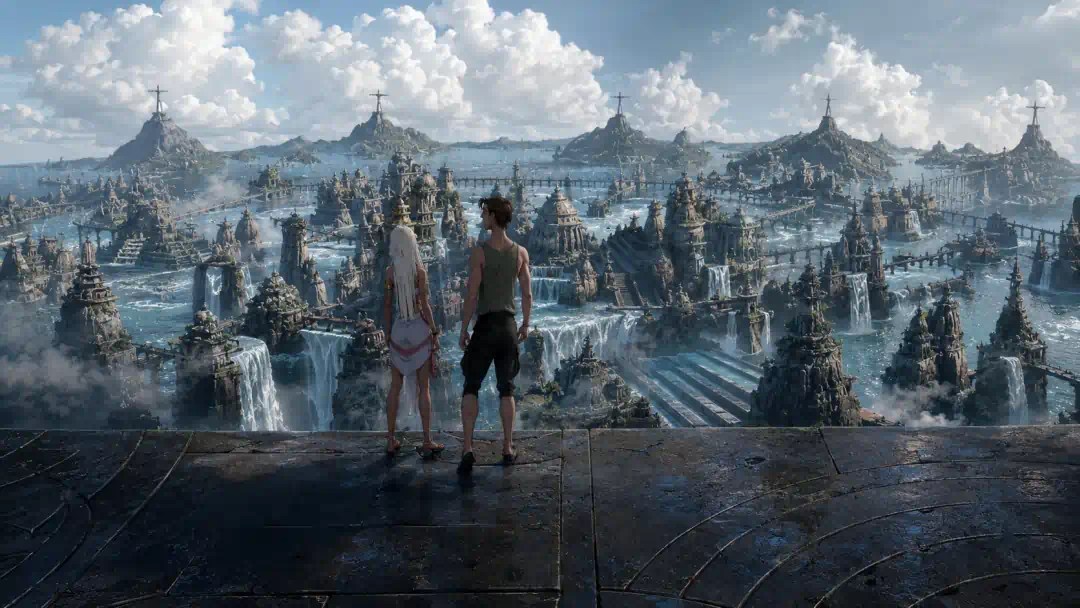
A few concept images for a live-action version, (ChatGPT)



More
Trailer
Notice Regarding Image Rights and Copyrighted Material
All images, film stills, posters, logos, trailer excerpts and other copyrighted materials used in this article are used solely for editorial reporting, film criticism, review and illustrative purposes related to the respective content.
Unless otherwise stated, all copyrights, trademark rights and other intellectual property rights in the materials used remain with their respective rights holders, including film studios, distributors, production companies, photographers, artists or other licensors.
The materials are used in good faith and with regard to applicable legal limitations, licence terms and source attributions. If, despite careful review, any rights have been infringed or any attribution is incomplete, please contact me. Upon review, the relevant content will be removed or corrected promptly.








 McHenry's Lair
Kommentar verfassen :