

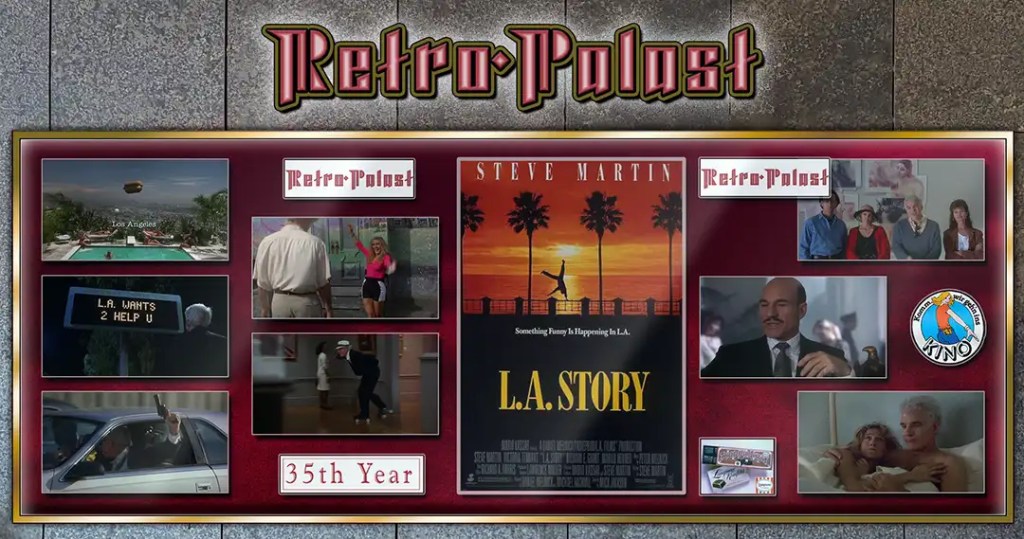
It’s a place where they’ve taken a desert and turned it into their dreams.
I think it’s also a place of secrets: secret houses, secret lives, secret pleasures.
And no one is looking to the outside for verification that what they’re doing is all right.
A satirical declaration of love to Los Angeles
L.A. Story is a 1991 American romantic comedy written by Steve Martin, who also plays the lead role. It was directed by Mick Jackson. The film combines satire, magical realism, and clear references to Shakespeare (especially A Midsummer Night’s Dream and The Tempest). It portrays the eccentric, often superficial life in Los Angeles as a loving caricature and tells the story of a man who, with the help of a magical traffic sign, searches for meaning in love, everyday life, and self-realization.
It becomes clear in the first few minutes that the film does not want to be just an ordinary romantic comedy, but a kind of fairy-tale-like big-city parable. Steve Martin uses his typical, intellectually playful humor to capture the spirit of LA: a place where people are constantly searching for the “next big thing” while at the same time being trapped by routines and superficialities. The film often comes across as a bizarre mixture of romantic fairy tale and satirical sketch.
With a running time of about 95 minutes, the film celebrates the absurdities of the city: pretentious restaurants, endless sunshine, status symbols, and the typical Californian search for “spiritual” meaning in everything. At the same time, it remains romantic and warm-hearted, taking its characters seriously despite all the irony. It is precisely this mixture of mockery and affection that makes L.A. Story an iconic portrayal of the LA lifestyle.
The film shows Los Angeles as a world where people are constantly on the move, but where hardly anyone ever really arrives—neither in traffic nor in life. This makes L.A. Story more than just a classic rom-com: it is also a charming reflection on identity, longing, and the question of how to find genuine closeness in a loud, fast-paced city.
Plot
Harris K. Telemacher (Steve Martin) is an eccentric weatherman in Los Angeles whose job is as predictable as the weather itself: always sunny. Even the viewers of his show seem bored by the daily “sensation” that tomorrow will be warm and cloudless again. Harris is stuck in an unhappy relationship with career-driven Trudi (Marilu Henner), who treats him more like an accessory than a partner. Although he has a doctorate in art history, he feels intellectually underchallenged and emotionally empty in his everyday life. Harris longs for more magic in his life—for a sign that there must be more than routine, small talk, buzzwords, and self-promotion.

At lunch, he meets British journalist Sara McDowel (Victoria Tennant) and immediately falls in love with her. Compared to his previous circle, Sara seems grounded, intelligent, and cultured; she is less impressed by superficial glamour and more interested in genuine conversation. Her aloof, almost elegant manner makes Harris both nervous and fascinated. On his way home, Harris‘ car stops in front of an electronic freeway sign that suddenly displays cryptic, personal messages and life advice – almost like an oracle. This “voice” on the highway becomes his guide, as if the city itself were speaking to him. The sign seems to influence him whenever he is at a turning point, reinforcing the fairy-tale feeling that Los Angeles has its own mysterious logic.
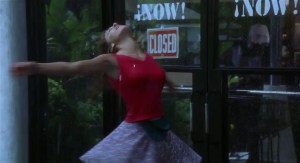
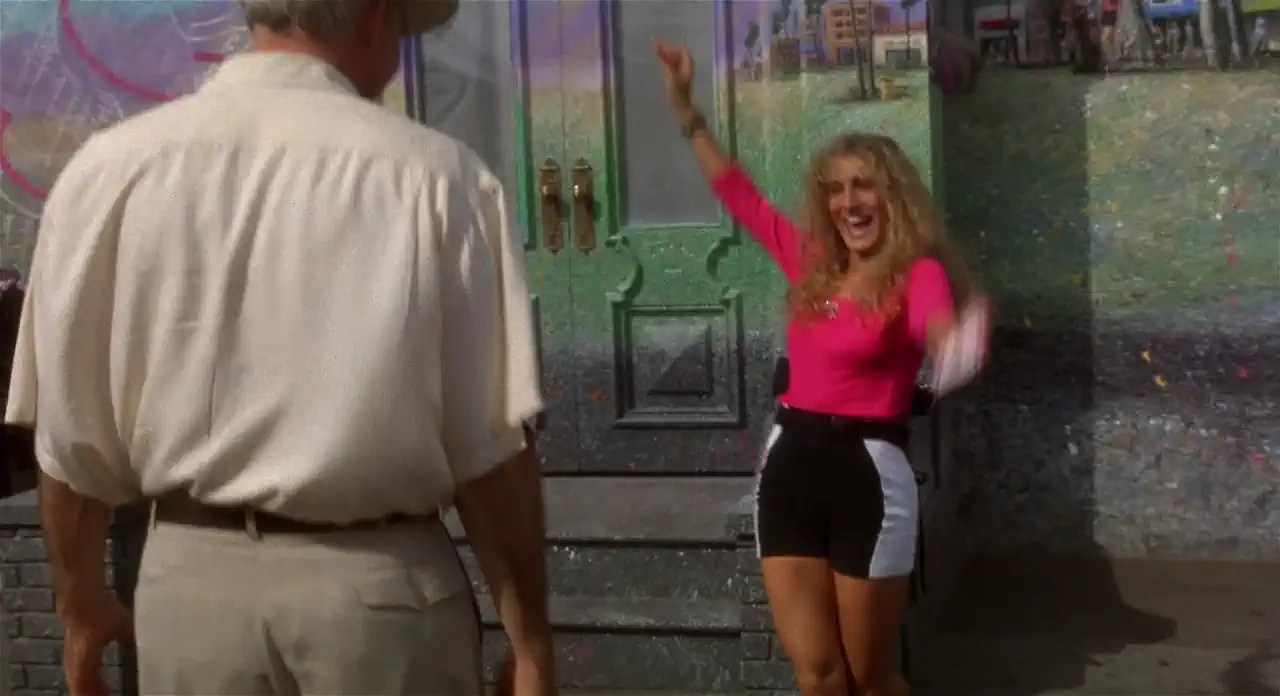
At the same time, Harris begins a casual affair with the young, naive SanDeE* (Sarah Jessica Parker), who fascinates him with her childlike enthusiasm and simple worldview, but also overwhelms him. SanDeE* embodies the extreme version of LA superficiality: charming but completely unreflective, constantly seeking attention and the next big dream. Harris gets involved in this relationship because it seems uncomplicated and strokes his ego, but he quickly realizes that it doesn’t really fulfill him. The situation becomes increasingly complicated: Sara’s ex-husband Roland reappears, Trudi confesses to a long affair, and Harris has to decide whether to remain stuck in superficial relationships or to really grow up.
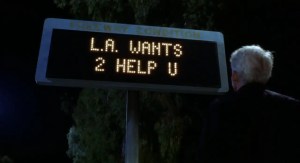
With the help of the magic shield, some freak weather, and a series of surreal encounters, Harris finally finds his way to true love and personal fulfillment. It’s not just about romance, but also about self-respect and the question of whether you want to actively shape your life or just passively “go with the flow.” The plot is full of absurd, satirical moments—such as roller skating through museums, exaggerated coffee orders, or conversations that switch between profound and ridiculous as a matter of course. This is precisely how the film pokes fun at LA life without ever becoming truly malicious: it laughs at people, but always with a palpable spark of affection.
Actors
- Steve Martin as Harris K. Telemacher – the eccentric, intellectual protagonist who forms the heart of the film with his mixture of irony, sensitivity, and intellectual hubris. Martin’s performance deliberately fluctuates between romantic sincerity and absurd exaggeration.
- Victoria Tennant as Sara McDowel – the smart British journalist and Harris‘ love interest (Tennant was married to Martin at the time of filming). She embodies the “European view” of Los Angeles: aloof, cultured, and at the same time fascinated by the absurdity of the city.
- Sarah Jessica Parker as SanDeE* – the lively, naive young woman who briefly attracts Harris. Parker plays the character like a parody of the “Valley Girl” cliché, but at the same time with surprising warmth.
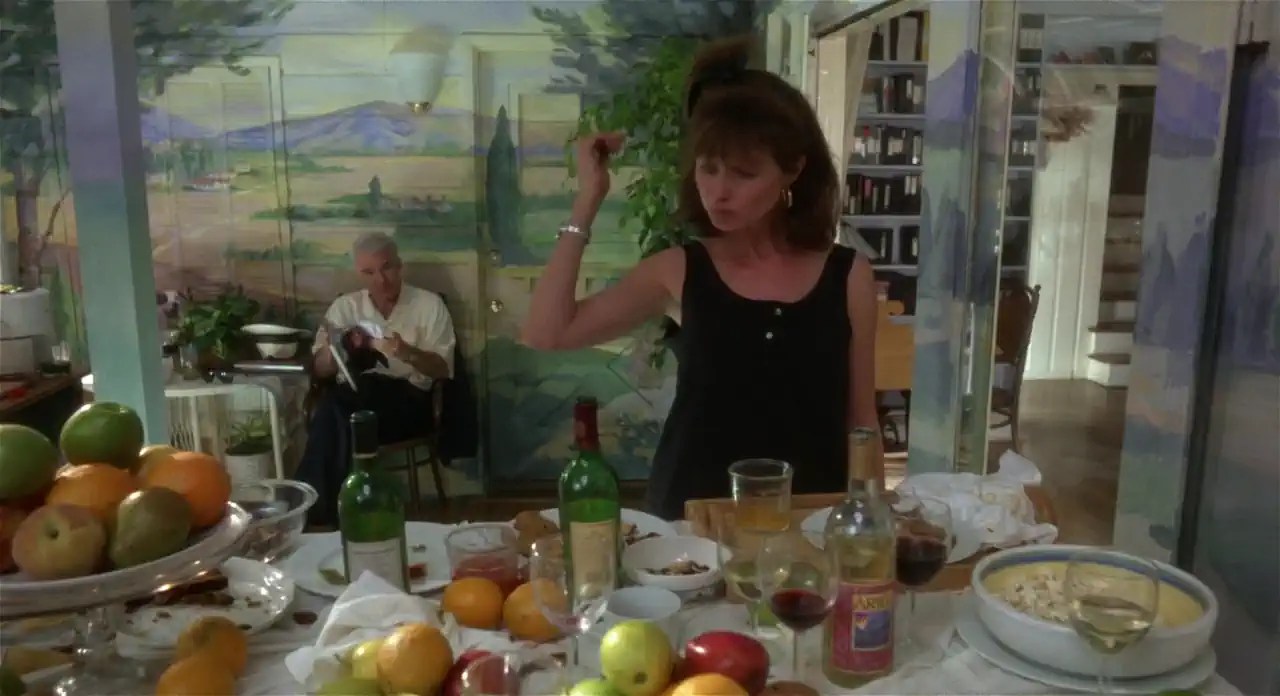
- Marilu Henner as Trudi – Harris‘ superficial friend who loses herself in her career, self-improvement, and lifestyle. She represents the egocentric side of the LA scene, which often views relationships as a status project.
- Richard E. Grant as Roland Mackey – Sara’s ex-husband, a charismatic but manipulative Brit who moves through Californian society like a theater actor and repeatedly tries to control Sara’s life.
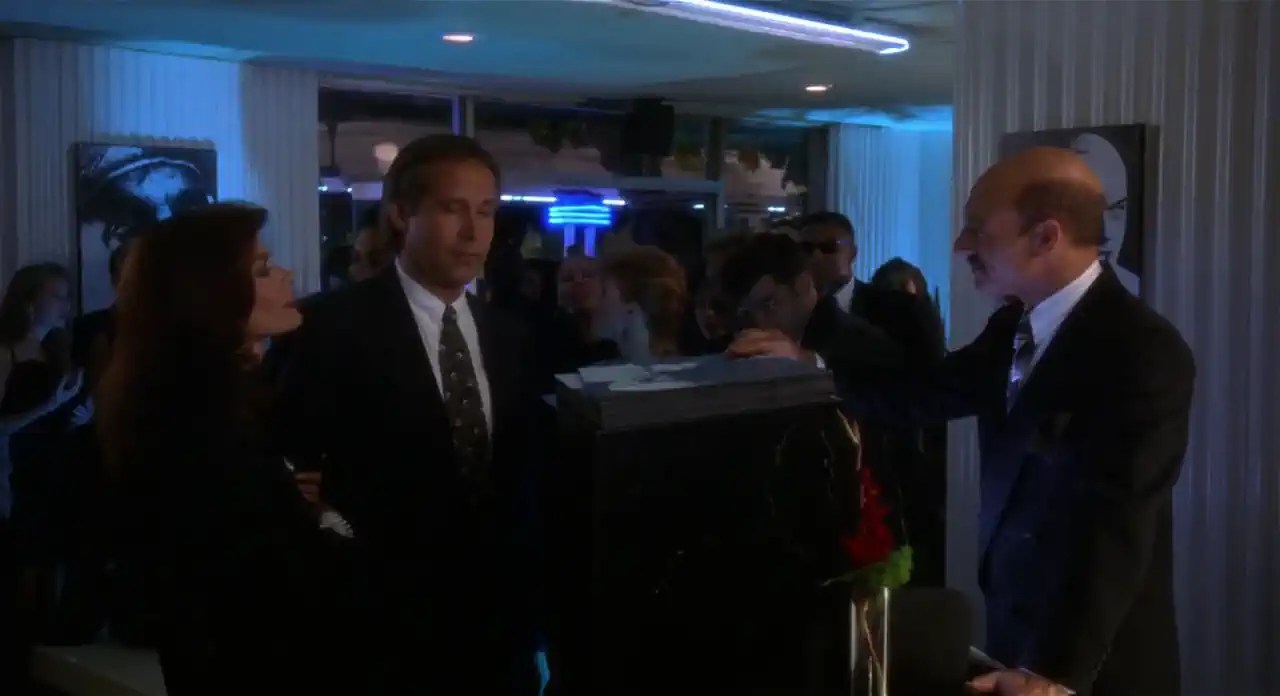
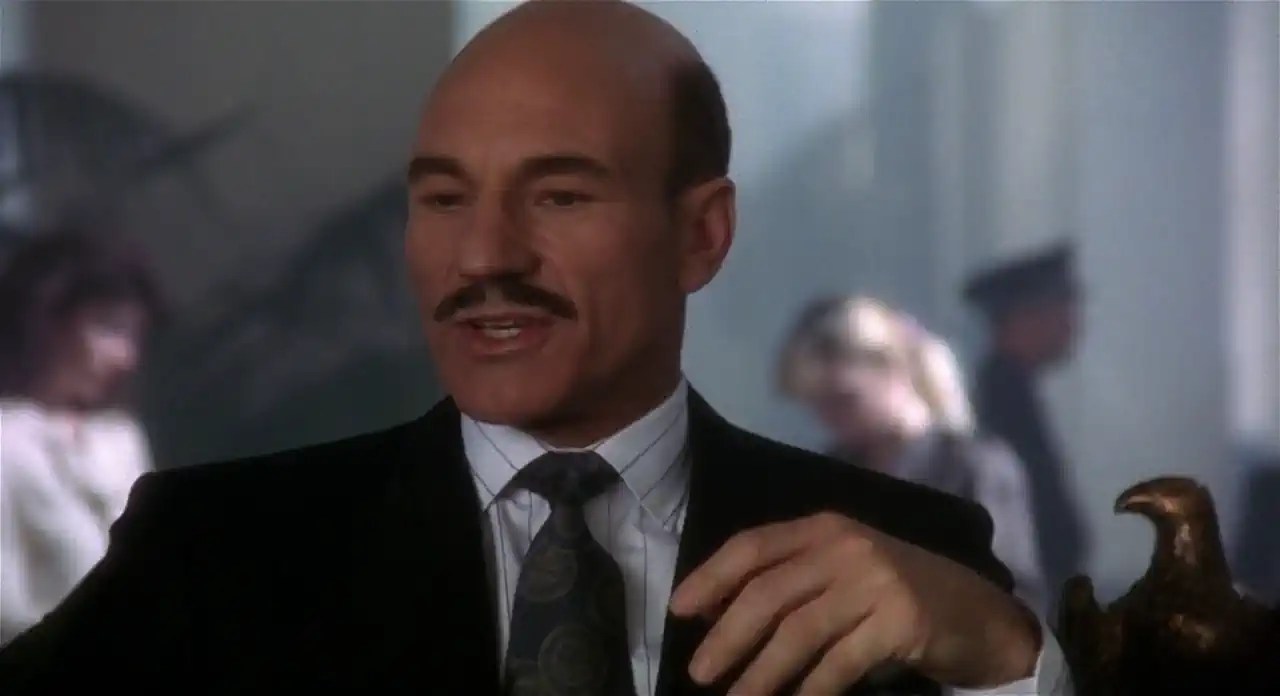
- Patrick Stewart as a snobbish restaurant manager – a brief but legendary appearance: Stewart plays the arrogant maître d‘ with a seriousness that makes the scene even funnier and caricatures the exaggerated luxury of the city.
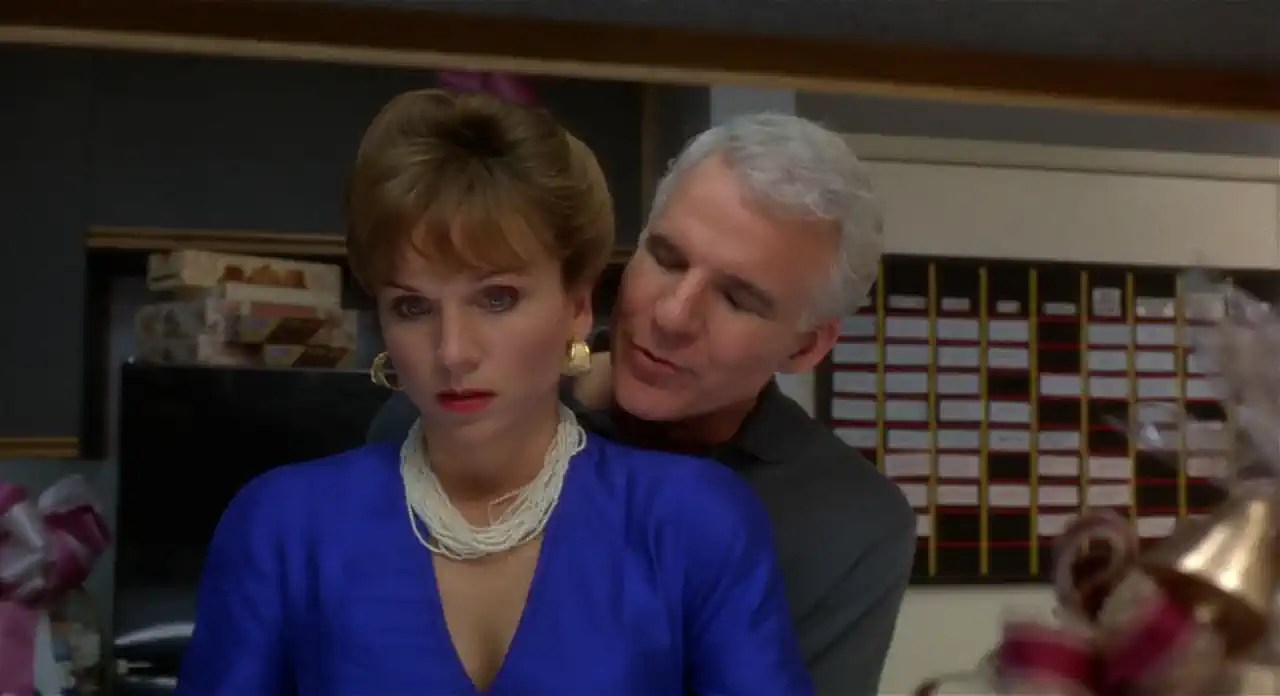
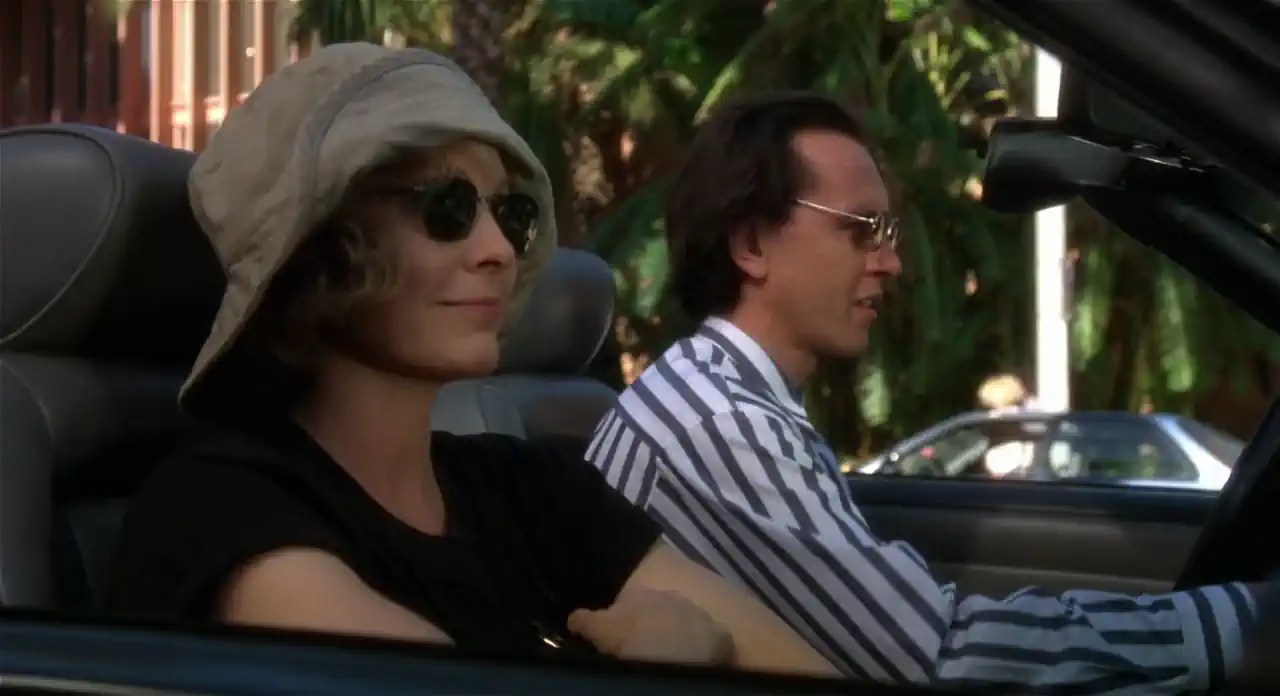
The film features numerous cameos, including Chevy Chase, Woody Harrelson, Rick Moranis, and Iman. Many of these brief appearances feel like tongue-in-cheek inside jokes that further reinforce the Hollywood setting. Scenes with John Lithgow and Scott Bakula were filmed but later cut, showing how many big names were briefly involved in this project – and how much the film was planned as an ensemble satire.
Interesting facts (trivia)
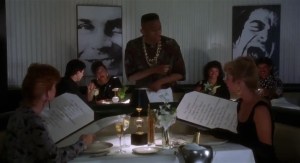
L.A. Story is heavily influenced by Shakespeare and affectionately parodies LA culture – for example, arrogant restaurants (such as the famous scene at “L’Idiot” where Patrick Stewart appears as the maître d‘) or the obsession with status, beauty, and “cool” self-presentation. Much of the dialogue is deliberately exaggerated to satirize the typical LA way of speaking, which is often both meaningful and meaningless at the same time. It is particularly funny how everyday conversations about coffee, dating, or food suddenly sound as if they were about big philosophical questions. This exaggeration is not just comedy, but also a commentary on how much people in LA define themselves by their lifestyle and image.

The Shakespeare references are not just an intellectual gag, but also subtly structure the film: mix-ups, romantic misadventures, and the search for the “right” partner are reminiscent of classic stage comedies. Harris moves through this world like a modern Shakespearean hero who must first find himself before he can allow true love to enter his life. This gives the film a surprisingly poetic touch, despite all its silliness.
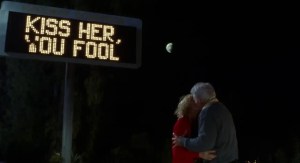
The magical freeway sign was programmed to display messages in several languages. In the film, it is not just a gag, but also a symbol of orientation in a city characterized by chaos, traffic, and superficiality. In a metropolis where people spend hours in traffic jams every day, a traffic sign becomes a spiritual guide – an idea that is both absurd and ingenious.
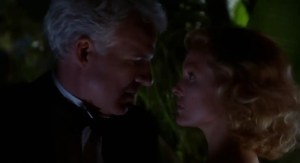
Steve Martin wrote the screenplay as a personal tribute to Los Angeles, where he lived for a long time. Despite the satire, you can feel his genuine affection for the city: the film pokes fun at LA, but at the same time visibly enjoys the energy, creativity, and craziness of the place. Sarah Jessica Parker later called the film career-changing, as it helped her establish herself more firmly as an actress.

Her role as SanDeE* became an early example of characters that later appeared in many romantic comedies: charming, naive, and a bit like a caricature, but still not completely unsympathetic.
In the US, the film grossed over $28 million and was a hit, especially in Los Angeles, which is not surprising: many viewers recognized their own city in the exaggerated scenes. At the same time, L.A. Story has developed into a cult film over the years, one that is constantly being rediscovered, especially by fans of Steve Martin’s humor and lovers of urban satire.
Critical reception at the time
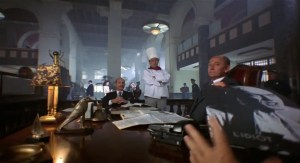
Upon its release in 1991, L.A. Story was received positively by most critics. Many critics emphasized that Steve Martin functions here not only as a comedian but also as a sensitive narrator. Roger Ebert praised Steve Martin’s performance and the intelligent satire, which has emotional depth despite its silliness, in the Chicago Sun-Times. He particularly liked that the film can be both playful and serious without betraying itself. The Lexikon des internationalen Films (Encyclopedia of International Films) described it as a “fresh comedy” and a “declaration of love to Los Angeles, which interprets its eccentricities as endearing quirks.” Many reviews also emphasized that the city itself acts as an additional character—as a stage for people’s vanities, desires, and dreams.
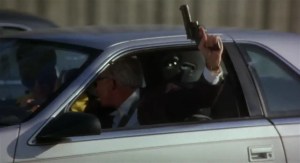
On Rotten Tomatoes, the film still has a 91% positive rating (based on 44 reviews), with the consensus: “Steve Martin at his silly, sweetly soulful best.” This sentence sums up the perception at the time: Martin’s humor here is not just silly, but also melancholic and romantic. Contemporary voices such as the Los Angeles Times and the San Francisco Examiner compared it to works by Preston Sturges and emphasized the successful blend of romance, satire, and absurdity. The surreal idea of the talking freeway sign was also well received by many critics because it clearly sets the film apart from conventional romantic comedies.
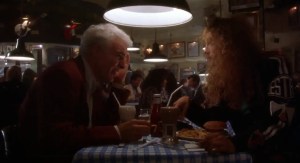
However, some critics noted that the film was not always thematically consistent and vacillated between romance and sketch comedy. Some found the plot episodic in places or like a string of pointed scenes. Today, however, it is precisely this erratic nature that is often considered part of its charm, because it reflects the mood and unpredictability of the city.
In retrospect, the film is therefore considered less of a classically composed rom-com and more of a stylistic snapshot—a satirical fantasy about the Los Angeles lifestyle in the early 1990s, which retains its timelessness precisely because of its playful tone.
Cultural influence
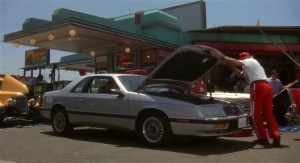
L.A. Story is considered one of the best cinematic portrayals of Los Angeles and was voted number 20 of the best LA films of the last 25 years by the Los Angeles Times in 2008. The film captures the essence of the city: superficial, but in a strange way also magical. It is precisely this mixture of glamour, absurdity, and unexpected poetry that makes it a work that cannot be clearly pigeonholed into a single genre. It influenced later satires about urban lifestyles and inspired films that also attempt to view big-city life in an ironic and romantic way. Above all, the idea of portraying a metropolis as a living, almost fairy-tale setting can be found later in many romantic comedies and city films.
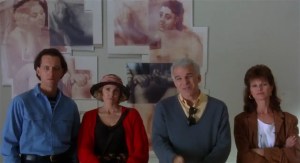
As one of the few US films in the style of magical realism, it is often cited as a timeless declaration of love for LA. It combines everyday reality with small surreal moments without the characters really questioning this magic – which makes the film seem like a dream that you simultaneously smile at and take seriously. The absurd scenes (such as the talking sign) are iconic and are still referenced today in discussions about 90s comedies, Steve Martin’s career, and the cultural self-perception of Los Angeles. Many film fans now see L.A. Story as an early cult classic that captures the zeitgeist of its era and yet remains astonishingly relevant today, because themes such as superficiality, the search for meaning, and self-promotion are perhaps even more prevalent today.
Conclusion

L.A. Story is a charming, intelligent comedy that showcases Steve Martin’s comedic genius at its best—funny, warm, and slightly surreal. Precisely because the film plays so freely with reality and fantasy, it comes across as a romantic fable that simultaneously pokes fun at its own setting. Martin’s humor here is not just slapstick or wordplay, but also subtle and occasionally almost melancholic: you sense that Harris‘ search for love is also a search for meaning and inner peace.
Although the film was released in 1991 and thus clearly belongs to the 90s, stylistically and fashion-wise it often feels very much like an 80s work: the eccentric energy, the fashion (e.g. Sarah Jessica Parker’s look) and Martin’s typical humor are strongly reminiscent of earlier hits such as The Jerk or All of Me. The staging also contributes to this: many scenes seem like small, pointed sketches, which, due to their exaggeration, are more reminiscent of classic comedies of the 80s than the smoother romantic comedies of later decades. At the same time, the film has a certain lightness that is typical of Hollywood at that time – a cinema that was not yet completely characterized by cynicism or ironic distance.
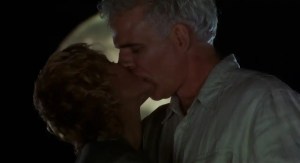
Anyone who likes Los Angeles, romantic comedies, or simply good absurd humor should definitely see it (again). The film is both a parody and a love letter – and that’s precisely why it has lost little of its freshness to this day. It is particularly fascinating how it depicts the city as a kind of dream world where everything seems possible and yet at the same time everything seems somehow empty. It shows that behind the glittering surface, there can sometimes be something real if you are willing to look for it. In the end, L.A. Story is remembered not only as a comedy, but also as a charming reminder that even in a seemingly artificial world, real feelings and real encounters are possible.







 McHenry's Lair
Kommentar verfassen :