

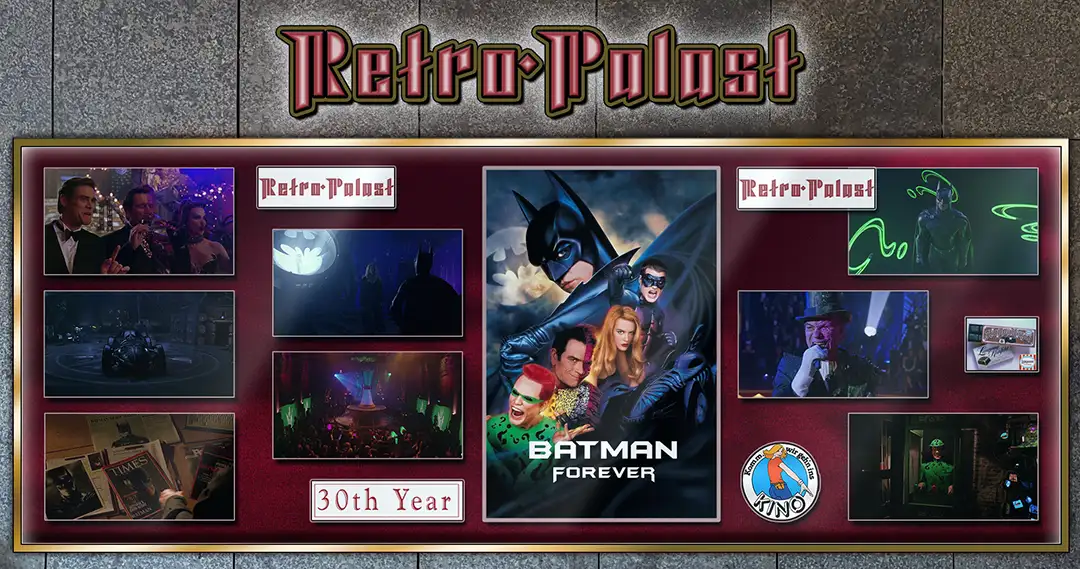
Riddle me this, riddle me that, who’s afraid of the big, black bat?
Better than its reputation
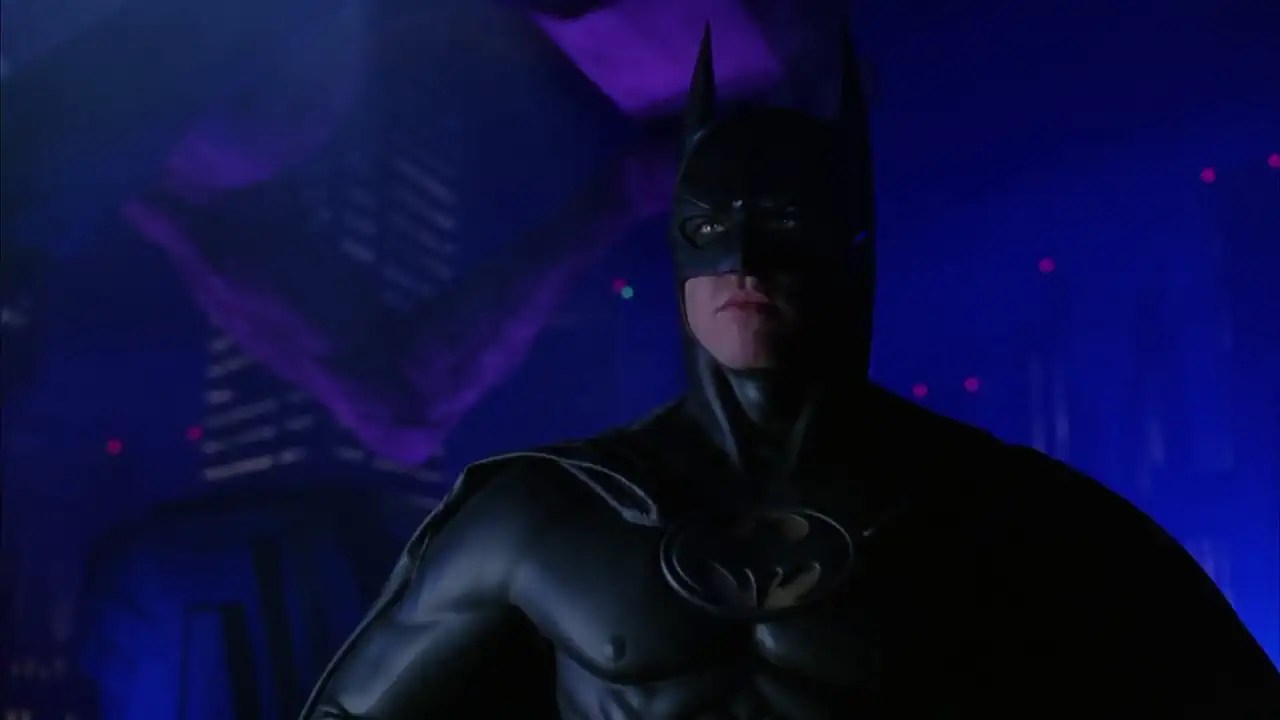
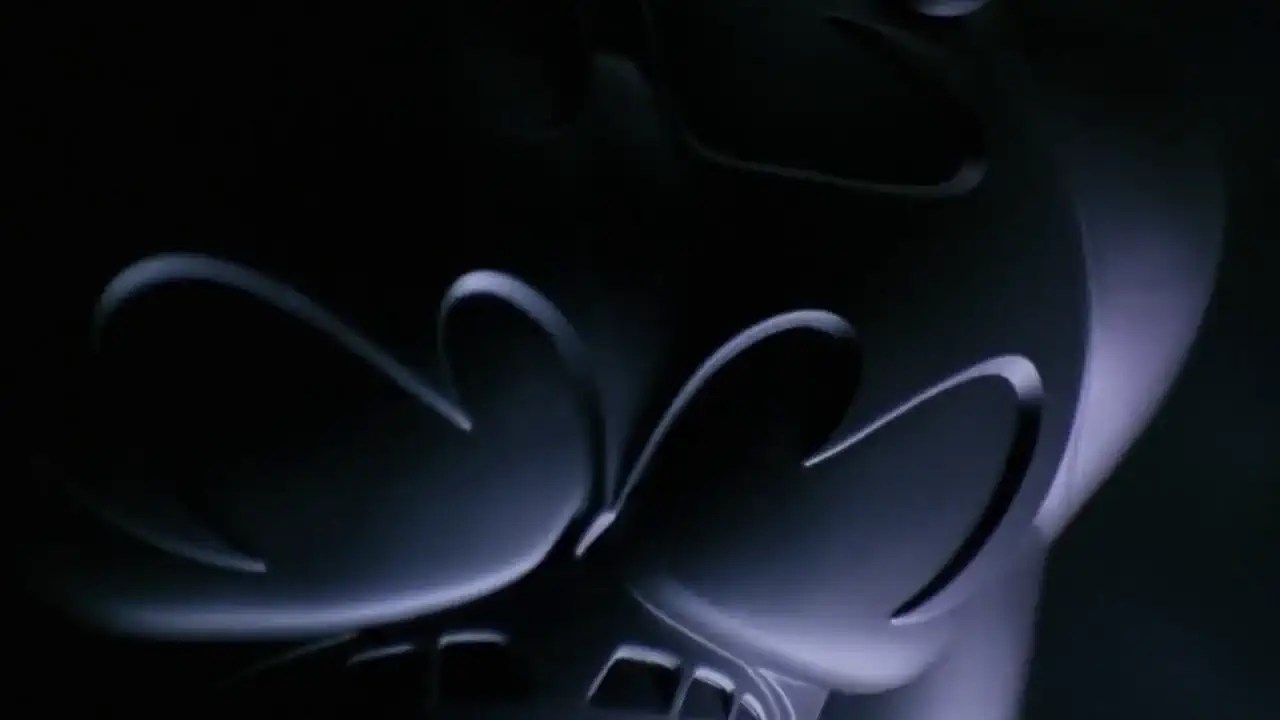
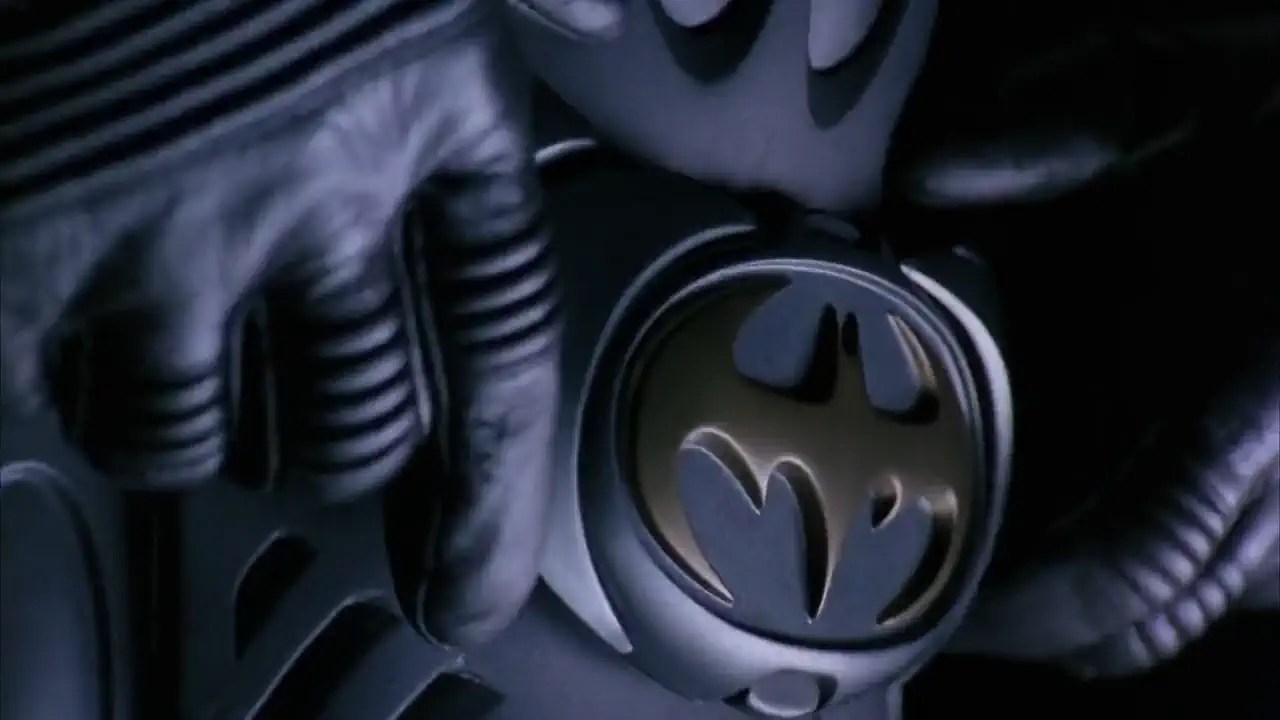
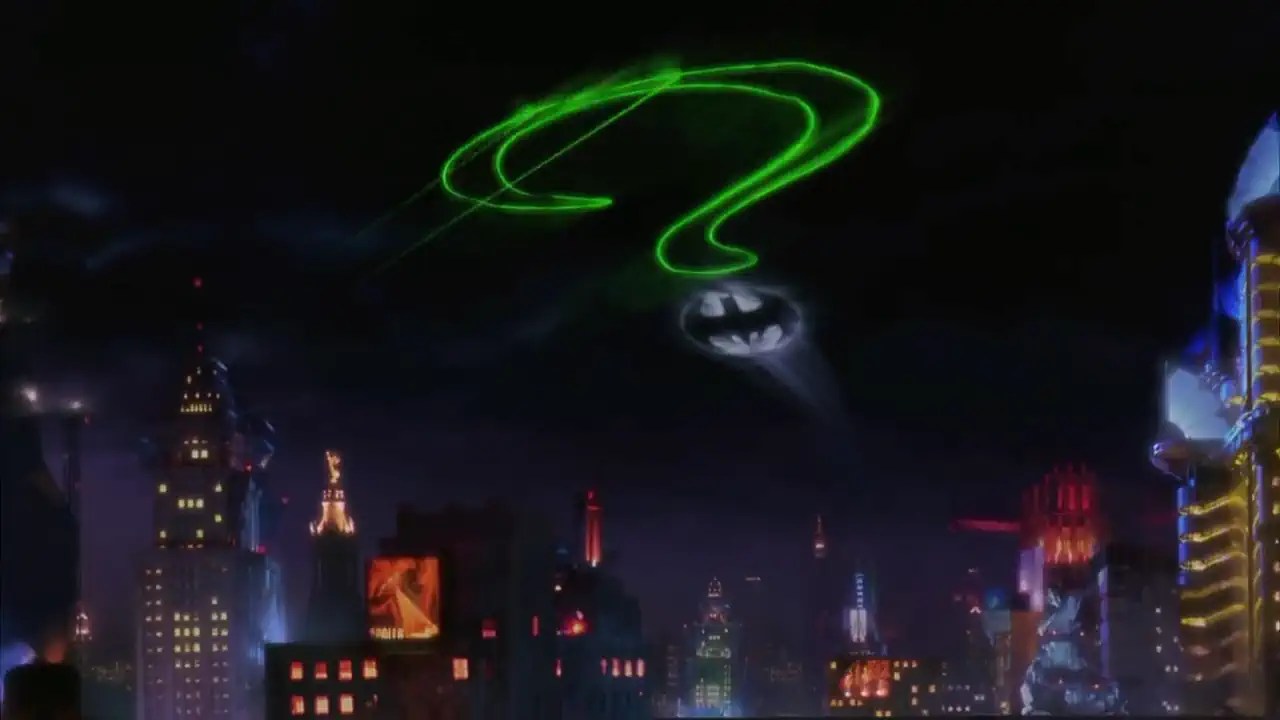
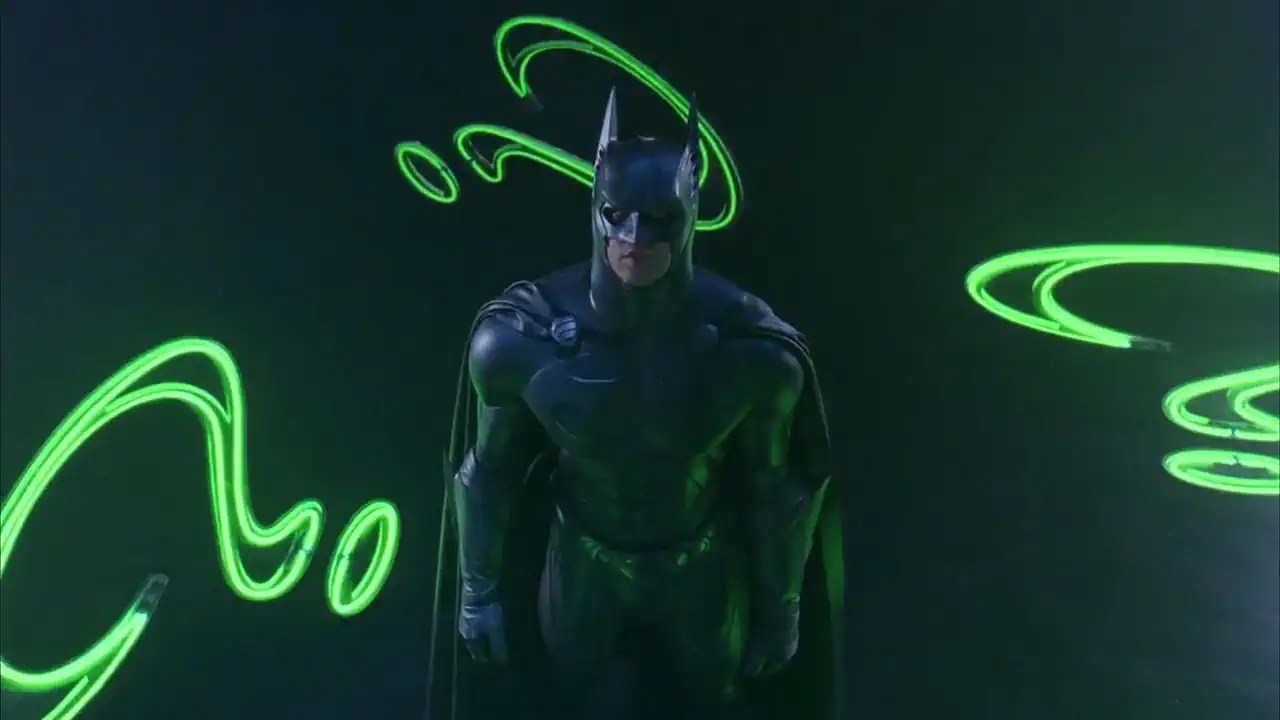
Batman Forever, released in 1995, is the third installment in the modern Batman film series, which began with Tim Burton’s Batman (1989) and had a decisive influence on superhero cinema in the 1990s. After Joel Schumacher took over the director’s chair from Burton, the film took a much more colorful, accessible, and stylistically extravagant direction, characterized by a kind of visual fireworks display of neon colors, exaggerated architecture, and comic-book-style exaggeration. Schumacher pursued a vision that was more closely aligned with the colorful comics of the 1960s, while retaining modern blockbuster elements.
The shift from a dark, gothic aesthetic to a neon-colored, pop culture world was a break with the familiar tone for many fans, but it is precisely this bold stylistic change that makes the film such an exciting document of its time. Schumacher attempted to make the Batman myth accessible to a wider audience without completely gutting it, creating a fascinating hybrid of pop art, action cinema, and superhero mythology. Despite mixed reactions upon its release and often negative reviews, Batman Forever deserves a more nuanced appreciation. The film embodies the tension between blockbuster aspirations and artistic individuality. Beneath its garish surface lies an entertaining blockbuster with a strong cast, charismatic villains, opulent set design, and a unique narrative and visual concept that clearly sets it apart from other contributions to the superhero genre.
Plot
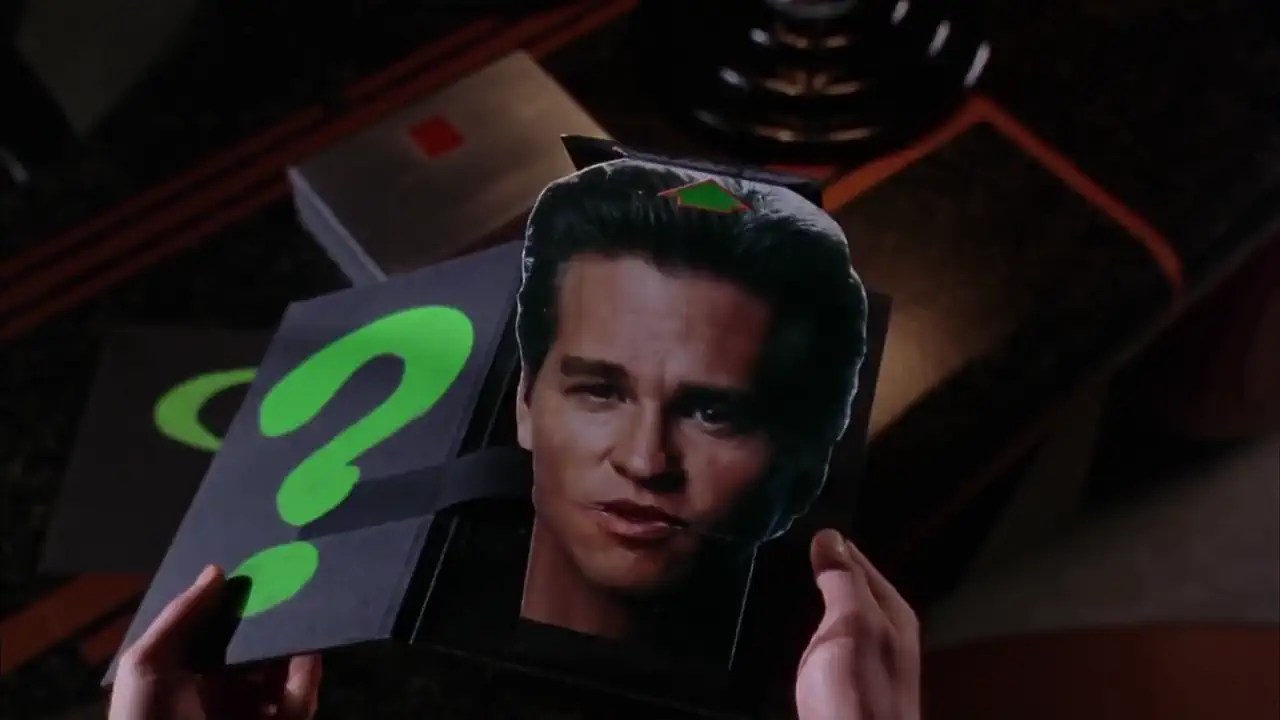
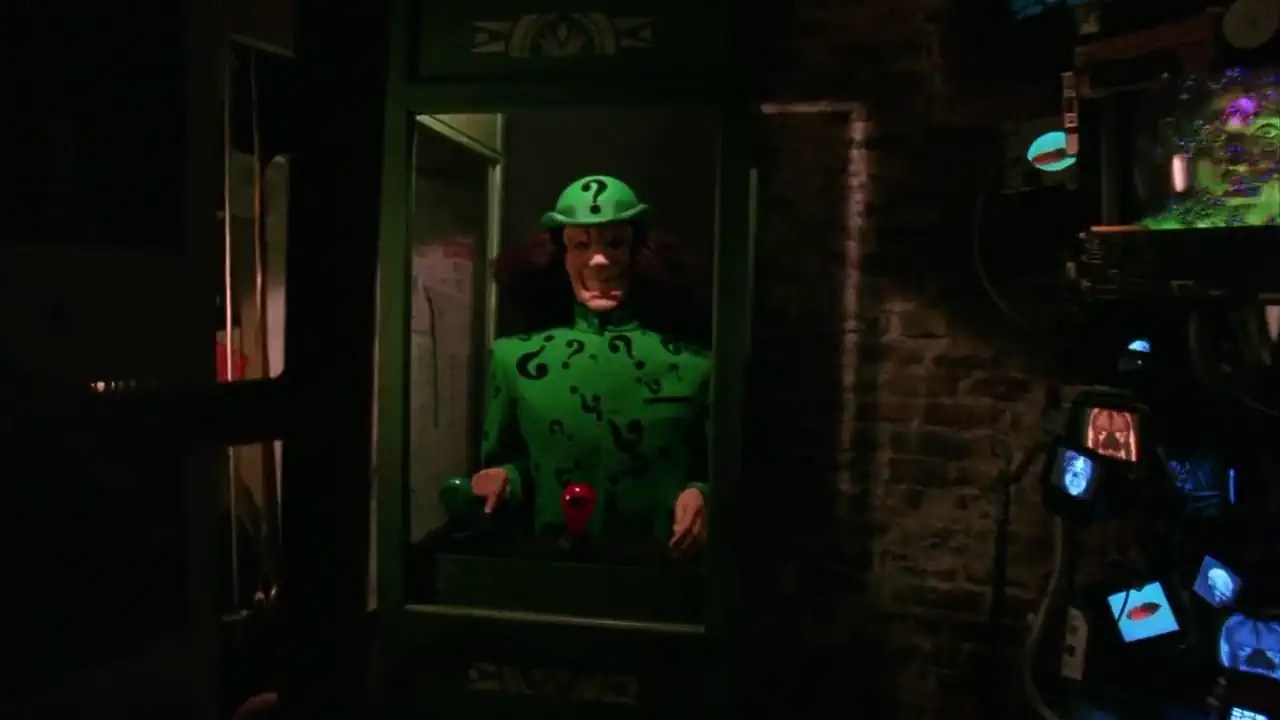
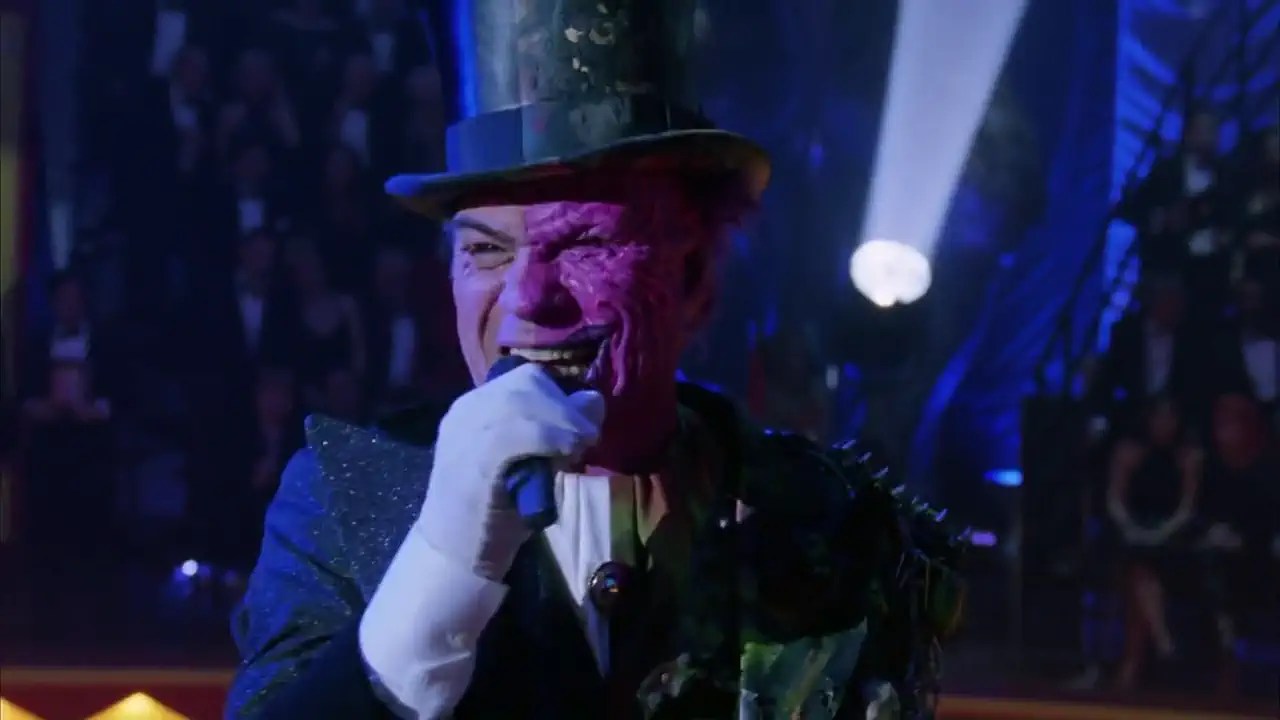
The plot follows Bruce Wayne, alias Batman (Val Kilmer), who faces a new threat in Gotham City: two supervillains are threatening the city. One is the eccentric Edward Nygma, alias the Riddler (Jim Carrey), a brilliant but mentally unstable scientist who feels betrayed by Wayne Enterprises and plans his revenge through technological control. The other is Harvey Dent, alias Two-Face (Tommy Lee Jones), a former district attorney whose split personality is reflected in his grotesque disfigurement and who is driven by a chaotic worldview. The two join forces to plunge Gotham into chaos and systematically destabilize Batman.
Batman is assisted by young circus acrobat Dick Grayson (Chris O’Donnell), who is taken in by Bruce Wayne after the tragic death of his parents at the hands of Two-Face. Grayson is driven by thoughts of revenge, but over the course of the film, a complex mentor-student relationship develops between him and Batman. As Robin, he eventually accepts the challenge of being not just a sidekick, but a hero in his own right with his own moral decisions to make. Their relationship adds depth to the film and shows Batman’s capacity for responsibility and compassion.
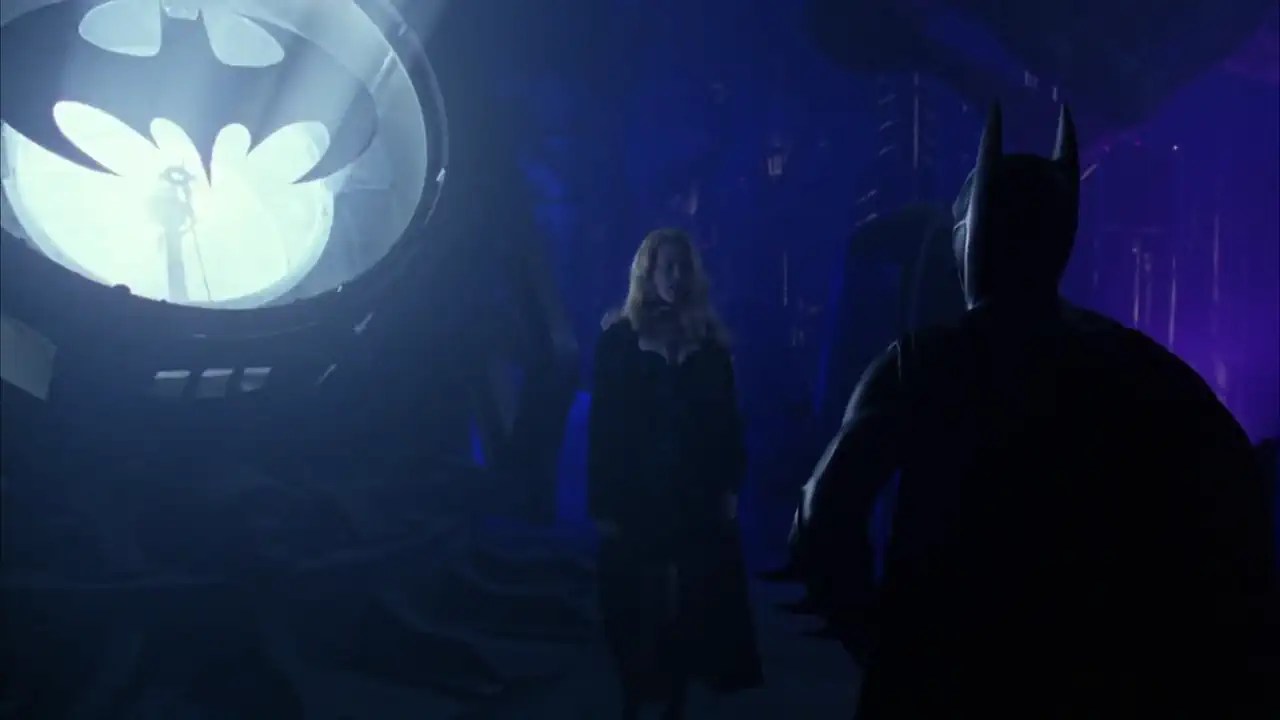
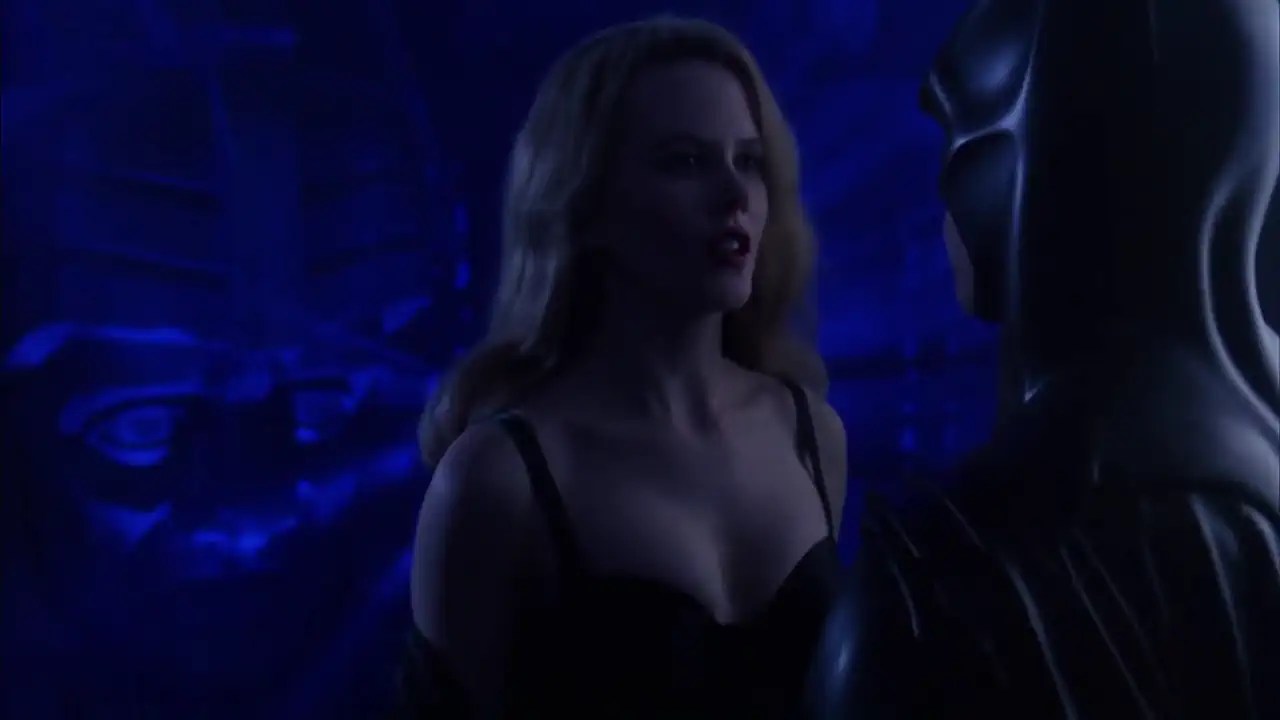
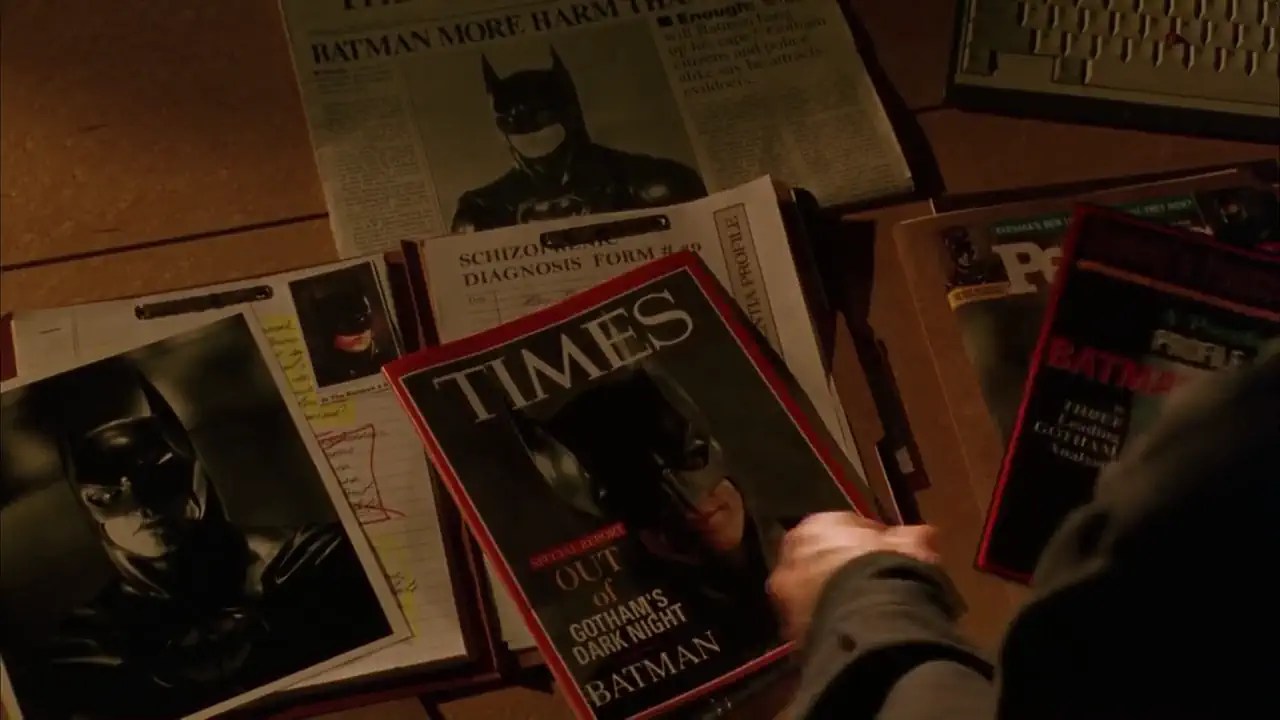
In addition to action-packed confrontations and spectacular showdowns, the film also focuses on Batman’s inner conflict: the tension between his dual identity, his desire for normality, and his inability to fully overcome his trauma. His encounter with psychologist Dr. Chase Meridian (Nicole Kidman), who analyzes both Bruce and Batman, brings a new dynamic to his emotional development. Chase becomes an emotional mirror for Bruce’s inner turmoil and challenges him to face his fears and not lose his humanity.
The Riddler, driven by narcissism and megalomania, develops a device that can extract the thoughts and secrets of the population via television waves and brain scanners. His vision of total control culminates in a spectacular finale on his island fortress, where he proclaims himself the “Brain King” of Gotham. In this showdown, Batman must prove not only physical strength but also emotional clarity in order to save both the city and himself as a human being. Ultimately, the battle against the Riddler and Two-Face leads him to redefine his role as a symbol of justice and recognize Robin as an equal partner.








Trivia
- Michael Keaton was originally intended to reprise his role as Batman, but he left the project due to creative differences with Joel Schumacher, who wanted a lighter tone.
- Nicole Kidman took on the role of psychologist Dr. Chase Meridian, created specifically for the film to explore Batman’s emotional depth.
- The aesthetic design of the film was heavily inspired by pop art, Las Vegas neon lights, and 1960s comics. Schumacher deliberately wanted to break with the previous look of the series.
- The soundtrack was a huge commercial success and includes “Kiss from a Rose” by Seal, which even won a Grammy.
- U2’s “Hold Me, Thrill Me, Kiss Me, Kill Me” was also released for the film and contributed to its pop culture status.
- Many of the sets were physically built rather than created using CGI, which gives the film a tangible look despite its exaggeration.
Actors
Val Kilmer follows in the footsteps of Michael Keaton and plays an internally torn, melancholic Bruce Wayne. His performance brings a calmer, more introspective touch, albeit with less edgy charisma. Especially in the quieter scenes, he succeeds in making the character’s inner turmoil palpable. At the same time, his interaction with the other characters, especially Robin and Chase, seems controlled and thoughtful, which gives the film a certain emotional depth.
Jim Carrey shines as the Riddler with his typical physical and comedic hyperactivity, which gives the character energy and madness. His performance divides opinion, but remains unforgettable and plays a decisive role in setting the tone of the film. Carrey’s Riddler is a mixture of genius, clown and madman, whose transformation from wounded inventor to megalomaniac villain is convincingly staged. His eccentric body language and exaggerated facial expressions are over the top, but fit perfectly with the deliberately stylized tone of the film.
Tommy Lee Jones as Two-Face, on the other hand, seems exaggerated and appears to be trying to imitate Carrey’s energy without achieving his natural ease. Nevertheless, he brings a certain theatrical presence that emphasizes the duality of his character. His performance is polarizing, but fits well into the film’s over-the-top overall picture. Chris O’Donnell brings youthful vigor and a dash of rebellion to the story, giving his Robin his own motivations and a classic origin story. His role adds a new emotional component to the Batman universe, as Robin acts both as Batman’s mirror and as an independent character. The relationship between him and Bruce Wayne offers an exciting contrast between maturity and youthful impulse, which benefits the development of both characters.
Despite the cliché of the “love interest,” Nicole Kidman succeeds in portraying Dr. Meridian as a credible character with psychological depth who provides Bruce Wayne with an emotional projection screen. She is not just a romantic appendage, but a driving force that prompts Bruce to reflect on himself. Her mixture of sensuality, intelligence, and caring nature makes her one of the more interesting female characters in superhero films of the time.
The interplay between the actors ultimately forms an ensemble that harmonizes despite stylistic differences and supports the thematic diversity of the film. Their respective energies, whether nuanced or exuberant, help bring the film’s contrasts between seriousness and camp to life.
Criticism at the time
Upon its release, “Batman Forever” received mixed reviews from critics. Many reviewers criticized the garish color palette, the campy dialogue, the flashy production design, and the over-the-top performances of the villains. Especially when compared to Tim Burton’s dark, almost noir-like vision, Schumacher’s interpretation seemed to some critics like a child-friendly watering down of the complex Batman mythos. Critics accused the film of a certain superficiality and missed the psychological depth that had been more strongly emphasized in the previous films.
At the same time, however, the creative vision was also appreciated: the spectacular sets, the stylized camera work, the courage to use exuberant colors, and the break with established conventions were well received, especially by younger audiences. Some praised Schumacher’s courage in establishing a unique, visually distinctive style that stands out from the uniformity of many blockbusters. The cast, especially Jim Carrey as the Riddler, was also positively highlighted by parts of the press, as his performance gave the film its own dynamic.
Despite the sometimes harsh criticism, “Batman Forever” was a commercial success: with box office takings of over $330 million, it was one of the most successful films of 1995. The film captured the spirit of the times and found a wide audience that was attracted by its extravagant staging and high entertainment value. It quickly established itself as a favorite among younger viewers in particular and gained a loyal fan base over time.
Reputation today
In retrospect, Batman Forever is increasingly viewed in a more nuanced light. In an era when many superhero films follow a rigid formula, Schumacher’s bold, almost expressionistic approach seems refreshing. While many modern comic book adaptations are characterized by homogeneity and calculated tonality, “Batman Forever” remains unique with a distinctly individual style. The colorful staging, imaginative set design, iconic soundtrack, and sense of exaggeration make the film a pop culture artifact of its time that today enjoys a growing fan base.
Particularly in the wake of the general retro trend and growing nostalgia for the 1990s, perceptions of the film have changed significantly. What was once considered exaggerated and overly playful is now seen as a loving homage to the more colorful era of comics. Streaming services and film critics with a penchant for unconventional works have also contributed to the reevaluation of Batman Forever. The film is increasingly seen as aesthetically coherent and courageous—a work that deliberately eschews dark seriousness without sacrificing entertainment value.
Film fans recognize it as a charming, stylistically uncompromising contribution to the superhero genre that marks an important transitional phase between comic book camp and realism. For some viewers, the film now even serves as a bridge between generations – a film they loved as children and are rediscovering today with a mature, analytical eye. Its stylistic consistency, opulent design, and iconic soundtrack make it one of the most memorable contributions to Batman film history today.
Summery
Batman Forever is certainly not the most profound or consistent Batman film, but as a standalone interpretation of the myth, it offers entertaining, visually impressive popcorn cinema with high recognition value. The film deliberately breaks with the style of its predecessors and brings a breath of fresh air to a genre that was not yet dominated by a fixed formula at the time. It is precisely this independence that makes it an exciting piece of the Batman film history mosaic.
Those who are willing to embrace the aesthetics and tone will discover a film that has more to offer than garish colors and over-the-top villains. Behind the opulent surface lies a story about identity, responsibility, and the search for inner balance. The film deals with central themes of the Batman character in an accessible, albeit stylized way, thus opening up the more complex mythology of the character to younger viewers.
Batman Forever is a film full of energy, camp, and 90s charm—a misunderstood work that is definitely better than its reputation. Viewed with a certain nostalgic distance, its creative vision can be appreciated anew: as an ambitious, stylistically bold contribution that is now more than just a brief chapter in the Batman canon. It is proof that even supposedly failed works deserve a second chance in the cultural memory






Kommentar verfassen