

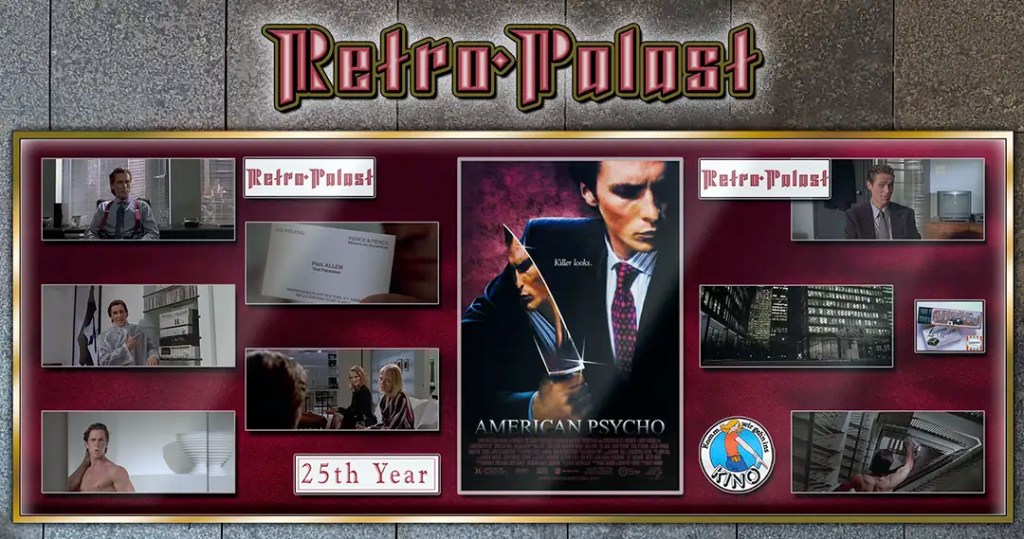
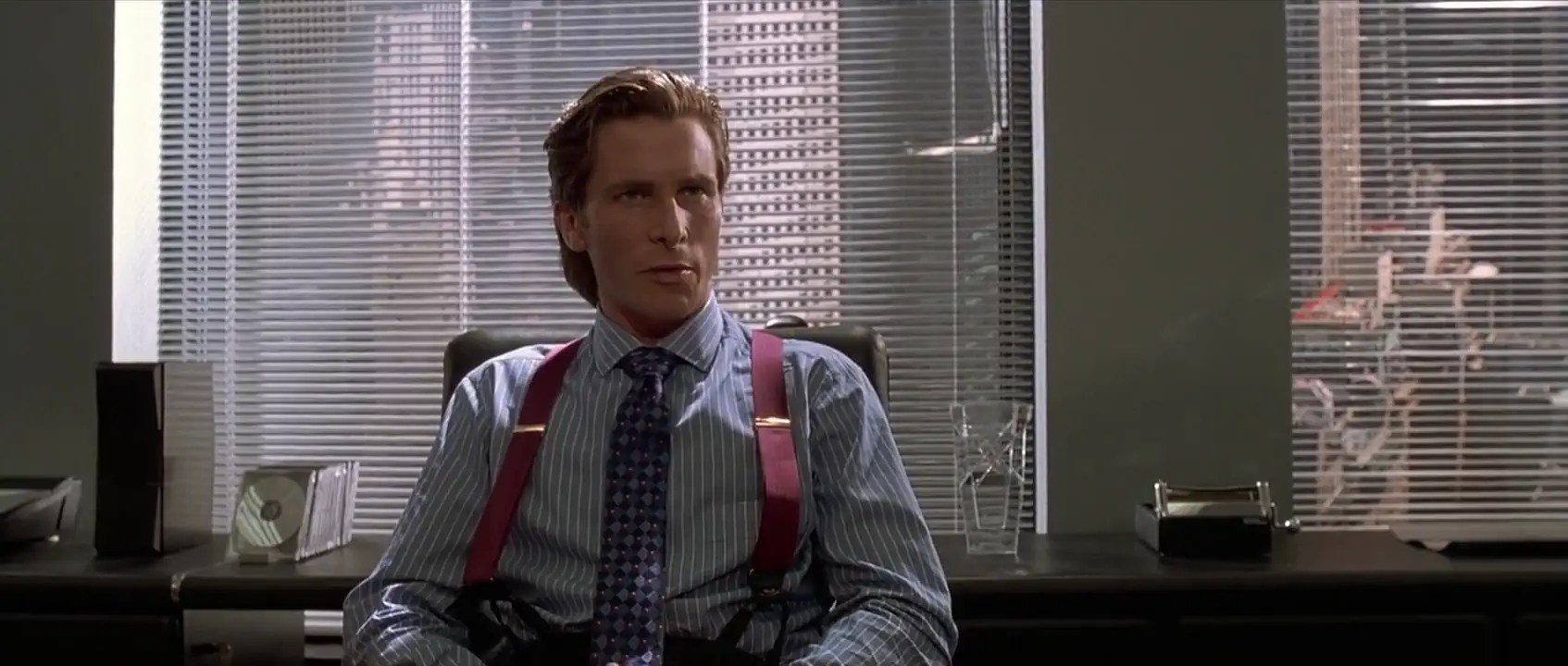
Look at that subtle off-white coloring.
The tasteful thickness of it.
Oh, my God. It even has a watermark.
A Critical Analysis of Madness and Society
The film American Psycho (2000), directed by Mary Harron and based on the novel of the same name by Bret Easton Ellis (1991), presents a multifaceted examination of the excesses of 1980s consumer society. The plot unfolds against the backdrop of a social class characterized by greed, narcissism, and outward perfection, in which status symbols and material surfaces overshadow the importance of morality and empathy. Christian Bale embodies the main character Patrick Bateman in a performance that oscillates between narcissistic self-dramatization, emotional coldness and psychotic loss of control, creating a deeply disturbing yet fascinating figure. His portrayal is considered a milestone in his acting career and gives the role an ambivalent depth that goes far beyond pure horror.
The film oscillates between psychological thriller, social satire and surreal psychological study, deliberately employing stylistic devices of irony, fragmentation and narrative unreliability. Harrons’s staging not only questions the state of the individual, but also the collective state of a society in which consumption has become an end in itself. “American Psycho” has established itself as a significant contribution to the pop-cultural reception of the American dream through this complex interweaving of genres, motifs and perspectives, and remains to this day the subject of cultural studies, psychological and media theoretical reflections.
Plot
The story centers around Patrick Bateman, a young, wealthy investment banker in New York City who leads a perfidious double life. During the day, he presents himself as a perfectionist, well-groomed yuppie who effortlessly fits into the neoliberal economic system of the 1980s. He moves in a world of exclusive restaurants, designer suits, business card collections and superficial conversations about pop music. At night, however, he loses all control over his dark impulses: he commits cruel, sadistic murders, whose brutality and senselessness escalate over time and seem increasingly surreal.
Bateman’s world is characterized by deeply rooted narcissism, emotional alienation and a serious loss of empathy. His character exemplifies the moral vacuum of a hyper-capitalist society in which the human being is degraded to a functional object. He is incapable of forming authentic interpersonal relationships and perceives his fellow human beings – whether colleagues, acquaintances or romantic partners – as interchangeable, meaningless extras in his egocentric universe.
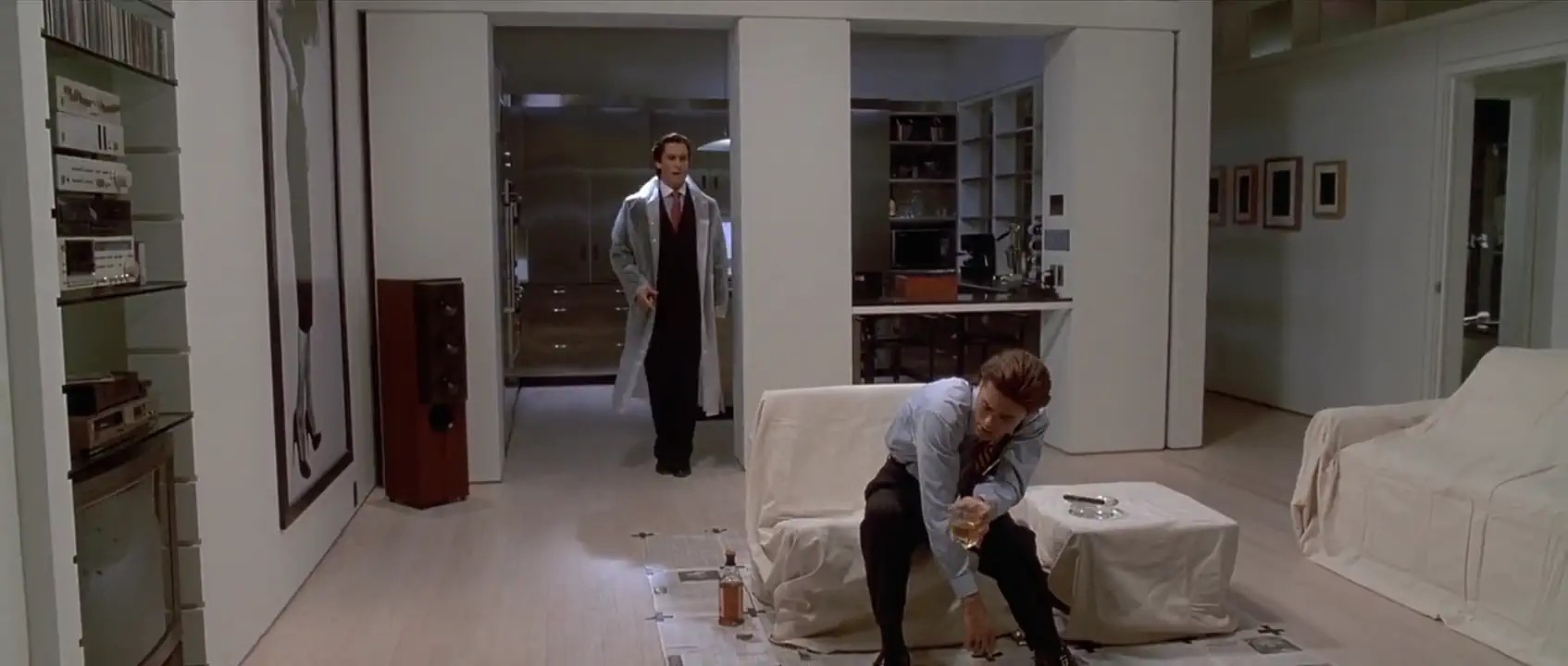
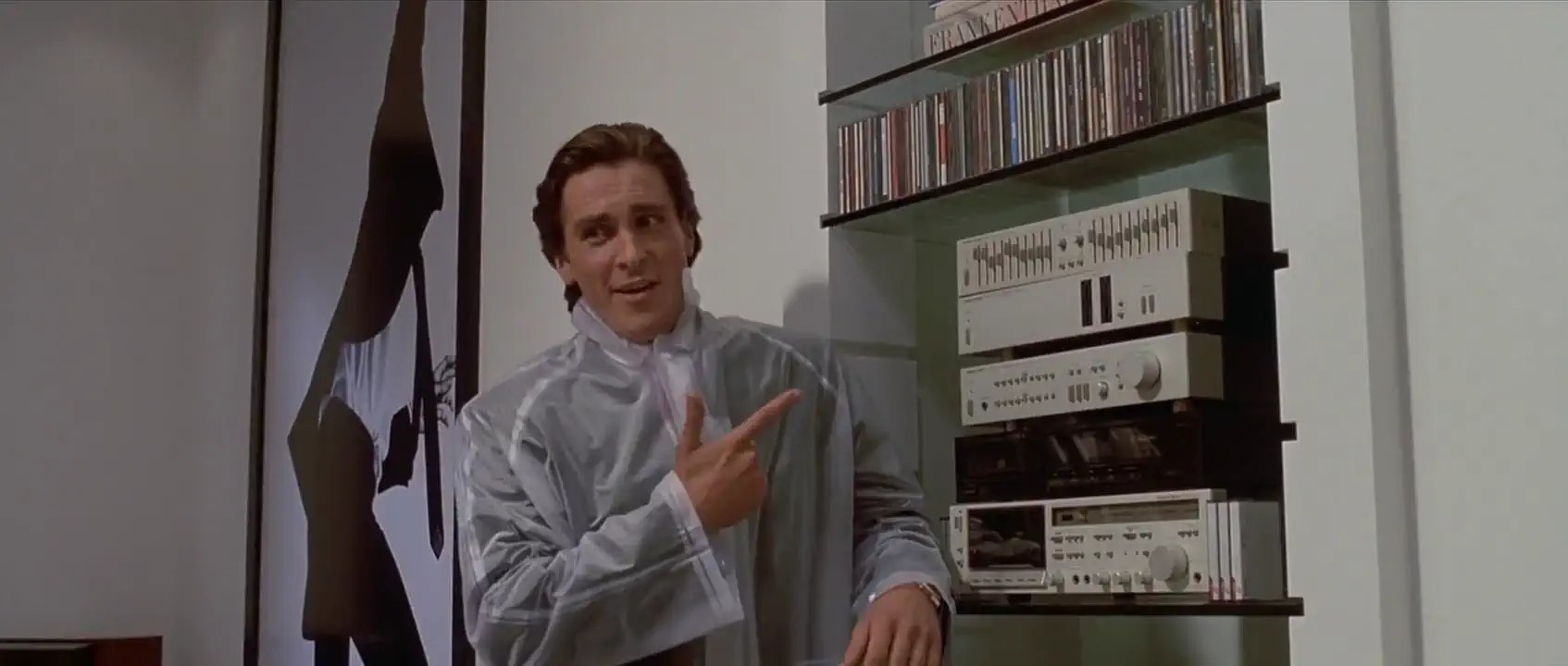
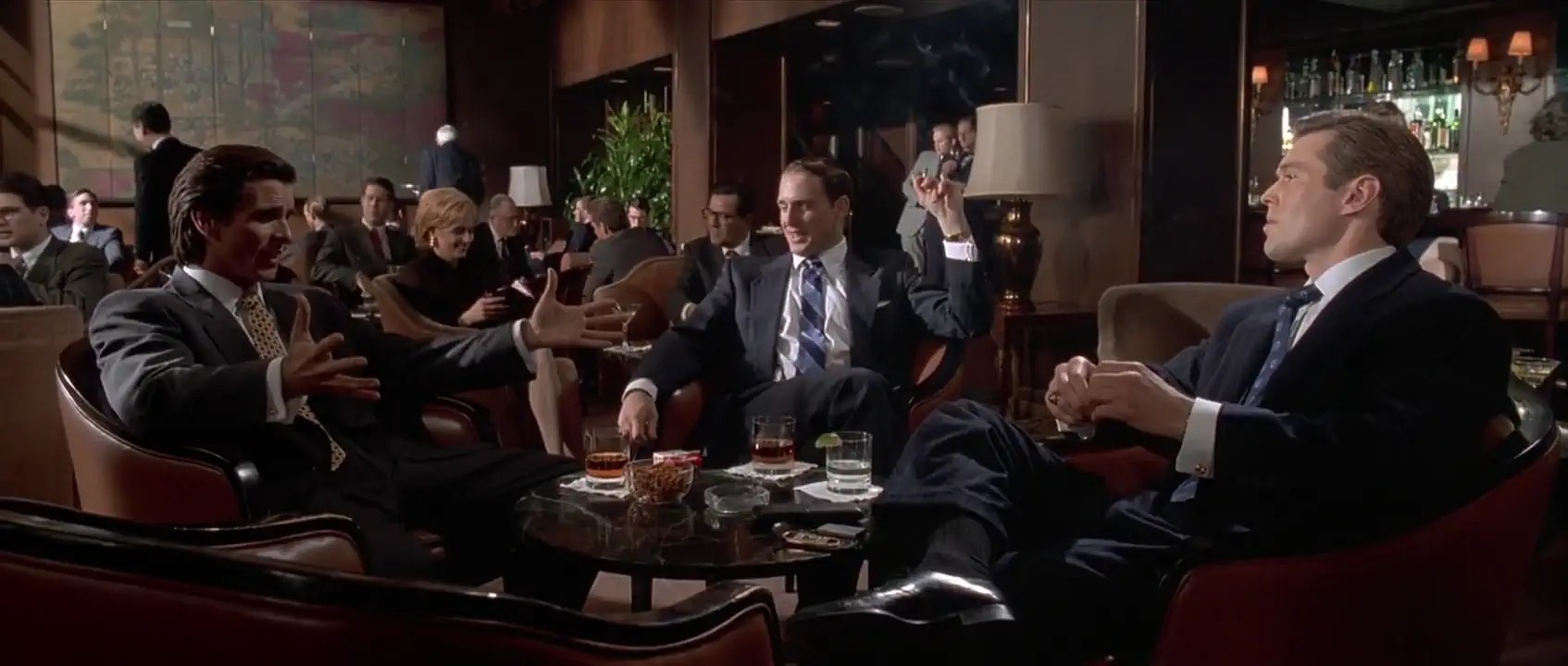
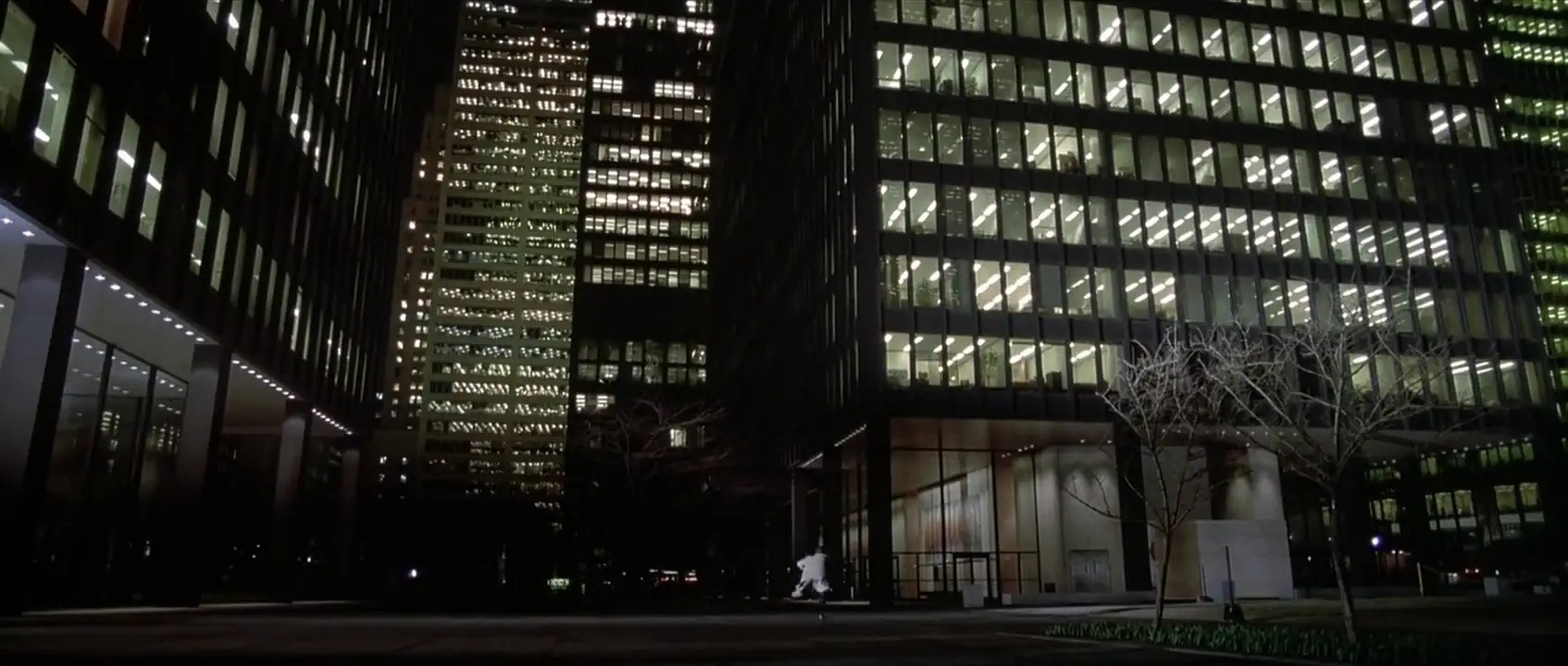
The visual aesthetic of the film subtly reinforces this thematic emptiness and alienated perspective. Harron stages Bateman’s world as a clinically clean, hypermodern urban environment in which superficiality, status symbols and brand fetishism triumph over moral values. The contrast between the perfect surface and the inner abyss of the main character creates an oppressive atmosphere that is not only psychologically disturbing, but also socially disquieting. The film avoids making any clear moral judgments, forcing the audience to grapple with questions of guilt, responsibility, and the line between reality and delusion.






Trivia
- Christian Bale developed his interpretation of the character, in part, by analyzing an interview with Tom Cruise, whose “intensely friendly but inwardly empty” demeanor inspired him. Bale also worked meticulously on Bateman’s appearance: He placed considerable emphasis on physical discipline, facial control and the portrayal of exaggerated perfection to make the character visually and psychologically tangible. His performance has been widely praised as one of the most haunting portrayals of a narcissistic psychopath in contemporary cinema.
- Leonardo DiCaprio was originally supposed to play the role of Bateman, but he withdrew due to creative differences and public controversy. Feminist groups had protested against DiCaprio’s involvement in advance, fearing that his then-teen idol image would problematically overshadow the film’s violence. Oliver Stone was also considered as a director for a while, but was replaced by Mary Harron, whose feminist and socially critical perspective played a decisive role in determining the final direction of the film.
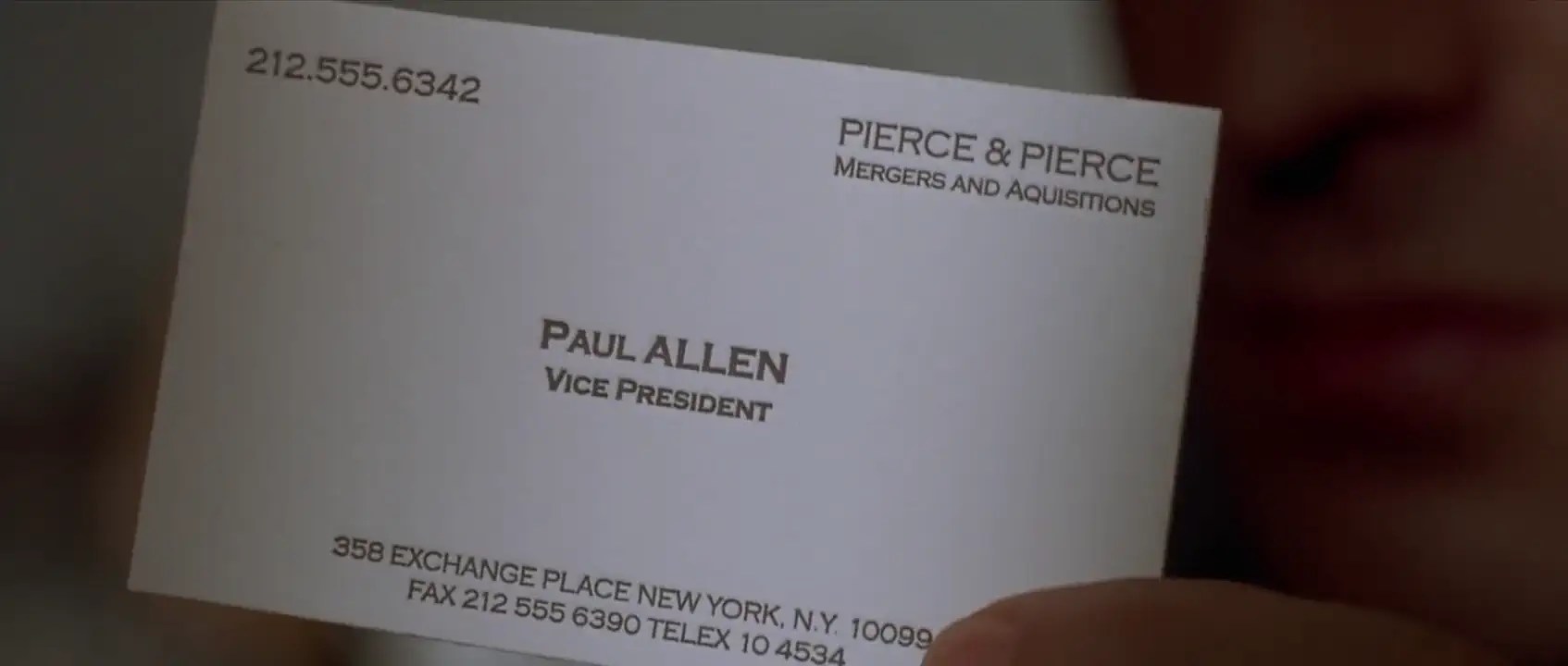
- The iconic scene with the business cards has become an emblem of the superficiality, obsession with appearances and absurd status competition of the protagonists, and has since achieved cult status. This sequence is often read as a cinematic microcosm of the entire work: a charged ritual in which ideals of masculinity, prestige and insecurity condense in a subtle, almost grotesque way. Visually, the scene is impressive in its attention to detail and cool staging, while at the same time revealing Bateman’s deep-seated insecurity and fragility beneath the perfect surface.
Novel vs. film
Bret Easton Ellis’s novel was the subject of heated controversy due to its explicit depictions of violence, its cynical worldview, and, in particular, its misogynistic content. Numerous critics accused the book of aestheticizing violence against women and voyeuristically exploiting mental disorders. Nevertheless, it was also read as a radical satire on the decadence of the 1980s. Mary Harron’s cinematic adaptation, on the other hand, takes a much more subtle and deliberately distanced approach: Harron and screenwriter Guinevere Turner focus less on graphic brutality and more on ironic refractions, psychological ambivalence, and symbolic exaggeration.
Many of the most explicit scenes in the novel have been either omitted or stylized in the film, not only to address ethical concerns but also to create critical distance. The viewer is confronted with violence not to be shocked, but to reflect on its representation and embedding in a capitalist context. The cinematic narrative style works with fragmentation, subjective perspective and a cold staging, which reflects Bateman’s psychological state and at the same time presents the social milieu as alienating and inhuman.
There are also differences in the characterization: while the novel describes Bateman as an almost caricature-like, uninhibited monster who acts without inner contradictions, the film conveys at least moments of self-doubt and cognitive dissonance. This allows for a deeper psychological interpretation and brings Bateman’s role as a symptom of a pathological society more to the fore. Despite these deviations, the central criticism of the capitalist logic of performance and consumption is succinctly preserved in both media, with the film enabling a more analytical approach that is particularly compatible with reception in cultural and media studies.
Reality or delusion?
A central interpretative area of tension arises from the question of whether Bateman’s acts of violence are real or imagined. The narrative structure of the film, especially towards the end, increasingly points to a subjective perception of reality. Contradictions in the story, such as Bateman’s apparent invisibility to his surroundings and the fact that his confessions have no consequences whatsoever, massively undermine the reliability of the main character. This ambiguity opens up the space for different interpretations: while a realistic reading understands Bateman as an actual serial killer who is covered up by an indifferent society, a psychological interpretation emphasizes his inner conflicts and a possible dissociation from reality.
The disintegration of the levels of reality becomes particularly apparent in the last scenes of the film. Bateman can no longer remember certain acts accurately or contradicts himself in his statements. In addition, there are indications that figures around him confuse him with other people or barely notice his existence. These stylistic decisions point to a deconstruction of classical narration and refer to a postmodern understanding of subjectivity and perception. In this reading, Bateman functions less as a real agent than as a mirror of a society in which anonymity, interchangeability, and moral apathy dominate. The question of reality or delusion thus becomes a central means of expression in the film, further intensifying its socio-critical thrust.
Reviews at the time
When it was published in 2000, “American Psycho” was met with extreme controversy and sparked intense debate among film critics and the general public alike. While some critics emphasized the film’s satirical edge, stylistic staging, and Christian Bale’s captivating performance, others criticized the work harshly. Feminist groups in particular were critical of the explicit portrayal of sexualized violence, which they found problematic, voyeuristic, and potentially trivializing. This criticism ignited a broader social discussion about the extent to which artistic works have the right to depict morally sensitive content without taking responsibility for its effect.
Furthermore, the film was censored in some countries or only released in an abridged version, which underscores the range of reactions. Even within academic circles, a differentiated debate about the intention of the film began early on: Is “American Psycho” a subversive critique of the media or merely a stylized excess of violence? The discussion about artistic freedom versus ethical responsibility not only significantly shaped the reception of the film, but also positioned it as a touchstone for the question of how far cinematic representation can go in the name of social criticism. This ambivalent reception contributed significantly to the film’s rapid development from a scandal-ridden work to the subject of serious cultural studies debate.
Current pop-cultural relevance
Today, “American Psycho” is considered a major postmodern film that deals with central social issues such as toxic masculinity, emotional brutalization, alienation in late capitalism, and loss of identity. Patrick Bateman has since become a cultural archetype of a hyper-individualized, morally unfettered masculinity that defines itself exclusively in terms of status symbols, consumer behavior, and outward perfection. His character exemplifies a model of living that moves in the field of tension between self-dramatization and existential emptiness.
The film’s lasting reception is reflected in numerous pop-cultural references. Scenes such as the business card sequence or Bateman’s monologue-like music reviews have achieved iconic status and are regularly cited or parodied in internet memes, social media comments, and academic discourses. In addition, the film is increasingly used as a starting point for media and cultural theoretical analyses dealing with the aestheticization of violence, the performativity of gender, and the deconstruction of narrative coherence. The film is also undergoing a productive reinterpretation in queer and feminist readings. This diverse connectivity makes “American Psycho” a work that radiates far beyond its original context and is negotiated in different discursive spaces.
Summery
“American Psycho” combines elements of the horror genre with a profound analysis of social and psychological structures in a remarkable way. The film raises fundamental questions about the construction of identity in the context of an anonymous meritocracy, about the function and symbolism of violence in a morally bankrupt environment, and about the dissolution of fixed boundaries of reality. In doing so, it consciously operates with ambiguity, uncertainty and narrative breaks in order to force the audience into a critical examination of Bateman’s world view. The constant tension between repulsion and fascination, between ironic exaggeration and psychological realism, makes the film a multi-layered work of art that remains both cineastically and socio-culturally relevant. In its radical ambivalence, “American Psycho” serves as a mirror of social conditions and a commentary on the deconstruction of male identity in late capitalism. The film is not only a disturbing portrait of a psychopath, but above all a provocative and thought-provoking contribution to contemporary film culture and social analysis.








 McHenry's Lair
Kommentar verfassen :