


The 80s – This was the Golden Age of the Commodore 64.
The undisputed ruler of home computing. It brought unforgettable games straight into homes worldwide.
Among its legendary titles was a true classic of its time:
Zaxxon
A Classic Reimagined for Home Play
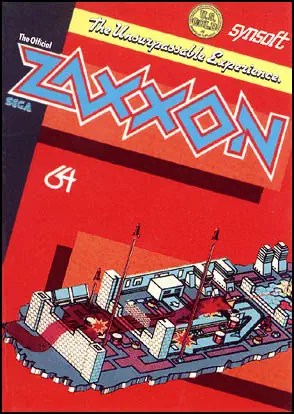
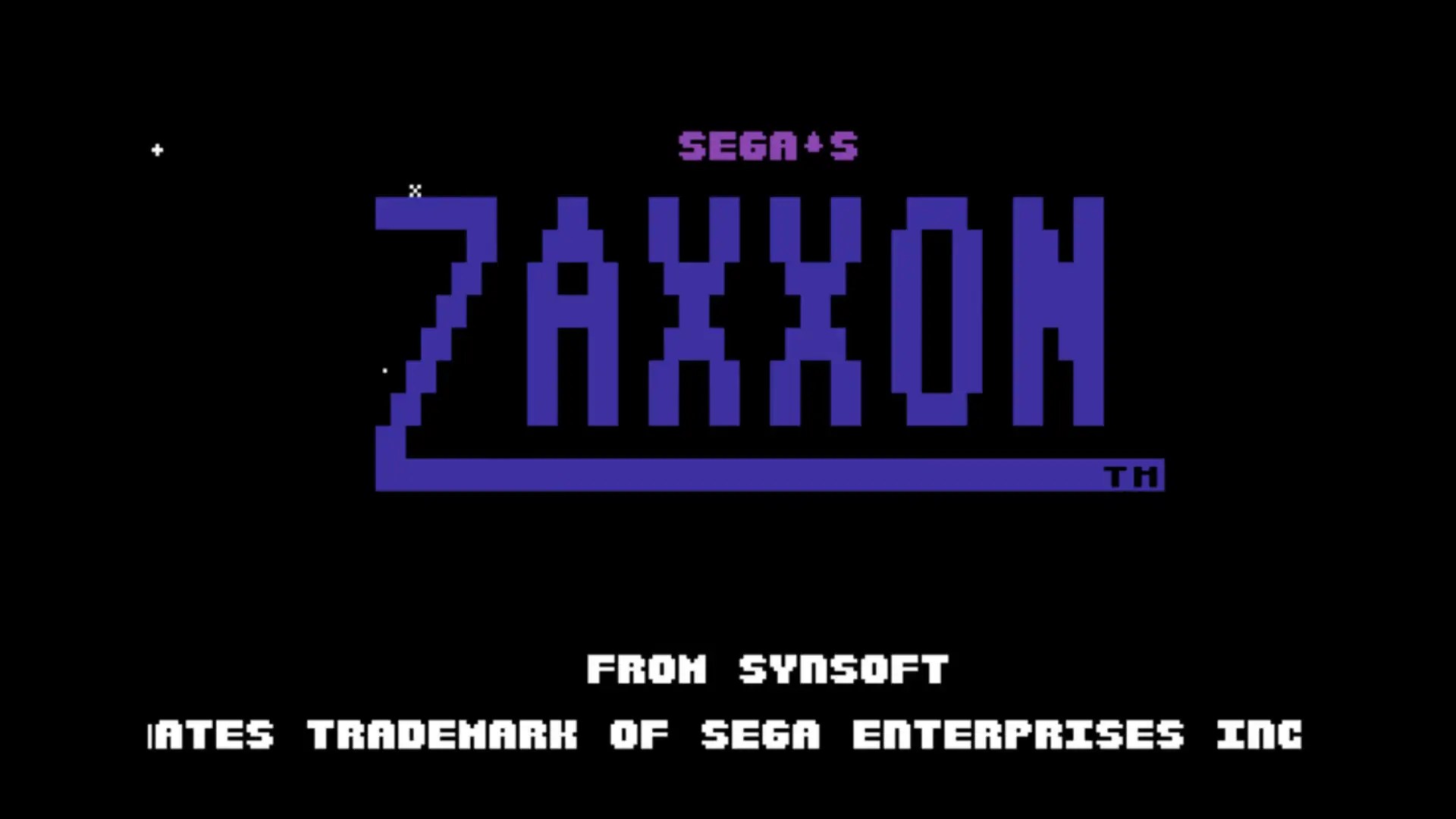
The Commodore 64 was the undisputed king of home computers in the 1980s, bringing arcade magic directly into living rooms across the world. Among its many iconic adaptations, Zaxxon was a standout. Originally released by Sega in 1982, Zaxxon revolutionized arcade gaming with its isometric 3D perspective, a visual innovation that captivated audiences and set a new standard for the shoot-‚em-up genre. Synapse Software took on the challenge of adapting this groundbreaking title for the Commodore 64. But how well did they capture the arcade experience, and what legacy does Zaxxon hold in today’s retro gaming market?
Battling Through Cosmic Fortresses
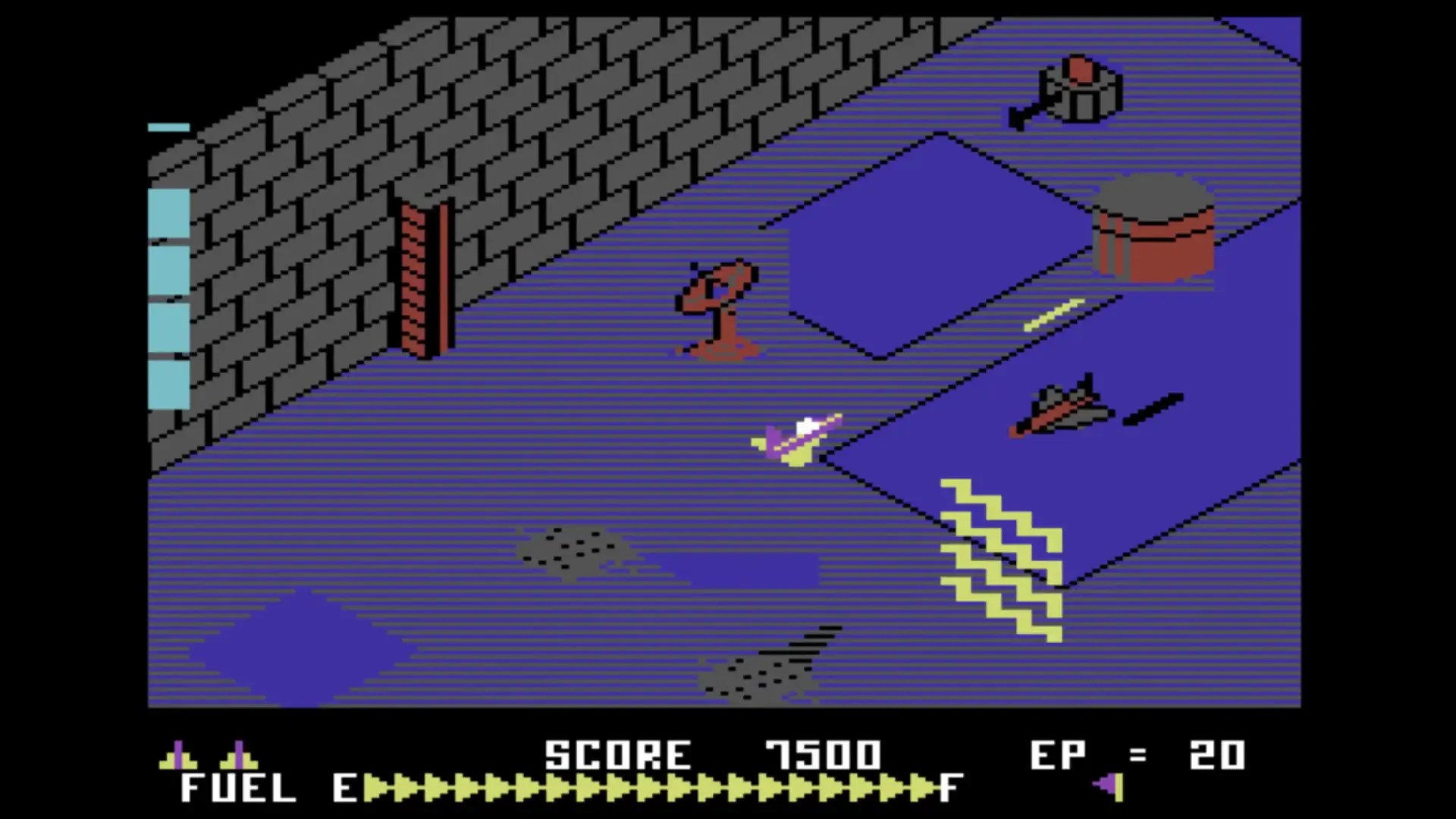
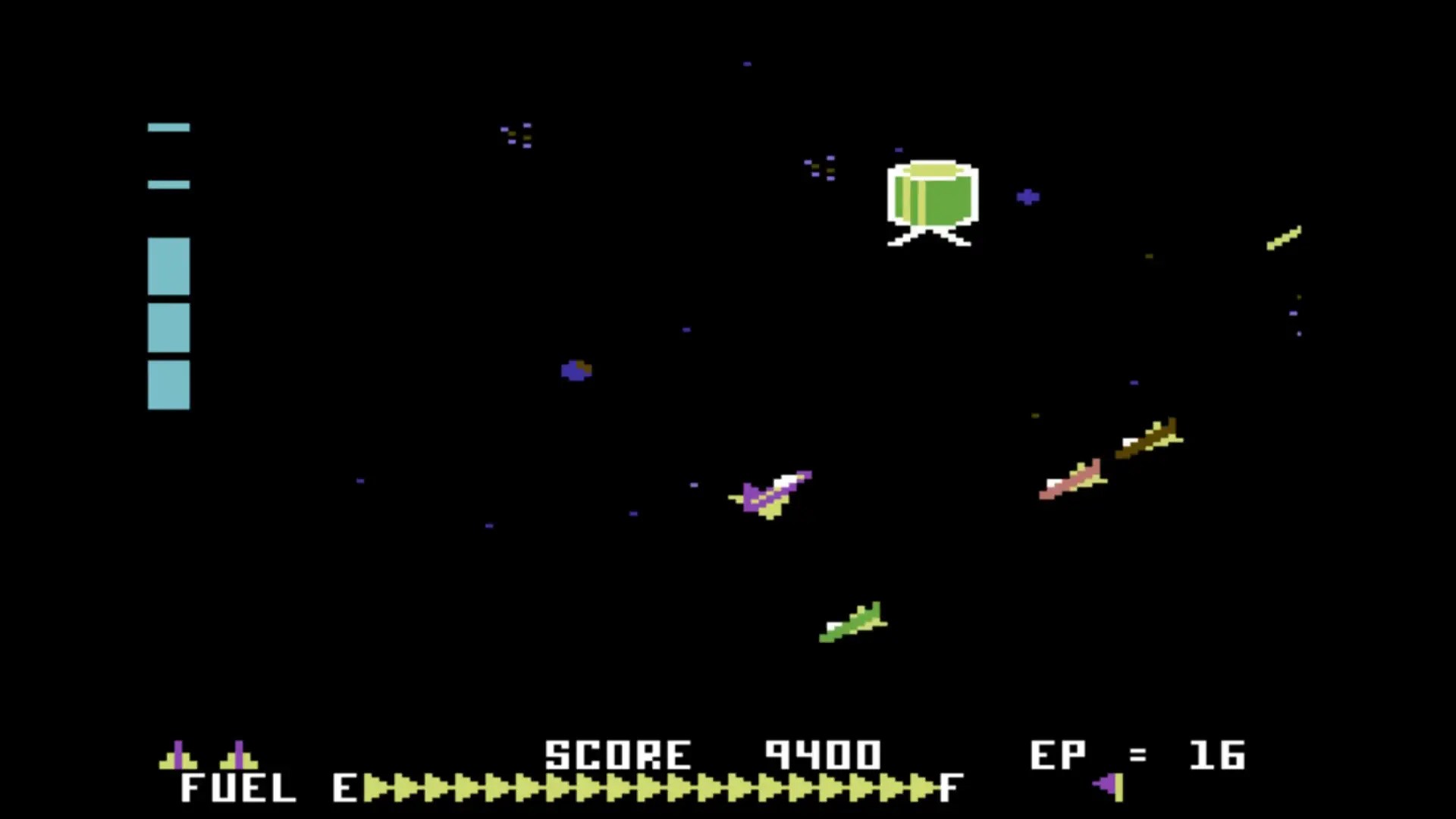
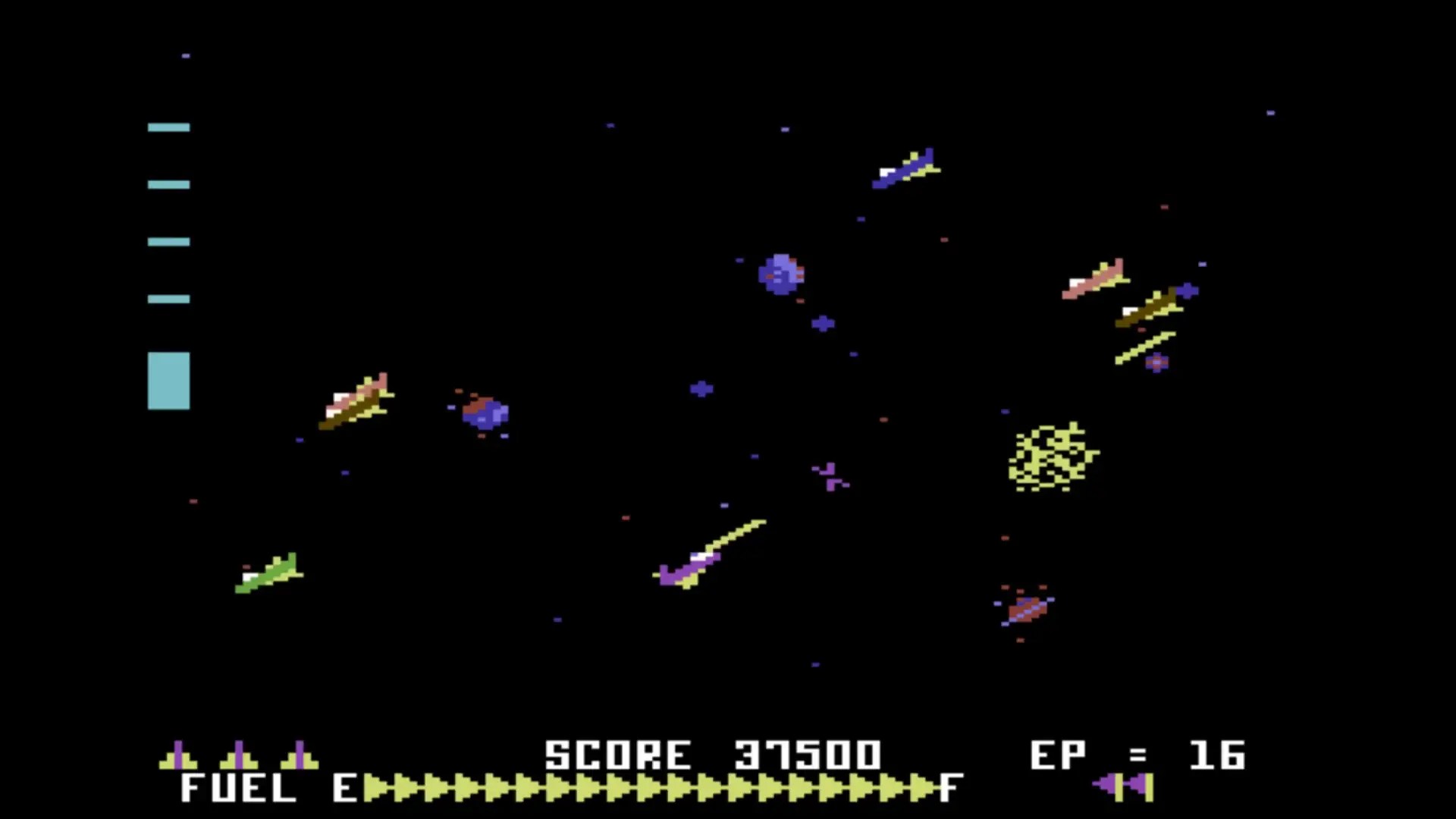
In Zaxxon, players step into the role of an intrepid pilot guiding a spaceship through enemy space fortresses. The mission: to destroy as many foes as possible, overcome a gauntlet of obstacles, and ultimately face off against the colossal Zaxxon robot. Success requires not just precise control but a careful strategy to navigate increasingly complex levels.
Enemies range from stationary turrets to homing missiles, cleverly placed mines, and advanced defense systems, all designed to outwit and overwhelm the player. A unique twist in the gameplay comes from the need to replenish fuel by destroying fuel tanks along the way. This introduces a compelling risk-reward dynamic, forcing players to decide whether to take risky maneuvers for precious fuel or play it safe to dodge enemy fire. Balancing the need for action, strategy, and resource management still makes Zaxxon a thrilling challenge decades later. Every moment demands precision, quick reflexes, and tactical decisions, which keeps players on their toes from start to finish.
Pioneering Gameplay, Not Without Obstacles
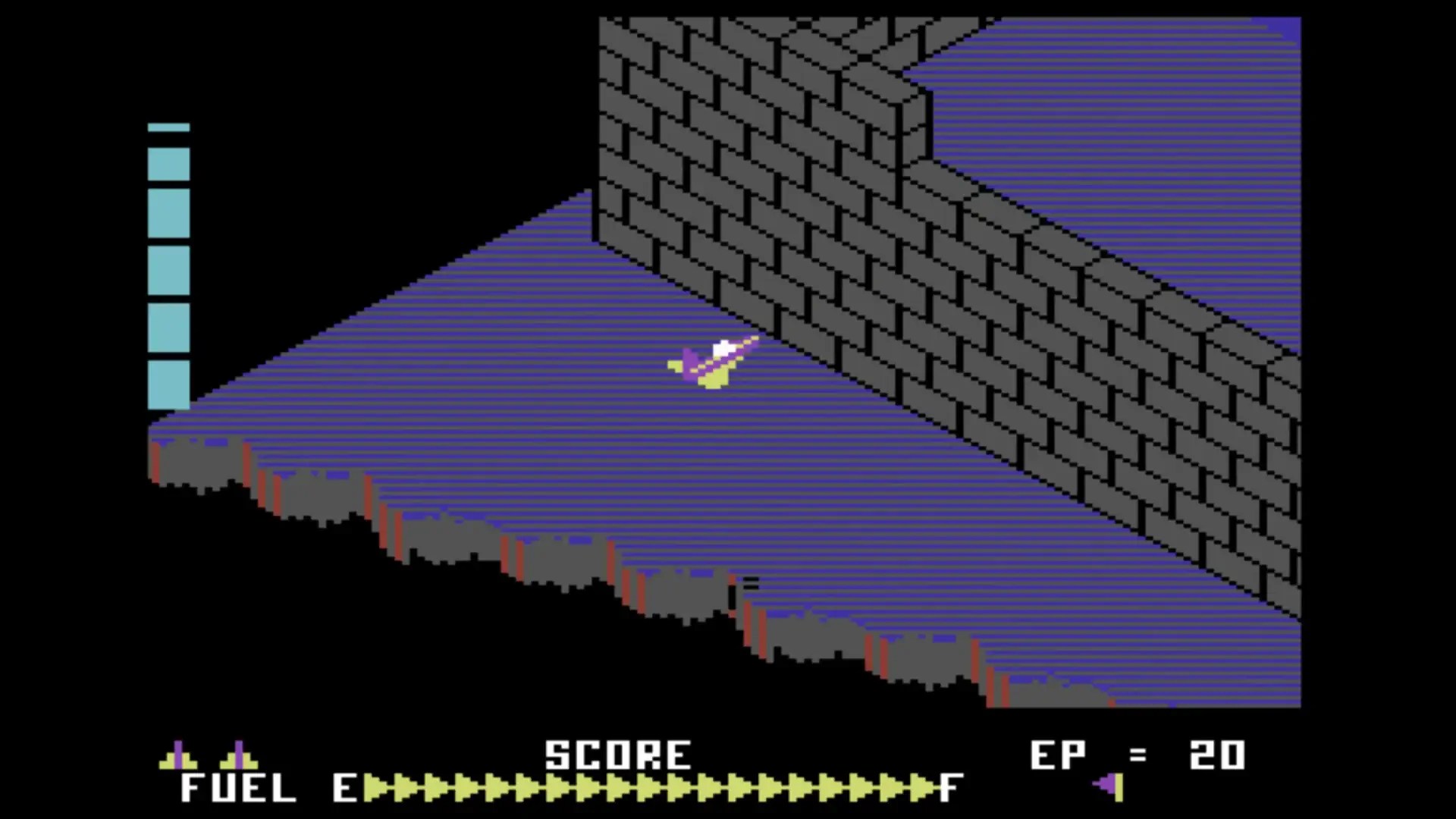
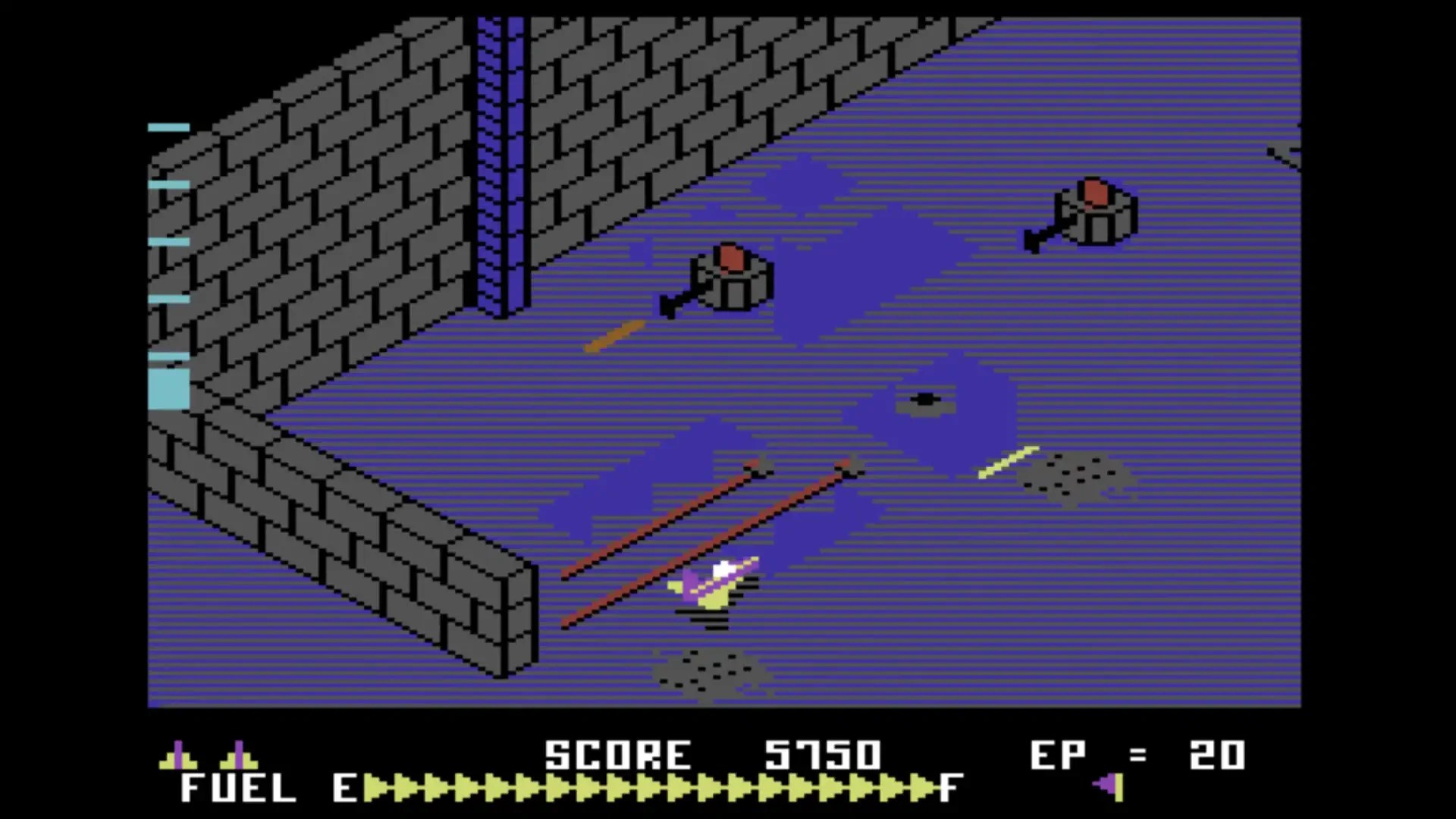
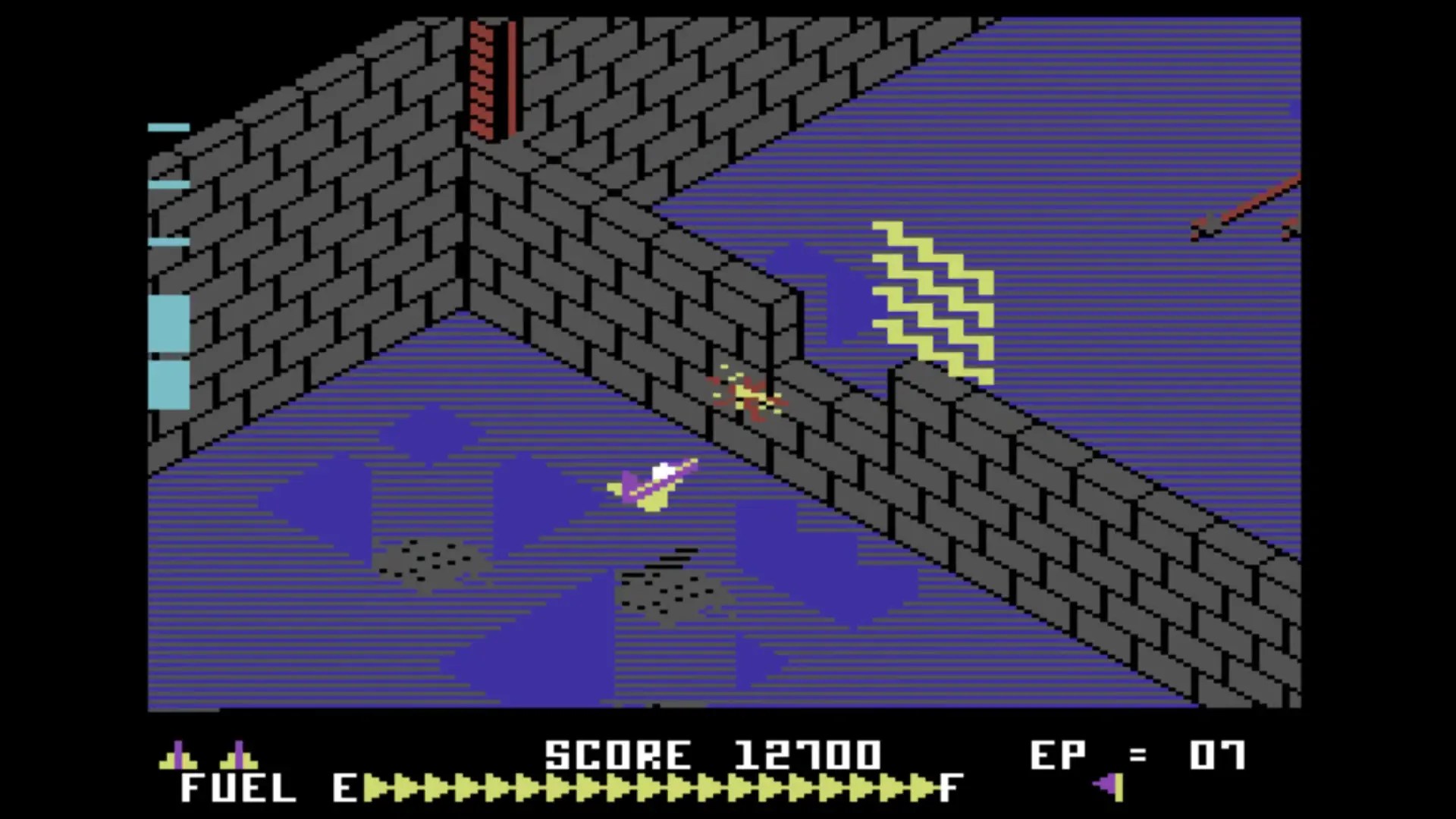
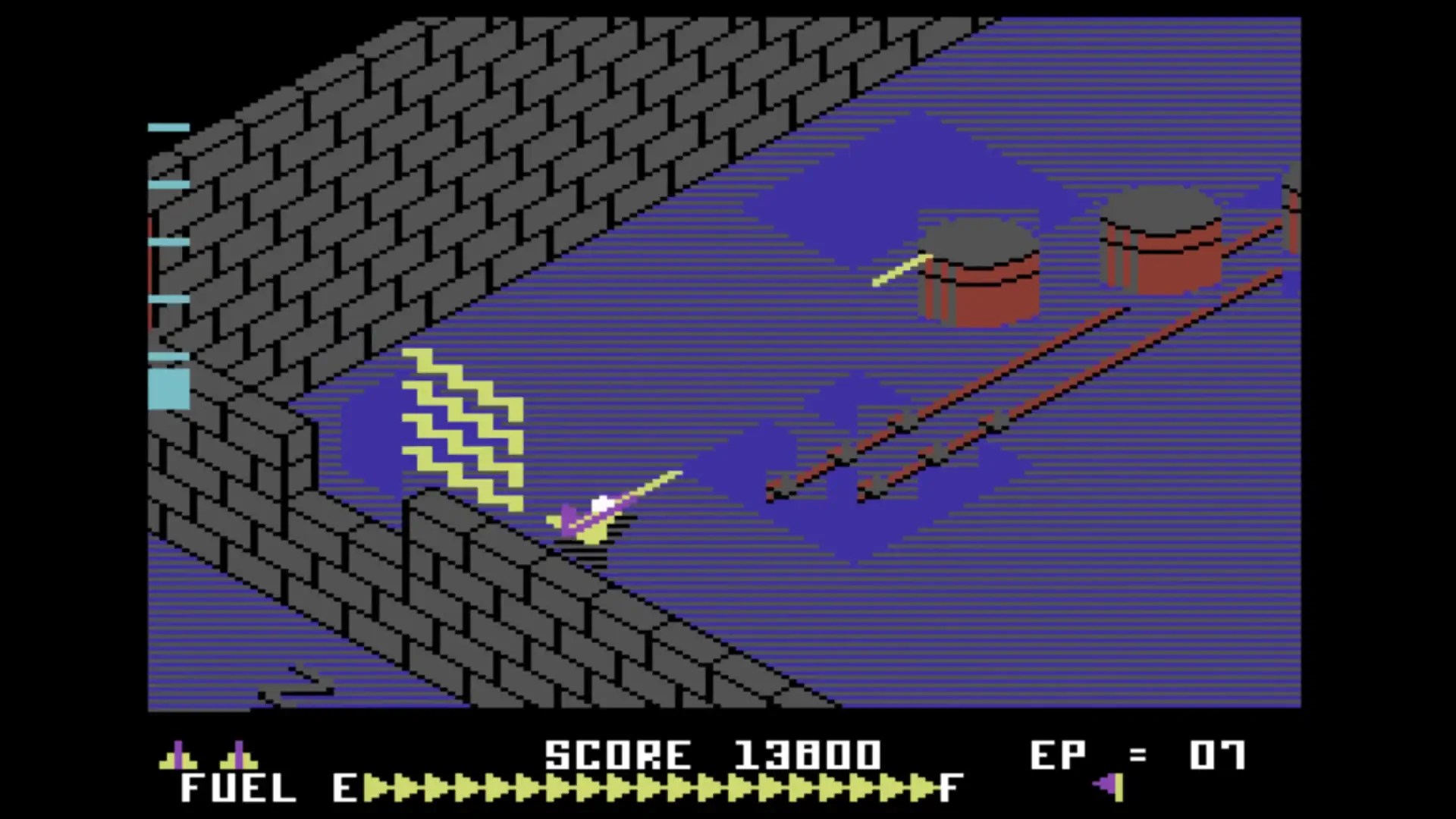
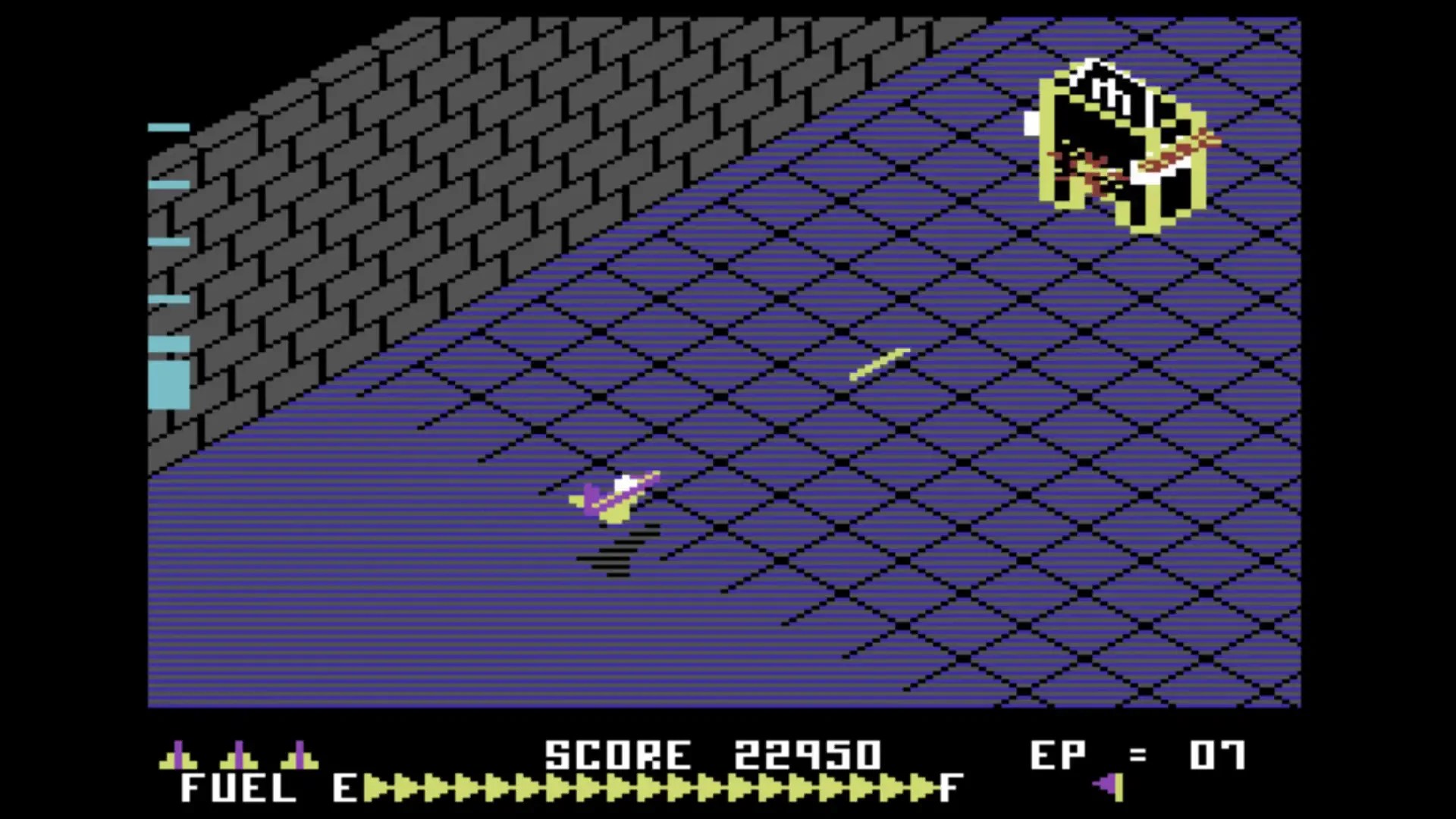
What truly set Zaxxon apart from other shooters of its time was its pioneering isometric 3D perspective, which offered a striking illusion of depth. This wasn’t just a visual flourish—it transformed gameplay, adding complexity to navigation and aiming. Unlike traditional side-scrolling shooters, players had to master vertical, horizontal, and depth movement to deftly dodge obstacles and target enemies, all while monitoring the ship’s altitude with a dedicated gauge.
Synapse Software’s adaptation for the C64 succeeded in retaining much of this ambitious gameplay. Despite the system’s hardware limitations, the isometric view was preserved, making Zaxxon one of the most visually sophisticated C64 titles of the early 1980s. However, the reduced graphical fidelity sometimes made it hard to identify enemies and obstacles, increasing the challenge, particularly in intense moments when fuel shortages, multiple enemies, and defensive maneuvers all converged.
The controls were a point of contention. On the arcade cabinet, specialized joysticks provided the precision needed to navigate the complex three-dimensional environment. On the C64, players used standard joysticks, which made controlling the ship feel clunky and sometimes imprecise. This heightened the difficulty, especially for new players who might find the steep learning curve frustrating rather than exhilarating. The game demanded the sort of precision that few casual players could muster, often leading to feelings of triumph for the few and repeated defeat for the many.
Bold Adaptation, But With Compromises
In the arcade, Zaxxon was celebrated for its stunning graphics, bright colors, dynamic animations, and a richly layered soundtrack that elevated the action. The arcade version’s dedicated hardware allowed for this sensory overload—specialized controllers, a wide color palette, and rich audio, all contributing to an intense experience.
Inevitably, the C64 version faced compromises. With a limited color palette, the graphics appeared less vibrant, and the animations were not as fluid, leading to some difficulty in judging movement and altitude, which were critical to gameplay. The soundtrack, while impressive for the C64’s SID chip, lacked the full richness of the arcade version. Perhaps the biggest hurdle was replicating the smooth controls. The arcade’s specialized joystick allowed nuanced movement that the C64’s standard joystick simply couldn’t match. These limitations made the home version more challenging, and often less forgiving.
The Hype
Zaxxon was one of the first video game releases to create a major hype in the 80s.
Nowadays we know exactly when new games are released, but in the 80s the world of video games looked different. Announcements mainly took place via printed magazines or advertisements and often reached fans very slowly. Some people had the games from dubious sources before official announcements came. Although magazines from the US or GB were sometimes faster, they were difficult to get in Germany.
The anticipation often arose from pure speculation. Which games could be released next for the C64? When would they come out? Often, only wild guesses could be made. If a game came out for other systems, one could hope that a C64 version would follow. But that was no guarantee – I’m still waiting for “Dimension X” for the C64.
At the beginning of 1984, we experienced the hype surrounding Zaxxon particularly intensely. Versions for other systems, such as the Apple II, and even for consoles like the ATARI 2600, had already been released. This time, there was even advertising for the C64 version before someone had the first pirate copies.
The question was: where is the C64 version?
The hype took its course, and the rumor mill was buzzing. Allegedly, someone would get the coveted C64 version through the brother of the aunt of the sister of the ex-boyfriend. Others claimed that the C64 version was as bad as the miserable VCS 2600 version. The tension was rising, and many went to great lengths to be the first. Some even traveled 40 kilometers by public transportation to a computer trade show, just in the hope of getting the game – unsuccessfully.
Everyone wanted to be the first to show up at the meeting places with a copy of the C64 version. It meant prestige and fame in the scene, and some offered rewards. The pressure and competitiveness created a special dynamic that made everything so exciting.
In April 1984, the first copies of the C64 version of Zaxxon finally appeared. This marked the end of one of the first major game hypes – and left behind a whole generation of gamers who would never forget that moment. The waiting, the rumors and the search were almost as important as the actual game.
The hype surrounding Zaxxon was not only an example of the enthusiasm for video games at the time, but also a reflection of a special era: a time without the internet, when information was collected with great difficulty, and when gaming was much more than just a hobby – it was an adventure.
Ambition Meets Mixed Reactions
Upon its release, the C64 version of Zaxxon received mixed reviews. Many critics lauded the technical prowess required to bring the isometric perspective to a home computer, calling it one of the most ambitious ports of its time. Magazines like Zzap!64 and Computer & Video Games praised Synapse Software for their impressive effort to capture the spirit and challenge of the original arcade game, considering it a technical triumph in adapting a complex game to the more limited C64 hardware.
However, the game’s shortcomings were also apparent. The high level of difficulty, compounded by less responsive controls and the graphical compromises, meant that many players found it too punishing. Beginners often found themselves repeatedly crashing into obstacles or running out of fuel, leading some to call the game „frustratingly difficult.“ The steep learning curve alienated casual players, even as hardcore fans admired the faithfulness of the adaptation.
Cult Status, Despite Flaws
Today, Zaxxon on the C64 holds a special place in the hearts of retro gaming enthusiasts. It stands as a testament to the creativity and ambition of early game developers, who sought to deliver cutting-edge arcade experiences to home audiences despite significant technological limitations. Its innovative isometric perspective is often credited as a precursor to later 3D gaming advancements, and its influence on the shoot-‚em-up genre remains undeniable.
Yet, not everyone looks back at Zaxxon with nostalgia. Its difficulty and cumbersome controls make it less accessible to modern players, and it feels more rigid compared to other games of its era that aged more gracefully. Nonetheless, respect for the developers‘ bold technical achievements and the historical significance of the game remains unbroken. For many, Zaxxon is less about perfection and more about ambition—a glimpse into the era when developers pushed boundaries regardless of the constraints.
A Milestone in Video Game History
The C64 adaptation of Zaxxon is a remarkable artifact of video game history, highlighting the ingenuity of developers during the early 1980s. It captures a time when translating arcade magic to home systems required not just technical skill but also a passion for the art of gaming. Despite its imperfections, Zaxxon remains an impressive reminder of what early developers could achieve with limited resources.
For retro enthusiasts, Zaxxon is a must-play—not just to understand the roots of modern gaming but to appreciate the tenacity of those who sought to bring new experiences to players in an era when every byte of memory mattered. Though it may seem like a relic today, it remains a symbol of a pioneering spirit, an era when technical constraints were merely challenges to be overcome with creativity and daring.








 McHenry's Lair
Kommentar verfassen :