


NEW : Prefer to listen? Explore this article as a slideshow video.
The Horror of Wanting to Belong
A Bloody Beginning

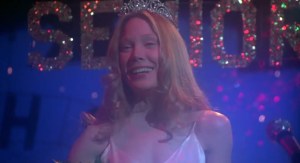
Few horror images are as instantly recognisable as Sissy Spacek standing beneath the prom lights, her pale dress soaked in blood. Yet the lasting power of Brian De Palma’s Carrie comes from everything that happens before that moment: the whispered insults, the nervous smiles, and the fragile possibility that an outsider might finally be accepted. Released in 1976, the film turns an ordinary adolescent longing into the foundation of a devastating supernatural tragedy.
Adapted from Stephen King’s debut novel, Carrie became the first feature film based on his work. Its combination of emotional vulnerability and extravagant visual horror helped establish a relationship between King’s fiction and cinema that would continue for decades. Even without that historical significance, however, it remains an unusually affecting film about humiliation, repression, and the catastrophic failure of compassion. The following discussion includes spoilers for both the film and the novel.
Prom Night Disaster

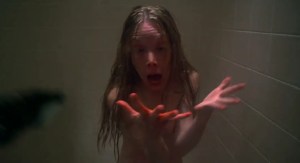
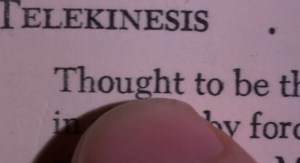
Carrie White is a withdrawn teenager whose classmates treat her as an easy target. At home, her mother Margaret’s religious fanaticism has left her terrified of her own body. When Carrie experiences her first period in the school showers, she believes something terrible is happening. Instead of helping, the other girls laugh and throw sanitary products at her, until gym teacher Miss Collins intervenes. Meanwhile, Carrie begins discovering that emotional distress can trigger her ability to move objects with her mind.
One participant in the bullying, Sue Snell, feels ashamed and persuades her boyfriend, Tommy Ross, to invite Carrie to the prom. Carrie cautiously accepts, defying her mother and allowing herself to imagine a happier life. Another classmate, Chris Hargensen, responds to her exclusion from the dance by arranging a vicious revenge with her boyfriend, Billy Nolan. Their plan culminates in a bucket of pig’s blood falling onto Carrie just after she is crowned prom queen.

Believing herself surrounded by ridicule, Carrie unleashes her powers on the assembled students and teachers. The destruction continues beyond the gym, but returning home offers no refuge: Margaret attempts to kill her, and Carrie retaliates before the house collapses around them. A final nightmare, in which Sue is grabbed by Carrie’s bloody hand, denies the audience any comfortable release. Survival does not mean that the horror is over.
From Page Onward
The story’s journey towards the screen began with an act of encouragement. Stephen King initially discarded the opening pages of what became his 1974 novel, only for his wife, Tabitha, to retrieve them and urge him to continue. Producer Paul Monash subsequently acquired the film rights, and Lawrence D. Cohen adapted the book. De Palma, whose earlier films included Sisters and Phantom of the Paradise, brought an established fascination with voyeurism, psychological instability, and elaborate visual storytelling.
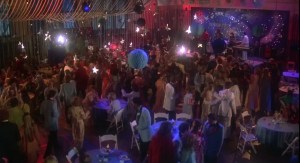
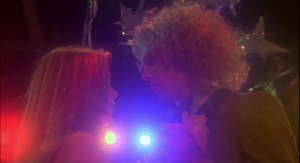
The adaptation’s greatest achievement is how confidently it translates emotional experience into cinematic form. Soft lighting and the circling camera make Carrie’s dance with Tommy feel temporarily detached from the hostile world outside. Later, split-screen images connect her almost motionless body with the destruction unfolding around her. Cinematographer Mario Tosi and De Palma also used split-field diopters to keep subjects at different distances sharply visible within one image. These techniques make watching itself part of the suspense: threats occupy the frame before characters understand them, and viewers become helpless witnesses to an approaching catastrophe.
Faces of Fear
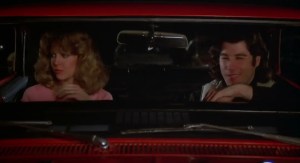
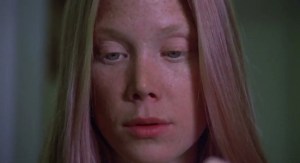
Sissy Spacek gives Carrie its emotional centre. Her lowered eyes and hesitant movements suggest someone accustomed to apologising for her existence. Crucially, she also allows flashes of curiosity, intelligence, and pleasure to emerge. During the prom, her growing confidence feels earned rather than magically bestowed by a pretty dress. When that confidence is destroyed, the transformation into terrifying stillness becomes almost unbearable because the vulnerable girl remains visible beneath it.
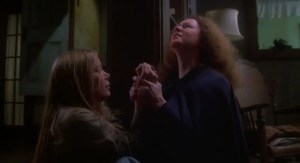
Piper Laurie’s Margaret operates at a very different pitch. Her performance is theatrical, suffocating, and sometimes grotesquely funny, yet her possessiveness gives the character a disturbing emotional logic. She treats her daughter’s independence as both spiritual corruption and personal abandonment. Spacek and Laurie received Academy Award nominations for Best Actress and Best Supporting Actress respectively, an exceptional recognition of performances in a horror film.

The supporting cast supplies the social world that makes Carrie’s isolation believable. Amy Irving gives Sue an uneasy conscience, while William Katt makes Tommy’s developing kindness convincing. Nancy Allen’s Chris and John Travolta’s Billy combine casual cruelty with childish self-absorption. Betty Buckley’s Miss Collins offers warmth and protection, but her disastrous misreading of Sue’s behaviour at the prom shows how even a sympathetic adult can fail the person she wants to help.
Film Versus Book
King’s novel presents Carrie’s story through a mixture of conventional narration, testimony, reports, and retrospective documents. The catastrophe is therefore something readers investigate as well as experience. De Palma largely removes this framework, allowing events to unfold with greater immediacy. The change narrows the social perspective but strengthens the audience’s attachment to Carrie’s moment-by-moment hopes and fears. Sue, whose perspective is more substantial in the book, consequently becomes a less fully explored presence onscreen.
The final act contains several major alterations. In the novel, Carrie’s destruction spreads across the town, whereas the film concentrates its spectacle around the school, the road, and the White household. King’s Carrie kills Margaret by stopping her heart; De Palma stages her death through flying knives, creating a grotesque religious tableau. The compassionate gym teacher survives in the book but dies in the film, making Carrie’s retaliation even more indiscriminate.
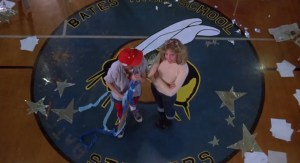
The endings also leave different emotional impressions. King gives Carrie and Sue a final telepathic encounter and closes with evidence that another child possesses similar powers. De Palma instead ends with Sue’s nightmare and the hand erupting from the rubble. The novel looks outward towards recurrence, while the film turns inward towards trauma. Neither approach offers reassurance, but they locate the continuing horror in different places.
Behind the Blood

Several production details reveal how carefully the film’s effects were constructed. The famous prom blood was a mixture of Karo syrup and food colouring, which Spacek recalled as intensely sticky and uncomfortable. The apparent nightmare required considerable physical endurance from its central performer, reminding us how much of the sequence’s impact depends on a real body confronting tangible materials rather than an abstract special effect.
The final dream contains an especially ingenious trick: Amy Irving walked backwards during filming, and the footage was then reversed to produce her strangely floating movement. Elsewhere, Bates High School provides a nod to Alfred Hitchcock’s Psycho. The collapsing White house involved a half-scale model, while a planned shower of rocks was abandoned because of mechanical problems. Such details show a production finding memorable images through practical ingenuity, including the unsettling transformation of an ordinary walk into something that feels subtly wrong.
Critics at Release
Carrie attracted enthusiastic supporters in 1976, but its later status should not obscure the disagreement surrounding its release. Roger Ebert praised its combination of powerful horror and convincing human observation. His response recognised the essential balance that still distinguishes the film: its shocks matter because the people experiencing them have first become emotionally legible. Carrie is frightening, but her unhappiness is never merely an excuse for staging destruction.
Pauline Kael’s contemporary review in The New Yorker celebrated the mixture of frightening and funny material, while also identifying weaknesses in some supporting characterisation. Not everyone shared that enthusiasm: the American Film Institute records that The New York Times dismissed the film as “a mess.” This division makes sense for a work that moves so boldly between adolescent comedy, intimate suffering, and operatic violence. The transitions that admirers experience as exhilarating can also feel manipulative or excessive.
Cultural Aftershocks

Carrie helped make the American high school a convincing setting for full-scale horror. Its corridors, changing rooms, and ceremonial dance expose a social hierarchy capable of cruelty without supernatural assistance. The prom sequence remains such a potent cultural image because it destroys a familiar promise: the idea that one perfect evening can transform an awkward teenager’s place in the world. Here, public recognition becomes another mechanism of humiliation.
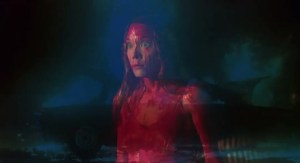
The story also continued through later adaptations and related works, including the 1988 stage musical, The Rage: Carrie 2 in 1999, and the 2013 film starring Chloë Grace Moretz. Their existence demonstrates the durability of the material, although De Palma’s imagery remains a particularly powerful reference point. Carrie’s blood-covered silhouette condenses innocence, shame, anger, and danger into a single unforgettable figure.
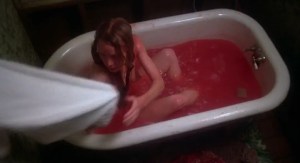
Its treatment of female adolescence remains open to productive disagreement. Carrie’s powers can be read as a fantasy of resistance, yet their emergence also connects female bodily change with terrifying destruction. Similarly, the opening shower scene invites questions about whether the camera challenges objectification or participates in it. These tensions keep the film interesting: its sympathy is powerful, but its perspective is neither simple nor comfortably innocent.
Lasting Unease
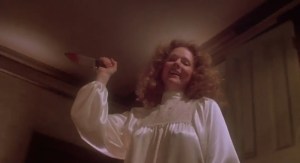
What makes Carrie endure is the time it spends persuading us that things might turn out differently. Tommy could be sincere, an adult could intervene successfully, and Carrie could discover a life beyond her mother’s control. The horror depends on those possibilities feeling real before they are destroyed. Even when the ending is familiar, the brief sight of Carrie enjoying herself can still make the approaching catastrophe feel newly cruel.

De Palma’s stylistic excess occasionally overwhelms the surrounding characters, but Spacek’s performance anchors the film in recognisable pain. Carrie offers the spectacle of revenge without allowing revenge to become a satisfying solution. Its deepest disturbance lies in the distance between the monstrous power its heroine possesses and the modest kindness she actually needs.
More
Trailer
External links
- Carrie at IMDb
- Carrie at Rotten Tomatoes
- Carrie at Wikipedia (en)
- Carrie at Wikipedia (de)
Notice Regarding Image Rights and Copyrighted Material
All images, film stills, posters, logos, trailer excerpts and other copyrighted materials used in this article are used solely for editorial reporting, film criticism, review and illustrative purposes related to the respective content.
Unless otherwise stated, all copyrights, trademark rights and other intellectual property rights in the materials used remain with their respective rights holders, including film studios, distributors, production companies, photographers, artists or other licensors.
The materials are used in good faith and with regard to applicable legal limitations, licence terms and source attributions. If, despite careful review, any rights have been infringed or any attribution is incomplete, please contact me. Upon review, the relevant content will be removed or corrected promptly.







Schreibe einen Kommentar