

Contents
- Soul Meets Dublin
- An Unusual Band
- Rehearsals Full of Conflict
- Success Without a Happy Ending
- Faces Instead of Stars
- Acting Full of Energy
- Soul as the Main Character
- America in Ireland
- Behind-the-Scenes Stories
- Praise for Dublin
- Music Wins Over Critics
- Ireland on the Big Screen
- Influence on Music Films
- Failure with Meaning
- A Timeless Music Film
- More
Soul Meets Dublin
When “The Commitments” hit theaters in 1991, the film felt both familiar and unusual. What was familiar was the classic story of a group of young people who form a band and dream of musical success. What was unusual, however, were the setting, the rough humor, and, above all, the music. Director Alan Parker, who had previously worked on music films such as “Fame,” transplanted the world of American soul to the working-class neighborhoods of Dublin. The film was based on the novel of the same name by Irish author Roddy Doyle, which forms the first part of his series of novels later known as the “Barrytown Trilogy.” However, the film isn’t simply an ordinary rags-to-riches story. Instead of celebrating the big breakthrough, it primarily shows how enthusiasm, ambition, and musical talent clash with personal conflicts. It was precisely this blend of comedy, social commentary, and musical that made “The Commitments” one of the best-known Irish films of its time.
An Unusual Band

At the center of the plot is the young Jimmy Rabbitte, who doesn’t play an instrument himself but is convinced he’s an outstanding music manager. He has a clear vision: Dublin needs a soul band. For Jimmy, soul isn’t just music—it’s an expression of working-class life. Together with friends, he therefore begins searching for musicians for a new group. The selection process turns out to be chaotic. Numerous applicants show up at Jimmy’s home, many of whom lack both sufficient talent and the right attitude. Eventually, however, a band takes shape, featuring female vocalists, horn players, guitarists, a drummer, and a keyboardist. Jimmy comes up with the name right away: The Commitments. What initially seems like a random group of very different people slowly evolves into a serious band. However, it soon becomes clear that musical talent alone isn’t enough to hold a band together.
Rehearsals Full of Conflict
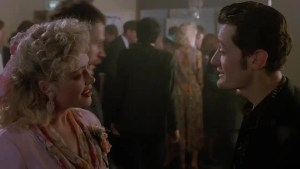
The members of The Commitments first have to learn to play together. This constantly leads to tension. The young singer Deco Cuffe, in particular, generates enthusiasm with his exceptionally powerful soul vocals, but at the same time causes arguments with his huge ego. Romantic relationships and jealousy within the group also exacerbate the situation. Meanwhile, Jimmy tries to keep the different personalities in check and make the band more professional. The project is supported by the older trumpeter Joey “The Lips” Fagan, who claims to have played with numerous famous musicians. Whether all his stories are true remains doubtful, but his experience initially provides the group with direction. After grueling rehearsals, their first performances finally take place. The audience reacts enthusiastically, and for a brief moment, it actually seems possible that this improvised Dublin band could become something bigger.
Success Without a Happy Ending

However, the better the Commitments become musically, the more difficult their coexistence becomes. Personal rivalries intensify, and minor disagreements escalate into serious conflicts. Jimmy hopes for a decisive career move and even tries to convince the famous soul musician Wilson Pickett to perform with them. The idea of sharing the stage with a real American soul star becomes a symbol of the band’s big dream. But the hoped-for breakthrough never comes. Instead, the group falls apart due to its own tensions. This is precisely what sets “The Commitments” apart from many classic music films. The story does not end with a triumphant concert, a record deal, or international fame. The real success lies in the fact that a group of young people created something special for a brief moment. The band disappears, but the experience remains.
Faces Instead of Movie Stars

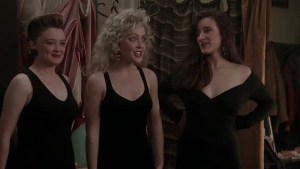
Much of the film’s impact stems from its cast. Alan Parker deliberately chose not to rely exclusively on well-known actors, but instead sought out people who brought musical talent and an authentic connection to the Dublin scene. Robert Arkins plays Jimmy Rabbitte with a mix of self-confidence, enthusiasm, and megalomania. The then-very-young Andrew Strong impresses as Deco Cuffe, particularly with his astonishingly mature and powerful voice. Angeline Ball, Maria Doyle Kennedy, and Bronagh Gallagher portray the band’s female vocalists and contribute significantly to the film’s musical character. Also part of the ensemble is Glen Hansard, who later gained international fame as a musician and through the film “Once.” Jimmy’s father is played by Colm Meaney, whose enthusiasm for Elvis Presley provides some of the film’s funniest moments.
Acting Full of Energy
The fact that many of the actors have a close connection to music greatly contributes to the film’s authenticity. The band doesn’t come across as a group of actors who were handed instruments for individual scenes. Rather, the impression is that of a real young band whose members just happen to be followed by a camera. The dialogue also reinforces this impression. It’s fast-paced, direct, and full of Dublin humor. The characters insult each other, argue, make up, and constantly crack jokes at each other’s expense. At the same time, the film avoids idealizing the members of The Commitments. Many of them are immature, selfish, or unreliable. That’s precisely why they come across as human. The viewer isn’t watching a perfectly planned success story, but rather a group of talented people who keep getting better musically while falling apart on a personal level.
Soul as the Main Character
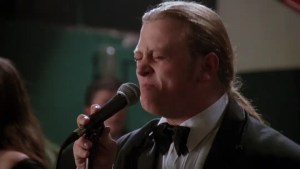
Alongside the cast, the music is the true main character of “The Commitments.” The band primarily plays classics of American soul and rhythm and blues. Among the songs featured are “Mustang Sally”, “In the Midnight Hour”, “Try a Little Tenderness”, and “Chain of Fools”. Crucially, the songs aren’t simply used as background music. The rehearsals and performances drive the plot forward. The audience witnesses how the Commitments develop musically: At first, much of their sound is uncertain and disorganized, but later the group performs with astonishing power. Andrew Strong’s vocals, in particular, infuse the familiar songs with new energy. The music briefly unites the characters and creates precisely those moments when their shared dream seems believable.
America in Ireland
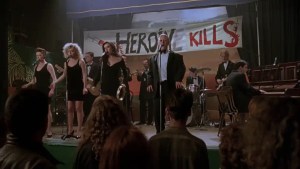
The fact that young people from Dublin, of all places, are playing American soul is no random gag. Jimmy declares soul to be the music of the working class, thereby attempting to forge a connection between the African American musical tradition and life in economically struggling Dublin. Of course, this equivalence isn’t entirely transferable historically or socially. The film uses it primarily as an expression of Jimmy’s enthusiasm and his desire to give his own community a voice. The Commitments, therefore, do not simply imitate American role models. They transform that music into something of their own. The contrast between the soul classics and the gray streets, small apartments, and humble pubs of Dublin is among the film’s most powerful images. As a result, soul comes across less as a geographically bound musical genre and more as an emotional language for frustration, longing, and hope.
Behind-the-Scenes Stories

There are numerous interesting details surrounding “The Commitments.” The film is based on Roddy Doyle’s 1987 novel and was the first film adaptation of a part of his “Barrytown Trilogy.” Musical talent played an unusually large role in the casting, which is why several actors went on to pursue successful music careers. Andrew Strong was still a teenager during filming, although his voice sounds significantly older. Glen Hansard was already active as a musician and founded the band The Frames before achieving international success years later with “Once” and the song “Falling Slowly.” Maria Doyle Kennedy also went on to have a successful career as a singer and actress. It’s also worth noting that, following the film’s success, the on-screen band took on a life of its own to some extent: Some of the cast and crew later performed under the name The Commitments, keeping the film’s musical spirit alive long after its theatrical release.
Praise for Dublin
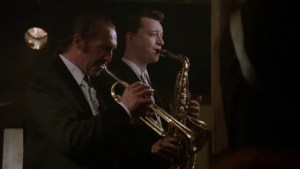
Upon its release, “The Commitments” was well-received by many critics. Particular praise was given to the musical energy, the humor, and the authentic portrayal of Dublin’s working class. The film was frequently praised for the fact that its characters do not come across as typical movie heroes. Their language, their clothing, and their conflicts convey a sense of life that was rarely seen in major international film productions outside of Ireland in the early 1990s. Alan Parker’s direction also received recognition because the concert sequences feel dynamic without losing the raw character of the story. At the same time, there was occasional criticism that the numerous characters are developed to varying degrees. Some band members remain more like archetypes than fully fleshed-out characters. Other critics, however, saw this as a strength, as it preserves the chaotic feel of a real band.
Music Wins Over Critics

Many observers were particularly unanimous about the quality of the music. The performances are among the film’s highlights and work even independently of the plot. The soundtrack therefore had an impact far beyond the movie theater. For many viewers, “The Commitments” even served as an introduction to classic soul music. Songs originally associated with artists like Otis Redding, Wilson Pickett, and Aretha Franklin reached a new—and in some cases younger—audience through the film. At the same time, Parker avoided an overly polished presentation. The music sounds powerful, at times almost aggressive, and thus matches the energy of the characters. It was precisely this combination of well-known soul classics and a young Irish band that made the film accessible to international audiences. Even those who knew little about Dublin or Ireland’s social situation could immediately relate to the characters’ enthusiasm for their music.
Ireland on the Big Screen
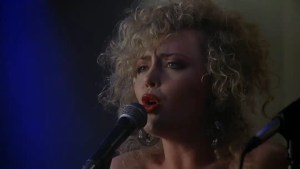
Culturally, “The Commitments” holds special significance for Irish cinema. The film portrayed Dublin not as a romantic backdrop with green landscapes and traditional clichés, but as a modern, at times run-down metropolis. The characters speak openly about unemployment, financial problems, and a lack of prospects, without the film turning this into a bleak social drama. Instead, it responds to difficult living conditions with humor, music, and self-deprecating humor. This portrayal differed significantly from many older international depictions of Ireland. At the same time, the film’s success proved that stories with a strong local character can reach an international audience. The Dublin dialect and the specific cultural references did not prevent viewers around the world from understanding the characters. On the contrary: it was precisely this local identity that made the film distinctive.
Influence on Music Films
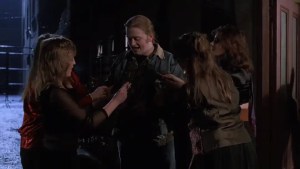
“The Commitments” can also be regarded as an important point of reference for later music films. The story shows that a film about a band does not need a spectacular rise to fame. The process of making music together can be just as crucial. Later productions about amateur bands or independent musicians often draw on similar themes: small venues, financial difficulties, personal conflicts, and the question of whether a passion for music alone is enough. Particularly interesting in this context is Glen Hansard’s later involvement in “Once”, a film that is also closely tied to Dublin and music, yet develops a completely different, calmer atmosphere. Both films show in different ways how closely music can be tied to a specific place and the people who live there. “The Commitments” remains the louder, more chaotic, and funnier of the two.
Failure with Meaning
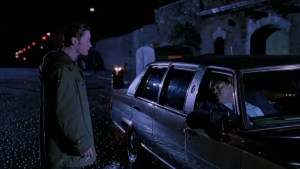
Perhaps the most interesting aspect of “The Commitments” is its portrayal of failure. The band does not achieve its grand goal. There is no international fame, no sold-out arenas, and no fairy-tale record deal. Yet the story doesn’t feel like a defeat. For a brief time, the members created something greater than their ordinary everyday lives. They learned to make music together, thrilled an audience, and experienced how an idea can become reality. The fact that this reality doesn’t last makes the film more believable. Ultimately, The Commitments fail not because of a lack of talent, but because of their personalities, their expectations, and their conflicts. In doing so, the film also tells a surprisingly realistic story about why creative projects sometimes fall apart even when the result actually works.
A Timeless Music Film
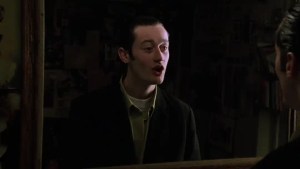
More than three decades after its release, “The Commitments” still possesses a special energy. The film thrives on its music, its quick wit, its quirky characters, and the atmosphere of Dublin. Above all, however, it tells of a universal desire: the dream of breaking out of an ordinary life and creating something extraordinary together. Alan Parker combines this dream with classic soul music without turning it into a cheesy success story. Precisely because the band falls apart in the end, their brief time together seems all the more precious. “The Commitments” is therefore more than just a comedy about a chaotic amateur band. The film is a declaration of love for soul music, for musical passion, and for those projects that may not last forever but still change the lives of those involved. That is likely the most important reason why the film has retained its cult status to this day.
More
Trailer
External links
Notice Regarding Image Rights and Copyrighted Material
All images, film stills, posters, logos, trailer excerpts and other copyrighted materials used in this article are used solely for editorial reporting, film criticism, review and illustrative purposes related to the respective content.
Unless otherwise stated, all copyrights, trademark rights and other intellectual property rights in the materials used remain with their respective rights holders, including film studios, distributors, production companies, photographers, artists or other licensors.
The materials are used in good faith and with regard to applicable legal limitations, licence terms and source attributions. If, despite careful review, any rights have been infringed or any attribution is incomplete, please contact me. Upon review, the relevant content will be removed or corrected promptly.






Kommentar verfassen