

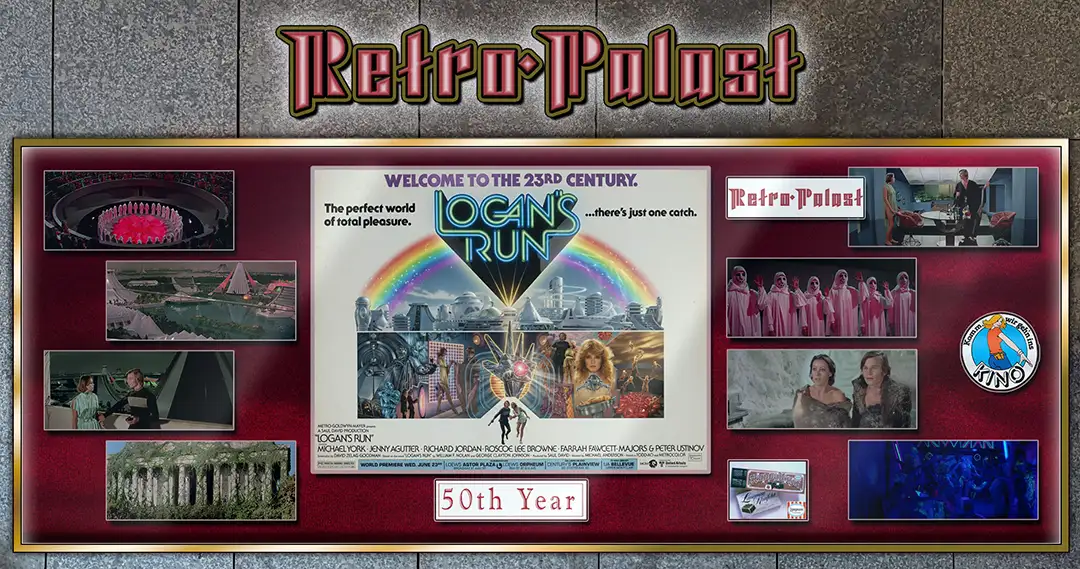
Sometime in the 23rd century…
the survivors of war, overpopulation and pollution
are living in a great domed city, sealed away from the
forgotten world outside. Here, in an ecologically balanced world,
mankind lives only for pleasure,
freed by the servo-mechanisms which provide everything.
There’s just one catch:
Life must end at thirty unless reborn in the fiery ritual of carrousel.
A Future Full of Splendor

When Logan’s Run hit theaters in 1976, science fiction cinema was at an interesting crossroads. The grand, philosophical visions of the future from the late 1960s and early 1970s were still present, but modern blockbuster cinema had not yet fully emerged. It is precisely in this in-between space that Michael Anderson’s film unfolds its unique charm: It is spectacular, colorful, serious, naive, elegant, and at the same time delightfully over-the-top. It is precisely this mix that makes it so endearing to this day.
The film depicts a future that initially seems like paradise. People live in a self-contained domed city—young, beautiful, well-provided-for, and seemingly free of worries. Work, old age, illness, and family appear to have been overcome. But beneath this smooth surface lurks a cruel order: No one is allowed to live past the age of thirty. Anyone who reaches this age must face the “Carrousel” ritual, which supposedly offers renewal but in reality brings death.
Logan’s Run is a film about the cult of youth, control, the fear of aging, and the longing for true freedom. What makes it so compelling and enduringly fascinating, however, is not just its warning, but its sense of wonder. The film believes in images, in spaces, in adventure, and in the possibility that a single person can awaken and challenge an entire world.
Escape from the Dome
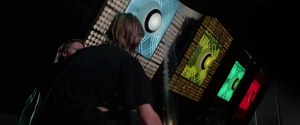
At the center of the story is Logan 5, played by Michael York. Logan is a so-called “Sandman,” a member of the elite unit that hunts “Runners”: people who want to flee the city before their thirtieth birthday. At first, Logan takes this system for granted. He moves confidently through a world of neon lights, shopping districts, entertainment, automated apartments, and technological conveniences. The city has given him everything: status, a mission, pleasure, and a clear role.
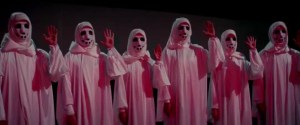
But the film begins to get exciting when this sense of security starts to crack. After hunting down a Runner, Logan stumbles upon the symbol of the Ankh, which is linked to a mysterious place called “Sanctuary.” This place is said to offer salvation to those on the run. The city’s central computer tasks Logan with finding Sanctuary. To this end, his life clock is manipulated: Suddenly, he himself is on the brink of death. The hunter becomes the hunted.
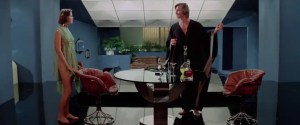
At his side is Jessica 6, played by Jenny Agutter. She is not merely a companion, but the emotional counterforce to the city. While Logan must learn that his certainties are false, Jessica embodies doubt, longing, and moral vigilance from the very beginning. Together, they leave the artificial world of the dome and venture into areas considered dangerous or off-limits to the inhabitants.
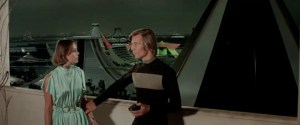
Particularly striking is the moment when Logan and Jessica reach the outside world. After the controlled color palette of the city, a different space suddenly opens up: nature, ruins, light, decay, and history. In the overgrown remnants of Washington, D.C., they encounter the old man, played by Peter Ustinov. This character is one of the film’s most beautiful ideas. In a world that has eradicated old age, an elderly person becomes a sensation. His mere existence proves that the city is built on a lie.

At its core, the plot is a classic coming-of-age story. Logan is fleeing not only death, but also a false conception of life. The film tells this story clearly, evocatively, and accessibly. It doesn’t present a complicated theory but translates its ideas into powerful images: the flashing life clock in his hand, the deadly carousel, the sterile city, the icy world of Box, the ruins of the old civilization, and, in the end, the people seeing the outside world for the first time.
Faces with a Strong Presence
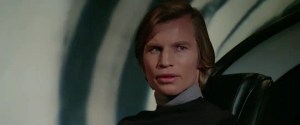
Much of the charm of Logan’s Run lies in its cast. Michael York plays Logan not as a flawless hero, but as a privileged young man who slowly comes to realize that his world is morally hollow. It is precisely this development that makes the character likable. York brings a blend of elegance, self-assurance, and growing uncertainty to the role. You can see in him how routine turns into doubt, and doubt into courage.

Jenny Agutter imbues Jessica 6 with warmth and dignity. Her character could easily have become nothing more than a companion on the run, but Agutter plays her with inner strength. Jessica isn’t loudly rebellious, but rather observant, vulnerable, and courageous. She is the film’s moral compass. Her presence ensures that Logan’s transformation doesn’t come across merely as an external chase, but as a journey of personal growth.
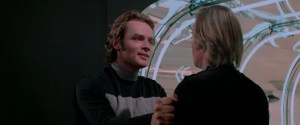
Richard Jordan as Francis 7 is also important. Francis is Logan’s friend, colleague, and later pursuer. He represents the system not as an abstract power, but as a personal connection. This lends emotional tension to the pursuit. Francis believes in the rules because he has never learned to question them. His conflict with Logan shows how difficult it is to leave a familiar order behind, even when it is cruel.

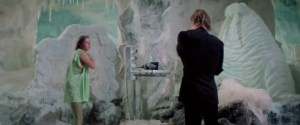
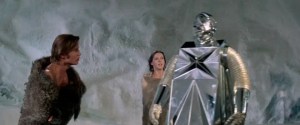
Roscoe Lee Browne is memorable as the voice and embodiment of the robot Box. Box is bizarre, theatrical, and eerie, but also a wonderful example of the film’s imagination. He is one of those moments in which Logan’s Run does not aim to be entirely realistic, but rather fairy-tale-like and strange. Farrah Fawcett-Majors makes a brief but striking appearance as Holly, reflecting the glamorous spirit of the 1970s.
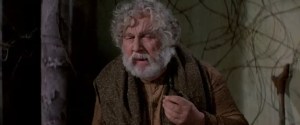
The great poetic highlight is Peter Ustinov as the old man. He plays the character with gentleness, humor, and an almost childlike sense of wonder. In his scenes, the film shifts its tone. Suddenly, it’s no longer just about escape and danger, but about memory, language, family, cats, books, and the wonder of being allowed to grow old. Ustinov turns old age not into a weakness, but into a form of richness.
Details Behind the Magic
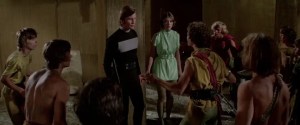
One of the most appealing aspects of Logan’s Run is its set design. From today’s perspective, the future clearly looks like a 1970s vision of the future: shiny surfaces, light-colored fabrics, geometric spaces, whimsical technology, and a certain shopping-mall aesthetic. But that is precisely what makes the film so distinctive. It doesn’t simply show “the future,” but rather a dream of what the future might have looked like back then.

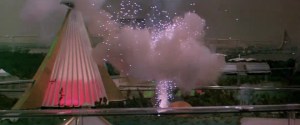
The domed city was created using miniatures, sets, and visual effects that give the film a handcrafted quality. You can sense that things were actually built, lit, painted, and staged here. This sense of materiality is a major asset. Even if some of the effects no longer appear seamless today, they possess charm and artistic integrity. The world feels like a giant stage set that you want to step into.

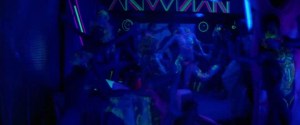
One of the film’s most famous scenes is the so-called “Love Shop,” a futuristic area where the city’s residents can easily make connections. For decades, there has been a rumor that this sequence was filmed in a real swingers’ club or in a location used for that purpose. Whether this is entirely true is a matter of debate, but the story is one of the most popular anecdotes surrounding the film. It also fits well with the permissive spirit of the 1970s and the portrayal of a society in which relationships and sexuality were largely liberated from social conventions.
It is also interesting to note that some of the models and miniatures built for Logan’s Run were reused later on. Especially in the late 1970s and early 1980s, it was not uncommon in Hollywood to reuse elaborate models multiple times to save on production costs. Elements of the futuristic cityscapes and building models appeared in modified forms in various television productions and science fiction projects. For example, parts of miniatures and set elements were reused for episodes of the series Buck Rogers in the 25th Century, as well as for other MGM productions. Some futuristic architectural models also found their way into promotional films and television productions of that era. This reuse demonstrates just how high-quality and versatile the designs of Logan’s Run were.
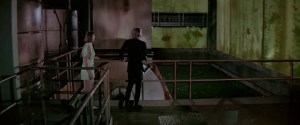
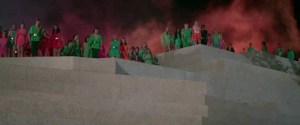
The Carrousel ritual is also noteworthy. It is one of the film’s most powerful visual concepts: a mixture of religious ceremony, sporting event, light show, and execution. The residents cheer because they believe they are witnessing a rebirth. For the audience, the process is both beautiful and terrifying. That is precisely where the scene’s power lies. It shows how easily violence is accepted when it is aesthetically packaged and collectively celebrated.
Another detail is the life clock in the palm of the hand. This small symbol makes the film’s central idea immediately understandable. Every person’s fate is visible, measurable, and color-coded. In this way, Logan’s Run finds a perfect science-fiction image for social control: Power lies not only in buildings or weapons, but literally within the body.
Jerry Goldsmith’s music also contributes greatly to the effect. It distinguishes between the artificial inner world and the open outer world. Cooler, more electronic sounds dominate in the city; outside, the sound becomes more organic and expansive. In this way, the music supports Logan’s inner journey without having to explain it.
Book vs. Film
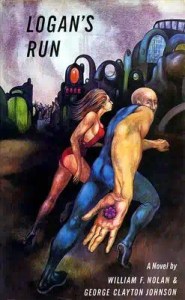
The novel by William F. Nolan and George Clayton Johnson was published in 1967. The film adopts the basic idea but changes many details. In the novel, the age limit is twenty-one; in the film, it is thirty. This change is crucial. Thirty is old enough to resonate with an adult audience, yet young enough to highlight the absurdity of a radical youth cult. The film thus transforms the idea into a particularly clear parable about a society that represses maturity, memory, and old age.
The structure has also been altered. The novel is more focused on movement, pursuit, and a broader world. The film concentrates the plot on the domed city, the escape, the encounter with the outside world, and the return. This focus is a strength. It gives the story a clear dramatic form: Logan discovers the lie, leaves the system, sees the truth, and brings it back.

What’s particularly beautiful is that the film isn’t just about escape, but about responsibility. Logan and Jessica could stay out there, but they return to free the others. This transforms a personal rescue into a hope for society. The film feels more optimistic because it shows the possibility of change. It doesn’t just say, “Escape the false world,” but also, “Show others that another world is possible.”
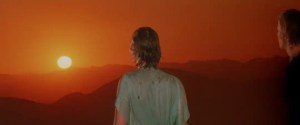
Of course, one could argue that the novel is harsher, more complex, or more consistent. But as a film, Logan’s Run works precisely because of its simplifications. Cinema needs images, rhythms, and emotional turning points. The dome, the Carrousel, the life clock, the old man, and the finale in front of the liberated inhabitants are powerful cinematic inventions. They make the story immediately tangible.
Reactions to the Premiere

Reviews at the time of its release were mixed. Some critics took issue with the naivety, the dialogue, or the narrative leaps. Others recognized its entertainment value, visual power, and imaginative design. In retrospect, this very division is interesting, as it shows that Logan’s Run never intended to be a soberly perfect film. It is more of a grand, bold futuristic fairy tale.
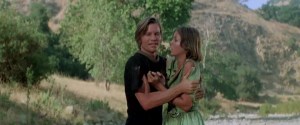
Roger Ebert viewed the film with appreciation for its spectacle and its playful take on visions of the future, even if he didn’t consider it a masterpiece in the vein of 2001: A Space Odyssey. This assessment rings true: Logan’s Run is not a cold, strictly philosophical film. It is more accessible, more colorful, and more emotionally direct. It aims not only to stimulate thought but also to inspire wonder.
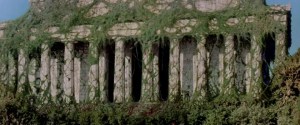
Variety praised the film as an appealing blend of futuristic adventure and intelligent drama. This positive perspective explains well why the film resonated with audiences. It offered visual spectacle, pace, romance, danger, and an easily understandable social concept. At the same time, it had enough substance to remain interesting beyond its surface.
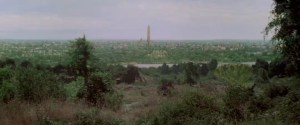
The fact that other critics were significantly harsher in their judgments is part of the film’s history. From today’s perspective, some of the objections raised at the time seem understandable, but not decisive. Yes, Logan’s Run has moments that are exaggerated or idiosyncratic. Yes, some of the effects have aged. But it is precisely these qualities that contribute to its identity. It is not a run-of-the-mill film. It has a voice, a look, and an atmosphere that are instantly recognizable.
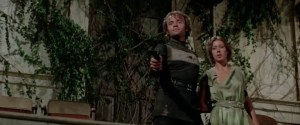
The film received its most significant validation through its award for visual effects. This recognition shows that its visual world was already perceived as a special achievement back then. The nominations for cinematography and production design also underscore that Logan’s Run impressed above all as visual cinema.
Traces of the Future
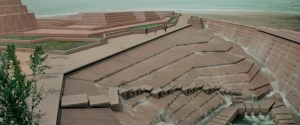
The cultural influence of Logan’s Run lies less in direct imitations than in its enduring ideas. The concept of a society that places absolute value on youth and eradicates old age remains relevant to this day. In an age of fitness culture, self-optimization, the beauty industry, and digital self-presentation, the film sometimes seems surprisingly modern. Its central question is: What does a society lose when it worships only youth, superficiality, and consumerism?
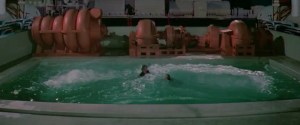
The motif of an apparent utopia that turns out to be a dystopia has also lived on in science fiction cinema and pop culture. Many later stories about controlled communities, artificial paradises, and hidden truths touch on similar themes. Logan’s Run belongs to that lineage of films that show how comfort can become dangerous when it comes at the price of ignorance.
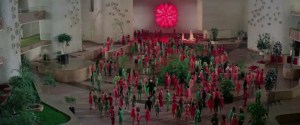
The film is also a seminal work of retrofuturism. Anyone looking at its sets, costumes, and effects today sees not only an imagined future but also the dreams and fears of the 1970s. This makes it doubly interesting: as a science fiction narrative and as a cultural document of its time. Its future has become the past, but it is precisely this that gives it poetic value.

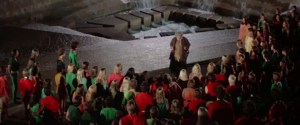
The image of the old man standing before the young people remains particularly powerful. This scene is almost mythical. An entire society encounters what it was never allowed to see: a face with wrinkles, a voice filled with memories, a life beyond the boundary. In this moment, old age is not portrayed as an end, but as proof of possibility. That is a humane, beautiful, and powerful message.
The fact that Logan’s Run has repeatedly been brought up for reinterpretation also demonstrates its enduring impact. The basic idea is simple but enormously resilient. Every generation can recognize its own fears in it: fear of death, of control, of conformity, of the obsession with youth, or of technology that organizes life but diminishes its meaning.
A Classic Endures
Logan’s Run is a film that you can love not only despite its quirks, but precisely because of them. It is brilliant, sometimes strange, sometimes naive, but always imaginative. It features images that linger in the memory and an idea that never grows old: A life without freedom is no paradise, even if it appears comfortable, beautiful, and perfectly organized.
Its strength lies in the combination of adventure and allegory. Logan 5 transforms from a servant of the system into a seeker. Jessica 6 becomes a partner in liberation. The old man becomes living proof against a deadly ideology. The domed city shifts from a dreamscape to a prison, and the outside world from a source of terror to a source of hope.
As a positive review of Logan’s Run, one must above all emphasize how generous this film is. It offers the audience visual spectacle, emotion, suspense, romance, social commentary, and wonder. It does not demand perfection, but rather a willingness to use one’s imagination. Those who open themselves up to it will discover a science fiction film that is more than just a product of its time. It is a shining piece of cinematic history.
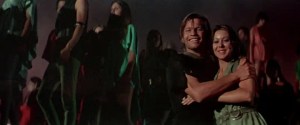
Today, Logan’s Run may no longer seem futuristic in a technical sense. But in a human sense, it remains relevant. It reminds us that a society needs its elders, that youth alone cannot sustain a culture, and that truth often begins where someone has the courage to run away. And sometimes, as this film shows, the most important run is not away from the world, but back to the people you want to free.
More
Trailer
External links
Notice Regarding Image Rights and Copyrighted Material
All images, film stills, posters, logos, trailer excerpts and other copyrighted materials used in this article are used solely for editorial reporting, film criticism, review and illustrative purposes related to the respective content.
Unless otherwise stated, all copyrights, trademark rights and other intellectual property rights in the materials used remain with their respective rights holders, including film studios, distributors, production companies, photographers, artists or other licensors.
The materials are used in good faith and with regard to applicable legal limitations, licence terms and source attributions. If, despite careful review, any rights have been infringed or any attribution is incomplete, please contact me. Upon review, the relevant content will be removed or corrected promptly.






Kommentar verfassen