

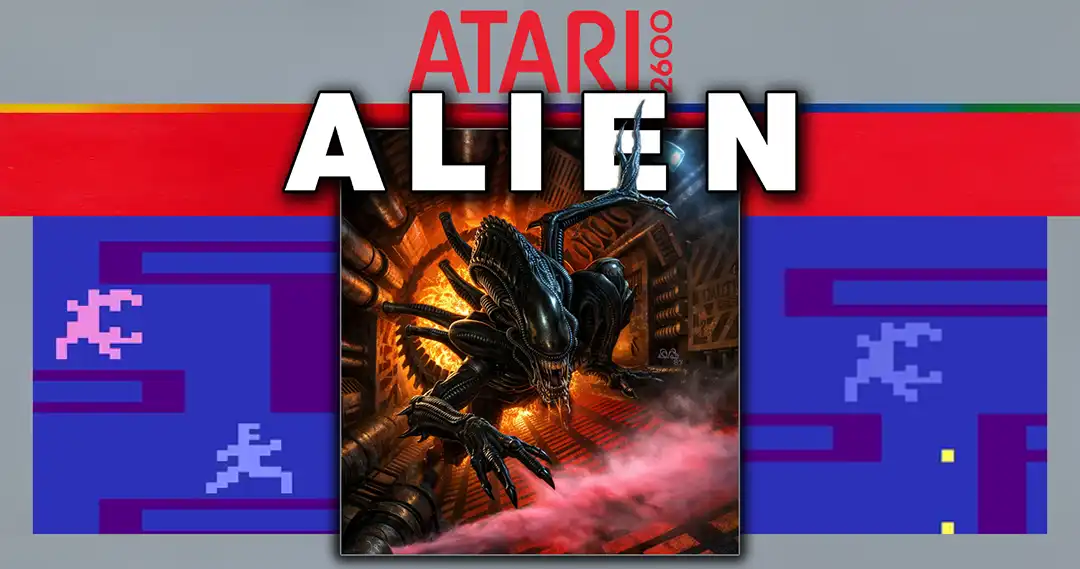
In space, no one can hear you scream!
Introduction
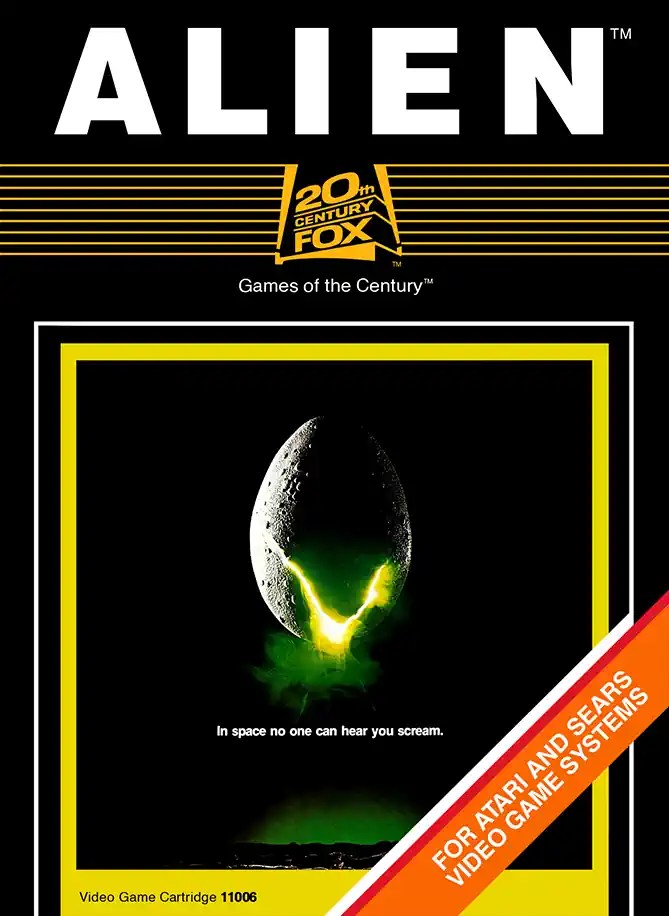
When the game Alien was released for the Atari 2600 in the early 1980s, it was part of a phase in which film adaptations were becoming increasingly visible on home consoles. The gaming industry was still young, many concepts had yet to be developed, and licensed titles often oscillated between marketing and genuine creative adaptation. At the same time, Ridley Scott’s film of the same name had already shown that science fiction could be not only futuristic and adventurous, but also dark, claustrophobic, and existentially threatening. Implementing a game based on this material on a technically limited console was therefore a particular challenge.
The starting point was unusual. The Atari 2600 was not built to reproduce cinematic atmospheres in detail. It had neither complex character models nor cinematic cutscenes or an expressive soundscape. Nevertheless, a game had to be created that conveyed at least some of the oppressive feeling of the original. This shows just how inventive developers had to be at that time.
The result was not a direct attempt to retell the film’s plot scene by scene. Instead, the game relied on its own playful interpretation of the theme: isolation, threat, disorientation, and escape. The original provided more of a mood, motifs, and basic feeling than a strictly retold plot. This is precisely why Alien on the Atari 2600 is now considered one of the more interesting licensed games of its generation.
In retrospect, the title is also exciting because it shows how flexibly well-known brands were handled. Whereas modern gamers often expect the most accurate adaptation possible, back then it was often enough to convey the theme, suspense, and recognition value. Alien is a good example of this: it is not a cinematic replica, but it still attempts to translate the feeling of constant danger into a playable system.
Gameplay
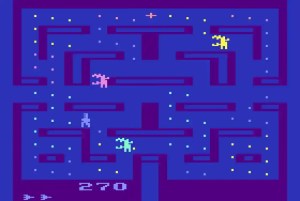
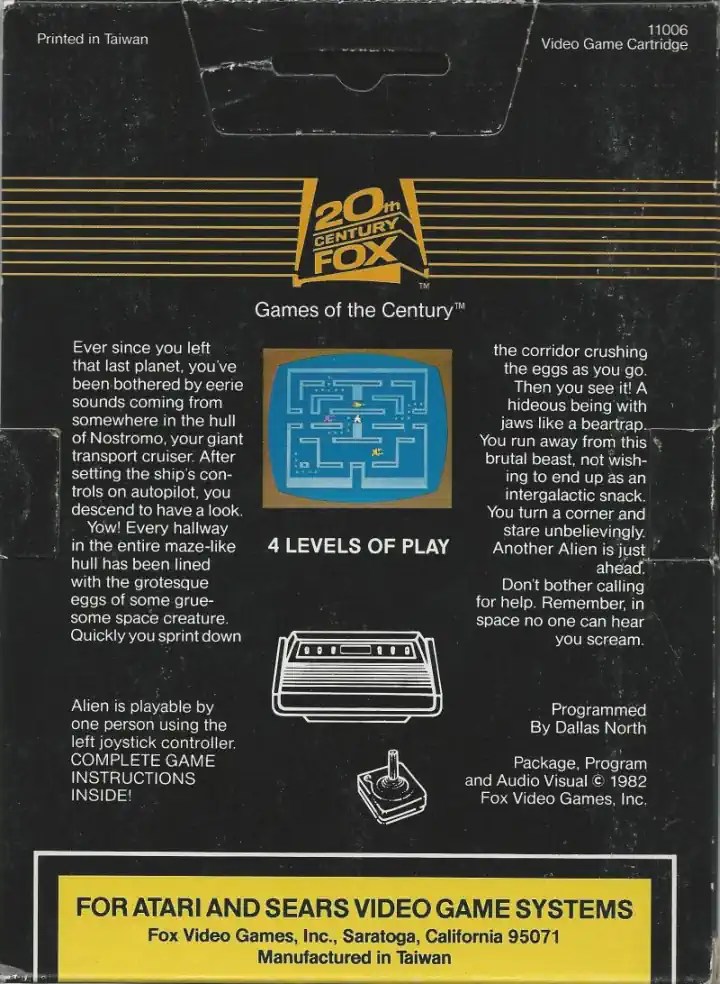
The game centers around the task of traversing a labyrinthine spaceship, surviving as long as possible, and ultimately escaping. The player controls a character through several connected screen areas that function like a ship divided into sectors. At the same time, enemy creatures lurk, moving quickly and creating constant pressure. This alone creates a basic tension that shapes the gameplay from the very beginning.
The basic idea behind the game is reminiscent of arcade games of that era: planning routes, avoiding enemies, assessing risks, mastering timing. But while many other titles relied on pattern recognition and repeatable sequences, Alien conveys a more nervous and threatening gaming experience. The rooms seem tighter, the pursuit more immediate, and the threat is not just an obstacle, but a central part of the atmosphere.
Instead of open confrontation, the game focuses more on evasion and survival. The player is less a conqueror than a hunted animal. This role reversal is remarkable for the time, because many early video games gave the player a sense of dominance and control. In Alien, on the other hand, you often feel vulnerable. This is precisely what indirectly ties in with the film, in which the threat is not heroically overcome, but is initially experienced as almost overwhelming.
It is particularly striking that the player is constantly under tension. The opponents seem unpredictable, the paths are narrow, and small mistakes are quickly punished. This creates a flow of play that fits well with the template: the focus is not on power fantasies, but on uncertainty and responsiveness. Those who play carelessly quickly lose control of the situation.
In addition, the game derives its tension not only from speed, but also from orientation. In a system of connected rooms, the player must make decisions quickly and think ahead at the same time. Which path is the safest? Where could an opponent appear? Is it worth taking a riskier corridor if it saves time? These questions give the game an astonishingly tactical touch despite its simple technical basis.
It is precisely this combination of simple controls and latent stress that makes Alien interesting to this day. It is not one of the most complex games on the Atari 2600, but it knows how to use its rules in such a way that a few mechanics create a coherent experience. The real appeal therefore lies less in variety than in intensity: everything serves to create a feeling of constant threat.
Technology
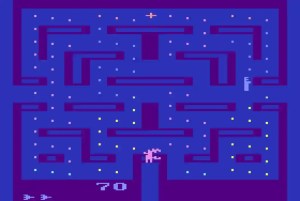
Technically, Alien is a remarkable example of how developers worked with very limited resources on the Atari 2600. The console had minimal graphics capabilities, extremely little storage space, and a greatly reduced soundscape. In addition, many effects had to be developed directly from the peculiarities of the hardware. Comfortable development environments or large production budgets, as later generations came to know them, did not yet exist in this form.
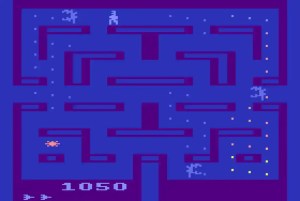
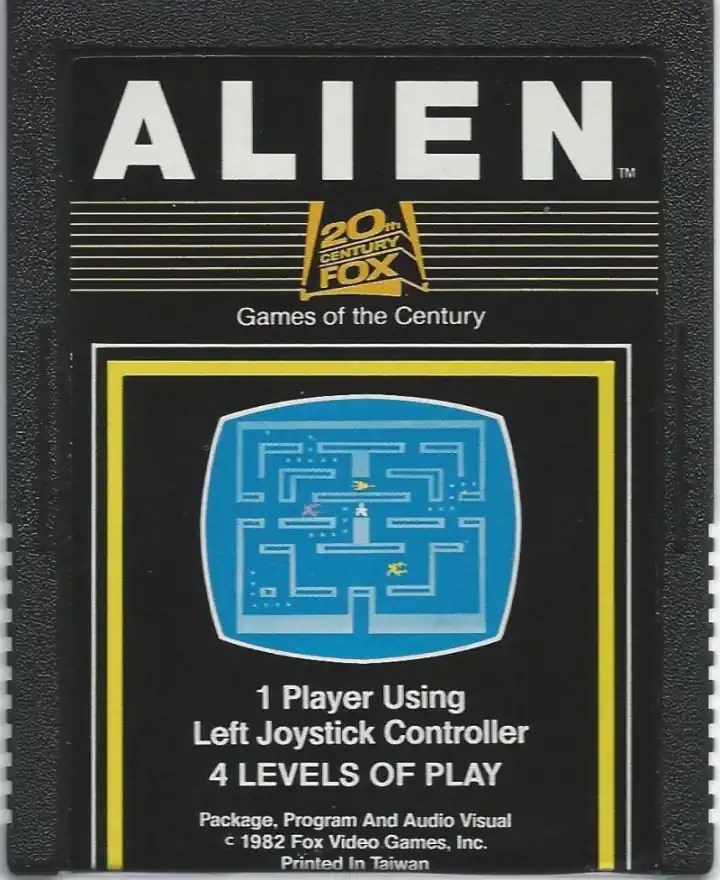
Nevertheless, the game manages to create a certain density and hecticness. The visual presentation is highly abstract, but functional. Rooms, paths, enemies, and characters remain clearly recognizable so that players can react even under pressure. This is precisely one of the game’s great strengths: it uses its limited resources not for decorative effects, but for readability and suspense.
The characters and rooms are very simply depicted, but functionally clear and legible. This is important because the game is fast-paced and players have to react in a fraction of a second. The animations are simple, but convey enough movement to make the enemies appear as a real threat. On a console like the Atari 2600, even this form of visual dynamics was an important part of the game’s impact.
The structure of the screen areas is also technically interesting. Since the game works with individual views, a kind of segmented sense of space is created. As a result, the ship does not feel like an open world, but rather like a series of dangerous zones. This limitation was technically necessary, but paradoxically enhances the atmosphere. Each new area can become a risk because the player never knows exactly how the situation there will develop.
Acoustically, the game also achieves more than one might expect from the hardware. The sound effects add to the tension without being particularly complex from a technical standpoint. As with many good Atari 2600 games, the strength lies less in the wealth of detail than in the clever use of fewer resources. Sounds indicate danger, movement, and speed; they do not create a realistic backdrop, but rather an effective signaling and alarm system.
From today’s perspective, the technical performance should not be judged by modern standards. What is more important is how consistently the game translates its limitations into design. Alien does not try to be more than the hardware allows. Instead, it finds a form in which limitation itself becomes a stylistic device. This is precisely why, in retrospect, the title seems more cohesive than many other licensed games of its time.
Trivial
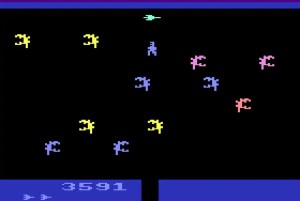
From today’s perspective, Alien is particularly interesting because it is not a classic retelling of the film. Many early licensed games reduced well-known brands to a very loose game concept. This is also the case with Alien, but with a greater sense of atmosphere than many comparable titles. The game takes liberties without completely losing sight of the core of the original.
It is also interesting that the title is often overshadowed by other film-related Atari games. While some adaptations became famous mainly because of their name, Alien has gained a reputation among retro gamers as an unusually exciting and atmospheric game. It is one of those titles that is not necessarily quoted en masse, but is often highlighted positively in specialized reviews.
In addition, early console games often had to take creative liberties. The distance from the film was therefore not a mere coincidence, but a practical necessity. This is precisely what gave Alien its own identity. What may seem like a significant deviation today was often the only way to turn a well-known brand into a functioning game at the time.
It is also interesting to note that such games are often interpreted differently today than they were at the time of their release. Back then, the main question was whether a title was fun and made good use of the well-known name. Today, people also consider how a game reflects media history, how it dealt with technical limitations, and what design ideas were already incorporated into it. From this perspective, Alien clearly gains in profile.
Another small appeal lies in the historical shift in perception. What may once have been considered a simple, perhaps even crude implementation, often seems charming, focused, and conceptually clear today. Retro gamers in particular discover qualities in it that are easily overlooked in an era of ever larger and more complex productions: directness, conciseness, and an almost raw form of atmosphere.
Criticism at the time
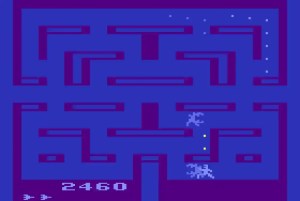
Contemporary reactions to Atari 2600 games were often strongly influenced by expectations of technology and play value. In the case of Alien, it was probably the suspense that stood out most positively. The game offered a faster, more intense experience than many simple point collectors or pure skill titles of the same period. This alone set it apart, at least to some extent, from the broad mass of early console games.
At the same time, criticism was also obvious. Anyone expecting a close adherence to the film might have been disappointed. The audiovisual presentation naturally fell far short of the cinema experience, and the abstract presentation required imagination. For some players, this was appealing, while for others it seemed too far removed from the original. This tension between the license name and the actual game design was typical of the era.
It was also typical of the press and players at the time that licensed games were often judged on whether they made good use of the name. Alien fared better than many other adaptations in this regard because at least the basic mood of danger and persecution remained palpable. Even if there was no detailed retelling, it was still clear what feeling the game wanted to convey.
It can also be assumed that the level of difficulty was perceived differently. For some, the constant pressure was a plus because it made the game intense and challenging. Others may have found the action hectic or unfair, especially if they preferred more relaxed, clearly structured gameplay. Such friction was often part of the normal reception of early console games.
In retrospect, it is clear that Alien was probably perceived less as a prestige production and more as a solid, unusual licensed title with its own character. It was not a game that revolutionized the industry, but one that created more atmosphere within its limitations than many other adaptations. Precisely for this reason, it is often more interesting in historical retrospect than everyday perception at the time might have suggested.
Cultural influence
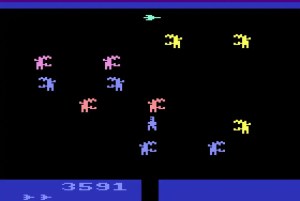
On a large cultural scale, Alien for the Atari 2600 is certainly not one of the best-known games of its era. Nevertheless, it is an interesting document of how early video games attempted to translate cinematic suspense into interactive form. It shows that even back then, adaptations could be more than just name exploitation, even if the means to do so were extremely limited.
The game demonstrates that even on a technically very simple console, themes such as fear, confinement, and constant threat could be playfully implemented. It is thus an early example of what later became commonplace as survival horror or suspense-oriented action design. Of course, it would be an exaggeration to see it as a fully developed precursor to later horror games. But certain basic ideas are recognizable: vulnerability, escape, spatial tension, and the feeling of being hunted.
The title is particularly significant for retro culture because it proves that licensed games did not necessarily have to be loveless. Even with few pixels and limited resources, it was possible to create a game that captured at least some of the spirit of its source material. Collectors, historians, and lovers of classic console games often appreciate such works not for their perfection, but for their ingenuity.
Furthermore, Alien is also an example of the translation achievement of early game designs. A film works with image composition, acting, music, editing, and atmosphere. An Atari 2600 game had only fragments of these elements at its disposal. Nevertheless, something had to be created that could function as an interactive version of a similar feeling. This transformation achievement has a cultural-historical appeal that goes beyond the individual game.
In retrospect, the title thus contributes to the larger narrative of game development: to the question of how simple systems gave rise to increasingly complex forms of mood, genre identity, and media adaptation. Alien is not a milestone in terms of general popularity, but it is a small, insightful link between film culture, early home consoles, and the search for new forms of expression in games.
Conclusion
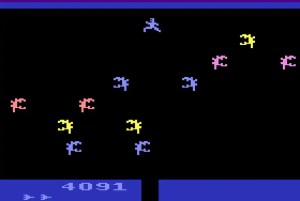
Alien on the Atari 2600 is not a perfect game, nor is it an exact adaptation of the film. The hardware would simply have been too limited for that. But even within these limitations, it delivers a remarkably exciting and atmospheric experience. It does not take the original literally, but translates its basic feel into a reduced, playable form.
The game impresses less with its technical brilliance than with its impact: confined spaces, fast-paced pressure, constant danger. In doing so, it achieves something that many film games fail to do—it feels like its source material without having to copy it directly. This ability to evoke atmosphere with minimal means is a big part of its appeal.
From today’s perspective, Alien is therefore interesting above all as a clever, creative, and surprisingly coherent interpretation of a famous science fiction story. For retro fans and Atari historians, it remains a small but remarkable piece of gaming history. Precisely because the game is neither technically overwhelming nor completely faithful to the film in terms of content, it is particularly good at showing how inventive early developers were in dealing with limitations.
Anyone interested in the history of licensed games will find here a revealing example of how successful adaptations should not always be measured by external similarities. Sometimes it is enough to capture the essence of the original: the feeling of uncertainty, persecution, and survival. This is exactly what Alien on the Atari 2600 manages to do in a surprisingly convincing way — and that is precisely why it remains memorable to this day.








Kommentar verfassen