

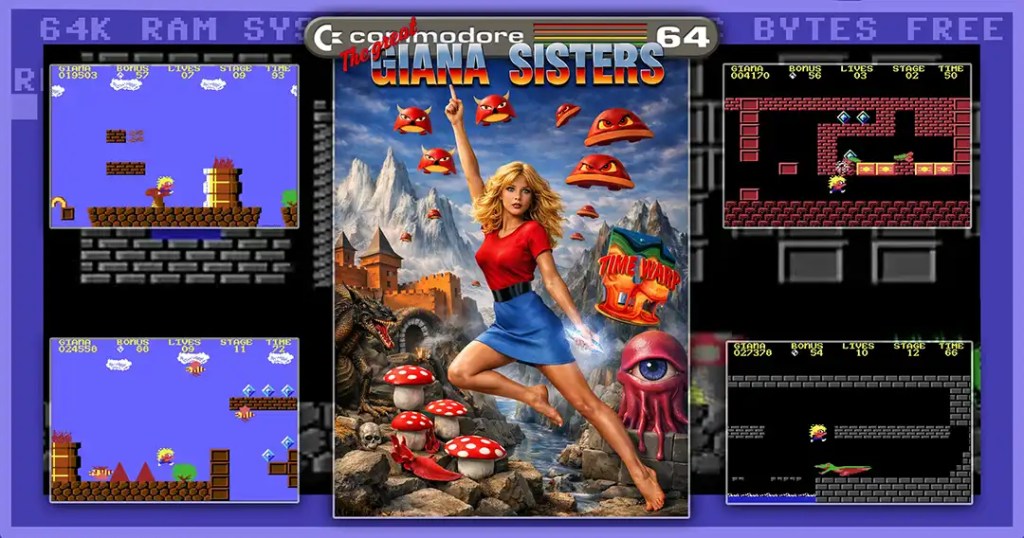

“Super Mario Bros.” for the C64?
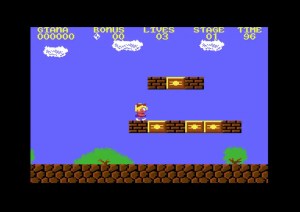
When The Great Giana Sisters was released in 1987, the parallels to Super Mario Bros. were almost obvious. While Nintendo’s hit platformer set new standards worldwide on the NES, redefining the genre and quickly becoming a cultural phenomenon, the Commodore 64 long lacked a comparable title that could keep up technically and inspire similar enthusiasm in terms of gameplay. Although platform games already existed on home computers, only a few combined smooth scrolling, catchy music, and well-thought-out level design in a form that was internationally competitive. The developers wanted to fill this gap with a colorful, fast-paced, and technically sophisticated platform game with catchy music, a clear structure, and precise controls—tailor-made for the most popular home computer of its time and designed as a confident response to the dominance of consoles.
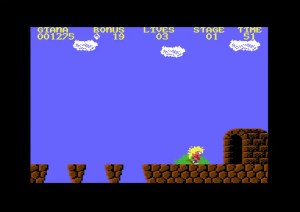
The game was quickly dubbed “Mario for the C64” in the gaming scene. On the one hand, this description was meant as a compliment, as it underlined the high quality and proximity to a genre milestone, but on the other hand, it also implied criticism of the strong orientation towards the model. There was lively discussion among gamers as to whether it was a legitimate homage, a clever marketing strategy, or an overly daring approximation. But behind the obvious inspiration lay more than just a copy. The Great Giana Sisters was a technically impressive work with its own pace, unique atmosphere, and a soundtrack that burned itself into the memories of players and gave the game an unmistakable identity. It was precisely because of these similarities that the game ultimately made history—albeit differently than originally planned—and became one of the most talked-about titles of the C64 era.
Gameplay
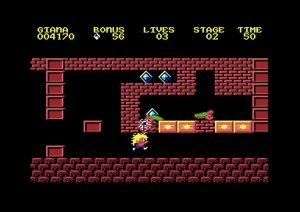
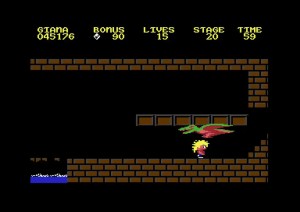
The game follows the classic jump ‘n’ run principle: Players guide Giana through side-scrolling levels, collect gems, defeat enemies by jumping on them, and search for the way to the respective level exit. As is usual in this genre, the focus is on timing, reaction speed, and discovering secret areas. The key challenges include accurately estimating jump distances, reacting quickly to suddenly appearing enemies, and memorizing certain passages. The level design relies on a mixture of linear progression and optional exploration elements, which means that both determined players and curious explorers will get their money’s worth.
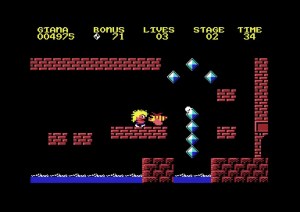
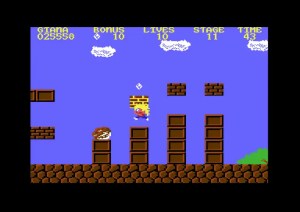
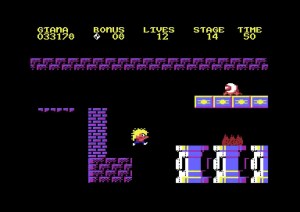
In total, the game comprises 32 levels spread across different themed worlds. Each of these worlds has its own visual accents and gameplay focus. Underground passages, open landscapes, and more complex platform sections provide variety and regularly change the pace of the game. Some sections rely on quick reactions, while others require careful navigation through narrow areas or areas densely populated with enemies. Power-ups change Giana’s appearance and abilities: the initially harmless-looking girl becomes a wild-haired fighter who can use stronger attacks and take out enemies more efficiently. This visual change not only reinforces the game’s mechanics, but also gives the character her own identity and provides a tangible sense of progress.
Hidden blocks, pipes, bonus zones, and alternative routes are clearly reminiscent of the great role model, but the specific arrangement of platforms, enemies, and obstacles follows its own dramaturgy, which deliberately varies the flow of the game. Safe sections are repeatedly combined with more challenging passages, so that tension and relief alternate. The difficulty level increases continuously and requires precise jumps and exact timing later on, especially on narrow platforms or moving obstacles. Mistakes are punished, but the gameplay usually remains fair and understandable. The smooth scrolling was particularly impressive on real C64 hardware, which was by no means a given on the system. The controls are still considered direct, responsive, and pleasantly precise today—a decisive factor in the game’s enduring popularity and the fact that it still plays well decades later.
Technology
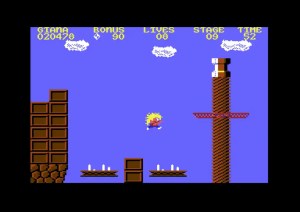
Technically, The Great Giana Sisters was a milestone for the Commodore 64. At a time when many games struggled with jerky scrolling, abrupt screen changes, or a severely limited color palette, this title was astonishingly mature and well thought out. The developers pushed the system’s hardware to its limits and showed that even complex platform mechanics could be implemented smoothly with careful programming. Armin Gessert was responsible for the programming, while Manfred Trenz designed the graphics. The soundtrack was composed by Chris Hülsbeck, who made masterful use of the C64’s legendary SID sound chip and impressively demonstrated its sonic capabilities.
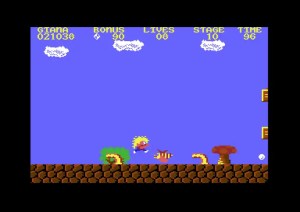
The music in particular enjoys cult status to this day. Hülsbeck succeeded in giving the game an energetic, catchy theme tune that quickly became one of the most famous pieces of the 8-bit era and clearly stood out from many other compositions of the time. The sound quality, polyphony, and rhythmic dynamics impressively demonstrated the creative potential of the SID chip when it was used not only functionally but also ambitiously in terms of composition. The sound effects—from collecting gems to defeating enemies—also blended harmoniously into the overall picture and supported the immediate gaming experience. This created an audiovisual unity that contributed significantly to the atmosphere of the game.
Graphically, the game impressed with colorful backgrounds, clearly recognizable enemies, and smooth animations that appeared astonishingly lifelike despite the technical limitations of the system. The sprite display was clean and clear, so that even in more hectic game situations, orientation was maintained. The continuous hardware scrolling was remarkably smooth for the time and conveyed a feeling of speed and dynamism that was unusual for the C64. Overall, the title impressively demonstrated that even in the mid-1980s, the C64 was still capable of delivering technically sophisticated and modern gaming experiences. From a technical standpoint, The Great Giana Sisters was by no means a simple copy, but rather a top-of-the-line product of European home computer development that confidently demonstrated the platform’s capabilities.
Music
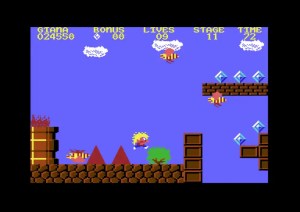
One particularly outstanding aspect of The Great Giana Sisters is the music, which goes far beyond its functional role as background accompaniment. Chris Hülsbeck’s compositions had a decisive influence on the identity of the game and are still considered a milestone in the history of C64 sound. The title melody combines driving rhythms with a catchy, almost pop-like structure that immediately sticks in the memory and is recognizable after just a few bars. Hülsbeck not only exploited the technical possibilities of the SID chip, but also explored them creatively by experimenting with different timbres, arpeggios, filter effects, and dynamic transitions. The result was a sound that was exceptionally rich and differentiated for the time, clearly setting it apart from many other productions of that era.
Another characteristic feature is the clear melodic line of the pieces. Instead of limiting himself to simple loops, Hülsbeck developed compositions with dramatic arcs, variations, and harmonic changes that added an extra emotional layer to the game. As a result, the music does not seem purely functional, but almost narrative: it not only accompanies the player, but literally drives them forward. Especially in hectic passages, the rhythmic structure creates a feeling of dynamism and movement that acoustically supports the visual speed of the scrolling.
It is also remarkable how strongly the music influences the overall gaming experience. The energetic pieces support the high tempo of the levels and reinforce the motivation to try difficult passages again, even after several failed attempts. At the same time, more melodic sections create an almost dreamlike atmosphere that fits well with the fairy-tale setting and allows for brief moments of relaxation. Looking back, it becomes clear that the soundtrack was not just accompaniment, but a central part of the overall experience – an element that contributed significantly to the game’s lasting memory and its frequent use as a reference for successful 8-bit compositions.
The lawsuit
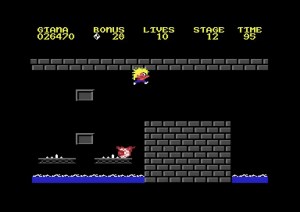
Shortly after its release, however, a conflict arose with Nintendo. The company saw the game as too similar to Super Mario Bros., both in its basic game design and in certain visual elements. The parallels ranged from the structure of the levels and the placement of certain objects to individual graphic details. Observers pointed out similarities in power-up mechanics, enemy behavior, and certain level motifs that were reminiscent of the successful NES model. Nintendo responded with legal action, and the game disappeared from the market after only a short time. For many retailers, this meant that copies that had already been delivered were no longer actively advertised or reordered.
Whether formal legal proceedings actually took place or whether an out-of-court settlement or legal pressure was sufficient remains unclear to this day and is part of the legend surrounding the game. Contemporary accounts and later interviews provide different accounts of the exact sequence of events, which further mystifies the events. What is undisputed, however, is that sales figures remained limited due to the rapid market withdrawal and that the game was only available for a comparatively short period of time. This early discontinuation contributed significantly to the game being perceived retrospectively as a “forbidden classic.” The limited availability not only increased the collector’s value of physical copies, but also led to pirated copies and diskette copies circulating in the scene and contributing to its further distribution. This created a tension between legal restrictions and informal popularity, which permanently reinforced the myth surrounding The Great Giana Sisters.
Criticism at the time
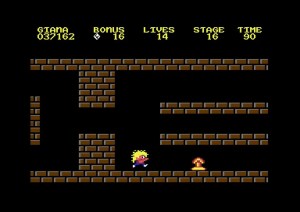
Contemporary magazines responded overwhelmingly positively to the game. In particular, they praised the outstanding music, the technical quality, and the smooth and motivating gameplay. Many editors emphasized that it was one of the best platformers on the C64 in terms of technology. The presentation appeared professional and competitive by international standards. Some trade magazines also emphasized that the title showed the potential that still existed in the C64, even though the system had already been on the market for several years at that point. The combination of fast-paced gameplay and catchy soundscape in particular was described as exemplary.
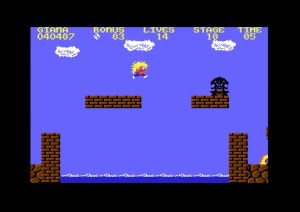
In addition, the game’s learning curve was frequently discussed. Testers noted that although the difficulty level increased, it usually remained fair and motivated players to master individual sections rather than causing frustration. The level design was also described as well thought-out in many reviews, as it offered sufficient challenges for both beginners and experienced players.
This assessment was reflected in letters to the editor and community sections, which gave the game additional popularity. However, there was criticism of its obvious similarity to the Nintendo model.
Some testers criticized a lack of originality and questioned whether the game would have received as much attention without the strong resemblance. There was some discussion as to whether the developers had relied too heavily on proven concepts instead of focusing more on their own ideas. Nevertheless, the overall ratings were high, and the title quickly established itself as an insider tip among gamers. For many users, the controversy was less important than the immediate gaming experience: fast, colorful, challenging, and motivating. Especially in direct comparison with other C64 platform games, The Great Giana Sisters often scored above average and was frequently referred to as a benchmark title within the genre.
Cultural influence
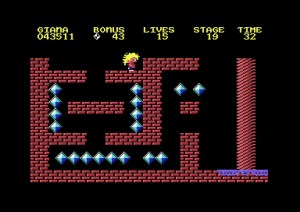
It was precisely because of the ban that The Great Giana Sisters became a cult title. In the retro scene, it is considered a symbol of the creative, technically ambitious, and sometimes rebellious European computer game culture of the 1980s. The game is exemplary of a time when development teams with limited resources tried to implement international trends in their own way while retaining their own signature style. This title made the discussion about originality, inspiration, and pushing boundaries tangible and had a lasting impact on the perception of European productions in comparison to the dominant Japanese and American manufacturers.
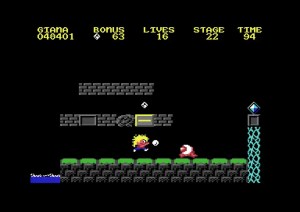
In addition, the game became an integral part of the retro community. At collector’s fairs, in online forums, and at scene meetings, it is regularly cited as a benchmark for technical excellence on the C64. The story surrounding its withdrawal from the market continues to give the title a certain aura of the forbidden, setting it apart from many other productions of its time. As a result, it has come to be perceived not only as a game, but also as a cultural artifact of the home computer era.
The brand returned decades later and was reinterpreted. Modern spin-offs took up the basic concept and combined it with contemporary technology, revised graphics, and orchestral reissues of the well-known music pieces. At the same time, new game mechanics were introduced to meet the demands of modern platform games. This turned the once controversial C64 game into a long-lasting series that reached new generations of players while also catering to the nostalgic fan base. The new editions showed that the basic idea could also work outside its original technical context.
The original soundtrack is still being remixed, rearranged, and performed live at retro events. Musicians and fans take the familiar melodies and reinterpret them with modern means without losing the characteristic 8-bit charm. The game regularly features prominently in documentaries, podcasts, and retrospectives on the 8-bit era. Its influence thus extends beyond the actual gameplay and also affects the perception of European developers in an international context and the recognition of computer games as an independent cultural asset.
Conclusion
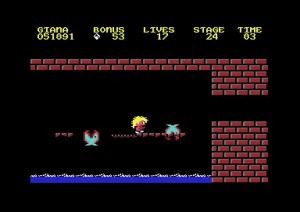
The Great Giana Sisters began as an ambitious attempt to create a technically equivalent counterpart to the dominant NES hit Super Mario Bros. on the Commodore 64. At a time when the market was becoming increasingly professionalized and major console manufacturers were setting the tone, this was a risky undertaking. Despite—or perhaps because of—the legal disputes, the game became a legend of the 8-bit era. The controversy gave the title an additional historical dimension and made it an integral part of computer game history.
Technically impressive, musically legendary, and historically unique, it remains one of the most significant games for the C64. It stands not only for the discussion about creative inspiration, competition, and legal boundaries, but also for the ingenuity of an entire developer scene that achieved amazing things with limited resources. Furthermore, it symbolizes the transition from an experimental home computer era to a more commercialized gaming industry. Today, it is no longer considered just a “Mario clone,” but an independent classic with lasting cult status—a title that evokes nostalgic memories and serves as an example of the dynamism and creativity of the 1980s.







 McHenry's Lair
Kommentar verfassen :