

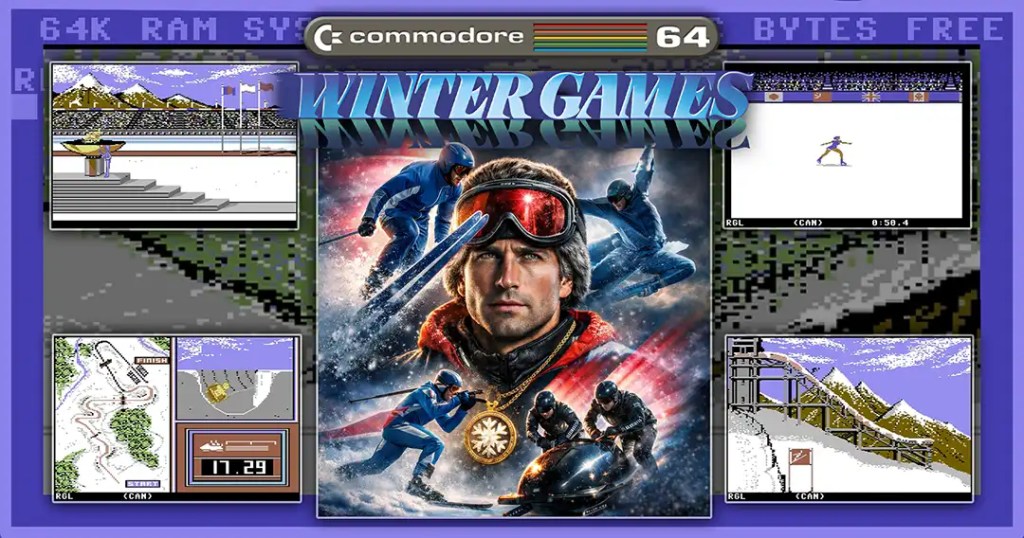
Winter Olympic

When Epyx released Winter Games in 1985, the game struck a chord: sports games were nothing new, but this mix of Olympic atmosphere, thrilling competition, and iconic 8-bit charm was something special. On the Commodore 64, Winter Games quickly became a true classic—not only because of the disciplines, but also because it was one of those games that you rarely played alone.

The game felt like an interactive winter sports show that you could bring home. Especially at a time when real TV broadcasts of winter sports were not yet so ubiquitous, Winter Games felt almost like a small Olympic event in its own right for many players.
It was a typical living room duel game: joystick in hand, friends beside you, and everyone wanting to prove that they were the true champion. And, of course, this included the obligatory “One more try!” – even when you should have gone to bed long ago.
The Disciplines
At its core, Winter Games is a collection of different winter sports presented as a mini-Olympics. Players can select individual disciplines or play a complete tournament. You collect points and medals, which makes the whole thing pleasantly motivating.
The strength of the game lies in the fact that each discipline plays very differently. Instead of always just “pressing faster” or “steering better,” each sport requires different timing and a different feel for rhythm. This is exactly what ensures that “Winter Games” doesn’t get boring even after many hours.
The disciplines are:
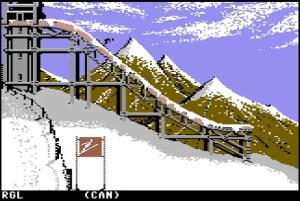
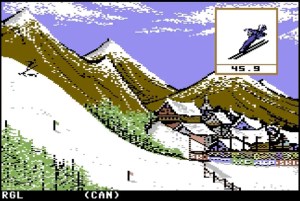
Ski jumping
One of the highlights: timing is everything. First, pick up the right speed, then jump off at exactly the right moment and finally keep your flight stable. If you jump too early or too late, you may fly far, but often into chaos. The moment just before the jump is particularly exciting: you can literally feel the pressure because a second can decide everything.
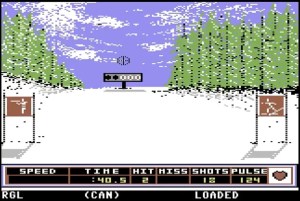
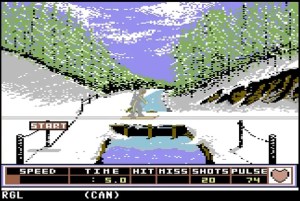
Biathlon
An exciting combination of cross-country skiing and shooting. First you pick up speed, then suddenly you have to stay calm and shoot accurately. It is precisely this change that makes the discipline particularly appealing to many. If you are too aggressive when running, you often have problems when shooting – so the game forces you to plan cleverly.
Speed skating
This is all about rhythm and control. The curves can be tricky, and if you steer too aggressively, you lose time or control. At the same time, this discipline has a pleasant athletic flow because after a few attempts, you really get into the rhythm of the movements.
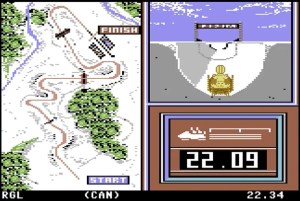
Bobsleigh
Fast, nerve-wracking, and often brutally difficult. The player has to keep the bobsleigh on the track and drive as perfectly as possible. One small mistake can ruin the run. But that’s what makes it so exciting: once you’ve completed a perfect run, it feels like a real triumph.
Hot Dog (Ski Artistry)
This sport tests skill and precision on skis. The player performs jumps and tricks and must not only find the right input, but also land cleanly. “Hot Dog” seems almost like a mixture of sport and acrobatics, setting it apart from the classic racing disciplines.
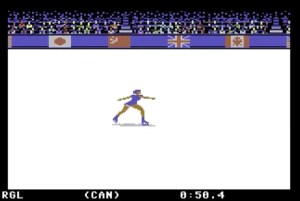
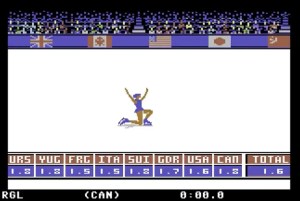
Figure Skating (Compulsory and free skating)
The most unusual discipline: instead of pure speed, the focus is on the correct execution of movement sequences. You have to memorize figures, execute them precisely, and present the sequence as cleanly as possible. This discipline seemed almost like a dance game long before such genres even existed.
Overall, the gameplay was typical of Epyx: easy to understand but difficult to master. And above all, it was incredibly fun in multiplayer. Especially with friends, a competition quickly developed in which we challenged each other and laughed at failed landings or falls.
Technology
Technically, “Winter Games” was impressive on the C64. The animations were smooth, the athletes were easily recognizable, and each discipline had its own visual style. The attention to detail was particularly striking: spectators, flags, and a harmonious Olympic setting created a great atmosphere.
The sound was also strong: typical C64 music, catchy and fitting, with simple but effective effects. The game made good use of the capabilities of the SID chip without seeming overloaded. Many melodies remain in players‘ ears to this day because they immediately trigger that “Winter Games” feeling.
The presentation was almost “classy” by the standards of the time. The menu navigation, discipline selection, and small cutscenes made the game feel like a major sporting event rather than a loose collection of mini-games.
Another plus point was the controls: although they were sometimes mercilessly sensitive – typical of the 80s – they were astonishingly precise for the time. However, the game was also known for the fact that you really needed the right joystick for some disciplines – cheap controllers could quickly become a problem.
Trivia / Fun Facts
Winter Games was part of the famous Epyx Games series, which also included Summer Games, World Games, and California Games. These titles became a kind of standard for sports games in the home computer sector and shaped an entire genre.
The so-called joystick killer factor is also legendary: Many disciplines required frantic shaking or rapid back-and-forth movements. Quite a few C64 players remember that joysticks (or thumbs) regularly suffered as a result. Some households had what felt like a “Winter Games joystick” that was sacrificed just for this game.
Also interesting: The game gave many players their first taste of how winter sports work – biathlon and bobsledding in particular were not necessarily everyday topics for children at the time. For some, “Winter Games” was even a kind of sporting “window of knowledge.”
Another small cult point: the “Hot Dog” discipline was an absolute crowd favorite for many players because it was so different from the other sports. Children in particular loved the fact that you could not only race, but also perform spectacular tricks.
Reviews at the time
At the time of its release, Winter Games received very positive reviews in many gaming magazines. The high-quality presentation and the fact that the game not only relied on quick reflexes but also rewarded real training and practice were particularly praised. Many editors emphasized how varied the individual disciplines were to play and how well Epyx managed to create a credible Olympic atmosphere with just a few pixels. The combination of sporting excitement and light-hearted entertainment was seen as a particular plus point.
Frequently mentioned were the variety of disciplines, the strong multiplayer motivation, the clean technical implementation, the high long-term motivation through high scores, and the typical “Olympic character” with atmospheric music and a fitting setting.
However, there was also criticism. Some testers complained that individual disciplines were frustratingly difficult or that the controls sometimes felt “unfair” – especially when a small mistake immediately ruined the entire run. Bobsleighing in particular was considered merciless because the track hardly forgave any mistakes. Opinions were also divided on the figure skating discipline: some loved the challenge and memorizing the figures, while others found it too complicated or not action-packed enough.
Nevertheless, the general consensus was clear: if you had a C64 and friends to play with, Winter Games was a must-have. It was one of those games that regularly appeared in top lists, was often recommended in magazines, and was considered a must-buy in many collections.
Cultural influence
The cultural influence of Winter Games is enormous at the home computer level. The game was one of the reasons why sports game collections became so popular in the first place. It established the concept of “party sports games” long before Wii Sports or similar titles existed.
Above all, it showed that computer games did not have to be single-player experiences. Winter Games was a real social magnet: friends would come over, tournaments would be held, and suddenly the living room was a small Olympic hall.
In schoolyards and teenagers‘ bedrooms, it became a competitive game: who could jump the furthest? Who could ski the best? Who could land a perfect figure skating routine? The hunt for the high score was almost as important as actually winning.
For many, Winter Games was also a piece of pop culture: a typical example of how games created community in the 80s. Not online – but side by side on the sofa. Today, the game is often cited as a prime example when it comes to nostalgia and the special “C64 atmosphere.”
Winter Games still has a firm place in retro communities today. It’s a title that many recognize immediately and associate with very specific memories: winter evenings, tube TVs, floppy disk drives, and the eternal debate about who has the best joystick.
Conclusion
Winter Games is more than just an old sports game – it is a symbol of the golden age of the C64. The mix of varied disciplines, competitive gameplay, and Olympic atmosphere made it a perennial favorite. Sure, from today’s perspective, the controls sometimes seem clunky and some disciplines are merciless. But that’s part of its charm.
The game was not only technically strong, but above all atmospheric: it managed to deliver excitement, competition, and fun in one package. And it proved that a good sports game doesn’t have to be photorealistic to be thrilling.
If you want to know why the C64 is still so legendary today, all you have to do is start “Winter Games” – preferably with friends, a sturdy joystick, and a willingness to get wonderfully upset about every fall. Because it was precisely this mixture of ambition and chaos that made “Winter Games” immortal.








 McHenry's Lair
Kommentar verfassen :