

Na na na na na na na na na na na na na na na na
Batmaaaaaan!
Introduction
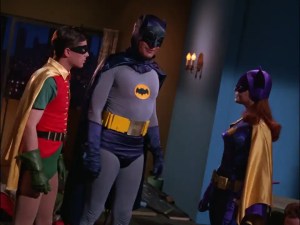
The 1966 television series “Batman” is an iconic American live-action production based on the DC Comics hero of the same name, created by Bob Kane and Bill Finger. It ran from January 1966 to March 1968 on ABC and comprises three seasons with a total of 120 episodes, which quickly reached an audience of millions. The series became famous above all for its deliberately camp style, its catchy and cheerful theme music, and its humorous, highly simplified moral, which was primarily aimed at a young and family audience. It was precisely this mixture of seriousness in the acting and tongue-in-cheek exaggeration that made “Batman” an extraordinary phenomenon of pop culture at the time. The series was produced by Greenway Productions in collaboration with 20th Century-Fox Television, with William Dozier as executive producer, who was largely responsible for the creative tone and had a decisive influence on the style, humor, and narrative. Dozier also served as the unnamed narrator, introducing or commenting on many episodes with his distinctive voice, further emphasizing the parodic nature of the series. Adam West as Bruce Wayne/Batman and Burt Ward as Dick Grayson/Robin gave convincing performances in the lead roles, their deliberately dramatic, serious acting contrasting sharply with the absurd situations and thus becoming the unmistakable trademark of the series. The two main actors developed a striking chemistry that made the so-called “Dynamic Duo” credible and entertaining. They were complemented by a strong ensemble cast, including Alan Napier as the ever-polite and supportive butler Alfred, Neil Hamilton as the dutiful Commissioner Gordon, and, from the third season onwards, Yvonne Craig as Batgirl, who not only brought additional dynamism to the series but also a more contemporary and active image of women.
Plot
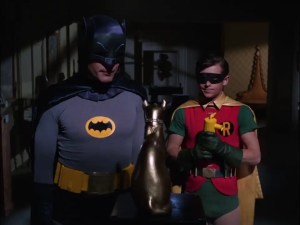
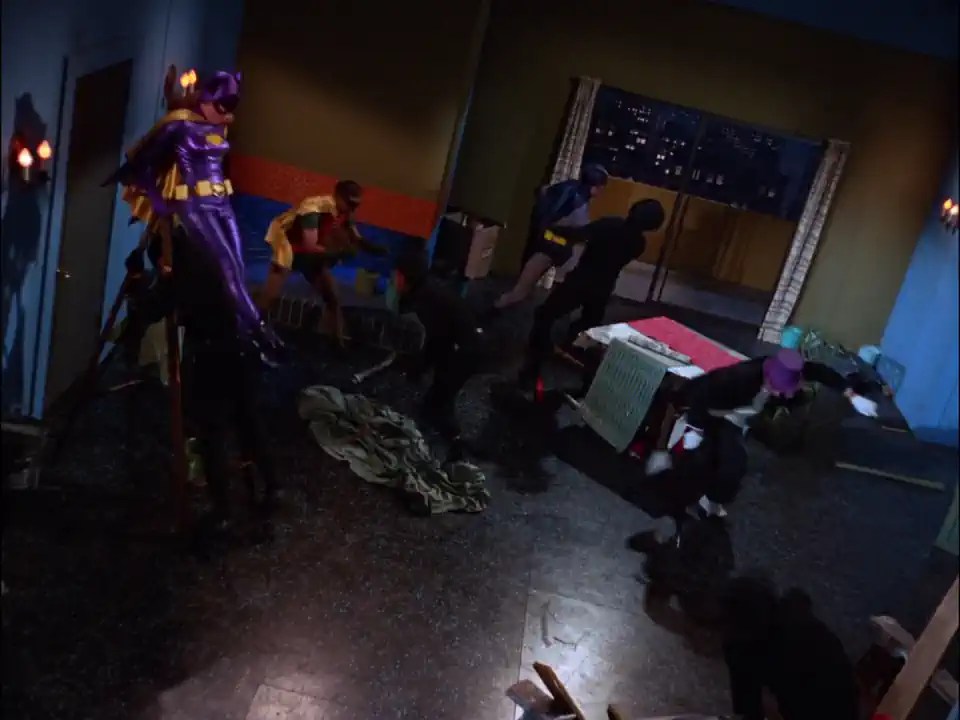
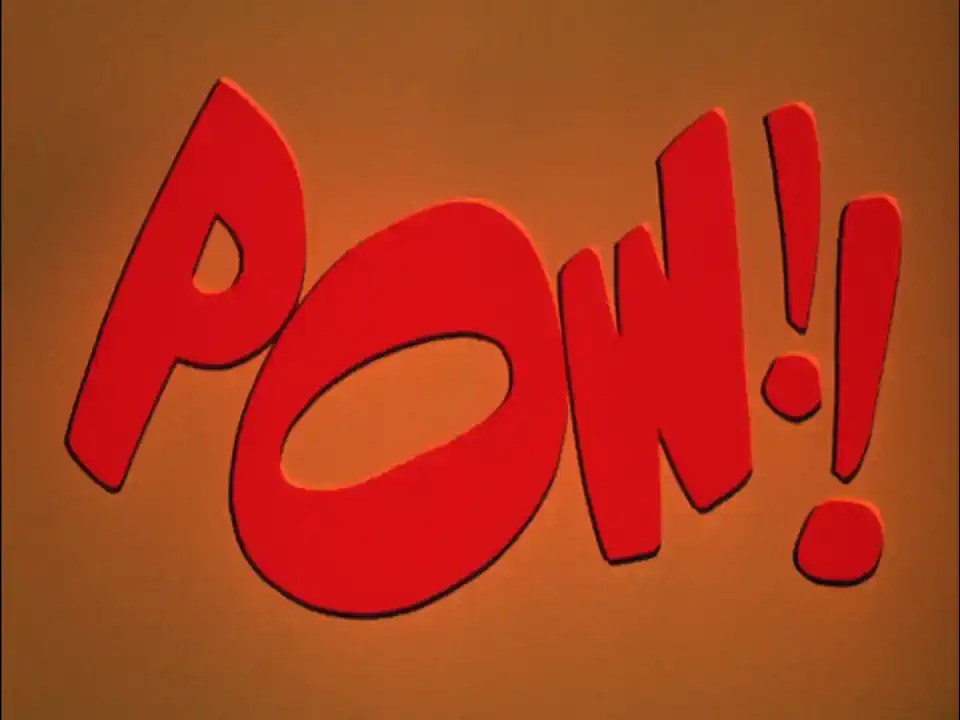
The series revolves around the adventures of Batman and Robin, who, as the so-called “Dynamic Duo,” tirelessly watch over Gotham City and protect the metropolis from a variety of colorful supervillains and their often equally eccentric henchmen. The two heroes do not appear as dark avengers, but as morally steadfast role models who always prioritize law-abiding behavior, politeness, and educational explanations. In the third season, Batgirl joins the team as another heroine, expanding the team to the “Terrific Trio” and creating new dynamics within the group. At the same time, Batgirl was intended to appeal specifically to a younger and female audience and reflect the more modern image of women in the late 1960s. The heroes regularly assist the Gotham City Police Department, represented by Commissioner Gordon and Chief O’Hara, who quickly reach their limits in the face of the villains‘ over-the-top and often spectacular crimes and rely on Batman’s technical expertise. The antagonists, often clearly themed and equipped with matching costumes, female accomplices, and loyal helpers, deliberately plan exaggerated and complex coups. In doing so, they leave provocative clues in the form of riddles, puns, or ironic messages to challenge Batman not only physically but also mentally. Batman and Robin decipher these clues with the help of their famous “Bat-logic,” criminalistic powers of deduction, and a variety of improvised, often curious gadgets from the Bat-belt. This results in a deliberately formulaic, almost ritualized narrative structure that makes the series so recognizable: An investigation phase is followed by a confrontation with the respective villain, then a choreographed fight – accompanied by comic-like, onomatopoeic screen inserts such as “POW!”, “BAM!” or “ZAP!” – and finally the inevitable capture of the villains, which usually ends with a clearly formulated moral lesson.

In the first two seasons, episodes were usually broadcast twice a week and mostly designed as two-parters, with occasional exceptions in the form of three-parters. These episodes often ended with spectacular cliffhangers in which Batman or Robin were trapped in seemingly hopeless and deliberately absurd death traps, such as under laser beams, giant pendulums, or exotic apparatus. This stylistic device increased the suspense and ensured that the audience eagerly awaited the continuation. With the third season, the format changed to weekly, self-contained stories, which took changing viewing habits into account. In terms of content, contemporary elements such as hippies, fashion trends, and typical 1960s slang were increasingly integrated. The visual design also changed: minimalist sets with clearly stylized cardboard cutouts and backdrops emphasized the artificial, comic-like character of the series. Each episode also ended with a brief preview or teaser of the next villain, deliberately fueling anticipation for upcoming adventures.


Trivia
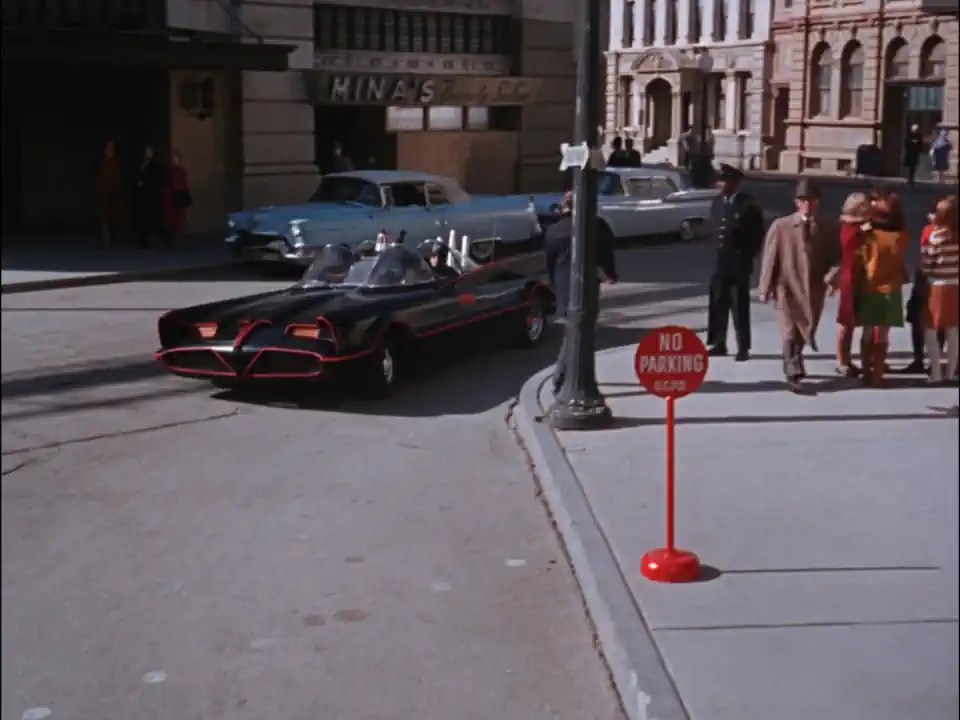
The series held the record for the longest-running live-action superhero series on American television for a long time, until it was finally surpassed by “Smallville” in 2007. Adam West got the role of Batman after producer William Dozier saw him in a commercial for Nestlé Quik, in which West maintained an unwaveringly serious expression even during completely absurd dialogues—precisely the quality that would provide the humorous contrast in the series. Burt Ward’s iconic exclamation “Holy ________, Batman!” quickly became a trademark of the series and was used in countless variations, although Robin’s comic book origins as Ward’s ward and circus acrobat were deliberately avoided to make the character more family-friendly. Burgess Meredith originally improvised the Penguin’s famous “quack” sound to cover up recurring coughing fits caused by heavy cigarette smoke, but it was precisely this detail that contributed significantly to the character’s popularity. The Batmobile, a Lincoln Futura concept car converted by custom car designer George Barris, became an icon in its own right and fetched a price of around $4.2 million at auction in 2013. In addition, numerous music tie-ins to the series were created, including humorous songs by Adam West, musical contributions by Frank Gorshin (arranged by Mel Tormé), and a pop album by Burt Ward with songs written by Frank Zappa. The series also made its mark cinematically: the camera often used so-called Dutch tilts, i.e., slanted shots, to visually reinforce the comic-like impression. However, several planned elements were never realized, including the introduction of Two-Face, for which Clint Eastwood was even considered at one point. Batgirl was ultimately introduced specifically to compensate for declining ratings; her debut was accompanied by a specially produced promotional film that was shown in advance in selected cities.
Guest stars
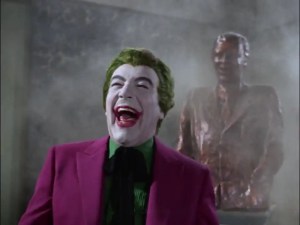
The series was famous for its numerous celebrity guest stars, who often appeared in the roles of eccentric and memorable villains and contributed significantly to the entertainment value of the individual episodes. Many well-known actors of the time considered it a special honor to appear in “Batman” because the series achieved high ratings and offered them the opportunity to vary their image in a self-deprecating way. Some of the special highlights include:
- Cesar Romero as the Joker (recurring, clownish arch-enemy, known for his flamboyant acting and the deliberately visible mustache under his white makeup, which became legendary in the series).
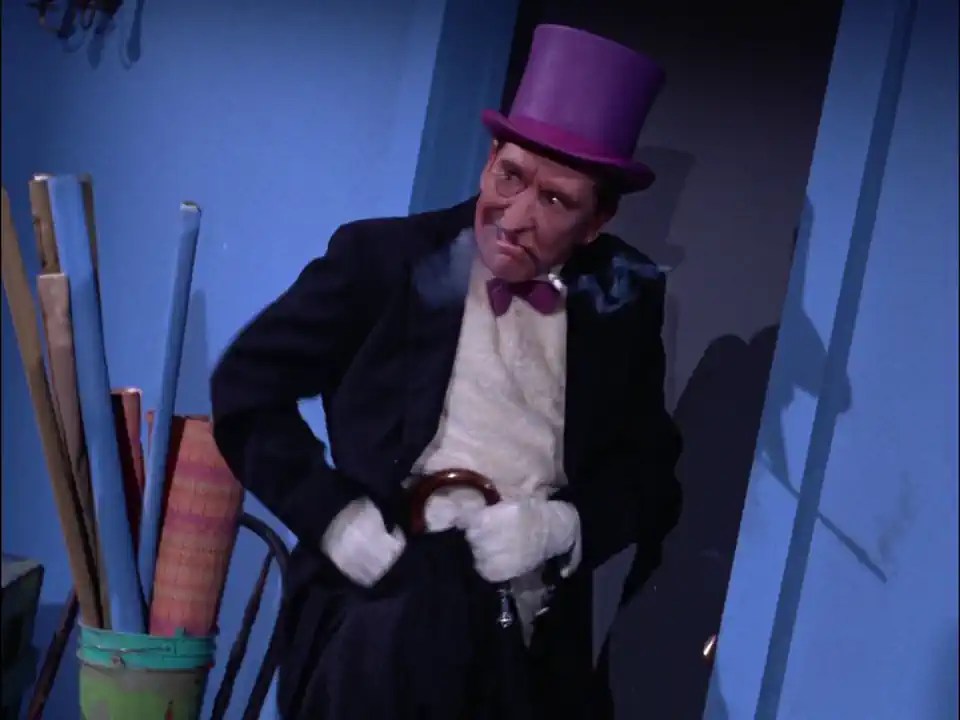
- Burgess Meredith as the Penguin (recurring, umbrella thief with cigarette holder, nasal voice, and bird-like body language that made the character unmistakable).
- Frank Gorshin (seasons 1 and 3) and John Astin (season 2) as the Riddler (a criminal who leaves riddles behind, challenging Batman with puns, visual clues, and psychological games; Gorshin’s manic portrayal in particular is considered iconic).
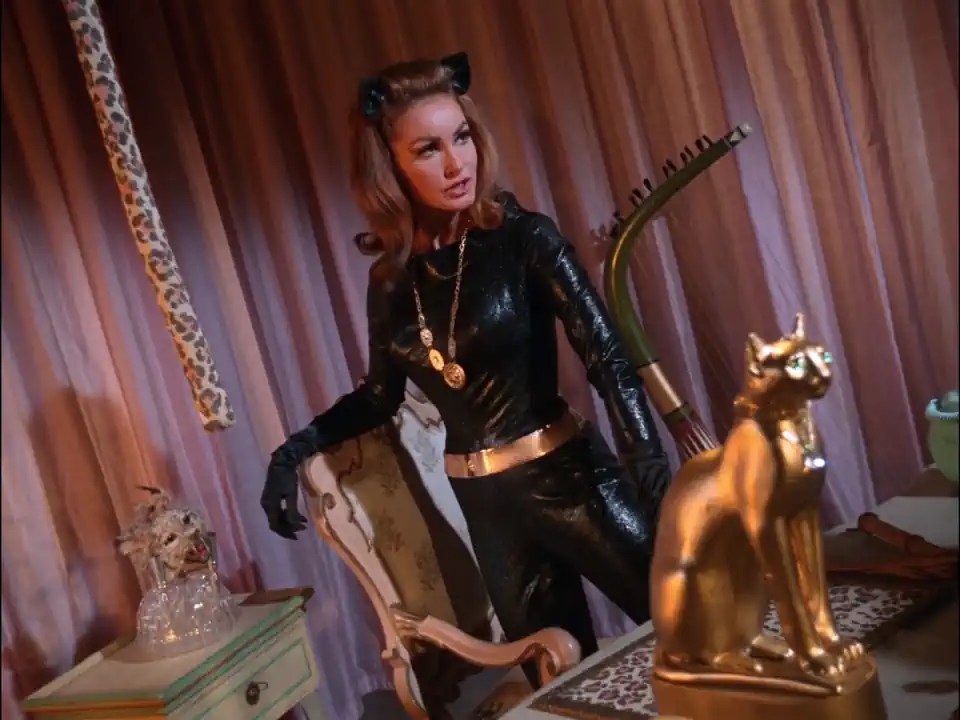
- Julie Newmar (seasons 1–2), Eartha Kitt (season 3), and Lee Meriwether (film) as Catwoman (a feline jewel thief who vacillates between being an adversary and a romantic interest, emphasizing different aspects of elegance, humor, or sensuality depending on the actress).
- Victor Buono as King Tut (an Egyptologist with a split personality who, after a head injury, believes he is the reincarnation of a pharaoh and consistently plans his crimes in ancient Egyptian style).
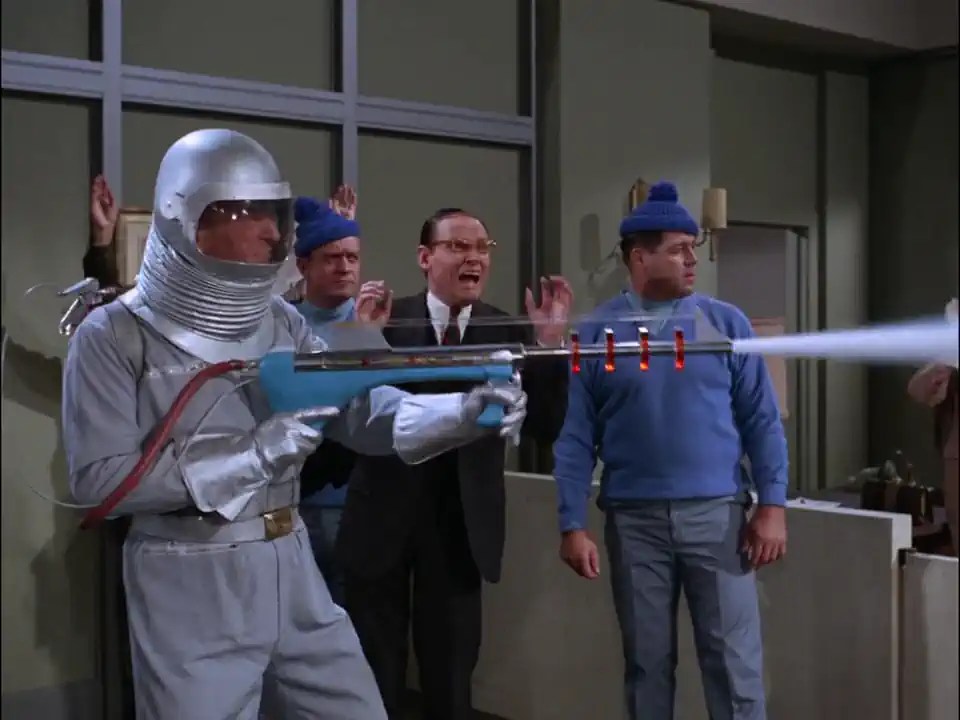
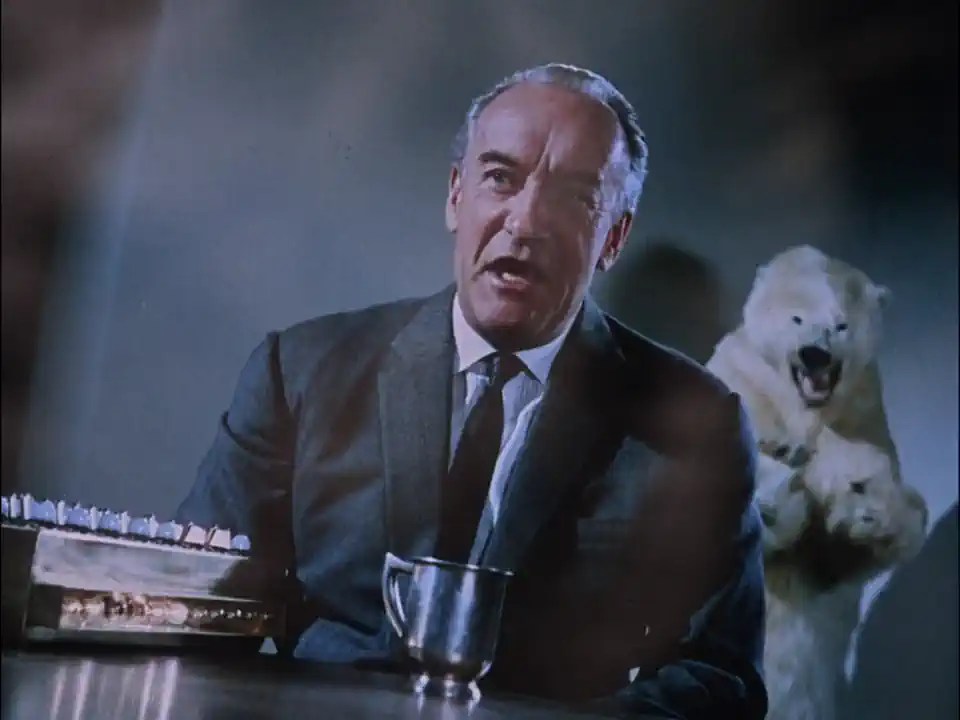
- George Sanders (season 1), Otto Preminger, and Eli Wallach (season 2) as Mr. Freeze (a cryogenically frozen scientist who operates with cold weapons and vacillates between tragic figure and pun-loving humor).
- David Wayne as the Mad Hatter (a hat-obsessed villain loosely inspired by Alice in Wonderland who uses mind control and elaborate costumes).
- Vincent Price as Egghead (an egg-themed genius villain invented specifically for the series who stands out with his overly correct language, puns, and eccentric intelligence).
- Carolyn Jones as Marsha, Queen of Diamonds (jewel-loving criminal with a dominant charisma who frequently uses seduction and manipulation as a means to an end).
- Cliff Robertson as Shame (Western parody villain in cowboy outfit who stages bank robberies and crimes based on classic Western motifs).
- Anne Baxter as Olga, Queen of the Cossacks (and Zelda the Great) (theatrical antagonist with changing identities who combines political power fantasies with circus and show elements).
- Milton Berle as Louie the Lilac (flower-themed gangster who stages his crimes with floral motifs, perfume, and poisonous plants).
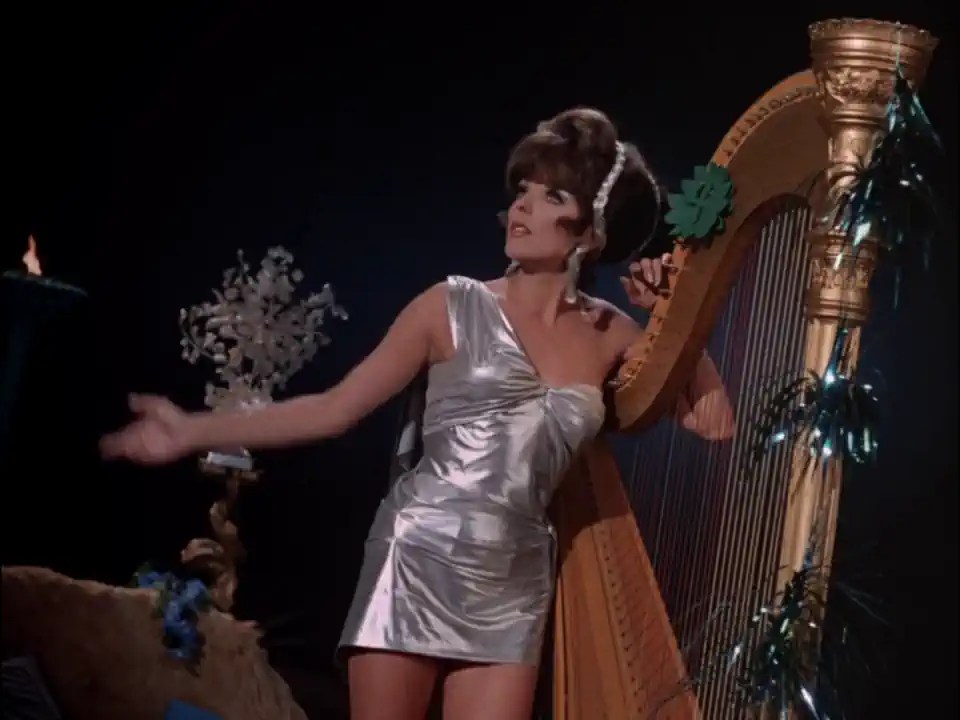
- Joan Collins as Lorelei Circe a.k.a. The Siren ( a chanteuse who is able to sing notes so high that they place men under her control)
Reviews at the time
In the 1960s, “Batman” was celebrated as one of the biggest TV phenomena of the mid-decade, reaching an exceptionally wide audience across all age groups. This enormous success led to a veritable boom in merchandise, licensed products, and re-releases of older Batman comics and series. The deliberately camp style, bright colors, and youthful focus ensured immense popularity, made the series easily accessible, and clearly set it apart from other television productions of the time. Contemporary critics often praised the courage to be self-deprecating, the humorous exaggeration, and the clear, easily understandable moral, which was particularly suitable for children and families. At the same time, many reviewers criticized the narrative simplicity, formulaic structure, and lack of psychological depth. As a result, “Batman” was perceived as extremely entertaining, but also superficial—a circumstance that contributed to its rapid rise to fame, but at the same time aroused a certain skepticism among adult viewers and serious comic book fans. Despite these criticisms, the series inspired a multitude of imitations, had a lasting impact on television, and played a decisive role in establishing superheroes as a permanent genre in mainstream TV.
Cultural influence
“Batman” sparked a veritable wave of “Batmania” in the 1960s that went far beyond television and encompassed almost all areas of popular culture. Countless merchandise items such as trading cards, model kits, costumes, board games, and school supplies flooded the market, turning the series into a major commercial event. The deliberately campy humor, the garish exaggeration, and the serious acting in absurd situations had a lasting influence on later film and television comedies such as “Airplane!” and “The Naked Gun,” which used a similar play on irony and exaggeration. Adam West and Burt Ward became strongly typecast by their roles, but West in particular later managed to continue this image with self-irony and deliberately parody it in series such as “Family Guy” and other guest appearances. In addition, the series inspired numerous comics, including the nostalgic “Batman ’66” series, as well as crossovers with characters such as the Green Hornet and Wonder Woman, which captured the spirit of the original series. In later years, the style of the series lived on in animated films featuring the original voices of West and Ward, such as in the 2016 and 2017 productions. References and cameos also appeared in modern movies such as “Space Jam: A New Legacy” and “The Flash” (2023), underscoring the enduring cultural presence of the ’66 version. The iconic Batmobile and the distinctive theme song are still considered enduring symbols of pop culture and are constantly being reinterpreted in pinball machines, LEGO sets, and collectibles. The delayed release on home video until 2014 highlights the long-standing rights issues surrounding the series, but there is no doubt about its lasting influence on international pop culture.
Conclusion
The 1966 “Batman” series remains a significant milestone in television history, popularizing the superhero genre on a large scale for the first time with humor, irony, and deliberate camp, and making it accessible to a mass audience on television. Instead of focusing on realism, psychological depth, or dark drama, the series proved that comic-like exaggeration, clear characterization, and consistent self-irony can reach an extremely broad and cross-generational audience. It was precisely this bold break with narrative conventions that made “Batman” a special case within the television landscape of its time. Despite its deliberately simple narrative structure, clearly formulated moral messages, and elements typical of the 1960s, the series has left a lasting cultural footprint, ranging from extensive merchandise to later comic book series to modern film, series, and animation adaptations. It impressively demonstrates how a television production from the 1960s can still be relevant, quotable, and entertaining decades later and continue to appeal to new generations of viewers. At the same time, it underscores the timeless appeal of the Dark Knight as a transformable pop culture figure who can be reinterpreted again and again without losing his fundamental cultural identity and recognizability.





 McHenry's Lair
Kommentar verfassen :