


The classic platform game
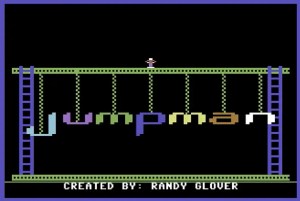
In the early 1980s, as home computers slowly but surely conquered the mass market, numerous games appeared that laid the foundations for modern genres. One of these games was “Jumpman”, released in 1983 for the Commodore 64 by Epyx. The title is one of the earliest and most influential representatives of the platform genre and is still known today for its creative level design, high game speed, and clever mechanics. It was one of those games that appealed to both beginners and experienced players and was able to inspire a broad target audience.
“Jumpman” was more than just another action game – it combined quick reflexes with strategic thinking and was one of the first games to use variable level mechanics. Particularly noteworthy was the fact that the flow of the game was actively influenced by defusing the bombs, which turned each level into a dynamic puzzle. In an era when many titles focused purely on scoring points or linear movement, “Jumpman” offered a dynamically responsive gaming experience that set new standards and served as a source of inspiration for many developers. The combination of innovative design, challenging gameplay, and technical finesse made “Jumpman” a title that had a decisive influence on the platform games of its time. Even decades later, it is still considered an instructive example of good game design in teaching or in retrospectives of gaming history.
Gameplay
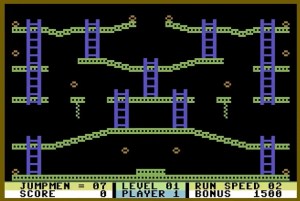
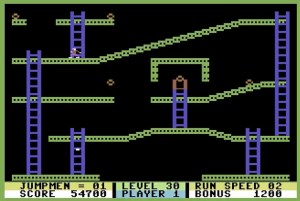
In “Jumpman,” the player takes on the role of a hero who must prevent acts of sabotage on the planet Jupiter. Terrorists have planted bombs in a space station, and it is up to the player to defuse them. In a total of 30 varied levels, known as “missions,” Jumpman must defuse bombs scattered across platforms, ropes, and ladders. The levels vary greatly in their structure: some require precise jumping, others creative timing or pattern recognition. What sounds simple is made more difficult by a multitude of deadly dangers: rockets, falling blocks, laser traps, aliens, and treacherous platforms that can suddenly move or disappear. Some levels surprise with gravity changes, invisible paths, or moving target objects that only become visible through certain actions.
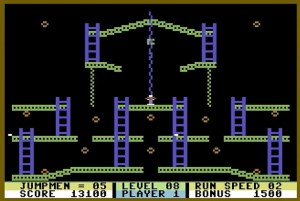
The highlight: every bomb that is defused changes the dynamics of the level – for example, by introducing new enemies, activating additional traps, or changing gravity. Some levels also contain so-called “trigger zones” that change the behavior of the entire playing field when entered. This variability ensures constant excitement and requires a strategic approach, quick reactions, and good timing. Jumpman can climb, jump, and swing along ropes – skills that must be used differently in each mission. The controls are deliberately kept simple, making them easy to learn, but still offering sufficient depth. Added to this is an intelligent enemy AI that puts the player under pressure and analyzes their movement patterns.
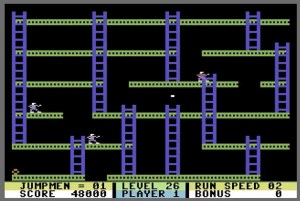
A special feature is the level selection at the beginning: you can choose between different difficulty levels and level sequences, which increases long-term motivation. If you want, you can play all levels in random order or select them sorted by theme – for example, by complexity or focus (skill vs. tactics). This keeps the game exciting and challenging even after several playthroughs. An additional incentive is to set high scores and compete with other players – an element that was an essential part of the fun of the game, especially at that time.
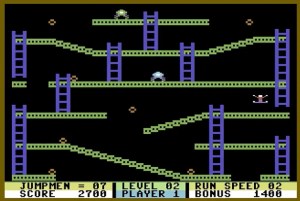
The depiction of the character’s demise is also particularly memorable: if Jumpman dies – for example, by colliding with an opponent or falling – he doesn’t just disappear from the screen. Instead, his character continues to roll across the floor of the level, visibly losing control and finally coming to rest in a pile of stars. This small but effective animation was iconic for many players and became the unofficial trademark of the game. It not only conveyed a sense of drama, but also an unexpected emotionality for a game of that technical era.
You can choose between different difficulty levels and level sequences, which increases long-term motivation. If you want, you can play all levels in random order or select them sorted by theme – for example, by complexity or focus (skill vs. tactics). This keeps the game exciting and challenging even after several playthroughs. An additional incentive is to set high scores and compete with other players – an element that was an essential part of the fun of gaming, especially at that time.
Technology
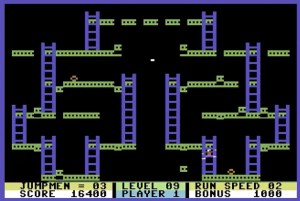
For a game from 1983, “Jumpman” impresses with smooth animation, fast frame rates, and a responsive control system. The movements are surprisingly smooth, and the responses to key inputs are almost instantaneous – a remarkable technical achievement. Particularly noteworthy: the game was originally developed in AppleSoft BASIC (on the Apple II) and then ported to the Commodore 64 – a technical feat given the limited resources of the time. The porting required extensive adjustments to make optimal use of the C64’s special hardware advantages, such as its sprite management capabilities and sound chip.
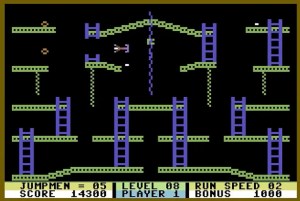
The graphics are functional but charming – with clearly defined sprites, lovingly animated explosions, and varied background colors. There is clear visual feedback on the player’s actions, such as visual effects when defusing bombs or colliding with enemies. Despite the simple visual presentation, “Jumpman” succeeds in creating a lively and believable environment that visually guides the player and provides orientation. The graphic clarity also helps players quickly grasp the game situation, which is essential given the high speed of the game.
The sound consists of simple effects and short melodies, but these are used appropriately and atmospherically. Although there is no continuous background music, specific sounds – such as when changing levels or collecting an object – enhance the immersion. Some effects have even been dynamically programmed to adapt to the current level, creating a stronger connection between sound and game mechanics.
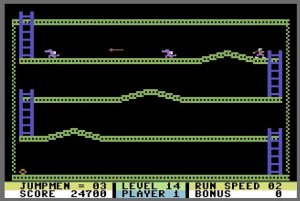
The levels are randomly selected from a larger pool, making each playthrough feel unique. This randomness significantly increases replayability, as the sequence changes slightly each time the game is started. The game mechanics are implemented close to the hardware in order to achieve high speed despite its BASIC origins – a balancing act between technical limitations and playability. Developer Randy Glover used creative programming tricks to optimize performance, including custom scroll routines and sprite management techniques that were remarkable for the time. Targeted memory addressing, buffered screen updates, and a minimalist code approach achieved a level of performance rarely seen in platform games. All these measures contributed to “Jumpman” playing more smoothly and stably than many competing products of the time.
Trivia
- The name “Jumpman” was popular at the time – even Mario initially bore this name in “Donkey Kong” (1981). The term was almost synonymous with jumping platform heroes and was used repeatedly in pop culture. This occasionally led to confusion or discussions about naming rights, especially when Mario achieved worldwide fame.
- The game was developed by Randy Glover, a one-man team, which was not uncommon at the time. Glover was not only the developer, but also the designer, tester, and graphic artist – a way of working that is almost unimaginable today, but which reflects the creative spirit of many games of that era.
- “Jumpman” was one of the best-selling games for the C64 in the year it was released and was later ported to other systems such as Atari 8-bit and IBM PC. In addition, there were also homebrew ports and emulator versions that can be run on modern platforms. The game’s popularity meant that it was represented in many country charts for months.
- There is a secret level that can only be accessed via a cheat module or a glitch. This level contains references to other Epyx titles and was long considered an urban myth among gamers until programmers analyzed the code and confirmed its existence.
- The game’s code was optimized so that even complex enemy movements and level changes run without significant delays. To achieve this, developers had to resort to assembler routines that they manually stored in memory – a technical masterpiece given the C64’s tight memory limits.
- Fan remakes and modifications of “Jumpman” are still circulating today, for example for Windows or mobile platforms. Some of them add new levels, a level editor, or improved control options. The active community ensures that the game is constantly being revived in new forms and inspiring a new generation of retro fans.
Jumpman vs. Jumpman Jr.

Following the success of the original, “Jumpman Junior” was released in 1984. The junior version offered fewer levels (only 12), but these were often more difficult, more compact, and more to the point. The levels were deliberately designed to be playable in a shorter time, but with higher demands. As a result, the game was aimed more at experienced players who were looking for a tough challenge. The game was primarily optimized for cartridge releases, which necessitated a reduction in content due to the limited storage space. At the same time, this resulted in significantly shorter loading times and an immediate gaming experience – an advantage that should not be underestimated at a time when many games were still loaded via Datasette or floppy disk.
While “Jumpman” scored points with its variety and gentle learning curve, “Jumpman Jr.” was more of a test for hardcore players. Critics and players were divided: some preferred the tough challenge of “Junior,” while others missed the variety and scope of the original. Some saw the shorter playing time as a disadvantage, while others praised the compact form as modern and focused. The learning curve was also steeper – mistakes were punished more harshly, and precise mastery of the controls was essential to progress.
Technically, “Jumpman Jr.” was also impressive – the speed was increased once again and the controls were refined. Enemies behaved more predictably, and the level structure was even more complex. The graphics were slightly clearer, with more contrasting colors and improved animations, but musical elements had to be reduced to save memory space. The story elements were also greatly simplified in the Junior spin-off. Nevertheless, the game retained its appeal – especially for speedrunners and high score hunters who wanted to measure themselves against ever-new record attempts. Today, “Jumpman Jr.” is considered an insider tip among retro fans – more compact, more difficult, and, in its simplicity, a masterpiece of minimalist game mechanics.
Criticism at the time
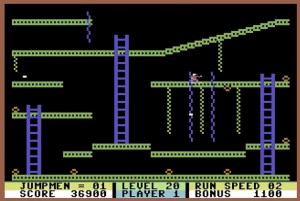
Contemporary reviews almost unanimously praised “Jumpman.” Magazines such as Compute!, Electronic Games, and Ahoy! gave it top marks for innovation, gameplay, and graphics. Particular praise was given to the varied level ideas, the precise controls, the well-thought-out level design, and the addictive gameplay. The editors emphasized that “Jumpman” clearly stood out from the crowd of platform games, not only because of its scope, but also because of the constantly changing challenges in each individual level. The learning curve – fair but challenging – was also often cited as a plus point and described as the ideal middle ground between accessibility and difficulty.
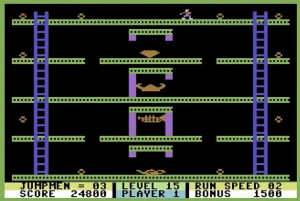
In reader surveys, “Jumpman” regularly ranked as one of the most popular games of the year. C64 owners in particular praised the title for its scope and technical implementation. Many players stated that “Jumpman” was one of the few games that could motivate them for months without losing its appeal. The simple but ingenious idea that each bomb changes the course of the game was often described as “revolutionary.” This concept gave the game an unexpected depth that clearly set it apart from the competition. Even years after its release, letters to the editor discussing new strategies and secrets could be found in magazines. Some of these letters were even supplemented with developer comments in later issues, further reinforcing the feeling of an active community. Tips and specially created maps regularly circulated in forums and fanzines, proving how much players identified with the game and considered it an integral part of their gaming experience.
Cultural influence
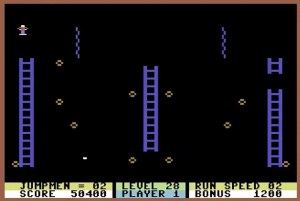
Even though “Jumpman” does not enjoy the same legendary status as “Pac-Man” or “Donkey Kong” today, its influence was noticeable and lasting. Many later platform games – such as Lode Runner, Montezuma’s Revenge, and even early indie titles like Spelunky – drew on ideas from Jumpman: level variety, clever traps, moving platforms, and reactive game mechanics. These elements were often further developed and refined later on, but their roots can clearly be traced back to the innovative spirit of Jumpman. Even modern games with permadeath systems, randomly generated levels, or high skill requirements show stylistic and structural parallels.
In developer circles, “Jumpman” is considered a prime example of creative game design with limited resources. Indie games of the 2000s and 2010s have also been visibly inspired by the title. Many developers cite “Jumpman” as one of the reasons they started programming in the first place. The game is often used in game design education to convey the importance of clear mechanics and functional level design. To this day, there are speedrun communities and competitions where “Jumpman” levels are mastered in record time. This scene is internationally networked and uses digital platforms such as Twitch or YouTube to share successes and exchange strategies. The game is often modified or given special challenges, such as completing the levels with reversed controls or within set time frames.
In addition, “Jumpman” has been mentioned in several museums and exhibitions on the history of computer games and is a popular example of early innovation on home computers. In interviews with game historians, “Jumpman” is repeatedly described as a milestone that combined technical creativity and playful depth. Its inclusion in digital archives and collections of renowned institutions underscores its historical value and secures its place as a classic for future generations.
Conclusion
“Jumpman” is a true gem of the early home computer game era. With its fast-paced, well-designed gameplay, technical sophistication, and high replay value, it has earned a permanent place in the history of video games. The perfect combination of innovation, excitement, and accessibility made it a milestone that inspired not only gamers but also aspiring developers. The game is still fun to play today – not just out of nostalgia, but because of its intelligent mechanics and timeless playability, which modern titles often lack.
Anyone interested in retro games cannot ignore “Jumpman.” It is a prime example of the inventiveness of the early 1980s and proves that good game ideas can inspire even without modern graphics or sound effects. Its creative implementation, technical elegance, and enduring relevance make it a cult classic that has helped shape the medium. “Jumpman” was ahead of its time – and deserves to be played, explored, and appreciated even today. Even decades after its release, it shows how timeless well-designed games can be – a realization that is more valuable than ever in today’s industry, which is often dominated by fast-moving trends.








 McHenry's Lair
Kommentar verfassen :