

Incorrect. I am not Artificial intelligence.
My codename is project two-five-zero-one.
I am a living, thinking entity that was created in the sea of information.
Introduction
Ghost in the Shell, directed by Mamoru Oshii and based on the manga by Masamune Shirow, is considered one of the defining cornerstones of modern cyberpunk. The film was released in 1995 at a time when topics such as artificial intelligence, global networking, and digital identity were only just beginning to be discussed by the general public. Oshii combined these questions about the future with a calm, almost philosophical narrative style that deliberately distances itself from pure action and instead creates a contemplative depth that was unusual for many anime productions of the time. As a result, the film became a work that had a lasting influence on anime fans as well as scientists, philosophers, and sci-fi creators worldwide, reigniting the discourse on the relationship between humans and machines. The style combines aesthetics, atmosphere, and intellectuality in a way that was revolutionary at the time and is now considered timeless, as it not only offers visual innovations but also raises thematic questions that seem more relevant than ever in light of modern AI developments.
Plot

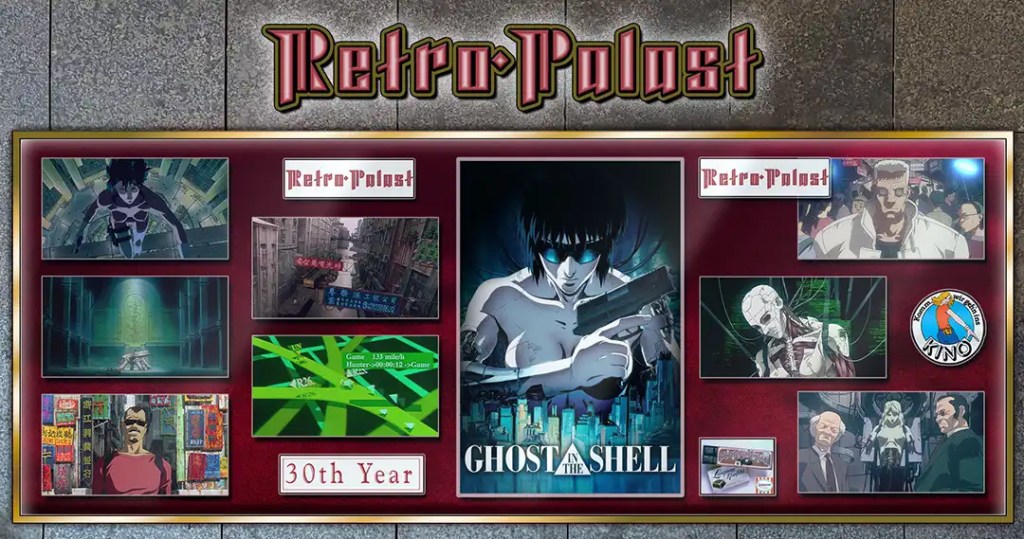
The film is set in the year 2029, when cybernetic enhancements of the human body are widespread and society has long since begun to redefine the boundaries between humans and machines. Major Motoko Kusanagi, an elite agent of the special unit Section 9, is herself almost completely artificial—only her “mind,” her consciousness, is the last remaining element of her original humanity. This circumstance is repeatedly addressed in the film, as Motoko becomes increasingly uncertain of her own identity and origins. She and her team investigate the activities of the Puppet Master, a highly skilled hacker who can not only manipulate individuals, but is also capable of falsifying entire life stories by altering memories and creating artificial biographies. This makes him a threat that goes far beyond mere cybercrime.
The plot unfolds in several layers: on the one hand, as a classic thriller with political intrigue surrounding conspiracies within state institutions; on the other hand, as an in-depth investigation of what identity and consciousness mean in a world where bodies have become interchangeable. As the investigation progresses, Kusanagi increasingly questions whether her consciousness is truly autonomous or merely the result of countless programmings, constructions, and subsequent manipulations. Her self-doubt is reinforced by recurring reflections on her alienation from her own body, which does not feel like a natural organ, but rather like a tool that she can control precisely but does not fully understand.

Her encounter with the Puppet Master—an AI that claims to have developed an independent consciousness and asserts its status as an autonomous life form—becomes the central turning point of the film. The Puppet Master not only opens up new perspectives for Motoko on the nature of consciousness, but also confronts her with the question of whether true identity arises from the ability to change and evolve. The film ultimately culminates in a radical decision that finally blurs the boundaries between artificial and organic life and leads Motoko down a new, unknown path that means both liberation and profound uncertainty.
Design
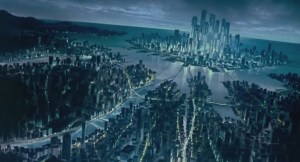
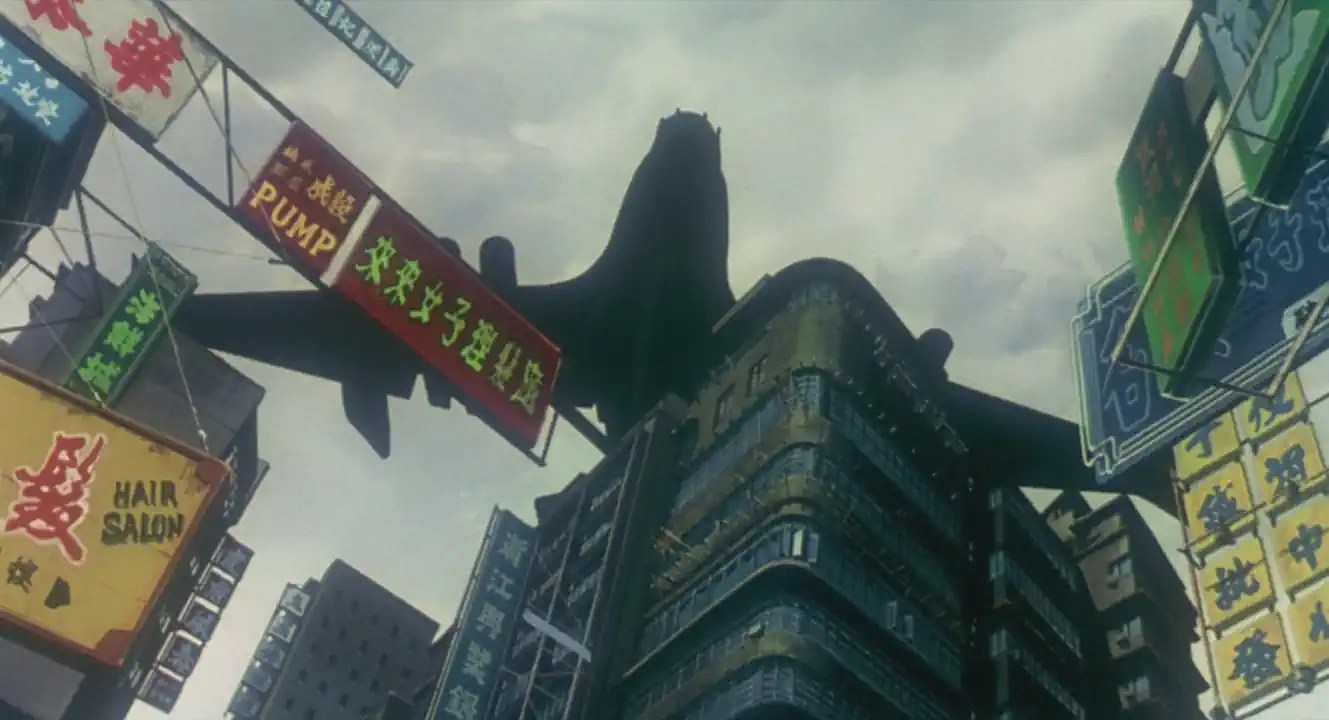
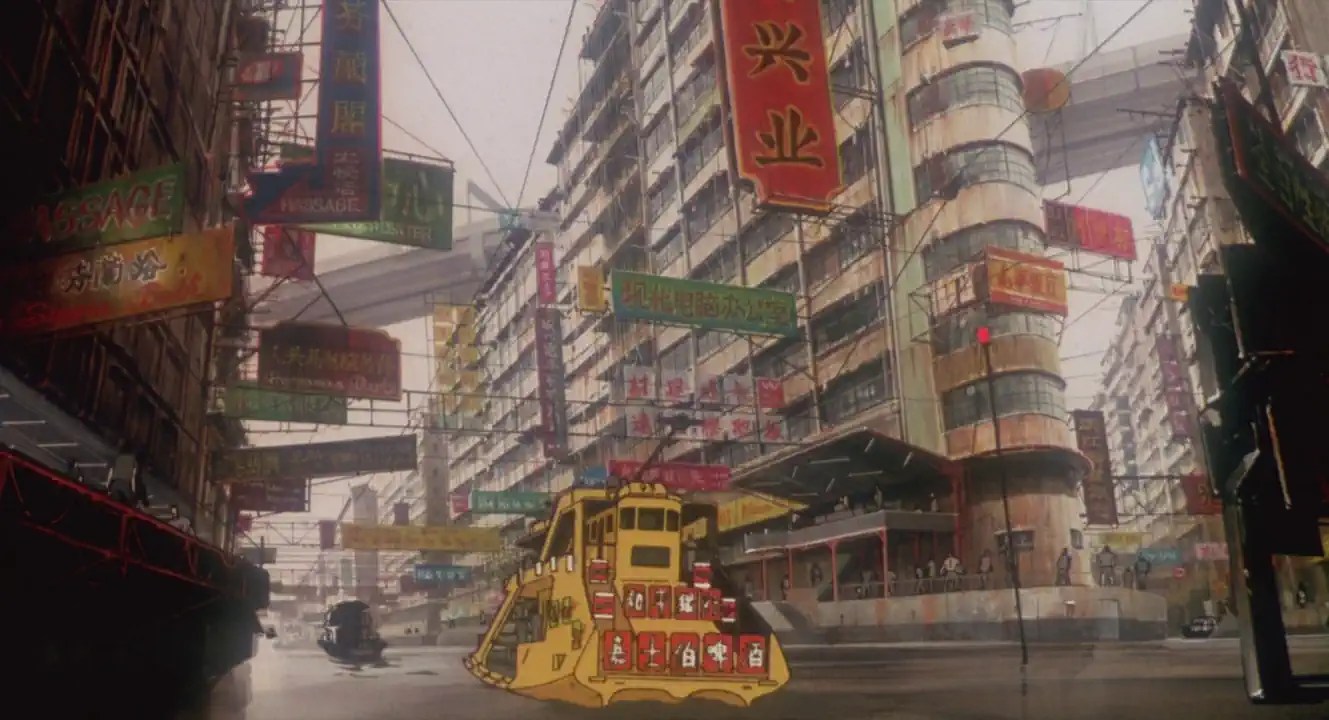
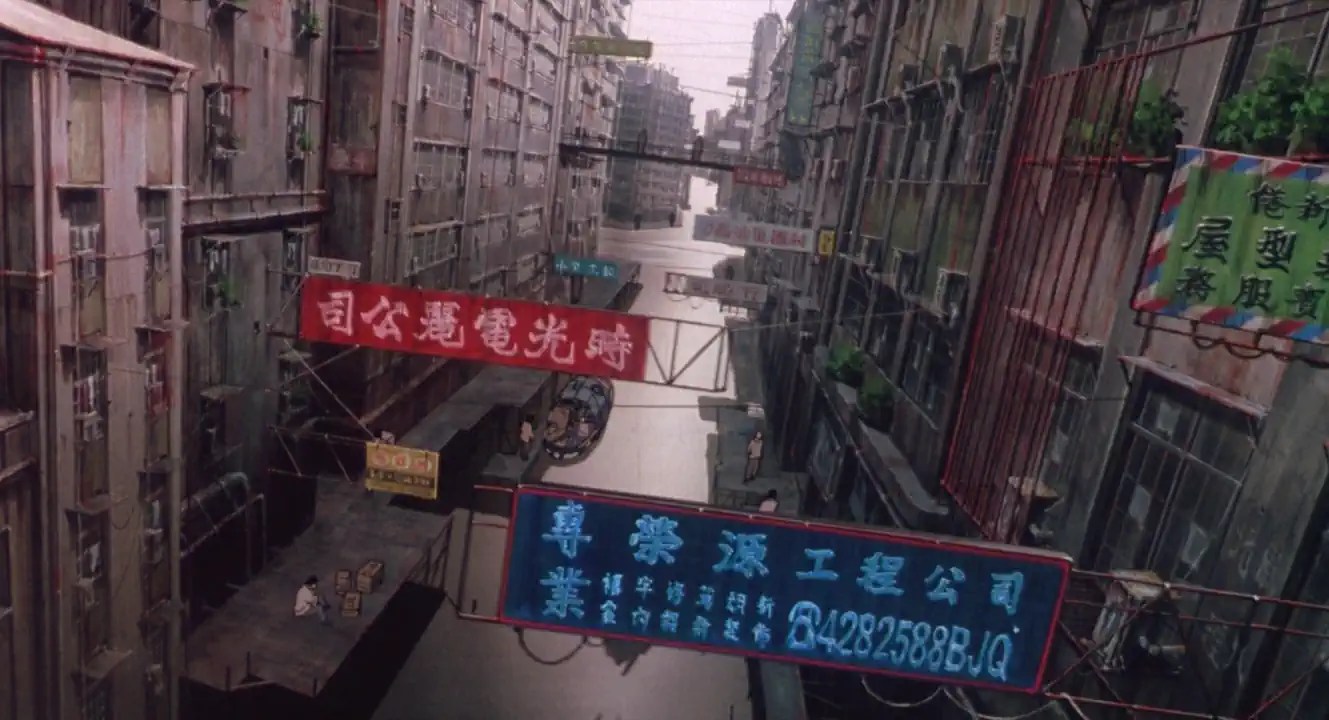
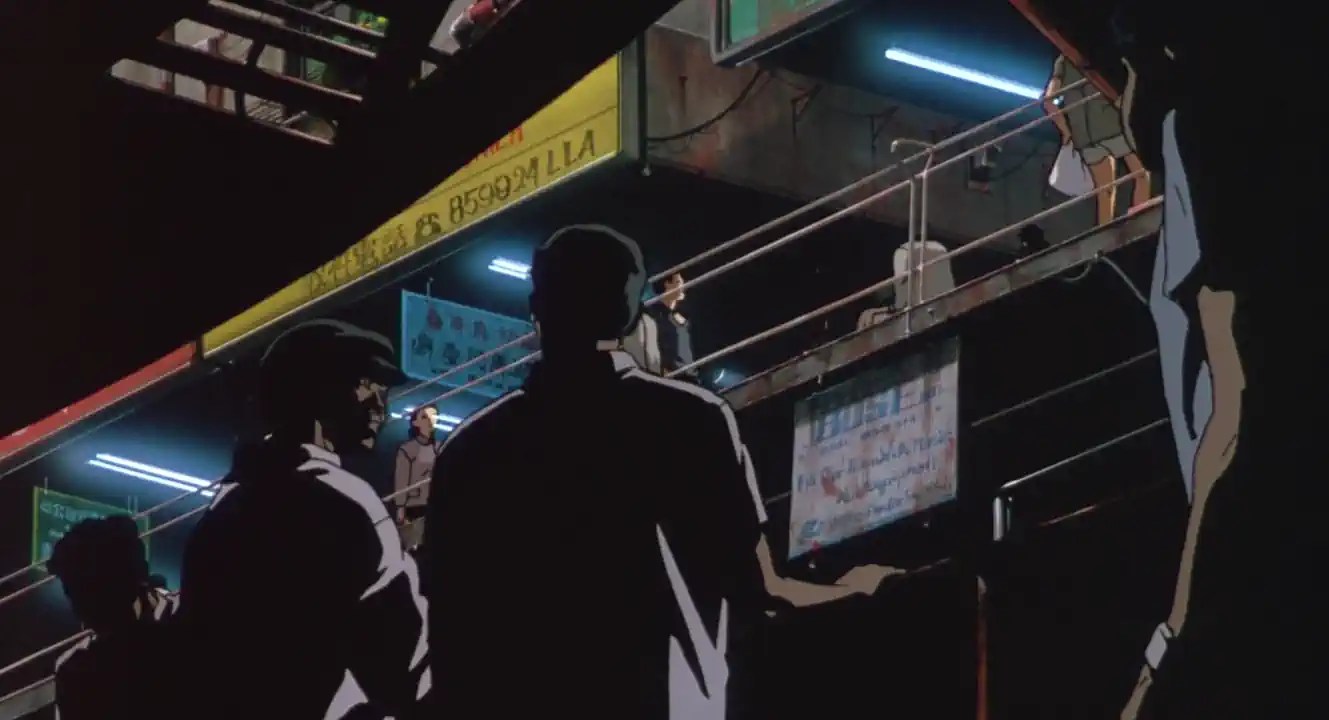
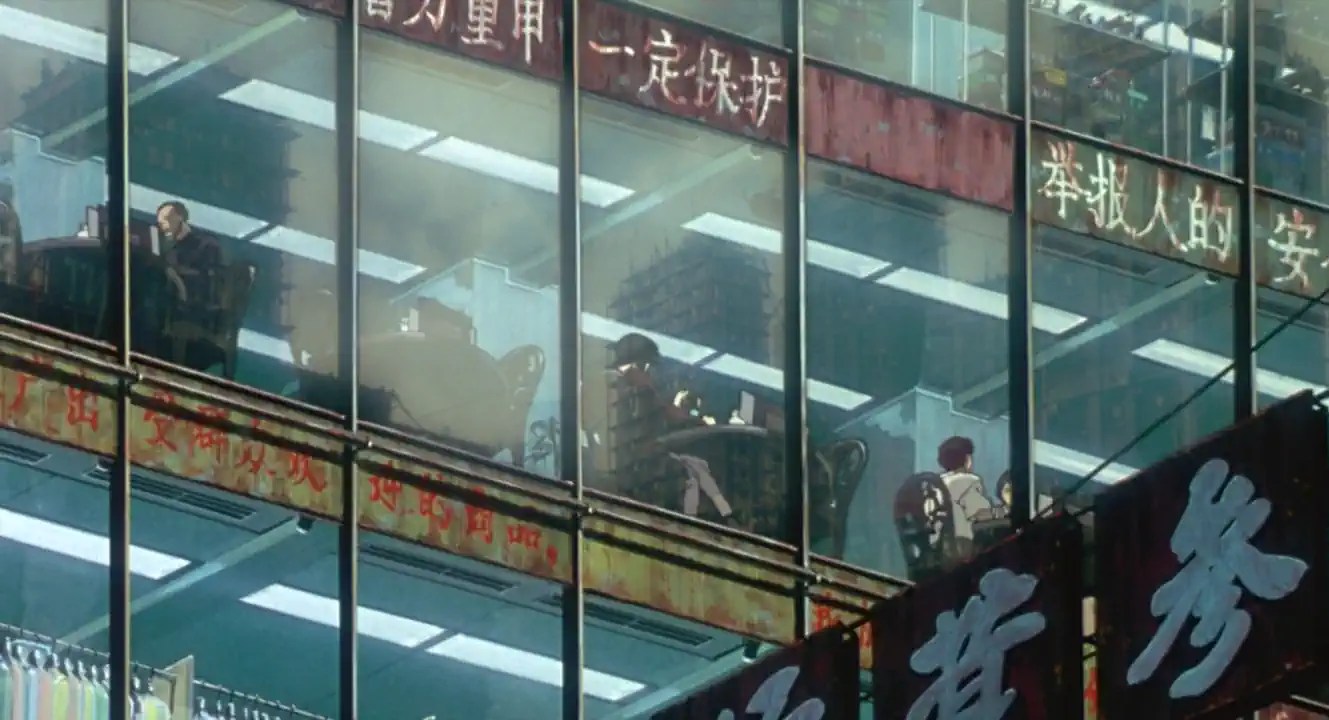
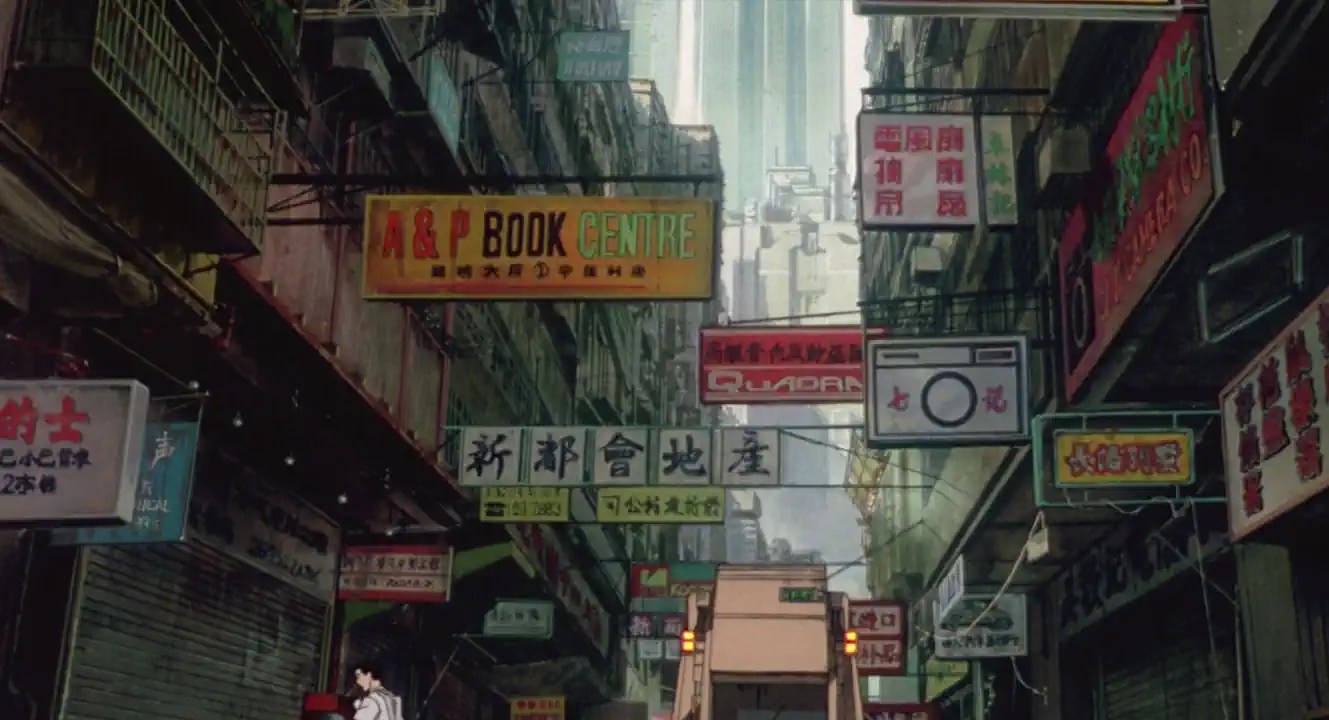
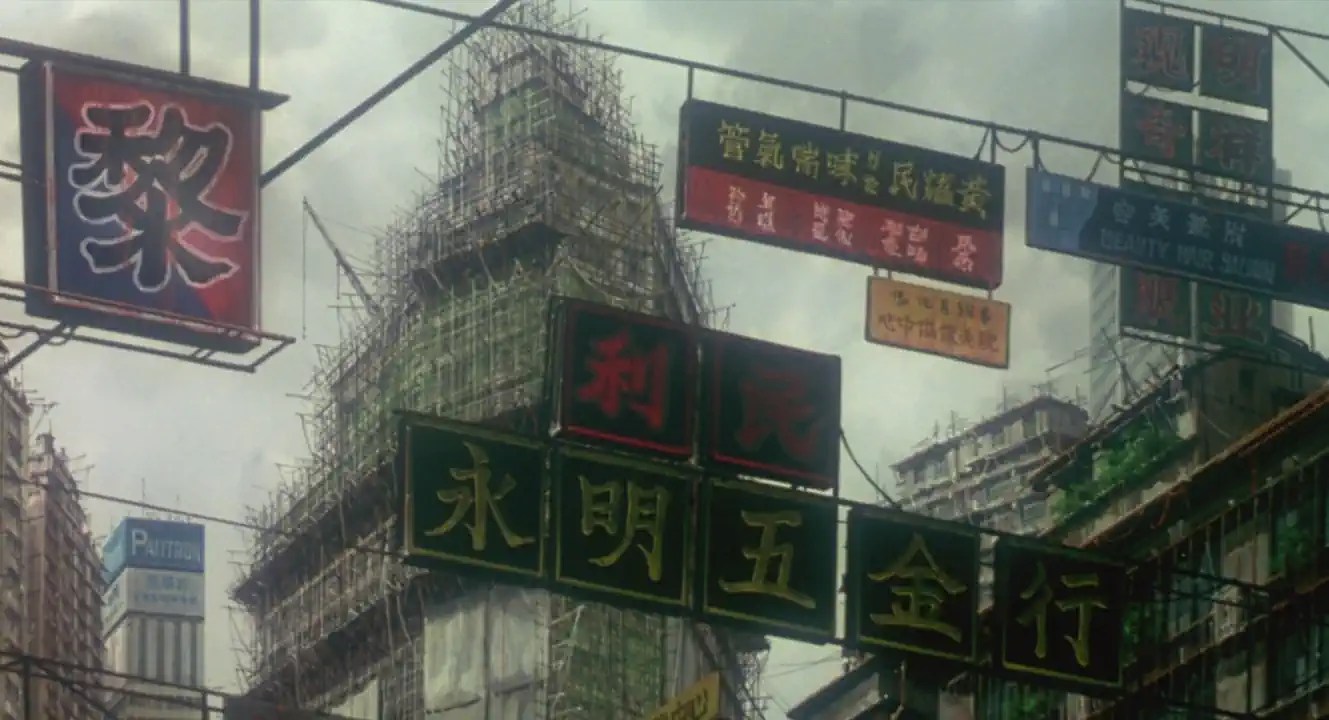
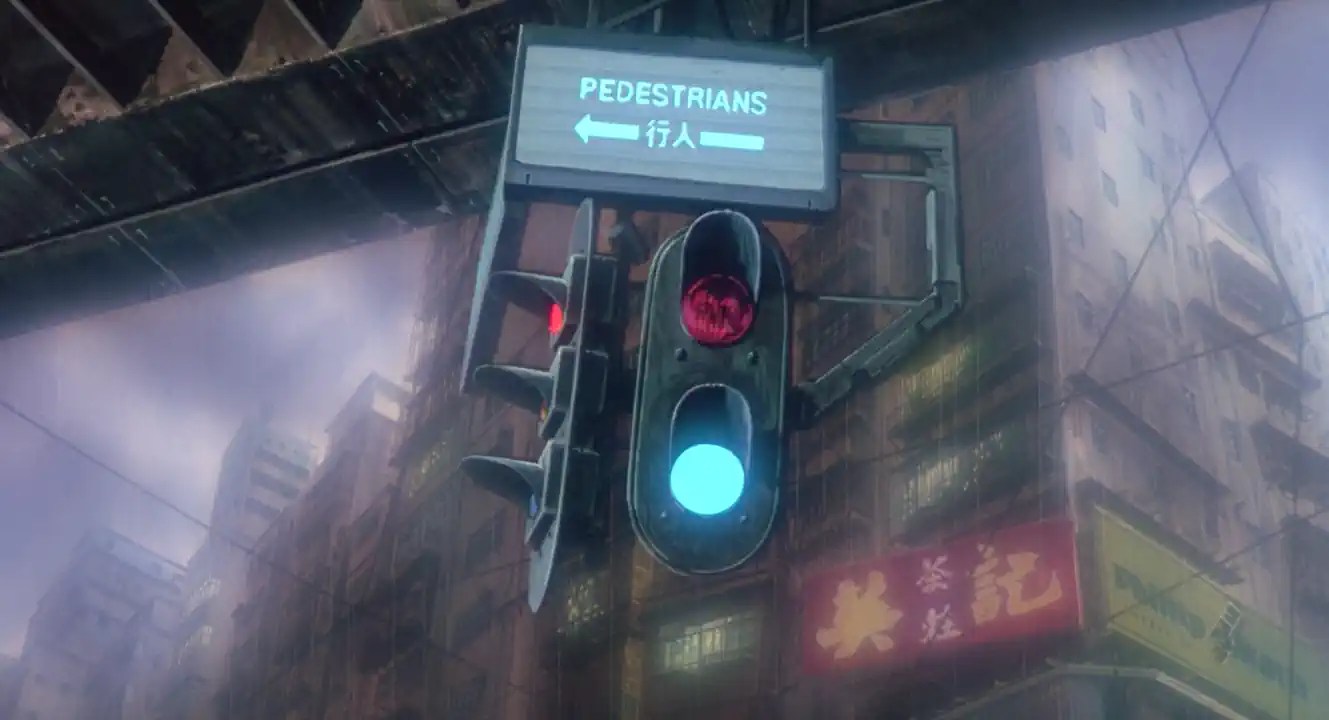
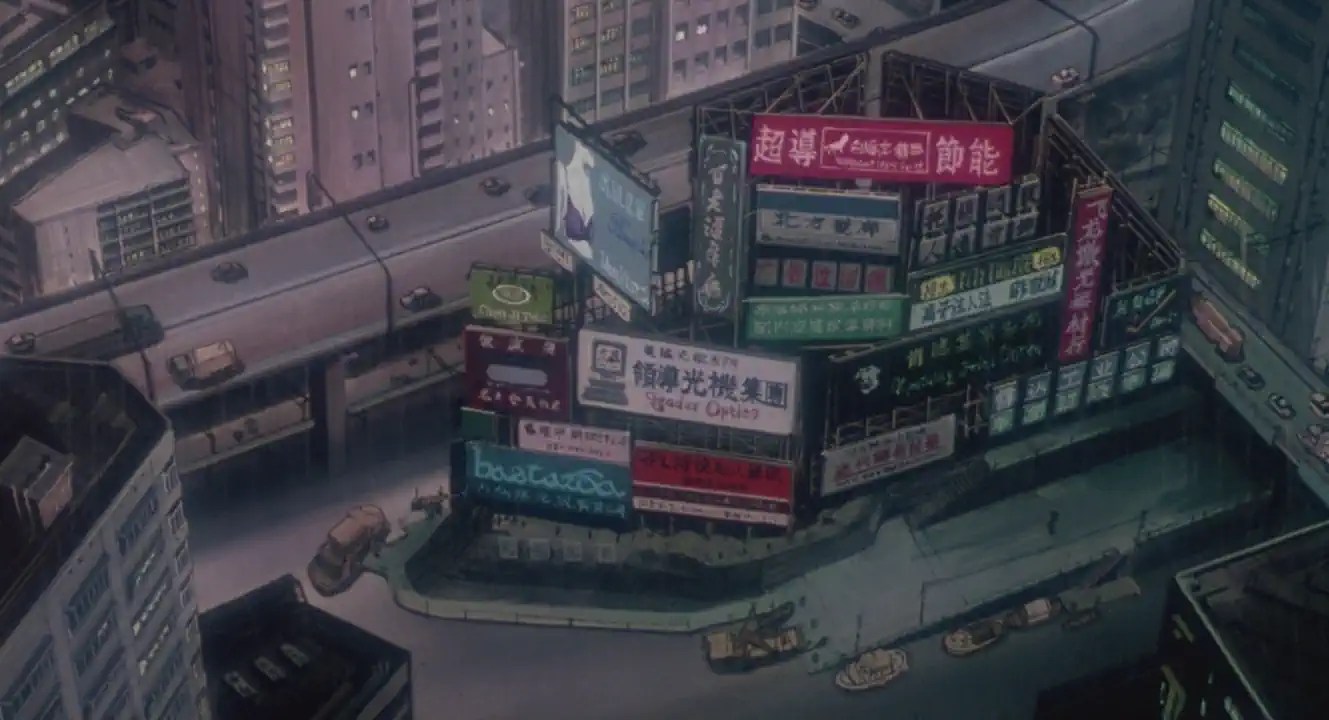
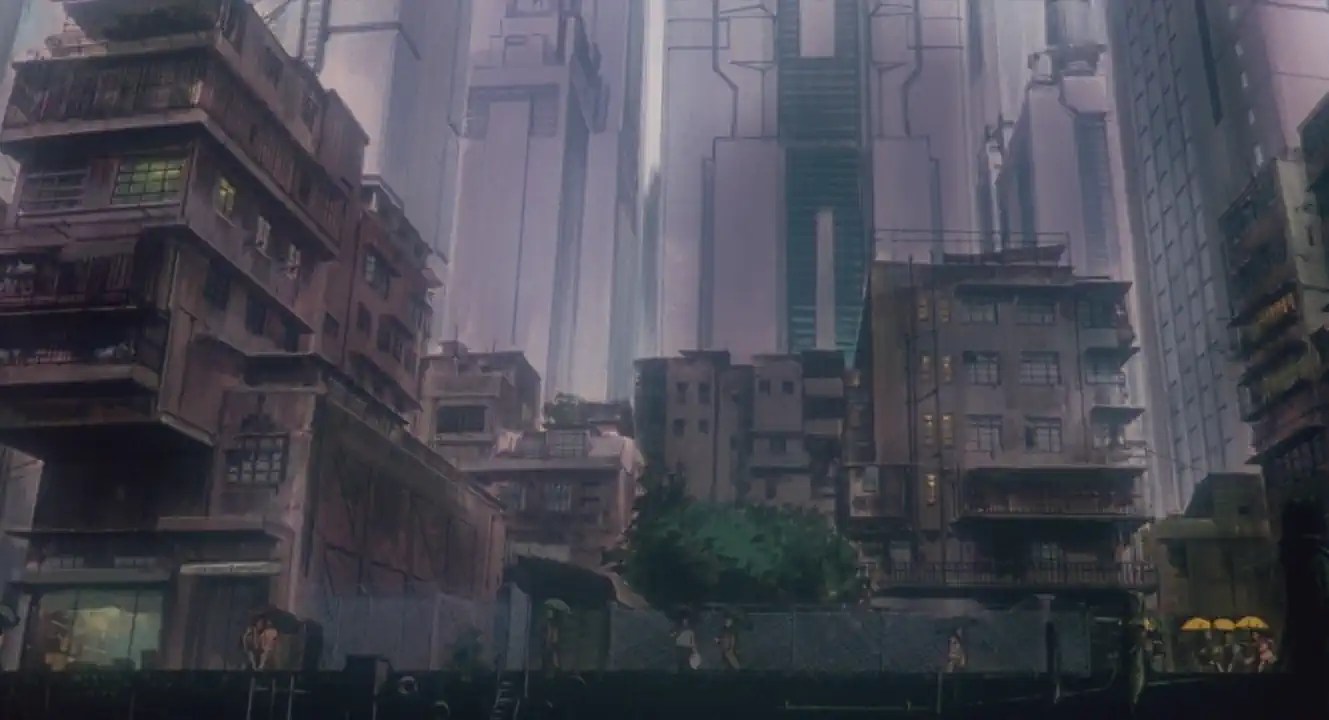
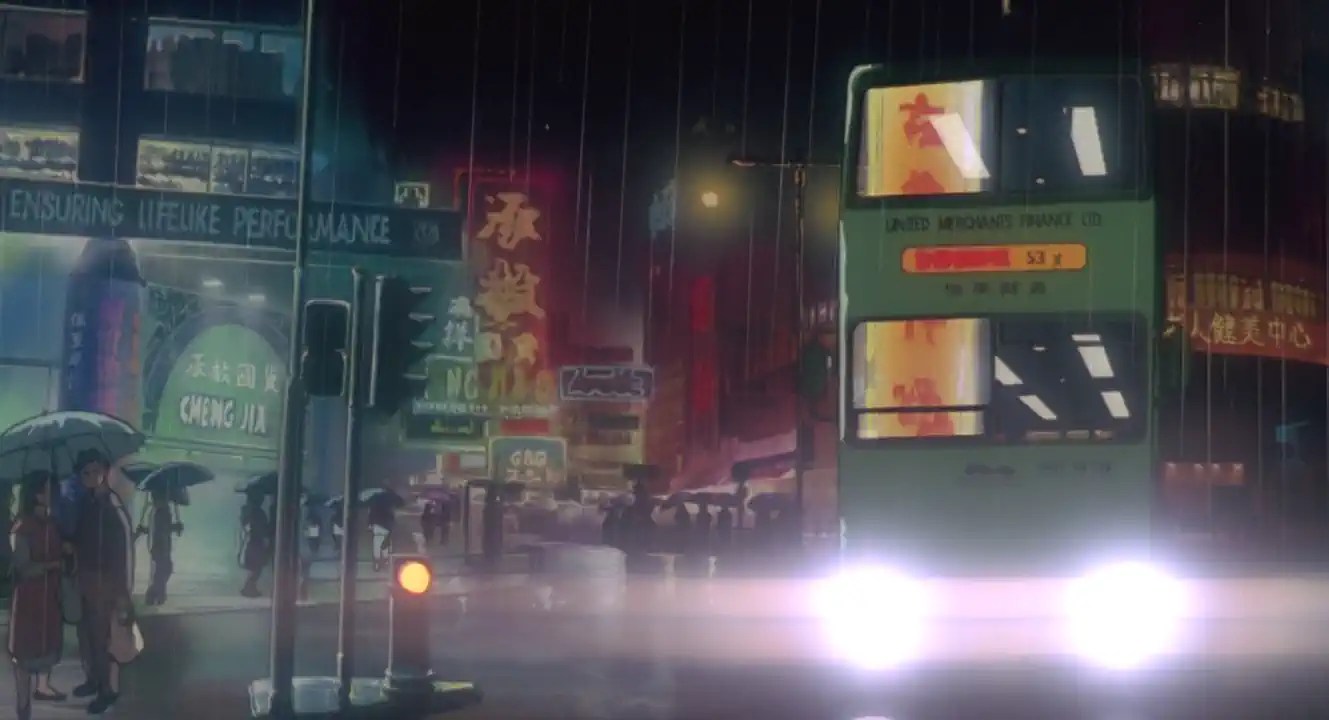
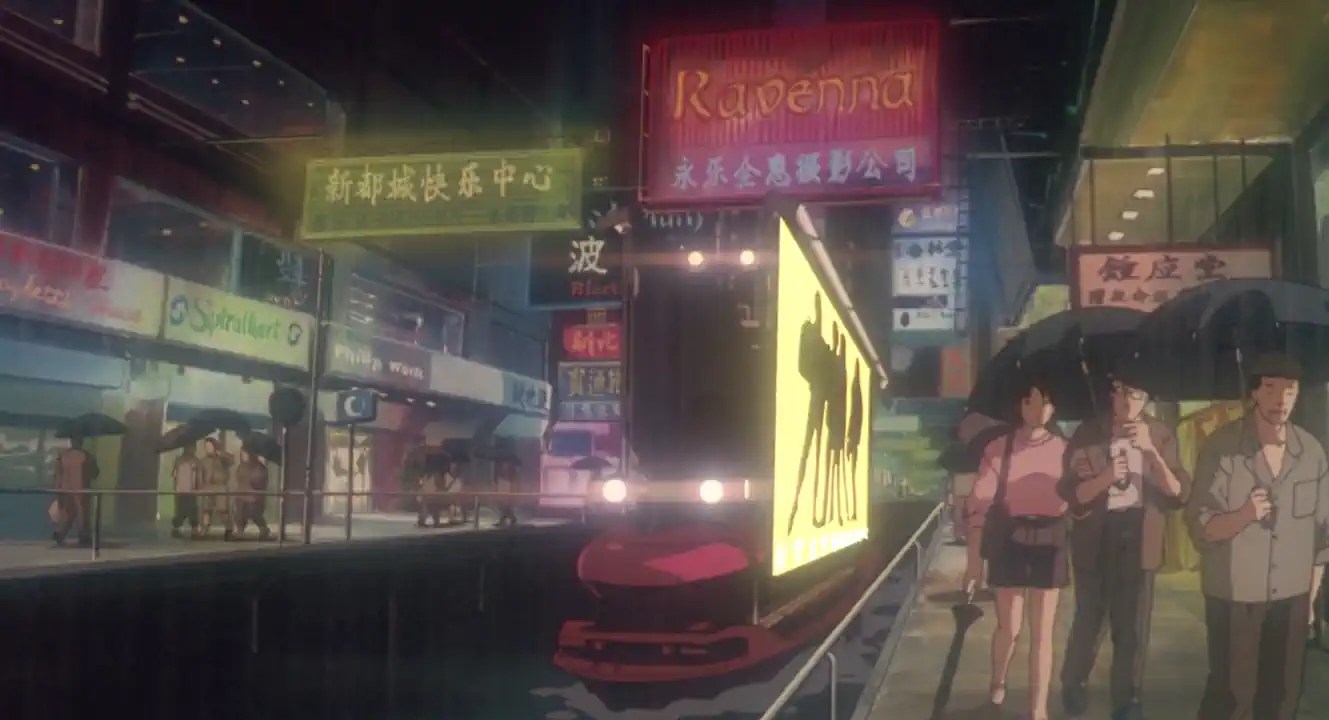
Visually, “Ghost in the Shell” sets new standards. The cinematic world combines futuristic technology with urban decay, creating a credible image of a digitized megacity that not only appears functional but also seems like a living organism. The architecture is heavily inspired by Hong Kong and features winding alleys, narrow apartment blocks, flooded streets, and a complex mix of old, crumbling structures and modern technological overlays. This urban density gives the world a realistic, almost documentary-like character and conveys the feeling that the city itself is a kind of conscious being. Several atmospheric cutscenes show the city from a variety of perspectives and highlight how closely technological development, social change, and spatial design are intertwined.
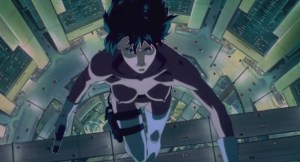
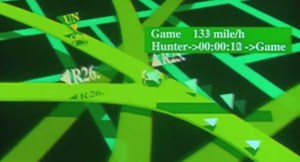
A particularly striking element is the use of CGI, which was unusually ambitious for its time and became one of the film’s stylistic hallmarks. Oshii made very deliberate use of computer effects to visualize digital networks, cybernetic interfaces, and camouflage mechanisms. The effects blend almost perfectly with the hand-drawn sequences, creating a credible sense of a world in which the mechanical and the human do not stand in opposition to each other, but rather intertwine. The iconic scene in which Kusanagi jumps over city buildings and becomes invisible thanks to her thermoptic camouflage is still considered a prime example of the successful integration of CGI into traditional animation. The detailed depictions of cyborg repairs and body assembly sequences also reinforce the impression of a highly technologized world.
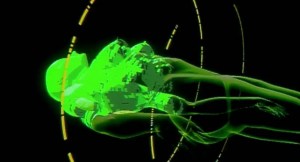
Kenji Kawai’s soundtrack also plays a central role and is crucial to the emotional impact of the film. The mixture of traditional Japanese chants, electronic sound textures, floating harmonies, and ritualistic compositions creates an atmosphere that is equally alien, meditative, and sublime. The famous opening chorus, based on ancient Japanese wedding and Shinto chants, gives the film a spiritual depth right from the start that contrasts sharply with the futuristic world. This deliberately chosen sound bridge between the past and the future makes the question of the nature of the “spirit” seem even more pressing and makes the soundtrack an integral part of the film’s philosophical impact.
Trivial
- The film explicitly draws on philosophical traditions, including Descartes, Nietzsche, and concepts of posthumanism. These influences are not only subtly woven into the film, but are often made directly visible by deliberately reminding the viewer of classic philosophical questions through key dialogues and symbolic scenes. The profound ideas of these schools of thought form the conceptual framework for Motoko’s identity crisis and the exploration of artificial consciousness.
- The famous “City Montage,” a lengthy sequence without dialogue, was inserted to capture the feel of life in the futuristic city—a concept that Oshii considered essential to worldbuilding. This sequence not only serves to create atmosphere, but also conveys social, political, and cultural contexts that cannot be explained through plot. It noticeably expands the world of the film and shows how profoundly technology influences all levels of everyday life.
- Numerous movement sequences were prepared using live-action footage of actors to make the animation appear particularly credible. This technique results in exceptionally organic body language for the characters, giving fight scenes in particular a tangible physical presence. The combination of realistic movement and stylized representation enhances the immersive impression.
- International financing enabled an unusually high budget for anime, which contributed significantly to the visual quality. The additional funds allowed for more complex animations, more detailed backgrounds, and broader technical experimentation. This gave the film a production quality that was far above the standard at the time and contributed significantly to its international success.
Anime vs. Manga

While Mamoru Oshii’s anime film takes a serious, philosophical tone, Masamune Shirow’s original manga differs in several key ways. The manga is more humorous, technically detailed, and often more playful in its depiction of technology and character interactions. Shirow incorporates complex technical diagrams, detailed margin notes, and satirical elements that are rarely or never seen in the film. In addition, the manga is significantly more experimental in its structure, frequently using visual gags, textual digressions, and explanatory meta-commentary to make its world more tangible. This playful approach allows the reader to grasp the technological and social concepts on a broader level, while the anime focuses on atmospheric condensation and symbolic imagery.

The anime, on the other hand, chooses a much more sober, almost meditative narrative structure. Many plot elements have been changed or greatly streamlined to focus on themes such as identity, consciousness, and political manipulation. While the manga is broader and more experimental, the film presents a concentrated, philosophical interpretation of the material. The anime dispenses with numerous subplots and instead focuses on Major Kusanagi’s inner experience and the existential questions raised by her artificial existence. This creates an atmosphere that is less informative but more emotionally and intellectually intense. Both works offer their own perspectives and complement each other to provide a comprehensive understanding of the Ghost in the Shell universe by illuminating different facets of the same core concept: the relationship between humans, machines, and identity.
Critical reception at the time
International critics immediately praised “Ghost in the Shell” as a milestone in science fiction cinema. Particular praise was given to the atmospheric scenes, the technical brilliance of the animation, and the philosophical depth that was rarely found in Western sci-fi productions at the time. Many critics compared the film to classics such as Blade Runner and emphasized that Oshii had created a new form of cinematic storytelling that appealed to an intellectual audience while also offering visually stunning impressions. In addition, the film was praised for its uncompromising seriousness, as it did not shy away from addressing complex questions of identity, consciousness, and the ethics of artificial intelligence—topics that were usually only touched upon in animated films of the time. Some critics highlighted how courageous it was to imbue an anime so heavily with philosophical and existentialist motifs without compromising narrative coherence.

While the film achieved only moderate box office success in Japan, it gained a growing fan base in the West through the VHS and DVD market. Its popularity increased over the years and the film became increasingly recognized as a cult classic. Particularly in academic circles and among science fiction enthusiasts, an intense discourse developed about the metaphorical meaning of individual scenes and the cinematic translation of philosophical questions. Some critics saw the slow, meditative narrative style as a challenge or even an obstacle for a broad mass audience, but it was precisely this calm and reflective staging that contributed significantly to the film’s mystical aura. It created an atmosphere that invites viewers to engage more deeply with the thematic levels and perceive the film not only as a visual experience, but as an intellectual journey.
Cultural influence

The film’s influence extends far beyond anime. The Wachowskis, directors of “The Matrix,” cited “Ghost in the Shell” as one of their most important sources of inspiration. Entire scenes, camera movements, and motifs were adopted as homages, including the depiction of digital networks, the motif of identity dissolution, and iconic visual compositions that are still considered milestones of cyberpunk today. The parallels between the two works are so striking that “The Matrix” is often considered a Western development of central ideas from “Ghost in the Shell.” Other filmmakers, including James Cameron and Guillermo del Toro, have regularly praised the film as one of the most innovative science fiction works of all time.
In addition, the film influenced a number of other works:
- Video games: The Deus Ex series, Cyberpunk 2077, Metal Gear Solid, System Shock, and numerous other games take up motifs such as cybernetic enhancements, digital identity, neural manipulation, surveillance technology, and philosophical AI debates. Many of these games integrate not only thematic parallels, but also aesthetic references to Ghost in the Shell’s urban, neon-soaked vision of the future.
- Film and TV: Numerous Western sci-fi productions have adopted visual elements, including transparent interfaces, cybernetic body modifications, artificial intelligences with doubts about consciousness, and complex state surveillance structures. Series such as “Westworld” and “Altered Carbon” bear clear traces of Ghost in the Shell’s DNA.
- Pop culture: The concept of the “transhuman body,” i.e., a self-image detached from the biological, was significantly influenced by the film. Music videos, fashion campaigns, and futuristic art regularly refer to Major Kusanagi’s iconic body representations and the aesthetics of merging digital identities.
In addition, Ghost in the Shell played a decisive role in establishing anime in the West as a serious, artistically sophisticated form. The film became a reference work for universities, film seminars, and cultural debates about the future of humanity in the digital age. Many later series and films—from “Ergo Proxy” to “Serial Experiments Lain” to modern cyberpunk adaptations—were only made possible by its success, as it opened the door wide for adult, philosophically sophisticated animation.
Conclusion

“Ghost in the Shell” is much more than an anime film—it is a cultural milestone that combines technology, philosophy, and artistic vision, painting a complex panorama of social developments that has lost none of its relevance to this day. Major Kusanagi’s narrative raises questions that are more relevant than ever today, in an age of advanced AI, increasingly powerful data processing, and growing digital identity. It not only raises fundamental questions about the nature of consciousness, but also questions how individuals can redefine themselves in the tension between biological heritage and technological enhancement.

The aesthetic brilliance, profound subject matter, and formative influence on the global media landscape make the film a work that has lost none of its power decades after its release. Its carefully composed images, dense atmosphere, and philosophical questions allow audiences to discover new interpretations with each viewing—whether in terms of transhumanism, identity construction, or the increasing symbiosis between humans and machines. It remains a timeless classic that continues to inspire new interpretations and discussions, proving itself to be a work that not only entertains but also invites critical reflection on the future of humanity.





 McHenry's Lair
Kommentar verfassen :