

If you will not fight,
then you will meet your destiny.

The real LAST Coin …
The first arcade game I played was a clone of Pong in the spring of 1978. Later, throughout the 1980s, I invested a lot of time and money in the arcade. I often played for hours just for fun—high scores were never important to me.
But at some point, the moment comes when you insert your last coin – only you don’t realize it at the time. It’s only years later that you realize that was the moment…
The last time I literally inserted a coin into an arcade game was in 2000 – long after the end of the golden age of arcades (late 1970s to early 1990s), in one of the few remaining arcades that still existed in Germany at that time.
The moment of power in the arcade
At the end of the 1990s, the Star Wars franchise made a strong comeback – thanks to the special editions of the original trilogy and the announcement of Episode I. This period sparked new enthusiasm among old and new fans alike. Re-releases, merchandise, and new games created a noticeable Star Wars wave.
Amidst this galactic spirit of optimism, Sega released the arcade game Star Wars Trilogy Arcade in 1999 – a bombastic rail shooter that catapulted the feeling of being a Jedi or rebel directly into the arcades. The game relied on a mixture of action-packed gameplay, cinematic staging, and the authentic atmosphere of the classic films. Players could actively immerse themselves in famous scenes from the trilogy and were drawn directly into the Star Wars universe through sound effects, music by John Williams, and detailed graphics. The combination of thrilling technology, nostalgia, and interactive action quickly made the game a real crowd-puller in arcades worldwide.
Gameplay
Star Wars Trilogy Arcade is a rail shooter that takes players through famous scenes from the classic Star Wars trilogy. Players slip into the roles of various heroes and fight their way through iconic battles.
The first three missions can be completed in any order:
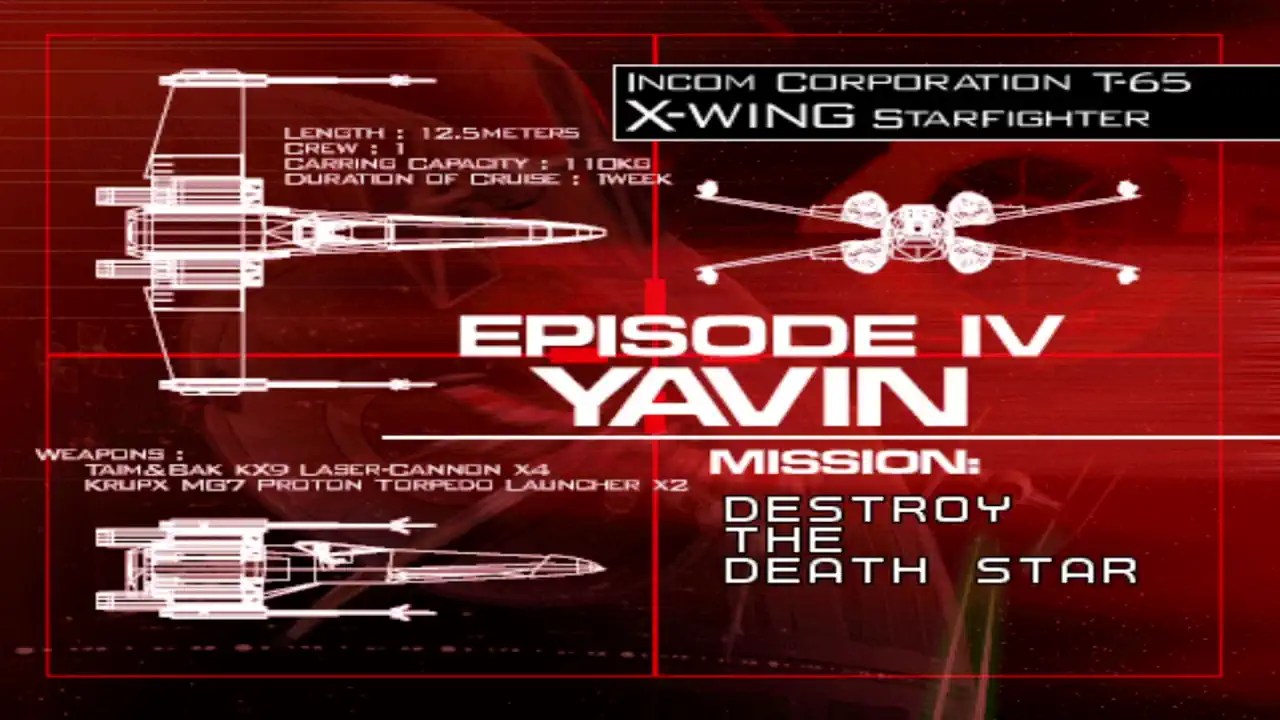
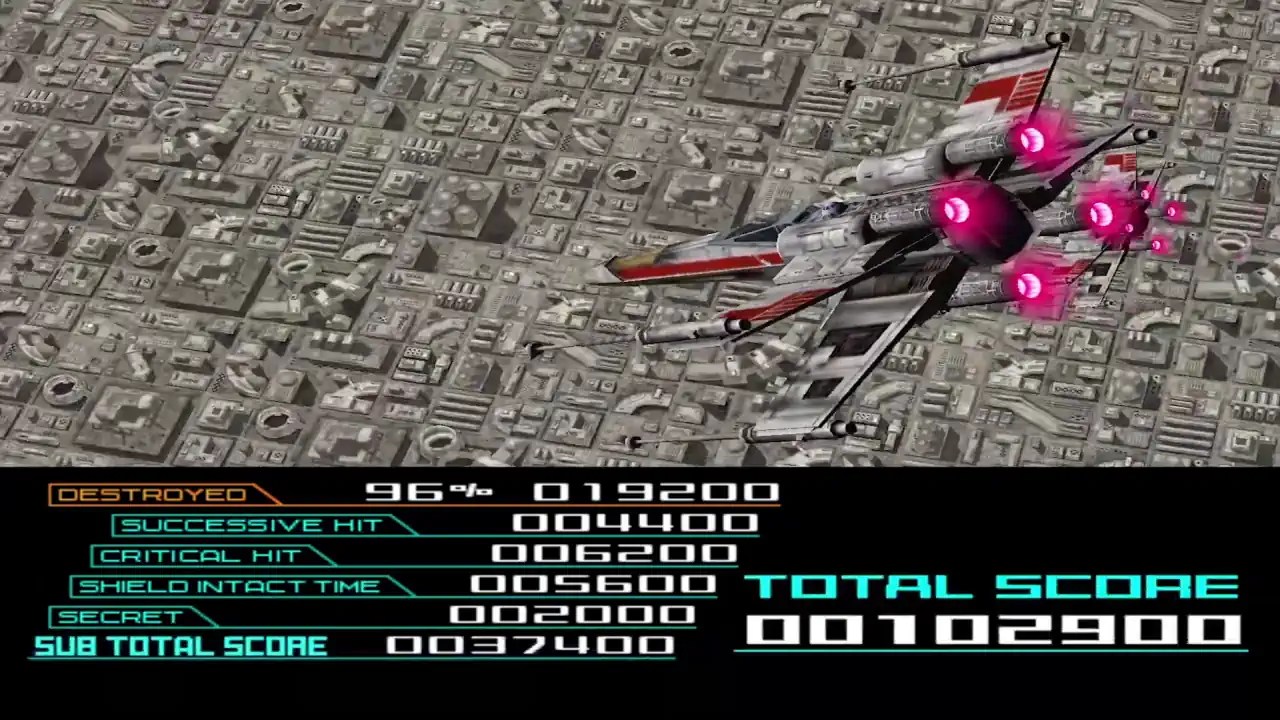
- Episode IV – Battle of the Death Star: Players fly an X-wing and attempt to land the legendary torpedo hit through the trench run.
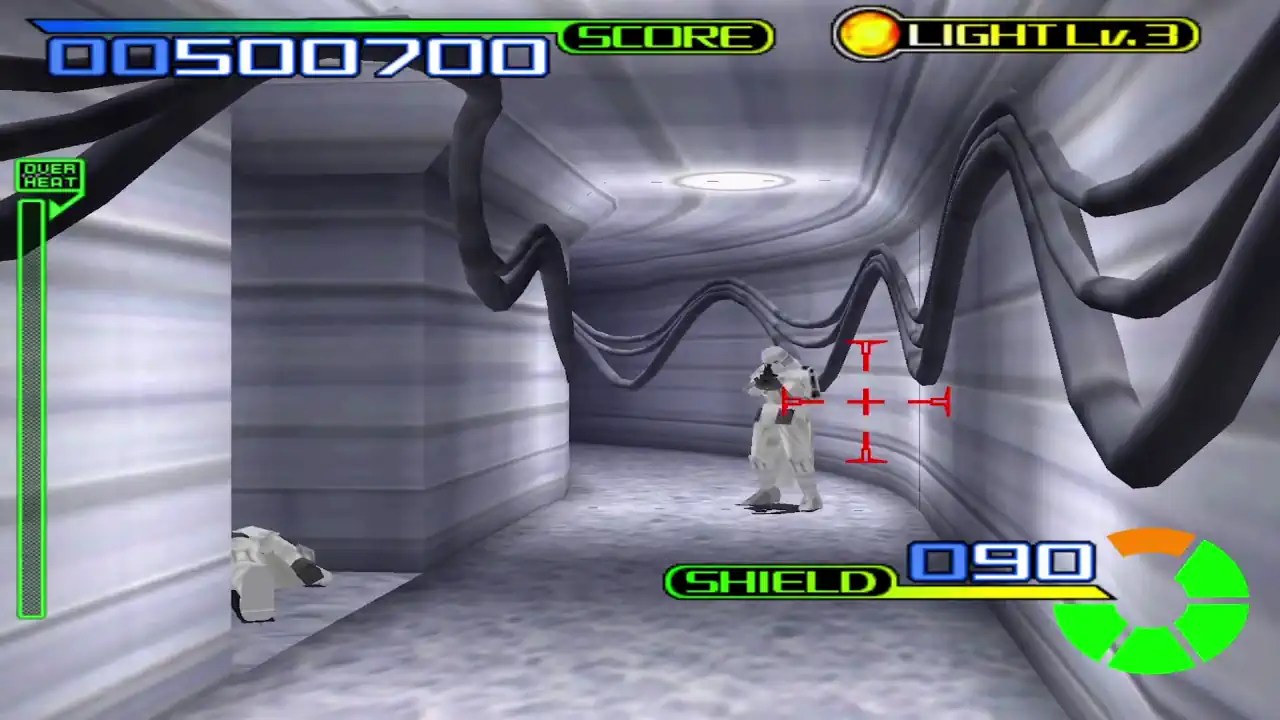
- Episode V – Battle of Hoth: In the Snowspeeder, you fight Imperial AT-ATs and AT-STs on the ice planet, including the famous rope maneuver. And as a rebel soldier, you fight snowtroopers and wampas on your way to the Falcon.
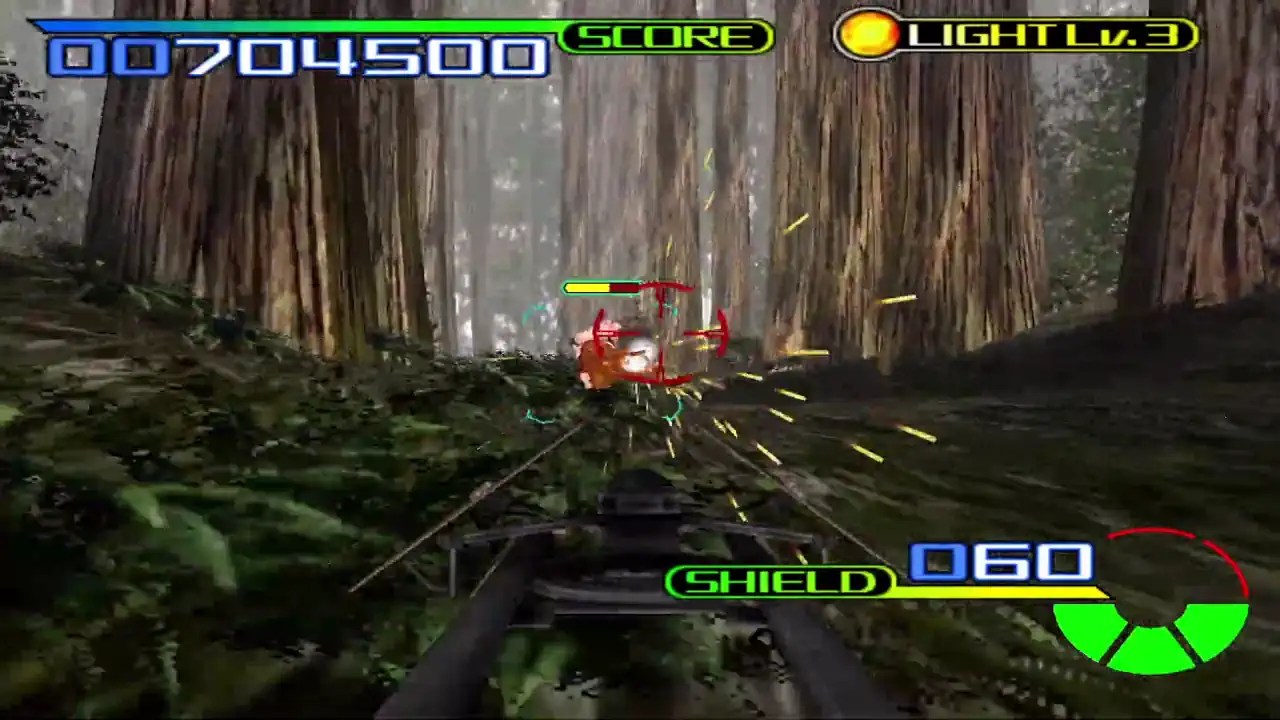
- Episode VI – Speeder Bike Chase on Endor: Players race through the forests of Endor on speeder bikes, dodging obstacles and fighting scout troopers and AT-STs.
After completing these three missions, a final, unlocked battle becomes available:
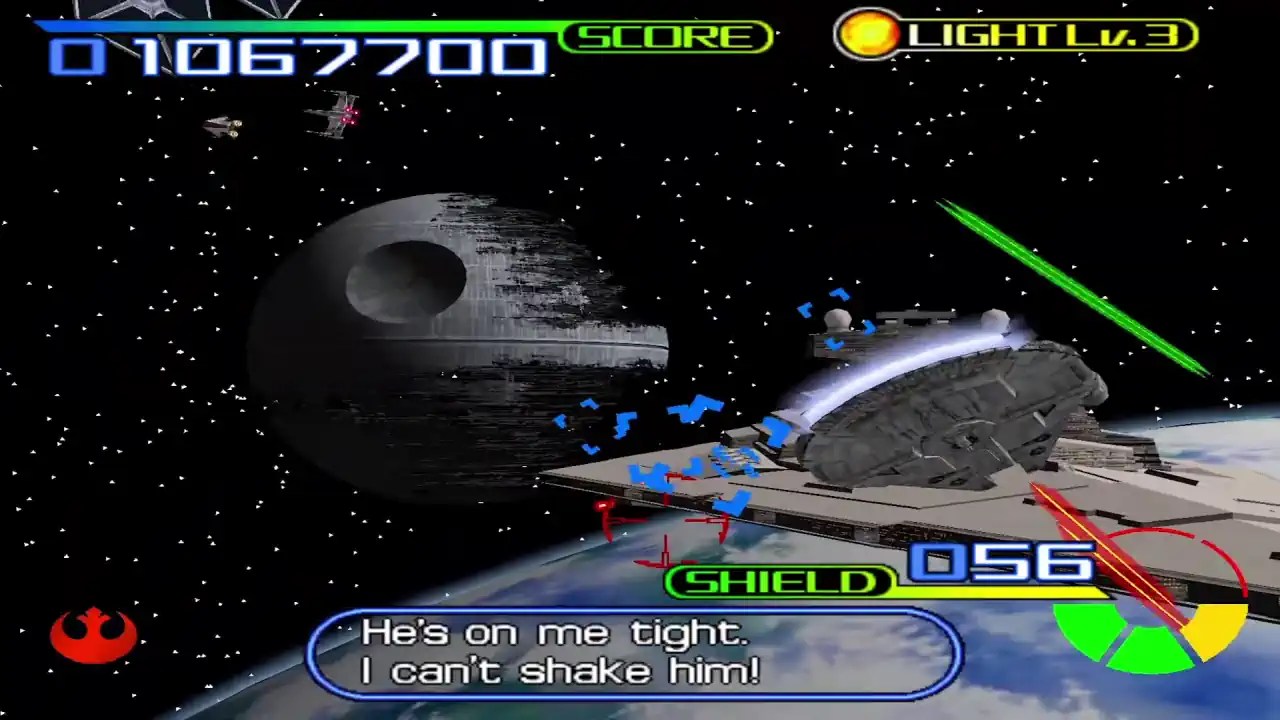
- Episode VI – Second Death Star Battle: You return to the cockpit of the X-wing and fight your way through an intense space battle, including the destruction of the reactor inside the Death Star.
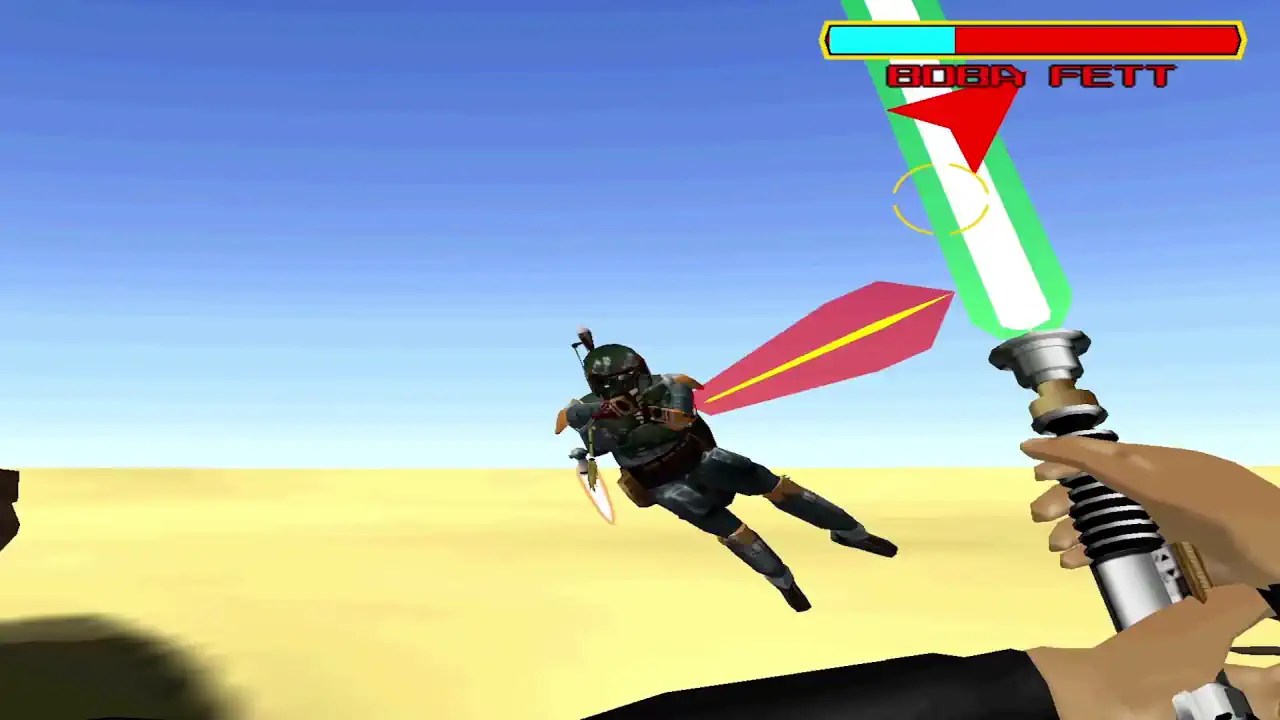
In addition to the space and ground battles, there are also lightsaber sequences in which you fight as Luke Skywalker with a lightsaber against Boba Fett and Darth Vader. These battles take place in cutscenes with interactive quick-time elements and are one of the highlights of the game.
The game is controlled using a special joystick with an integrated trigger, which makes aiming easy and direct. In the lightsaber battles, players follow the movement instructions that appear on the screen, which require quick reactions and timing.










Technology
The game ran on Sega Model 3 arcade hardware, which was one of the most powerful systems on the market at the time. This platform was known for its enormous graphics performance and stability and was used in several high-quality arcade titles. It enabled detailed 3D graphics, smooth animations with high frame rates, and spectacular visual effects that were well ahead of their time.
Some technical highlights:
- High-resolution 3D graphics with dynamic textures and lighting effects that created a dense and authentic game world
- Surround sound with original effects from the films and orchestral music by John Williams, taken directly from the film soundtrack
- Sampled voice output from the film characters, some of which were accompanied by digital film clips, providing additional immersion
- Available as a standard cabinet with standing room or as a deluxe version with a comfortable seat, large screen, and improved sound system
The deluxe version featured force feedback in the joystick, which made the gaming experience even more immersive. Vibrations when hits were scored or during lightsaber battles provided physical feedback that enhanced the feeling of being right in the middle of the action, especially during intense scenes. In addition, this version often offered a larger screen size and improved sound, making it the preferred choice for large arcades. The ergonomic design of the control panel also contributed to the positive gaming experience and was often imitated in later arcade machines.
Trivia
- The game was never released for home consoles, which means that it remains a purely arcade experience to this day. As a result, unlike many other Star Wars titles, it could not be ported or emulated on modern platforms. For many fans, the game is therefore a rare gem that can often only be experienced by traveling to specialized retro arcades. Even in the emulator scene, the game is only available to a very limited extent via MAME (Multiple Arcade Machine Emulator). Due to the complex hardware structure of the Sega Model 3 platform, a complete and error-free emulation has not yet been officially realized.
- The voices in the game were not recorded by the original actors, but accurate imitations and film samples were used. Although some fans noticed the difference, the quality of the dubbing was generally considered to be high. The combination of familiar quotes and matching voice actors contributed to the atmosphere and still made the dialogues authentic.
- The game was particularly popular in Japanese arcades – and can still be played there today in some retro arcades. Some Japanese arcades are very dedicated to preserving their arcade culture, which is why there are still working copies of Star Wars Trilogy Arcade in existence today, some even in their original condition.
- Sega reportedly planned a sequel with prequel content, but it was never realized. Rumor has it that the sequel was to include content from Episode I, including pod racing and a duel against Darth Maul. It is unclear why the project was shelved – possibly the declining popularity of arcade games in Western markets played a role.
Critical reception at the time
Upon its release in 1999, Star Wars Trilogy Arcade received mostly positive reviews and was highly praised in trade magazines and by arcade gamers. Particular praise was given to the thrilling presentation, which managed to authentically translate the epic atmosphere of the films into an interactive experience. The high recognition value for Star Wars fans also contributed significantly to the enthusiasm, as iconic scenes were faithfully reproduced. The controls via the special arcade joystick were described as precise and intuitive, which ensured a smooth gaming experience, especially during hectic battles. A particular highlight was the lightsaber duels against Boba Fett and Darth Vader, which were celebrated at the time as a novel, almost cinematic gaming experience.
However, there were also points of criticism: many felt that the playing time was too short, especially considering the high cost per playthrough. The replay value was also limited, as the missions repeated themselves after several playthroughs and did not offer much variety. In addition, the high level of difficulty towards the end of the game, especially in the final Death Star battle, was perceived as a real “coin guzzler” – which was not uncommon for arcade games of that time, however.
Despite these weaknesses, the game was overall rated as one of the best Star Wars adaptations in the arcade sector and is still considered a benchmark for cinematic arcade games today.
Reputation today
Today, Star Wars Trilogy Arcade enjoys cult status. It is a prime example of the golden age of 90s arcades, when games shone with sophisticated technology, striking aesthetics, and strong licensing ties. The combination of cinematic presentation, iconic music, and innovative gameplay mechanics has helped the game endure far beyond its time. For many arcade enthusiasts, it marks the pinnacle of an era when arcade experiences merged with cinema-quality entertainment.
The game is a coveted item for collectors—especially the deluxe version, which offers a particularly immersive experience thanks to its impressive physical presence, force feedback seat, and larger screen. Depending on its condition and version, the game can fetch high prices on auction platforms. Retro fans, on the other hand, appreciate the game not only for its nostalgia factor, but also for its dense, lovingly crafted atmosphere, which still makes an impression even decades later. Some even describe it as one of the last “great” arcade experiences before the gradual decline of the classic arcade.
In relevant retro communities and forums, “Star Wars Trilogy Arcade” is often cited as one of the best arcade games based on a movie – often ahead of later titles such as “The Fast and the Furious,” “Aliens: Extermination,” or “Jurassic Park Arcade.” The lasting impression the game has left on an entire generation of players makes it an indispensable part of arcade history.
Conclusion
Star Wars Trilogy Arcade is more than just a rail shooter – it is an interactive monument to the original trilogy, embedded in the golden era of arcades, when video games set new standards with immersive experiences and spectacular presentation. The game managed to convey the magic of the films not only visually, but also emotionally – with perfectly timed music, dramatic moments, and a well-thought-out gameplay flow that combined excitement and fan service.
With its cinematic presentation, action-packed gameplay, iconic scenes, and lovingly captured details, the game has secured a permanent place in the hearts of many fans – not just as an entertainment experience, but as a true nostalgic cultural treasure. Particularly impressive was how, despite the technical limitations of the time, it created a dense atmosphere that still captivates fans today.
Even though it is difficult to find today and can often only be experienced in specialized retro arcades or through experimental emulators, it remains a shining star in the arcade sky – a game that not only symbolized the power of arcades, but also transported them to another galaxy for a brief moment. It remains a testament to a time when games were not just played, but experienced.







Schreibe einen Kommentar