


The chip that changed the world
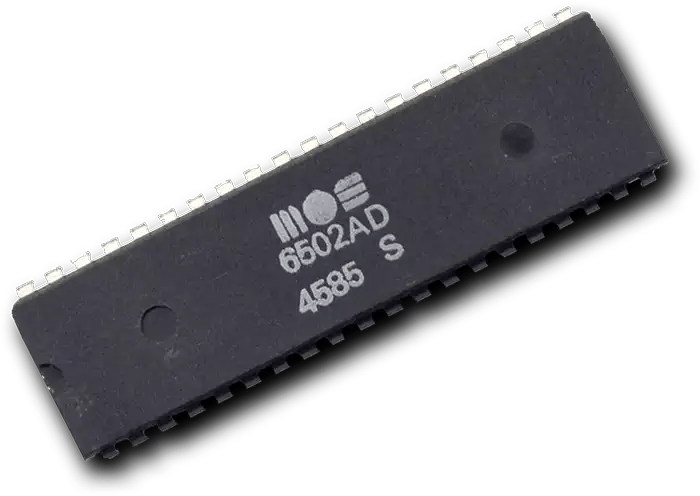
Exactly 50 years ago, in 1975, a microprocessor was introduced that not only revolutionized the computer world, but also became the driving force for an entire generation of technology enthusiasts: the MOS Technology 6502. This small chip, developed by a group of former Motorola engineers, became the symbol of a fundamental technological change. Simple, affordable and incredibly powerful for its time, the 6502 set new standards in terms of value for money and accessibility. With an introductory price of less than 25 dollars, it made microcomputers affordable for hobbyists, educational institutions and small businesses for the first time.
But its impact went far beyond that: the 6502 became the driving force behind a new era of home computers, games consoles and embedded systems. It created the technical basis for products that gave millions of people worldwide direct access to computer technology for the first time. In doing so, he not only shaped devices, but also ways of thinking, job profiles and the idea of what could be possible with a computer. In a way, the 6502 became the ticket to the digital future.
Technologie
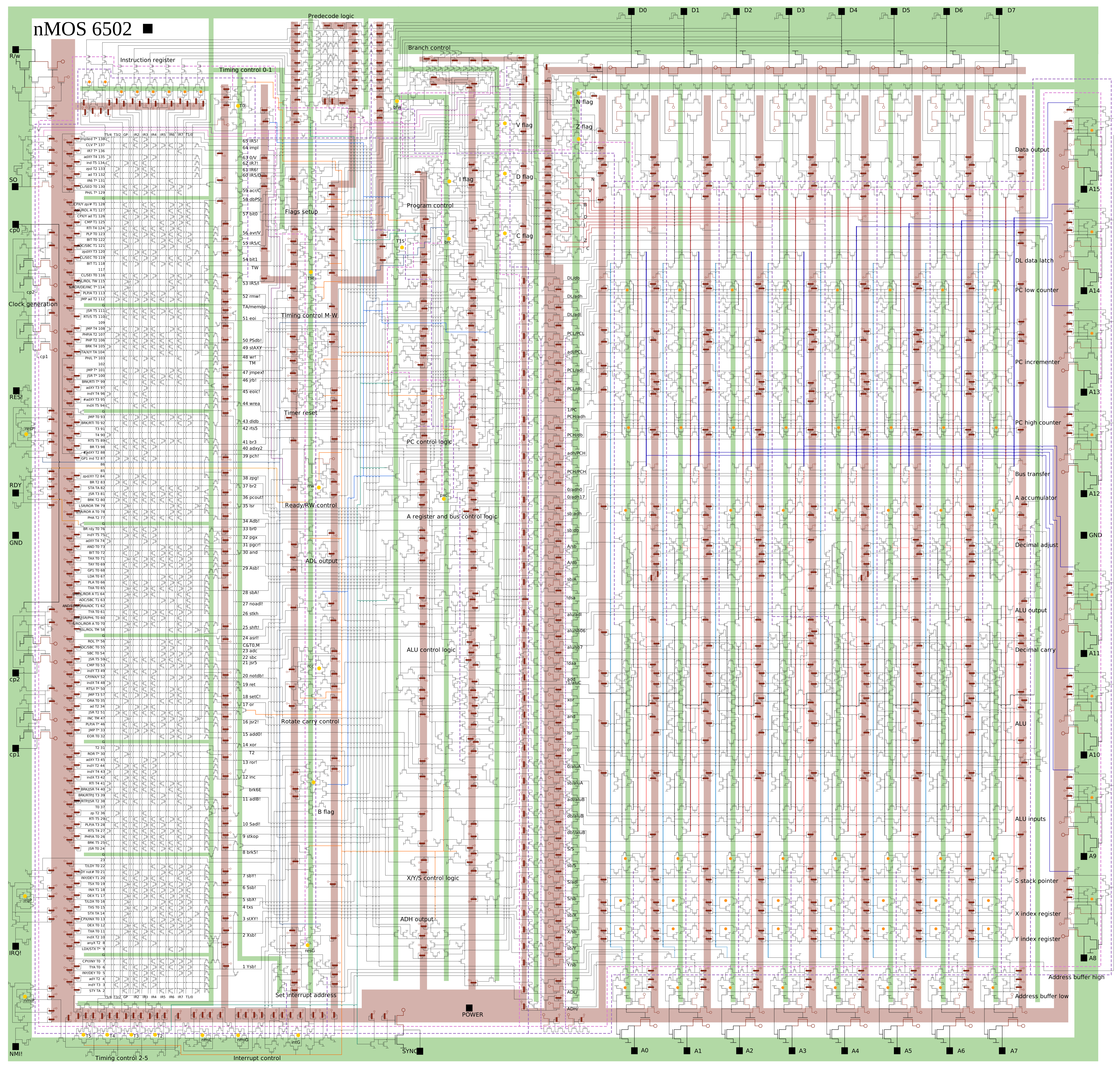
The 6502 was an 8-bit microprocessor with a 16-bit address bus that could address up to 64 KB of memory. This amount seemed considerable at the time and enabled applications that were previously reserved for more expensive or larger systems. Its architecture was comparatively slim, which made it easier to integrate into a wide variety of devices. When it was introduced, the 6502 cost only around 25 US dollars – a revolutionary low price that made it far cheaper than competing chips such as the Intel 8080 or the Motorola 6800, which often cost several hundred dollars.
This drastic cost saving meant that the 6502 became affordable for hobbyists, start-ups and educational institutions for the first time. Despite its simplicity, the chip offered a sophisticated and efficient instruction set architecture. This enabled not only fast execution of instructions, but also compact programs – a decisive advantage with limited memory. Its small number of transistors, around 3,500, was a further advantage: it made the 6502 not only inexpensive to manufacture, but also energy-saving, heat-resistant and mechanically robust.
In combination with its small size, the processor could be built into a wide range of devices, from games consoles and pocket computers to control systems in industrial plants. It paved the way for a new generation of compact, affordable and reliable electronic devices that shaped the everyday lives of many people and helped lay the foundations of today’s digital world.
Assembler
A special feature of the 6502 was its clearly structured assembler instruction set, which was ideal for learning machine programming. With only 56 instructions, the code was manageable, yet powerful enough for complex applications. The instructions included central operations such as loading, saving, calculating, comparing and jumping, making it possible to create functional programs with just a few lines of code. This simplicity was a great advantage, especially for beginners, as they could quickly achieve visible success.
Commands such as LDA (Load Accumulator), STA (Store Accumulator), ADC (Add with Carry), SBC (Subtract with Carry) or JMP (Jump) shaped the thinking of many young programmers and were explained in detail in textbooks, courses and computer magazines. Numerous hobby writers wrote down their programs on paper and memorized the structure of a machine program before typing in the codes on the computer. This practice fostered a deep understanding of memory addressing, register operations and the flow of programs at the machine level.
Many programmers learned not only how to write functioning programs with the 6502, but also the importance of efficiency. As memory was scarce and computing time expensive, many tasks had to be solved with as few bytes as possible. This led to creative solutions and a deep understanding of optimization.
There were also so-called „undocumented opcodes“ – commands that were not officially documented but could still be used. Experimental developers used them to achieve special effects or push performance limits. These hidden possibilities contributed to the fascination that the 6502 still exerts today.
Working directly with memory addresses and registers thus promoted not only a practical, but also a creative and lasting understanding of how a computer works at the lowest level. Many later engineers, game developers or hardware designers began their careers with precisely this chip.
He was in everything!
In the 1980s, the 6502 was literally everywhere. It was at the heart of legendary home computers such as the Apple I and Apple II, the Commodore PET, the C64 and the Atari 800. The Nintendo Entertainment System (NES) was also based on a 6502 variant. In addition, the chip was used in arcade machines, learning computers, synthesizers, fax machines, toy robots, industrial control systems, even in medical devices – and, remarkably, in the Commodore 1541 floppy disk drive, where a separate 6502 processor took over the control and file system. This astonishing range made the 6502 a central building block of the early digital world.
Its spread was not only a technical movement, but also a cultural one. The 6502 paved the way for entry into the digital age – whether at home, at school or in the playroom. In many educational institutions, 6502-based systems served as the first platform on which pupils acquired programming skills. They often used the BASIC programming language, which was specially tailored for teaching on these machines.
Its widespread use made it a defining element of computer education for an entire generation. Anyone learning to program in the 80s had a good chance of doing so on a 6502-based system. The accessibility of the hardware, the straightforward system design and the wide range of teaching materials and magazines made it easy to get started. Communities, self-build projects, programming competitions and code examples also promoted understanding. The 6502 was therefore not just technology, but an educational tool and a window into a networked future.
Legacy
Even though the 6502 can no longer be found in modern PCs, its legacy lives on. Many embedded systems still use simplified or further developed derivatives of the design, for example in household appliances, industrial control systems or toys. Emulations and retro computer projects keep the architecture alive and allow enthusiasts to relive the fascination of days gone by. In the world of hobbyists and retro fans, there is an active scene that recreates and modifies 6502 systems or even develops new software for them. Even learning platforms and online emulators use the architecture to give programming beginners a low-threshold introduction.
The 6502 also inspired a generation of technology pioneers – including Apple co-founder Steve Wozniak, who used the chip in the Apple I and Apple II. Many of the early computer pioneers who are now regarded as thought leaders of the digital revolution took their first steps with the 6502, shaping ways of thinking, providing a deep understanding of how computers work and influencing the design of later architectures.
The philosophy behind the 6502 – to make simple, powerful technology accessible to everyone – still has an impact today. It lives on in the maker movement, in the open source hardware scene and in the increasing democratization of technology worldwide. Principles such as openness, modularity and accessibility, which were embodied by the 6502, can be found today in platforms such as Arduino, Raspberry Pi and similar projects. The 6502 not only wrote technological history, but also laid the foundations for a culture of do-it-yourself and understanding that continues to this day.
Conclusion
Five decades after its introduction, the MOS 6502 remains a symbol of the pioneering era of microcomputers. Its significance lies not only in its technology, but above all in its impact: the 6502 gave an entire generation the opportunity to build, learn and dream. It revolutionized access to digital technology and opened the door to a world where people could turn their own ideas into working devices and programs.
Thanks to its simplicity and accessibility, the 6502 became a bridge between technology and creativity. It was not just a tool for professionals, but an entry point for curious hobbyists, children and inventors who were taking their first steps in the digital age. Many of these people went on to become developers, engineers or entrepreneurs and contributed to the further development of the computer industry.
Half a century later, the relevance of the 6502 has not faded. On the contrary: it reminds us that major technological breakthroughs often start with small, accessible innovations. The 6502 was one such spark – a catalyst for an era of change that continues to have an impact today. Congratulations, 6502 – on 50 years of influence, inspiration and innovation!








Kommentar verfassen