


Our PAC-MAN has all of the excitement and
challenge of the standard arcade game.
Milestone and stumbling block
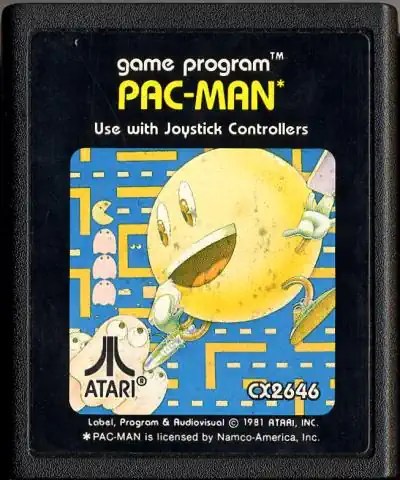
When Atari released the home version of Pac-Man for the VCS (also known as Atari 2600) in 1982, expectations were huge and almost superhuman. The original arcade game was not only a global hit, but also a pop culture phenomenon that turned characters such as Pac-Man and the ghosts into icons. Atari hoped to transfer this triumph directly into the living rooms of the masses – and did so in commercial terms: With around seven million copies sold, Pac-Man became the best-selling game for the VCS, a record that remains inextricably linked to the console to this day. But behind this economic triumph there was also a downside. The title symbolizes the overheating of the market, disappointed player expectations, and unbridled marketing policies. In many analyses, the release is seen as a piece of the puzzle in the context of the 1983 video game crash, which shook not only Atari but the entire industry. This makes Pac-Man for the VCS both a triumph and a cautionary tale in video game history.
Gameplay
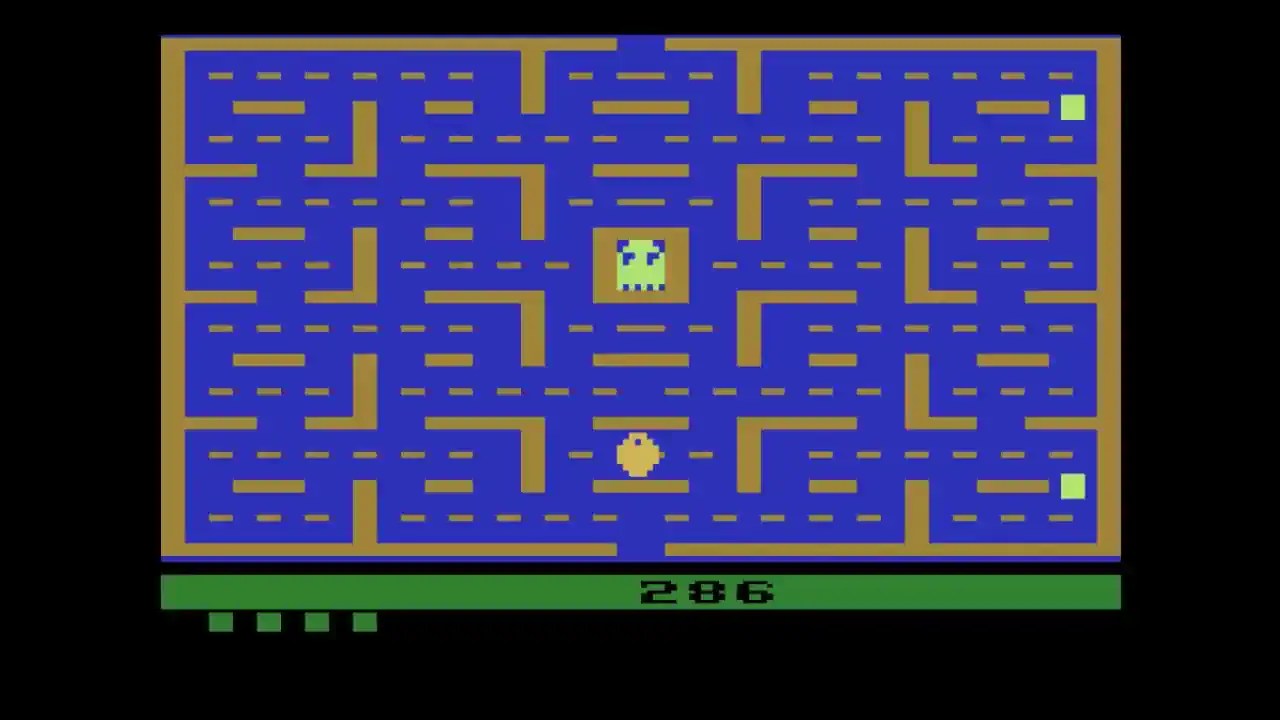
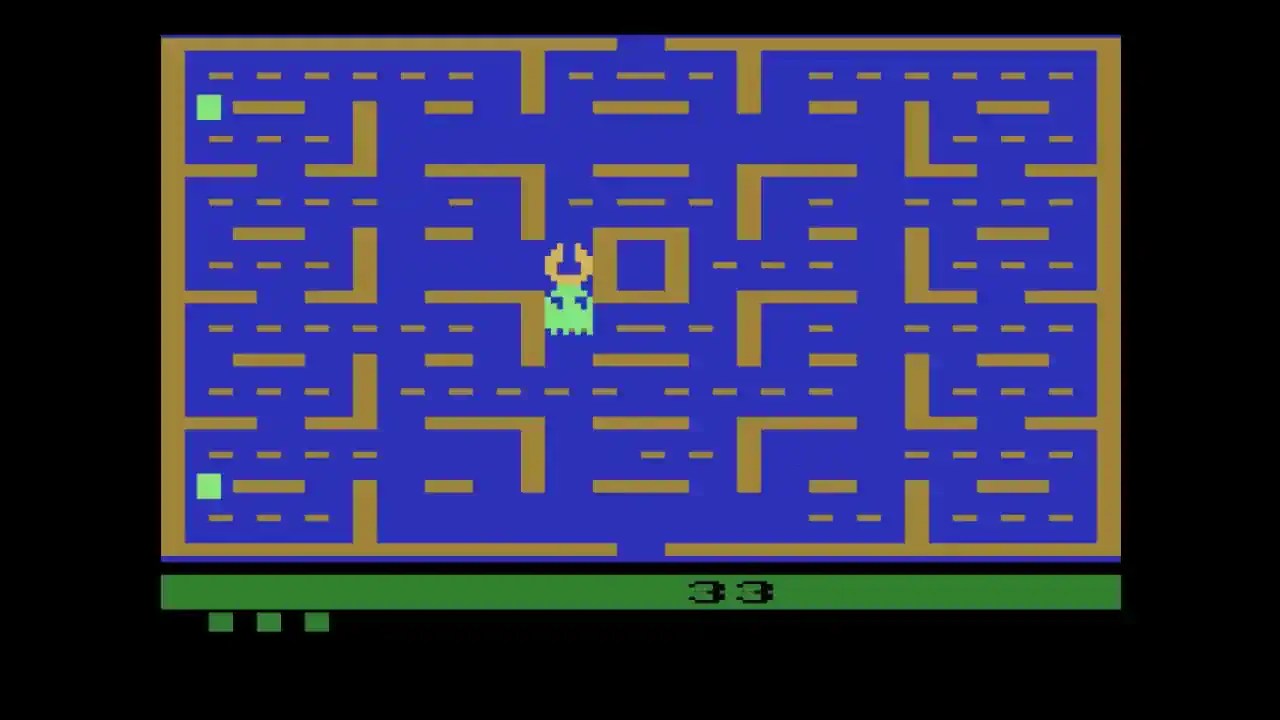
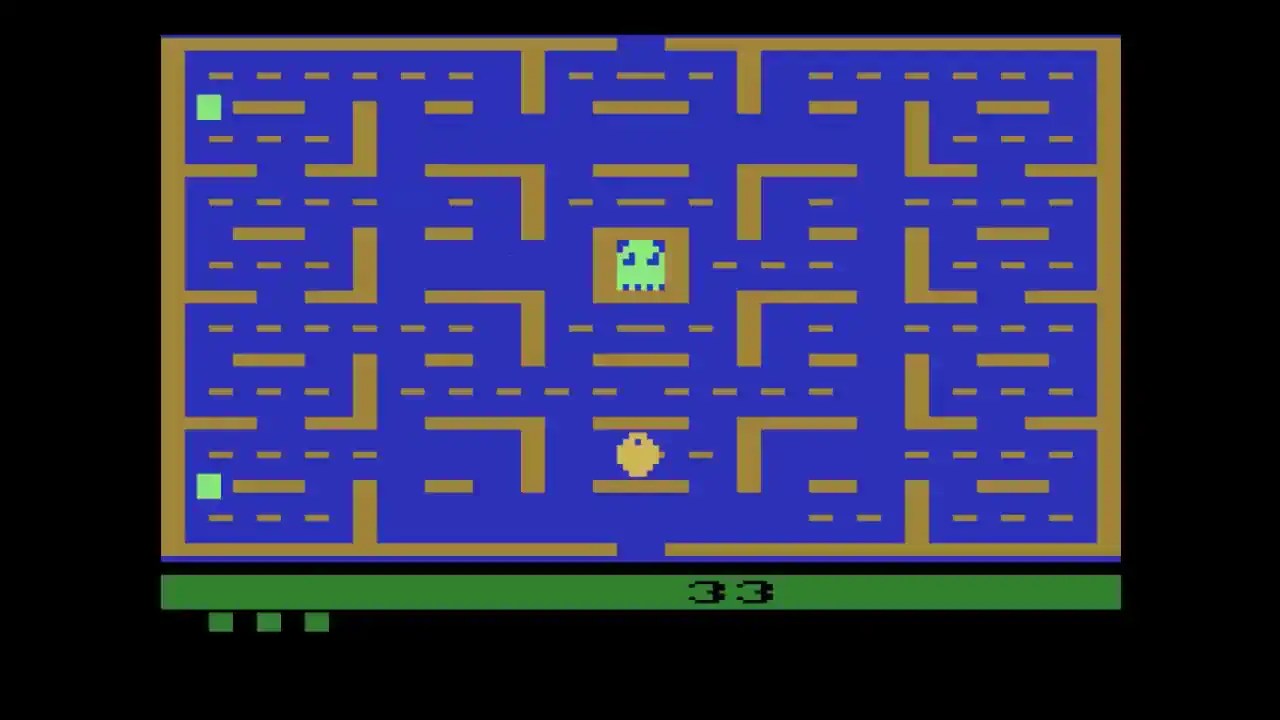
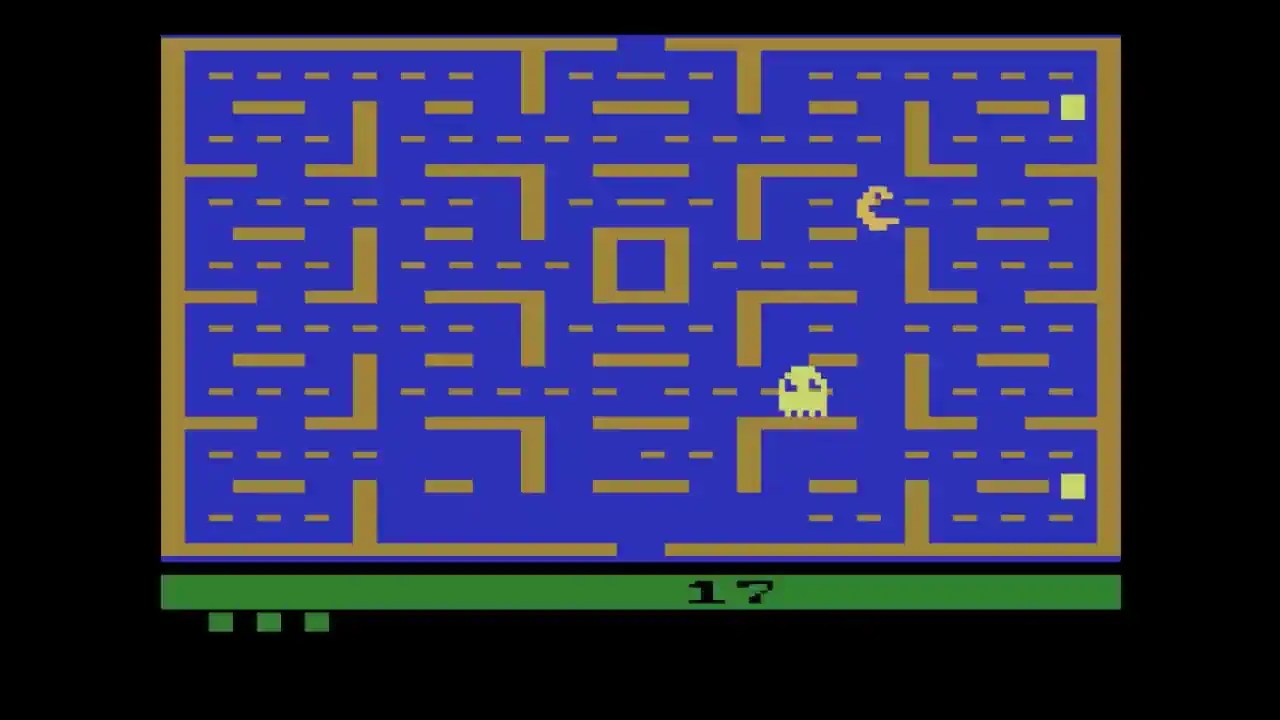
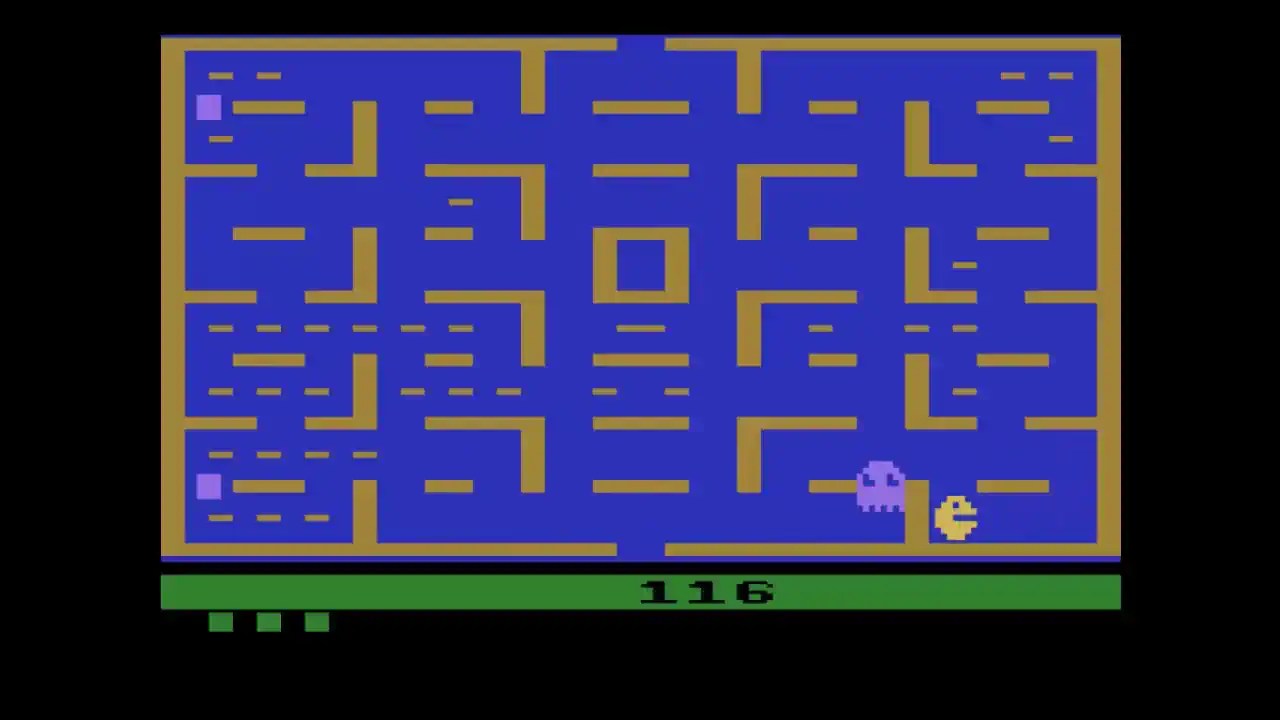
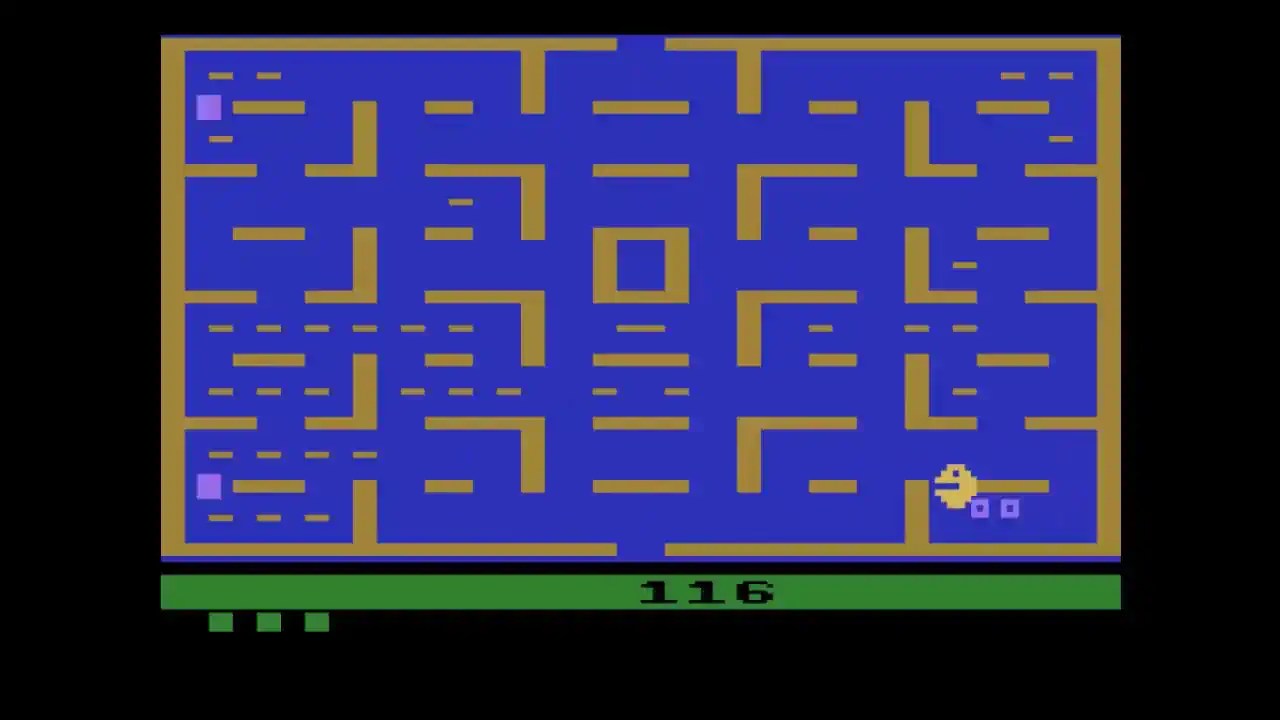
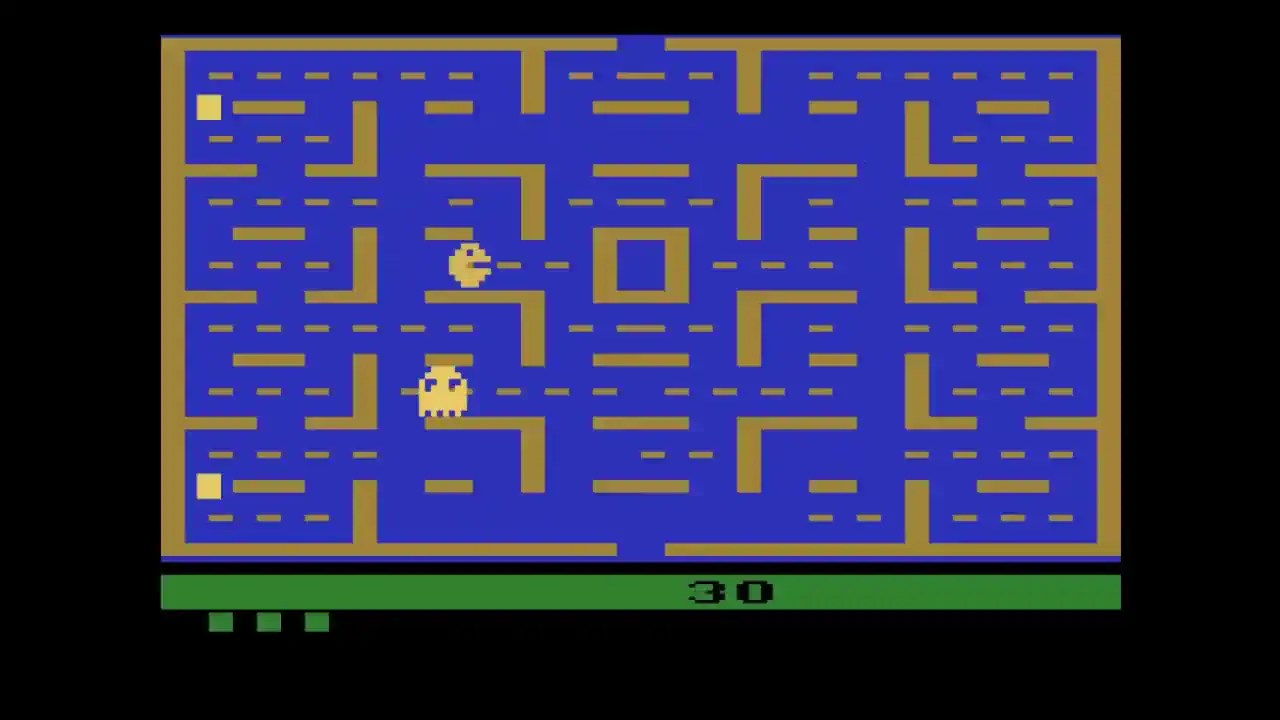
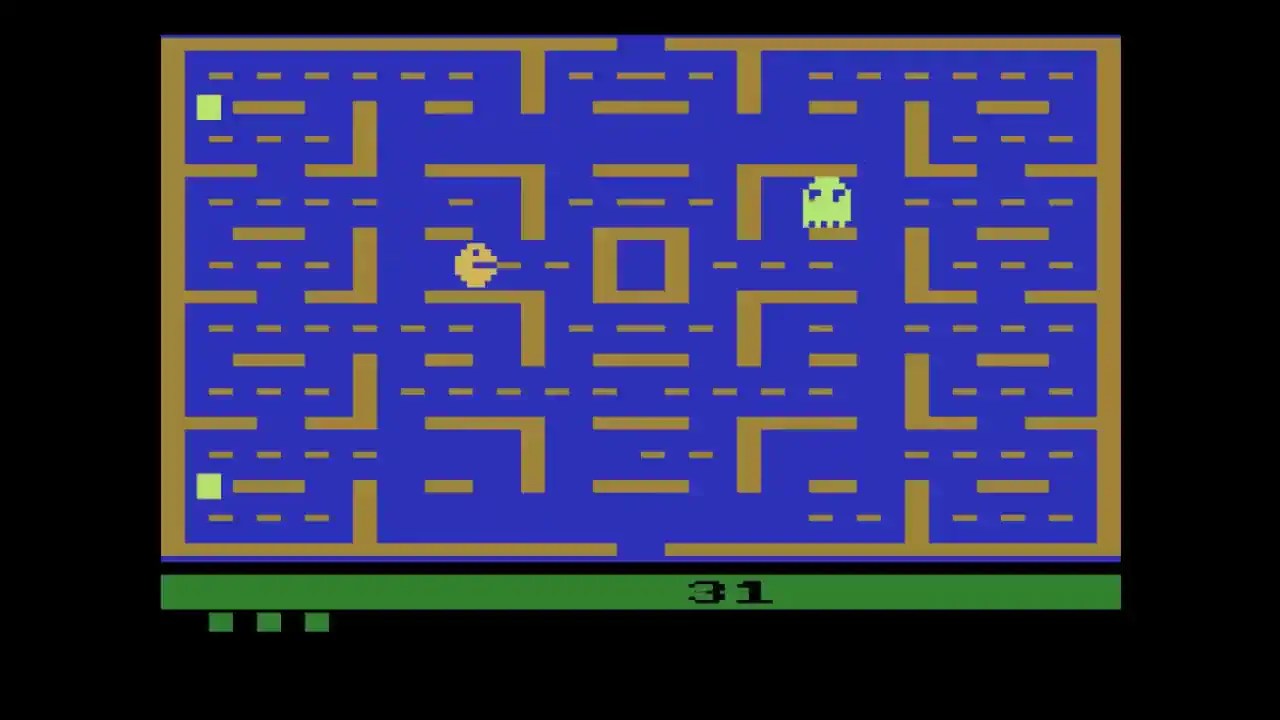
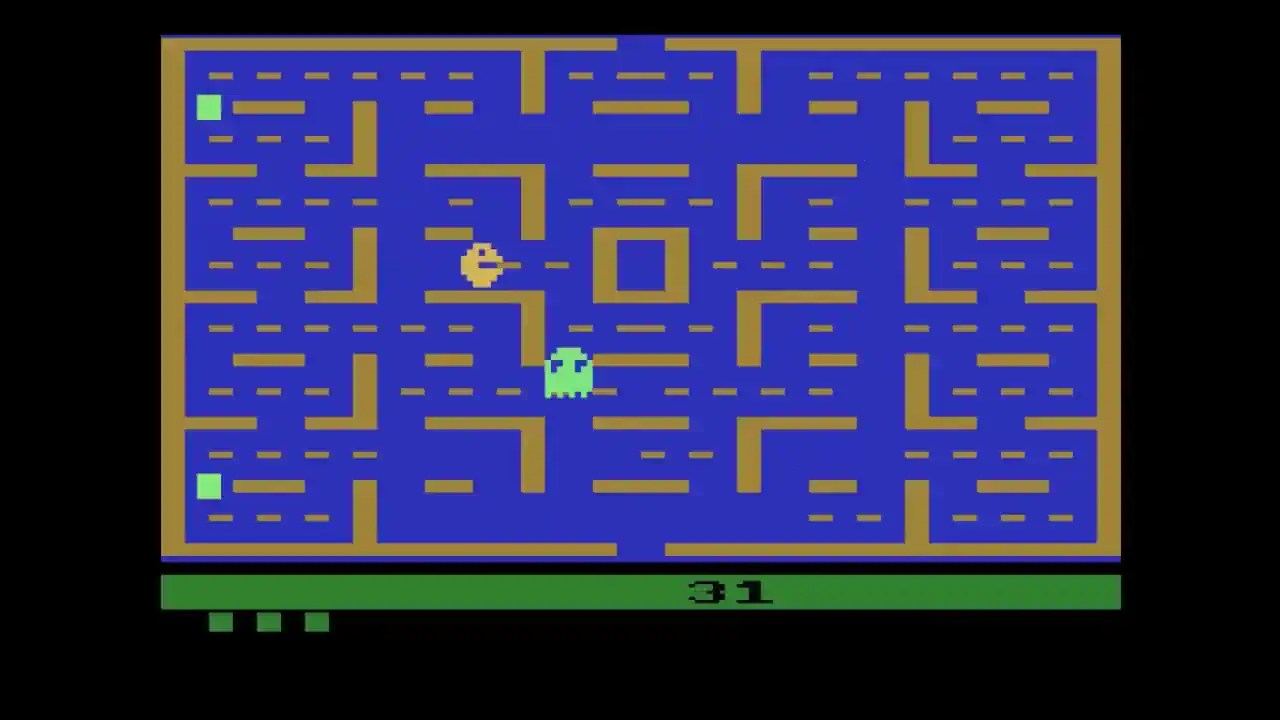
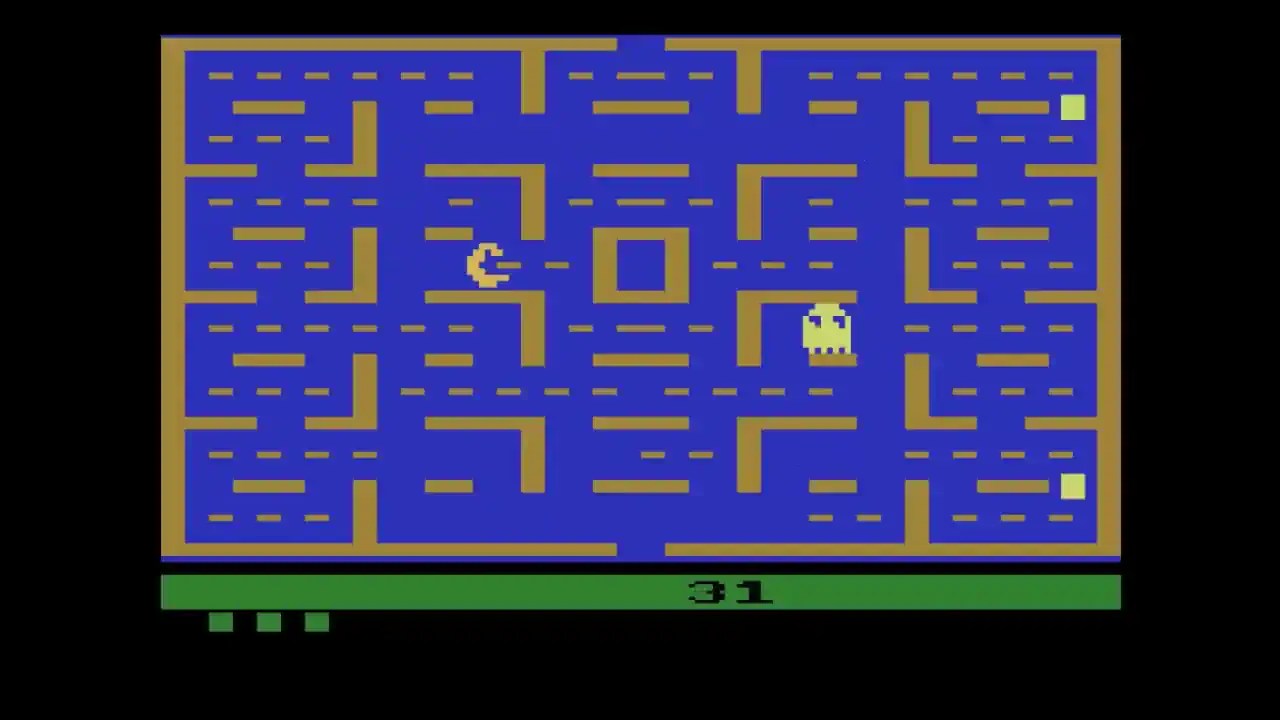
The basic idea remained the same: the player controls Pac-Man through a maze, eating dots and power pills while being chased by four ghosts. This familiar basic principle made the title instantly recognizable. However, the implementation on the VCS differed greatly from the arcade template in many details. The maze is not only rectangular and symmetrical, but also much simpler in design, making the rounds seem less varied. The ghosts flicker visibly because the console was technically unable to display all four of them simultaneously in a stable manner. Players had to get used to this constant image change, which was often found to be distracting. In addition, Pac-Man himself looked more like a square block, as the characteristic round shape with the “mouth” was difficult to implement. Even the famous power pills, which were immediately recognizable in the original, were transformed into simple “energy biscuits” and thus lost their iconic recognition value. Many arcade fans also noticed that the ghosts‘ movements seemed less predictable, making the game feel even more different from the original. All these factors meant that while the core gameplay remained the same, the overall feel was a completely different – and for many, disappointing – variation.
Technology
The Atari VCS was never designed for arcade conversions of this magnitude. With only 128 bytes of RAM (!) and extremely limited graphics capabilities, a detailed conversion was practically impossible. Developer Tod Frye programmed the game alone and was under massive time pressure, as Atari wanted to get a product on the market quickly. To circumvent the harsh technical limitations, he used the so-called flickering effect: the four ghosts were not displayed simultaneously, but alternately, which led to the characteristic and often distracting flickering. The color palette was also greatly reduced – many players found the image to be “pale” and “alienating” as a result. In addition, the VCS processor only allowed for very simple movement patterns and sound effects. The typical “waka-waka” sounds of the original were not present; instead, there were monotonous tones that quickly became tiresome. Compromises also had to be made in terms of speed and scrolling: the playing field appeared static, and the animations were significantly more jerky. Even the size of the sprites was adjusted to fit into the limited memory, which made Pac-Man and the ghosts appear even more angular. From today’s perspective, it is remarkable that Frye created a playable version at all despite these limitations. Nevertheless, the technical implementation illustrates how wide the gap between arcade hardware and home consoles was at the time and why this port in particular was so controversial.
Controversies
Atari had produced millions of cartridges – more than there were consoles in circulation, which later proved to be a risky and ultimately disastrous strategy. Many buyers were disappointed by the difference in quality between the arcade and home versions, as the advertising campaigns had promised an almost identical experience. Returns piled up in department stores, and retailers were left with huge inventories. Confidence in the brand suffered considerably, not only among gamers, but also in the retail sector, which became increasingly hesitant to order large quantities of new Atari games. In industry circles, Pac-Man was soon cited as a prime example of the discrepancy between marketing hype and actual gaming experience. In addition, public discourse used the title as a symbol of Atari’s overproduction and mismanagement. Thus, the game not only shaped consumer perception, but also exacerbated the critical attitude of the press and the business community toward the entire video game industry at that time.
Trivia
- Developer Tod Frye received an unusually high advance for the implementation, which caused a stir in the industry and can be seen as a harbinger of the professionalization of developer culture.
- The game was so widespread that in many households it was the only VCS cartridge besides the included Combat, meaning that entire families spent countless hours playing it, making it the collective gaming experience of a generation.
- The unusual depiction of the maze was later often used in parodies, both in magazines and cartoons as well as in later retro games that deliberately alluded to the distinctive design of the VCS version.
Criticism at the time
Contemporary reviews were mixed. Some simply praised the opportunity to play Pac-Man at home, seeing it as a small dream come true for arcade fans. For many children and teenagers, it was fascinating to experience a piece of the arcade in their own homes. Others, however, including many more experienced players, criticized the flickering image, the dull sound effects, and the lack of similarity to the original. Critics accused Atari of focusing too much on speed and sales figures instead of quality. Some trade magazines emphasized that while the game was playable, it fell far short of the standards set by its arcade counterpart, which only added to the disappointment among fans.
Reputation today
Today, Pac-Man for the VCS is considered a symbol of the problematic commercialization of the early gaming industry. In retrospect, it is often cited as a negative example of how a poor port can undermine player confidence and how exaggerated expectations can turn into bitter disappointment. At the same time, it is often used in professional circles as a teaching example to illustrate the difference between technical feasibility and economic pressure. Nevertheless, the game has achieved cult status – solely due to its historical significance and enormous sales figures, which secure it a place in almost every discussion about the video game crash. Many collectors today regard the cartridge not only as a curious piece of software, but also as a cultural artifact that embodies the highs and lows of the early video game industry. As a result, Pac-Man occupies an ambivalent place in the VCS today: it is both criticized and valued as an indispensable part of history.
Conclusion
Why does E.T. always get all the blame, even though Pac-Man is at least as much to blame for the video game crash of 1983? After all, it was Pac-Man that was put on the shelves in millions of copies, hugely disappointing expectations and thus contributing massively to the loss of confidence. Atari’s Pac-Man for the VCS is a paradox of video game history: commercially highly successful, but disappointing in terms of gameplay. It shows how technical limitations, time pressure, and exaggerated expectations can collide, and impressively illustrates that popularity and quality do not necessarily go hand in hand. While it contributed to the erosion of market confidence at the time, today it is valued as an important chapter in gaming history—as a warning and at the same time as a reminder of how even missteps can make history. Looking back, it is clear that this title was not only a product of its technical time, but also a lesson in the dynamics between consumers, manufacturers, and the media. Pac-Man thus remains a symbol of the opportunities and risks of the early home console era for the VCS.








Kommentar verfassen