


The show must go on, yeah
The show must go on
I’ll face it with a grin
I’m never givin‘ in
On with the show
The Final Single
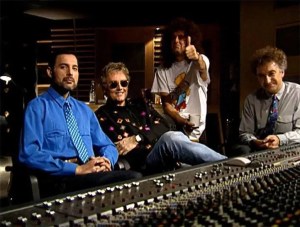
Some songs become unforgettable because of their melodies. Others become legendary because of the stories behind them. Queen’s “The Show Must Go On” belongs to both categories. Released as a single on 14 October 1991, it was the last Queen single released during Freddie Mercury’s lifetime. Just six weeks later, on 24 November, the iconic singer passed away at the age of 45.
The song originally appeared as the closing track on Innuendo, Queen’s final studio album released during Mercury’s lifetime, which was released in February 1991. It was also chosen to promote the compilation Greatest Hits II. Initially, listeners heard another magnificent Queen anthem filled with dramatic arrangements, powerful guitars and Mercury’s unmistakable voice. Few could have imagined how profoundly its meaning would change.
Behind the music lay a deeply personal story: Mercury was battling AIDS, and his health was deteriorating rapidly. Although rumours about his condition were circulating in the media, he kept his diagnosis largely private. Rather than retreating from music, he continued to record with his bandmates whenever he had the strength.
Today, ‚The Show Must Go On‘ feels like more than just a rock song. It is an extraordinary farewell and a declaration of determination — perhaps the most moving final statement of one of music’s greatest performers.
Behind the Lyrics
At its heart, ‚The Show Must Go On‘ explores the conflict between private suffering and public strength. Its lyrics use theatrical imagery to describe someone who must continue performing even when they are falling apart inside.
The song opens with images of emptiness and abandonment, creating an atmosphere of uncertainty. Questions about purpose and direction follow, suggesting someone searching for meaning in the face of an approaching end.
The central metaphor is particularly powerful: a performer standing beneath the spotlight, concealing their pain with a carefully maintained smile. This reflects the contrast between Mercury’s flamboyant public persona and the increasingly challenging reality of his private life.
The recurring declaration, “The show must go on”, becomes the song’s emotional foundation. It is not merely a statement about continuing a performance. It is an almost defiant refusal to surrender to suffering.
Yet the lyrics are not entirely pessimistic. They gradually shift from uncertainty and despair towards determination, courage and transcendence. Images of butterflies, fairy tales and flight introduce a sense of spiritual freedom, suggesting that something beautiful can endure even when life itself ends.
What makes the lyrics especially remarkable is their ambiguity. While they can be interpreted as a reflection on Mercury’s illness, they also describe universal human experiences such as loss, disappointment, vulnerability and the need to persevere despite overwhelming circumstances.
It is this balance that gives the song its emotional power. Rather than asking listeners to deny their pain, the song recognises suffering while insisting that dignity and hope can endure.
Musically, Queen reinforces this message through dramatic changes in intensity. The verses establish a darker, more reflective mood, while the chorus rises with almost overwhelming force. Mercury’s voice elevates the lyrics beyond a mere personal confession.
It is a performance that confronts mortality without allowing it the final word.
The Making Of
The origins of ‚The Show Must Go On‘ can be traced back to Queen’s 1990 recording sessions, when the band was working on material for Innuendo.
The initial musical idea emerged from a chord sequence played by bassist John Deacon and drummer Roger Taylor. Guitarist Brian May recognised its potential and began developing it into a complete composition.
May later explained that he sensed something unusually important in the music. After working extensively on the arrangement, melody and lyrics, he collaborated with Mercury on the song’s central theme and first verse.
Although the song was officially credited to all four members of Queen, May was its principal songwriter.
The recording process took place under extraordinary circumstances. Mercury’s health was deteriorating, and he was no longer able to spend long periods in the studio. The band adapted their schedule to take advantage of the times when Mercury felt well enough to sing.
May initially doubted whether Mercury could perform the song’s demanding vocal passages. The melody required exceptional range, power and emotional control.
According to May’s recollections later on, Mercury responded to these doubts with his usual confidence. After taking a drink of vodka, he entered the recording booth and delivered an astonishing vocal performance.
The result remains one of his most impressive studio recordings.
Despite his physical weakness, his voice sounds remarkably strong, moving effortlessly between vulnerability and explosive intensity. His performance demonstrates not only technical brilliance, but also extraordinary determination.
The instrumental arrangement is equally important. May’s soaring guitar lines, layered keyboards, dramatic harmonies and powerful rhythm section combine to create the hard rock sound with theatrical grandeur for which Queen had become famous.
Producer David Richards also played a key role in shaping the album’s distinctive sound.
Perhaps most remarkable of all is the emotional understanding between the musicians. Although they rarely discussed Mercury’s illness directly while working, the song enabled them to express feelings that would otherwise have been almost impossible to communicate.
Music became their shared language for confronting an approaching loss.
Fascinating Queen Trivia
There are several fascinating details that make ‚The Show Must Go On‘ an especially significant chapter in Queen’s history.
Firstly, Mercury never performed the song live. Second, Queen’s final concert with their original frontman took place at Knebworth Park in England on 9 August 1986, years before the song was written.
Secondly, the promotional music video contains no newly filmed performance by Mercury. Instead, it consists of a montage of footage from earlier Queen videos. The result is a visual journey through the band’s history, showcasing different stages of Mercury’s extraordinary career.
What initially served as a practical solution became a surprisingly emotional retrospective.
Another interesting detail concerns the song’s title. Brian May reportedly worried that the expression was too familiar and predictable. However, Mercury immediately recognised its strength and encouraged him to keep it.
The song also became the closing track of Innuendo, giving the album an ending that now seems almost impossibly appropriate.
In the United Kingdom, the single reached number 16 in the charts. Following Mercury’s death, it returned to the charts, reflecting the song’s growing emotional significance.
The song was first performed live at the Freddie Mercury Tribute Concert at Wembley Stadium on 20 April 1992. Elton John sang the lead vocals, and Black Sabbath guitarist Tony Iommi joined Queen on stage.
It was a deeply symbolic moment: Mercury’s fellow musicians were continuing the performance that he could no longer give.
A Visual Farewell
The music video for ‚The Show Must Go On‘ is one of the most touching and unusual in Queen’s history. Released in October 1991, it was directed by the Austrian filmmaking duo Rudi Dolezal and Hannes Rossacher, known as DoRo. Unlike Queen’s earlier productions, the video featured no newly recorded performances. By this time, Freddie Mercury was too ill to participate in another shoot, so the directors created a retrospective montage using footage from the band’s previous videos.
The result is a fascinating journey through Queen’s visual history, featuring clips from 1981 to 1991. Memorable scenes from ‚Radio Ga Ga‘, ‚I Want to Break Free‘, ‚Who Wants to Live Forever‘, ‚Breakthru‘, and ‚I’m Going Slightly Mad‘ appear alongside other iconic moments. Mercury is portrayed in a variety of personas: the flamboyant entertainer, the theatrical provocateur, the energetic rock star and the vulnerable artist. The rapid transitions between these images powerfully contrast the band’s joyful past with the darker emotional atmosphere of the song.
Originally intended to accompany the release of Greatest Hits II, the video took on a whole new meaning following Mercury’s death. What began as a compilation of memorable performances suddenly became a poignant visual tribute to a remarkable career.
Perhaps its greatest achievement lies in the relationship between music and imagery. While Mercury sings about his determination to carry on despite suffering, the screen celebrates a performer who dedicated his life to giving his all to his audience. Watching him smile, dance and command the stage is particularly poignant when we consider the circumstances surrounding the song’s release.
In retrospect, the video feels less like a conventional promotional clip and more like a farewell letter written in images. It captures the extraordinary vitality of Freddie Mercury, reminding viewers of all that the world was about to lose. Few music videos have transformed archival footage into such a powerful celebration of an artist’s life.
This music video does not show Freddie Mercury’s final performance. Instead, it reminds us why his performances will never be forgotten.
Contemporary critical reception
When Innuendo appeared in February 1991, Queen occupied a complicated position in the music world.
The band had already enjoyed nearly two decades of international success, but musical tastes were changing. Alternative rock was becoming increasingly influential, and some critics considered Queen’s elaborate, theatrical style to be outdated.
Consequently, contemporary reactions to Innuendo were mixed.
British rock publications were generally more positive than some American critics. NME awarded the album seven out of ten, while Sounds gave it an enthusiastic five-star rating.
By contrast, Entertainment Weekly graded the album C-, reflecting a more sceptical attitude towards Queen’s established musical formula.
In Rolling Stone, critic Chuck Eddy acknowledged the album’s craftsmanship, but also described it as lightweight and ultimately forgettable.
These reviews were concerned with Innuendo as a whole rather than the single specifically. Nevertheless, they illustrate the critical environment in which ‚The Show Must Go On‘ was released.
At the time, the song could be seen as just another example of Queen’s characteristic grandiosity, with its enormous chorus, dramatic instrumental passages and Mercury’s commanding vocal performance.
However, everything changed after 24 November 1991.
Once Mercury’s illness and death became public knowledge, the song acquired a devastating new significance. What had sounded like theatrical determination now seemed intensely autobiographical.
Over time, critics and fans increasingly recognised the song as one of Queen’s most emotionally powerful achievements.
This illustrates how historical circumstances can fundamentally transform the meaning of music.
An Enduring Legacy
More than three decades after its release, ‚The Show Must Go On‘ remains one of Queen’s most emotionally resonant songs.
Its cultural influence extends far beyond the original recording, reaching concert stages, cinema, musical theatre and popular culture.
One notable example is Baz Luhrmann’s 2001 film Moulin Rouge!, which features a dramatic rendition of the song. In the film, the song’s themes of performance, hidden suffering and inevitable tragedy fit naturally into the story.
The song has also been covered by many artists, including Céline Dion, showcasing its ability to transcend musical genres and generations.
Its connection to the memory of Freddie Mercury has remained particularly strong.
In 1997, the surviving members of Queen performed the song with Elton John at the Paris premiere of Maurice Béjart’s Ballet for Life. This production paid tribute to Mercury and the dancer Jorge Donn, who had both died from AIDS-related illnesses.
Later, ‚The Show Must Go On‘ became an important part of Queen’s performances with both Paul Rodgers and Adam Lambert.
These performances demonstrate how the song has continued to evolve. Each new rendition honours Mercury’s memory while enabling another artist to convey its emotional message.
Beyond professional performances, the song has become a personal anthem for countless listeners who are dealing with grief, illness, disappointment or difficult life transitions.
Its appeal lies in the universality of its message. Everyone encounters moments when continuing seems impossible. Queen transformed that universal struggle into something monumental.
Although the song was originally connected to a specific and tragic period in the band’s history, it ultimately celebrates human resilience.
It reminds us that courage does not necessarily mean being fearless. Sometimes, it simply means finding the strength to carry on when the future is uncertain.
The Last Curtain

‚The Show Must Go On‘ is widely regarded as one of Queen’s greatest artistic achievements. This is not only due to its magnificent composition and Mercury’s extraordinary singing, but also because of the human story it tells.
It represents the final chapter of an exceptional musical partnership, as well as the determination of a performer who refused to let illness silence his creativity.
Freddie Mercury passed away on 24 November 1991, just one day after publicly confirming that he had AIDS. His death shocked millions of fans and marked the end of an era in rock history.
Yet his legacy remains almost impossible to measure.
Born Farrokh Bulsara in Zanzibar in 1946, Mercury went on to become one of the most charismatic performers the world has ever known. With his remarkable vocal range, flamboyant stage presence, theatrical imagination and fearless individuality, he transformed the possibilities of rock performance.
From the operatic ambition of ‚Bohemian Rhapsody‘ to the universal triumph of ‚We Are the Champions‘, his music transcended generations, cultures and musical boundaries.
Mercury was more than just an extraordinary singer. He was an artist who challenged conventions, embraced individuality and connected with millions of people through music.
His final years revealed another dimension of his character: immense courage in the face of suffering. Even as his health deteriorated, he remained dedicated to creating music and giving his all to his audience.
‚The Show Must Go On‘ captures that spirit more powerfully than any other Queen recording.
At its heart lies a heartbreaking contradiction. Mercury sings about continuing the performance, knowing that his time on stage is coming to an end. Yet the song refuses to end in defeat. Instead, it builds to a final expression of determination.
This is what makes it so unforgettable.
Freddie Mercury’s final curtain fell far too early. However, through his recordings and performances, as well as the generations of musicians he inspired, his extraordinary presence continues to be felt.
He left behind much more than a collection of iconic songs. He left behind an artistic legacy based on freedom, passion, vulnerability and the courage to live and create without compromise.
Perhaps the most beautiful meaning of “The Show Must Go On” is that an artist’s life may end, but their art can continue to speak long afterwards.
The world lost Freddie Mercury. The music never lost its voice.
Rest in peace, Freddie Mercury (1946–1991).
The show goes on — and so does your legend.







Schreibe einen Kommentar