


Space Ace!
Defender of justice, truth, and the planet Earth!
Ace is being attacked by the evil Commander Borf!
Struggle with Dexter to regain his manhood! Destroy the Infanto-Ray!
Defeat the evil Borf! Be valiant, space warrior; the fate of Earth is in his hands!
Dragon’s Lair in Space

When Space Ace hit arcades in 1984, the first impression was almost inevitably the same: This is just Dragon’s Lair—only with laser guns, spaceships, and an extra dose of ’80s sci-fi. This comparison is obvious, but it doesn’t do the game justice. For Space Ace wasn’t merely a copy of that surprise hit, but a deliberate evolution of the idea of making arcade games feel like animated films. Once again, Don Bluth and his team were behind the animation; once again, the visuals weren’t rendered using classic pixel graphics but via a Laserdisc film; and once again, the appeal lay in the promise of being part of a real cartoon production yourself.

That was precisely what made it such a sensation back then. In the early 1980s, an arcade machine typically featured crisp sprites, simple backgrounds, and gameplay mechanics that were immediately intuitive. Space Ace, on the other hand, seemed like a visitor from a different technological future. The characters were smoothly animated, the camera movements dynamic, the colors rich, and the presentation strikingly cinematic. Anyone seeing the machine for the first time didn’t feel like they were looking at an ordinary video game cabinet, but rather at a small animation stage.

The story fits perfectly with this principle of awe. The hero, Ace, is struck by the villain Commander Borf’s “Infanto-Ray” and transformed back into the teenage Dexter. Kimberly is kidnapped, Earth is under threat, and the player must guide Dexter—or rather, Ace—through a series of dangerous scenes. It’s not a particularly deep science fiction scenario, but it’s exactly the right setting for rapid scene changes, exaggerated characters, and humorous, heroic moments. Space Ace has a very clear grasp of its own pulp aesthetic: the villain is delightfully megalomaniacal, the rescue mission is as melodramatic as it gets, and the tone always stays close to that of a Saturday morning cartoon.
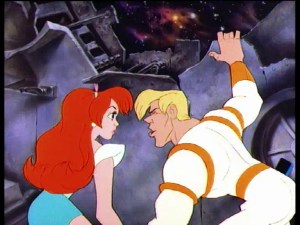
That’s why “Dragon’s Lair in Space” is an apt introduction, but too simplistic as a judgment. Space Ace takes the basic idea of its predecessor and shifts it into a futuristic adventure that feels more active, varied, and a bit more playful. It doesn’t just want to deliver the same thing all over again; it wants to translate the same formula into a different register: away from the fairy tale book, toward space opera. It was precisely this shift that made the game so distinctive. Whereas Dragon’s Lair drew heavily on knightly clichés, castles, and monsters, Space Ace relied on tunnel chases, robots, futuristic architecture, and a hero who could switch between a vulnerable, youthful form and a cool action figure.
The result was one of the most striking arcade showpieces of its time. Not necessarily because it was the better game, but because it embodied the dream of the early ’80s in a garish form: that video games might soon look like movies. Space Ace thus occupies a fascinating point in gaming history—between technical illusion, interactive reduction, and genuine pop appeal.
Reaction Instead of Control

In terms of gameplay, Space Ace belongs to the family of Laserdisc adventures that rely less on free movement and more on precise inputs at precisely defined moments. The player doesn’t continuously control a character through the world but reacts to situations. In one scene, you have to press left at the right moment; in the next, fire, then duck, dodge, or make a quick decision. If you get the timing right, the story continues. Those who react too late, too early, or incorrectly are presented with an often spectacular failure.
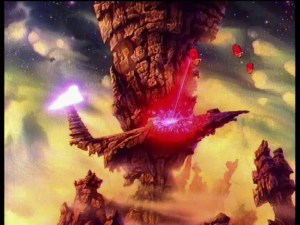
It is precisely this aspect that remains the game’s central source of excitement to this day. On the one hand, Space Ace feels surprisingly open and exciting upon first play, because each scene is its own mini-adventure. You hurtle through futuristic corridors, dodge drones, engage in chase sequences, escape traps, and constantly experience new visuals. On the other hand, this openness is strictly choreographed. Behind the cinematic surface lies a system of commands that can be precisely rehearsed. The game therefore tests observation, a sense of rhythm, and memory rather than classic orientation or tactical thinking.
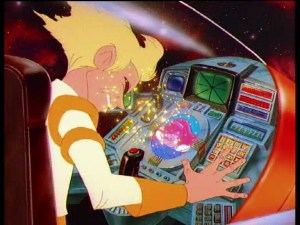
Compared to Dragon’s Lair, Space Ace doesn’t simply seem identical. The most important addition is the transformation mechanic. In some situations, a prompt appears to “energize” and temporarily transform back into Ace. If the player chooses to do so and presses the button at the right moment, the more evasive Dexter becomes the more aggressive action hero Ace. This idea is more than just a nice effect. It changes the dynamics of individual scenes because obstacles can not only be avoided but also actively fought. Dexter tends to dodge, while Ace attacks. This adds a small but noticeable extra layer of variety to the game.

Added to this are different difficulty levels. With “Cadet,” “Captain,” and “Space Ace,” the arcade game offered several tiers in which not only the margin for error but also the scope of the scenes varied. On the easier settings, players saw only a portion of the content, while only the highest difficulty level offered the complete sequence. This was clever for two reasons. First, it allowed beginners to get started at all, rather than immediately hitting a wall of perfect reaction tests. Second, it increased the replay value for experienced players who wanted to see more of the game.
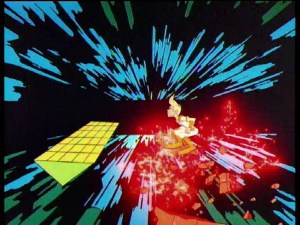
Nevertheless, Space Ace remains a game that interprets the term “gameplay” in an almost provocatively narrow way. Here, your skill consists primarily of memorizing movements and recalling them at the right moment. For some players, that’s precisely the appeal: a rhythmic training exercise in which you gradually develop mastery from an initial sense of being overwhelmed. For others, it’s a frustrating illusion of autonomy, because the spectacular visuals suggest freedom, even though the correct solution is usually predetermined.
This ambivalence lies at the heart of Space Ace. It’s not an action game in the usual sense, not a platformer, and not an adventure game with puzzles, but rather a choreography of reaction, repetition, and reward. Those who accept the machine for what it is will experience a gripping audiovisual timing game. Those who expect more genuine control will quickly hit their limits. It was precisely at this point that the debate flared up back then over whether such Laserdisc titles represented the future of the medium or rather a glorious dead end.
Laserdisc Instead of Pixels
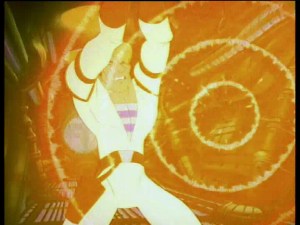
Technically, Space Ace was a prestige project. Instead of rendering all images in real time using classic arcade hardware, the machine relied on pre-produced animation sequences played from a Laserdisc. The actual game hardware thus primarily coordinated inputs, timing, and jump points within the video material. This made the machine a unique hybrid: half video game, half specialized playback system for interactive film.

For the audience, this design was spectacular because it enabled results that standard arcade technology of the time could hardly achieve. While other games worked with few moving objects and limited color palettes, Space Ace featured fully animated scenes with cinematic visuals. Perspectives shifted, characters were animated with fluidity and expressiveness, and the production value appeared significantly higher than what was typically seen in arcades. The soundscape also contributed to this: voice actors, narrators, sound effects, and music staged the game more like a short film than a typical arcade machine.

Behind this illusion, however, lay a complex and costly production. The animation was created by Don Bluth’s team—artists who came from the classical animation tradition. Rotoscoping was used for certain objects and sequences: models of spaceships or vehicles, for example, were filmed and then used as the basis for animations that appeared particularly three-dimensional. This explains why some movements in Space Ace possess a striking sense of spatial depth that sets them apart from the typical look of TV cartoons.

The arcade machine itself was also ingeniously designed. Space Ace was released not only as a dedicated cabinet but also as an upgrade kit for existing Dragon’s Lair machines. This meant operators could install the laserdisc, EPROMs, an expansion board, and new signage instead of having to purchase an entirely new machine. This made economic sense and also demonstrates just how closely related the two games were from a technical standpoint. In practice, however, reliability depended heavily on the mechanical components. Laserdisc players were fascinating, but not exactly known for being completely rugged. Especially in harsh arcade environments, the technology could be high-maintenance.
This is where the dual nature of Space Ace becomes particularly evident. Technically, the game was visually ahead of its time, yet it was tied to hardware that was expensive, specialized, and more delicate than traditional solutions. It impressively demonstrated what was possible with pre-rendered film aesthetics, but also how difficult it was to translate that splendor into a robust, mass-market format. Space Ace was therefore less a glimpse into the mainstream future and more a luxurious side street of arcade technology—one that, however, continues to amaze to this day.
Behind-the-Scenes Curiosities

Over the years, a whole collection of little quirks has accumulated around Space Ace, making the game almost as interesting as its actual mechanics. It starts with the voice cast. For cost reasons, the production didn’t rely on prominent voice actors across the board, but instead often used voices from its own team. Don Bluth himself voiced Commander Borf—electronically distorted—and thus gave the villain exactly the over-the-top theatricality that fits the game’s tone perfectly.
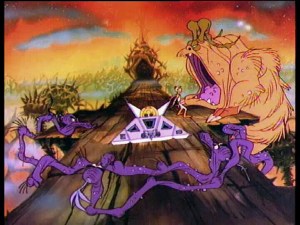
The design of the main character is also remarkable. The split into Dexter and Ace makes Space Ace immediately understandable narratively and visually memorable. The hero isn’t just strong or weak—he embodies his gameplay mechanics directly in his body. As Dexter, he appears youthful, more vulnerable, and more spontaneous; as Ace, he becomes an idealized sci-fi figure. This transformation isn’t merely story decoration—it’s one of the game’s cleverest hallmarks.

The release history is also curious. Some early units still appeared in Dragon’s Lair-style cabinets, while later versions received their own cabinet design. This fits well with a game that, on the one hand, emerged from the shadow of its predecessor and, on the other hand, was determined to develop its own identity. The conversion kits also reflect this in-between status: Space Ace was new, but closely linked to its successful older brother.
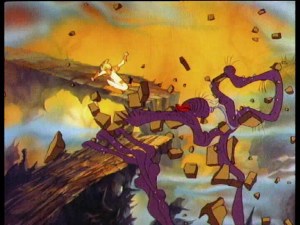
After its arcade run, the title never completely disappeared. Numerous home versions attempted to bring the film character to floppy disks, CD-ROMs, consoles, and later digital platforms. Sometimes they succeeded better, sometimes worse. Some versions had to greatly simplify the animation, while others benefited from more modern storage media. What’s particularly interesting is that Space Ace was repeatedly adapted to new technical environments without altering its core essence. The game almost always remained the same: a choreographed series of reactions presented in an animated style.
Added to this was its foray into television. In 1984, Space Ace received an animated adaptation as part of Saturday Supercade—a fine example of how quickly popular arcade brands migrated to other media back then. Although the series didn’t last long, its very existence shows that the character and the game’s style were strong enough to be perceived as a brand in their own right. Later, comics and re-releases were added to the mix, and the title lives on to this day in the retro scene—not least thanks to emulation and collector interest.
Amazement and Skepticism
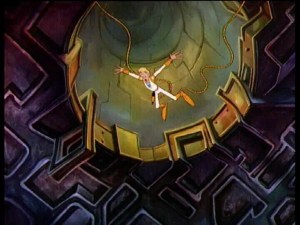
The contemporary reaction to Space Ace was marked by a contradiction that accompanied almost all Laserdisc games of those years. On the one hand, there was genuine amazement. The animation was sensational for an arcade game, the presentation seemed futuristic, and the machine drew attention even before anyone had inserted a coin. At a time when audiovisual opulence was rare in arcades, Space Ace had an immediate window-display effect: people stopped, watched, and wanted to see what was actually going on.

On the other hand, the skeptical question quickly arose as to how much actual gameplay the game actually offered. Even back then, it was clear that spectacular visuals didn’t automatically enhance interactivity. Those who let themselves be dazzled by the animation could be thrilled. Those who paid closer attention to gameplay freedom, strategy, or continuous control quickly found the concept limiting. This tension was particularly evident in Space Ace because the game visibly strove to be more than just Dragon’s Lair—with transformations, branching paths, and difficulty levels—without straying from the system’s basic logic.

Contemporary reviewers therefore often praised both the presentation and the challenge, though not always in a positive sense. The precision the game demanded could be thrilling, but also frustrating. Many failures felt less like the result of creative decisions and more like punishment for a fraction of a second of imprecision. This is one of the reasons why Laserdisc titles, while iconic, did not have a lasting future as the dominant model of the arcade market.

Added to this was the historical context. Space Ace was released at a time when the initial shockwave of Dragon’s Lair’s success had already passed, and the arcade market as a whole was no longer driven solely by euphoria. The game was certainly successful, but it did not achieve the same legendary status as its predecessor. This is not due to a lack of quality in its presentation, but rather because the element of surprise could not be replicated. The audience had now come to understand what a Laserdisc game was—and could therefore assess more objectively what was impressive about it and what its limitations were.
That is precisely why the criticism from that time is so revealing. It shows that Space Ace wasn’t simply ahead of its time, but rather, even in the year of its release, it crystallized a debate that would continue to shape the medium for a long time to come: Is strong presentation enough when interaction remains limited? Or is the very focus on timing and choice a distinct, legitimate form of gameplay in its own right? Space Ace didn’t provide a definitive answer, but it made the question impossible to ignore.
Traces in Pop Culture

The cultural influence of Space Ace lies less in countless direct successors than in its symbolic power. The game belongs to that small group of titles that, to this day, immediately evoke a specific image of the 1980s: neon colors, exaggerated science fiction, futuristic technological promises, and the idea that video games could merge with cinema. In this regard, Space Ace is not just a game, but a pop-cultural artifact.
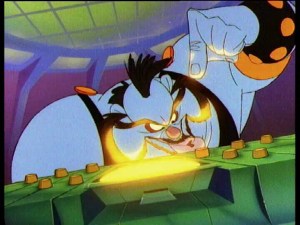
Its influence is evident on several levels. First, it cemented the concept of the “interactive film” long before the term became mainstream. Today, the input moments seem like early precursors to what would later often be called quick-time events. Space Ace did not invent this format on its own, but it is one of the best-known early examples in which cinematic scenes and precise, timed reactions are closely intertwined.
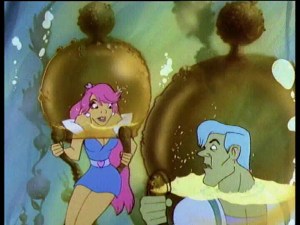
Second, the game exemplifies the close relationship between animation and video games. Don Bluth’s involvement gave the title an aesthetic authority that extended far beyond the game’s actual market. Even today, Space Ace is often remembered not primarily for its mechanics, but for its visual style: the movements, the use of color, the character of Borf, and the switch between Dexter and Ace. The game thus demonstrates how strongly visual identity can shape cultural memory.

Third, Space Ace lived on through adaptations, ports, and re-releases. Its appearance on television shows like Saturday Supercade, later home versions, DVD and digital editions, as well as its preservation by collectors and emulator enthusiasts, ensured that the title never completely disappeared. It did not always appeal to the masses, but it remained discoverable time and again. And that is often more decisive for cultural resonance than short-term dominance.
Today, Space Ace appears time and again in retrospectives on arcade history, animation aesthetics, and the evolution of cinematic game forms. It is a game that is often only fully appreciated in hindsight. Not because it offers perfect design, but because it brings to life a dream that has not faded to this day: that games can be both play and spectacle, reaction and staging, cartoon and machine.
Splendor and Limitations

Space Ace is a typical example of a work that cannot be fairly judged by asking just a single question. If one asks whether it is a deep, free, and versatile game, the verdict tends to be reserved. The choreography is too rigid, progress relies too heavily on memorization, and the actual freedom of action behind the opulent surface is too limited. However, if you ask whether Space Ace is an extraordinary arcade experience, a technical milestone, and a piece of unmistakable ’80s pop culture, the answer is unequivocally: yes.

Its greatest strength is the very same thing that also sets its limits. Space Ace aims to overwhelm. It aims to look bigger than other arcade machines, sound more cinematic, appear more expensive, and create that brief moment when you believe you’re witnessing the future of the medium. It succeeds brilliantly at exactly that. But as soon as your perspective shifts from wonder to analysis, you also realize how thin the interactive foundation is.

That is precisely why the game remains so exciting. It is not a failed experiment, but a clearly visible borderline case of what arcade games could be. Space Ace shows how far style, technology, and presentation can carry a game—and where these elements alone are no longer enough. Perhaps that is the most honest reason why the title is still remembered today. Not as an undisputed classic in the narrow sense of game mechanics, but as a brilliantly dazzling document of an era in which the medium reinvented itself, experimented, and sometimes deliberately careened into dead ends.
Anyone who looks at Space Ace today therefore sees more than just an old arcade machine. You see the attempt to make the animated film playable. You see the early longing for interactive cinema. And you see a work that, despite all its limitations, possesses enough style, charm, and historical impact to be more than mere technological nostalgia. Space Ace isn’t simply Dragon’s Lair in space. It’s a brilliant variation of its own on that same great ’80s idea—and that’s exactly why it remains memorable.







Schreibe einen Kommentar