

One dream, one soul
One prize, one goal
One golden glance of what should be
It’s a kind of magic
Pop Magic Between Fantasy and Stadium
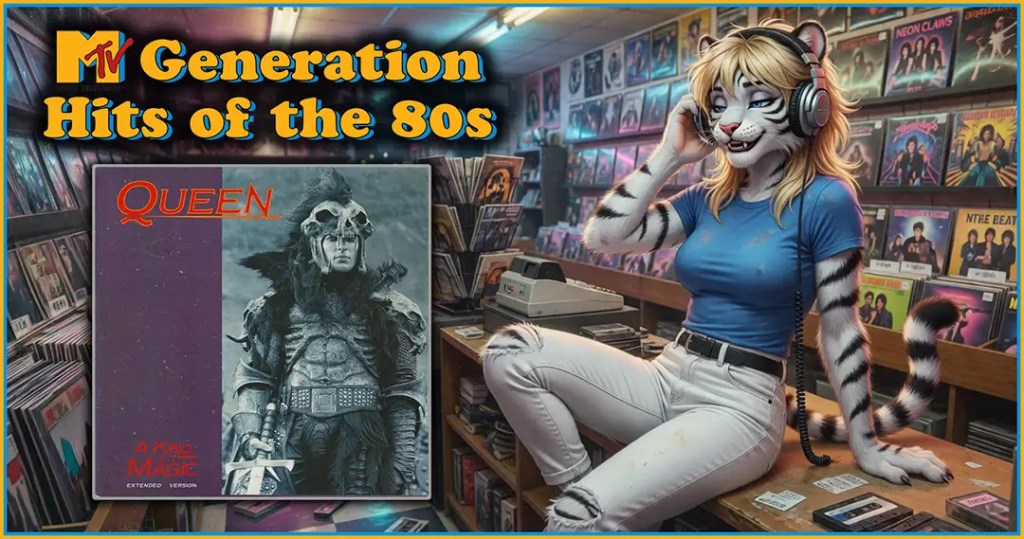
“A Kind of Magic” is one of those Queen songs that instantly sets the mood: mysterious, optimistic, theatrical, and at the same time very catchy. Even the opening bars feel like an invitation into a world where pop music is meant not only to entertain, but to transform an entire space. The song was released as a single in 1986 and became the title track of the album of the same name. It represents a special phase in Queen’s career: Following their triumphant Live Aid performance in 1985, the band was back in the spotlight, while at the same time moving musically toward a modern, keyboard-driven ’80s sound.
The track is often perceived merely as a cheerful pop-rock hit, but there is more to it than that. “A Kind of Magic” is closely linked to the fantasy film Highlander, whose themes of immortality, fate, struggle, and transformation shape the song. You can hear this cinematic origin in the track, even though it never feels like mere background music. Rather, Queen takes the film’s underlying mood and transforms it into a standalone pop song that works even without any knowledge of the film.
It is precisely this blend of cinematic myth, Queen’s pathos, and radio-friendly pop production that makes the track so recognizable to this day. “A Kind of Magic” is neither a pure rock song nor a classic ballad, but a dazzling hybrid: light on its feet yet grand in scope; pop-oriented yet not arbitrary; commercial yet bearing a distinct Queen signature. The song demonstrates how skillfully the band could translate dramatic themes into a format that is immediately accessible.
At the same time, the song marks a moment when Queen no longer had to prove themselves, but were instead managing and expanding their own legend. The band had already made pop history with “Bohemian Rhapsody,” “We Will Rock You,” “We Are the Champions,” “Another One Bites the Dust,” and “Radio Ga Ga.” “A Kind of Magic” didn’t add a radical break to this series, but rather a new color: fantasy pop with a stadium vibe.
Lyrics
Thematically, the lyrics revolve around magic, destiny, dreams, goals, and victory. The famous line “It’s a kind of magic” functions like an incantation: it is less a sober statement than an exclamation that immediately opens the song up to a fantastical world.
It is striking how strongly the words are linked to Highlander. The film tells of immortal warriors, of a final prize, and of the idea that in the end, only one can remain. The song translates these motifs not into a dark ballad, but into a bright, almost danceable pop piece. This creates an exciting contrast: the lyrics play with grand themes like fate and triumph, while the music remains light, rhythmic, and accessible.
The lyrics do not rely on long narrative verses, but on catchphrases, recurring phrases, and powerful imagery. Terms like dream, goal, prize, and magic create an open symbolism. They can be directly related to Highlander, but also understood more generally: as a song about a special moment, about success, about a transformation, or about the feeling that something extraordinary is happening. This ambiguity is one reason why the song became popular beyond its film context.
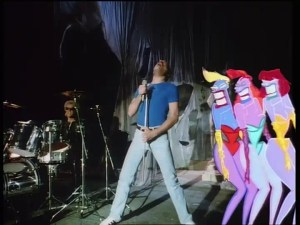
Freddie Mercury’s vocals play a decisive role in ensuring the lyrics don’t come across as flat. He doesn’t simply sing the lines in a friendly manner, but imbues them with a blend of mystery, elegance, and drama. His voice lends even simple words a theatrical impact. With Queen, this was often crucial: a brief phrase could become a grand gesture through Mercury’s delivery. Thus, a relatively brief text becomes a piece of pop theater: grand enough for a stadium, yet catchy enough for the radio.
It is also interesting that the lyrics are less a personal confession than a collective fantasy. Many pop songs tell of love, loss, or individual longing. “A Kind of Magic” remains more abstract and, as a result, more universal. The “magic” can stand for the magic of film, for music, for fame, for a relationship, or for the moment when the audience and the band merge into one. This is precisely where the strength of the chorus lies: it doesn’t explain too much, but leaves room for interpretation.
Background
The roots of “A Kind of Magic” lie in the film Highlander by director Russell Mulcahy. Queen was asked to provide music for the film, and this collaboration resulted not only in a single film song but ultimately in an entire album with strong Highlander references. Several tracks on A Kind of Magic draw on dialogues, characters, or moods from the film. As a result, the album feels like a loose musical extension of the film, even though it is not officially a pure soundtrack.
“A Kind of Magic” was written by Roger Taylor. He was particularly inspired by the film’s fantastical language and its central themes: a centuries-long battle, the quest for the ultimate prize, and the idea that magic appears not as a magic trick but as a sense of destiny and grandeur. Queen transformed this initial concept into a song that sounds less like film music in the classical sense and more like a standalone pop-rock hit.
The album’s production took place during a transitional phase. Queen still combined guitar rock, polyphonic choruses, and theatrical arrangements, but also made significant use of synthesizers, drum machine elements, and slick ’80s production. “A Kind of Magic” illustrates this blend particularly clearly: John Deacon’s bass foundation, Roger Taylor’s rhythmic structure, Brian May’s short guitar accents, and Mercury’s charismatic voice form a piece that is both quintessentially Queen and quintessentially 1986.
The song was also written at a time when Queen was enjoying a strong resurgence. After several years in which the band had become more controversial among some critics, Live Aid in 1985 brought enormous public validation. Freddie Mercury displayed a stage presence there that was perceived as legendary worldwide. Against this backdrop, “A Kind of Magic” seemed almost like a fitting motto: Queen were back, and their effect on the audience truly had something magical about it.
Musically, the track is carefully crafted for catchiness. The bassline is fluid and carries the groove, the drums are relatively straightforward, and the keyboards provide the sparkling pop framework. Brian May’s guitar isn’t constantly in the foreground, but it adds deliberate accents that make the song instantly recognizable as a Queen track. The production feels controlled and airy; it doesn’t overload the song but leaves plenty of space for the chorus.
It’s also interesting that there are different versions. The version associated with Highlander differs from the later single and album versions. This clearly demonstrates how Queen adapted material for a film project in such a way that it became a hit in its own right. A cinematic motif became a pop single; a scene became a song with a life of its own.
This approach fits Queen very well. The band was never just a classic rock group, but always also a studio and performance project. They were able to blend rock, opera, funk, disco, ballads, gospel influences, and theater. “A Kind of Magic” follows this tradition, even if it is more simply constructed than some earlier masterpieces. The magic here lies less in complex shifts in form and more in the professional refinement of an idea.
Music Video
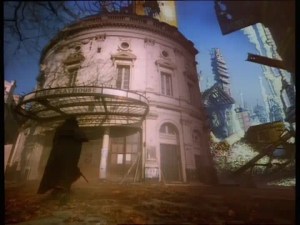
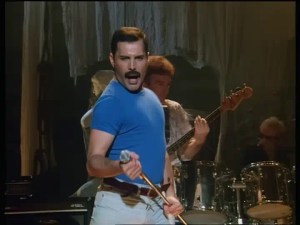
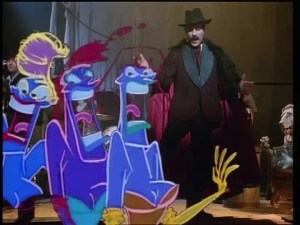
The music video for “A Kind of Magic” was directed by Russell Mulcahy, the same director who also made Highlander. This is a perfect fit, as the video is less a realistic band clip than a small fantasy narrative. It uses the visual language of theater, transformation, and illusion, rather than simply showing a performance by the band.
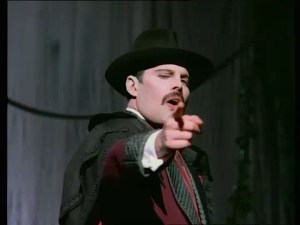
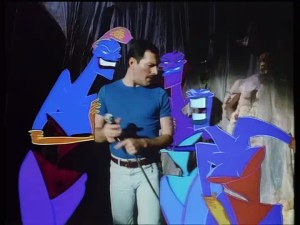
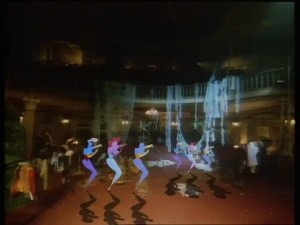
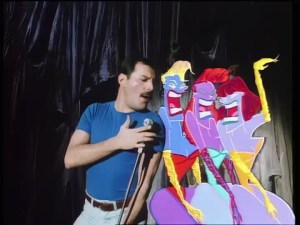
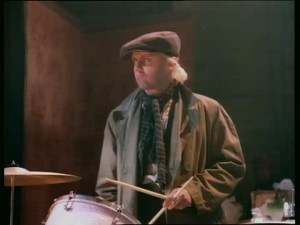
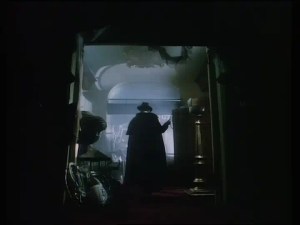
Freddie Mercury appears in it as a sort of sorcerer or magician. He enters an abandoned theater where the other Queen members are initially sleeping like dilapidated figures. Through his magical presence, the scene transforms: the seemingly lost figures become the musicians of Queen once again, complete with instruments and stage energy. In the end, the magic returns to its starting point, as if it had all been just a brief, sparkling moment.
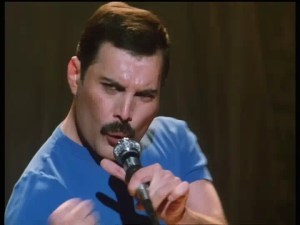
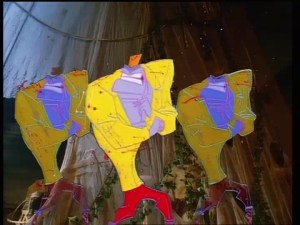
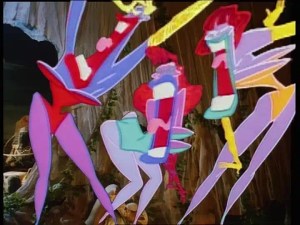
This visual concept fits the song very well. The video conveys the theme of “magic” not in a complicated way, but directly: Mercury becomes a master of transformation, the theater a place between dream and reality, the band an apparition. The animated elements reinforce the fairy-tale-like character and give the clip a distinct ’80s charm. The clip relies heavily on Mercury’s body language: his smile, his elegance, his almost supernatural ease as the center of the scene.
Particularly effective is the contrast between decay and splendor. At the beginning, the theater appears empty, dusty, and almost lifeless. The band members do not appear as stars, but as weary figures on the sidelines. It is only through Mercury’s entrance that the space is transformed. This simple narrative can also be read symbolically: music brings life back, art transforms everyday life, and Queen turns an abandoned place into a stage once again.
The music video also fits into an era when clips were becoming increasingly important for the success of singles. In the 1980s, MTV was already a decisive factor in pop culture and music marketing. Queen had understood early on that visual staging could be more than just advertising. As early as 1975, “Bohemian Rhapsody” had shown just how influential a music video could be. “A Kind of Magic” continues this tradition, albeit with the tools of the 1980s: brighter effects, a stronger fantasy aesthetic, and a clear, easily understandable visual narrative.
Trivia
“A Kind of Magic” reached No. 3 on the UK singles charts, making it one of Queen’s most successful songs of the mid-1980s. The album of the same name even debuted at No. 1 in the UK. This demonstrated that Queen in the mid-1980s weren’t just living off their past, but could still deliver current hits.
The song is closely associated with the so-called Magic Tour, Queen’s final tour with Freddie Mercury. As a result, the track holds special emotional significance for many fans: it belongs to the last major live phase of the classic Queen lineup. In retrospect, the title seems almost prophetic, as these concerts are often perceived today as the end of an era.
Another distinctive feature is the connection to the film Highlander. The song’s structure and mood were shaped by the film’s context, yet the track quickly broke free from it and became a Queen classic in its own right. Many listeners know the song from the radio or best-of albums without having seen the film. Conversely, many Highlander fans associate the film inextricably with Queen’s music.
The credits and accompanying information often mention that the song features additional studio contributions alongside the four Queen members. These include supplementary synthesizer elements and small rhythmic details that further anchor the track in the pop production of the time. Such studio contributions do not alter the song’s identity, but they demonstrate how meticulously Queen worked on timbres.
The song was later repeatedly featured in Queen compilations, on the radio, in commercials, and in pop culture contexts. Precisely because it instantly conveys a good mood and a sense of grandeur, it is particularly well-suited for retrospectives, sports moments, and nostalgic 1980s programs. Its message is open-ended enough to work in many contexts.
It is also noteworthy that “A Kind of Magic” plays a somewhat different role in the Queen catalog than the truly great anthems. It is not as combative as “We Will Rock You,” not as triumphant as “We Are the Champions,” and not as experimental as “Bohemian Rhapsody.” Instead, it is an elegant, light, almost floating song that shows Queen from their charming and pop-oriented side.
Furthermore, the song highlights the band’s internal diversity. Although Freddie Mercury is often perceived as the face of Queen, many important songs originated from different band members. With “A Kind of Magic,” Roger Taylor wrote one of Queen’s defining tracks of the 1980s. This shows that Queen didn’t function solely through a single creative voice, but through the interplay of very different musical personalities.
Contemporary Reviews
Contemporary reviews were mixed. Some critics immediately recognized the song’s hit potential: the catchy melody, Mercury’s voice, and the typically layered Queen sound made “A Kind of Magic” an obvious radio hit. In particular, the lightness of the chorus and the clean production pointed to commercial success.
Other critics were more skeptical. In particular, the heavy use of keyboards was sometimes seen as a sign that Brian May’s guitar was being pushed too far into the background. Some compared the song to “Radio Ga Ga” and accused Queen of retreating too much into slickly produced pop-rock. For listeners who primarily associated Queen with heavy guitar rock and dramatic arrangements, “A Kind of Magic” could therefore seem a bit too polished.
At the same time, it was often emphasized that Freddie Mercury saves the song—or at least significantly elevates it. His voice gives the track power, charm, and drama. Brian May’s brief guitar moments were also mentioned positively, even if some critics would have liked to hear more of them. This reflects a typical pattern in the reception of later Queen singles: even when the production was controversial, the quality of the performance was usually undisputed.
In retrospect, this divided reaction makes sense. “A Kind of Magic” is neither a hard rock track like “Tie Your Mother Down” nor an experimental mini-opera like “Bohemian Rhapsody.” It is a deliberately bright, modern, synthetic pop-rock song. Those who loved Queen primarily as a guitar band might have found it alien. Those who appreciated Queen’s ability to transform grand gestures into catchy singles found exactly that appeal in it.
The criticism of the song’s smoothness also reveals a lot about the 1980s. Many rock bands at the time were faced with the question of how to deal with new studio techniques, synthesizers, and the pressure of expectations from music television. Queen did not opt for a return to the raw sound of the 1970s, but rather for a modern pop aesthetic. This was not welcomed by everyone, but it was one reason the band remained a fixture in the mainstream.
Today, the song is often judged more favorably than some of the criticism from that time might suggest. What once might have seemed too polished or too commercial now comes across as a characteristic document of its time. The 1980s sound has become part of its appeal. “A Kind of Magic” doesn’t sound timeless in the sense of a neutral sound, but rather deliberately like its era—and that is precisely what makes it nostalgically appealing to many listeners.
Cultural Influence
“A Kind of Magic” has established itself as one of those Queen songs that even people who don’t own every one of the band’s albums are familiar with. The song feels instantly familiar because it combines several of Queen’s strengths: a distinctive chorus, theatrical vocals, multi-layered production, and an atmosphere that sounds bigger than an ordinary pop song. The title itself has become a sort of catchphrase because it describes a feeling that is hard to pin down precisely.
Its cultural influence is closely tied to Highlander. For fans of the film, Queen’s music is part of the identity of this fantasy universe. Conversely, the film gave the song a mythical aura that went beyond the typical success of a single. The title sounds not just like a hit, but like a motto. The combination of pop music and fantasy myth, in particular, was unusually effective in this form.
The song also holds significance in Queen’s own career. It represents the late 1980s, the last major tour with Mercury, and the band’s ability to reinvent itself time and again without losing its fundamental theatricality. In subsequent decades, “A Kind of Magic” remained a fixture on the radio and in best-of compilations. This made the song a cross-generational Queen classic.
The fact that the song is still used today for campaigns, cover versions, and retrospectives demonstrates its enduring appeal. It has become not just a product of 1986, but a piece of pop language: Whenever grandeur, transformation, or a special moment needs to be evoked, “A Kind of Magic” fits almost automatically. The song has a positive underlying energy without coming across as completely naive, and is therefore suitable for a wide variety of contexts.
For Queen fans, the song also holds emotional value because it is associated with Freddie Mercury’s later stage career. When you hear it today, the knowledge often resonates that the classic Queen lineup would only be active together for a few more years. This retrospective perspective changes the song: what sounded like an optimistic pop hit in 1986 also seems, in hindsight, like a shining moment just before the end of an era.
Its cultural influence is evident not only in official releases but also in the way the song has remained in the collective memory. It is one of those songs that immediately brings to mind Freddie Mercury’s voice while simultaneously conjuring a vivid image: stage, lights, transformation, magic. In a pop landscape where many hits fade quickly, “A Kind of Magic” has retained a lasting identity.
Conclusion
“A Kind of Magic” is not a Queen song that seeks to impress through musical complexity. Its strength lies in the combination of simplicity, charisma, and atmosphere. The song takes the mystical motifs of Highlander, translates them into glossy ’80s pop-rock, and thrives above all on Freddie Mercury’s unmistakable presence.
That is precisely why it still works today. It is accessible but not trivial; commercial but not faceless; playful but with genuine Queen pathos. “A Kind of Magic” showcases Queen as masters of the grand gesture: a band that could turn a movie line into a global hit—and pop music into a moment of magic.
Compared to Queen’s greatest classics, the song may not represent the band’s most radical or daring side. Yet it stands for something just as important: their ability to set a mood, create imagery, and stage simple musical ideas in such a way that they seem larger than life. “A Kind of Magic” is thus an ideal Queen song of the 1980s—brilliantly produced, sung with theatrical flair, and inextricably linked to the feeling that music can truly transform a space.







 McHenry's Lair
Kommentar verfassen :