


The Quest for the Golden Axe!
Introduction
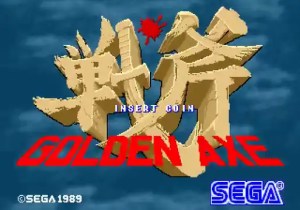
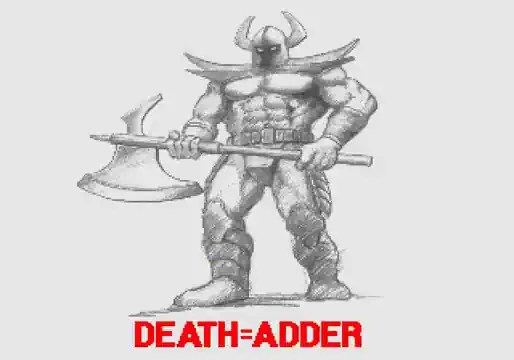
A storm crept over the shattered kingdom of Yuria, as if even the heavens were holding their breath in the face of what had happened. Thunder rolled over jagged mountain ridges, rain lashed against shattered towers, and in the valleys, the last fires of abandoned farms flickered. In dark taverns, amid rough voices and clinking mugs, travelers whispered of the new lord of the land—a despot whose name sounded like a curse: Death Adder. It was said that he had torn the king from his throne, put the royal family in chains, and hoisted his black steel banners above the castle walls. Where once celebrations had been held, there was now silence, heavy as a gravestone.
But in a world of blood, mud, and broken oaths, hope is not born in golden halls, but in the burning hearts of those who have been stripped of everything. Three warriors stepped out of the shadows of their losses. A barbarian with a raised sword, his muscles like carved granite. An Amazon whose gaze burned brighter than any torch. And a dwarf, small in stature but with a hatred that could split mountains. Each of them carried a wound that would not heal. Each of them had one name on their lips: Death Adder. Their paths converged not by chance, but by the iron bond of vengeance. Thus begins the legend of Golden Axe—a saga of steel, sorcery, and the ceaseless roar of battle.

Gameplay / Story
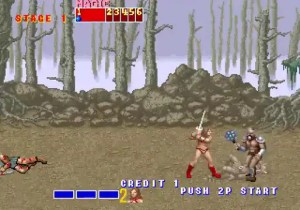
At first glance, Golden Axe is a side-scrolling beat ‚em up, but that description doesn’t do it justice. It’s a digital campaign through a world reminiscent of the gritty tales of sword & sorcery literature. The player advances from left to right, as if turning the pages of a blood-soaked epic. Each section is a new scene of resistance: dusty plains where the wind blows bones across the ground; weathered ruins where the echoes of ancient battles linger; and finally, the gloomy halls of the tyrant himself.
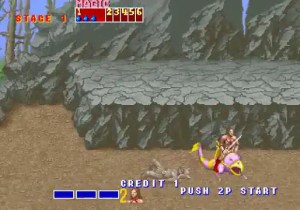
Enemies appear in waves. Skeleton warriors with rusty blades, heavily armored axe fighters, mighty executioners with superhuman strength. They attack in a coordinated manner, trying to surround the player and force them onto the defensive. The combat system is deliberately kept simple: punches, kicks, throws, and jump attacks form the foundation. But behind this simplicity lies a rhythm. Those who know the range of their attacks and choose the right moment to jump or retreat can control even larger groups.
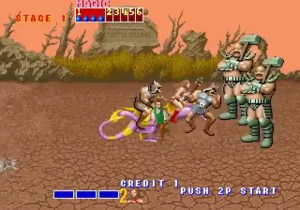
The story itself is archetypal. Death Adder has kidnapped the king and princess and subjugated the kingdom. The three heroes are united by their desire for revenge, but their motives go beyond that. It is not just a fight for a crown, but for the restoration of an order that has been shattered by violence. Between burning villages, floating turtle islands, and stone fortresses, a journey unfolds that is told less through dialogue than through images.
Magic is a defining element. Small, goblin-like creatures carry potions that serve as a source of arcane energy. If the player collects enough of them, they can unleash spells that dominate the screen. Columns of flame rise, dragons of pure energy swoop down, lightning tears through the air. These attacks are not only visually spectacular, but also tactically crucial. They offer respite when the odds are too great and reinforce the feeling of being part of an epic narrative. The final battle against Death Adder ultimately requires full mastery of all mechanics—stamina, positioning, and the wise use of your last reserves of magic.
Characters
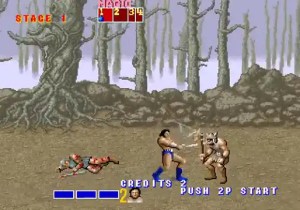
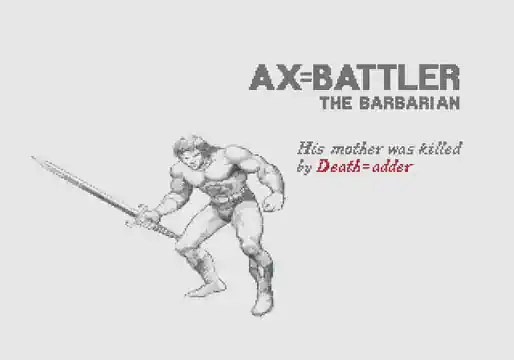
Ax Battler exemplifies the ideal of the barbarian hero. With his bare chest, headband, and enormous sword, he seems like the embodiment of raw determination. His family fell victim to the tyrant’s brutality. His campaign is therefore not political, but deeply personal. Every sword stroke is an act of remembrance.
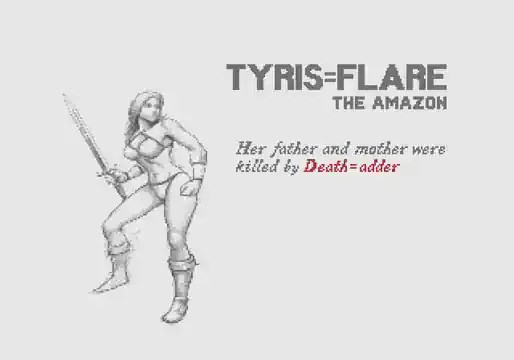
Tyris Flare brings a different energy to the game. As an Amazon, she combines grace with deadly precision. Her clan was wiped out, her home reduced to ashes. She is filled not only with rage, but also with discipline. She has the most powerful spells at her disposal, which makes her particularly effective against larger groups of opponents. Her physical resilience is lower, but her magical dominance can clear entire battlefields.
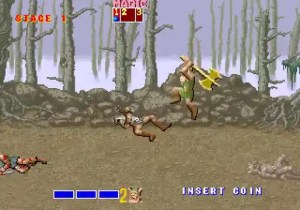
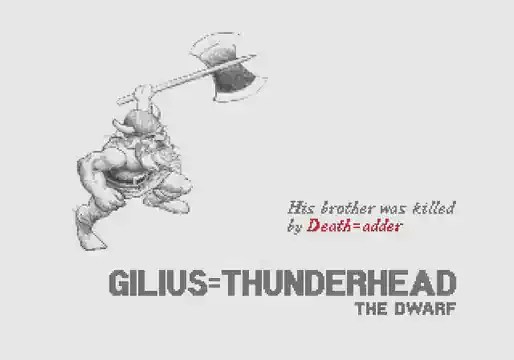
Finally, Gilius Thunderhead embodies steadfastness. The bearded dwarf with his battle axe is experienced, tough, and uncompromising. The loss of his brother drives him on. He is particularly robust in close combat and is suitable for players who prefer direct, uncompromising exchanges of blows. However, his lower magic capacity requires a considered approach.
The differences between the characters are more than just cosmetic. Attack speed, range, damage values, and magic levels vary noticeably. This creates replay value that goes beyond simply reaching the end credits. Each character tells their own version of the same journey.
Technology
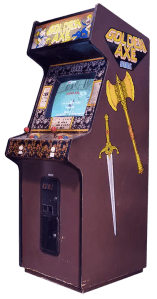
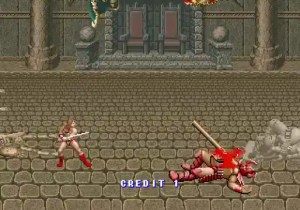
Golden Axe was released in arcades in 1989 and was developed by Sega. The underlying hardware enabled impressively large sprites for the time. The characters took up a lot of space on the screen, which enhanced their presence. Animations were fluid and conveyed a sense of weight – especially when hitting and throwing.
The level design used parallax scrolling to create depth. Backgrounds moved at different speeds, adding an extra dimension to the two-dimensional world. The game relied on strong color contrasts: bright magic effects in front of dark castles, light armor in front of gloomy landscapes. This visual clarity made the battles easier to follow.
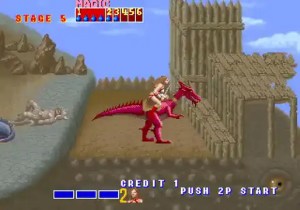
A special feature was the ability to mount creatures. Dragon-like creatures and other beasts significantly expanded the range of attacks. They could breathe fire or knock down enemies with their tails. This element added variety to the combat system and reinforced the impression of moving through a living fantasy world.
Golden Axe also set standards in terms of sound. The soundtrack combined heroic motifs with dark undertones. The music reinforced the feeling of a dangerous campaign. Hit sounds, cries of pain, and the crash of magic effects added to the intensity. Later home console ports endeavored to convey this technical and atmospheric quality as far as possible.
Trivia
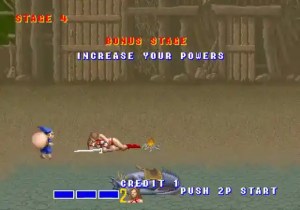
Between levels, a small dwarf village appears in a dream sequence. While the heroes sleep, goblin-like creatures sneak in. They carry sacks full of magic potions, giggle, and scurry across the screen as if they had sprung from a mischievous fairy tale.
The player can chase them away and gain additional energy by striking at the right moment and stopping the nimble thieves. If they miss this opportunity, they lose valuable resources that may be sorely missed in the next section. This gives this seemingly humorous interlude strategic significance, as it directly influences the strength of the following magic attacks. The sequence acts as a tongue-in-cheek commentary within the otherwise serious narrative, but at the same time provides a breather after intense battles. It slows down the pace without completely breaking the tension, reminding us that even in a world full of tyranny, there is still room for whimsical moments.
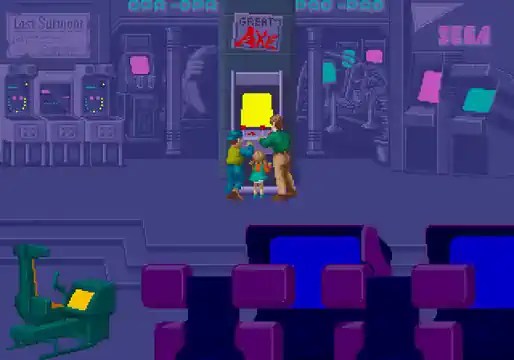
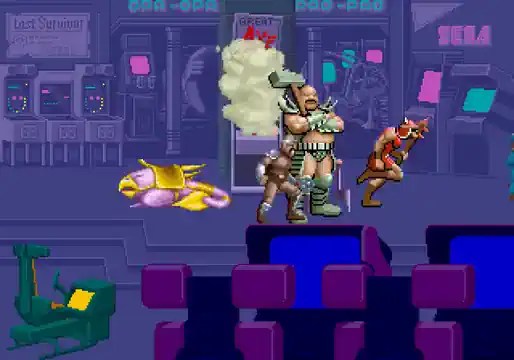
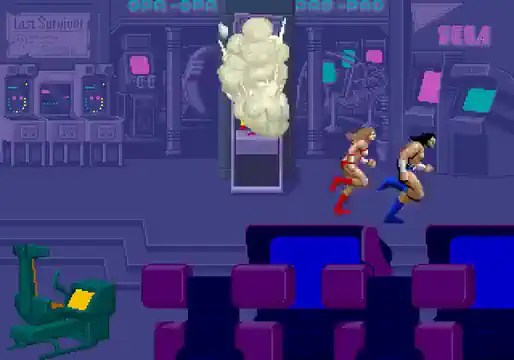
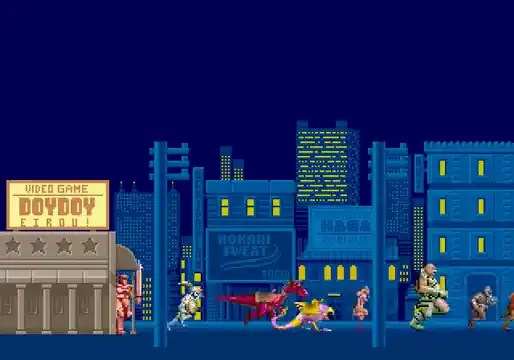
A particularly noteworthy detail can be found at the actual end of the arcade version. After Death Adder is defeated and the triumph over evil seems to be celebrated, Golden Axe surprisingly breaks through the fourth wall. The characters – heroes and enemies alike – suddenly storm out of the game world, breaking through the boundaries of the screen, so to speak, and running straight into a real arcade. In this humorous meta-sequence, they attack children and teenagers who are playing on a Golden Axe machine. Finally, Ax Battler, Tyris Flare, and Gilius Thunderhead climb out of the machine themselves and chase the bewildered players across the arcade. This tongue-in-cheek finale deliberately breaks with the previously serious fantasy world and reminds us that all the epic battles are ultimately part of an entertainment medium. At the same time, it emphasizes the arcade character of the game and creates an unforgettable, self-deprecating conclusion that clearly stands out from the conventional credits of the time.
Reviews at the time
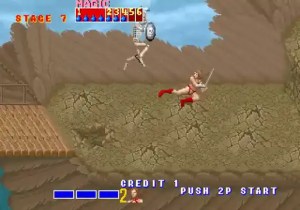
Contemporary trade magazines gave Golden Axe mostly positive reviews and quickly ranked it among the most technically impressive arcade titles of its time. The graphics, the size of the characters, and the harmonious fantasy atmosphere, which stood out clearly from urban-themed fighting games, were particularly praised. Many reviewers emphasized that the powerful animations and colorful magic effects conveyed a sense of epic grandeur that had previously been more familiar from fantasy films than from arcades. The cooperative multiplayer mode was also highlighted as a special feature, as it promoted teamwork, required tactical coordination, and intensified the arcade experience. Some magazines also emphasized that Golden Axe appealed to both casual gamers and experienced arcade veterans thanks to its clear structure and accessible controls.
Criticism was mainly directed at the limited number of levels and the sometimes simple enemy AI, which became predictable with increasing gameplay experience. Some voices saw the game as more of a visually impressive spectacle than a deep combat system and wished for more combination options or more varied boss mechanics. The relatively short playing time was also mentioned in isolated cases, especially in comparison to other arcade titles that artificially stretched the playing time with a higher level of difficulty. Nevertheless, the positive impression clearly prevailed. Golden Axe quickly established itself as a benchmark title in the fantasy beat ‚em up genre, had a lasting impact on expectations of the genre, and spawned several sequels that further expanded on the basic concept and cemented the brand’s long-term success.
Cultural influence
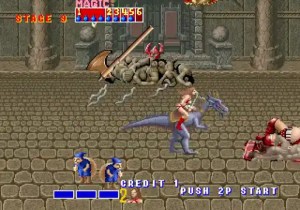
Golden Axe influenced numerous subsequent titles in the arcade and console sectors and set standards for how fantasy elements can be combined with classic fighting game mechanics. The combination of barbarian aesthetics, magic, and direct, easily accessible action became a recurring motif in the early 1990s and was found in various variations in arcades worldwide. Developers took up the idea of equipping archaic heroes with supernatural powers and guiding them through clearly structured level architectures that offered both spectacle and playful challenges. The game thus played a decisive role in establishing fantasy as a viable and commercially successful setting in the beat-‚em-up genre – a far cry from the science fiction or street fighting scenarios that had previously dominated.
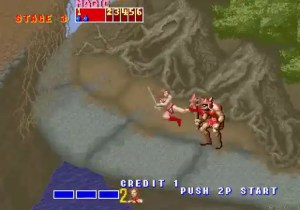
Golden Axe also influenced the visual language of later titles. The large-scale magic effects, imposing boss enemies, and rideable creatures created images that burned themselves into the collective memory of a generation of gamers. The characters became integral parts of the Sega brand world and figures of identification for fans of the company. Sequels, spin-offs, and later re-releases kept the franchise alive for years and ensured that new generations of players were exposed to the name. In retro collections, digital archives, and online services, Golden Axe is still considered a classic and is regularly re-released. It symbolizes an era in which game mechanics and atmosphere merged in a compact form, in which clear concepts were more important than technical overload, and in which a strong setting was enough to turn an arcade title into a lasting cult object.
Conclusion
Golden Axe is more than just a simple beat ‚em up game. It is a condensed heroic saga that translates classic motifs of revenge, honor, and magic into an accessible arcade format, translating the raw energy of the arcade into a mythological visual language. Behind the seemingly clear structure of forward movement and waves of enemies lies a deliberate staging of heroism: the lonely march against evil, the steady advance through enemy territory, and the inevitable duel with the tyrant at the end of the journey. The combination of a powerful combat system, striking characters, and impressive presentation made it a milestone of its time, because it combined technical possibilities, artistic design, and playful accessibility in a rare unity. It knew how to use relatively simple means to create a sense of grandeur and pathos that extended far beyond its actual playing time.
Even decades later, the game still has a special appeal. It recalls an era when coins fell into arcade machines, screens flickered, and a few pixels created heroes who seemed larger than life itself. Golden Axe is exemplary of that phase in video game history in which creativity and technical limitations entered into a productive tension and formed intense, immediate experiences from clearly defined rules. For many players, it is not just a title in a publisher’s catalog, but a memory of shared afternoons in the arcade, of competition, cooperation, and amazed glances at spectacular magic effects. Golden Axe thus remains a symbol of the golden age of arcades – and at the same time of the timeless desire for epic adventures that, even in digital form, make the sound of steel, the blaze of fire, and the triumph over darkness palpable.








 McHenry's Lair
Kommentar verfassen :