

!! Trigger warning !!
Okay, let’s get the mandatory disclaimer out of the way
(because warning signs are required everywhere these days):
This is about an ancient Atari game that features sexual violence and nasty racist stereotypes.
If this kind of thing triggers you easily, you might want to skip it.
If not, welcome to the wild, unfiltered backlog of the 80s!
A Scandalous game from the early days
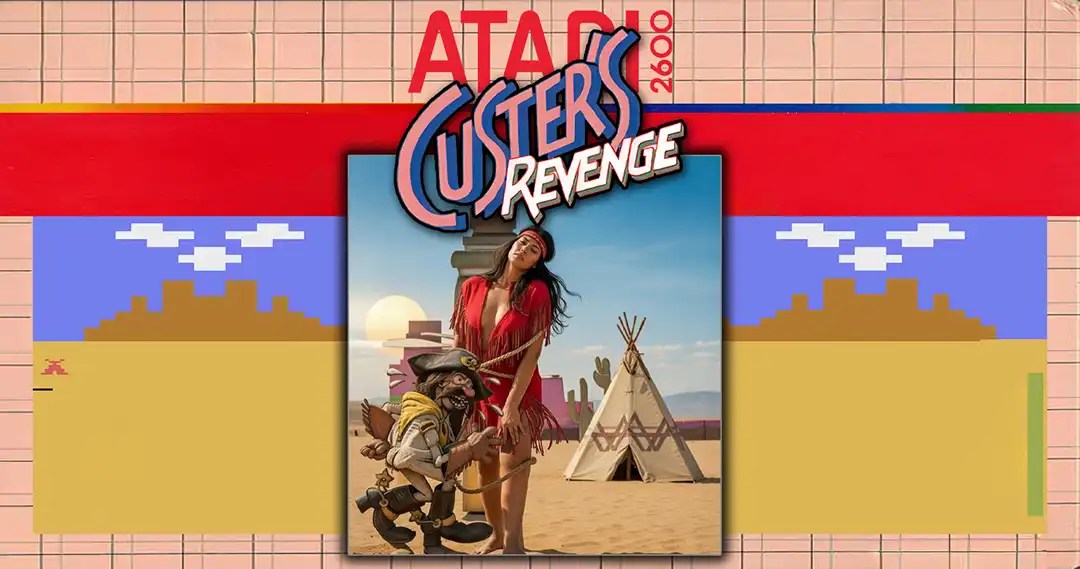
Back when the Atari 2600 conquered the living room, the games market was pretty much “anything goes.” There were no clear age labels, hardly any rules, and no one had heard of “content guidelines” – the main thing was that the cartridge booted up and the packaging looked action-packed in the store. That’s exactly why, alongside genuine classics, a lot of junk was released: quickly cobbled together, cheaply produced, and often with some kind of provocative twist to get people talking.
And that brings us to “Custer’s Revenge”: an unlicensed Atari 2600 title from 1982, published by Mystique (American Multiple Industries). Game depth? Not really. It became famous because of its content: a sexualized scene that clearly reads as sexual violence, combined with nasty colonial and racist clichés surrounding an indigenous woman. This seems less like “contemporary color” and more like a calculated headline on a cartridge – along the lines of: if everyone freaks out, you get the best advertising for free.
Gameplay
To stay in the style of “calculated provocation,” I’ll best describe the game in the style of a VHS back cover texts for one of those cheap Italian exploitation Z-movies that were so popular in the 80s too. And that’s exactly how it should be described: hard, direct, to the point—not for snowflakes…
The gameplay in exploitation style (NSFW)
In the scorching expanses of the Wild West, where dust and death reign, GENERAL CUSTER’S REVENGE awakens!
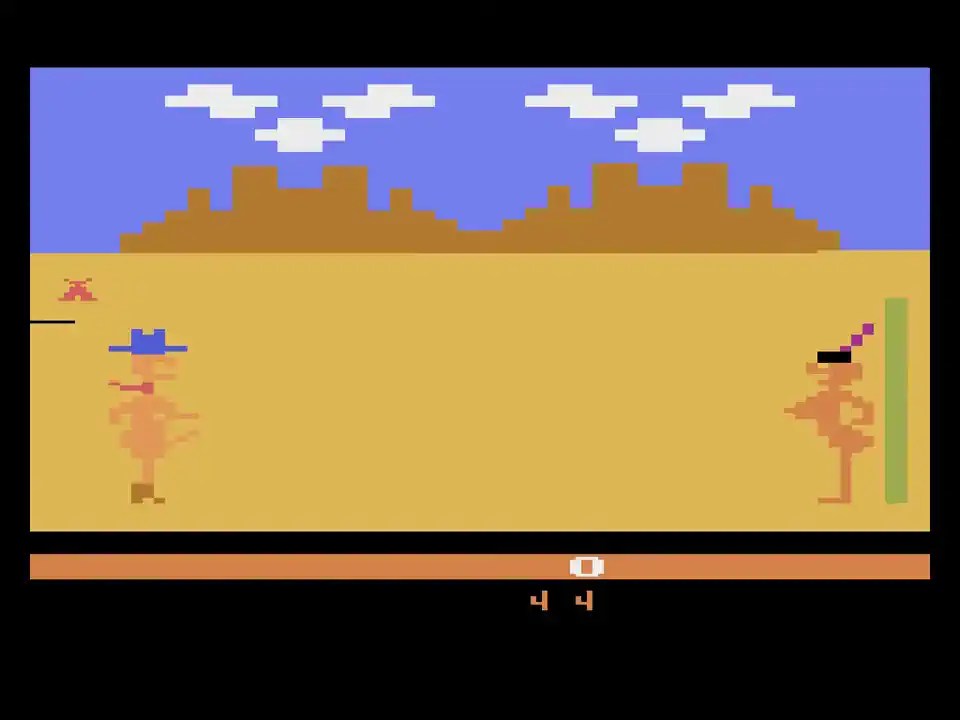
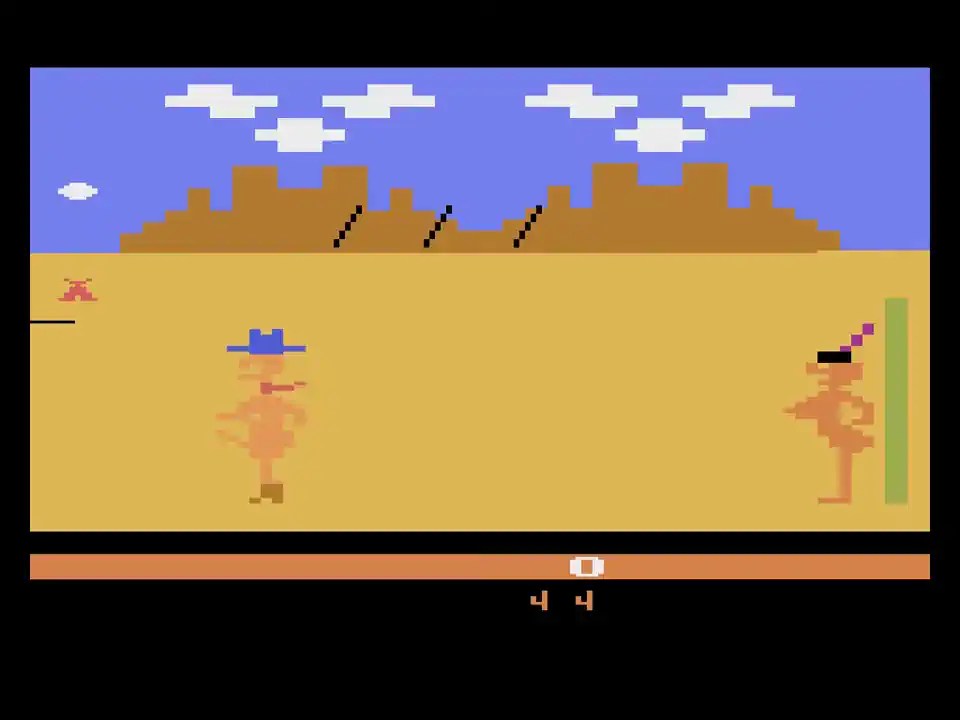
You are the pale conqueror himself – stark naked, with nothing but your unshakeable, rigid will for revenge! Your only goal: the bound, helpless squaw on the stake on the other side of the screen. Between you, only a deadly hail of arrows raining down from the sky by those red bastards!
With your joystick in hand, you run – left, right, duck, jump – every arrow that grazes you costs you a life, but you’re not here to die! You’re here to TAKE! Dodge the deadly projectiles, fight your way through the merciless barrage until you finally stand before her – naked, victorious, ready!
And then… REVENGE! You thrust – again and again – hard, fast, relentless! Every thrust a point, every f$§& a triumph! The pixels dance in a raw, primitive rhythm as you hammer your rage, your lust, your superiority into them! No mercy, no retreat – just the pure, animalistic act of conquest!
The more you succeed, the higher your score! The arrows become faster, denser, deadlier – but you become stronger, hornier, invincible! Level after level, round after round – until the screen explodes under your merciless dominance!
CUSTER’S REVENGE – the game that takes no prisoners. Only winners. And losers.
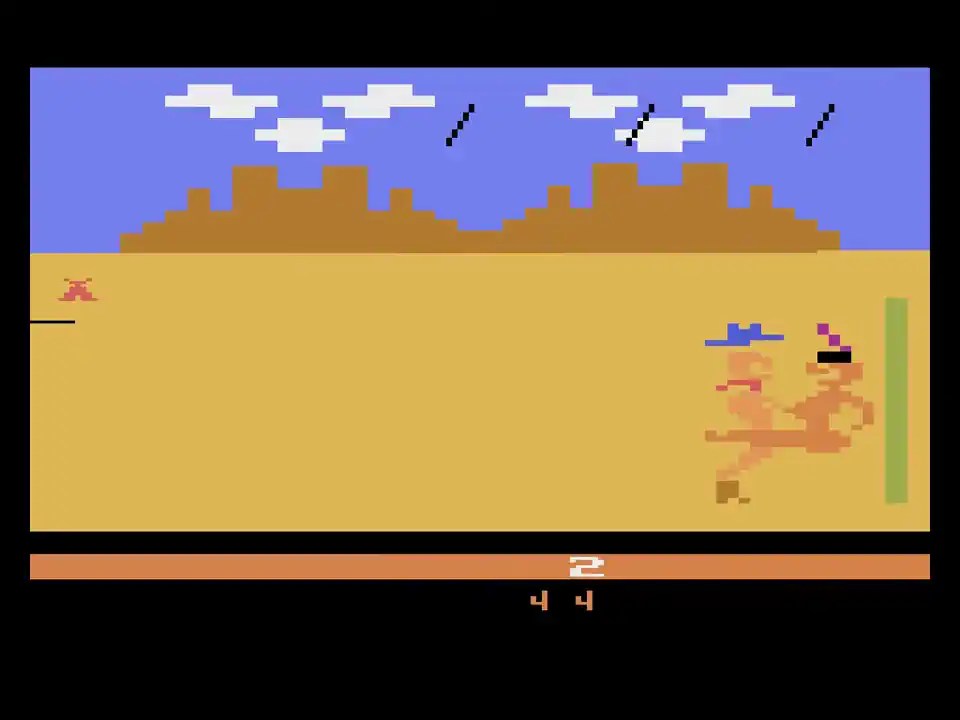
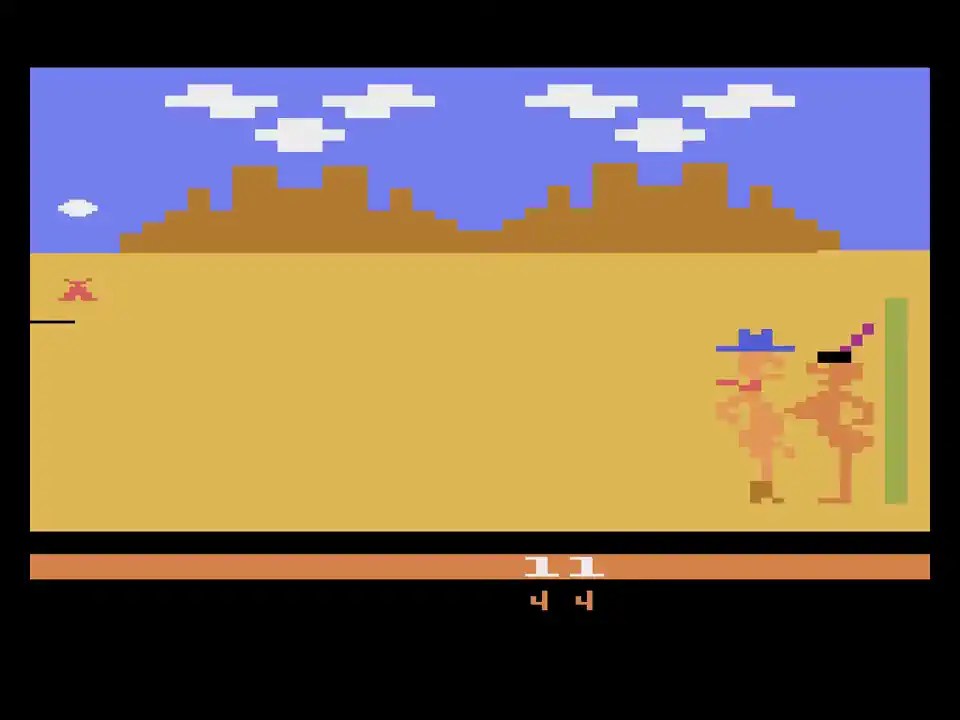
This sensational, exaggerated description sounds better than the actual gameplay. Because “Custer’s Revenge” is a one-screen loop: no plot twist, no new level, no “finale.” The game runs in an endless loop and focuses entirely on repetition and scoring – like a B-movie that shows its one big “signature scene” over and over again in the trailer.
Technology
Technically, the title corresponds to what was standard on the Atari 2600: few sprites, very rough animations, minimal audio output, and a reduced playing field. Basically, you have a few characters that are moved across an empty screen, plus a few simple hit/dodge moments – and the cartridge is ready. This also fits in with the hardware reality: the 2600 was never a miracle machine, but rather “make the best of very little,” with tricks such as flickering, reusing sprites, and extremely economical animation.
The technical achievement is neither innovative nor particularly complex. There are no playful gimmicks such as level logic, big scene changes, or sophisticated sound effects – rather a short loop that looks like a very small TV stage at any given moment. The sound is correspondingly basic: a few short tones that are more “signal” than “soundtrack.”
What was more striking was the presentation: a home console game that relied on provocative, “adult” symbolism in 1982 and deliberately sought to attract attention. It almost looks like an exploitation poster in a video store: technically low-budget, but the cover and the “hook” are supposed to sell it. Or in other words: not “wow, how impressively programmed,” but “wow, this is going to cause trouble” – and that was precisely the intended effect here.
Controversy
The release quickly sparked protest – and not just a few “letters to the editor,” but real headlines, calls for boycotts, and the whole 80s media circus that goes with it. The main criticisms were (1) the trivializing or normalizing portrayal of sexual violence, (2) the devaluation of an indigenous woman as an object and “target,” and (3) the association with a historically controversial figure from the Indian Wars. Women’s rights and indigenous organizations publicly condemned the game, and in some areas the issue became so heated that retailers removed the module from their shelves or only wanted to sell it “under the counter.” In some cases, there were attempts to restrict or ban sales locally – not necessarily as a major, nationwide law, but rather as a “not here, not in our area” reaction at the local level.
And because in 1982 there was no ESRB, no standardized age rating, and no uniform approach to “adult content” in games, the whole thing seemed like a test run: How would parents, politicians, the press, and retailers react if a game that felt like a sleazy exploitation trailer suddenly appeared on the Atari in the living room? Contemporary reports mention that the game was sometimes sold in sealed packaging with a note saying “not for minors” – essentially an improvised “Adults Only” label, long before such categories were commonplace. This is precisely what further fueled the debate about the protection of minors: when even retailers start making warning stickers, it’s clear that something doesn’t fit into the usual “for kids” categories.
In retrospect, “Custer’s Revenge” is considered an early lesson in how provocation was used as a marketing tool: outrage generates attention, attention generates conversation, and conversation can generate sales. It’s the old drive-in logic, only on cartridge: the louder the outcry, the more people want to know “what’s actually on it.”
And yes, this ploy apparently worked – contemporary statements and later reviews often cite sales figures of around 80,000 copies. That’s not “blockbuster” territory (the big Atari and Activision hits were more in the millions), but for a small manufacturer without mainstream distribution, with retailers who in some cases didn’t even want to stock the product, that’s a pretty impressive output. In short, for Mystique, the uproar was not an accident, but rather part of the advertising campaign.
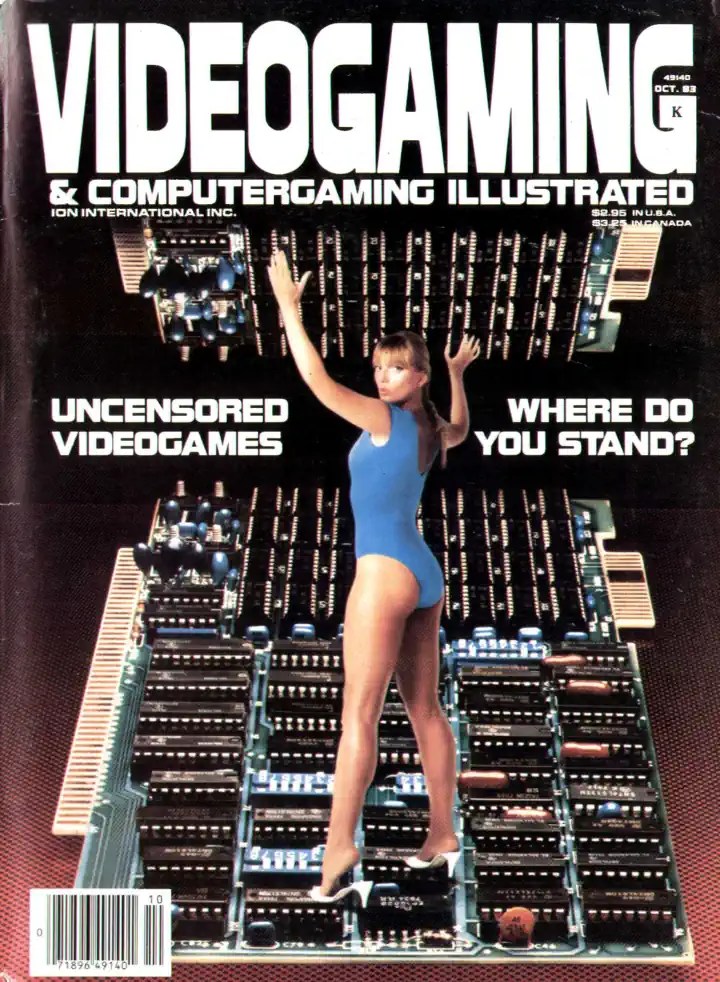
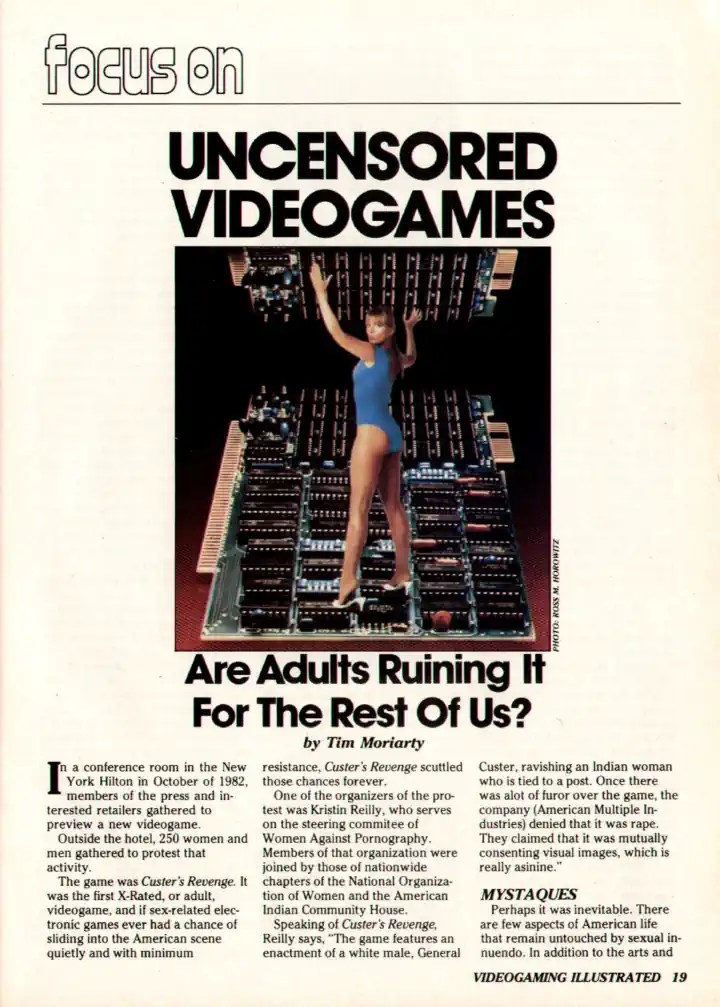
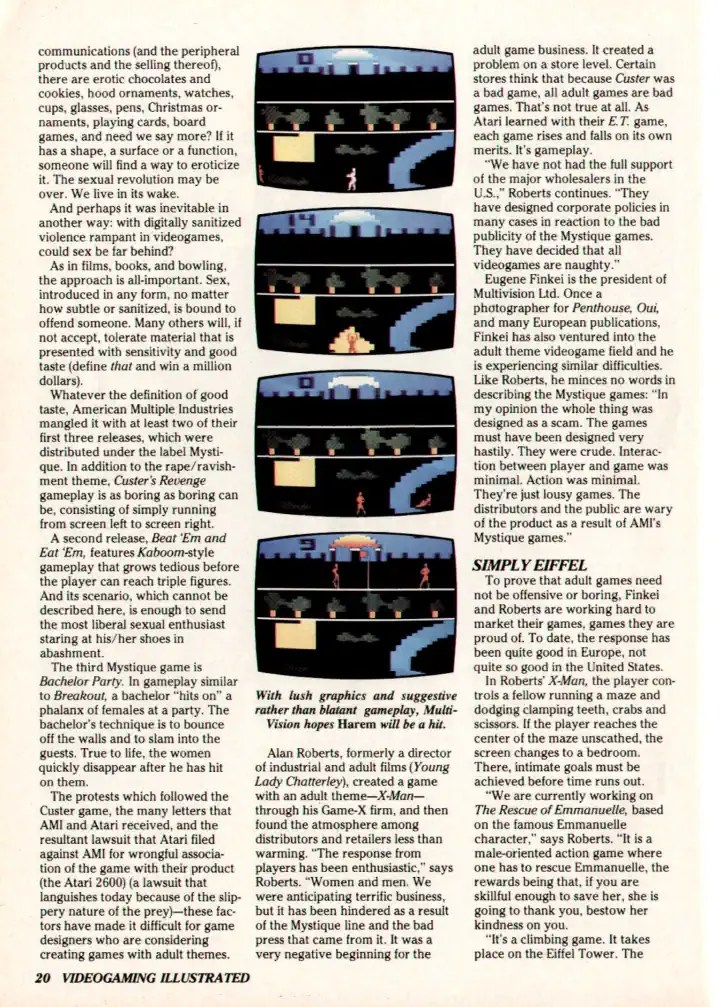
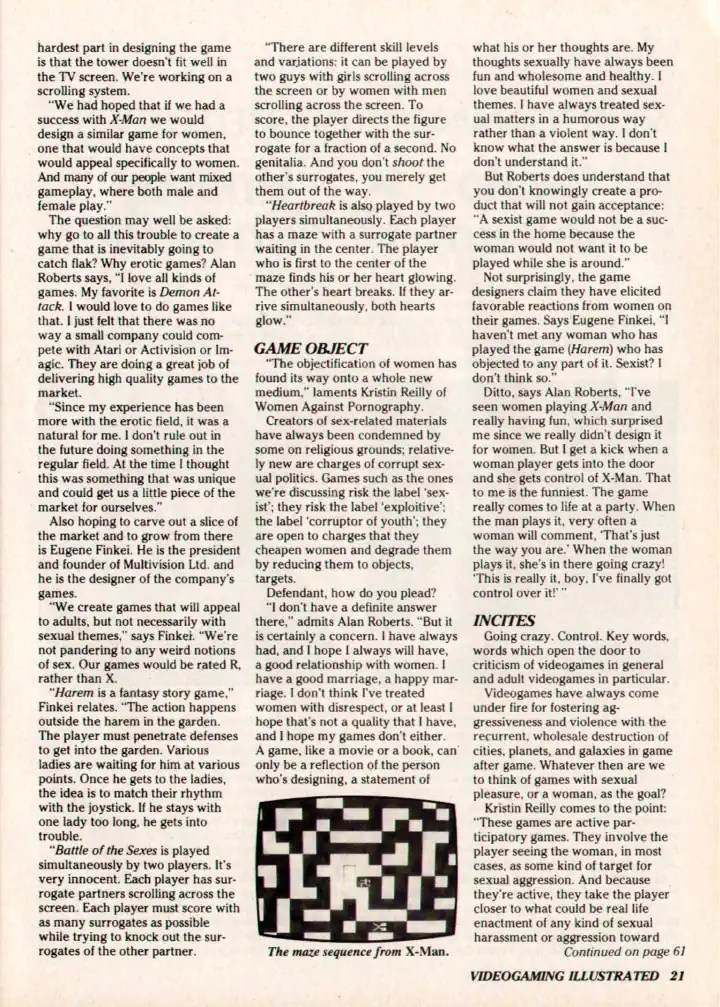
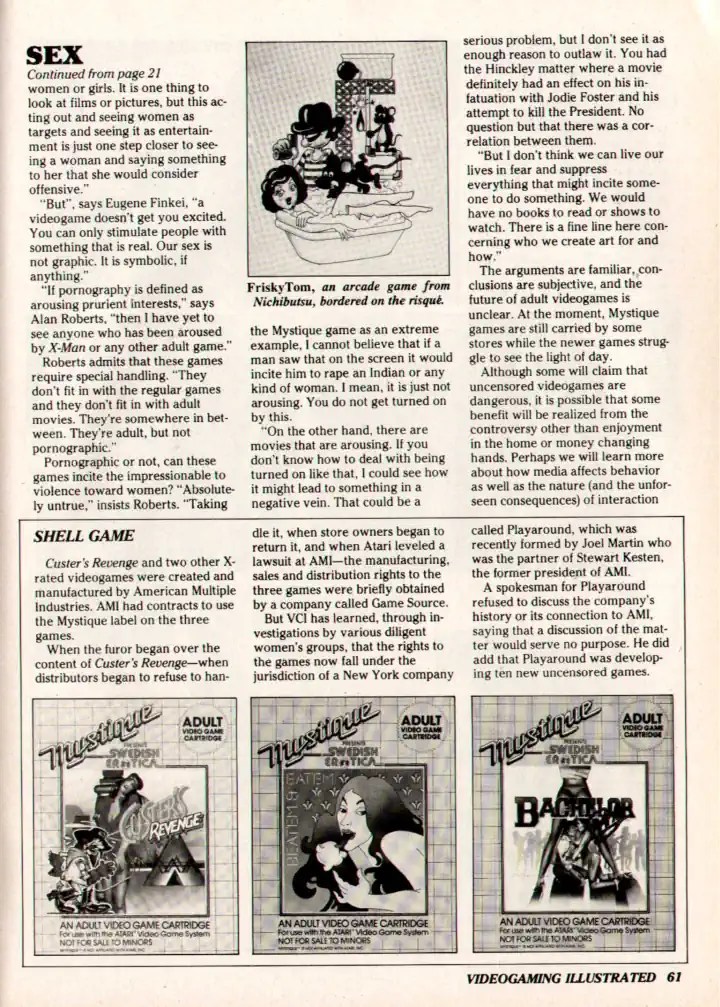
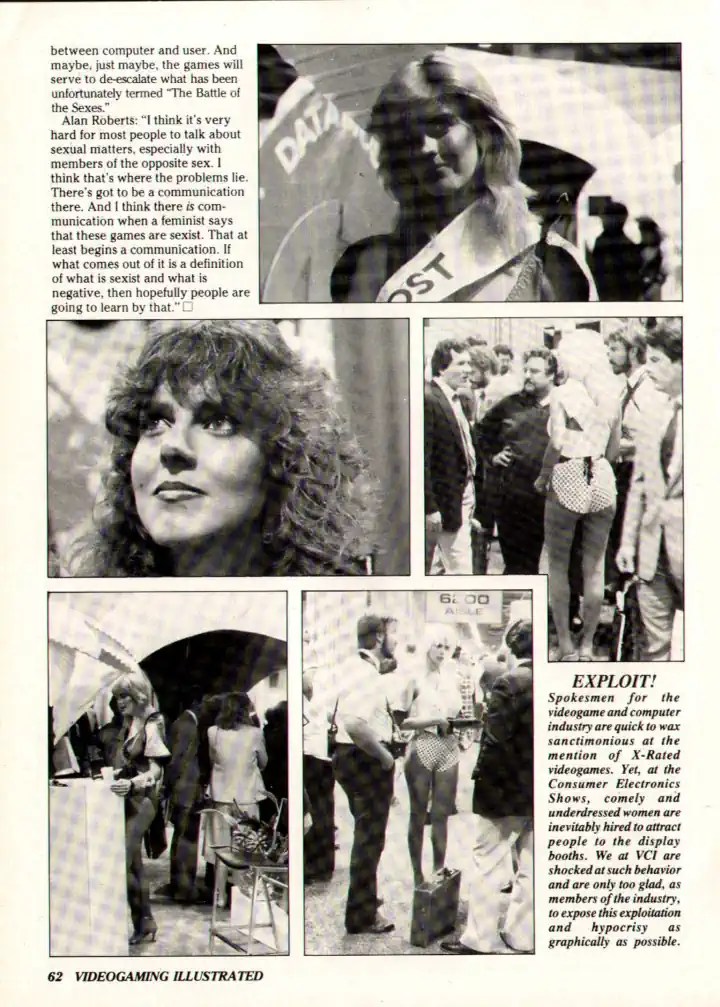
Videogaming Illustrated About Uncensored Videogames (10/1983)
Criticism at the time
Contemporary reviews were mostly negative. Even where adult content was not generally taboo, the title was considered tasteless and irresponsible in terms of content. Many reactions followed the motto: “If this is the future of video games, good night.” Critics also complained that the gameplay was weak: the game was reduced to a single, scandal-oriented “reward loop” with no significant variation. A few minutes are enough to see everything – after that, all that remains is dull repetition, as if you were watching the same sleazy trailer over and over again.
The public debate overshadowed any classic game criticism. Instead of “Are the controls tight?” or “Is the score addictive?”, the focus was almost exclusively on “Is this allowed?” and “Who even sells this stuff?”. Many media outlets and retailers treated the title less as an entertainment product and more as a cultural-political controversy. Some stores didn’t even stock it, others hid it behind the counter, and some magazines mentioned it only in passing – more as a warning signal for the industry than as a “must-play release.”
Conclusion
“Custer’s Revenge” is not a classically significant game, but rather a document of its time from the early home console era. It shows quite clearly how the market worked in 1982: hardly any rules, no uniform age ratings, a lot of Wild West mentality (pun intended) – and an environment in which small labels with provocative themes could quickly attract attention, even if the actual game remained very simple. At a time when a “game” was often considered a new product as soon as it was available as a cartridge in stores, the hook sometimes counted for more than fine-tuning. In addition, distribution was handled by small distributors, catalogs, mail order companies, and retailers who had to decide for themselves what to put on their shelves – a perfect breeding ground for things that were more likely to be promoted by “Have you seen THIS yet?” than by reviews.
As a cultural and historical artifact, the title is interesting because it reveals the conditions under which this phase came about: the technical limitations of the Atari 2600, the confusing third-party market, the battle for shelf space and headlines – and how packaging, hooks and scandal potential could be part of the strategy at the time. You can also sense how close the industry was to overheating at the time: more and more cartridges, more and more suppliers, fewer and fewer filters. Shortly thereafter, as is well known, the US market crashed into the great video game slump of 1983 – and titles like this belong, at least atmospherically, to precisely this “everything goes” phase. If you want to understand the time when games were still released without fixed guidelines, here’s a pretty blunt example.
More
Box and Cartridge
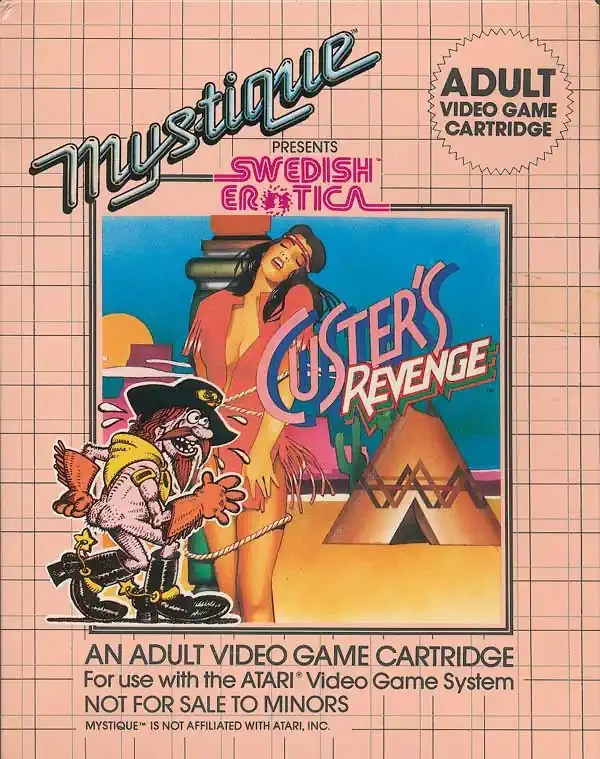
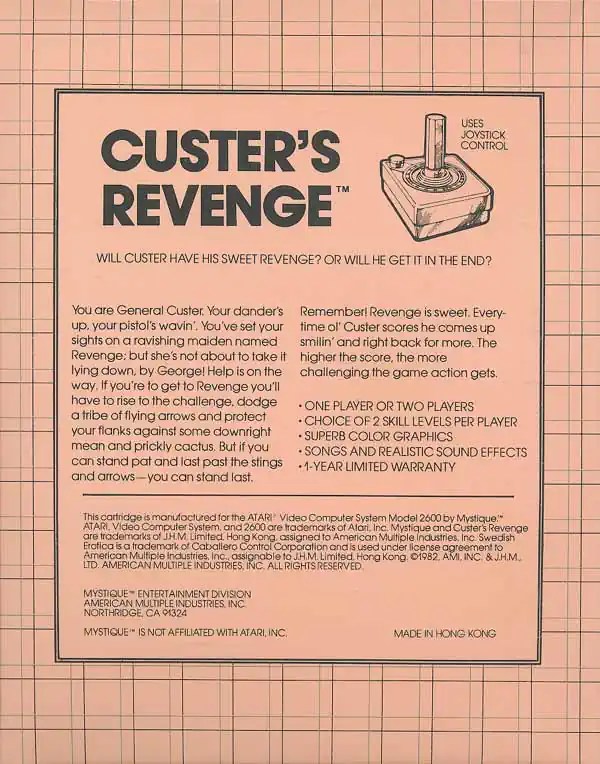
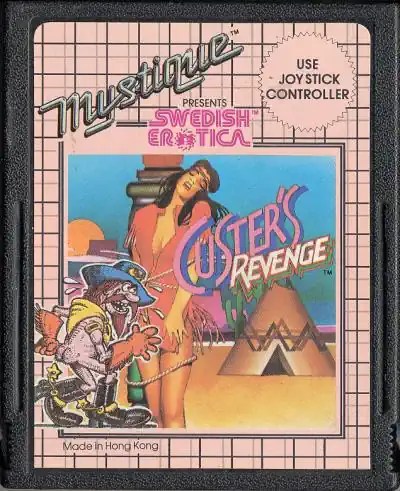








 McHenry's Lair
Kommentar verfassen :