

You don′t have to be beautiful
To turn me on
I just need your body, baby
Introduction
The song “Kiss” is one of the best-known and most unusual pieces in Prince’s oeuvre. Released in 1986, the track initially seemed minimalist and almost provocatively simple, but quickly became an international hit and attracted a great deal of media attention. At a time when pop music was often characterized by opulent productions, dense synthesizer pads, and complex arrangements, “Kiss” deliberately focused on reduction and sonic emptiness. It was precisely this simplicity that made the song distinctive and ensured that it stood out clearly from other contemporary releases. “Kiss” exemplifies Prince’s ability to combine funk, pop, and sexuality in an intelligent, stylized, and highly effective way, subverting the audience’s expectations while setting a new aesthetic standard for popular music of the 1980s.
Lyrics

Lyrically, “Kiss” thrives on innuendo rather than clear statements, and its impact comes less from narrative depth than from attitude and tone. Prince largely dispenses with romantic clichés such as eternal love or sentimental promises, replacing them with playful power games, demonstrative self-confidence, and a deliberately reduced, subtle eroticism. The lyrics convey a clear and self-determined attitude: material gifts, status symbols, or external recognition lose their significance in comparison to physical closeness, mutual attraction, and personal authenticity. Lines such as the invitation to need no expensive things, but only a kiss, reverse classic role models and place emotional independence and individual self-esteem in the foreground. This deliberate simplification gives the lyrics a timeless quality and eludes clear attribution. They are concise, almost fragmentary, leaving plenty of room for interpretation, identification, and personal projections on the part of the listener, which contributes significantly to their lasting impact.
History
“Kiss” was written during a phase in the mid-1980s when Prince was at the height of his creative and commercial power and was increasingly taking full control of his sound, image, and production methods. Originally, “Kiss” was not intended for Prince himself, but was conceived as a contribution for other artists. He initially wrote the song for the band Mazarati, with whom he was working closely at the time and whose sound he significantly influenced. However, after hearing an early demo version, Prince decided to take the piece back and develop it further on his own, as he recognized the song’s creative potential. In the final version, he radically reduced the instrumentation: there is hardly any bass, dry drums, striking rhythmic guitar riffs, and his unmistakable falsetto vocals, which give the song a special tension. This minimalist approach was unusual for funk music and represented a conscious break with the production standards that prevailed at the time. It was precisely this consistent reduction, combined with Prince’s precise control over arrangement and sound, that made the song so striking, modern, and innovative.
Trivia
“Kiss” reached number one on the US Billboard charts and became one of Prince’s most commercially successful and influential songs. The track remained in the upper regions of the charts for several weeks, cementing Prince’s status as an international superstar. In 1987, the song won a Grammy Award in the Best Male R&B Vocal Performance category, underscoring its recognition by both critics and the music industry. It is also striking that Prince deliberately dispensed with a dominant bass line, which is considered essential in funk and was seen by many as a bold stylistic risk. Furthermore, the song is often cited as a prime example of Prince’s playful and self-confident approach to gender roles, both musically and visually. Prince’s high vocal range and use of falsetto also attracted attention, irritation, and intense discussion about male role models in pop music at the time.
Music video
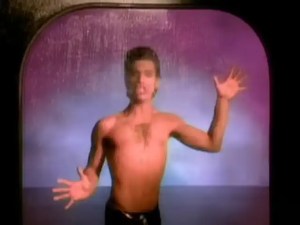
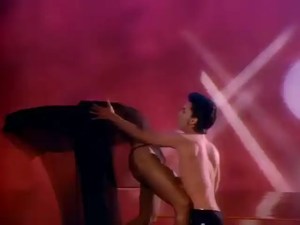
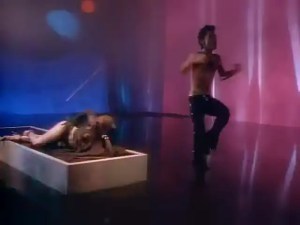
The music video for “Kiss” is as minimalist and stylized as the song itself, consistently reflecting its minimalist basic idea. Shot in black and white, it shows Prince dancing and performing, complemented by dancer Monique Manning, whose confident presence acts as a visual counterpart. By deliberately limiting the number of people and locations, the focus is entirely on the body, movement, and expression. The camera work is simple, almost documentary-like, and largely dispenses with elaborate cuts, effects, or visual distractions, giving the video a direct and almost intimate effect. The choreography appears deliberately raw, physical, and partly improvised, emphasizing Prince’s extraordinary sense of rhythm and his ability to communicate music through movement. Overall, the video reinforces the erotic tension of the song and underscores Prince’s charismatic stage presence without pursuing a classic plot or clear narrative structure, making it timeless and open to individual interpretation.
Contemporary reviews
Contemporary reviews were overwhelmingly positive, although the song initially caused some irritation and challenged conventional listening habits. Many music journalists particularly praised the courage to consistently reduce the song to its bare essentials, as well as Prince’s extraordinary vocal performance, which oscillates between vulnerability, irony, and self-assured dominance. Some critics were initially surprised by the sparse, almost barren production, but quickly realized that this was precisely where the song’s real strength lay and that “Kiss” deliberately broke with convention. In reviews, the track was often highlighted as proof of Prince’s innovative power and cited as an example of how he repeatedly redefined pop music and pushed stylistic boundaries.
Cultural influence
The cultural influence of “Kiss” is still felt today and extends far beyond its original release context. The song inspired numerous artists in the funk, pop, and R&B genres and impressively demonstrated that minimalism in pop can be just as effective, provocative, and successful as elaborate studio arrangements. Many later productions deliberately took up this idea of reduction and were guided by the clear structure and directness of the song. In addition, “Kiss” had a lasting impact on the public image of Prince as an artist who staged sexuality in a self-determined, playful way that transcended clear gender attributions, thereby challenging social norms. Over the years, the song has been covered and sampled many times and used in films and commercials, reaching new generations and becoming permanently anchored in the collective pop memory.
Conclusion
“Kiss” is much more than just a successful pop song from the 1980s and can be understood as an artistic statement that set standards both musically and culturally. It exemplifies Prince’s courage to break musical and social conventions and achieve an extraordinarily powerful effect with seemingly simple, reduced means. The deliberate limitation to a few instruments and the clear rhythmic structure in particular show how precisely Prince controlled sound and atmosphere and used them to form an unmistakable style.

Thanks to its minimalist production, ambiguous and self-confident lyrics, and clear, sensual visual aesthetics, the song is still considered a timeless classic of pop music today. At the same time, “Kiss” can be understood as a piece that playfully dissolves typical role models, thereby enhancing the song’s appeal: it is not about romantic sentimentality, but about self-confidence, excitement, and staging. The mixture of funk, pop, and erotic provocation still seems modern decades later because it avoids exaggeration and instead focuses on attitude and expression.
“Kiss” impressively demonstrates why Prince is perceived not only as a hit maker, but also as a visionary artist. The song showcases his ability to not simply follow trends, but to shape and develop them. In doing so, Prince has not only had a lasting impact on pop music, but has also established himself as one of the most influential and innovative figures in music history.








 McHenry's Lair
Kommentar verfassen :