

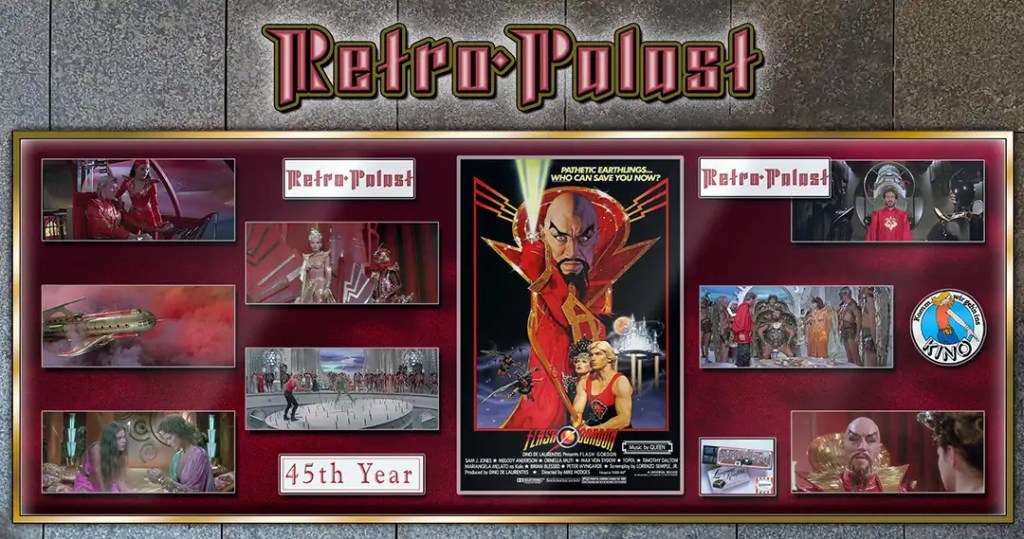
I’m bored. What plaything can you offer me today?
An obscure body in the S-K System, Your Majesty.
The inhabitants refer to it as the planet… „Earth“.
Will you destroy this, er, Earth?
Later. I like to play with things a while…
FLASH! – Ah-aaah!
Flash Gordon, released in 1980, is a film that oscillates between camp, retro aesthetics, and cult exuberance like no other. Director Mike Hodges created a deliberately exaggerated science fantasy that sought neither the realism nor the seriousness of other genre productions of its time—instead, it was a garishly colorful pop spectacle that clearly referenced its comic book roots, both aesthetically and narratively. The film succeeds in combining both the colorful exoticism of classic pulp adventures and the self-confidently artificial style of the late 1970s and early 1980s. The production celebrates the exaggerated, the operatic, the playful, while at the same time breaking with many conventions of the realism that was popular in science fiction cinema at the time. Supported by a legendary soundtrack by the band Queen, which perfectly captures the energetic, ironic, and at the same time epic tone, the film is now considered a dazzling curiosity that has risen to cult icon status over the decades and is increasingly perceived as a deliberate artistic statement.
Story
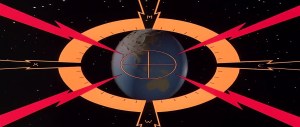
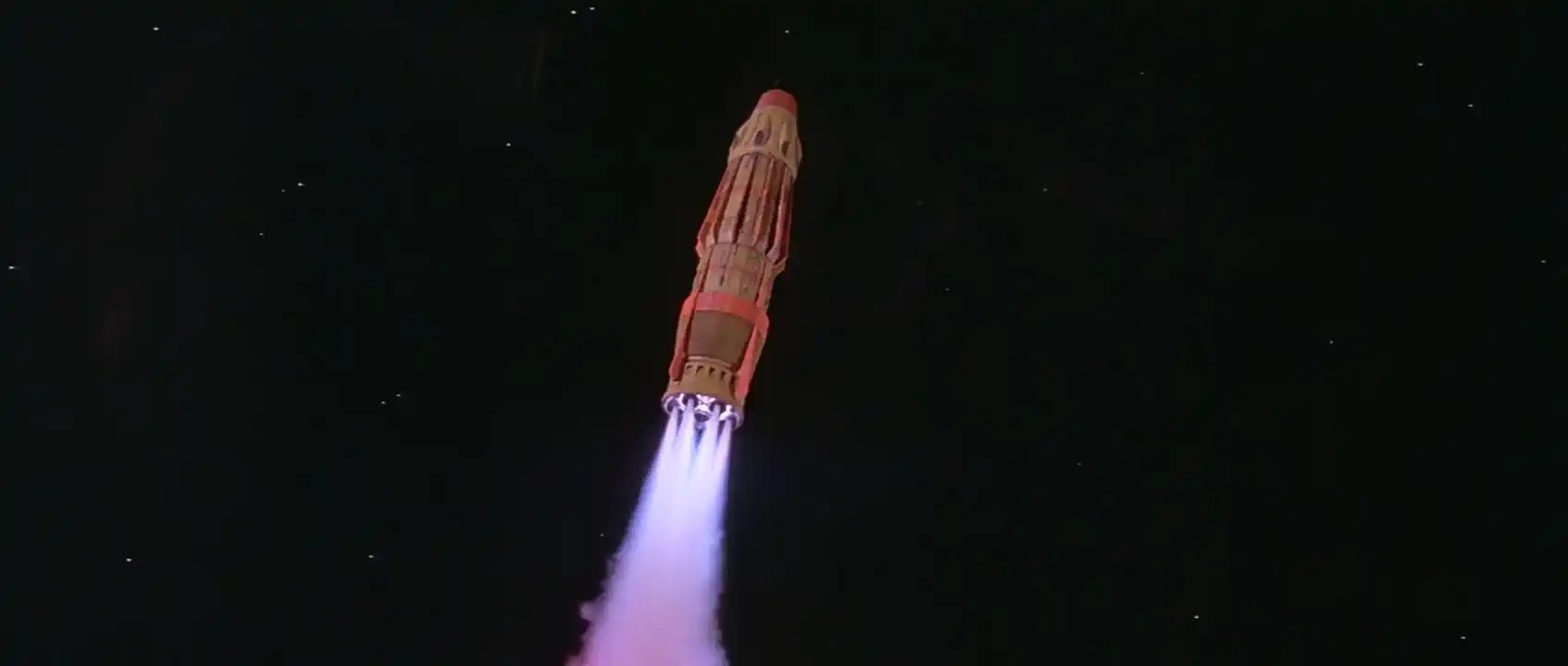
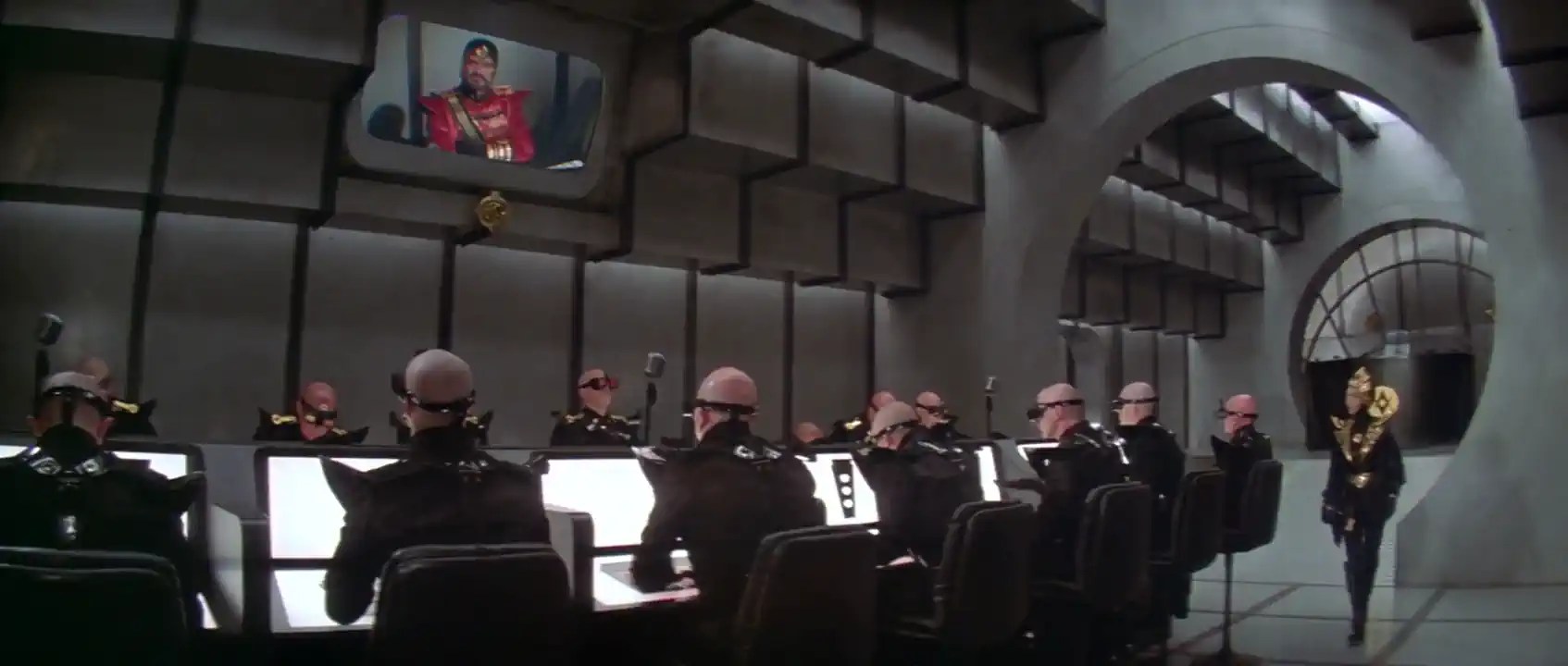
The plot follows American football star Flash Gordon, who, together with travel writer Dale Arden, is drawn into a cosmic threat. It soon becomes clear that Flash did not stumble into this adventure by chance: The eerie natural phenomena that disrupt their flight are only the prelude to a far greater galactic crisis, whose origins lie far beyond Earth and whose effects are becoming increasingly threatening. The impending danger intensifies as evidence mounts that an alien power is deliberately interfering with natural processes. After a dramatic emergency landing at the mysterious research station of the eccentric scientist Dr. Hans Zarkov, all three are catapulted into the intergalactic empire of Mongo in his homemade rocket – a symbol of Zarkov’s obsession, his paranoid foresight, and his desperate search for the truth behind the catastrophes. There, the tyrannical space emperor Ming the Merciless rules, threatening Earth and sowing chaos with the help of advanced technologies, manipulative surveillance systems, and deliberately created natural disasters. Their arrival on Mongo immediately confronts Flash, Dale, and Zarkov with a world frozen in political intrigue, power games, and fear, while the planet’s various peoples are oppressed and pitted against each other.
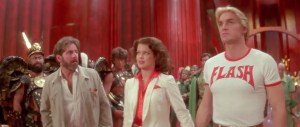
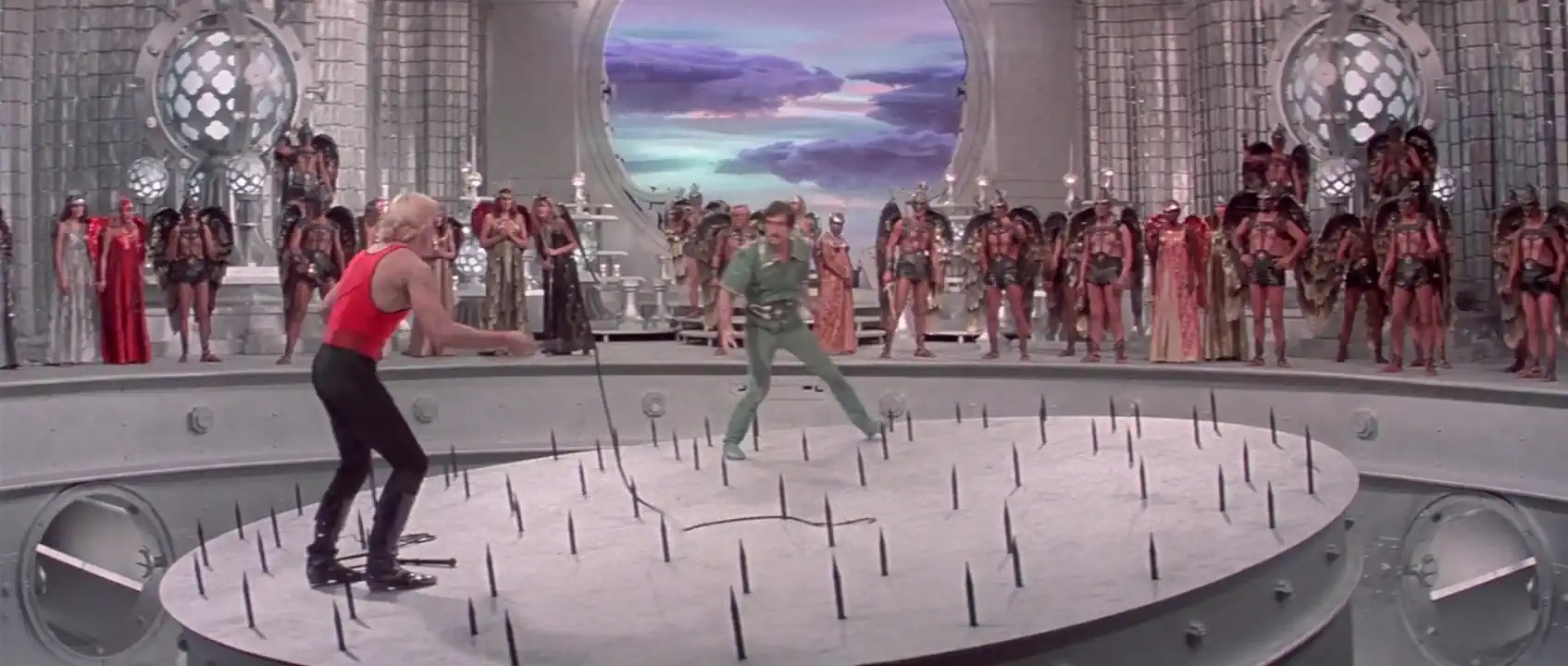
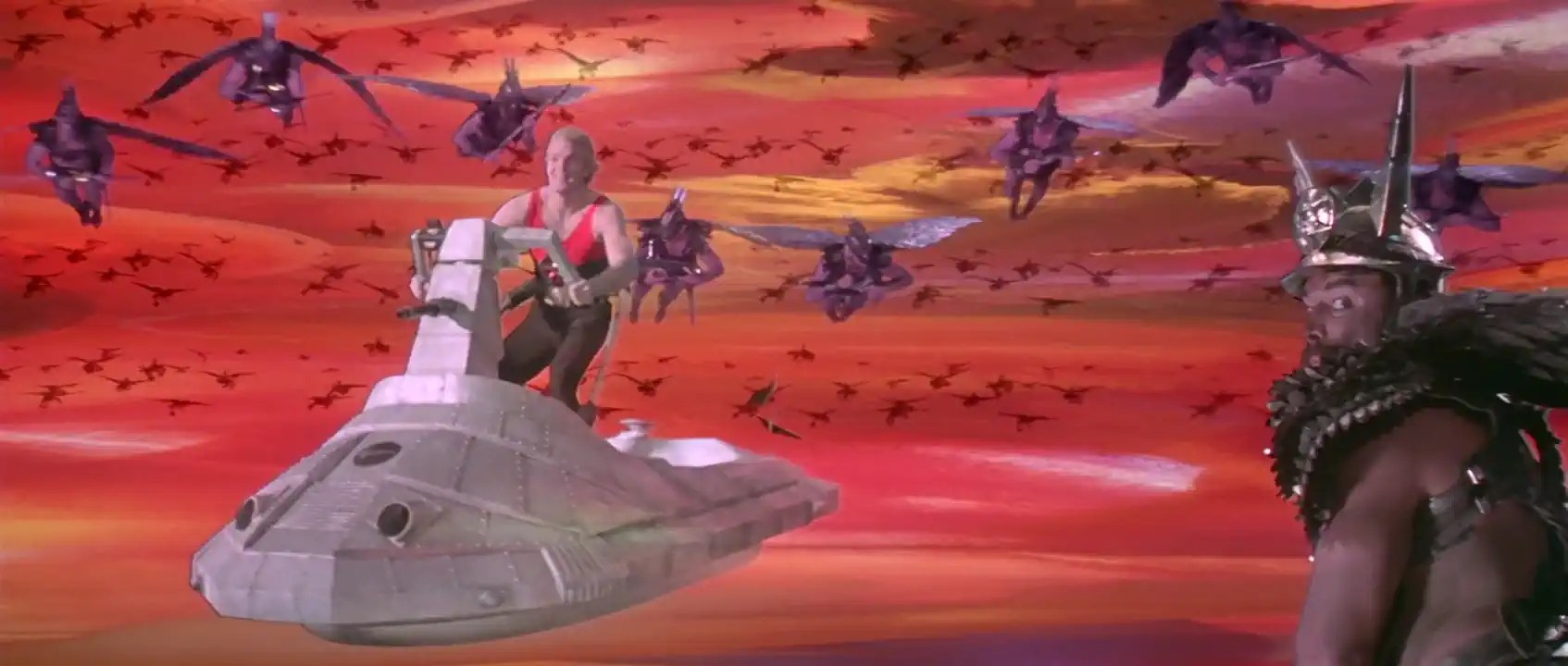
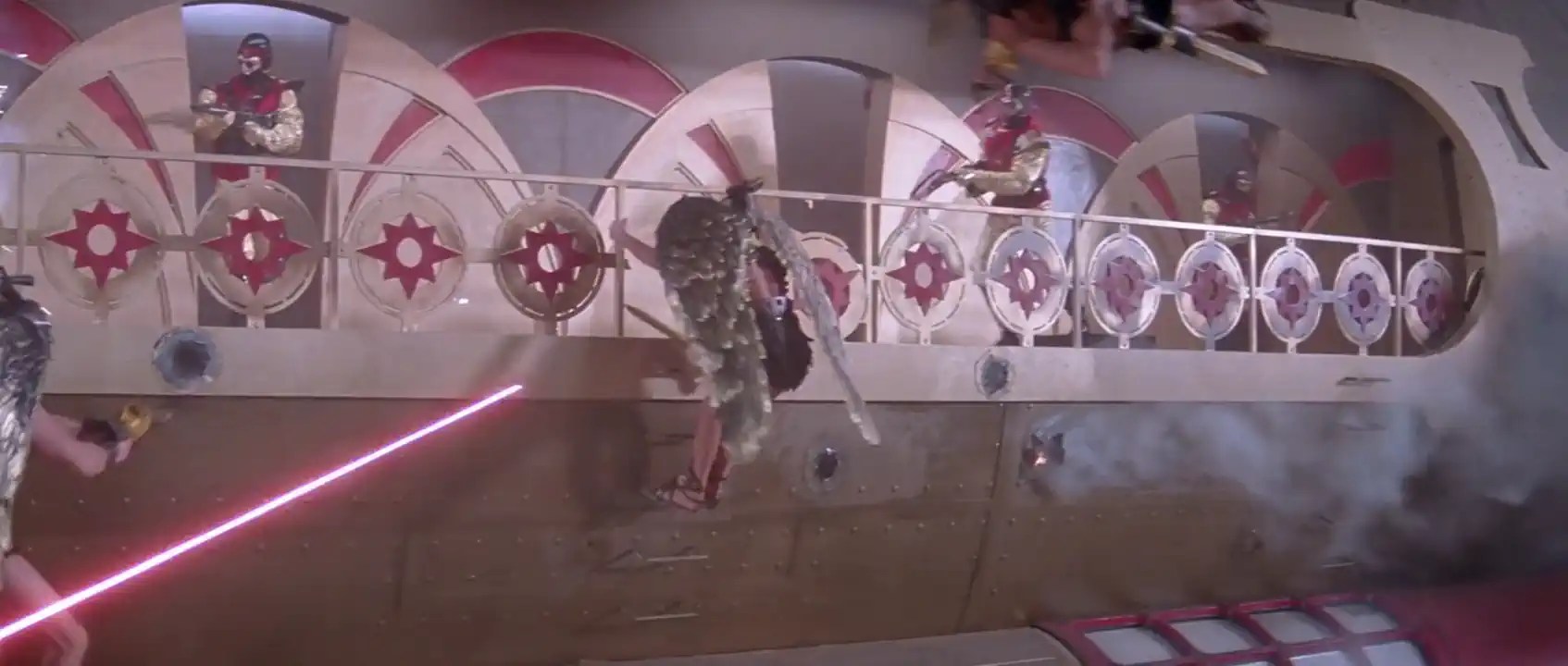
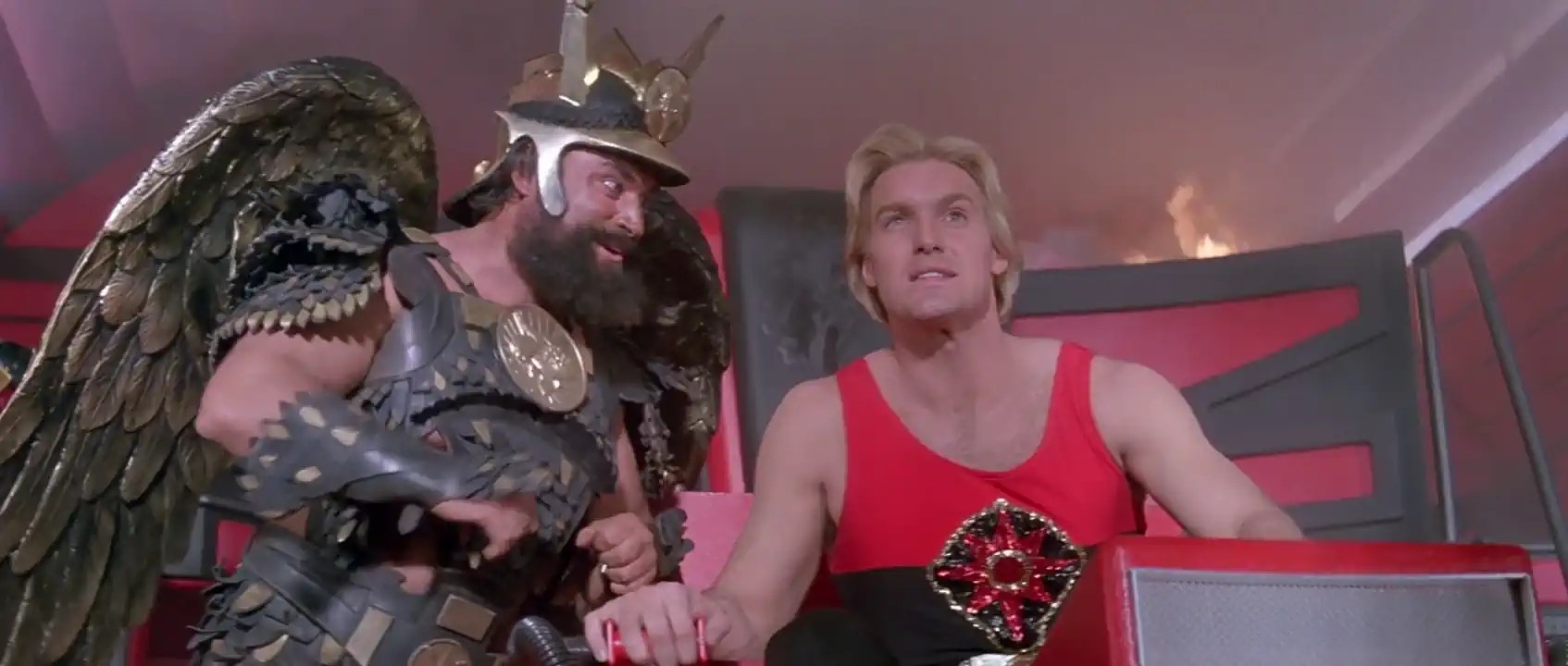
Flash is increasingly drawn into the political maelstrom of the planet Mongo and, against his will, becomes the bearer of hope for various oppressed peoples – including the proud, aerobatically gifted Hawkmen and the nature-loving, tradition-steeped Forestmen, both of whom suffer under Ming’s brutal rule and whose cultures have been eroded by mistrust and repression. In a series of trials, exhibition fights, dangerous rituals, diplomatic challenges, and grotesquely exaggerated trials, Flash must prove not only his physical strength, but also his moral fortitude, empathy, and strategic thinking. During these challenges, he surpasses himself, forges unexpected alliances, gains new respect for the peoples of Mongo, and realizes that his efforts have far-reaching consequences beyond anything he could have imagined—not only for Earth, but also for the liberation of an entire planet. Finally, in a spectacular finale that combines military conflicts and personal tests of courage, he succeeds in stopping Ming and saving Earth from destruction. The story deliberately feels episodic and highly theatrical—a stylistic device that clearly draws on the serial adventures of the 1930s and creates the feeling of an ongoing, pulp-like adventure that intensifies from chapter to chapter.

Actors
The cast is an essential part of the film’s charm and contributes significantly to its distinctive tone. Each character is deliberately exaggerated, and the actors fill these roles with a mixture of ironic distance and sincere devotion, which supports the film’s unique balancing act.
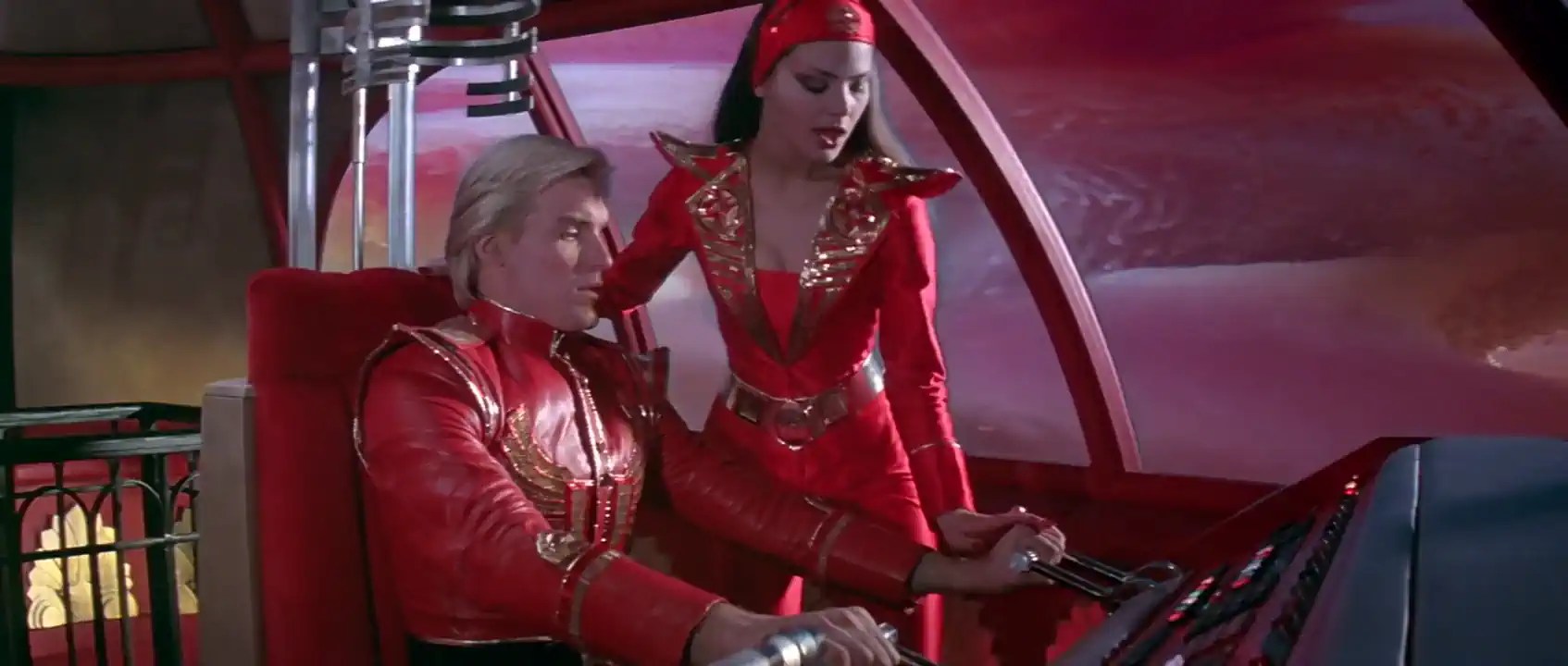
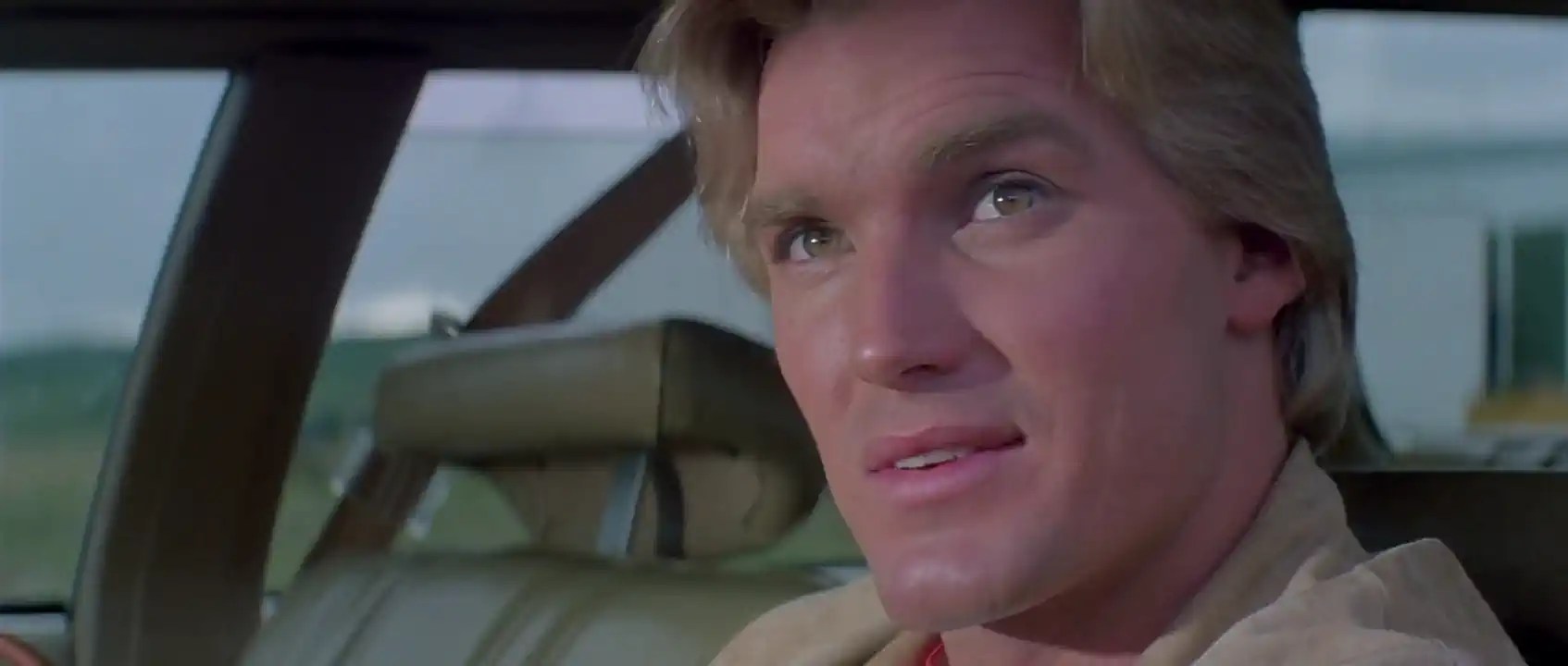
- Sam J. Jones as Flash Gordon carries the role with a naive heroism that fits perfectly into the deliberately ironic staging. His performance combines athletic physique with an almost childlike sincerity, making Flash appear both a classic adventurer and a charmingly awkward outsider. Jones‘ slightly stiff but enthusiastic presence reinforces the campy tone and makes his character a likable centerpiece of the film.
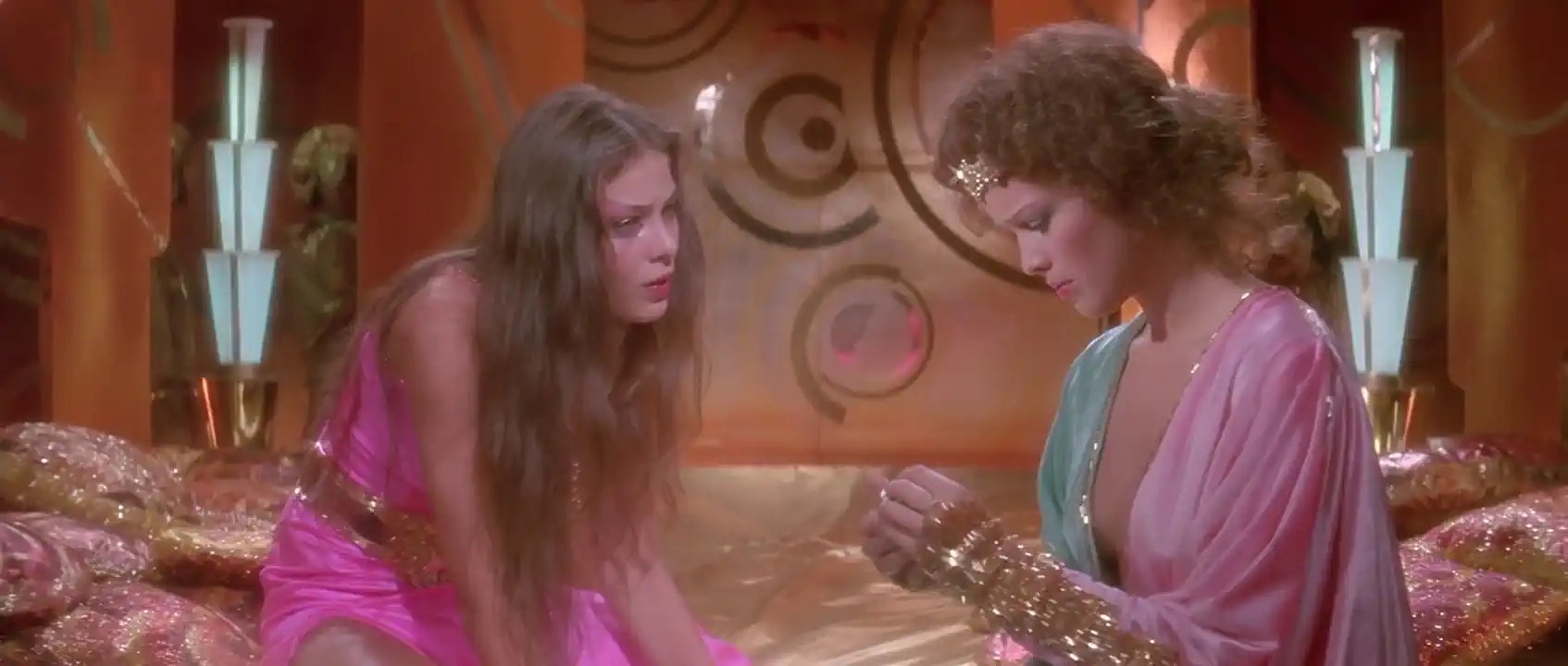
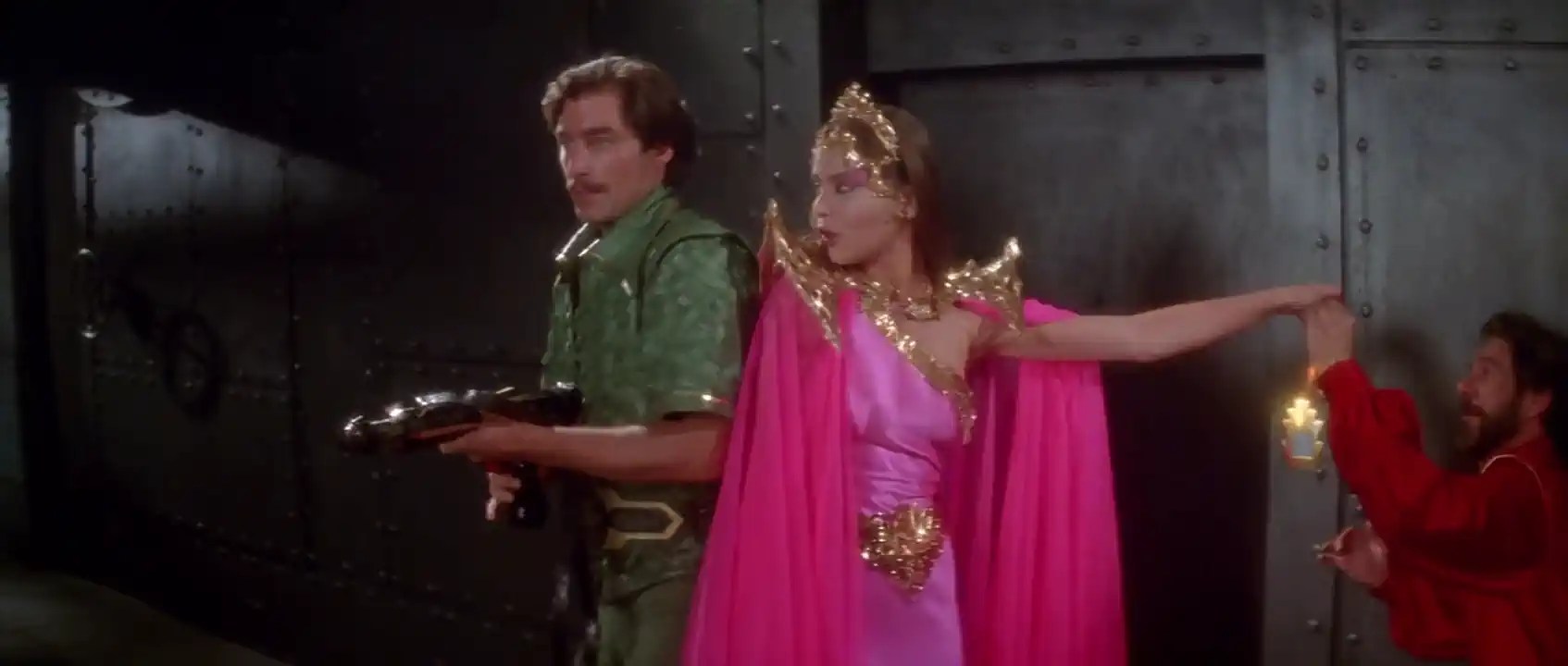
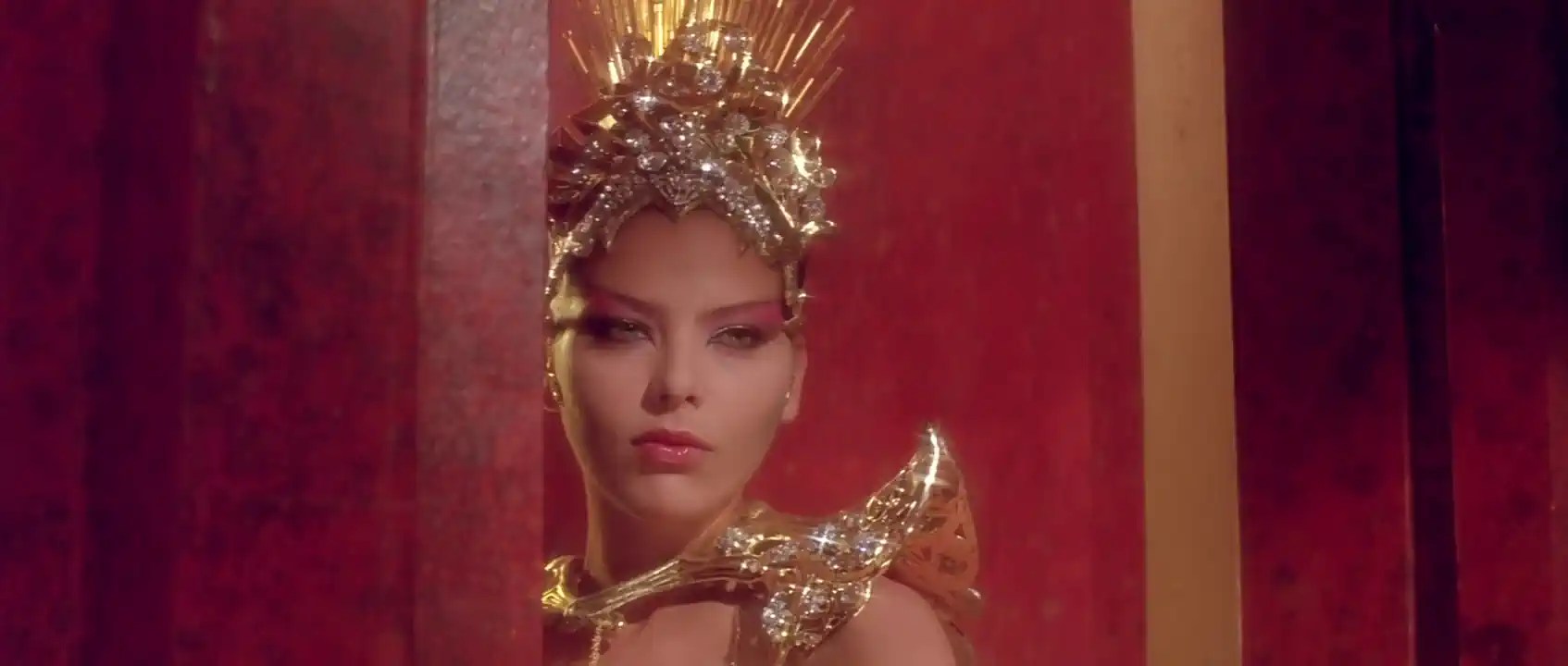
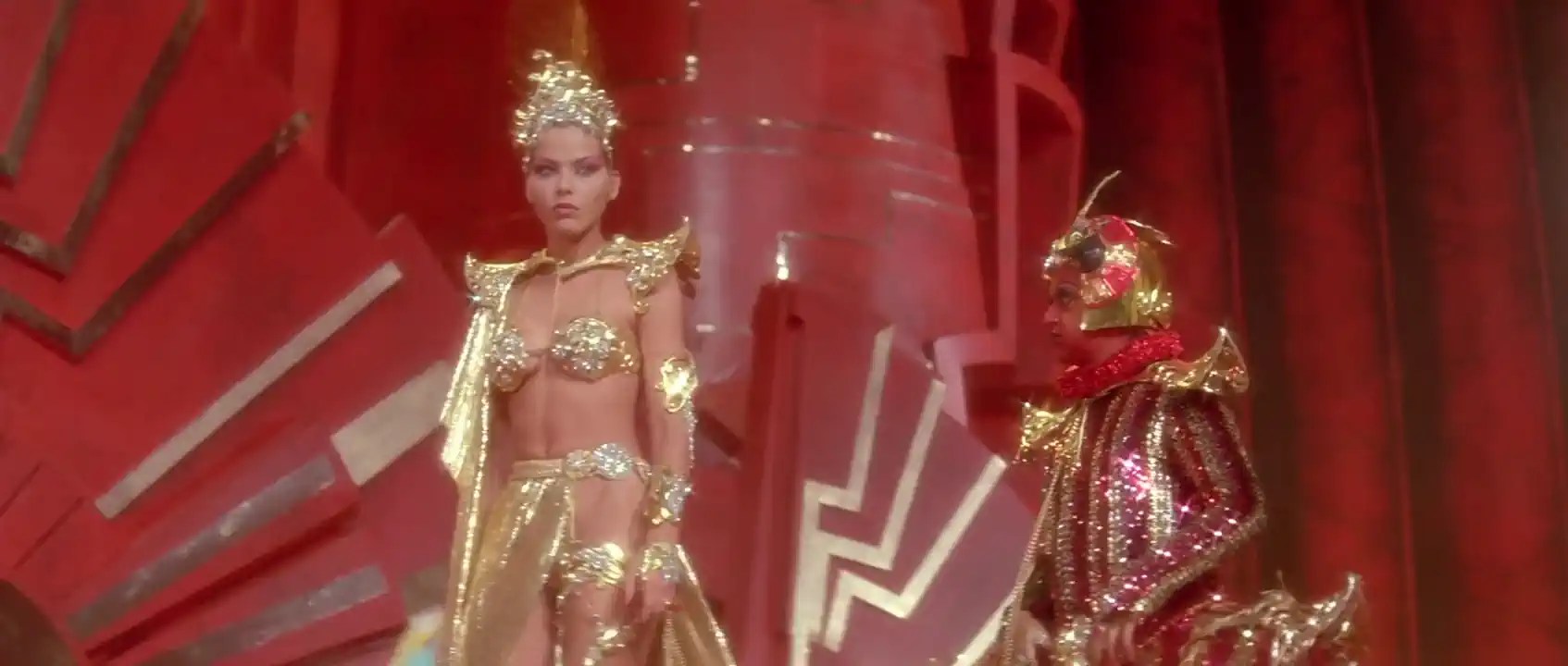
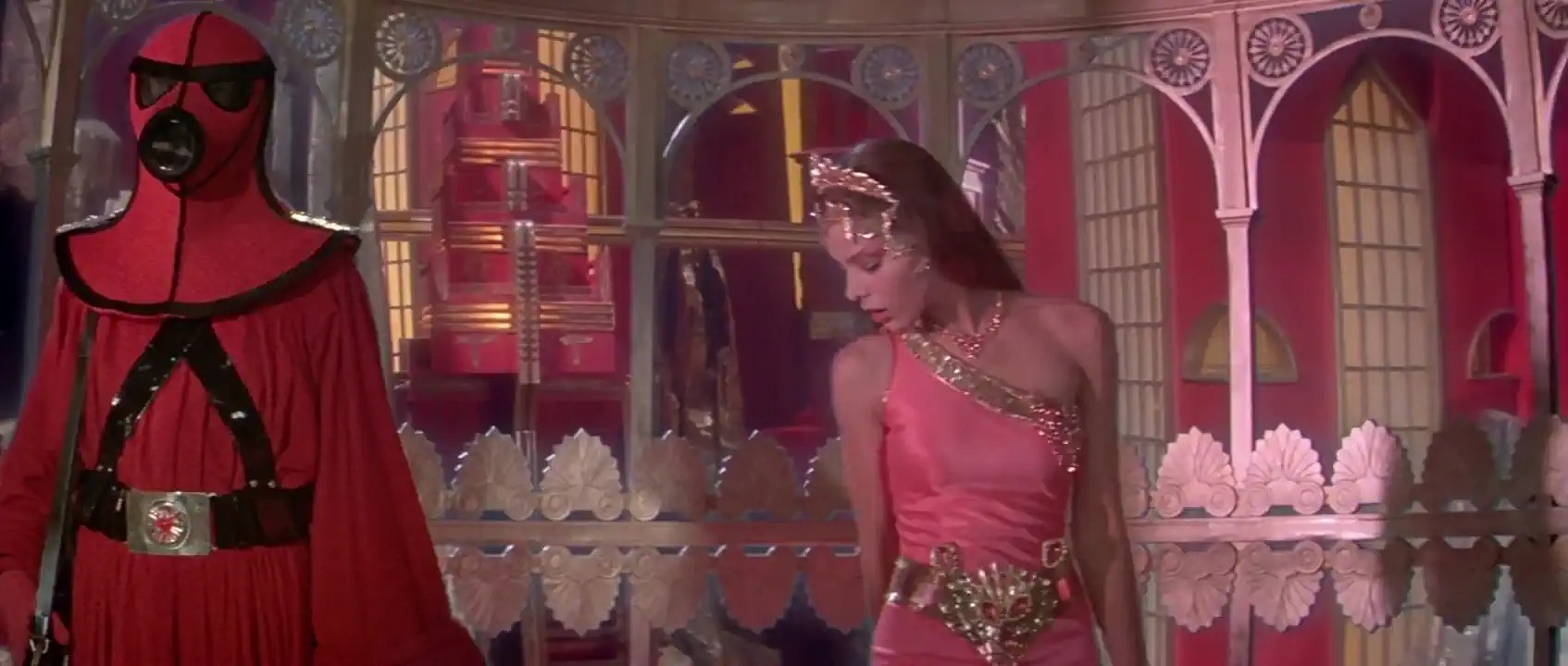
- Ornella Muti as Princess Aura brings a mixture of seductive elegance, vulnerable depth, and dangerous unpredictability to her role. Particularly noteworthy are Muti’s extravagant, sensually ornamental costumes, which perfectly underscore her role as a beguiling but unpredictable noblewoman with sparkling gemstones, flowing fabrics, and dramatically cut silhouettes. Muti succeeds in portraying Aura as a complex character who vacillates between loyalty, rebellion, and personal desire, and whose outward appearance—glamorous, exotic, and deliberately exaggerated—emphasizes her inner turmoil even more strongly.
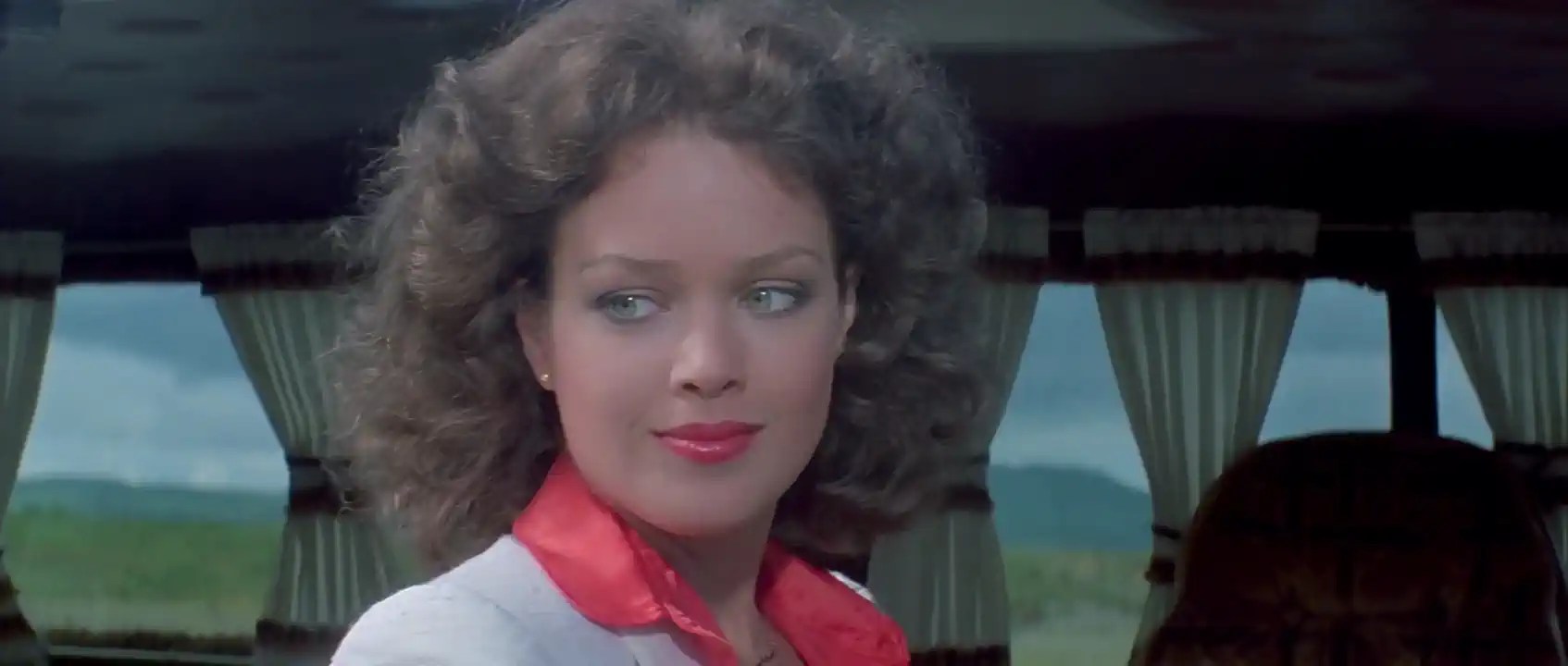
- Melody Anderson as Dale Arden delivers a mixture of classic “damsel in distress” and self-confident partner. Her character is given more witty dialogue and independence than we are used to seeing in older serials, and Anderson skillfully balances emotional vulnerability with resolute strength. This gives Dale more depth and makes her an active participant in the adventure.
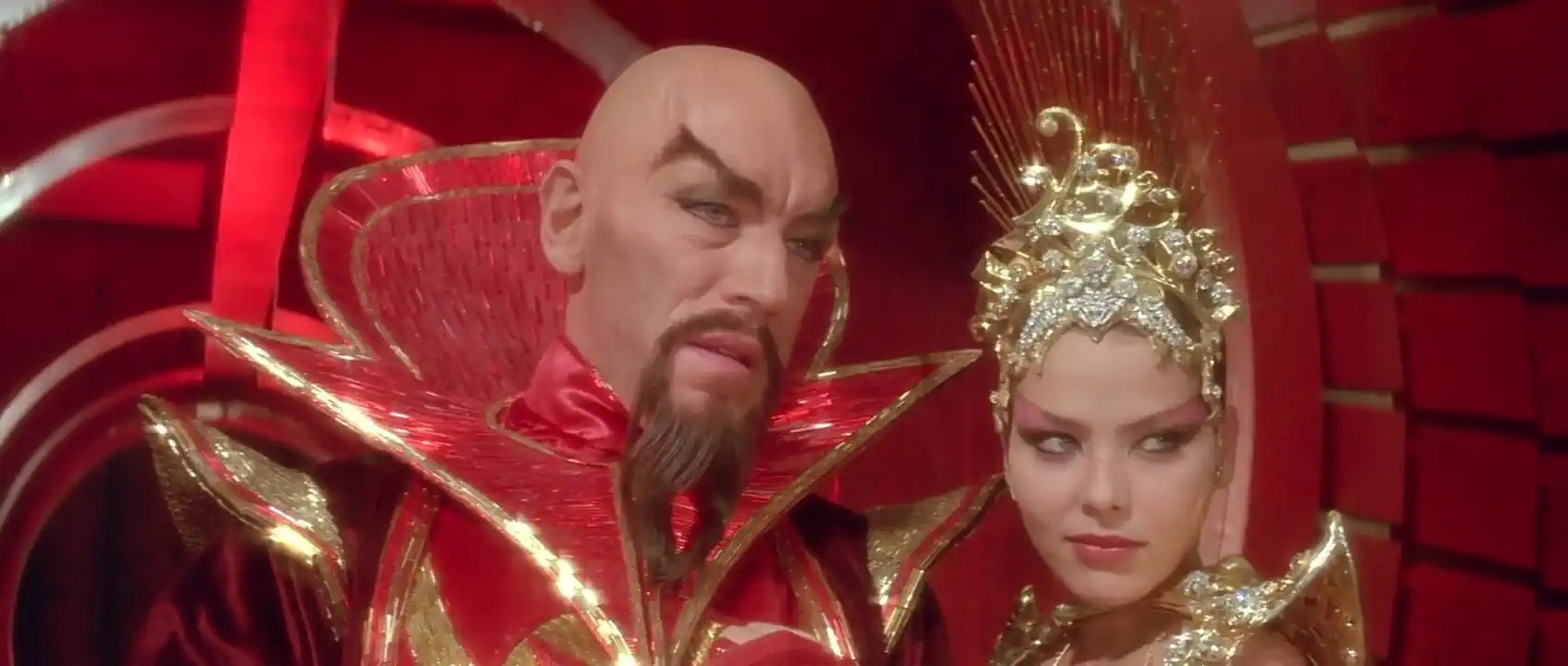
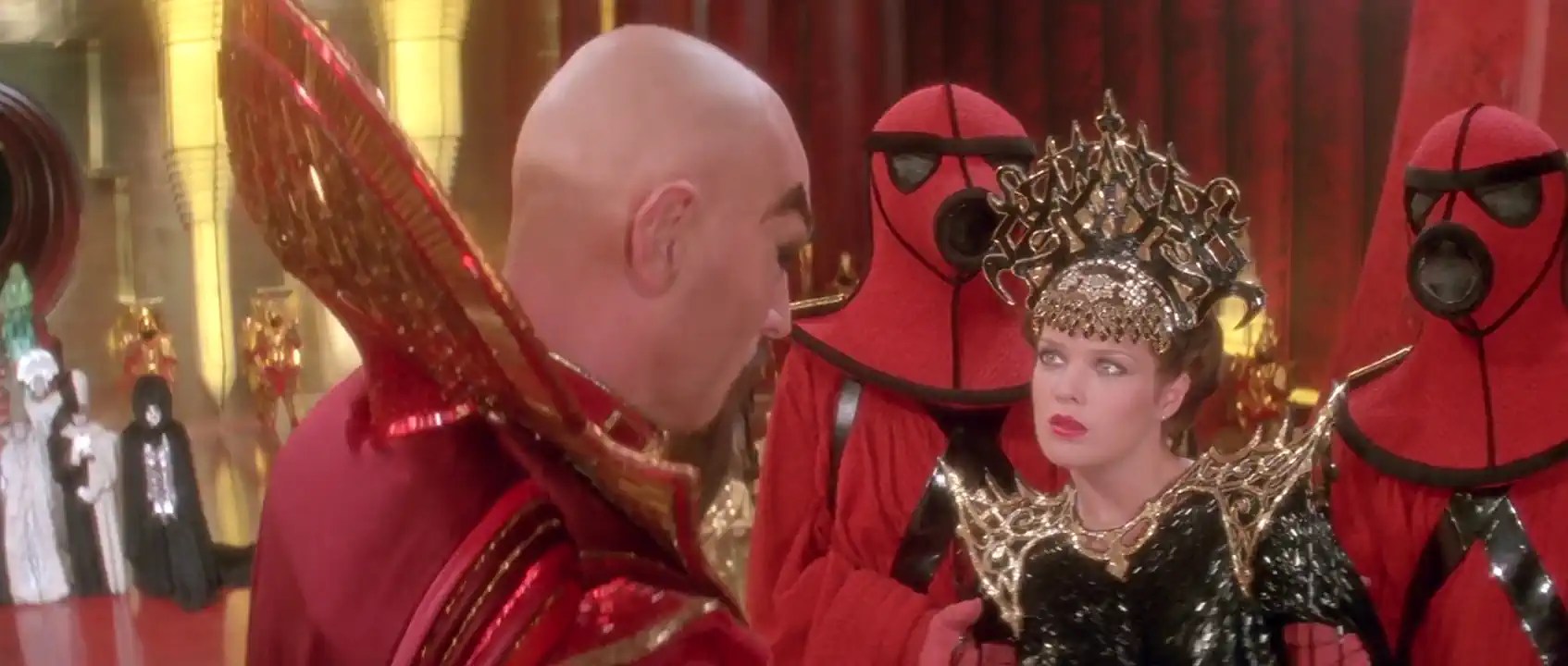
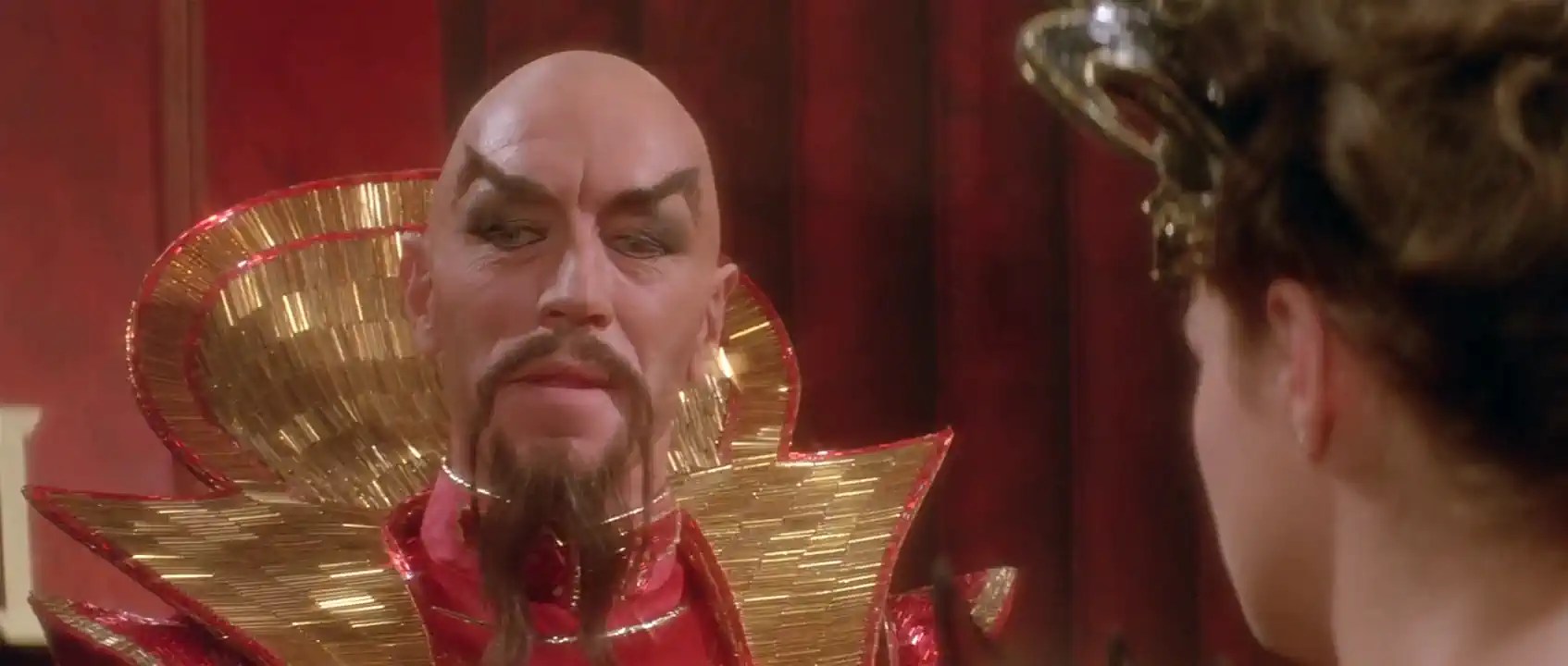
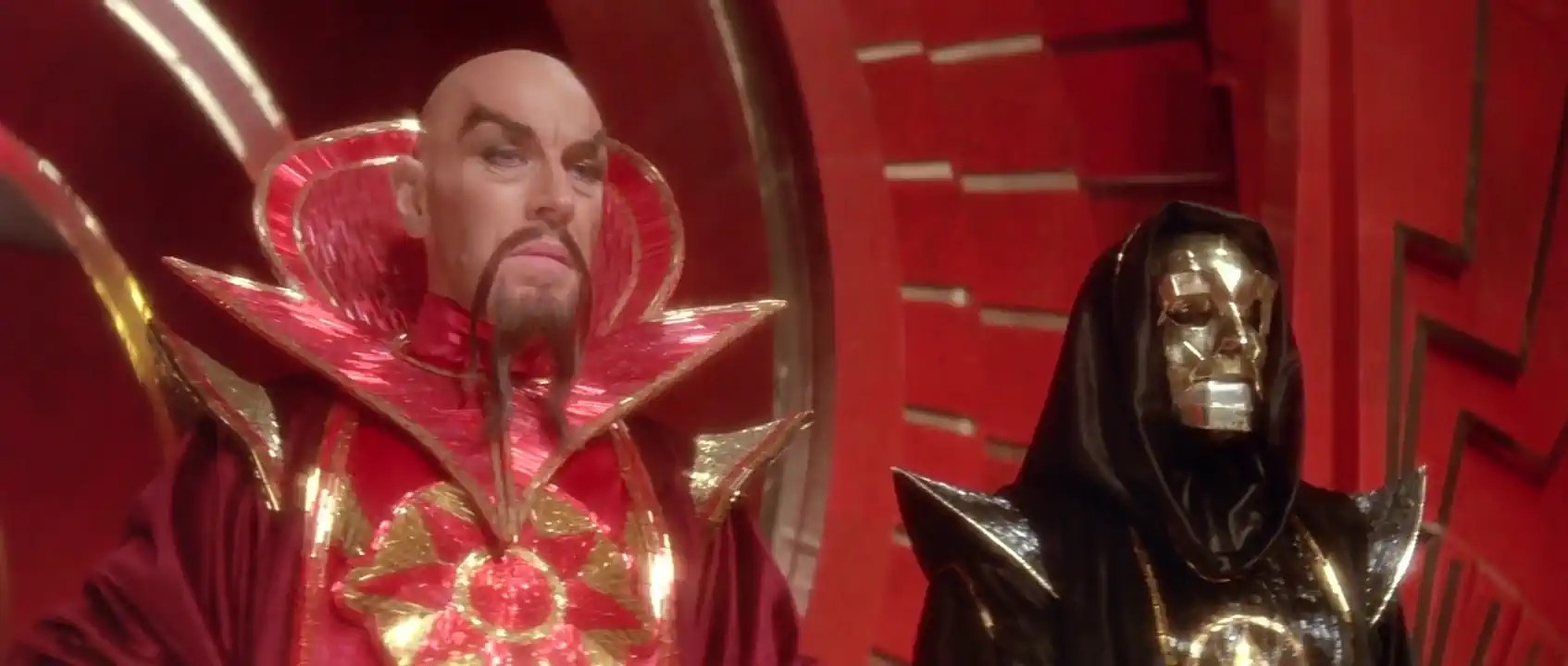
- Max von Sydow as Ming the Merciless is one of the film’s great highlights: he plays the iconic role with theatrical gravitas, elegance, and menacing composure. Von Sydow gives Ming an aristocratic aura that goes far beyond the clichés of the pulpy villain. His performance deliberately fluctuates between menacing seriousness and mischievous exaggeration, making him one of the most memorable villains in the genre.
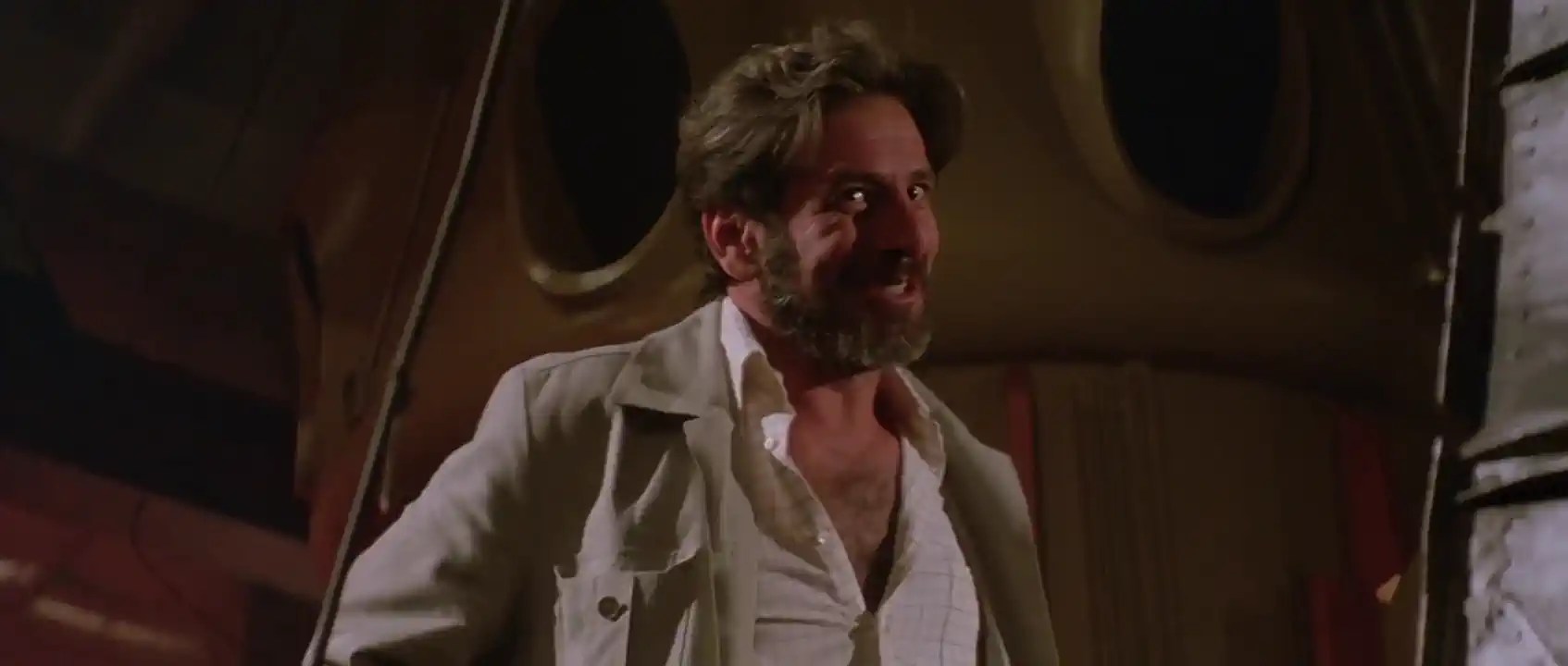
- Chaim Topol as Dr. Hans Zarkov brings a charismatic blend of obsession, intellect, and unexpected warmth to the film. His Zarkov becomes one of the most human characters in the story, serving as both a moral and narrative anchor.
- Timothy Dalton (Prince Barin) and Brian Blessed (Prince Vultan) enrich the film with energetic, striking performances that are now considered some of its most iconic moments. Dalton gives Barin a romantic austerity strongly reminiscent of classic swashbuckling heroes, while Blessed embodies the Falcon Men leader Vultan with a thunderous voice and unbridled enthusiasm. Both roles add additional comedic and dramatic tones to the film.
The actors mostly perform in a deliberately exaggerated manner—a central pillar of the camp aesthetic that Hodges was striving for.These exaggerated performances create a unique tone somewhere between parody, opera, and adventure story.
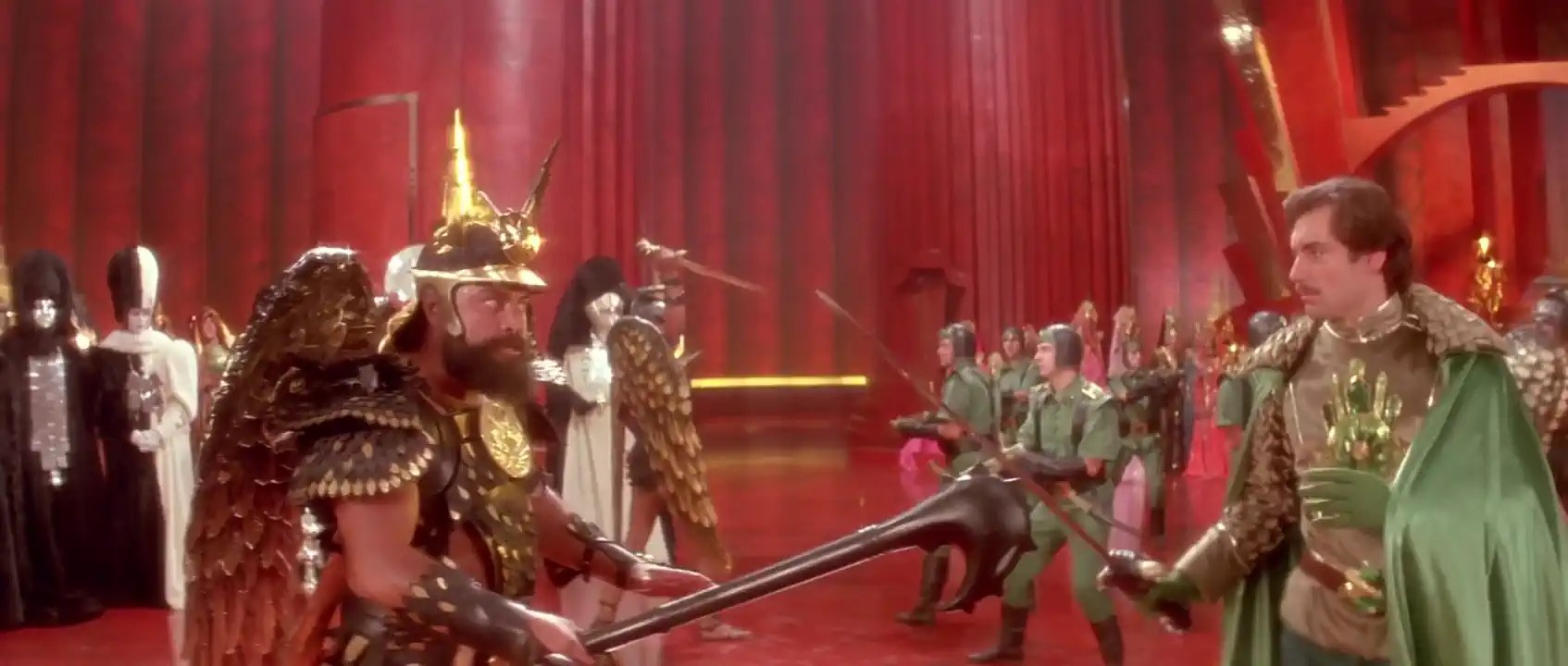
Design & Costumes
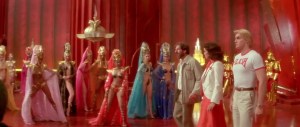
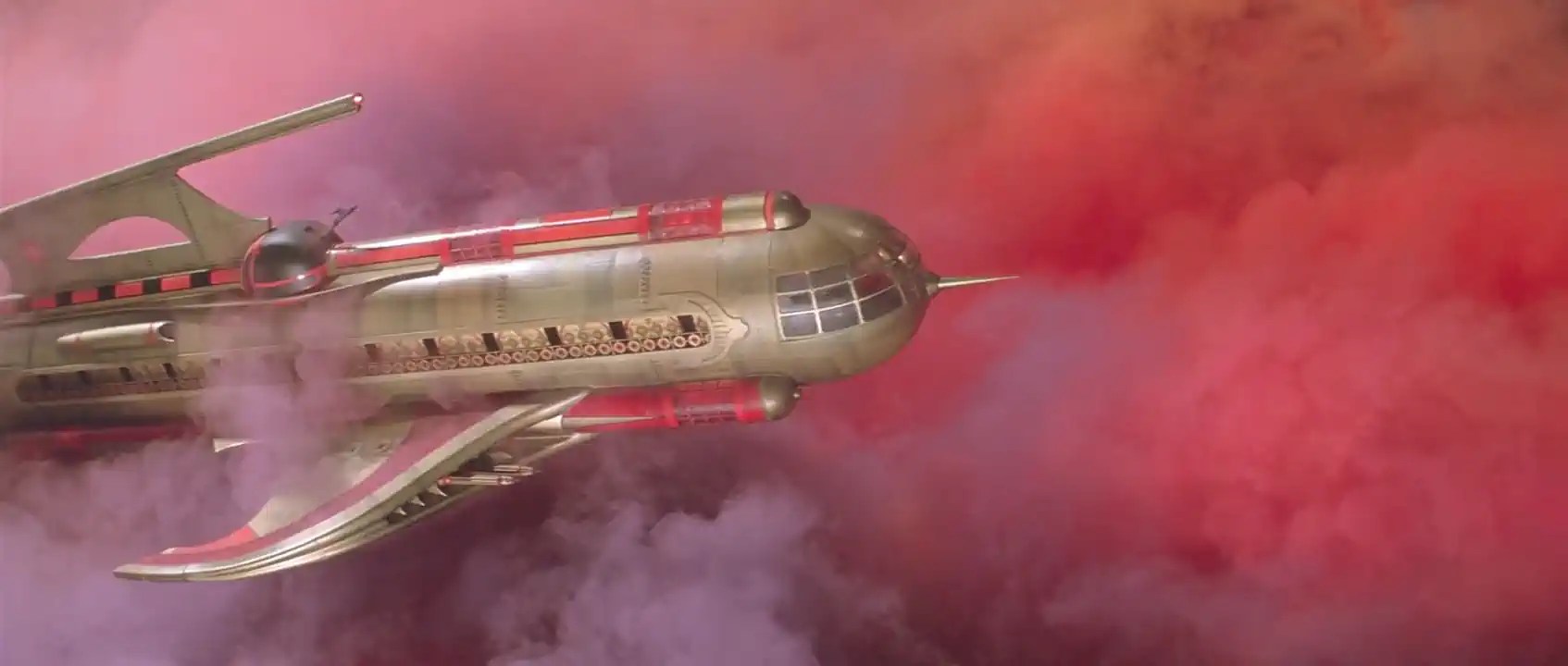
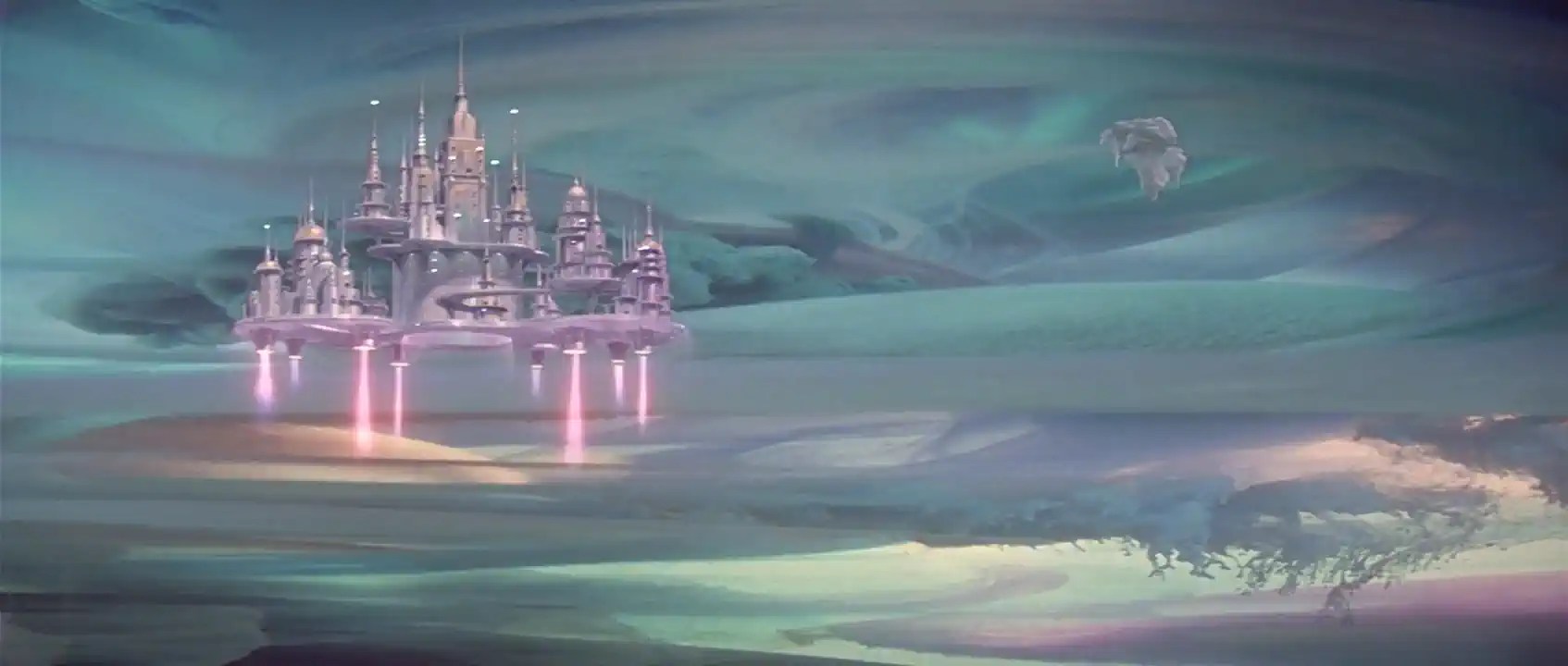
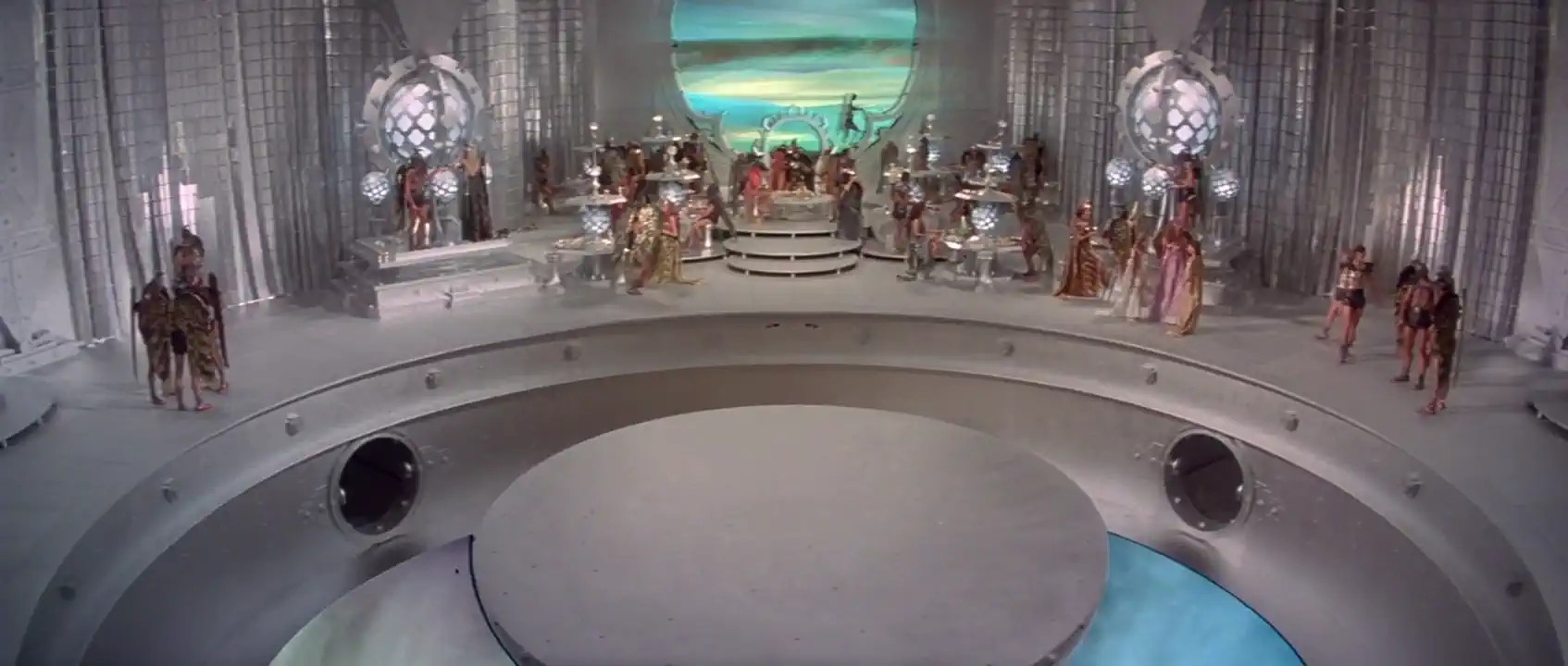
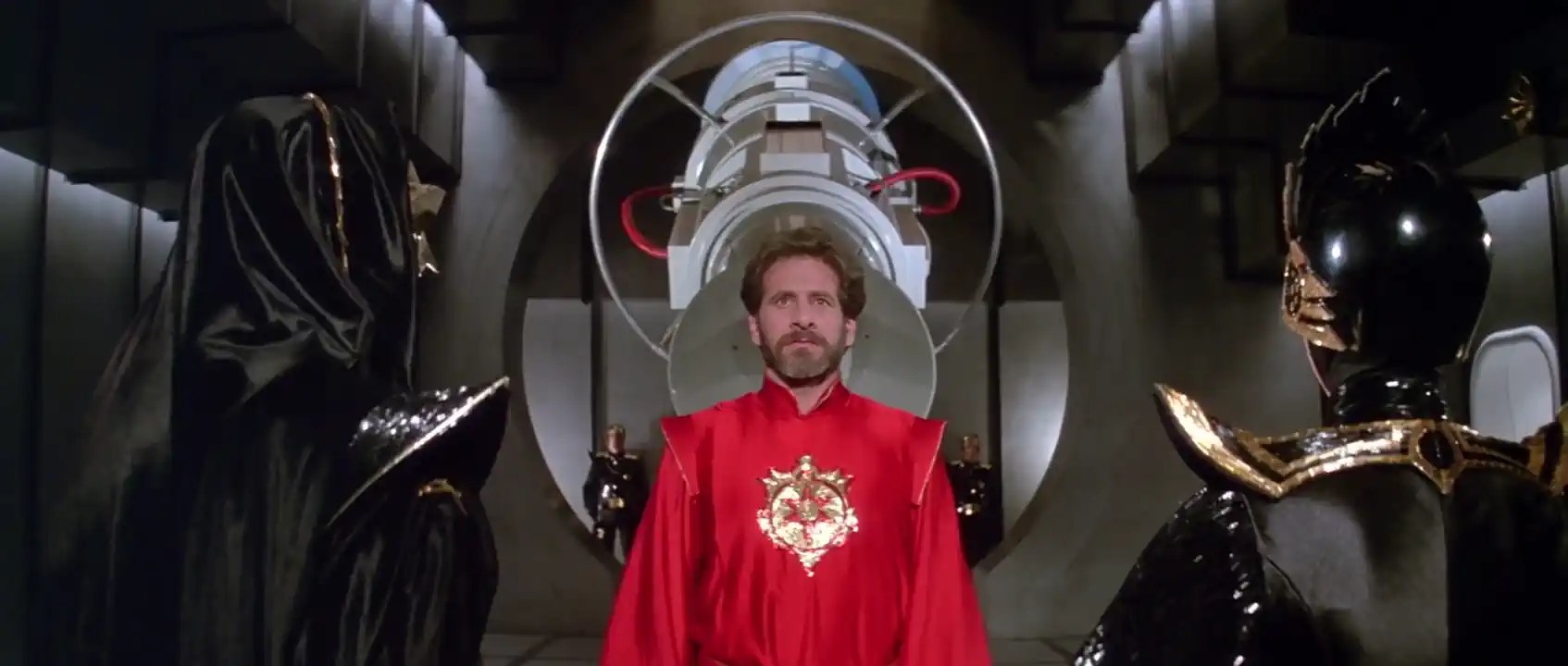
Visually, “Flash Gordon” is a fireworks display of colors, glittering fabrics, and baroque extravagance that deliberately transcends the boundaries of realism to create a world more reminiscent of cosmic opera than classic science fiction—a world that appears at once fairy-tale-like, surreal, and operatically oversized.
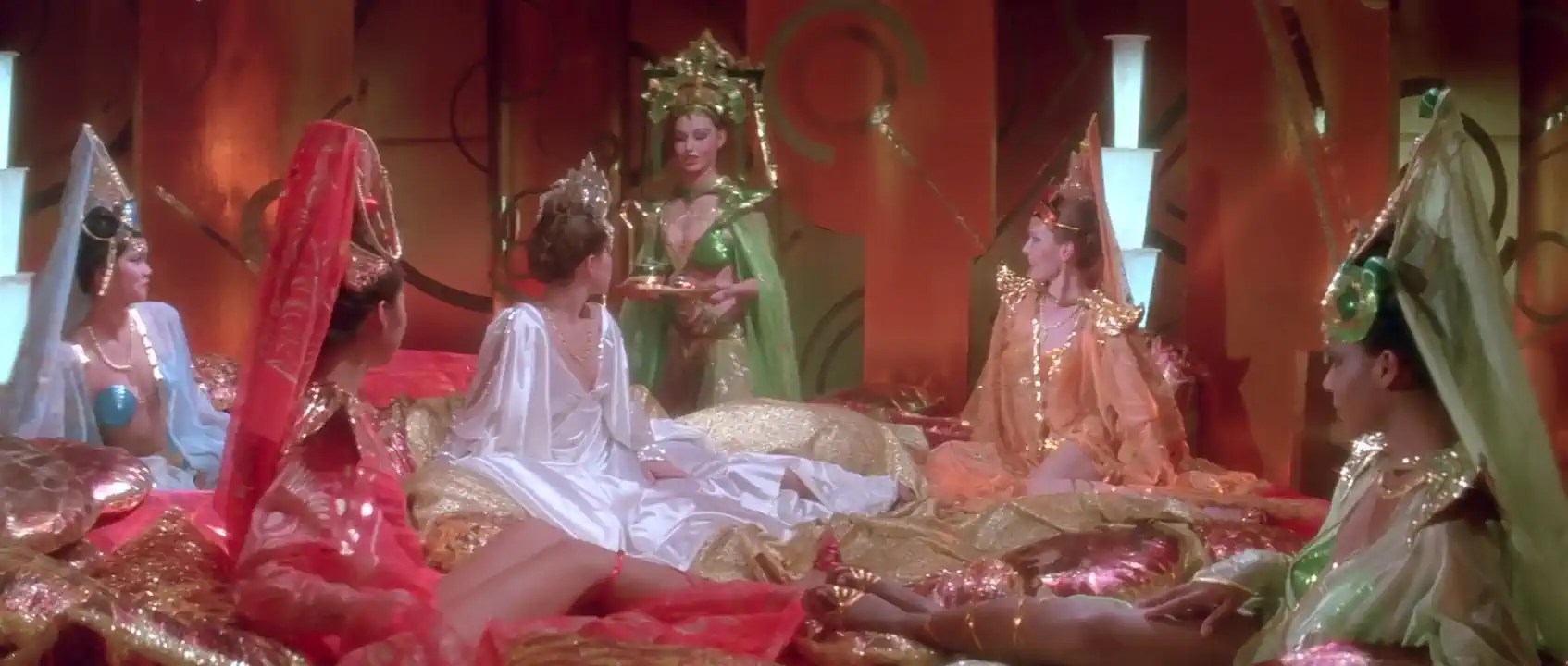
The costumes by Fellini-experienced designer Danilo Donati combine opulent fantasy theater with futuristic elements, giving the film its distinctive aesthetic. Donati worked with a wealth of materials, including shiny metallic fabrics, heavy brocades, elaborate appliqués, richly decorated headdresses, and highly stylized silhouettes to create characters that look like walking works of art and visually exaggerate the culture, hierarchy, and personality of each role. Magnificent robes encrusted with precious stones meet deliberately artificial-looking uniforms, while the various alien races appear in expressive, almost operatic garb that strongly exaggerates their cultural idiosyncrasies and transforms the world of Mongo into a panorama of extreme visual diversity.
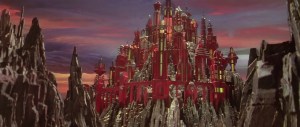
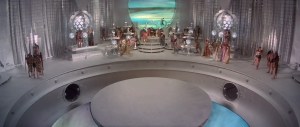
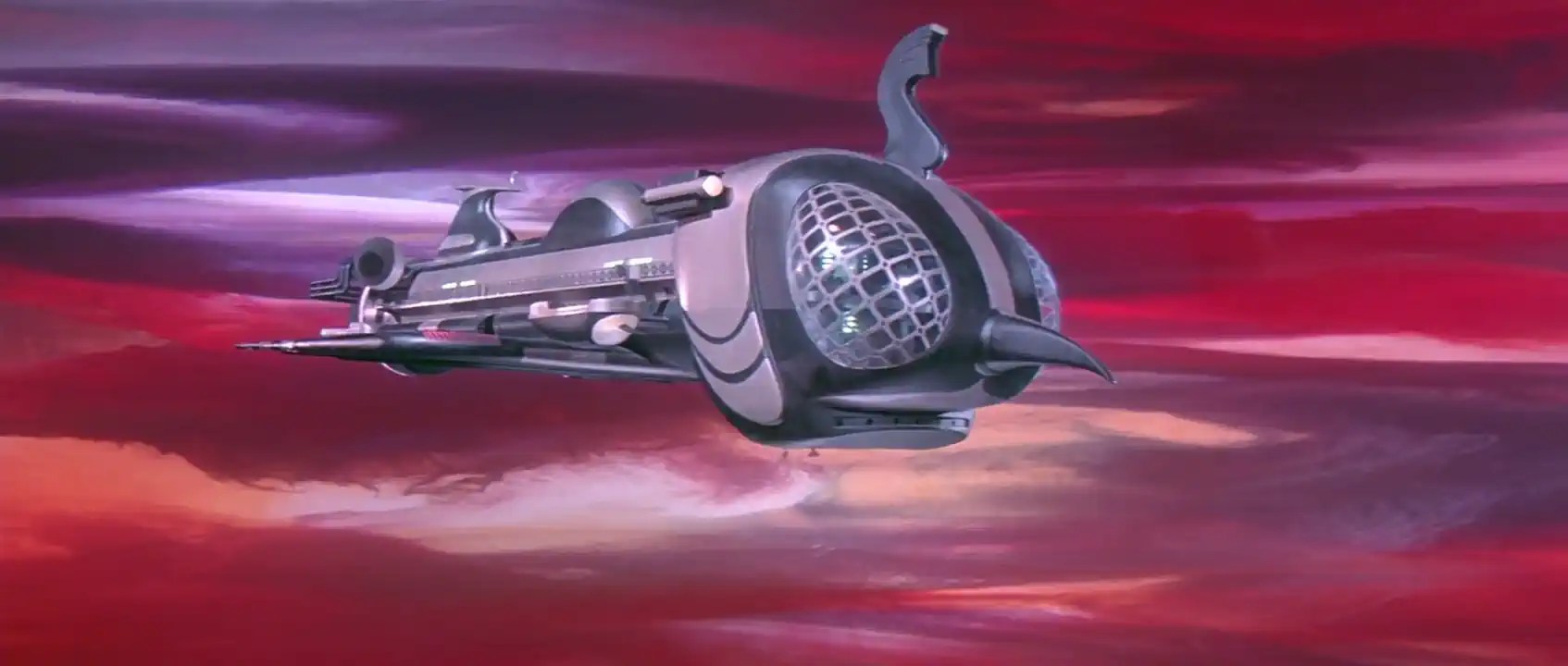
The production design also follows this line: bright red palaces, surreal distorted landscapes, dramatic depictions of the sky, shimmering plasticity, and clearly studio-based backdrops create a world that is less reminiscent of realistic science fiction than of a garish, pop-cultural dreamscape full of symbolism and stylistic playfulness. The interplay of deliberately artificial architecture, bright colors, and theatrical lighting creates an atmosphere that is both nostalgic and radically modern. Instead of sober technology, the film relies on visual exaggeration—a kind of pop expressionism that consistently develops the comic book roots of the original, reinforces them, and translates them into a spectacular, deliberately artificial universe that presents itself to the viewer less as a space reality and more as a living fantasy world.
Music
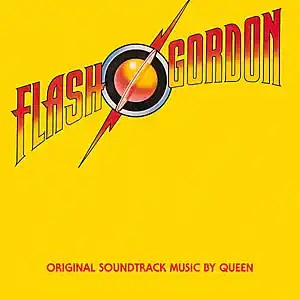
An essential part of the unique impact of “Flash Gordon” is the iconic soundtrack by the rock band Queen, which does much more than just provide background music. The musicians combined electronic sounds, driving rock elements, melodramatic passages, and experimental studio effects to create a soundscape that is as stylized and energetic as the film itself. The title song “FLASH!”, with its distinctive cry, heroic synth elements, dramatic interplay of choir and drums, and deliberately exaggerated sound accents, quickly became a pop culture classic and serves as a recurring acoustic leitmotif in the film. But the instrumental pieces—including atmospheric synth pads, majestic orchestral simulations, and rhythmically pulsating tension motifs—also lend many scenes an epic, ironic, or deliberately theatrical touch that further reinforces the camp character of the film.
Queen’s music functions not only as accompaniment, but as an independent narrative engine that significantly shapes the tempo, mood, and irony, and often even serves as stylistic commentary. In action sequences, the soundtrack drives the action forward; in emotional moments, it deliberately counteracts expectations; and in many places, its mixture of pathos and tongue-in-cheek exaggeration creates an acoustic identity that perfectly matches the film’s exuberant aesthetic. The collaboration between the film crew and the band was unusually close: Queen experimented with new technologies, multi-track synthesizer concepts, and sound modulation techniques that gave new impetus not only to the film but also to their own musical style in the early 1980s. The soundtrack is therefore still considered one of the most striking examples of how film music can not only accompany a work, but also decisively shape it and contribute to its cult status.
Comic vs. 30s vs. 80s version
The different versions of “Flash Gordon” each reflect the aesthetics and zeitgeist of their era and show how changeable the material has been interpreted over the decades. Each adaptation bears its own cultural imprint and reveals how audience expectations, production conditions, and aesthetic trends have changed. The comic book series by Alex Raymond, which appeared from 1934 onwards, shaped early visual science fiction with its colourful, exotic and opulently staged adventures. This pulp-like mixture of action, decadence and fantasy forms the foundation on which later adaptations are based. Raymond’s dynamic panels, his elegant character designs, dramatic lighting, and fairy-tale worlds not only influenced the comic book landscape, but also set standards for the entire genre. His influence also extended to later science fiction films, fashion design, and illustration styles, so that his aesthetic radiated far beyond the boundaries of the medium.


The material was first adapted for film in the serials of the 1930s starring Buster Crabbe – simple, action-packed, charmingly improvised, with cardboard sets, exaggerated villains, and an episodic structure that shaped the weekly serial format. These serials convey a sense of adventure, immediacy, and naive heroism that fit perfectly into the cinema of the time. At the same time, they convey the unbroken spirit of discovery of an era in which cinema was still strongly influenced by wonder and a desire for the unknown. Many elements from this era—the visible studio artistry, the theatrical antagonists, the adventures in clearly defined episodes, dramatic cliffhangers, and the mixture of pathos and lightheartedness—are deliberately revisited in the 1980 version and transformed into a new, deliberately exaggerated form that reinforces the nostalgia of the serials with modern cinematic means.
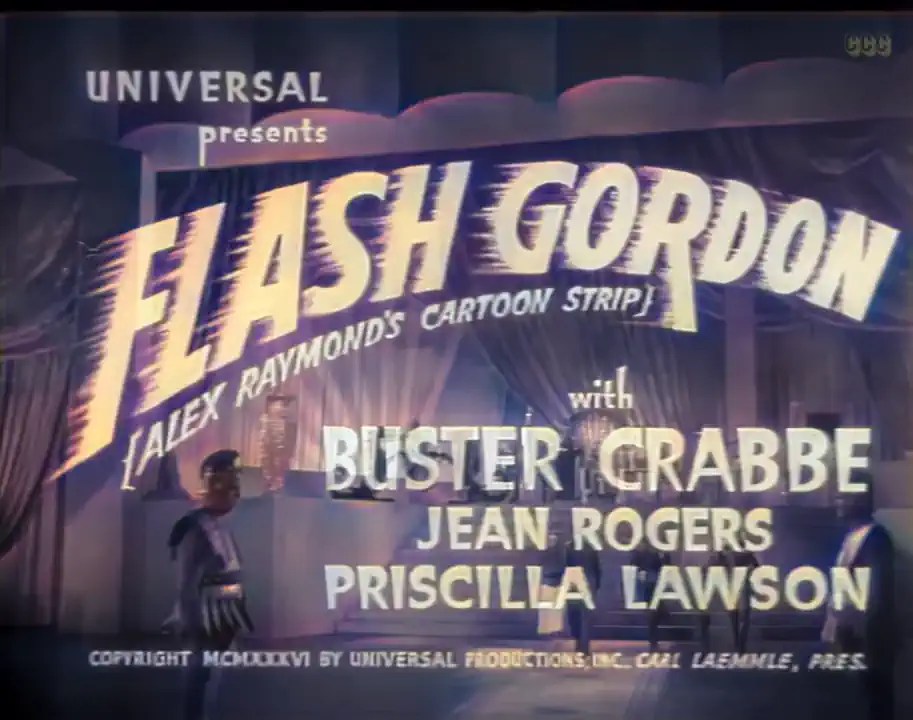
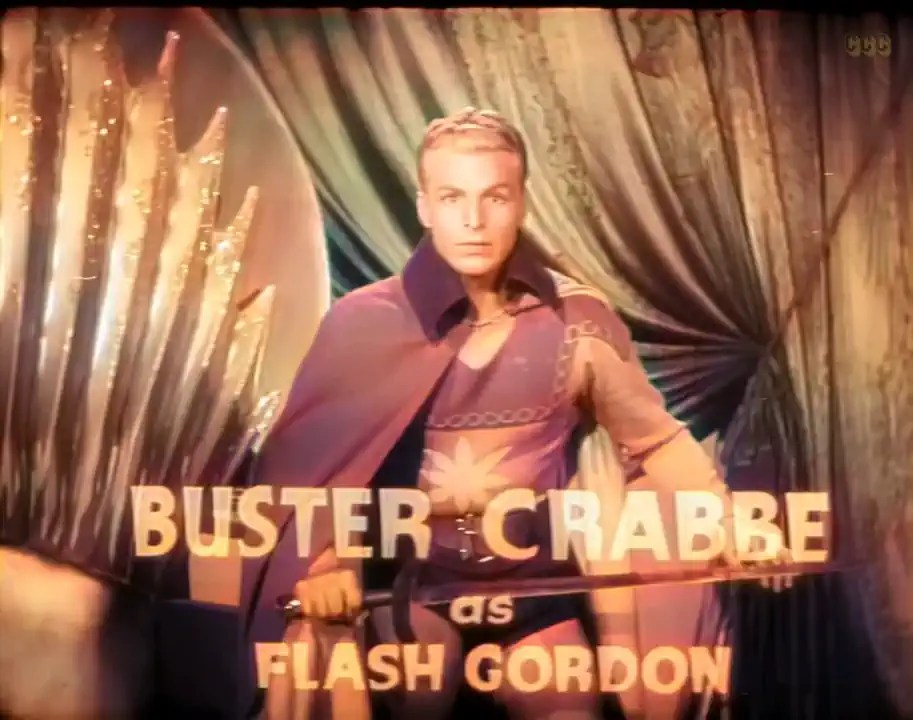
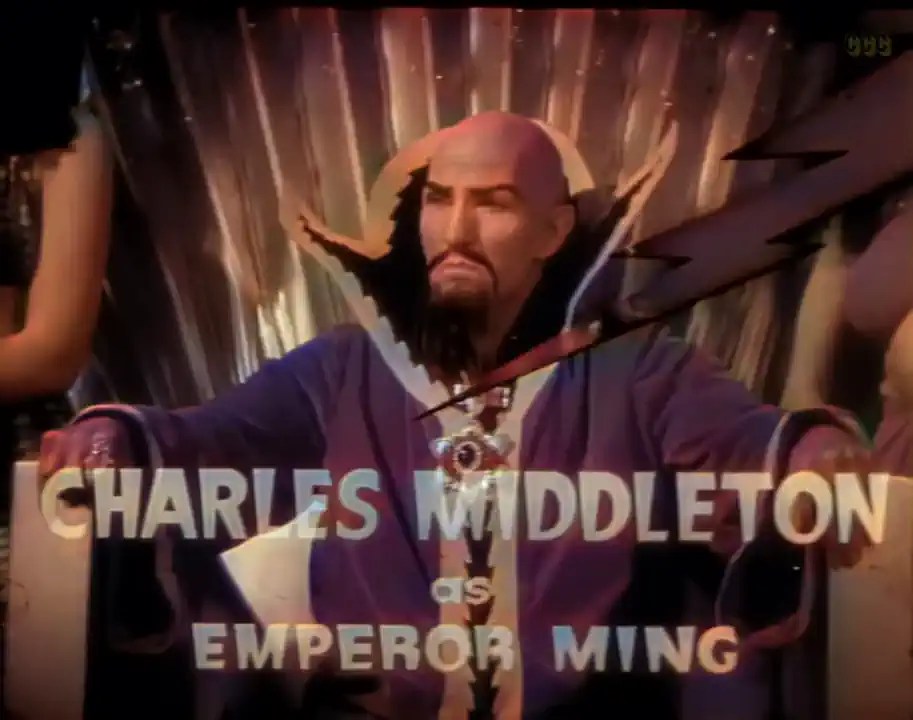
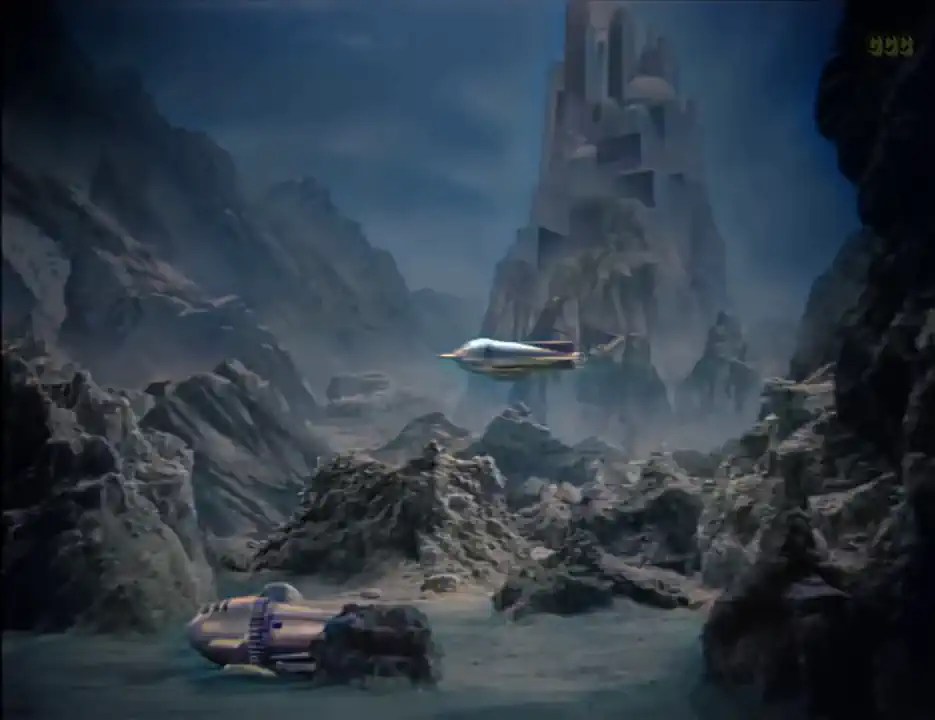
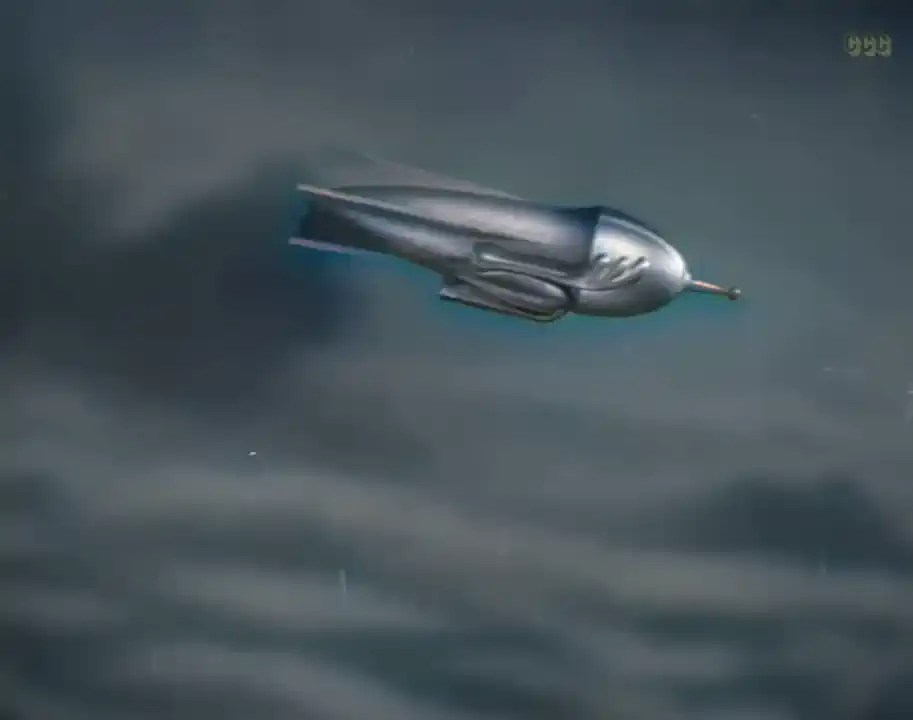
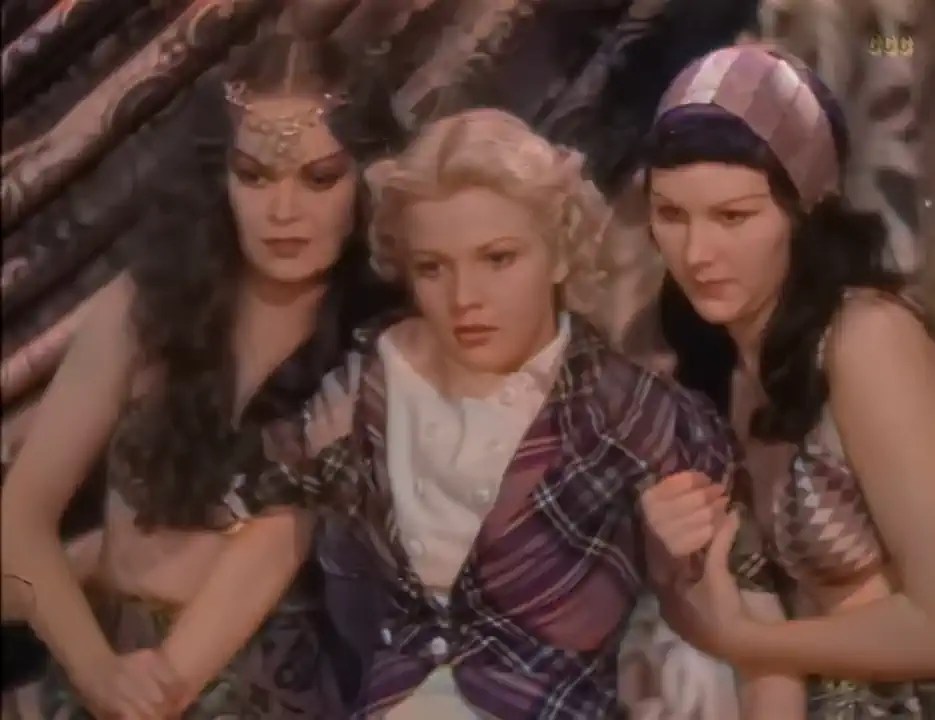
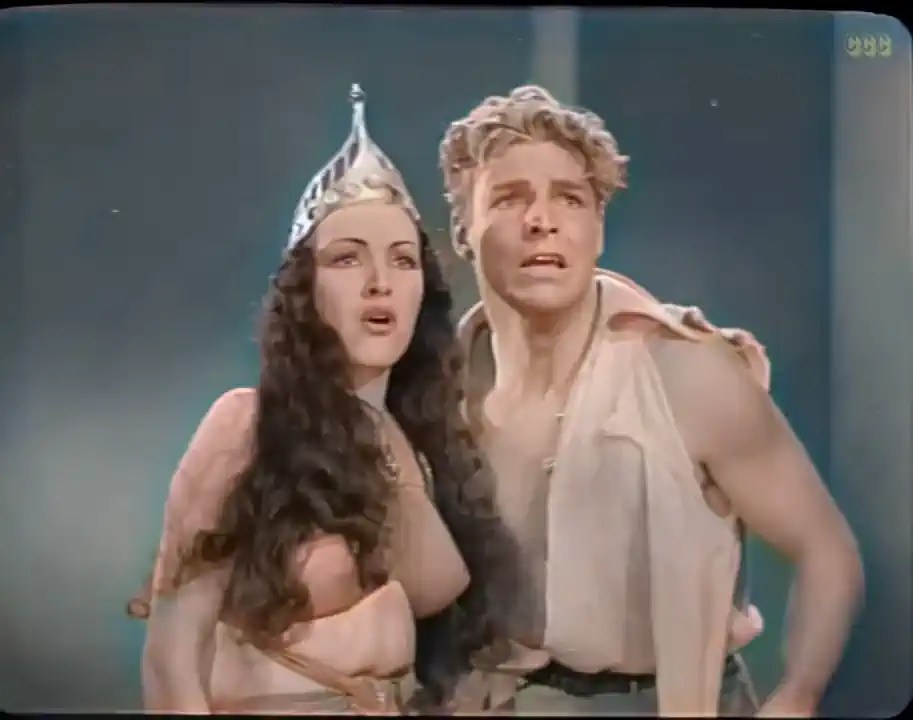
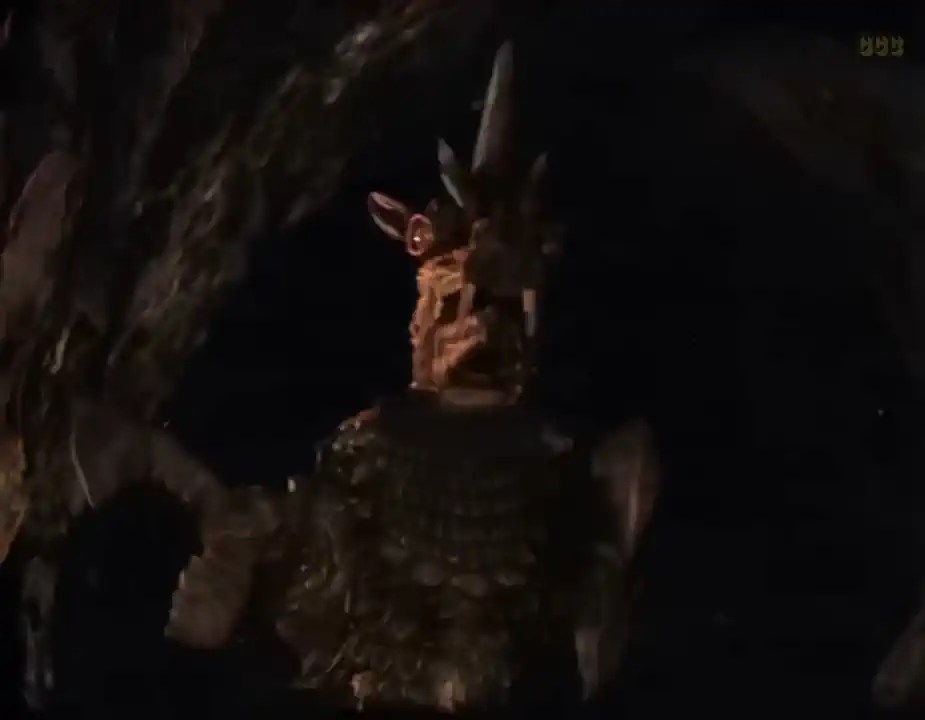
However, the 1980 film is not merely a remake, but a playful homage that combines the exaggerated aesthetics of the 1930s with the self-confidently garish style of the 1980s. It not only references but also expands on historical influences: the pop aesthetic of the time—with neon-colored designs, operatic sets, self-deprecating performances, and exaggerated pathos—merges with classic adventure motifs to create a kind of operatic comic film that both references the past and creates its own extravagant visual world. In doing so, the film succeeds in paying tribute to the nostalgic era of serials while developing a modern, deliberately artificial, and highly stylized vision that redefines the material and gives it an unmistakable profile. In addition, the opulent staging contributes to the 1980 version functioning both as a humorous reminiscence and as an independent stylistic statement, elevating the cultural palette of the original to a new, visually radical level.
Trivial
- The legendary “FLASH! – Ah-aaah!” song was written by Queen, who composed the entire soundtrack and gave the film a sonic identity that makes it unmistakable to this day. In addition, the band experimented with new synthesizer techniques that later played a role in their other albums.
- Sam J. Jones left the project during post-production; large parts of his dialogue were re-dubbed. This unusual situation not only led to a slightly different voice characteristic, but also influenced the public perception of his performance in the long term.
- Many designs are based directly on Alex Raymond’s panels. Donati’s team studied the comics intensively in order to not only reproduce the iconic shapes, patterns, and color schemes, but also to stylize them even more for the big screen.
- George Lucas originally wanted to make a movie out of Flash Gordon, but he couldn’t get the rights and ended up making “Star Wars” instead. This is often seen as one of the most important decisions in science fiction history, since both works took completely different creative paths.
- Brian Blessed is still considered one of the loudest and most enthusiastic actors on set (“DIVE!!!” is iconic). His irrepressible enthusiasm meant that many of his lines of dialogue live on in pop culture and are regularly quoted.
- The film was nominated for several Saturn Awards, including for costumes and music. Although it did not ultimately win in all categories, the nominations helped to give early weight to its reputation as an unusually creative project.
Critical reception at the time
When it was released, Flash Gordon received mixed and sometimes contradictory reactions from critics. Many reviewers failed to recognize the ironic approach and interpreted the film as an unintentionally kitschy spectacle that seemed shallow in content, over-the-top, and stylistically overloaded. In particular, the garish staging, deliberately theatrical tone, and extravagant costumes were often misunderstood and interpreted as signs of a lack of seriousness. Some critics also accused the film of relying too heavily on visual effects, sacrificing narrative depth in favor of spectacle, while others found the courage to engage in radical exaggeration irritating or even disturbing.
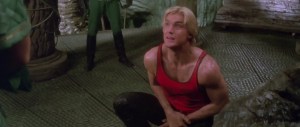
Nevertheless, even at the time, there were voices praising the film’s visual extravagance, its courage to stylistic exaggeration, its unusual color dramaturgy, and Queen’s energetic, experimental soundtrack. The film found early supporters, especially in niche cinephile circles, who interpreted its deliberately campy style as a subversive counter-movement to the increasingly serious understanding of the genre in the late 1970s. The audience was also divided: while some celebrated the exuberant imagination, humor, pop exaggeration, and unmistakable comic tone, others couldn’t relate to the campy, self-deprecating tone or found the film too loud, too colorful, and too eccentric. Some viewers were confused by the unusual hybrid of space opera, comedy, and garish fantasy, while others found this mixture refreshing and innovative.
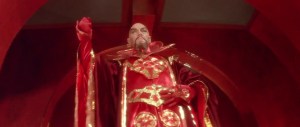
Commercially, the film performed solidly in the middle of the pack, but failed to achieve blockbuster status. However, it quickly found a small but dedicated fan base who appreciated its unconventional nature and already considered it a cult alternative to mainstream sci-fi in the 1980s. This early fan group laid the foundation for the film’s later cult status, which has steadily grown over the decades.
Reputation today
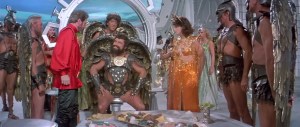
Over the years, “Flash Gordon” has developed a passionate cult following who appreciate the film for qualities that were often overlooked at the time of its release. Retro fans, science fiction enthusiasts, and comic book lovers today emphasize the deliberately campy humor, stylistic originality, color-intensive exaggeration, and courage to clearly set itself apart from the serious science fiction cinema of the late 1970s and early 1980s. The energetic performances—especially those of Max von Sydow and Brian Blessed—also contribute significantly to the film’s enduring appeal, as does Queen’s distinctive soundtrack, which has long since acquired a pop-cultural legacy of its own and first brought the film to the attention of many fans. In addition, the deliberately theatrical staging, which was previously considered a weakness, is now understood as an artistic decision that links the film more closely to its serial and comic book roots.
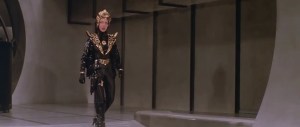
Through humorous pop culture references, for example in films such as “Ted,” television series, video games, and music videos, as well as through regular fan events, restored editions, conventions, limited collector’s editions, and new perspectives from a film history perspective, the film’s cult status has steadily consolidated and expanded. Many modern critics today appreciate the film’s courageous stylistic excess, radical color palette, unbridled joy in visual spectacle, and deliberately artificial, almost operatic staging. Today, “Flash Gordon” is considered a dazzling cult classic that occupies a special place in the science fiction genre not despite, but precisely because of its extravagant, exaggerated aesthetics and its unmistakable pop spirit, and is often cited as a prime example of successful camp in cinema.
Conclusion
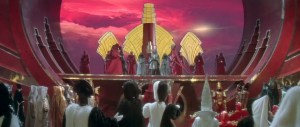
Flash Gordon (1980) is a film that defies clear categorization and, precisely because of this, gains an unusual artistic freedom. It is too colorful, too loud, too camp—and that is exactly what makes it special. Instead of a serious science fiction opera, it offers a baroque pop spectacle full of humor, retro charm, and deliberately artificial worlds, which sees itself both as a declaration of love for fantastic adventure cinema and as a playful parody of it. The film actively employs exaggeration, relying on garish colors, dramatic staging, and a deliberately melodramatic undertone that is both serious and ironically broken. This makes “Flash Gordon” seem like a cinematic hybrid that moves between opera, comic, pulp adventure, and rock fantasy, deliberately foregoing stylistic purity.
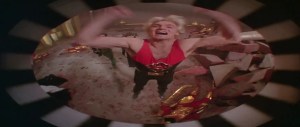
What was once considered exaggerated kitsch is now regarded as an art form in its own right: a film that celebrates its medium, honors its role models, deliberately celebrates excess, and at the same time makes it clear with every scene that cinema can be fun—without having to apologize for it. With its fearless colorfulness, exaggerated characters, and self-deprecating attitude, “Flash Gordon” has also established itself as an example of how stylistic freedom and creative boldness can keep a work alive and fascinating for decades. Furthermore, the film shows that radical aesthetic decisions can have a timeless effect when implemented consistently – and that a work that refuses to bow to contemporary tastes often develops a more powerful cultural presence in the long term.





 McHenry's Lair
Kommentar verfassen :