


If he dies, he dies.
Between boxing ring, Cold War, and cult status

When Rocky IV hit theaters in 1985, the successful series about underdog boxer Rocky Balboa had long been an integral part of global pop culture. In an era of political tensions, patriotic narratives, and media spectacle, the film struck a chord like no other American entertainment film before it. The fourth installment of the series is still considered one of the most striking and stylistically influential films of the entire franchise – not least because it combines athletic drama, political symbolism, and emotional storytelling in an almost operatic style that aesthetically captures and at the same time exaggerates the typical characteristics of the 1980s. Sylvester Stallone, who once again directed and played the lead role, deliberately developed the film as a cinematic statement that blurs the boundaries between action cinema, propagandistically exaggerated allegory, and personal character study. Particularly noteworthy is the visual power of the film: the monumental training montages, the iconic camera movements, and the strong use of symbolic color compositions lend the story an almost mythical dimension. The mixture of powerfully staged image sequences, extreme emotionalization, a clear good-versus-evil narrative structure, and a soundtrack that captures the essence of the 1980s made Rocky IV one of the most influential and enduringly powerful films of its decade.
Story
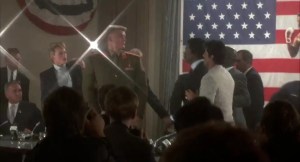
The focus is on Rocky Balboa, now a wealthy and respected heavyweight world champion whose life has stabilized through hard work, numerous title defenses, and mature family support. But this quiet, almost idyllic life is suddenly shaken when Soviet super athlete Ivan Drago—a near-perfect athlete, shaped by scientifically supported training programs, state-of-the-art technology, and state-orchestrated performance enhancement—travels to the US to publicly display his strength. Drago appears not only as a talented athlete, but as a symbol of an entire system. Rocky’s close friend, showman, and mentor Apollo Creed sees Drago’s appearance as the perfect opportunity to return to glorious greatness one last time. Driven by pride, nostalgia, and the desire to prove to the world that his fire is still burning, he ignores Rocky’s urgent warnings and agrees to an unequal exhibition fight.
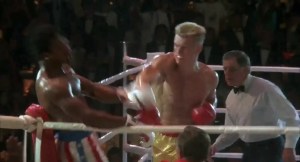
However, the fight ends in tragedy: Drago strikes with brutal precision, without a trace of compassion, and Apollo dies – in the glare of the spotlights – in Rocky’s arms. This loss leaves a deep wound in Rocky, who is plagued by feelings of guilt, self-doubt, and a sense of failure. Driven by a desire for justice, personal redemption, and, as he himself feels, the need for one last big fight with himself, he challenges the Soviet colossus. But this fight is not to take place on American soil, but in the middle of the Soviet Union – a symbolic act that charges the sporting action with massive political significance.
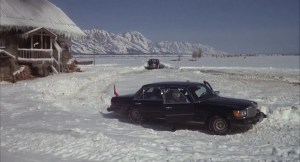
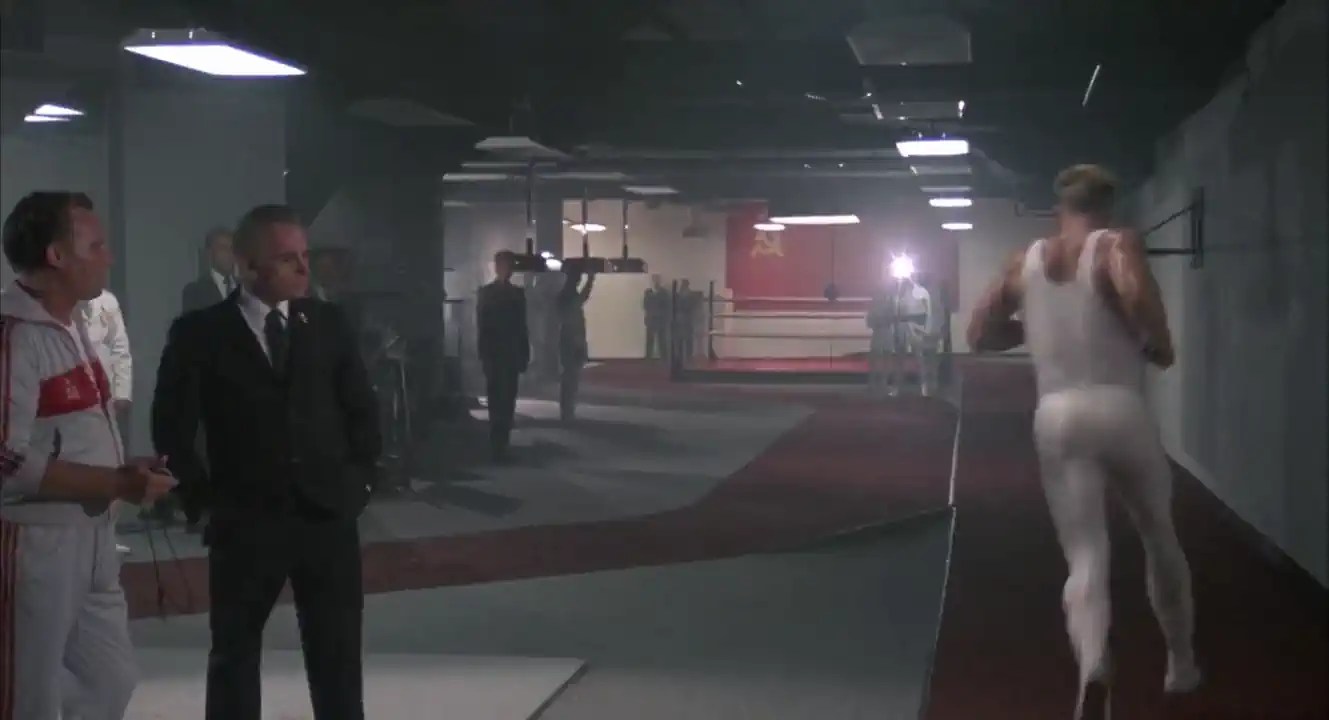
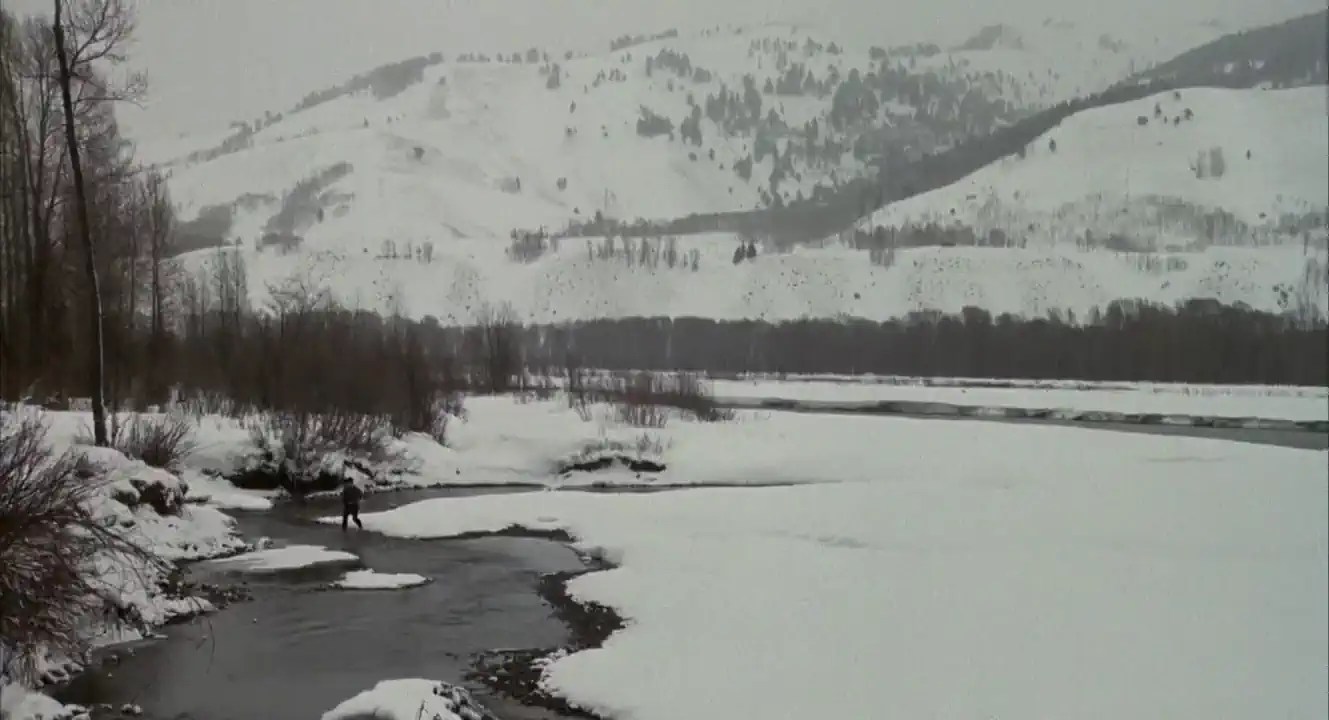
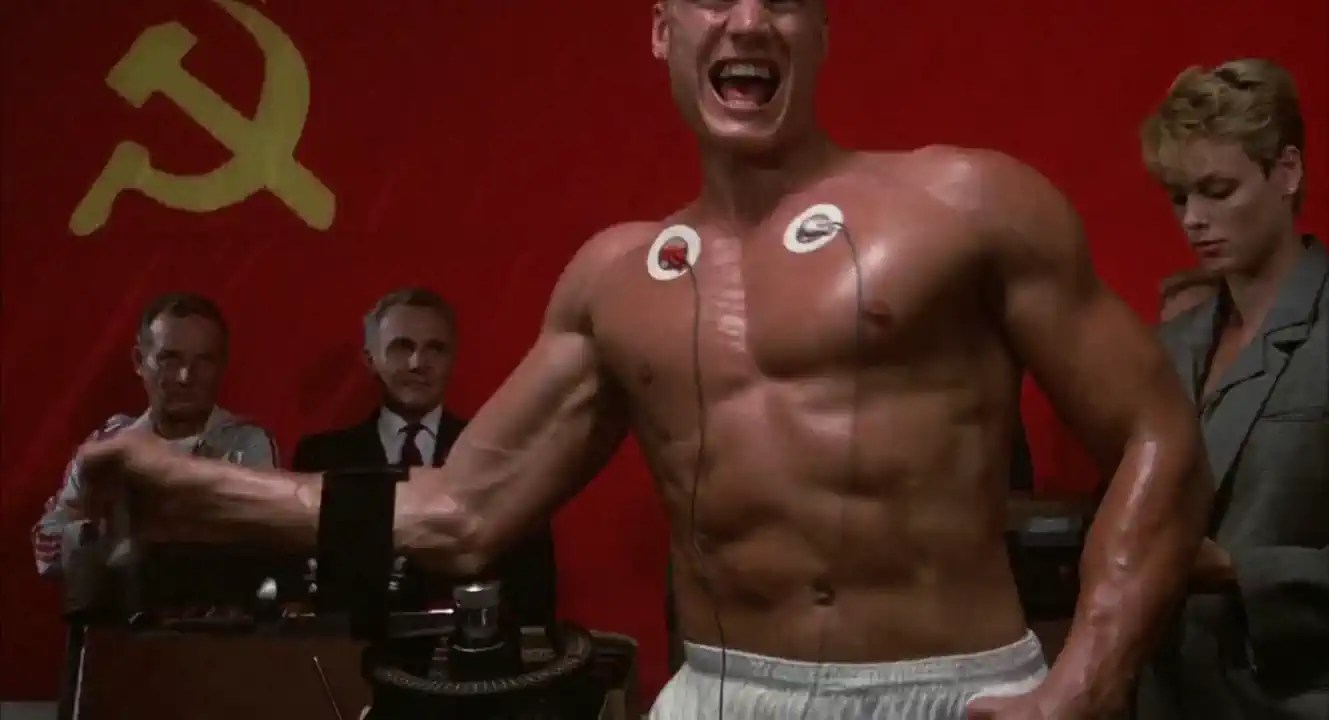
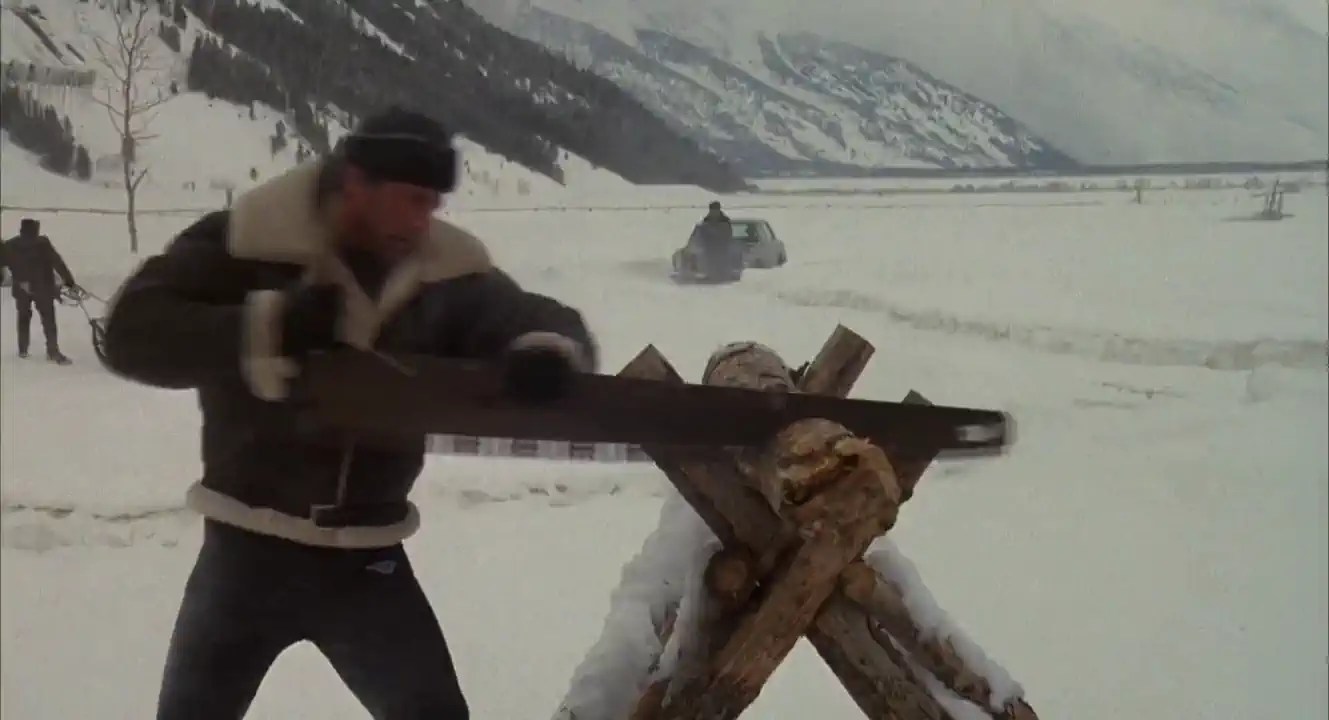
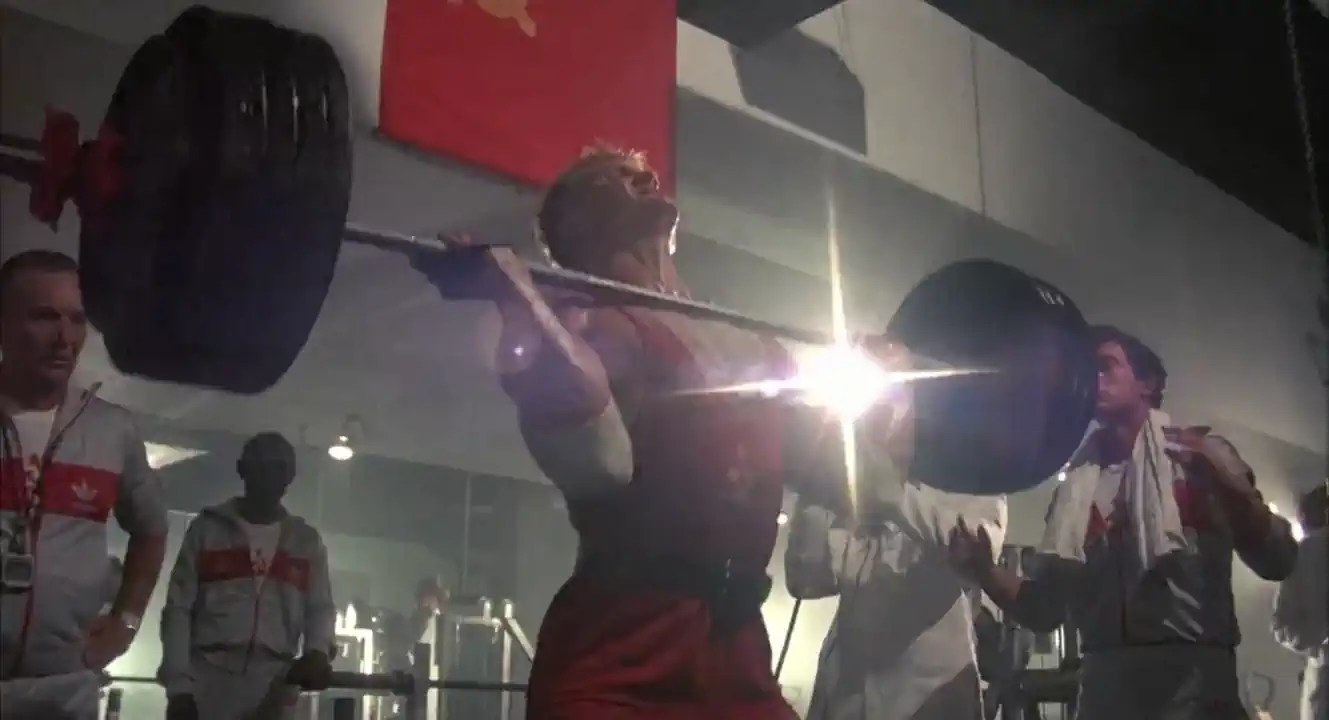
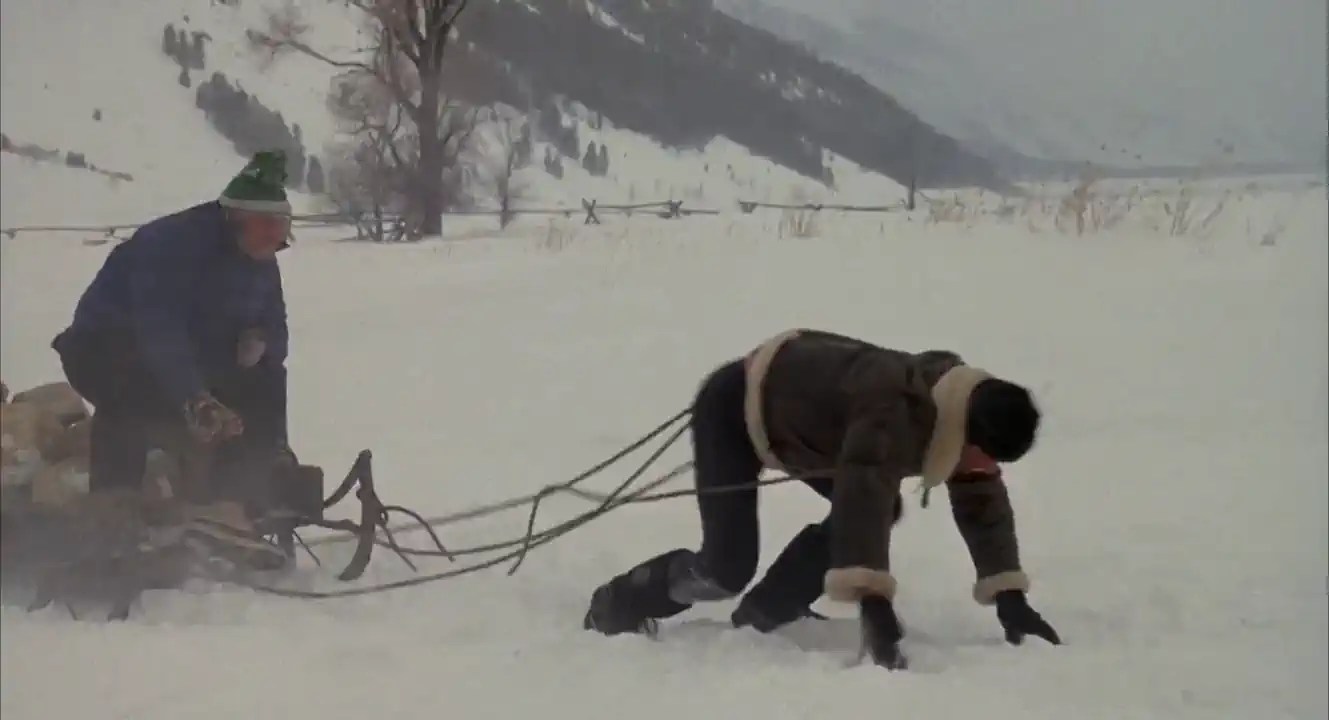
Rocky leaves his comfortable life behind and retreats to the icy, snow-covered expanses of Siberia, where he trains with simple equipment, hard physical labor, the power of nature, and unshakeable will. He drags tree trunks, chops wood, pulls heavy loads through deep snow, and battles the elements—all as an expression of his belief in human determination and genuine strength born of one’s own power. At the same time, the film shows Drago in hyper-modern training facilities, monitored by scientists, sensors, and machines, accompanied by performance charts and technical perfection—a clear, visually striking contrast between “heart and soul” on the one hand and “cold technical optimization” on the other.

The final fight in Moscow develops into an audiovisual spectacle of almost operatic force. The arena seems like a political monument, the audience hostile, the atmosphere tense. While Rocky is initially brutally dominated and literally smashed, his unwavering determination, tenacity, and unyielding fighting spirit begin to impress not only the audience but even Drago himself. The Soviet giant increasingly realizes that Rocky is not just an opponent, but a man of unbroken moral strength.
The film culminates in a speech in which Rocky—scarred, exhausted, but full of moral clarity—advocates for understanding, change, and dialogue despite all the hostility and mutual resentment. This moment may seem cheesy, but it conveys the essence of the film: the belief that even in the deepest conflict, even in the face of political and cultural hostility, change is possible if people are willing to listen to each other and rethink their perspectives.
Trivial
- Rocky IV has an unusually high proportion of music and training montages: it is estimated that up to 40% of the film consists of them. These montages are so distinctive that they set the rhythm of the entire film and create a kind of visual language that condenses the emotional journey of the characters. Many viewers associate the film primarily with these powerful sequences, which became a blueprint for countless later training scenes in action and sports cinema.
- Dolph Lundgren, who plays Ivan Drago, was not only a karate world champion, but also has a master’s degree in chemical engineering—an unusual combination that almost ironically underscores his “scientifically bred” film character. In addition, Lundgren speaks several languages, worked briefly as a security guard, and became one of the iconic action stars of the 1980s thanks to his physical presence. His casting was originally considered unusual, but it turned out to be one of the most legendary roles of his career.
- The production process was physically extreme: Stallone insisted that Lundgren punch “full contact.” A particularly hard blow to Stallone’s chest resulted in a heart injury that required several days in intensive care. During filming, there were also numerous bruises, tears, and contusions—not only for Stallone, but also for Lundgren. These real physical stresses contributed to the credible intensity of the fight scenes.
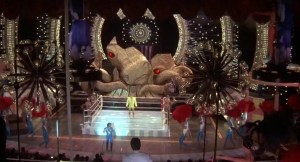
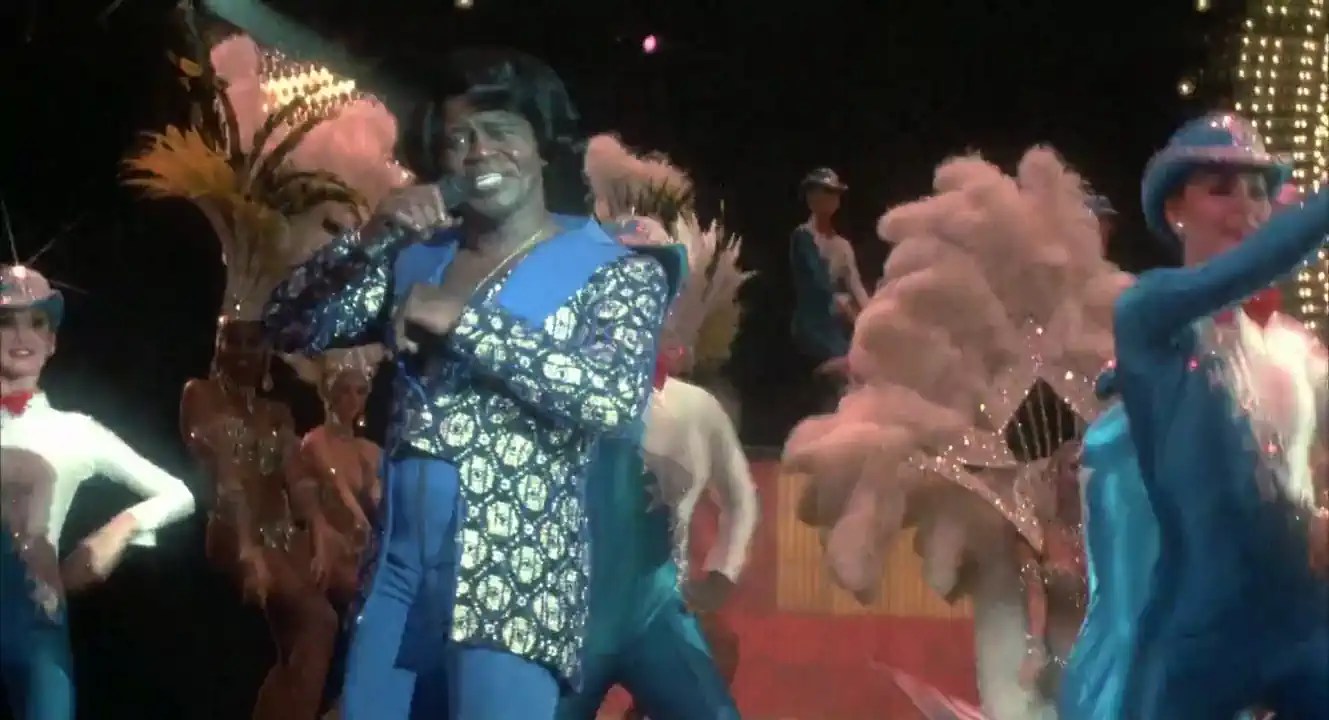
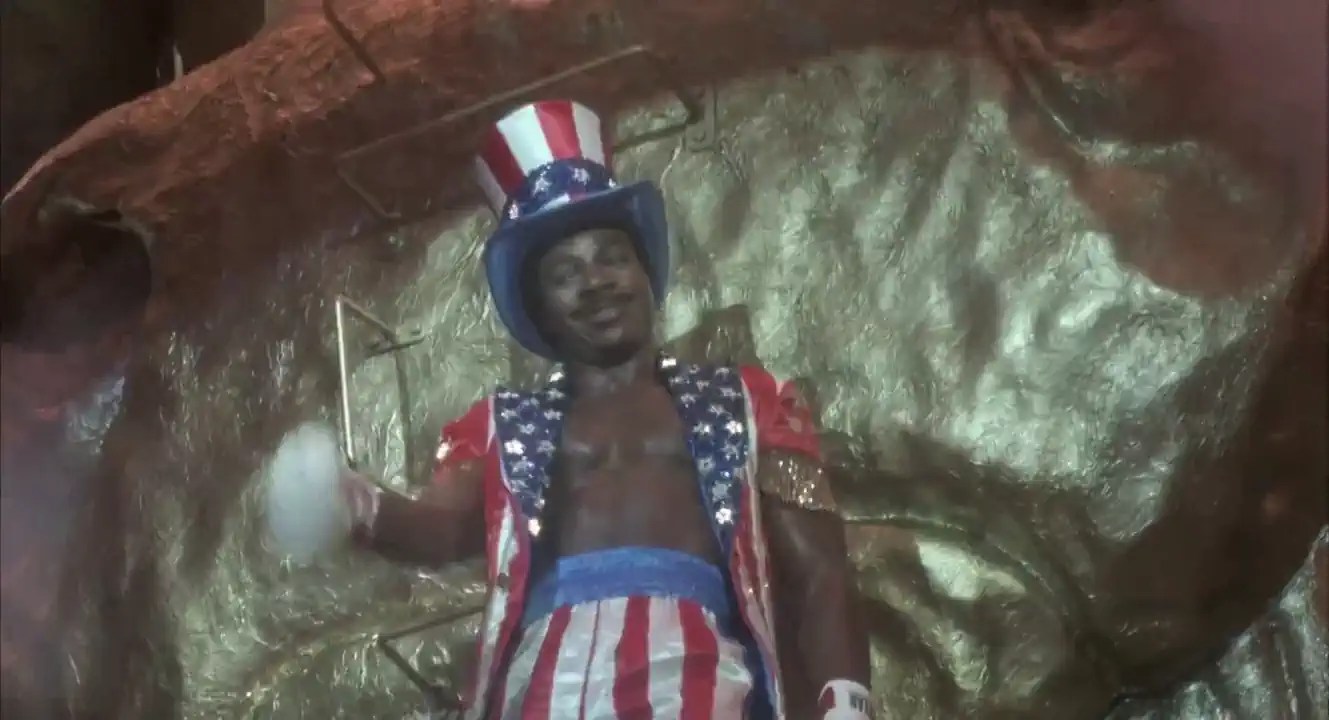
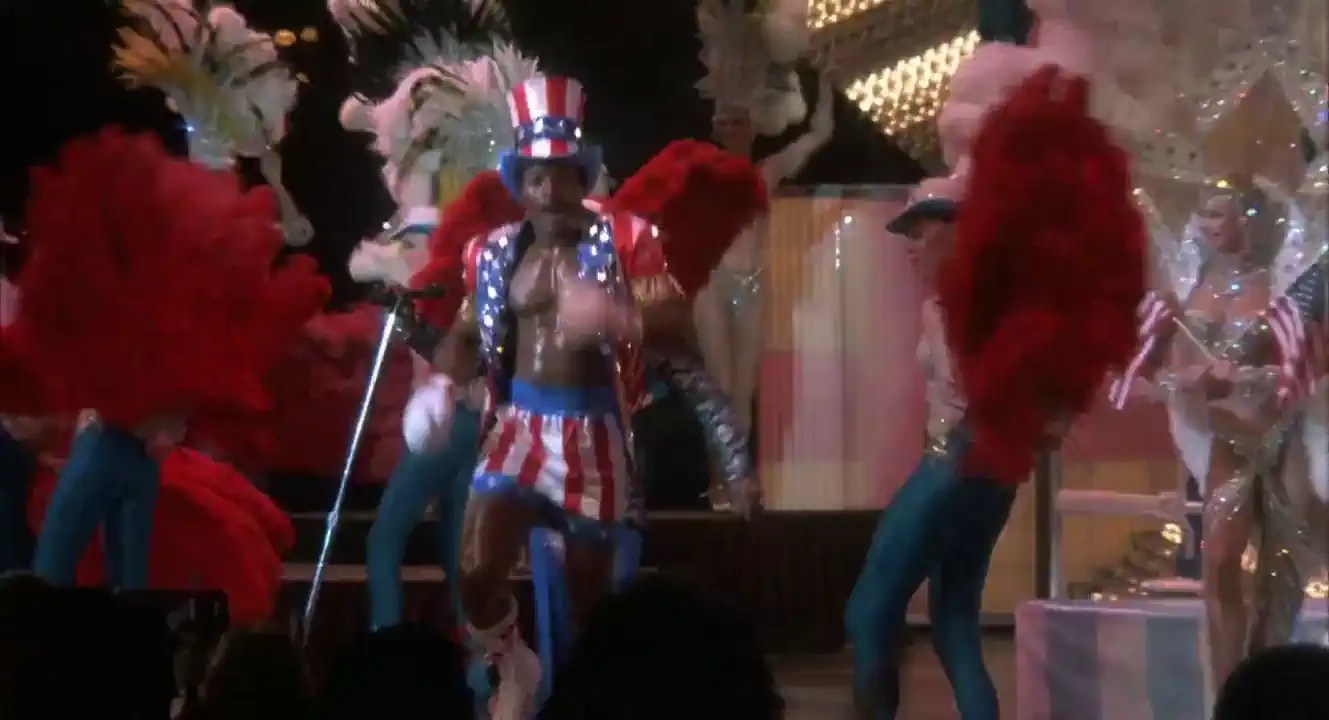
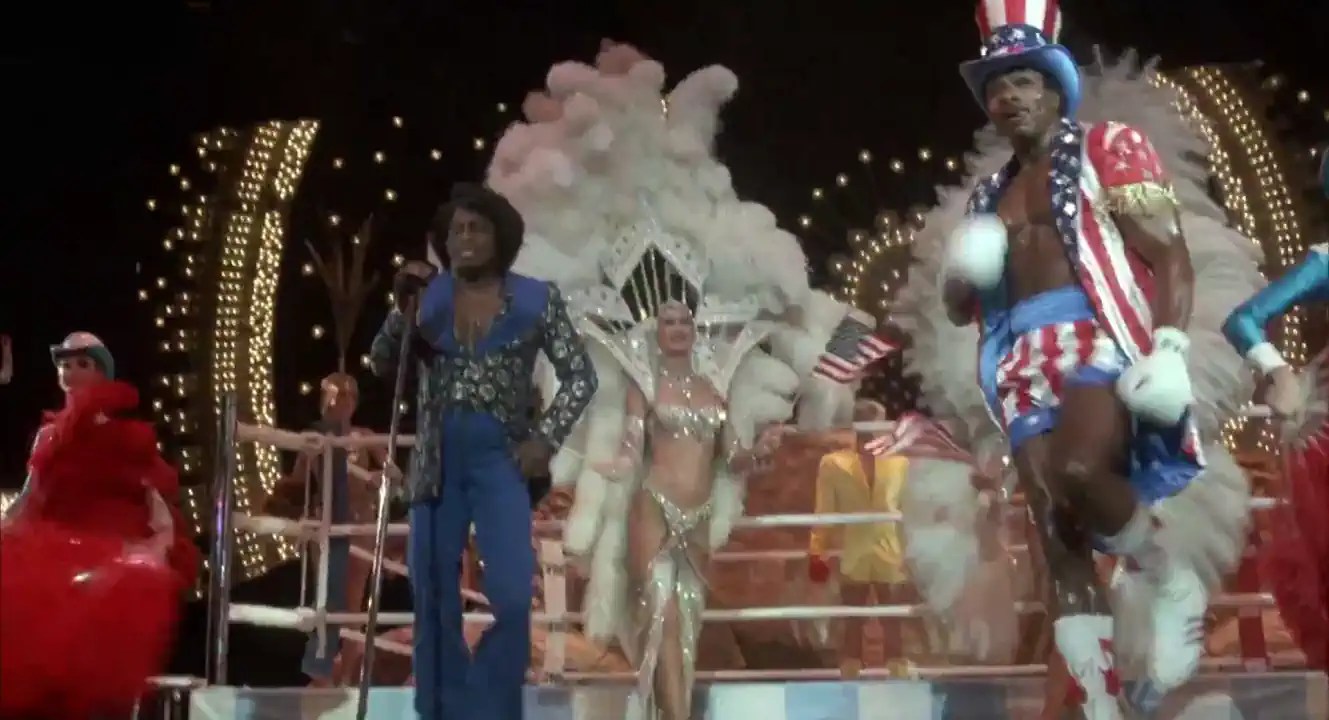
- The iconic “Living in America” entrance sequence featuring Apollo Creed and James Brown is considered one of the most over-the-top and famous show openings of the 1980s. It was not only technically elaborate, but also culturally significant, as it portrayed American pop and show culture in a maximally exaggerated way. The scene was later parodied, quoted, and even used in music videos on multiple occasions.
- The film was so successful that years later it was even discussed in the US Congress as an example of cultural propaganda during the Cold War. In addition, Rocky IV regularly appears in documentaries about political symbolism in film and is repeatedly used as a textbook example to illustrate the connection between pop culture and state narratives of the 1980s.
Political background
The Cold War shaped the culture of the 1980s more than any other issue. Rocky IV acted as a mirror of the US view of the geopolitical situation at the time. The Soviet opponent Drago represents not only a boxer, but a system that “breeds” muscle power with science, surveillance, and mechanical perfection. Rocky, on the other hand, embodies the American ideal of the ordinary man who can achieve anything through hard work and heart.
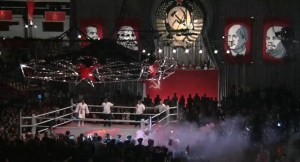
The film was deliberately staged in a polarizing manner. The red color palette, the unemotional Soviet officials, the gigantic halls, and the strict military structures in the film reflected how Hollywood wanted to portray the USSR. At the same time, Stallone surprised audiences with the ending: instead of a victory song about the defeat of his opponent, Rocky pleads for peace – a remarkably conciliatory approach in a film that is otherwise clearly patriotic.
This contrast makes Rocky IV a fascinating piece of cinematic contemporary history. It exaggerates, simplifies and symbolizes – and at the same time shows how much pop culture can be an outlet for social moods.
Music
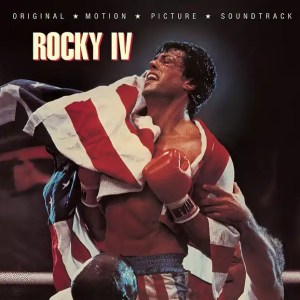
The soundtrack is a prime example of the musical style of the 1980s. Composer Vince DiCola relied heavily on synthesizers, electronic rhythms, and powerful, driving arrangements that not only supported the cinematic style but also had a decisive influence on it. The songs were not only used as atmospheric background music, but also contributed significantly to character development, emotional intensity, and dramatic structure. DiCola’s compositions reinforce both Rocky’s inner conflicts and Drago’s menacing presence, lending the iconic training and fight scenes an additional layer of intense expressiveness. In addition, the musical elements reflect the technological and cultural developments of the 1980s and contribute to the film’s distinctive acoustic identity to this day.
Legendary tracks such as:
- “Burning Heart” by Survivor – a song that directly addresses the conflict between East and West. The energetic melody and powerful lyrics reflect not only the geopolitical tension, but also Rocky’s inner struggle between revenge, duty, and self-reflection. The song acts as a musical engine that immediately charges the mood of the film and is still considered an anthem for determination today.
- “Hearts on Fire” – an iconic motivational classic for training scenes worldwide. With its driving synthesizer arpeggios, pulsating rhythm, and intense crescendo, the track accompanies Rocky’s Siberian training and symbolizes the arduous but unstoppable process of personal growth. “Hearts on Fire” represents the hero’s transformation and has become a staple of countless workout playlists.
- “Living in America” by James Brown – Apollo’s patriotic anthem, which presents American pop culture of the 80s in its purest form in its exuberant show staging. The combination of funk, soul, and stage spectacle lends the scene a celebratory atmosphere that shows Apollo as an artist and performer in his element. At the same time, the contrast to Drago’s stoic seriousness becomes abundantly clear.
- “Training Montage” by Vince DiCola – a purely instrumental piece that became one of the most famous training themes in film history with its mix of synthesizers, fast sequences, and dramatic harmonies. It drives the visual montage forward like a metronomic heartbeat and creates an emotional dynamic that immediately connects the viewer with Rocky’s willpower.
- “No Easy Way Out” by Robert Tepper – another musical highlight of the film, played during Rocky’s iconic car ride reflection scene. The song combines powerful synth-rock elements with emotional lyrics about pain, responsibility, and the desire not to run away from problems. This sequence is considered one of the most emotionally powerful in the film, as it reveals Rocky’s inner turmoil and processes his trauma over Apollo’s death in intense flashbacks.
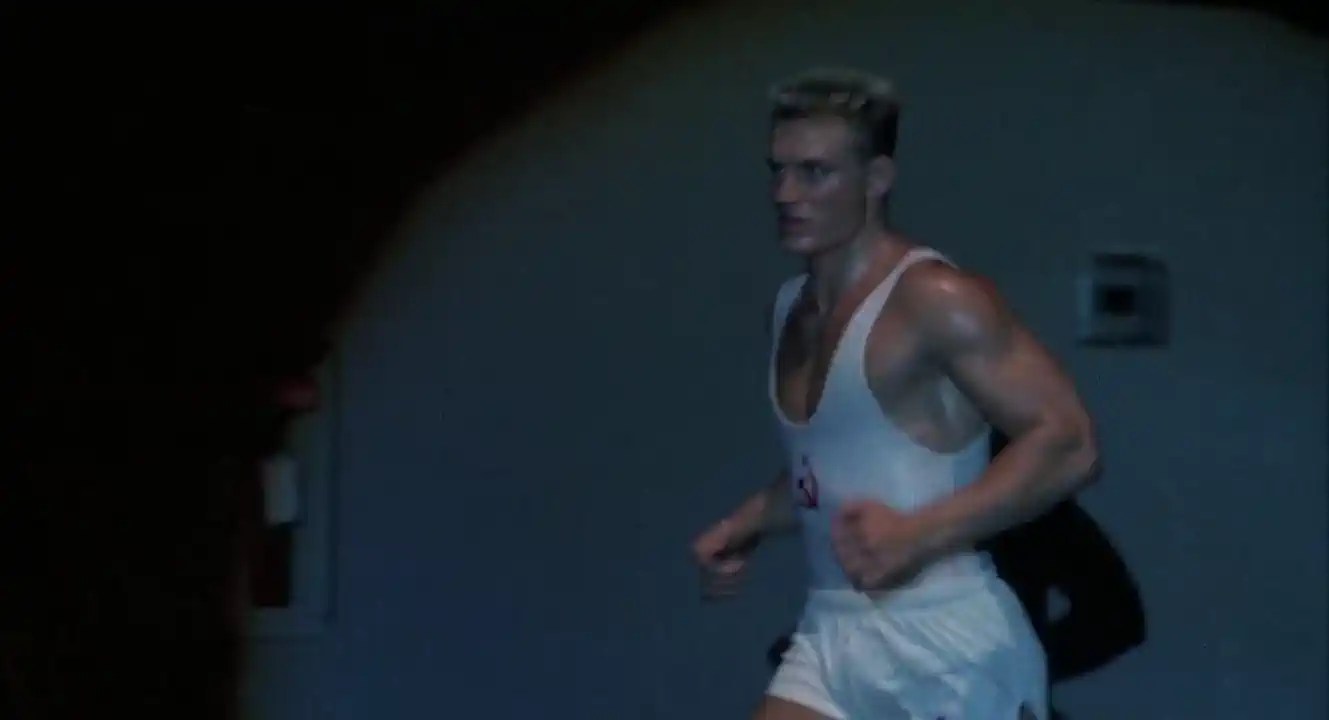
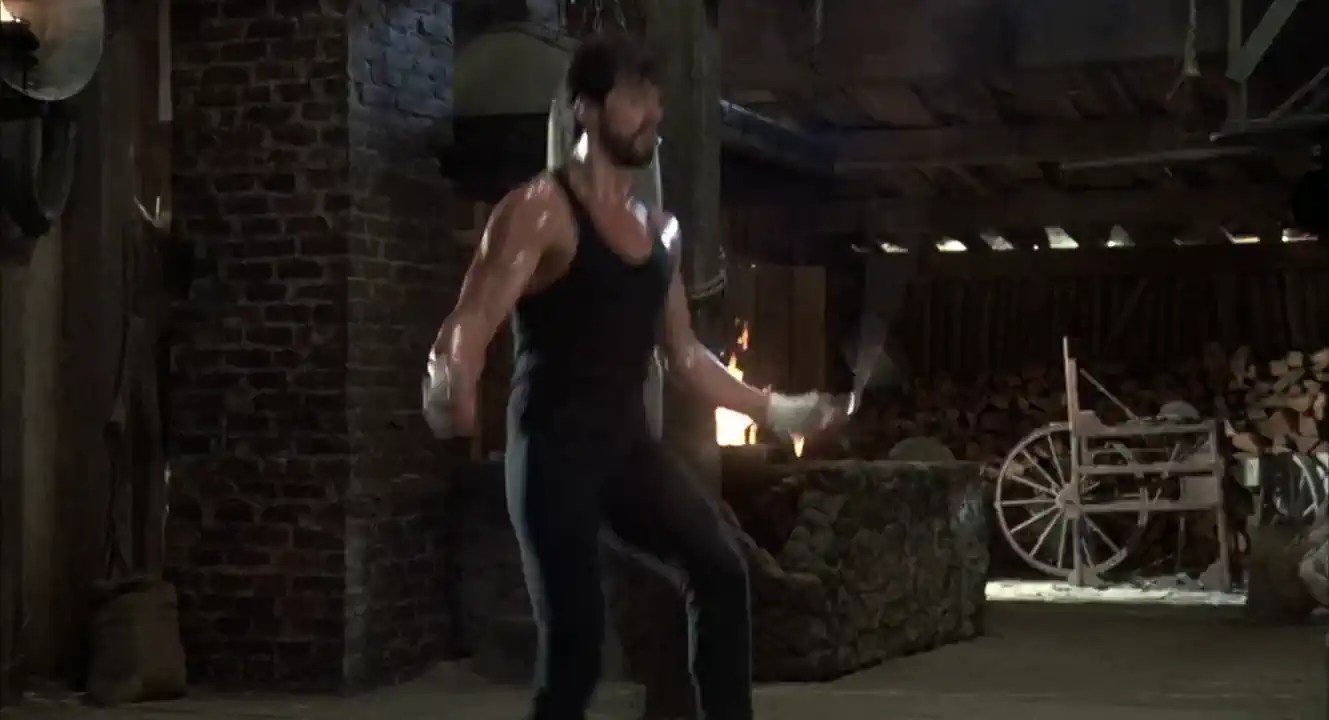
Together, these tracks not only shaped the film, but also influenced a gym culture that continues to this day. In addition, numerous songs have found their way into commercials, television documentaries, sports broadcasts, and motivational videos—a testament to their enduring power and recognizability. Many athletes and trainers report that the powerful synthesizer passages, anthemic melodies, and unparalleled forward momentum of the music in particular have become integral parts of their training routines. The soundtrack of Rocky IV is considered one of the most commercially successful in the series and became an integral part of the 1980s music landscape, still present today in playlists, radio broadcasts, and pop culture references, shaping entire generations of fans and aspiring athletes.
Criticism at the time
Contemporary reviews of Rocky IV were extremely mixed, reflecting the ambivalence many critics felt toward the film’s exaggerated tone. Numerous established media outlets accused the film of being a striking example of American self-promotion that oversimplified political conflicts and reduced them to stereotypical opposites. Particular criticism was levelled at the dominance of montage sequences, which made the film seem like an overlong music video to some and, from a critical point of view, lacked narrative depth. The portrayal of the Soviet opponent as a cold, almost emotionless titan was also considered overly black-and-white and dramaturgically calculated.
Despite these accusations, the film became a huge success with audiences. Viewers saw Rocky IV less as a political statement and more as an intense, emotional spectacle that thrilled them with its visual language and energy. With box office takings of over $300 million, the film became the most commercially successful sports film of its time and shaped an entire generation of action and training motivation. From today’s perspective, Rocky IV is often viewed much more leniently. Many film historians interpret the exaggeration and symbolism not as propaganda manipulation, but as a typical expression of an era in which films deliberately sought to maximize emotional impact. In retrospect, the film is understood as a visually impressive, energetic, and culturally fascinating reflection of its time, whose impact extends far beyond its original political context.
Cultural influence
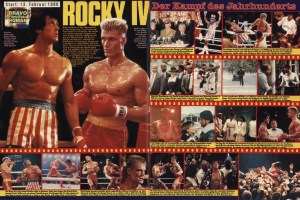
The influence of Rocky IV on pop culture remains enormous and far-reaching to this day: the training sequences became the benchmark for countless action films, sports videos, and parodies. Ivan Drago became an archetype of the “invincible opponent,” whose charisma influenced numerous later film characters. The iconic quotes – above all “I must break you” and “If he dies, he dies” – have become cult phrases that live on in internet culture, memes, parodies, and social media trends. In fitness culture, motivational training, and even e-sports, the film is still used today as a symbol of unshakeable perseverance, underscoring its lasting impact on motivational techniques and self-optimization narratives.
In addition, the political symbolism of the film is often discussed in modern analyses. Film scholars, historians, and cultural theorists use Rocky IV as an example of how Hollywood can reinforce geopolitical narratives and instrumentalize emotions. Drago’s portrayal as a “scientifically engineered titan” is often compared to real-world political tensions, particularly in the context of propaganda-driven self-representation by both superpowers.
Conclusion
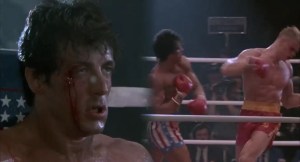
Rocky IV is much more than a classic boxing movie. It is a cinematic document of its time, a mirror of the 1980s, and an energetically staged epic about willpower, loss, patriotism, and hope. It also serves as a cultural hinge between entertainment cinema and political symbolism, as it captures both the fears and aspirations of an entire era in condensed form. The film tells not only the story of a man who takes on an overpowering opponent, but also that of a country trying to reassert itself amid global tensions. The emotional charge, the pictorial exaggeration, and the stylistic intensity elevate the film far beyond the genre of sports drama.
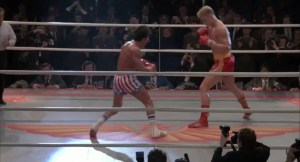
Despite all its exaggerations—or perhaps because of their effectiveness—the film remains an emotional favorite with audiences. The dramatic climax, the pathos, the simple but powerful symbolism, and the radical juxtaposition of two worlds create a narrative force that continues to fascinate to this day. Viewers identify with Rocky’s fighting spirit, his vulnerability, and his ability to never give up, even under extreme conditions. This emotional connection makes the film a work that inspires people across generations—whether as a source of motivation, a nostalgic memory, or an iconic pop culture phenomenon.
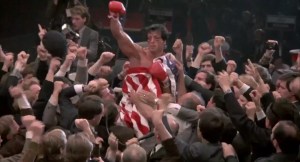
With its combination of political subtext, gripping training scenes, iconic music, and symbolic imagery, Rocky IV has had a lasting impact on film history. The film’s visual language, powerful montages, use of music as a narrative engine, and clear metaphorical charge have influenced entire genres—from action cinema and music videos to modern motivational clips and sports documentaries. At the same time, Rocky IV remains an indispensable part of the Rocky saga to this day because it marks a decisive turning point: Rocky’s personal maturation process, the thematic expansion of the series, and the linking of individual and geopolitical conflicts elevate the film to a level that offers much more than mere entertainment.
More
Trailer
External links
- Rocky IV at IMDb
- Rocky IV at Rotten Tomatoes
- Rocky IV at Wikipedia (en)
- Rocky IV at Wikipedia (de)








 McHenry's Lair
Kommentar verfassen :