


Next chapter of the Star Wars arcade trilogy
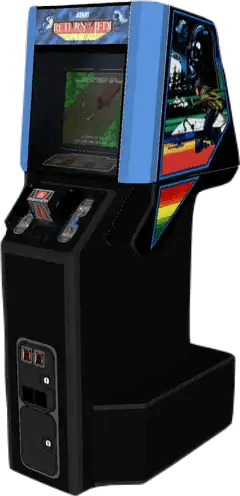
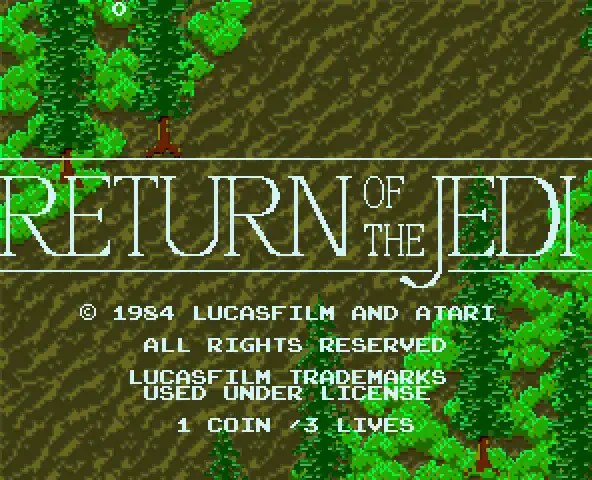
When Atari released the arcade game Star Wars: Return of the Jedi in 1984, the world was still reeling from the cinematic conclusion of the original trilogy. Pop culture was permeated by Star Wars – toys, comics, soundtracks, and books shaped the youth. Fans were enthusiastic, and the need for interactive adventures in the Star Wars universe was enormous. Atari, which had previously set standards with the vector-based successes Star Wars (1983), made a conscious decision to take a different direction with the new game. Instead of relying on the clean lines and futuristic look of vector graphics, Return of the Jedi offered colorful raster graphics, faster action, and a more cinematic presentation that focused more on cinematic suspense and rhythmic movement. This made the game feel more lively and emotional, but also more dense and challenging. This experiment gave the game its own character, distinguishing it from both its predecessors and contemporary arcade titles.
Atari invested considerable resources in the project. Designers, programmers, and artists worked closely with Lucasfilm to achieve the most authentic representation of the film world possible. Internal documents show that several months were spent just coordinating color palettes and animations to harmoniously combine light, shadow, and movement. During the development phase, the team experimented with different camera angles and game speeds to create a sense of “cinematic flow” – a concept that was far ahead of its time.
The game was released at a time when arcade machines were at their peak. Players crowded around the machines all over the world, and the characteristic buzzing and beeping sounds characterized the atmosphere of the arcades. Atari seized the opportunity to create a particularly elaborate and visually impressive experience with the Star Wars label. The company deliberately positioned the machine as a premium product, with detailed cabinet design, bright LED displays, and a robust sound module. The response in test markets was overwhelming, with players praising the speed and cinematic intensity of the game in particular.
It is important to note the historical context: Return of the Jedi was released in 1984, between the two vector-based Star Wars games from Atari. Contrary to popular belief, it was not the conclusion of the trilogy, but rather the middle part. It was not until a year later, in 1985, that The Empire Strikes Back, the last classic Star Wars video game from Atari’s arcade era, followed, once again using the tried-and-tested vector technology and concluding the series.
- Star Wars (1983) – Vector graphics (colors): The first Atari arcade machine in the series featured colorful vector graphics with exceptional clarity and an iconic steering wheel-like yoke controller. Players experienced dogfights in space and the legendary Trench Run against the first Death Star. This title had a significant influence on the aesthetics of early Star Wars games and set new standards in arcades with its fluid line graphics and sample-based voice clips.
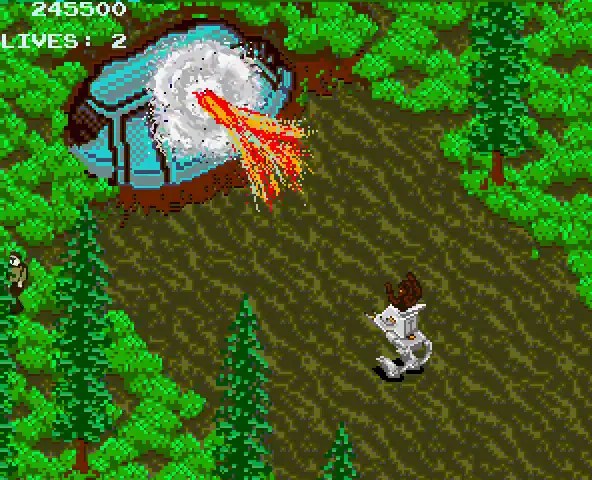
- Return of the Jedi (1984) – Raster graphics (isometric): The game discussed here switched from vector to raster graphics and structured the action into several cinematically staged sequences (Endor speeder, AT-ST, Death Star interior). The isometric perspective, high speed, and color-intensive sprites made it a stylistic outsider – and a bridge between minimalist line graphics and colorful arcade staging.
- The Empire Strikes Back (1985) – vector graphics (colors), conclusion of the Atari series: A year later, Atari returned with vector-based technology. In terms of content, the focus was on the Battle of Hoth with AT-AT/AT-ST confrontations and space battles against TIE fighters, among other things. In many arcades, ESB was delivered as a conversion kit for the 1983 Star Wars cabinets – cost-effective for operators and the formal conclusion of the classic Atari Star Wars arcade era.
Today, Return of the Jedi is considered a symbol of the creative experimentation of the early 1980s. It represents a time when technical innovation and pop culture were in perfect balance, and when developers still took risks to surprise audiences with new ideas.
Gameplay
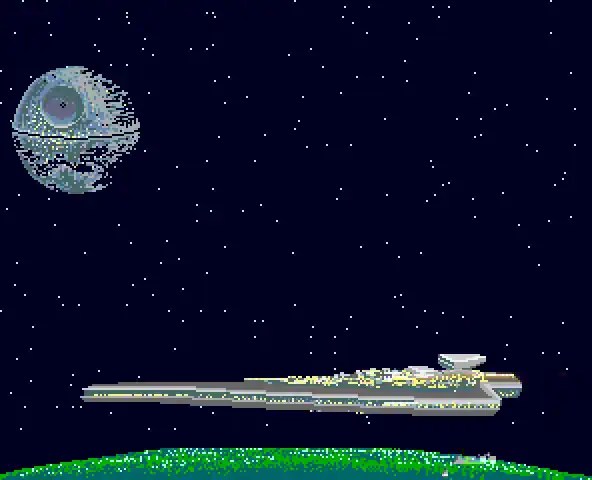
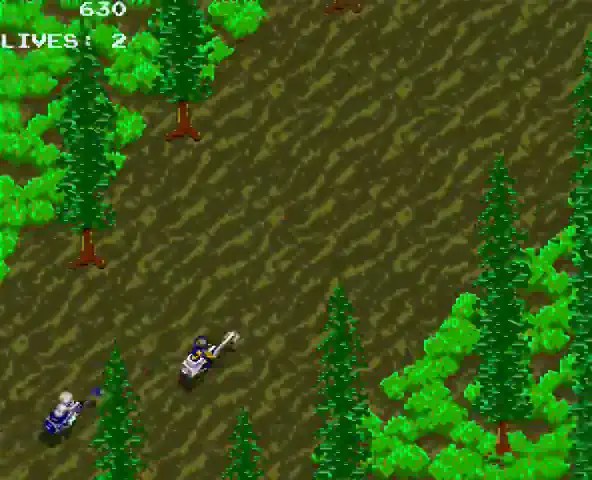
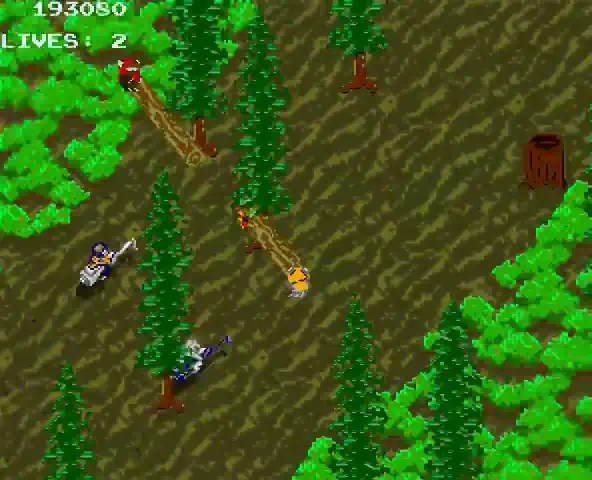
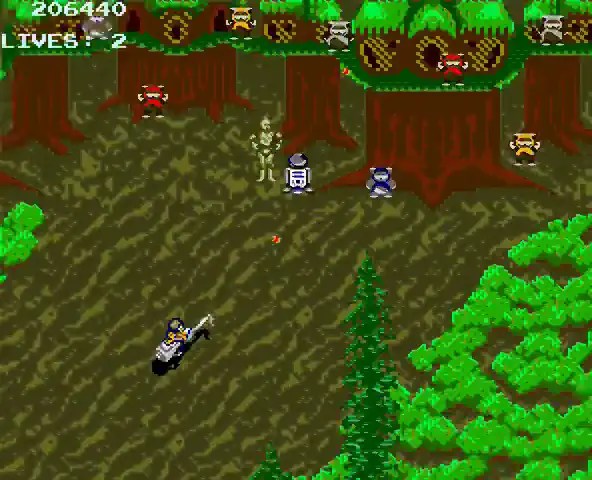
The gameplay of Return of the Jedi is divided into several sequences that loosely retell the dramatic events of the movie Return of the Jedi. The player experiences the battle between the Rebels and the Empire in three central game sections, which differ significantly from each other and offer a continuous increase in difficulty, dynamics, and atmosphere:
- Scene 1 – Speeder bike sequence on Endor:
The adventure commences as the player navigates Leia through a forest on Endor towards the Ewok Village. In order to successfully evade the pursuing Stormtroopers, it is necessary for the player character to manoeuvre her vehicle in such a manner as to force the Stormtroopersout of her way. Concurrently, the impish Ewoks have established traps to assist her, comprising ropes stretched between trees and logs that can be propelled together to impede the enemy speeders. - Scene 2 – AT-ST walking mission:
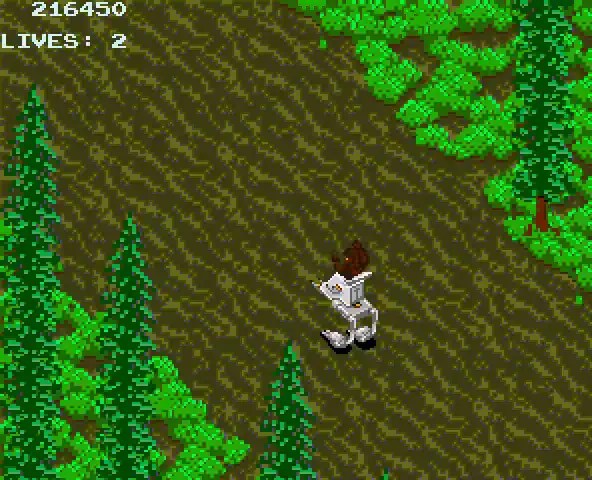
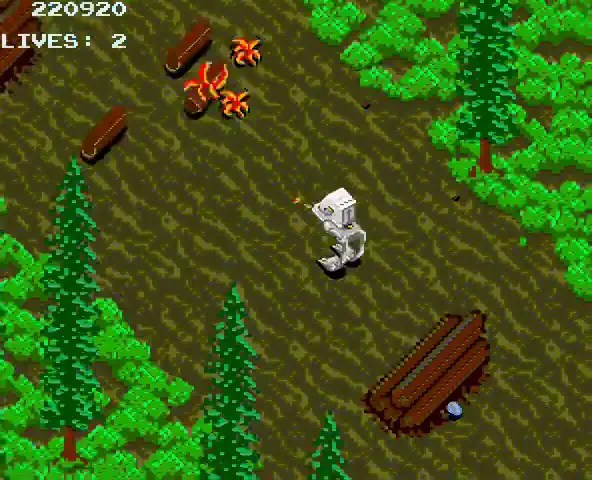
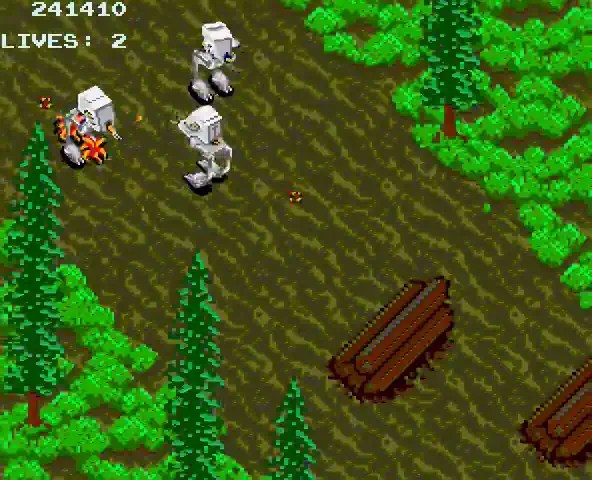
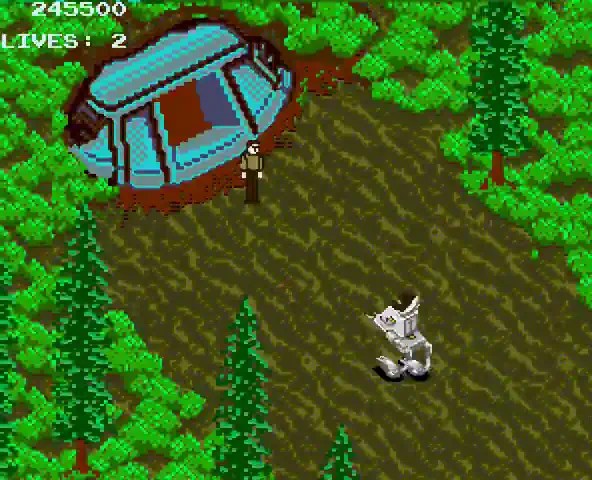
Upon Leia’s arrival at the Ewok Village and subsequent conjunction with C-3PO and R2-D2, the player transitions to a different section of the forest, where they must navigate Chewie’s Scout Walker through perilous rolling logs, catapulted rocks, and incessant enemy Scout Walkers. His objective is to reach the bunker, so that the waiting Han Solo can detonate it and deactivate the protective shield surrounding the Death Star. - Scene 3 – Millennium Falcon space battle:
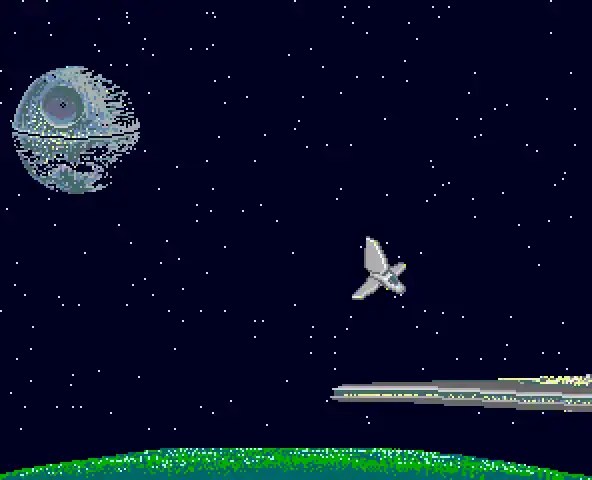
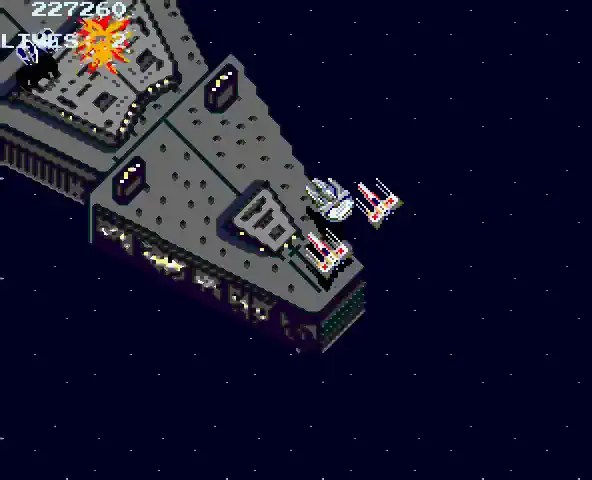
Simultaneously, Chewbacca’s efforts to penetrate the bunker are underway, while Lando Calrissian is navigating the Millennium Falcon towards the Death Star. The „Split-Wave“ feature autonomously alternates between these two scenes. The player assumes control of Chewie in the Scout Walker and Lando in space – in the same wave. - Scene 4 – Millennium Falcon Death Star battle:
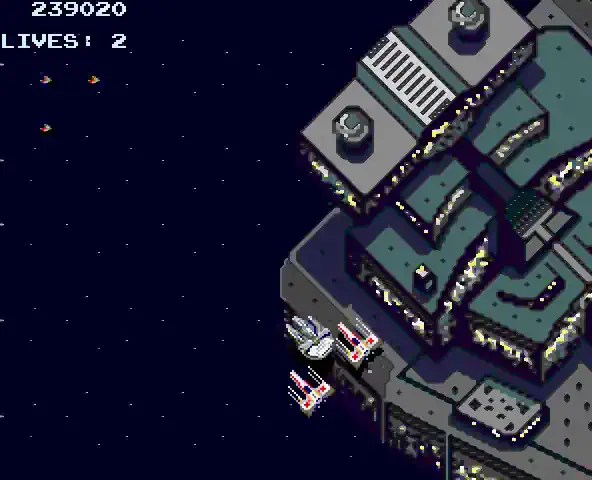
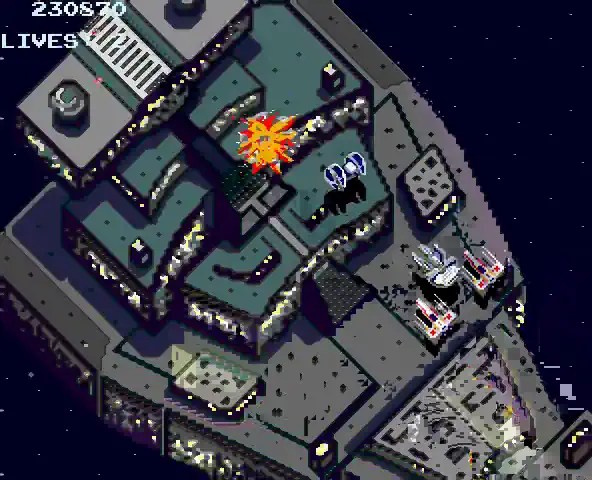
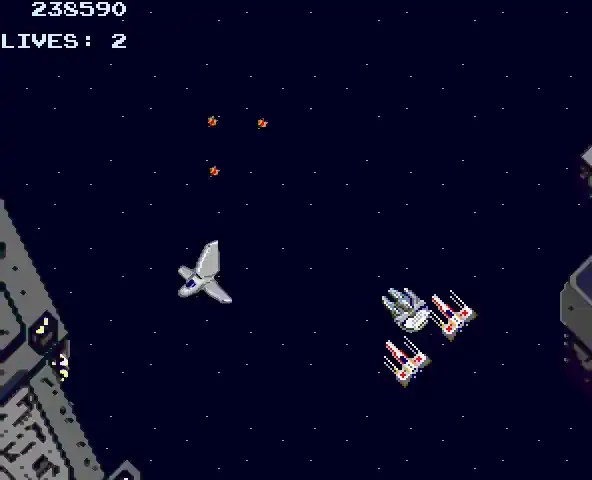
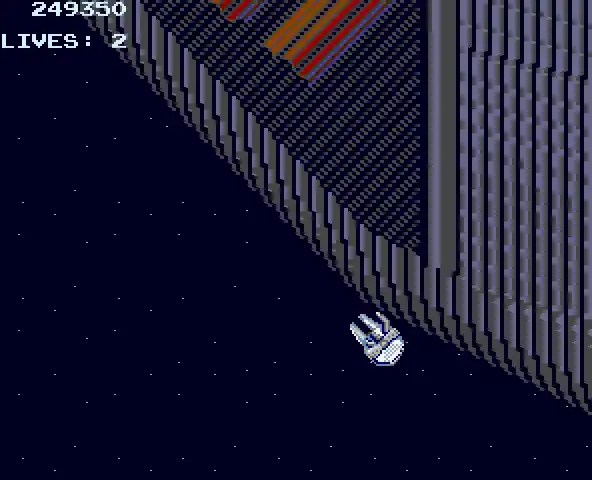
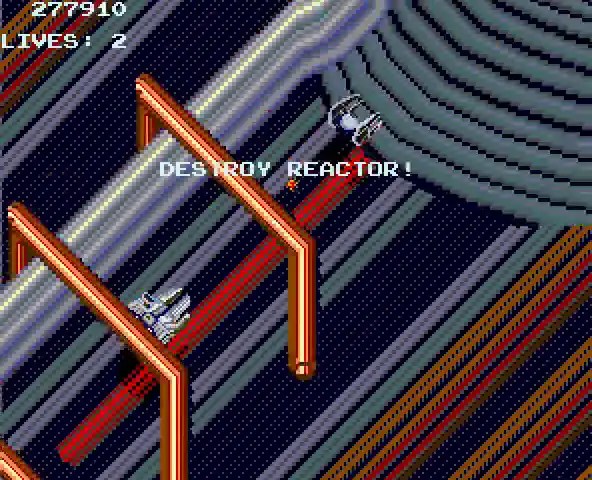
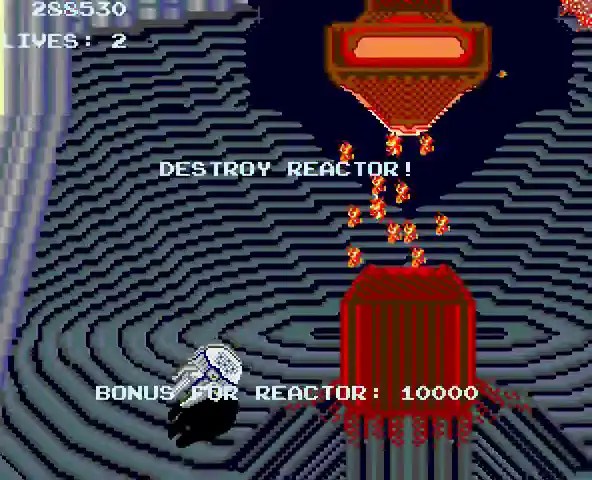
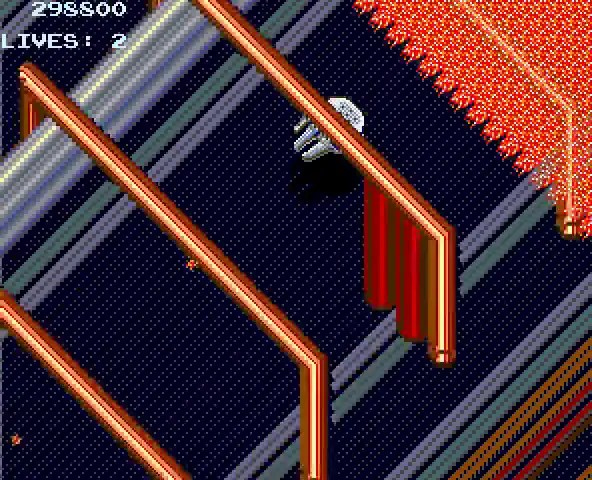
With the shield deactivated, Lando is able to initiate his offensive manoeuvre into the Death Star with the objective of targeting the central reactor. However, this undertaking is not without the necessity of first confronting the presence of marauding TIE-FIGHTERS and shuttles. - Scene 5 – Millennium Falcon Death Star escape:
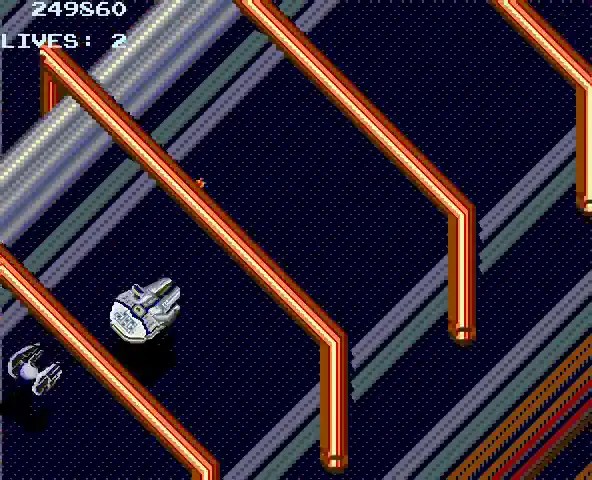
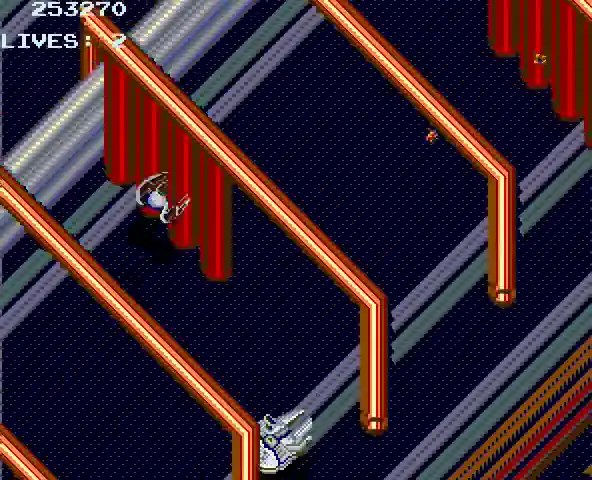
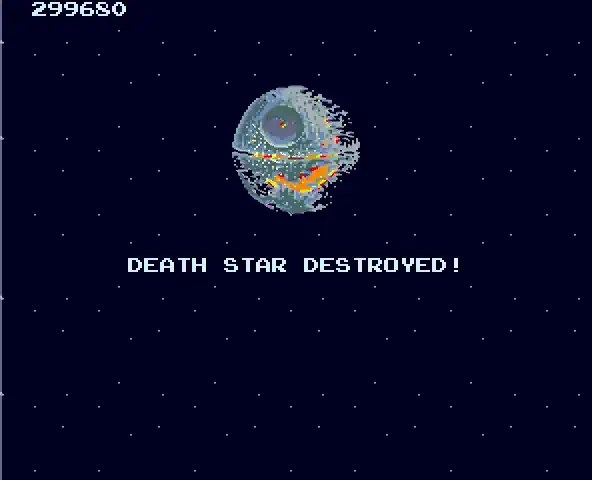
The conclusion of the matter has yet to be determined. Upon entering the Death Star, Lando is required to evade or neutralise TIE-fighters and other obstacles as he navigates a narrowing tube that leads to the reactor. When the target is finally in his sights, the player must shoot, turn and fly back out of the tube as quickly as possible to escape the pursuing explosion that has the potential to destroy his ship. Subsequently, the Rebel Forces achieve a decisive triumph as the Death Star is destroyed in a cataclysmic explosion.
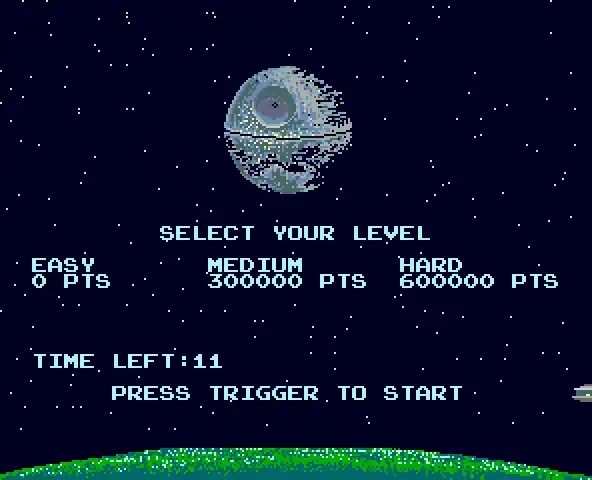
Between the main sequences, there are short transitional scenes and animated sequences that break up the flow of the game and reinforce the impression of being part of a cinematic experience. Some versions of the game also offered variable difficulty levels, with enemy density, speed, and obstacles dynamically adjusted.
This mix of different perspectives, speeds, and game mechanics provided variety and excitement. The isometric top-down view—a stylistic device that was still rarely used at the time—gave the game a cinematic depth that was often praised by critics. Particularly noteworthy is the balance between fast-paced action sequences and moments of precision. The combination of speed, accuracy, and tight reaction times made Return of the Jedi a challenging experience that fascinated and frustrated experienced players alike, while giving them the feeling of being in the middle of an interactive movie scene.

Technology
Technically, Return of the Jedi marked a turning point for Atari. While its predecessors relied on vector graphics – a display method that offered razor-sharp lines but little color – the decision was made to use raster graphics. These enabled a more colorful, vivid display that was closer to the style of the film. Detailed sprites, smooth animations, and fast scrolling effects made the machine a real eye-catcher.

The underlying hardware was a specially adapted Atari system, whose computing power and memory architecture were optimized for fast sprite movements and complex background animations. The sound chip performed amazingly: synthesizer effects were mixed with digitized samples reminiscent of John Williams‘ orchestral motifs. It was particularly remarkable that Atari managed to capture the iconic sound of the Star Wars universe atmospherically with limited technical means.
Players control the vehicles using a flight control stick with trigger fire buttons, similar to the previous game, Star Wars. This control device offered precise and direct control over the movement of the vehicles, which was particularly crucial at high speeds and in narrow passages.
Criticism at the time
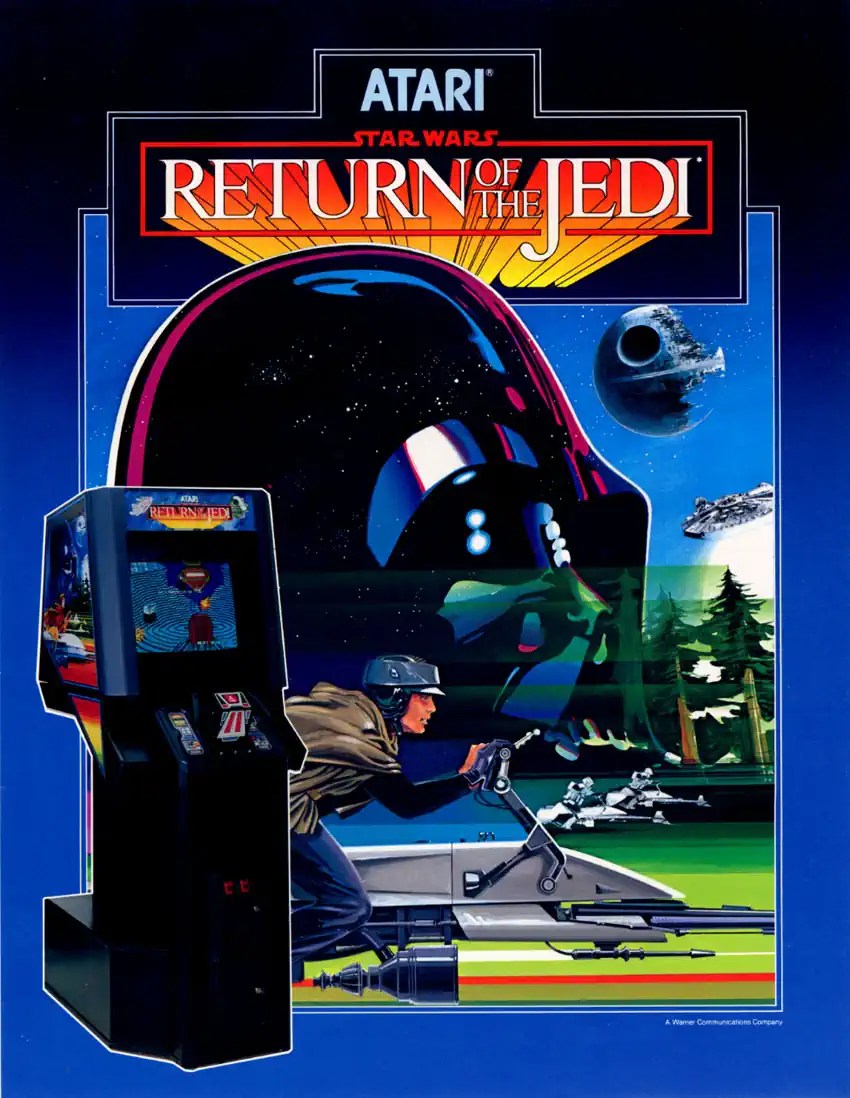
The trade press of the 1980s responded overwhelmingly positively and was impressed by Atari’s ambition to bring the world of Star Wars to the screen. The magazines Electronic Games, Video Games, and Computer and Video Games in particular praised the game’s high speed, colorful graphics, and visual splendor. Many critics emphasized that the different levels gave the feeling of taking a cinematic journey through the Star Wars universe. The varied missions, changing perspectives, and rapid succession of action moments were considered innovative and offered players an experience that stood out from the static shooters of the time.
However, there was also criticism: some players found the isometric view confusing, especially in the dense Endor sections, where trees, enemies, and projectile trajectories quickly merged into one another. The sensitive controls, which required precise timing, were unforgiving of mistakes and led to frustration among casual players. Some arcade operators reported that experienced players sought out the game, while newcomers gave up after a few rounds – a phenomenon typical of many Atari titles of that era.
Some reviewers saw the game as a technical milestone, but one that offered less emotional depth than the first Star Wars arcade game. Others praised the courage to vary the gameplay more, even if it made it seem less “purist.” Nevertheless, the presentation was convincing across the board: the sound effects, the detailed sprites, and the cinematic staging were seen as proof that video games could increasingly combine narrative and audiovisual art. The machine quickly became a crowd-puller, especially in the US. In large arcade chains such as ShowBiz Pizza Place and Chuck E. Cheese’s, Return of the Jedi became one of the most played machines of its time. Although the machine was less common in European arcades, queues regularly formed wherever it was located – it was not uncommon for spectators to watch eagerly as experienced players attempted to master the Death Star level, giving the game an almost mythical reputation.
Cultural influence
Return of the Jedi left a lasting impression on video game and pop culture history. The game is considered a link between the era of minimalist vector graphics and the transition to detailed, color-intensive raster graphics, which shaped the style of many later action games. With its isometric display and cinematic scenes, it paved the way for a new form of arcade experience that focused more on atmosphere and cinematic effect. This cinematic presentation inspired later designers to integrate more narrative depth into arcade games – an approach that was reflected in titles such as Star Fox and Panzer Dragoon in the 1990s. Many players experienced Return of the Jedi as one of the first games that conveyed the feeling of actually being part of a movie, long before the term “interactive movie” became popular.
Furthermore, Return of the Jedi illustrates how closely cinema and arcades were intertwined in the 1980s. At a time when video games were increasingly perceived as an entertainment medium in their own right, the game served as a bridge between the two worlds. It helped to keep the Star Wars brand firmly anchored in the gaming sector and cemented the connection between film aesthetics and game design. This interaction influenced not only arcade games, but also home computer and console titles, which increasingly took their cue from cinematic staging.
In addition, Return of the Jedi inspired numerous subsequent titles that combined action, storytelling, and visual effects. In the retrogaming scene, the game is now valued not only as a technical experiment, but also as a cultural artifact that captures the spirit of a time when video games became a central part of pop culture. It is considered a symbol of an era in which the boundaries between interactive media and visual art began to blur – a precursor to the modern narrative games that transfer the cinema experience to the digital realm. The enthusiasm that Return of the Jedi sparked in arcades at the time is still reflected today in the nostalgia of collectors and in tributes from contemporary developers who regard the game as a creative milestone and proof of the cultural value of the medium.
Conclusion
Star Wars: Return of the Jedi remains an impressive relic of a bygone era when innovation, courage, and technical limitations went hand in hand. It shows how Atari attempted to bring the magic of the film to the screen and proves that a game can be compelling not only through perfection, but also through character. It is a product of an era when developers still physically soldered circuit boards, set pixels by hand, and had to overcome all odds with limited memory. It is precisely this dedication to craftsmanship and the courage to break new technical ground that give the game its lasting magic. Even decades later, every level and every sound sequence still conveys the excitement of a time when video games were still uncharted territory and creative freedom was more important than perfection.
Despite minor weaknesses – such as the difficult controls, the sometimes confusing perspective, and the steep learning curve – it still offers a fascinating window into the golden era of arcade culture. It is not just a game, but a piece of history that reflects the energy, ambition, and fascination of an entire generation of developers and players. Even though Return of the Jedi was not chronologically the conclusion, but rather the middle part of the Atari Star Wars games – since The Empire Strikes Back was not released until 1985 as the last vector-based game – it is still considered by many fans to be the emotional highlight of the series, thanks to its visual diversity and cinematic implementation. For many collectors and retro gamers, it is considered a worthy conclusion to the legendary Atari Star Wars trilogy: a colorful, fast-paced, and technically ambitious monument to a time when arcades were the center of digital adventure. Furthermore, it symbolizes the transition from the analog to the digital age – a shining example of how pioneering spirit and pop culture could merge to create something timeless that still inspires admiration today.
Hashtags: #StarWarsArcade #ReturnOfTheJediGame #AtariArcade #RetroGaming #80sArcade #ArcadeHistory #RasterGraphics #VectorGraphics #GenXGeek #GamingCulture #InteractiveMovie #ArcadeTechnology #EndorSpeeder #Atari1984
Keywords: Atari Return of the Jedi arcade game, Star Wars arcade history, 1980s arcade gaming evolution, raster vs vector graphics arcade era, cinematic presentation in early video games, Endor speeder bike game sequence, Atari arcade hardware technology 1984, retro gaming culture Gen X geek, film tie-in arcade titles Star Wars trilogy, interactive movie style arcade gameplay






 McHenry's Lair
Kommentar verfassen :