

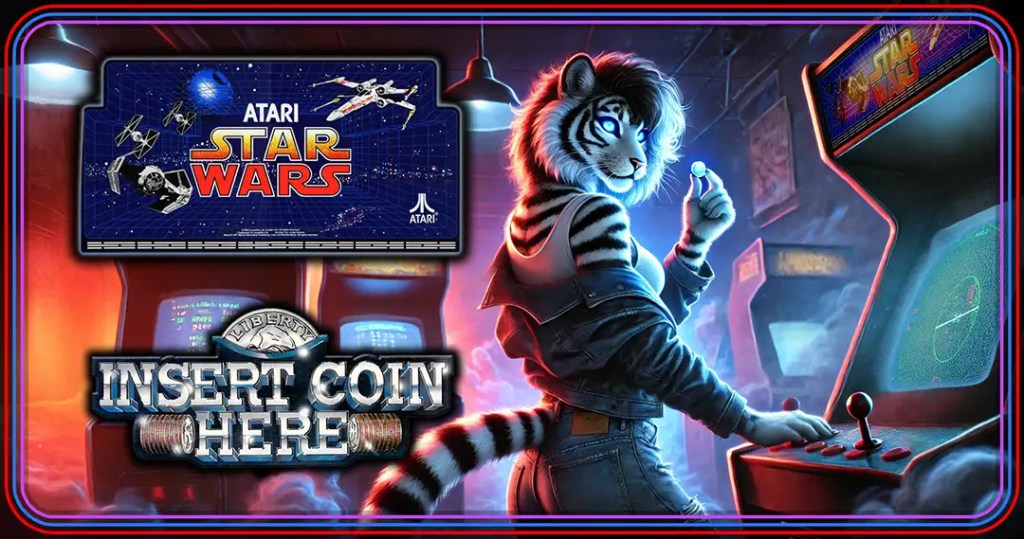
Red Five standing by…
In August 1984, I had just seen “Indiana Jones and the Temple of Doom” at the cinema and wanted to stop by my regular arcade for a quick visit. But when I entered the arcade, I immediately noticed a new machine: the cockpit version of “Star Wars”! Curious, I sat down and started the first round.
What was supposed to be a quick visit turned into a long, intense, and above all expensive evening. Countless coins disappeared into the coin slot as I fought my way through dogfights in space and the famous trench run. The sound, the graphics, and the feeling of being right in the middle of the movie made the experience unique.
…. I’m going in
In 1983, at the height of the global arcade boom, game manufacturer Atari released a groundbreaking video game that thrilled both movie and gaming fans alike: “Star Wars”, a visually stunning vector graphics shooter that recreated the dramatic final attack on the Death Star from the first Star Wars movie in 1977 in rich detail. For the first time, players could now slip into the role of an X-wing pilot and actively participate in one of the most famous scenes in film history – an experience that had never been seen before in this form.
The game combined innovative technology with original samples from the film, including real voice recordings of the actors, and combined this with action-packed, accessible gameplay that captivated both casual gamers and die-hard fans alike. The use of color vector graphics was not only a technical highlight, but also gave the game its unique futuristic style, which clearly set it apart from competing products of the time.
Atari’s “Star Wars” was not only a commercial success, but also set new standards for the combination of film and interactive gaming. Today, the title is considered a true milestone in the history of arcade games – a product that has had a lasting influence on both pop culture and video game development. It exemplifies an era in which innovation, licensing power, and creative visions came together in arcades.
Gameplay
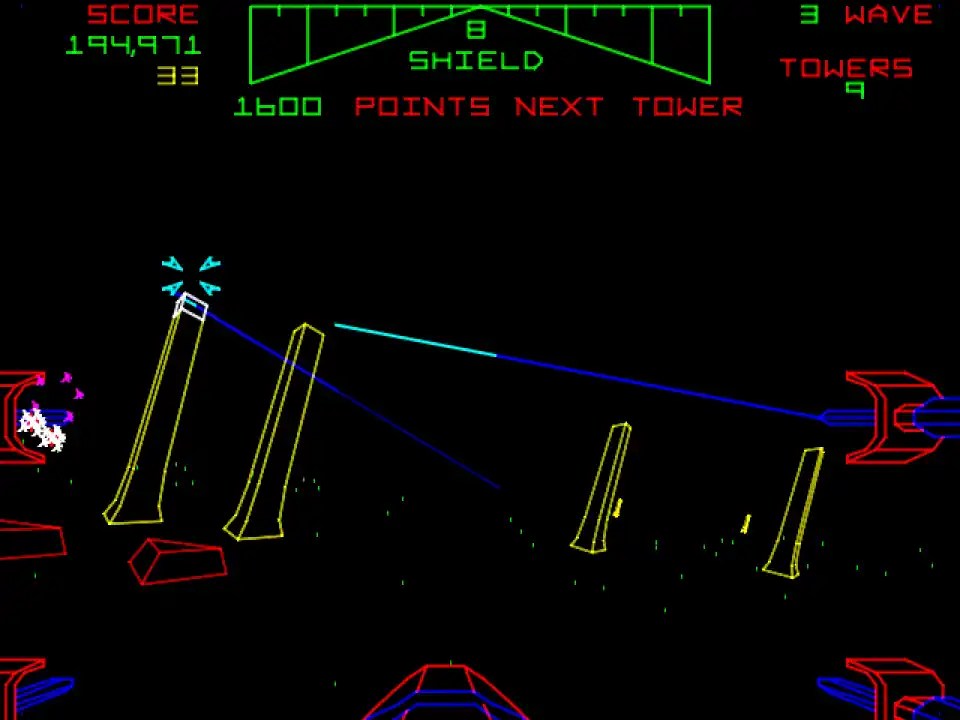
“Star Wars” is a first-person rail shooter in which the player takes on the role of an X-wing pilot and completes a series of intense, consecutive missions based directly on the final battle from the first Star Wars movie. At the beginning, the player finds themselves in space, fighting a multitude of enemy TIE fighters and turrets positioned around the Death Star. This “dogfight” scenario requires quick reactions and precise aiming, as some of the enemies approach rapidly and attack from different angles.
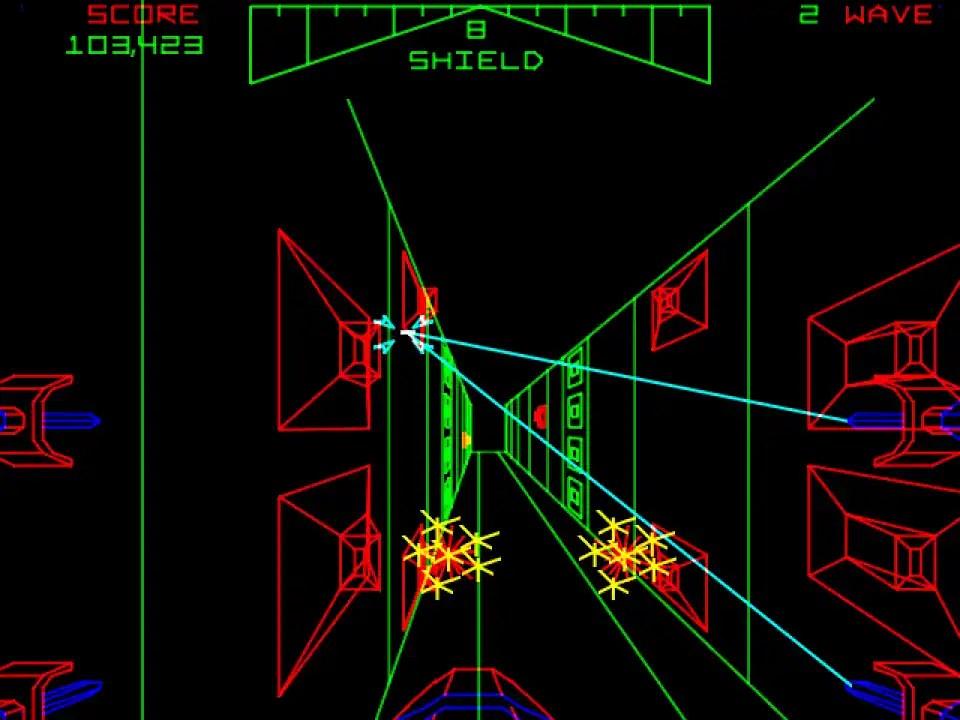
Once this phase has been successfully completed, the next step is to approach the surface of the Death Star. In this section, players must not only fight enemy turrets and ships, but also demonstrate their skill at dodging obstacles. The difficulty level increases noticeably here, as reaction time and coordination are increasingly required.
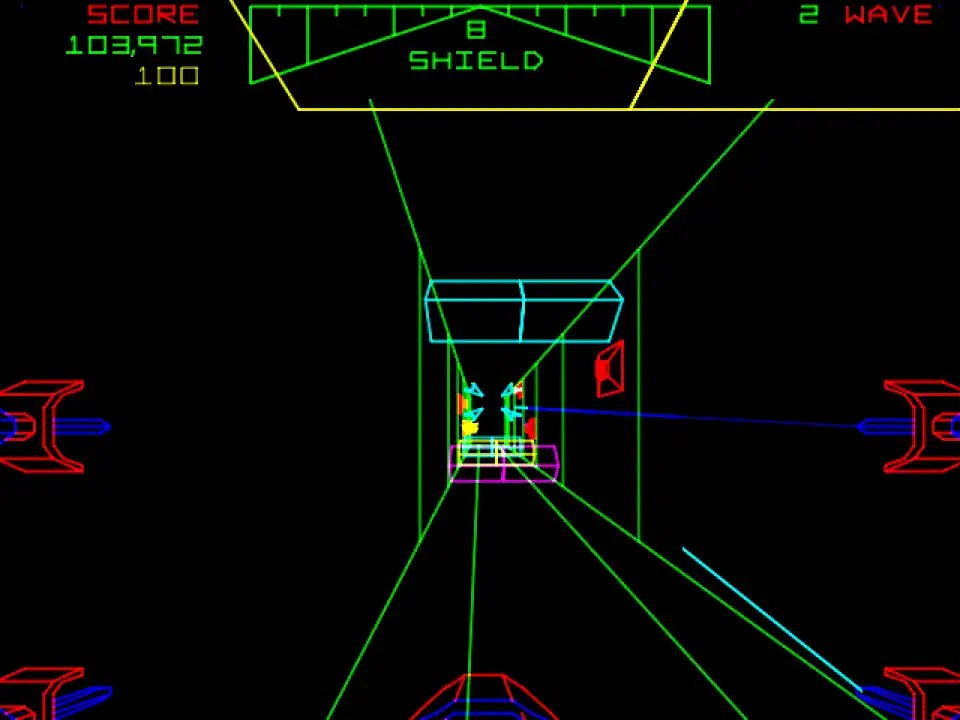
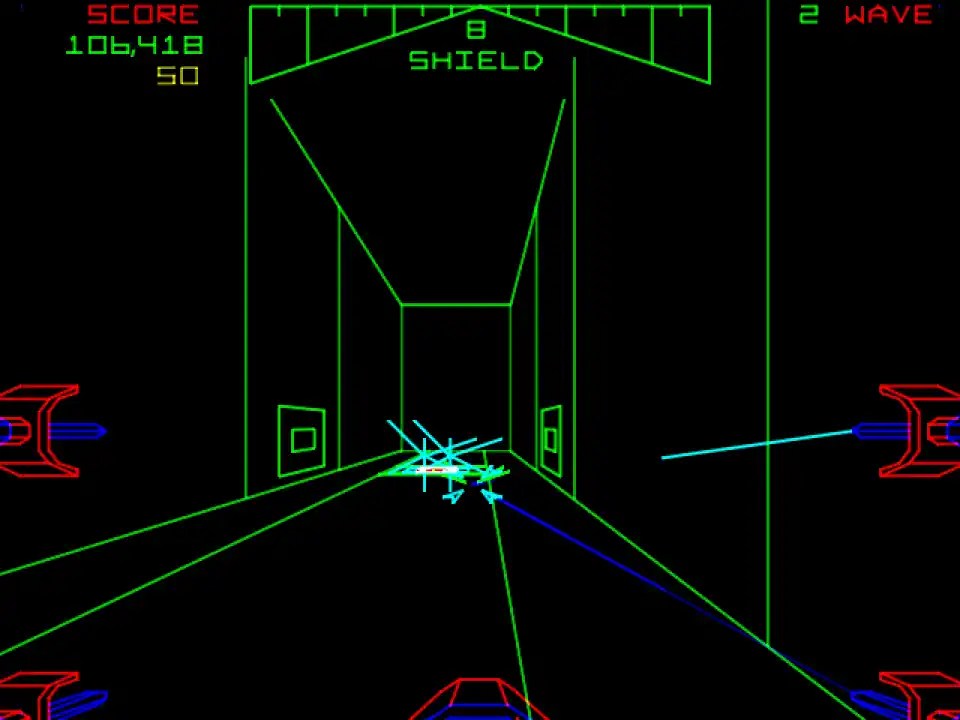
The final and most well-known phase of the game is the low-altitude flight through the narrow trench of the Death Star. Players navigate through narrow passages at breakneck speed, dodging projectiles and structures, and finally attempt to fire a proton torpedo into the small opening, which leads to the explosion of the entire space complex – just like in the iconic film finale from 1977.
With each completed round, the game repeats itself with increased difficulty, putting reflexes, concentration, and strategic thinking to the test. In keeping with classic arcade titles, the focus is always on striving for the highest high score.

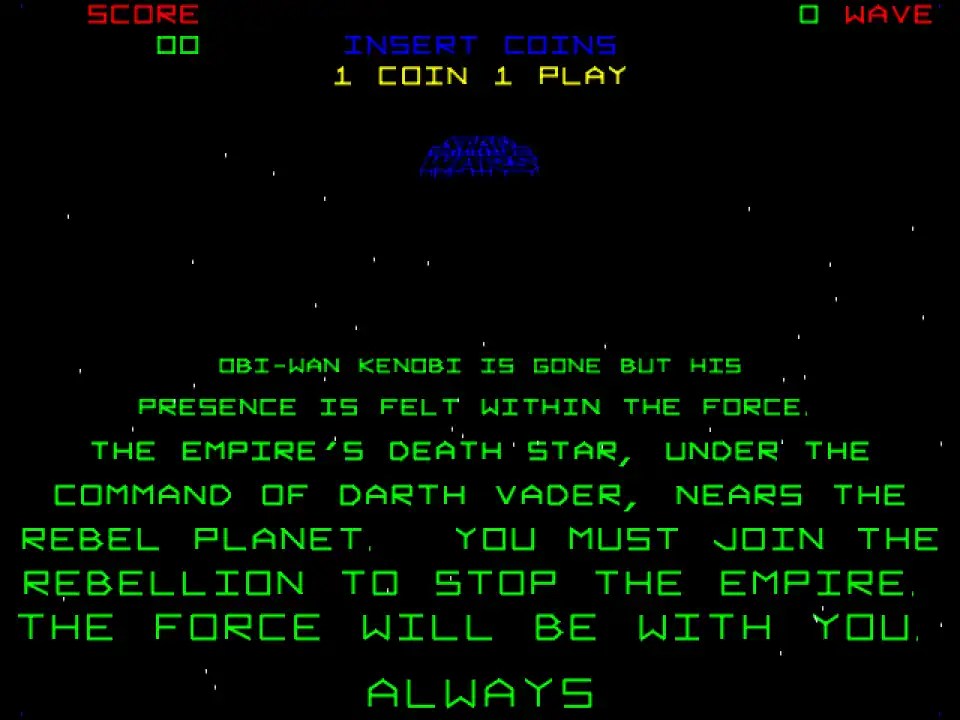

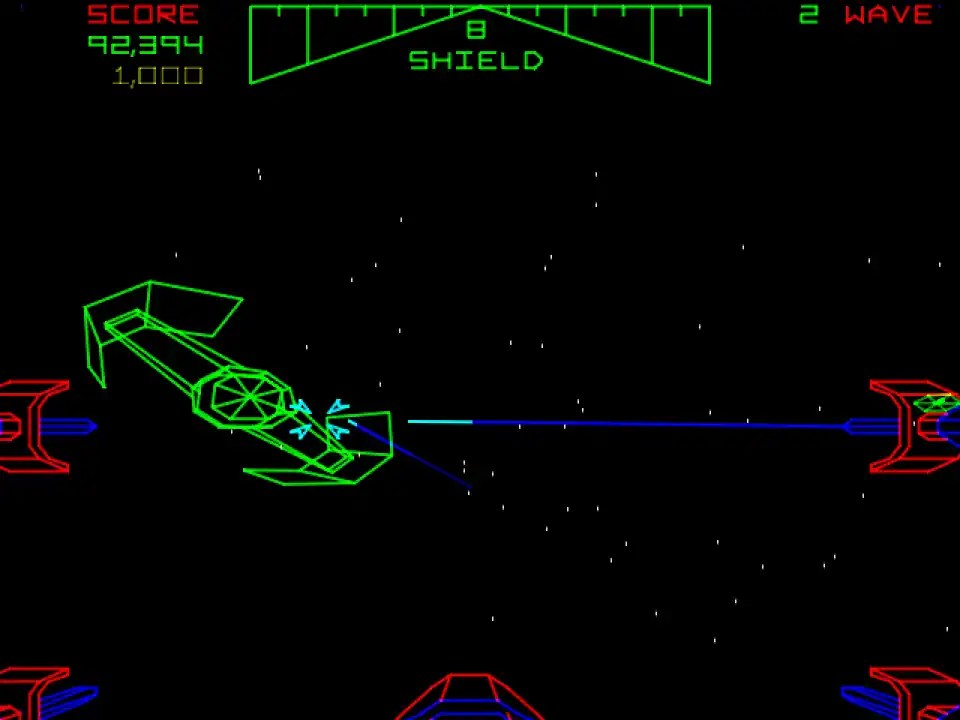
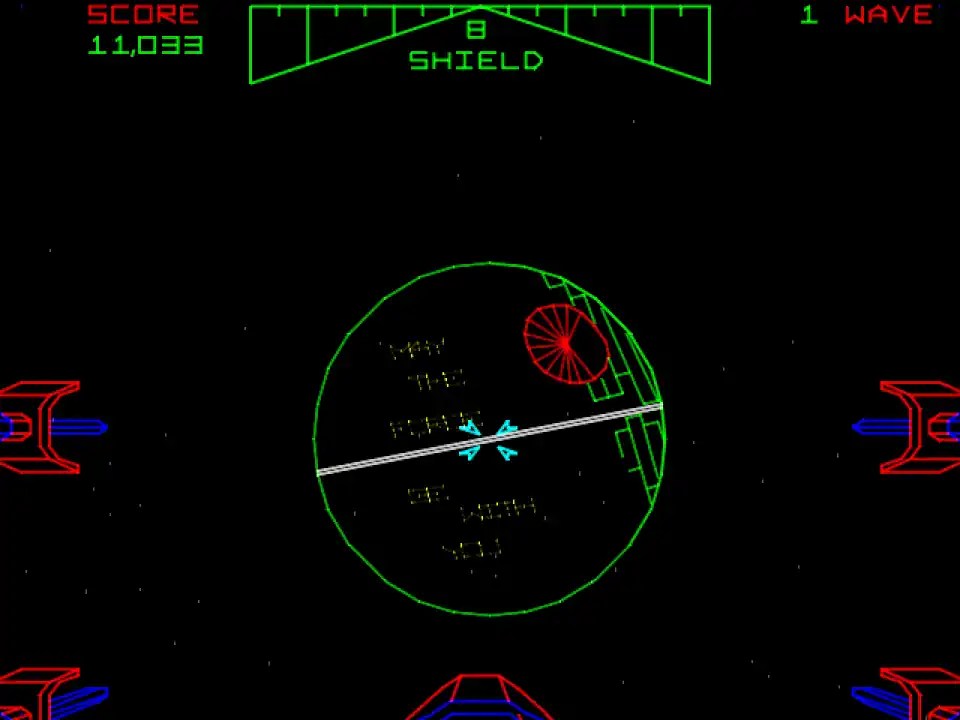



Trivia
The original voice acting in the game comes directly from the film and features memorable lines from actors such as Mark Hamill, James Earl Jones, and Alec Guinness, lending an authentic depth to the audiovisual experience. It was unusual at the time for an arcade game to feature such high-quality voice samples – a feature that immediately immersed many players in the world of Star Wars.
The physical design of the machine is particularly noteworthy: in addition to the standing version, there was also a so-called cockpit variant, in which the player sat in a cabin. This version offered an even more intense experience, as it not only resembled a spaceship cockpit visually, but also allowed the player to immerse themselves more acoustically and visually in the game thanks to its shielded design. Many players still report today that this variant significantly intensified the gaming experience and was one of the best arcade experiences of their youth.
Technology
The game used color vector graphics, a method of displaying content on the screen that was still rare and technologically advanced at the time. In contrast to classic raster graphics, which consist of individual pixels, all elements were constructed using bright lines, giving the game a minimalist yet futuristic look. Especially in the context of a sci-fi universe like Star Wars, this graphic style contributed enormously to the atmosphere.
The technical basis for this was a special vector graphics engine from Atari, which was based on the Motorola 6809 processor. This enabled precise and smooth display of the line graphics, even though the hardware performance was extremely limited by today’s standards. Nevertheless, the developers managed to create an impressive visual depth that was considered groundbreaking at the time.
Star Wars also set new standards in the field of audio technology: digital voice samples taken directly from the film provided an unprecedented level of authenticity. The voices of well-known characters such as Darth Vader and Obi-Wan Kenobi were used specifically to give players the feeling of really being part of the action.
Another innovative element was the control system. Instead of a simple joystick, Atari used a yoke controller – a control stick similar to that of an airplane. This control system not only gave the game unique handling, but also reinforced the feeling of actually piloting a spaceship. The ergonomic design of the controller contributed significantly to the immersion and was far ahead of its time.
Together, the graphics, sound, and controls formed an impressive package that made “Star Wars” a technological showcase among arcade games. It stood out from the competition and is still considered a prime example of creative and technical innovation in the arcade era.
Criticism at the time
Upon its release, Star Wars was received positively by both the trade press and arcade visitors alike. Particular praise was given to the vector graphics, which were extraordinary for the time and, with their bright lines, not only offered a unique visual style but also perfectly matched the futuristic atmosphere of the Star Wars universe. Critics praised the courage to break away from the pixel-based graphics that were common at the time and to use a graphic technique that was not only technically sophisticated but also created a unique visual feature.
The soundscape was also widely described as groundbreaking. The integration of original film samples – from iconic voices to familiar sound effects – created an immersive soundscape that was unmatched in quality by any other arcade game of the era. The voices of Darth Vader and Obi-Wan Kenobi in particular gave fans goosebumps.
In terms of gameplay, the game was celebrated for its fast-paced action and close adherence to the movie scenes. The fact that players could relive a central movie scene themselves was considered particularly appealing and made “Star Wars” a crowd-puller in arcades.
However, not all reviews were exclusively positive. Some critics complained that the game was relatively short compared to other arcade titles and that its content quickly became repetitive. However, this criticism was in line with the format that was common at the time, in which replay value lay in the constant increase in difficulty and the achievement of ever-higher scores – a core element of the arcade experience of that era.
Reputation today
Today, “Star Wars” (1983) is considered one of the most important arcade titles of the early 1980s and has earned its place in the history of video games. It regularly appears at the top of “Best of Arcade” lists in specialist articles and retrospective rankings – a clear indication of its enduring significance and popularity. The elaborately designed cockpit version of the machine in particular has become a sought-after collector’s item that fetches top prices among lovers of retro hardware today.
Furthermore, the game is considered by fans and gaming historians to be one of the most successful film adaptations in the history of arcade games. Instead of simply exploiting the brand, the developers succeeded in translating the cinematic experience into exciting and technologically ambitious gameplay. This balance between license fidelity and playful quality makes the title remarkable even decades later.
Its influence extends far beyond 1983: many later titles in the Star Wars universe, including the popular Rogue Squadron series on consoles and PC, incorporate elements that were first realized in the original arcade game – be it the dynamic flying experience, the trench flight scenario, or the staging of epic space battles. Even modern VR games with Star Wars licenses can be traced back to the immersive basic idea of this classic.
Last but not least, Atari’s “Star Wars” is considered a prime example of successful license exploitation: it didn’t just exploit a franchise, but created a creative, technically innovative, and playfully captivating work that respectfully expanded on the film template while also asserting itself as a standalone game.
Conclusion
Atari’s Star Wars from 1983 is more than just a licensed game – it is a technical work of art and a milestone of the arcade era that has had a significant impact not only on the video game industry at the time, but also on the genre of licensed games. With its unique graphics, iconic soundscape, and dynamic gameplay, it has secured a permanent place in the hearts of many players. The game was an early example of how audiovisual elements and interactive controls can merge into an immersive overall experience that goes far beyond what other titles of the time offered. Particularly noteworthy is how it succeeded in translating the essence of one of the most famous film franchises ever into a fast-paced arcade format.
Even more than 40 years after its release, “Star Wars” remains a symbol of how video games can capture the magic of cinema in a new, interactive way. It continues to be used as a reference point for successful licensed games and remains a prime example of the innovative power and courage to embrace the technical avant-garde that characterized Atari in the early 1980s. Whether as a nostalgic collector’s item or a milestone in video game history, the influence of this game is undeniable and remains unforgettable.






 McHenry's Lair
Kommentar verfassen :