


It’s War! Waves of ICBMs are attacking!
Destroy the incoming missiles! You are our last hope!
The defense will never win
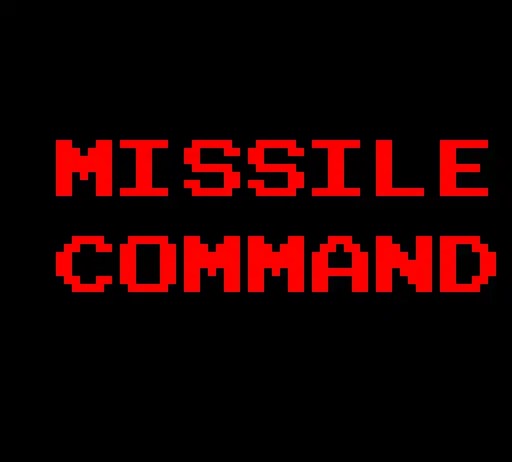
In 1980, Atari released the arcade game Missile Command, designed by Dave Theurer. At a time when the Cold War shaped the geopolitical reality and the threat of nuclear war was ever-present, this game struck a particular chord: Players took on the role of a defender desperately trying to save cities from an unstoppable nuclear attack. The goal was to fend off a growing wave of attacks with limited resources and use every second strategically. As with almost all games of that era, the focus in Missile Command was on holding out as long as possible while the threat drew inexorably closer. In the context of the tense geopolitical situation of the early 1980s, this principle seemed like an interactive reflection of the reality of the time: every game inevitably ended with the image of a destroyed world.
The Gameplay
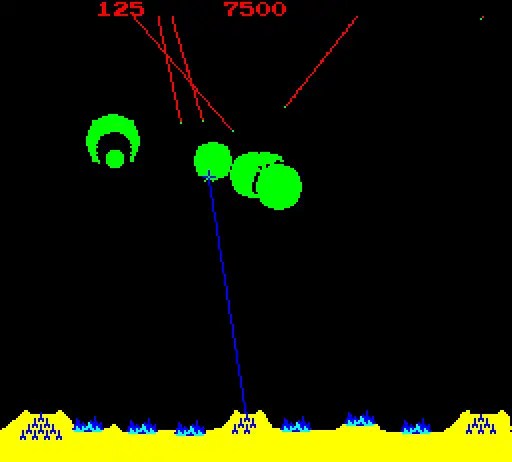
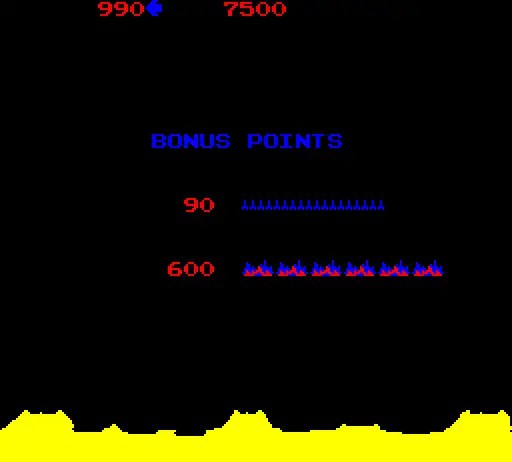
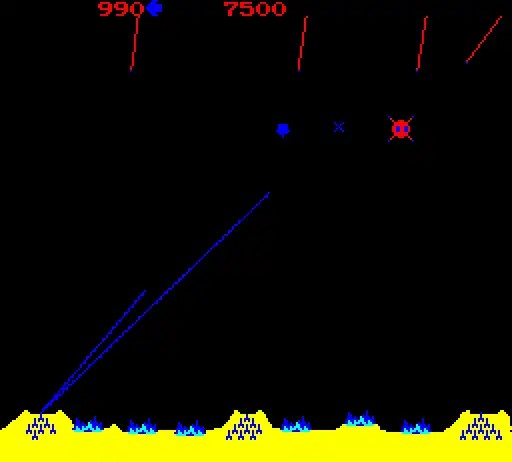
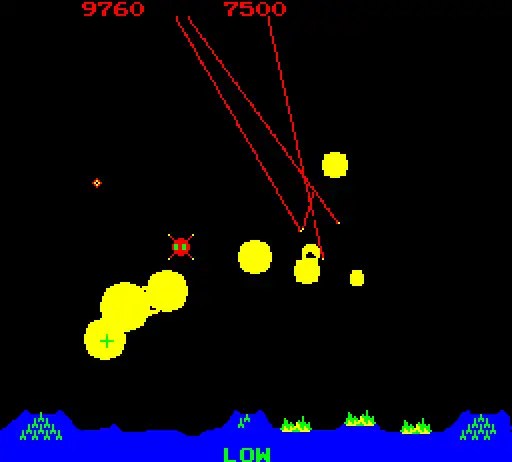
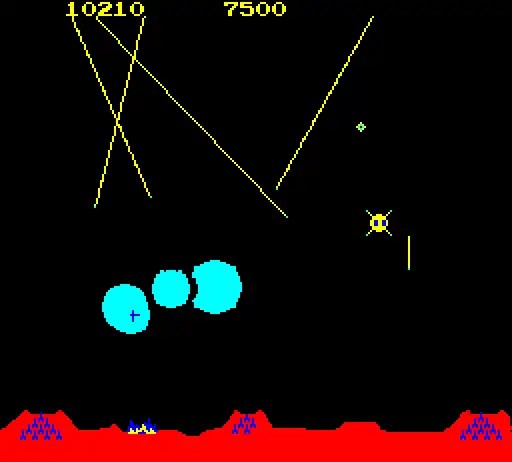
The player controls a movable crosshair with which they fire interceptor missiles to destroy approaching enemy warheads before they hit their target. The goal is to protect six strategically located cities from waves of nuclear missiles, enemy bombers, and deadly satellites, while the attacks become increasingly faster and more coordinated. To do this, the player has three missile launch bases with limited ammunition, each covering a specific geographical area. The choice of launch base, the precise alignment of the crosshairs, and perfect timing when firing determine the life or death of the virtual civilian population. Interceptor missiles explode in the air, creating a short-lived but effective blast radius that destroys enemy warheads. This mechanic requires not only quick reflexes, but also forward planning – players must anticipate trajectories, prioritize multiple targets, and make tactical decisions under constant time pressure.




The Technology
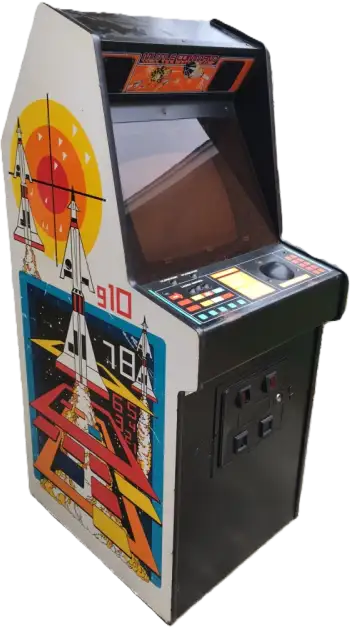
The hardware for Missile Command was based on a robust Atari arcade platform with a color monitor and the distinctive trackball control. The latter enabled particularly precise and smooth aiming in all directions, which was crucial for fast reaction times in the gameplay. The image output relied on a colorful, stylized look reminiscent of vector graphics, but was in fact carefully implemented in raster graphics. This clear, minimalist aesthetic gave the threat depicted an abstract, almost surreal character that underscored the unreality and inevitability of the scenario. This was complemented by monotonous, menacing sounds that changed depending on the speed and intensity of the missiles, creating a steadily increasing acoustic pressure. This soundscape not only served as atmosphere, but also as a psychological element that significantly increased the tension while playing.
The Reagan myth
For decades, there has been a frequently told but unsubstantiated story that US President Ronald Reagan played the game in the 1980s, or at least heard about it, and was inspired to promote the Strategic Defense Initiative (SDI, also known as “Star Wars”) as a result. Some versions of this anecdote even claim that Reagan commented on the strategic parallels between the game and a possible missile defense system. However, historians and contemporary witnesses consider this connection highly unlikely, as there is no reliable evidence to support it, and point out that such stories often arise from a mixture of zeitgeist, legend-making, and the appeal of linking pop culture and politics. The story therefore belongs more to the realm of modern myths, which flourished particularly easily in the atmosphere of the 1980s.
Reviews at the time
The game received much praise for its innovative control system, exciting gameplay, and high level of challenge, which pushed even experienced players to their limits time and time again. At the same time, some players found the steadily increasing difficulty frustrating, as complete victory was impossible and the game ultimately always ended in defeat. This unforgiving structure gave the title a special appeal, but also created a tense atmosphere that intensified the gaming experience. In the media, Missile Command was described as both entertaining and disturbing – a reflection of its time, combining the technological enthusiasm and underlying anxiety of the era in a single gaming experience.
Reputation today
Missile Command is now considered a classic and is often featured in museums, collections, and retrospectives on video game history, where it is regarded as a memorable example of the connection between game mechanics and the spirit of the times. Many historians and players also see it as a metaphor for the futility and hopelessness of nuclear warfare, especially in the context of the omnipresent fear during the Cold War. In addition, the game inspired numerous later titles in the tower defense genre and is considered a precursor to modern defense and strategy games. It has been reissued several times in various forms, including for consoles, home computers, smartphones, and in technically and visually enhanced remakes that attempt to bring the thrill and oppressive atmosphere of the original into a new era.
Conclusion
Missile Command is more than just an arcade game – it is a digital document of the Cold War that embodies the fears, tensions, and latent insecurity of an entire era. With its relentless mechanics and steadily increasing pressure, it conveys a sense of permanent threat that remains relevant today and becomes almost tangible when playing the game. Even if the Reagan myth is probably just an anecdote, it still shows how deeply the game has penetrated pop culture and the collective consciousness.








 McHenry's Lair
Kommentar verfassen :