

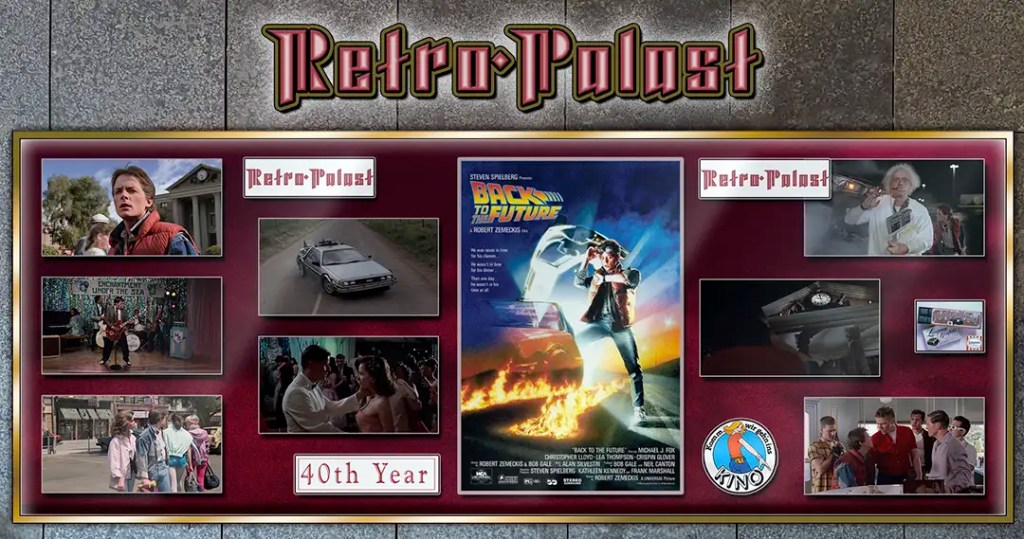
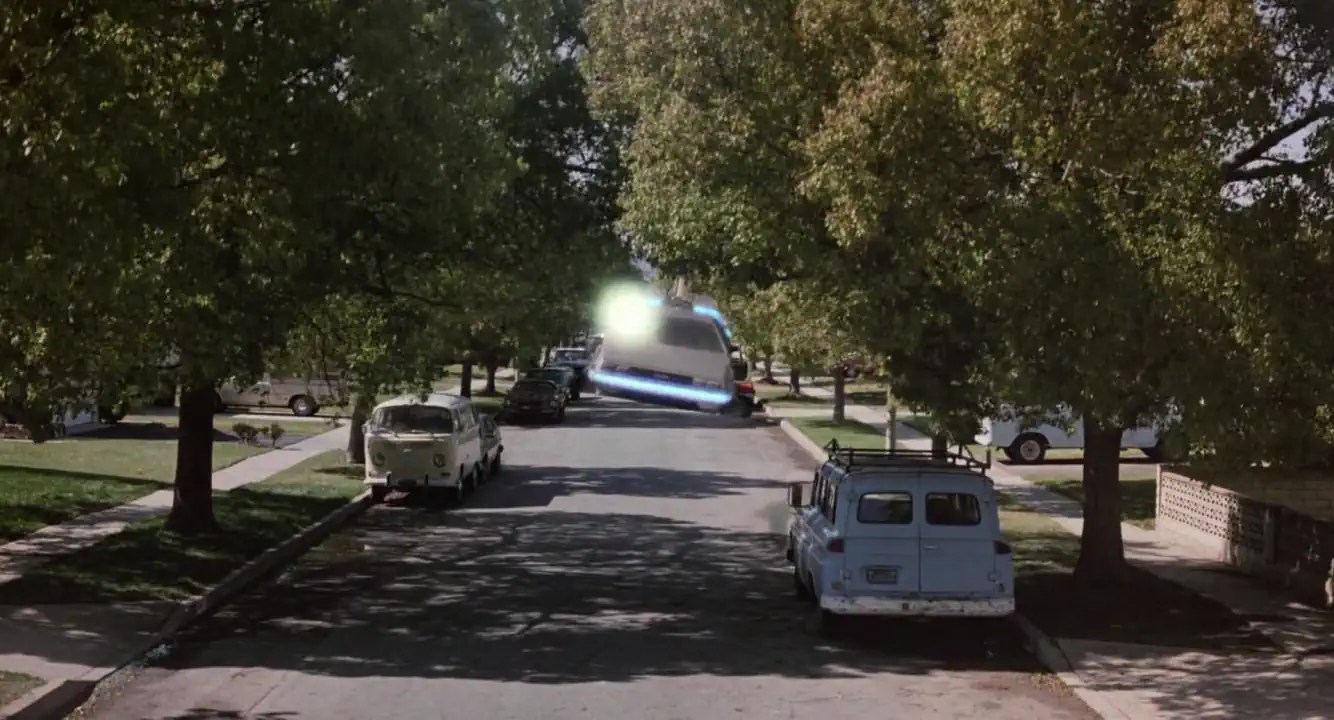
If my calculations are correct, when this baby hits 88 miles per hour…
Time travel with cult status
“Back to the Future” is more than just a science fiction film – it is a pop culture phenomenon that continues to thrill generations to this day. Since its release in 1985, the film has become deeply ingrained in the cultural memory and, over the years, has become a symbol of creative, entertaining, and intelligent cinema. With its unique blend of original story, charming characters, and distinctive style, the film is a prime example of the best that 1980s Hollywood cinema had to offer. It was directed by Robert Zemeckis, who created a visionary narrative together with screenwriter Bob Gale. The film was produced by Steven Spielberg, among others, whose influence on the tone and tempo is also clearly evident. The mix of adventure, humor, retro charm, youthful rebellion, and a touch of romance continues to appeal to audiences around the world, whether they are seeing it for the first time or revisiting it.
What makes the film so special is not only its innovative time travel theme, but also the way it was staged: with an impressive sense of visual and narrative detail, a dynamic narrative pace, and a dash of philosophical questions about cause and effect, free will, and responsibility for one’s own actions. Despite all the fantastic elements, the film remains grounded and relatable thanks to its characters – the audience is hooked because they recognize themselves in Marty, Doc, and the gang. Today, the film is considered a milestone of 1980s cinema, a reference point for countless time travel stories, and an inexhaustible source of inspiration for modern narrative formats in film, television, and pop culture.
Plot
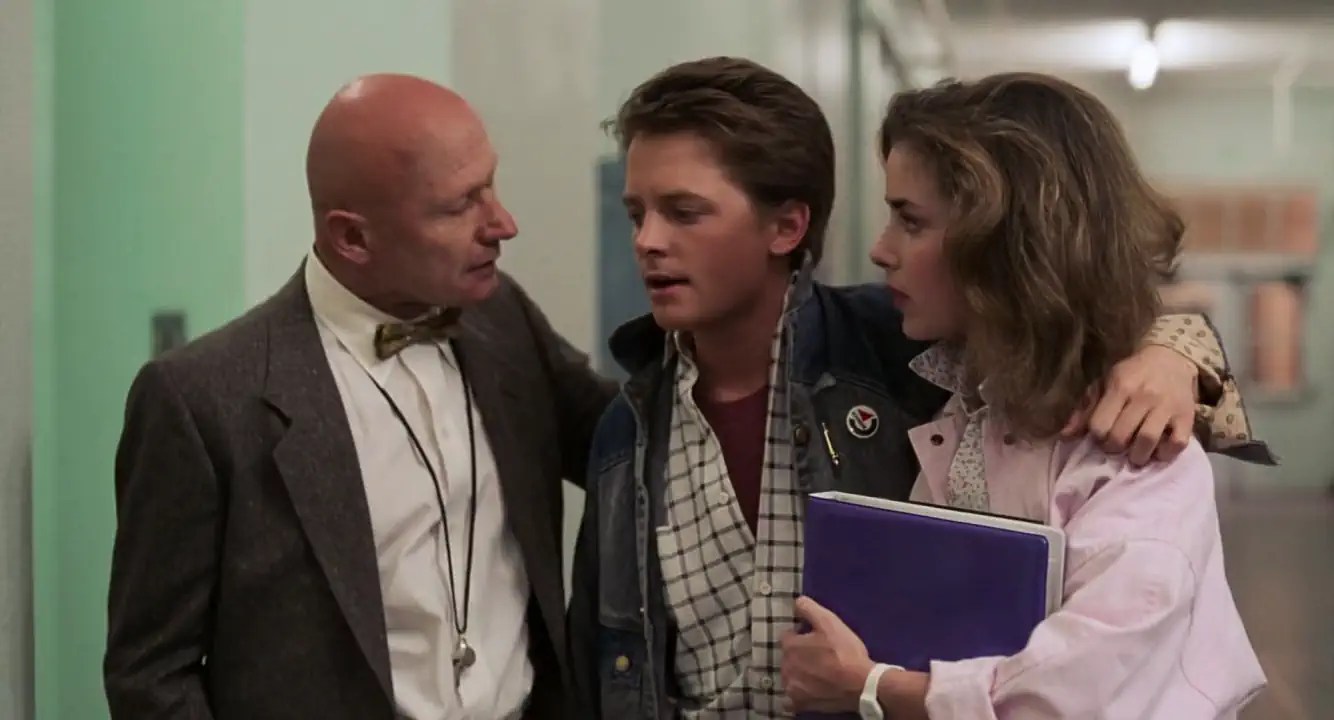
The story revolves around 17-year-old Marty McFly, a seemingly normal teenager who lives in the small US town of Hill Valley. He goes to high school, dreams of a career in music, and struggles with the typical worries of a teenager – including an authoritarian school principal, annoying siblings, and a father who can’t stand up to his boss.
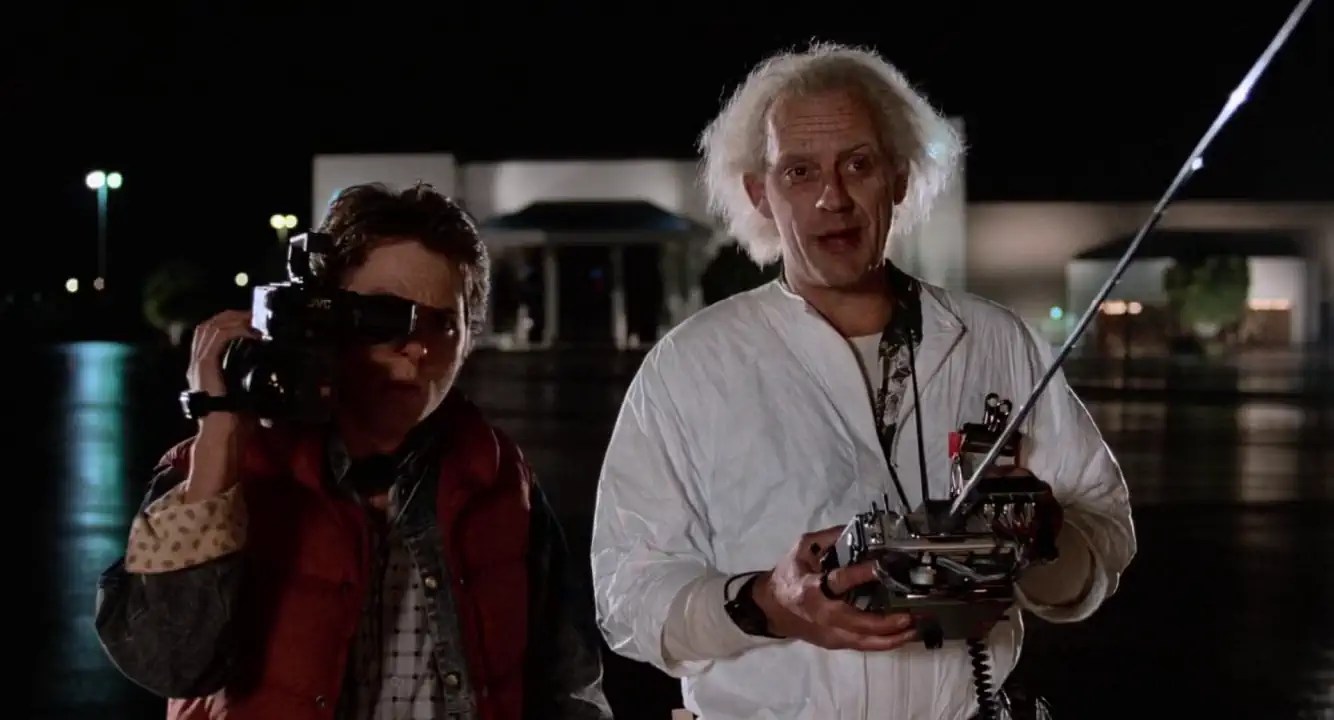
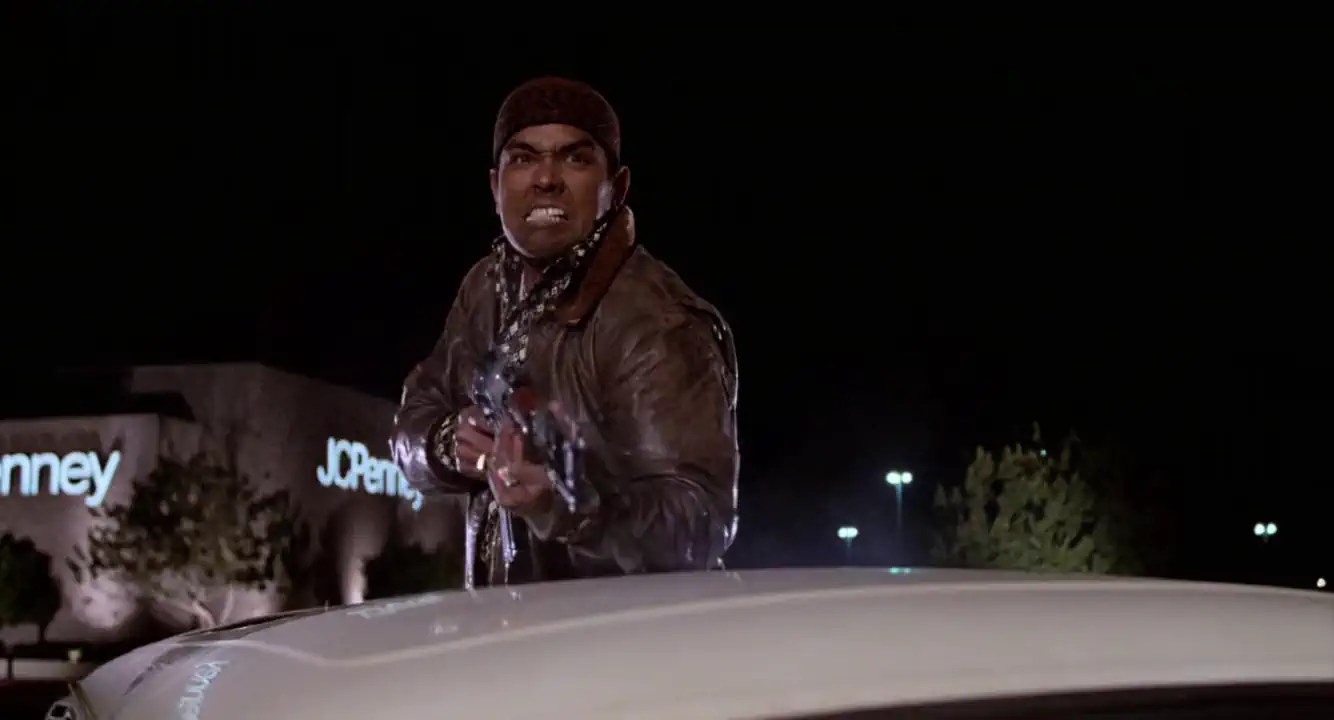
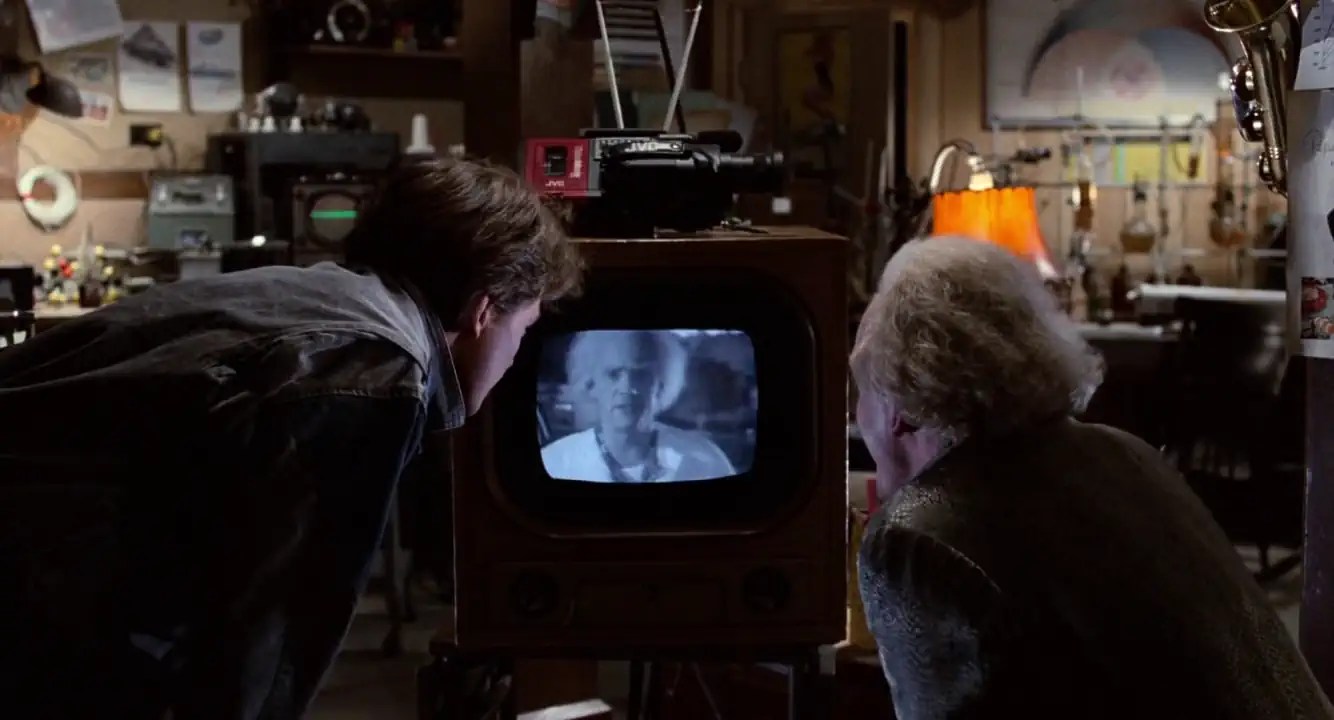
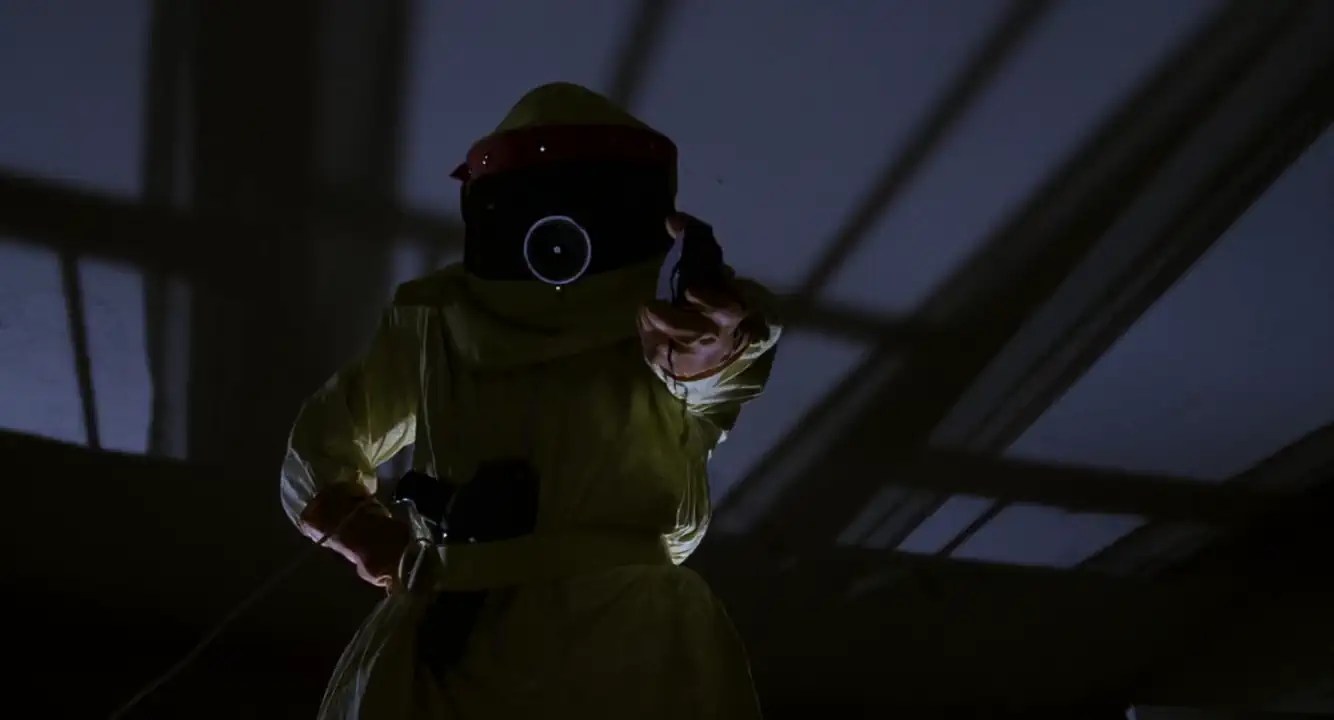
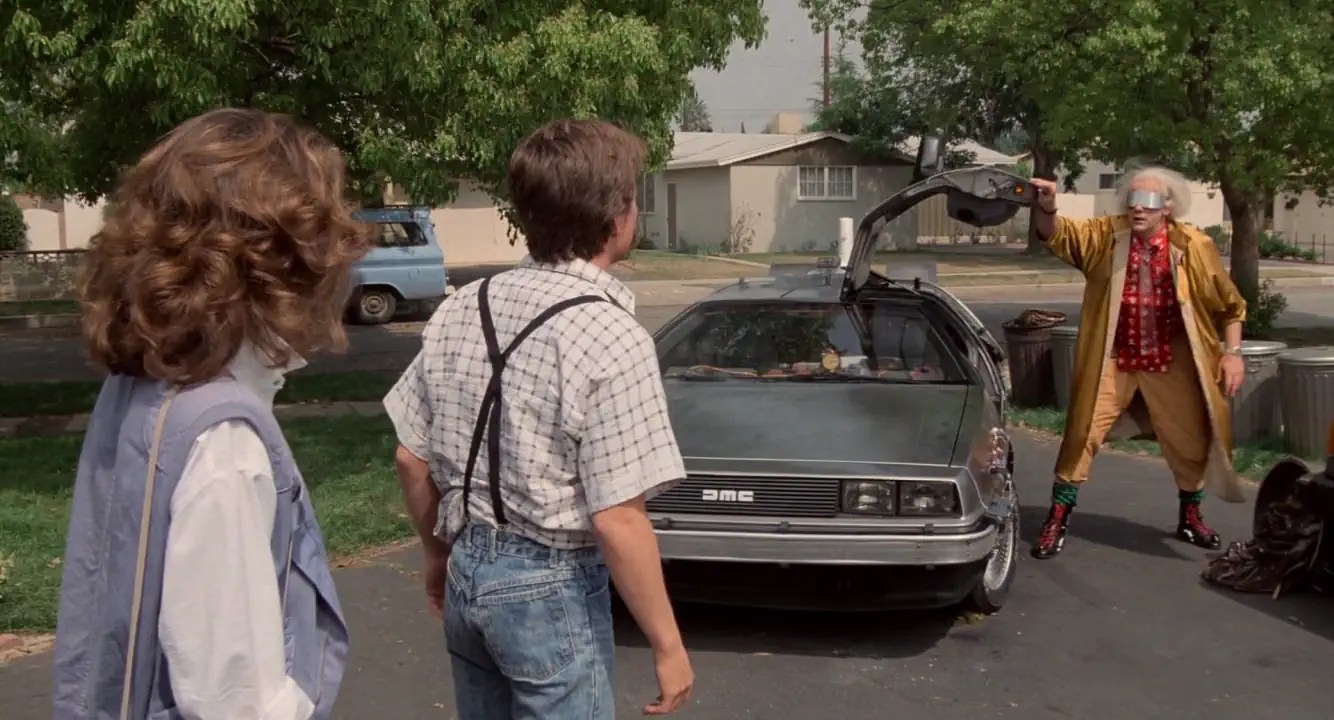
But Marty’s life takes an unexpected turn when his best friend, the eccentric scientist Dr. Emmett “Doc” Brown, reveals a secret project to him: a time machine built into a futuristic-looking DeLorean sports car. Doc built the time machine with the help of plutonium, which he obtained in a questionable manner from Libyan terrorists.
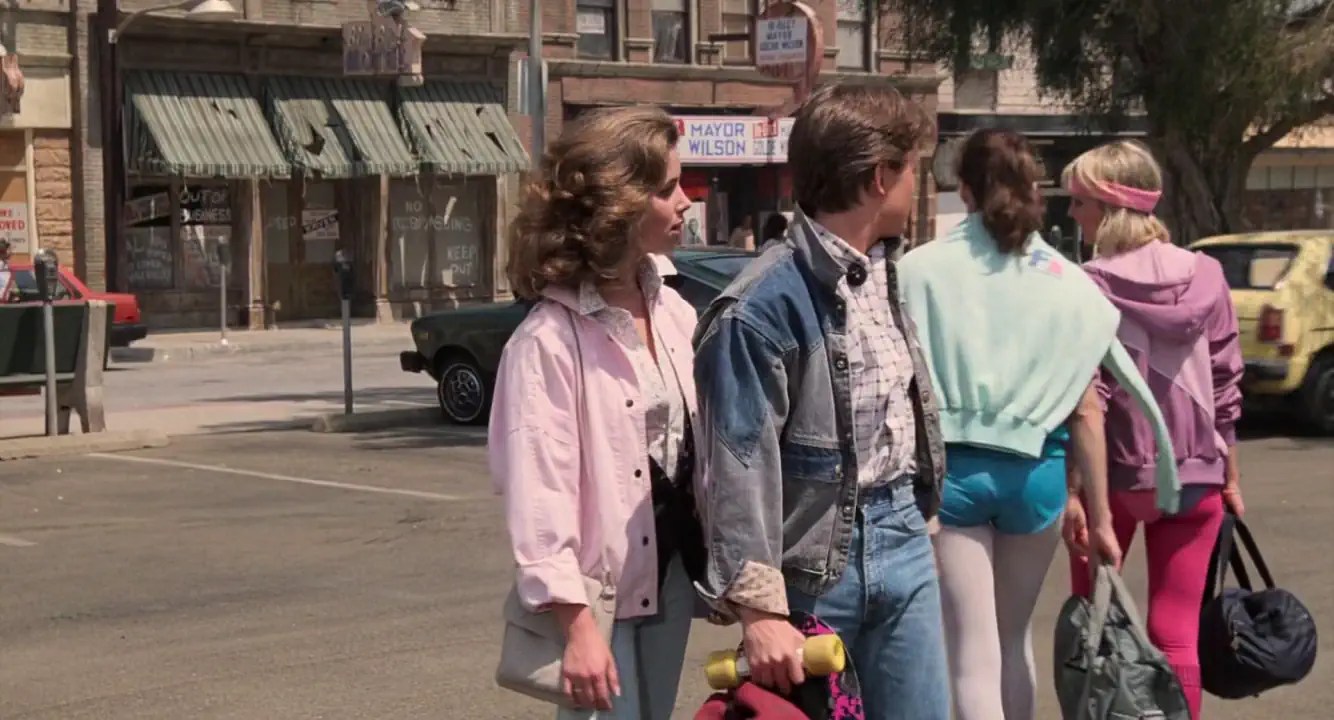
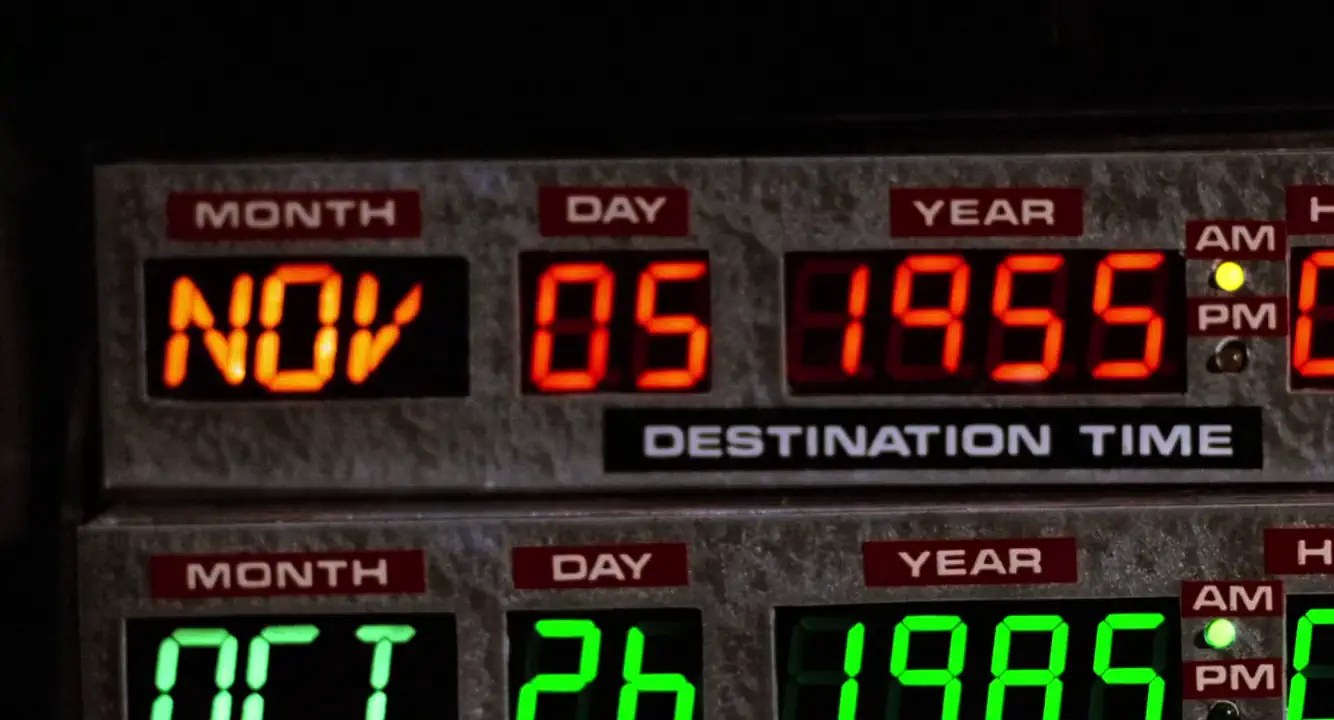
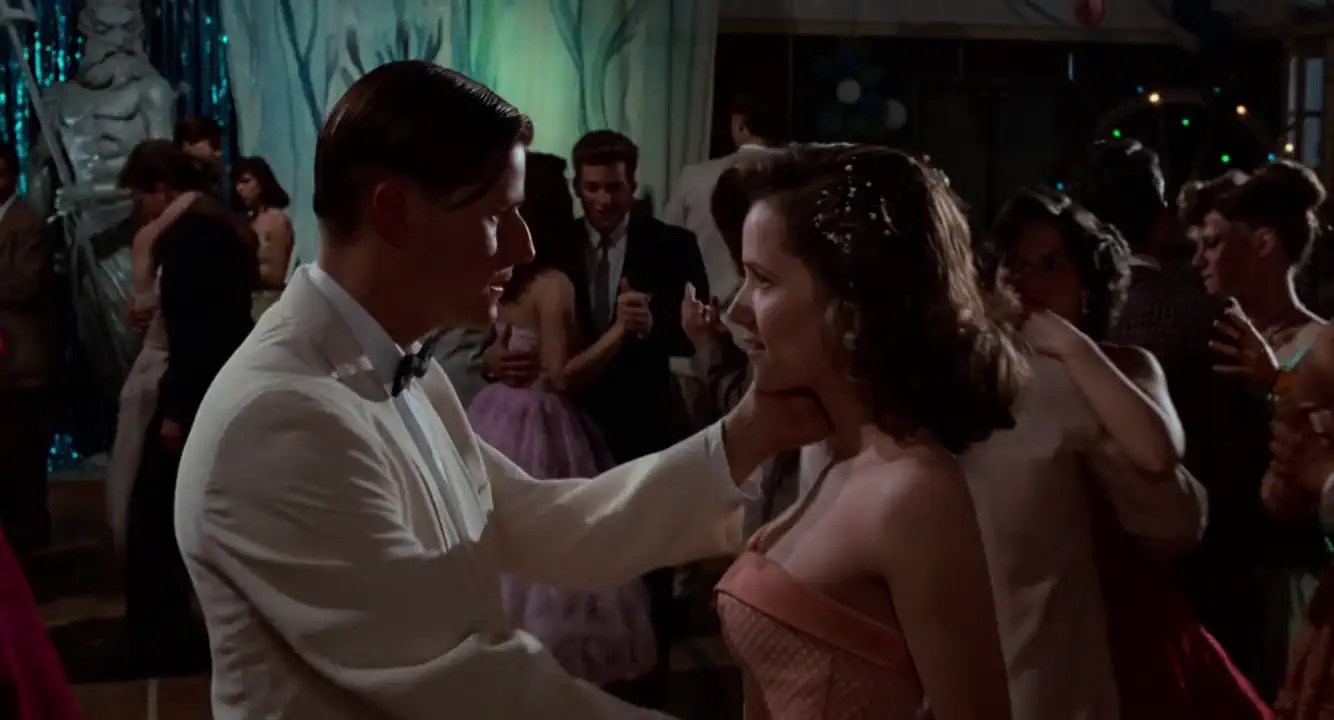
When they unexpectedly confront him, the situation escalates and Marty flees in the DeLorean at the last second – accidentally activating the vehicle in the process. He travels back to 1955, exactly thirty years into the past. Once there, he finds himself in a world that seems foreign to him, even though it is familiar to him from his parents‘ stories.
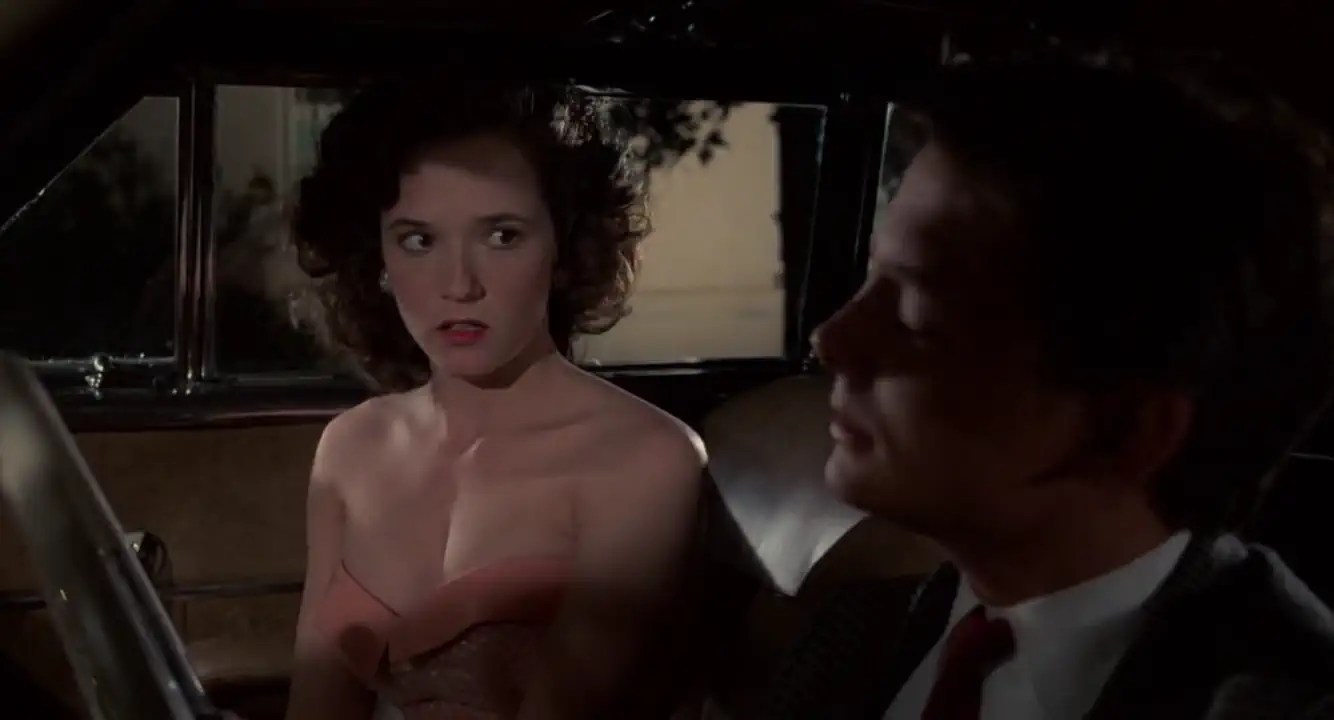
Marty quickly discovers that his intervention in the past has unforeseen consequences: through an unfortunate rescue mission, he causes his own mother, Lorraine, to fall in love with him instead of his shy father George. This threatens a time paradox that could wipe out not only Marty’s own existence, but also the future of his entire family. To prevent this, he must bring his parents together and at the same time convince the young Doc Brown from 1955 to help him repair the time machine and send him back to 1985 – all within a few days.
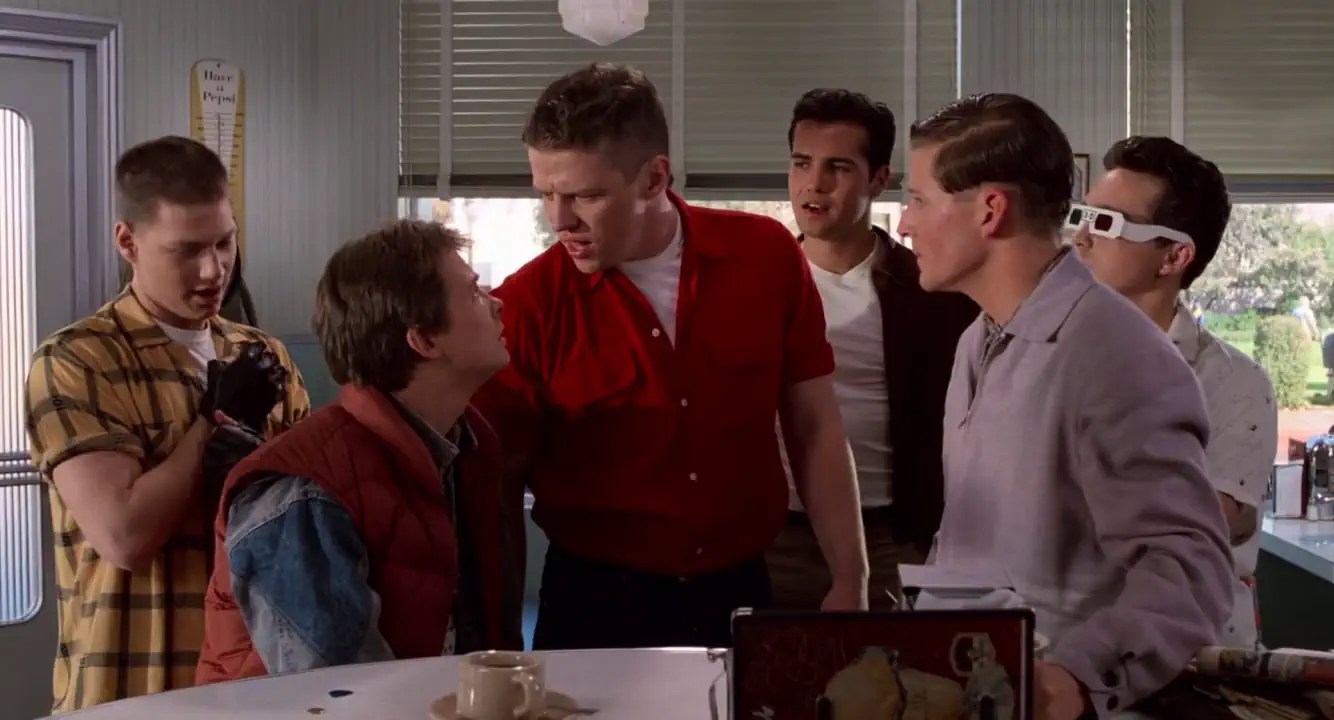
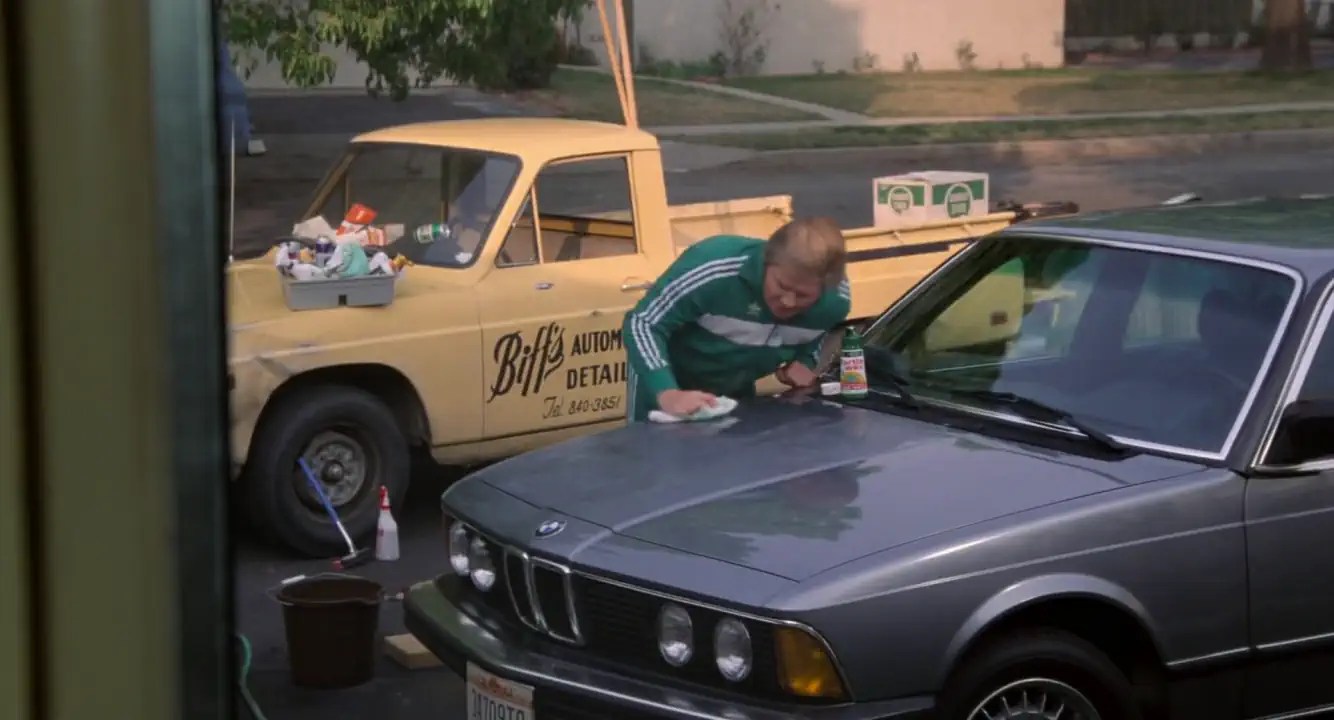
Marty is also confronted by the teenage Biff Tannen, who is already an intimidating bully and regularly harasses George. Marty’s intervention forces George to stand up for himself, which becomes a turning point in history. Marty not only teaches his father courage, but also permanently changes his character – with direct consequences for the present.
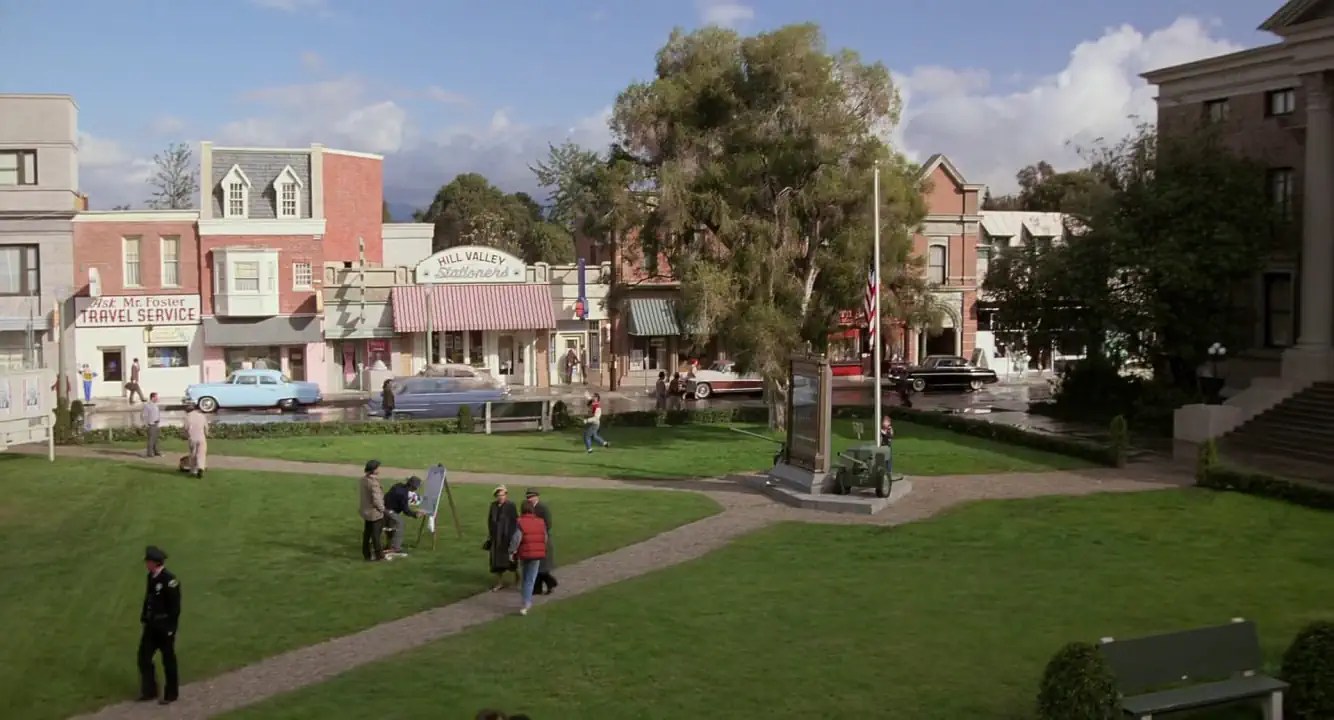
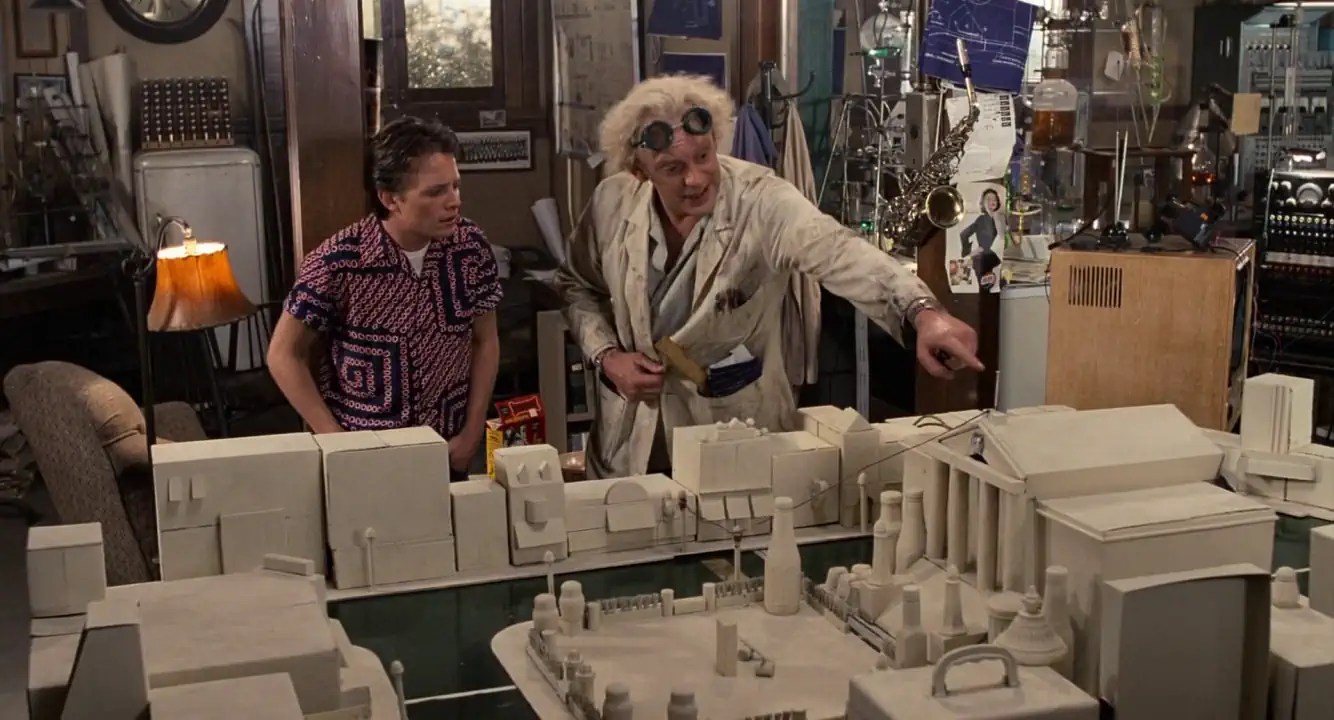
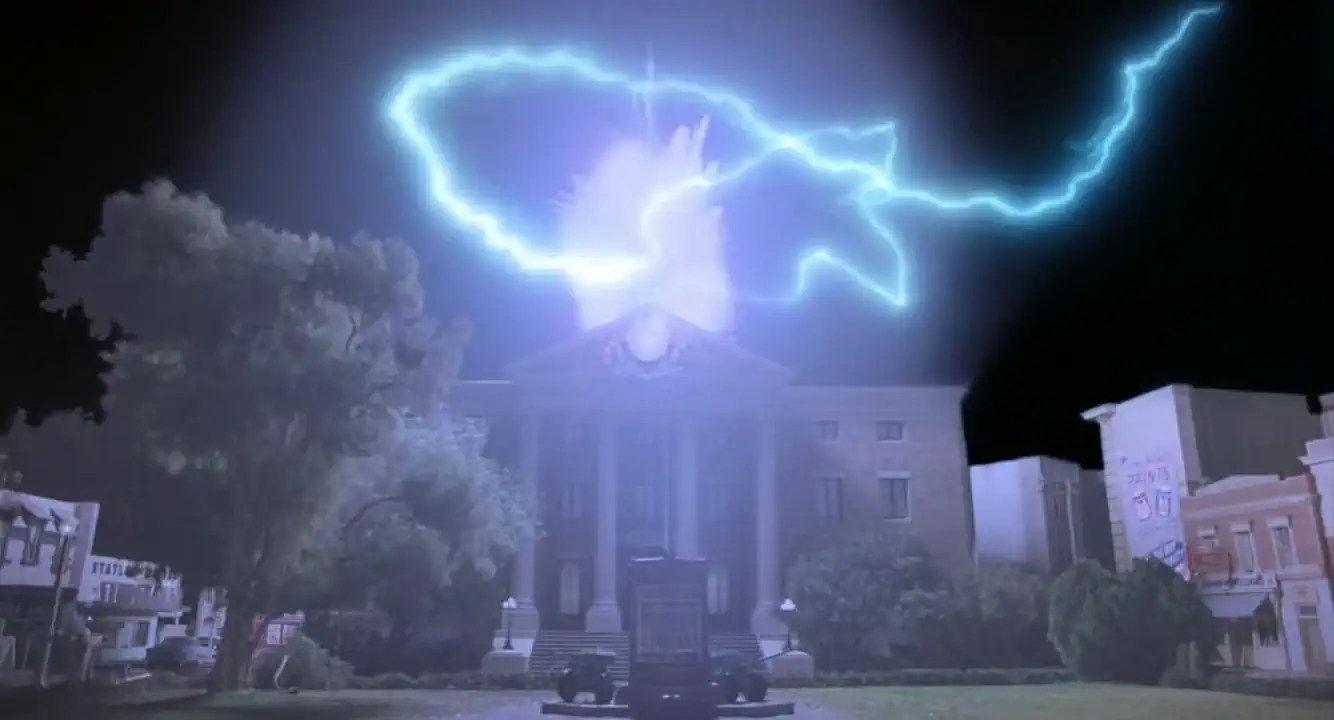
The film manages to weave together a variety of themes: personal responsibility, family relationships, social hierarchies, technological ethics, and the question of whether we are in control of our own destiny. The tone remains light-hearted, humorous, and emotionally touching throughout. Visual details – such as changing family photos or the striking town hall with the clock – serve not only as props, but as dramatic markers of Marty’s progress and impending doom.
Back to the Future is more than just an adventure film with science fiction elements: it is a finely balanced interplay of humor, suspense, nostalgia, and emotional depth. The cleverly told story, the well-thought-out logic of time travel, and the charismatic characters ensure that the film has lost none of its fascination over the decades. The dense, logically structured narrative allows the viewer to immerse themselves deeply in the action – with the feeling that the past and the future are always just a blink away.
Actors
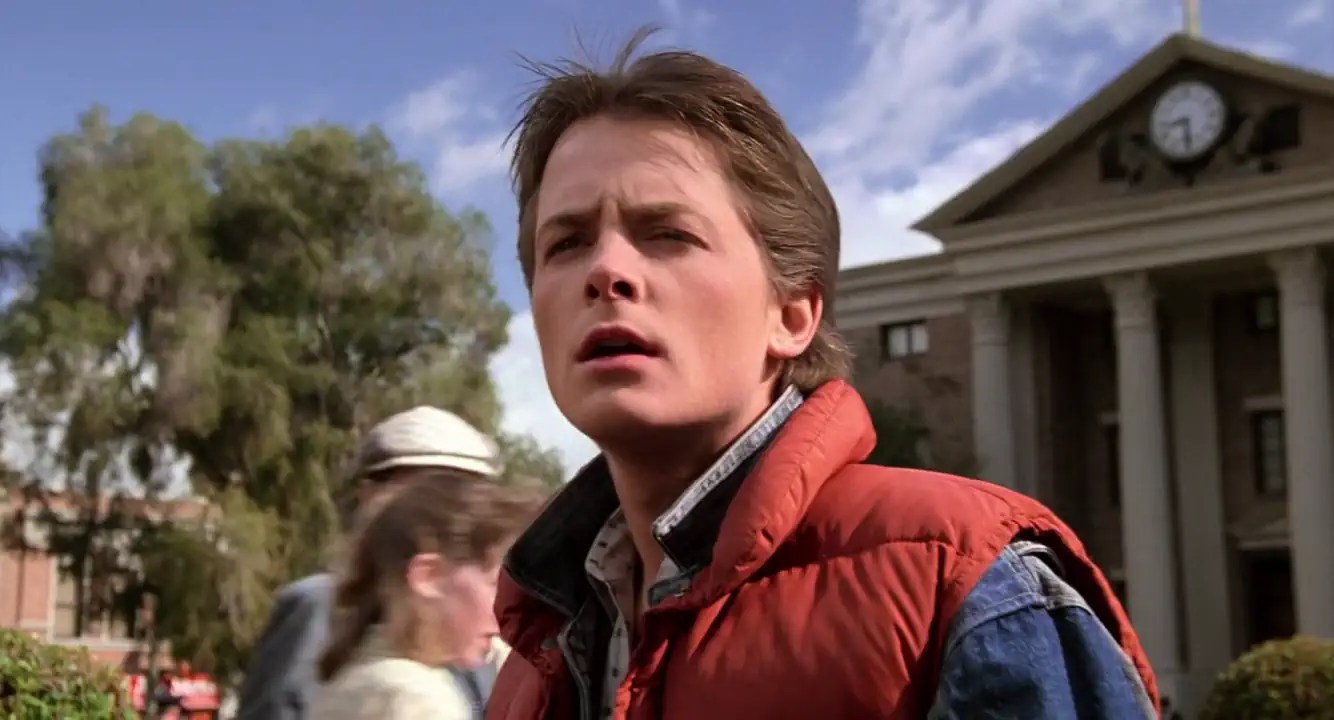
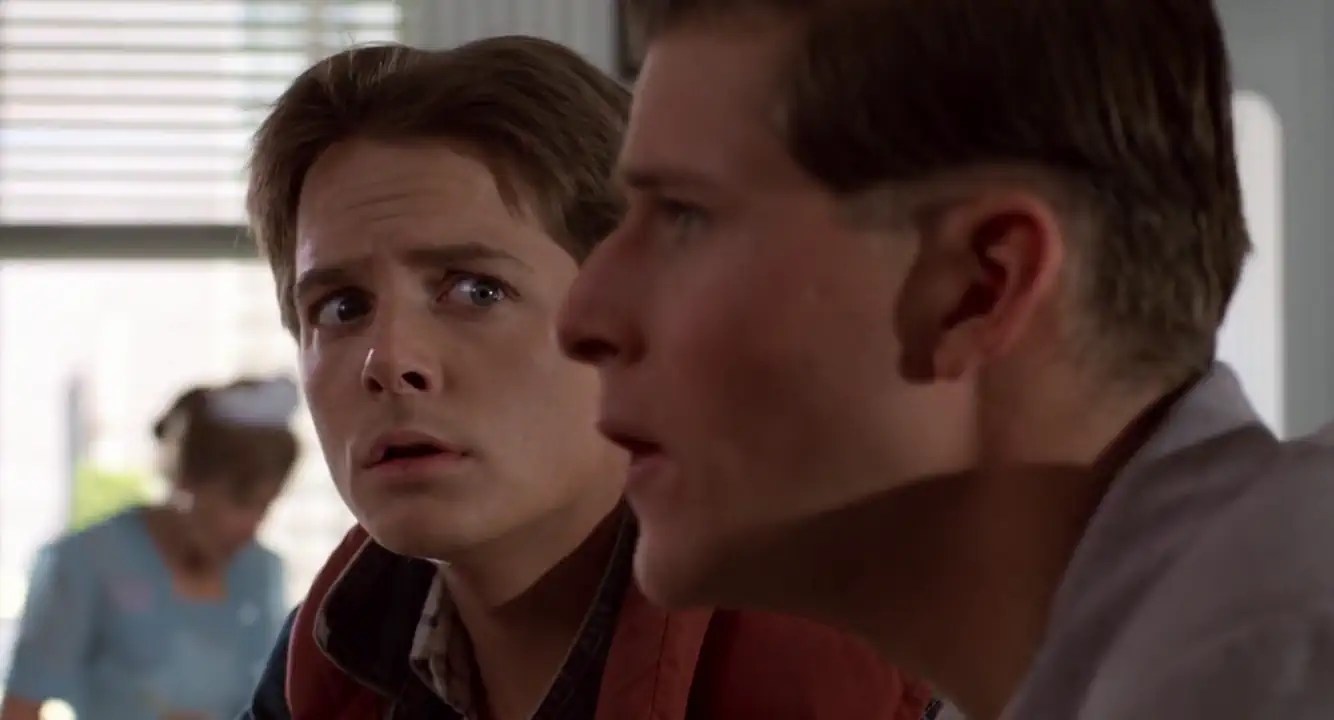
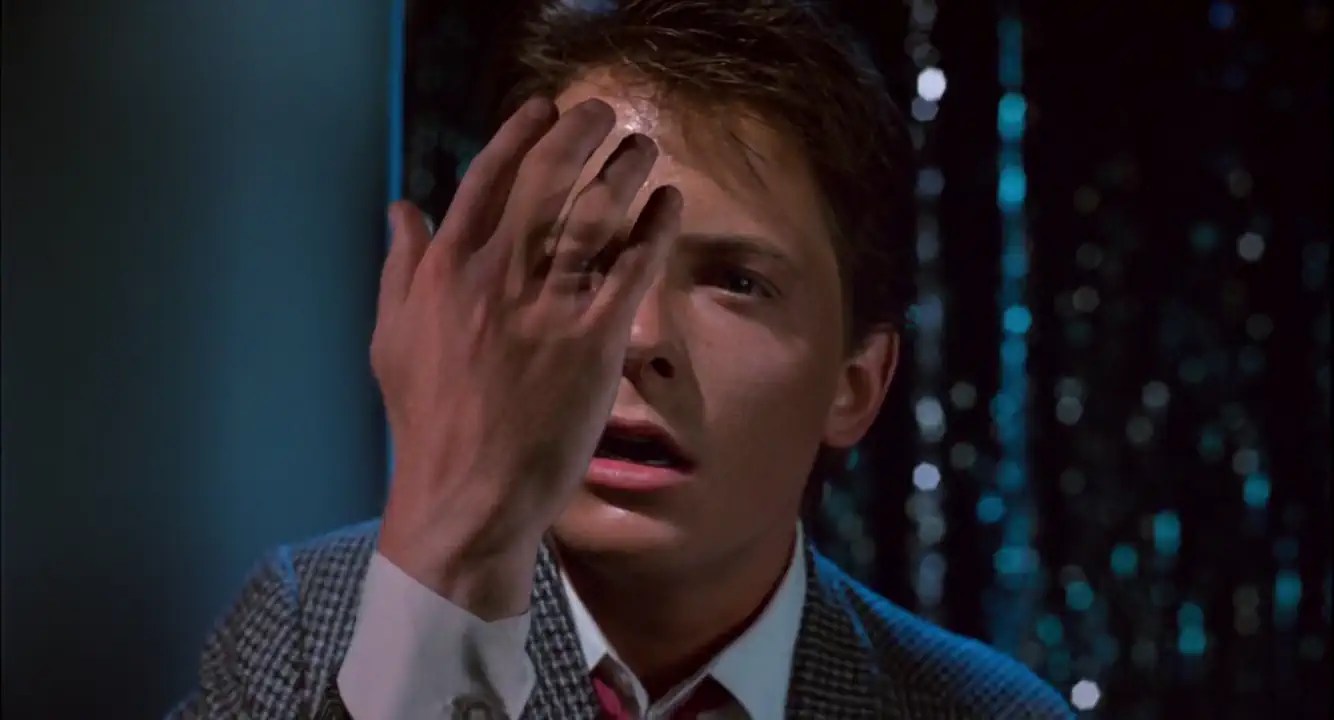
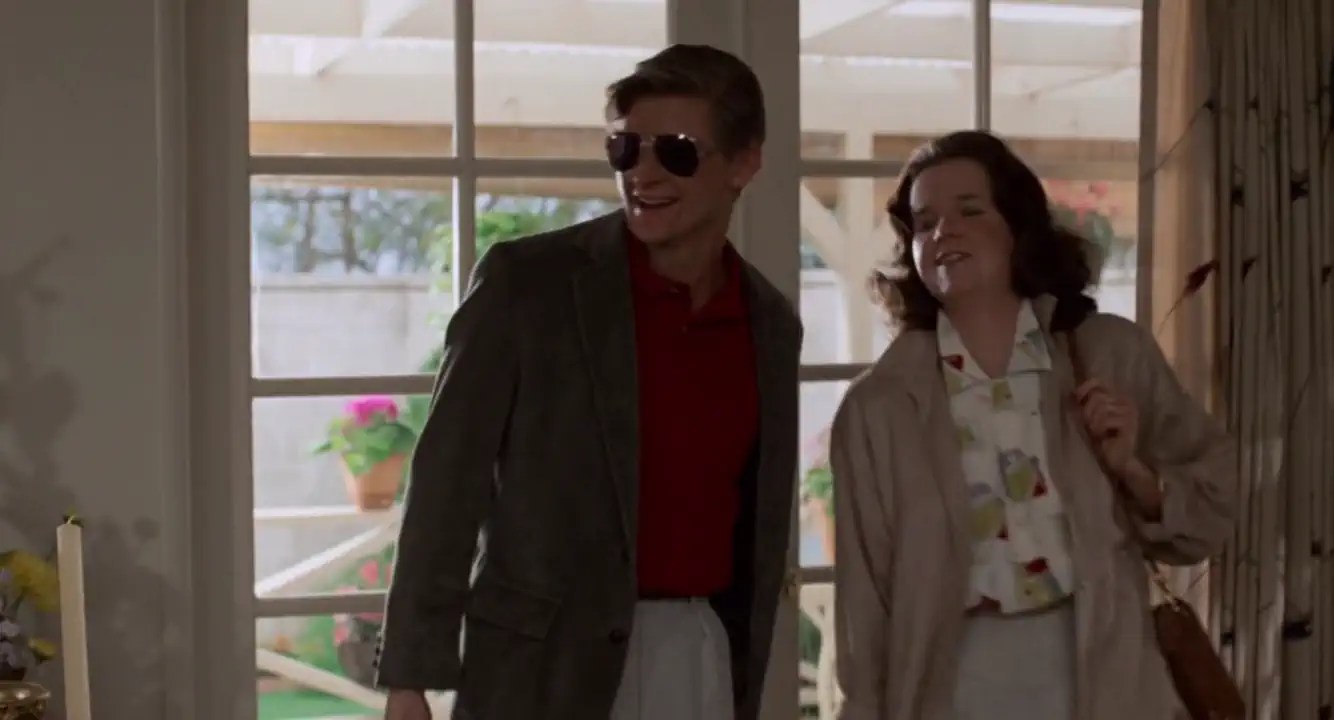
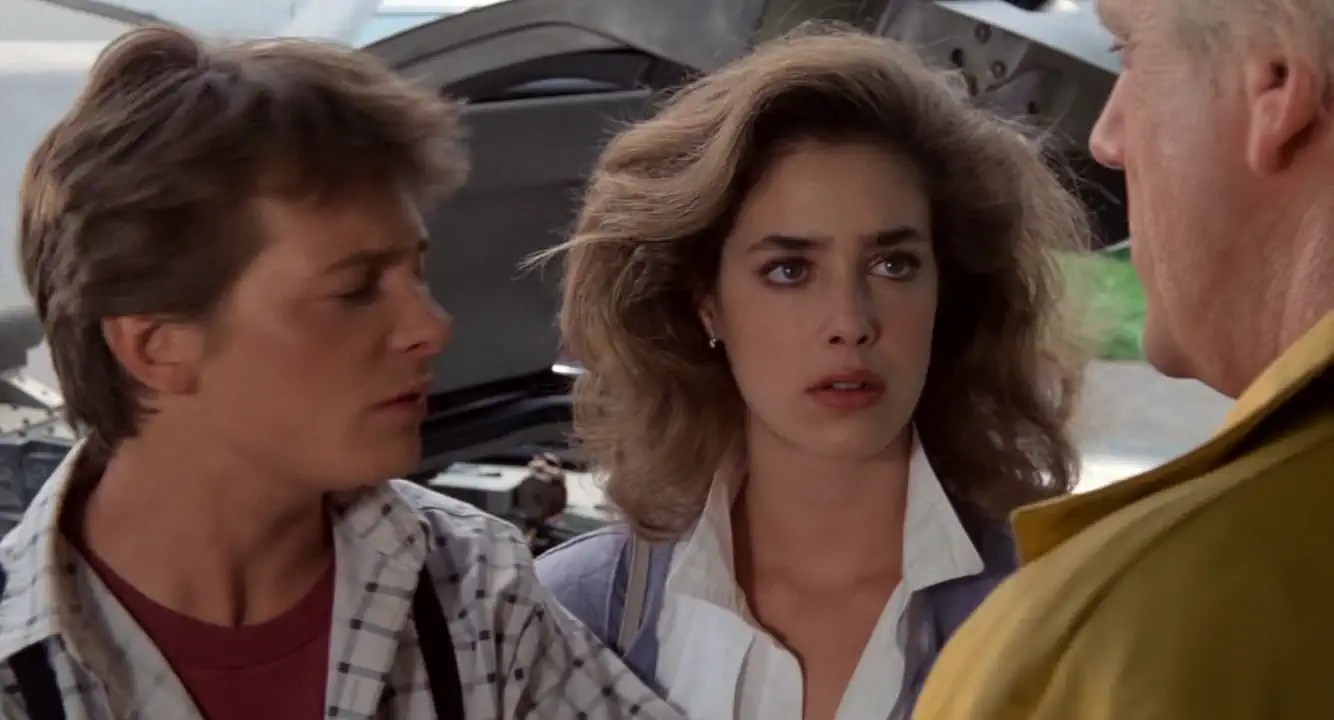
- Michael J. Fox as Marty McFly: The role was originally cast with Eric Stoltz, but the chemistry wasn’t right. Fox took over the role under considerable time pressure and became an icon. His youthful energy, humor, and charisma have a decisive influence on the character. Fox’s portrayal makes Marty one of the most likable and accessible protagonists of 1980s cinema. Particularly impressive is how effortlessly he switches between serious moments and slapstick comedy, which underscores the emotional range of the character. He also gives Marty a modern coolness that fits perfectly with the pop culture aesthetic of the 1980s and at the same time makes the character’s development from passive teenager to self-confident hero relatable.
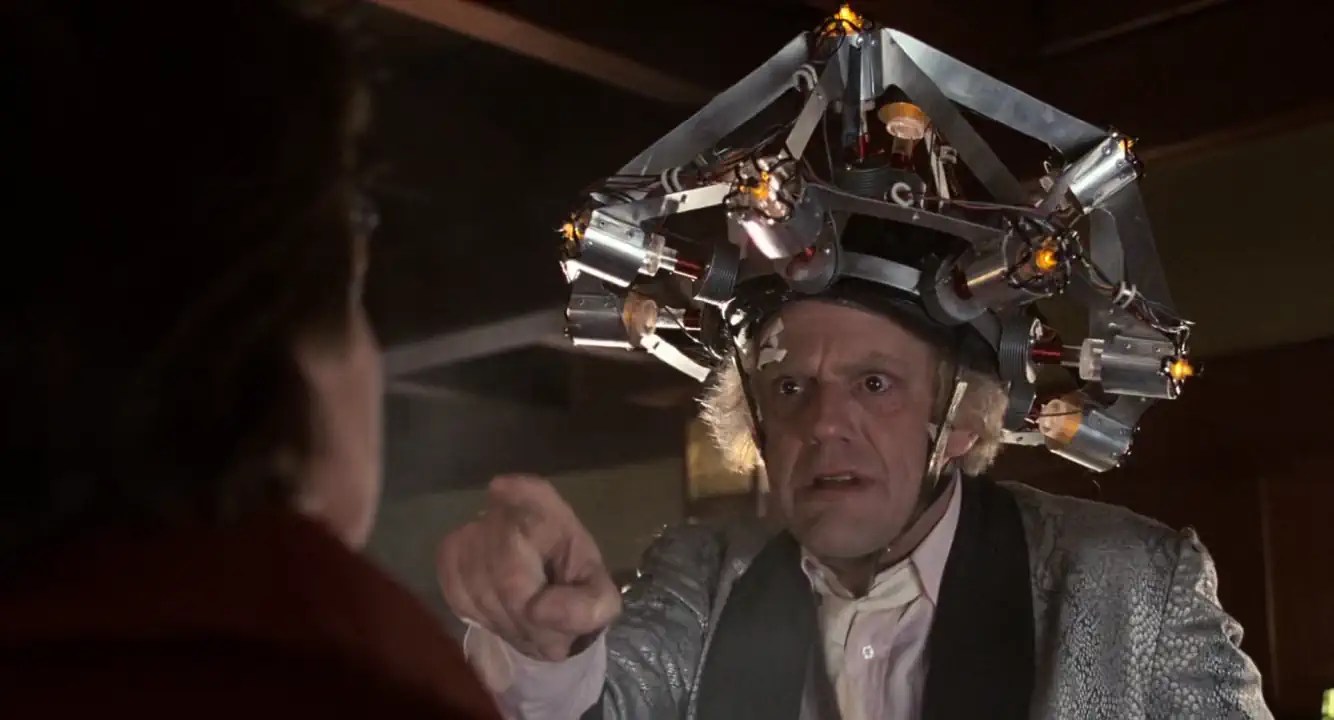
- Christopher Lloyd as Dr. Emmett Brown: Lloyd’s portrayal of the slightly crazy but brilliant scientist is one of the most memorable performances of the 1980s. With his wild hair, grand gestures, and unwavering enthusiasm, Doc Brown is unforgettable. Lloyd imbues the character with a mixture of genius and madness that perfectly suits the tone of the film. His performance is over-the-top but never silly – it always remains believable and emotionally relatable. He introduces the audience to the concept of time travel in such a fascinating and passionate way that you believe everything he says – even when it’s physically impossible.
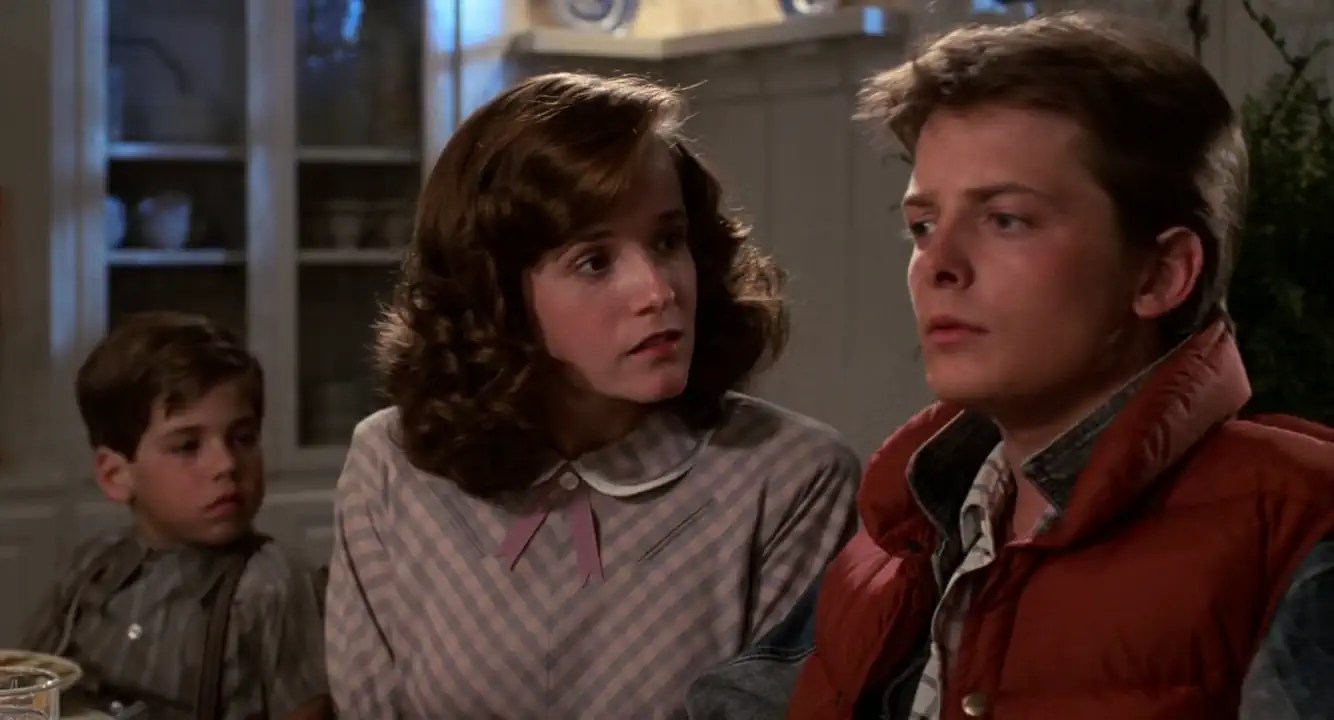
- Lea Thompson as Lorraine Baines McFly: She shows great versatility – from a naive teenager in the 1950s to a serene mother in the 1980s. Her ability to act convincingly in two very different age groups gives the character depth. Thompson manages to show both vulnerability and strength – a balance that gives her role a lot of substance.
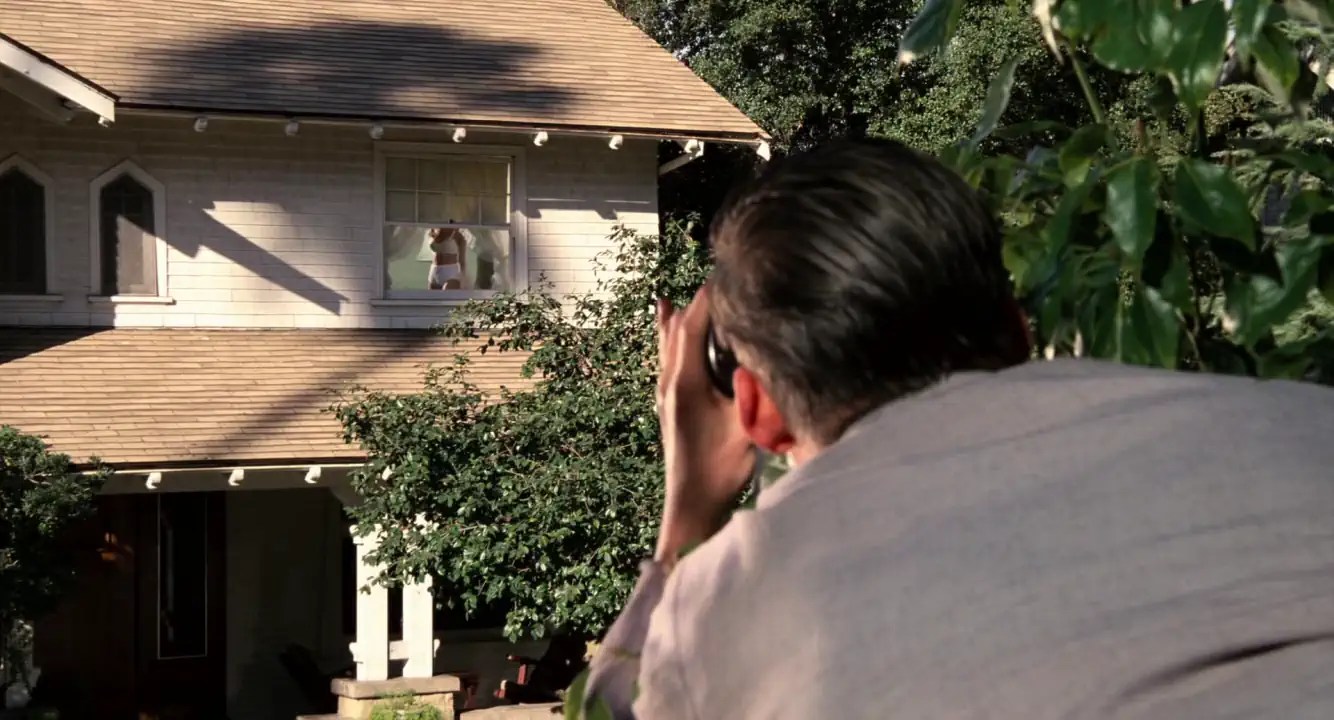
- Crispin Glover gives George an idiosyncratic body language and a mixture of comedy and tragedy that make him one of the most distinctive characters in the film. His transformation from a henpecked man to a self-confident man is a central narrative element. Glover impressively shows how small gestures and attitudes change over the course of the story and manages to portray a credible development without many words.
- Thomas F. Wilson as Biff Tannen: The classic bully, both in the 1950s and the 1980s. Wilson manages to give the antagonist a certain depth despite his exaggeration. His portrayal ranges from brutal menace to comedic ridiculousness without the character losing any of his impact. In the sequels, Wilson also demonstrates his talent for embodying different variations of his character—from dark dystopian versions to the naive old Biff—proving his acting range.
The chemistry between the main actors contributed significantly to the film’s success. They made the story believable, touching, and incredibly entertaining at the same time. Each individual actor fills their role with life, so that the characters have an impact far beyond the plot. Their dynamics and perfectly coordinated interplay ensure that the story works emotionally and remains thrilling at the same time. The ensemble conveys the feeling of a familiar world in which even the craziest events seem understandable.
Music
Huey Lewis and the News provided a milestone with the song “The Power of Love,” which not only became a hit but is also closely associated with the character Marty McFly. The song was nominated for an Oscar and is still a radio staple today. The song “Back in Time” by the same band was also written for the film and musically underscores the time travel theme. These two songs anchor the film sonically in the 1980s and contribute significantly to the nostalgic effect that many viewers associate with the film. Lewis‘ music adds a contemporary, energetic touch that harmonizes perfectly with the youthful main character.
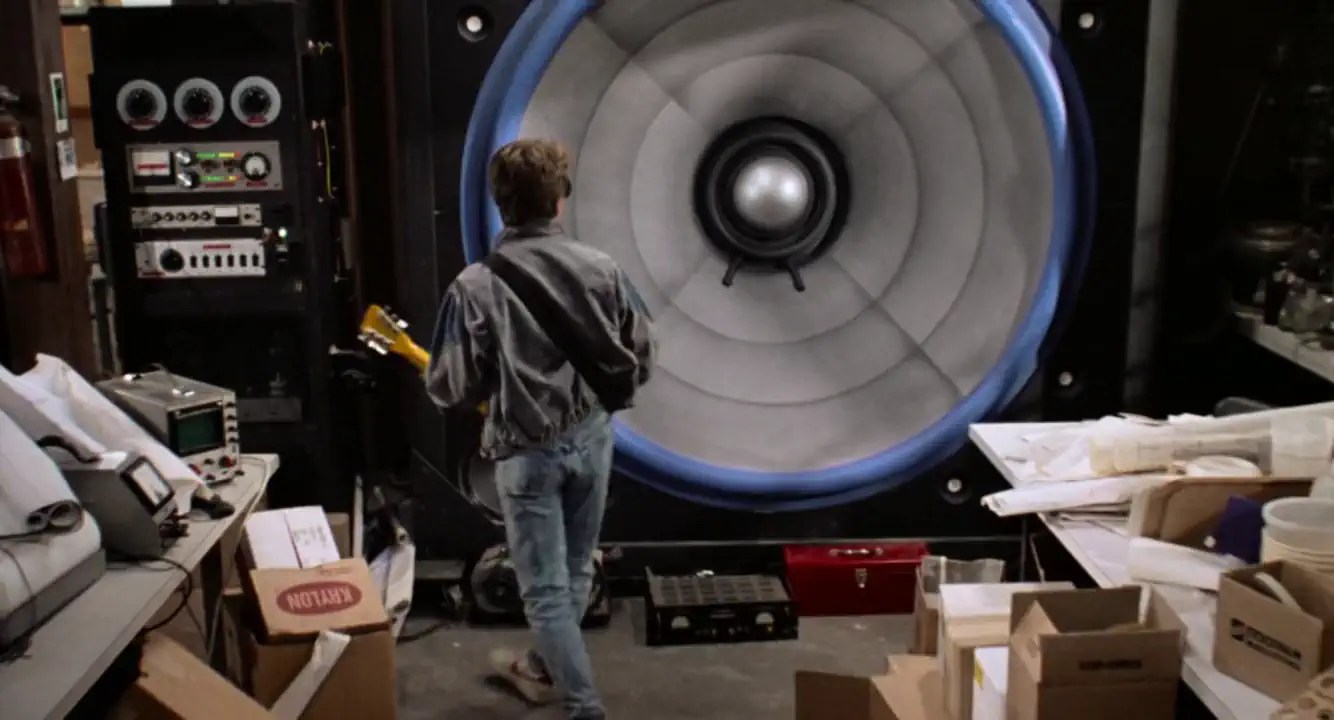
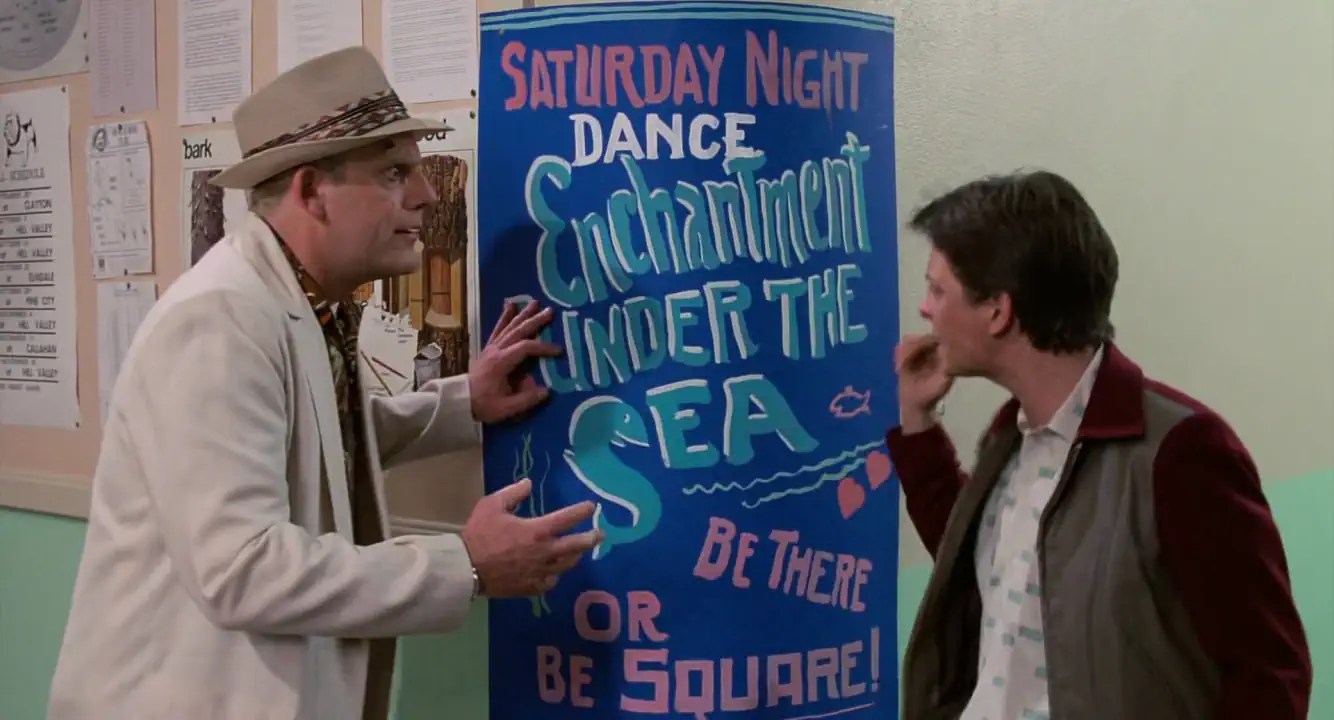
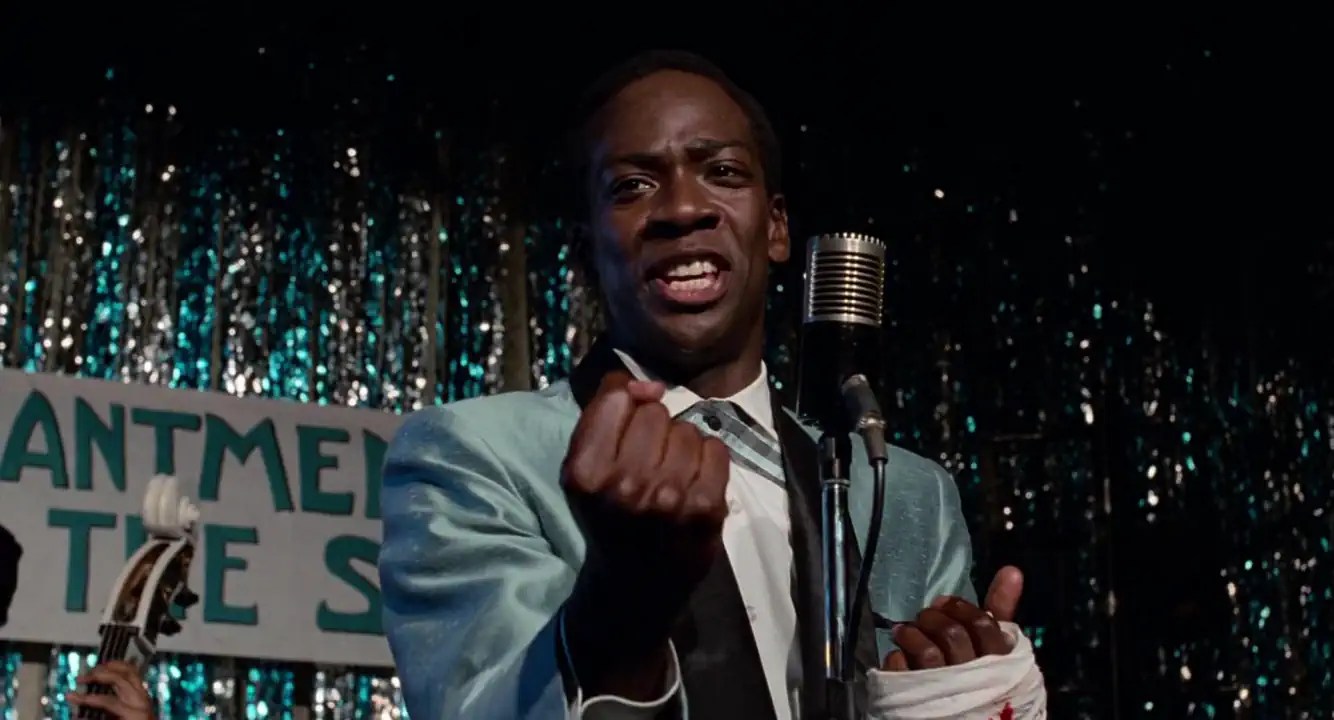
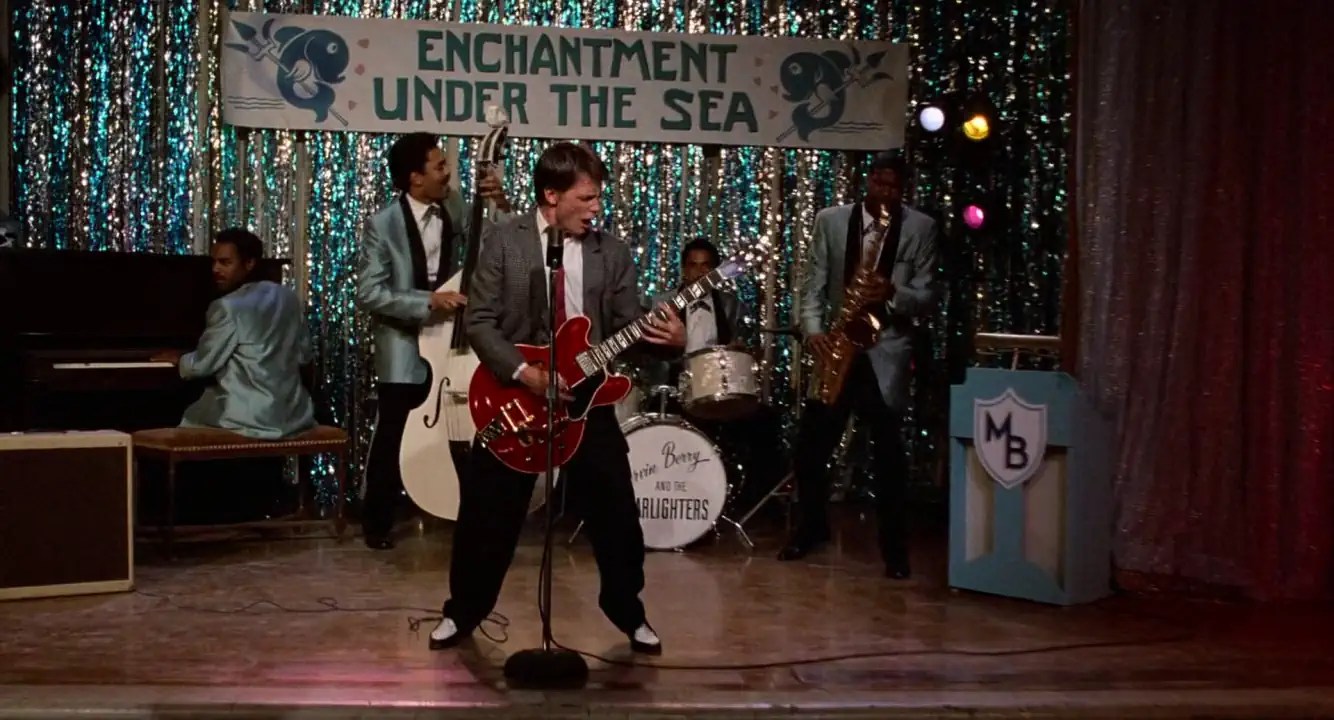
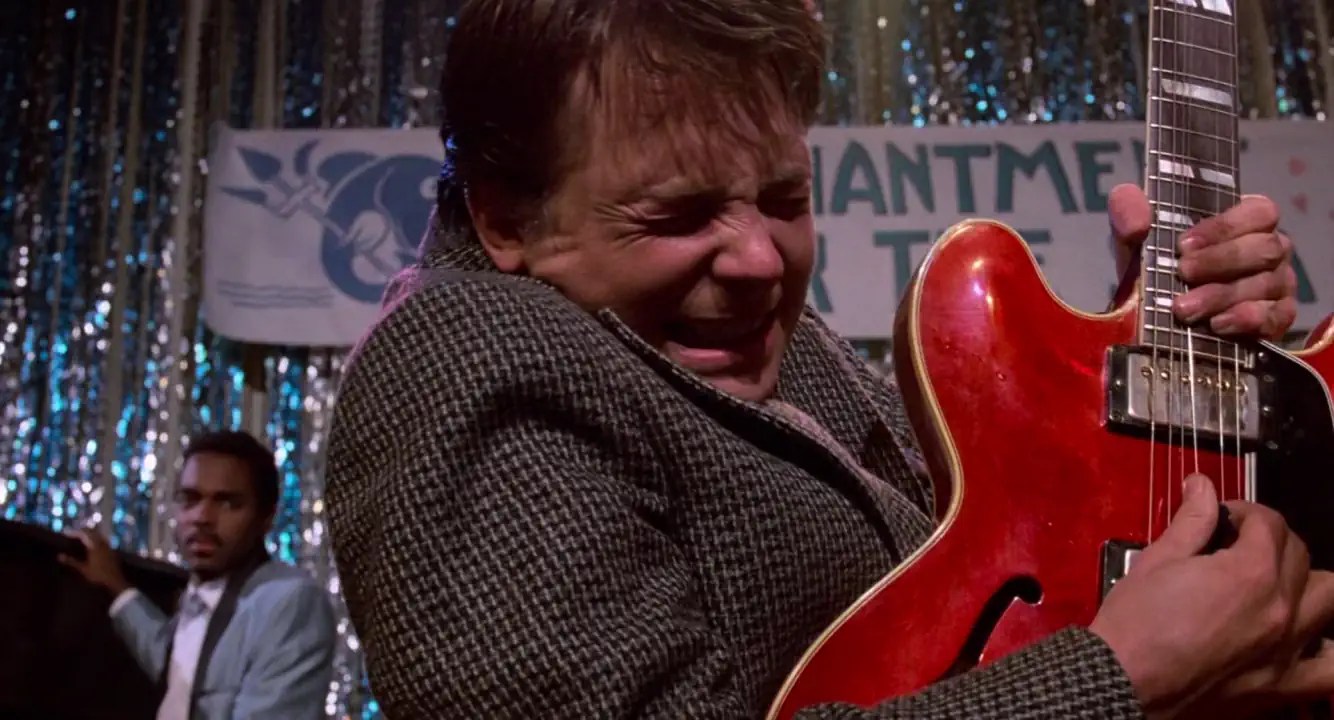
In addition, the film draws on typical 1950s music, which lends additional authenticity to the time travel theme. Songs such as “Mr. Sandman” and “Earth Angel” perfectly capture the atmosphere of the time and help the viewer to immerse themselves in the era. An unforgettable moment is Marty’s guitar solo at the school prom with the song “Johnny B. Goode,” which humorously links several time levels – on the one hand as a cultural reference to Chuck Berry, and on the other as a tongue-in-cheek reference to Marty’s role as the unwitting inventor of rock ‘n’ roll. This scene is a prime example of the film’s clever use of music as a narrative tool and pop cultural stylistic device.
The soundtrack of Back to the Future is an essential part of its overall success. Composer Alan Silvestri created an epic, heroic theme that perfectly matches the adventurous mood of the film. A grandly orchestrated, dramatic leitmotif provides the musical backdrop for the time travel aspect. The music conveys excitement, wonder, and a sense of adventure. Silvestri’s compositions are not just an acoustic accompaniment, but also a narrative element—they structure scenes, build emotional tension, and reinforce the feeling of traveling through time.
Quotes
The film is rich in iconic quotes that have entered pop culture. Some of the most famous are:
- “Roads? Where we’re going, we don’t need roads.” – Doc Brown
- “Great Scott!” – Doc Brown
- “This is heavy.” – Marty McFly
- “If my calculations are correct, when this baby hits 88 miles per hour… you’re gonna see some serious shit.” – Doc Brown
- “Hello? Hello? Anybody home? Think, McFly, think!” – Biff Tannen
- “Why don’t you make like a tree… and get outta here!” – Biff Tannen
- „I’m your density. I mean… your destiny.“ – George McFly
These quotes are not only pointed, but also reflect the characters and humor of the film. They are often humorous, sometimes bizarre, and always to the point – just like the dialogue throughout the film. Many quotes have been parodied and quoted multiple times, both in other films and in advertising, TV shows, comics, and even political speeches. Even today, fans still use these lines as insider references, for example in forums, at conventions, or on social media.
Trivia
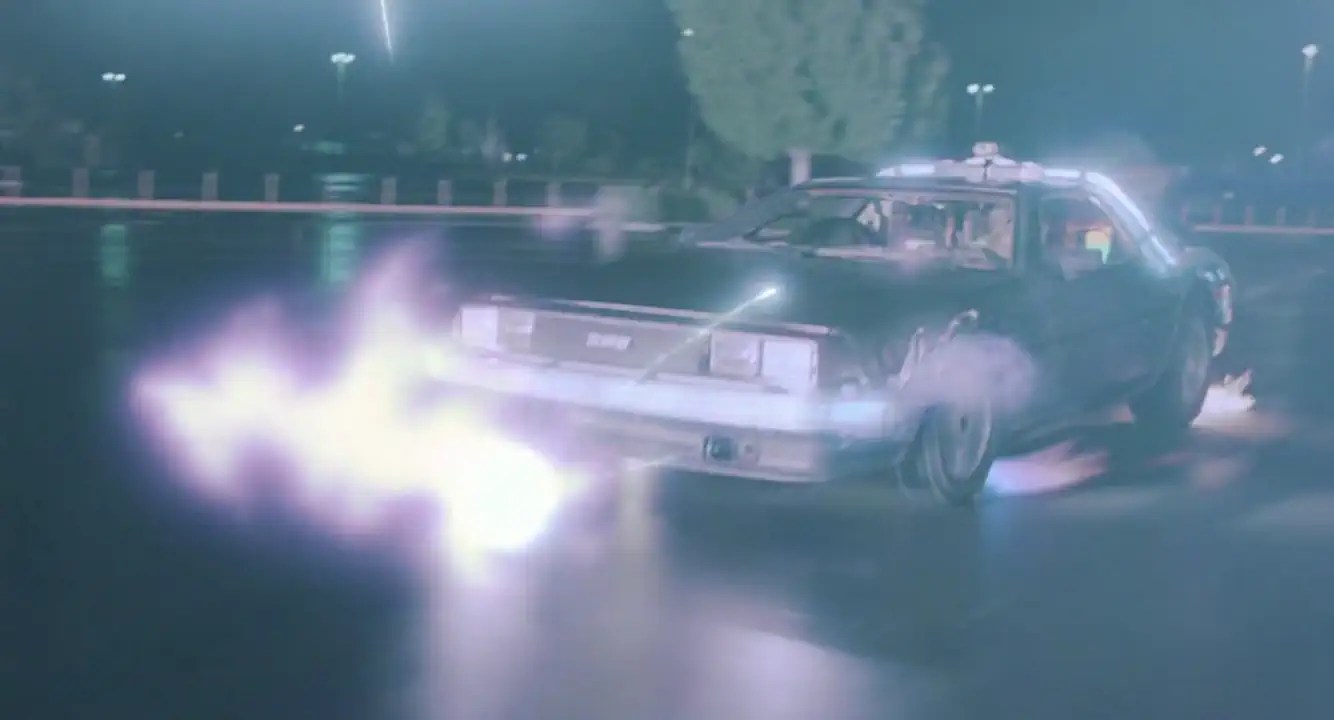
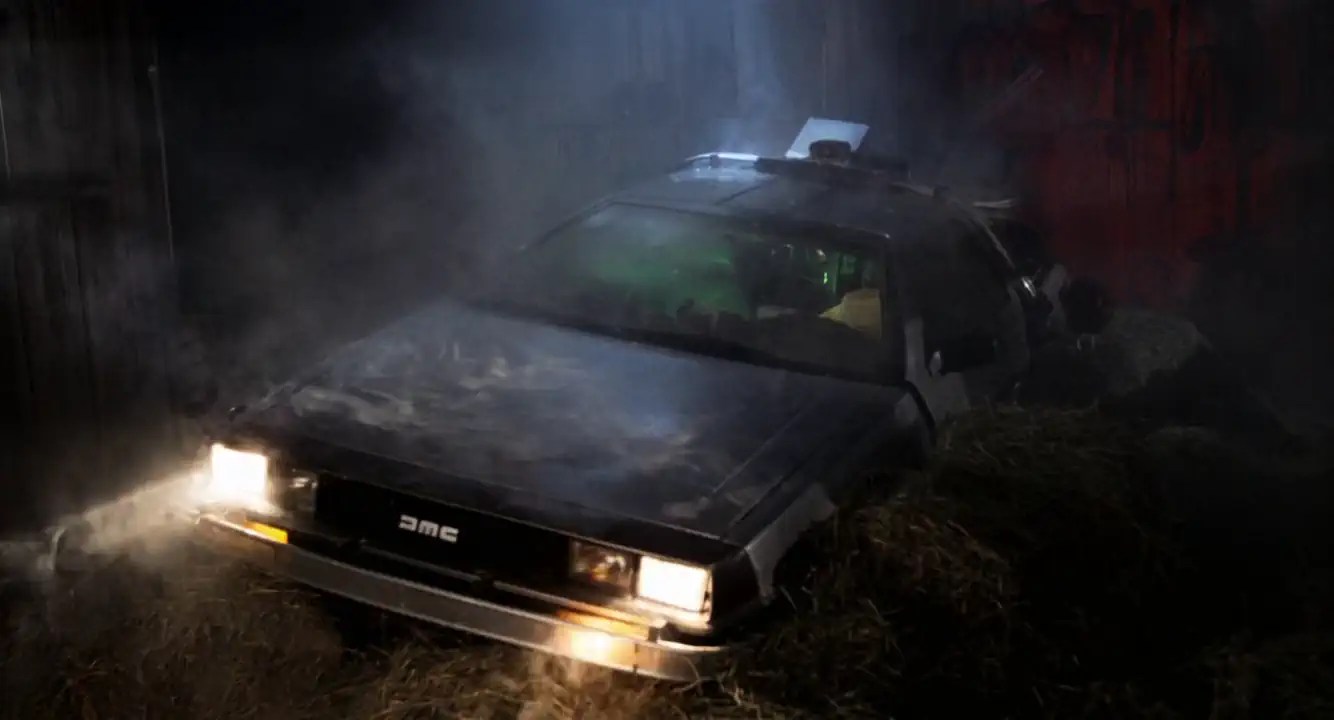
- The famous DeLorean time machine was originally planned as a refrigerator. The idea was rejected for safety reasons – it was feared that children might try to hide in refrigerators to reenact time travel. In retrospect, this decision proved to be brilliant, as the DeLorean, with its stainless steel look and gull-wing doors, became one of the most iconic props in film history.
- The DeLorean was chosen for its futuristic design and distinctive gull-wing doors – and the car is now inextricably linked to the film. Although the car was never a big commercial success, the film brought it international fame. Today, the DeLorean is a sought-after collector’s item, and some fans have even converted their vehicles into working replicas of the time machine.
- The date October 21, 2015, when Marty travels into the future in Part 2, was celebrated worldwide as “Back to the Future Day.” Cinemas held special screenings, cities symbolically renamed streets, and even major tech companies such as Nike and Pepsi released special editions of products that appeared in the film, including the famous self-lacing shoes and the futuristic Pepsi Perfect.
- Huey Lewis, who contributed the song “The Power of Love,” makes a cameo appearance as a strict music judge who kicks Marty out of the band competition because his music is “too loud” — an ironic reference to his own hit. The appearance is a popular Easter egg among fans.
- Michael J. Fox had to shoot the film while starring in the series “Family Ties” – his scenes were mainly shot at night and on weekends. Despite the enormous time pressure, Fox delivered a convincing and nuanced performance that had a decisive impact on his career.
- The original script was rejected by several studios, including Disney, because it seemed “incestuous.” The idea of a mother unknowingly falling in love with her son seemed too daring. Ironically, it was precisely this bold narrative twist that later accounted for much of the film’s charm and suspense.
Critical reception
Upon its release, Back to the Future was almost universally praised by critics. The original screenplay, fast pace, and performances were particularly praised. Roger Ebert called it an “intelligent, funny, and wonderfully made film,” while many critics praised the perfect balance between comedy and science fiction. The film was also highlighted for its clear dramaturgy and skillful combination of humor and suspense. The concept of time travel was particularly praised as creative and accessible, which made Back to the Future appealing even to viewers with no prior knowledge of the genre.
The film was also a huge commercial success: with box office takings of over $380 million, it became the most successful film of 1985. It topped the box office charts in several countries for weeks and broke records for the highest number of viewers in some cases. Not only was it a box office hit, but it also received numerous awards and nominations, including four Oscar nominations (for screenplay, sound, and music, among others). In addition, the film won a Hugo Award and a Saturn Award for Best Science Fiction Film. The combination of financial success and critical acclaim quickly made Back to the Future a modern classic.
Reputation today
Today, Back to the Future is considered a cult film and one of the best films of all time. It has influenced countless filmmakers and remains popular with younger generations. The trilogy is regularly re-released, published in special editions, and referenced in pop culture. Series such as “Stranger Things” and animated series such as “Rick and Morty” also make deliberate references to motifs and characters from the film series. In addition, tributes and references can be found in music videos, video games, and even fashion campaigns—underscoring the film’s broad cultural influence.
The technical execution—such as the effects and narrative rhythm—still seems remarkably modern even decades later. In particular, the way in which the past and present are interwoven demonstrates a cinematic craftsmanship that was ahead of its time. The seamless linking of different time levels, the play with paradoxes, and the emotional development of the characters have made the film not only entertaining but also rich in content. In addition, the carefully crafted details—such as the design of Hill Valley in the different decades—ensure that the film offers new discoveries even when viewed repeatedly.
In addition, a huge fandom has sprung up around the film series, with conventions, fan projects, books, video games, and merchandising. Collectibles, replicas of the DeLorean, and fan films are now as much a part of the legacy as countless online communities. The cult status of Back to the Future continues to grow, making the series one of the most enduring phenomena in film history.
Summery
Back to the Future is not just an entertaining film, but a cultural event. It manages to convey a complicated idea like time travel with wit, heart, and suspense – without ever losing sight of its characters. The strong cast, clever script, and timeless soundtrack make it a masterpiece of pop culture.
What makes this film so special is its universal appeal: it appeals to people of all ages and manages to present complex themes such as cause and effect, family ties, and personal development in an accessible and entertaining way. The combination of sci-fi elements with nostalgic flashbacks and character-driven storytelling ensures that the film appeals to both the emotions and the intellect. The extraordinary interplay of music, imagery, and timing also sets the film apart from many of its genre counterparts.
What began as a sci-fi comedy evolved into a cross-generational classic that creatively connects the past, present, and future. Its significance extends far beyond the genre—it is regularly cited in studies on screenplay structure, visual storytelling, and film music. Even decades later, it remains a prime example of perfect mainstream cinema. Whether you’re seeing it for the first time or the tenth, a trip “back to the future” is always worthwhile – because good stories never grow old. They live on – in our memories, in pop culture heritage, and in the everlasting joy of being enchanted by cinema.
More
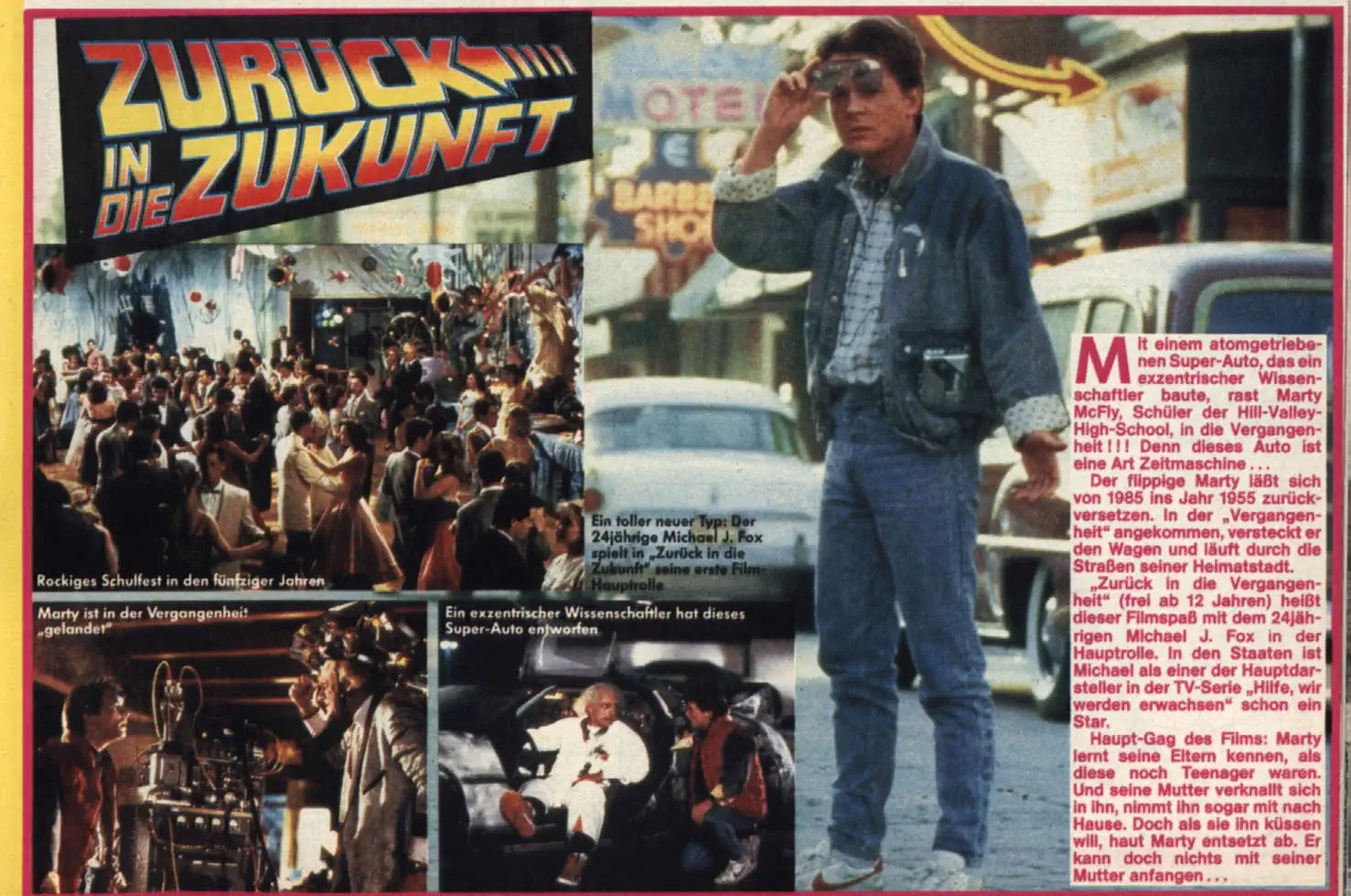
Magazine Scans
Bravo 1985/40





 McHenry's Lair
Kommentar verfassen :