

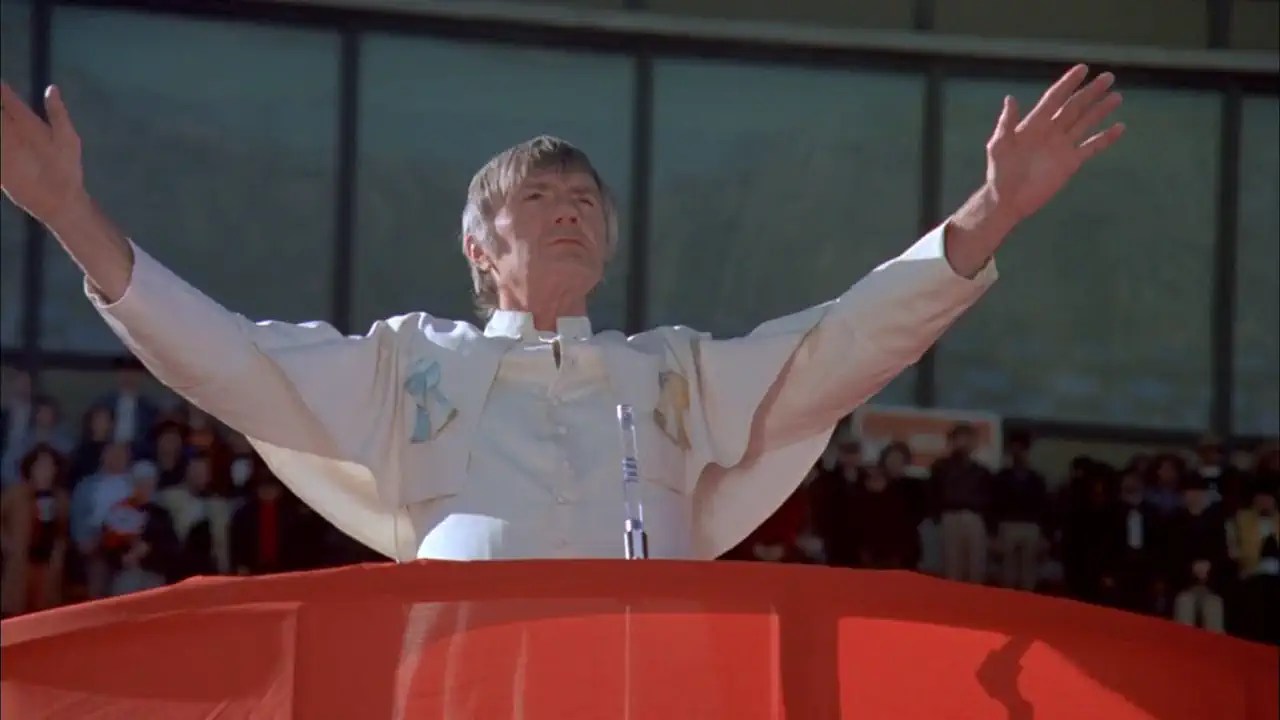
O, great American multitude and sports fans everywhere,
today we inaugurate the 20th Annual Trans-Continental Road Race.
Today, the five bravest young men and women in this greatest of nations will risk their lives in the greatest sporting event since the day the Sparticus! Three days hence, a new American champion will be crowned for all the world to behold, in awe, in respect, in fear!
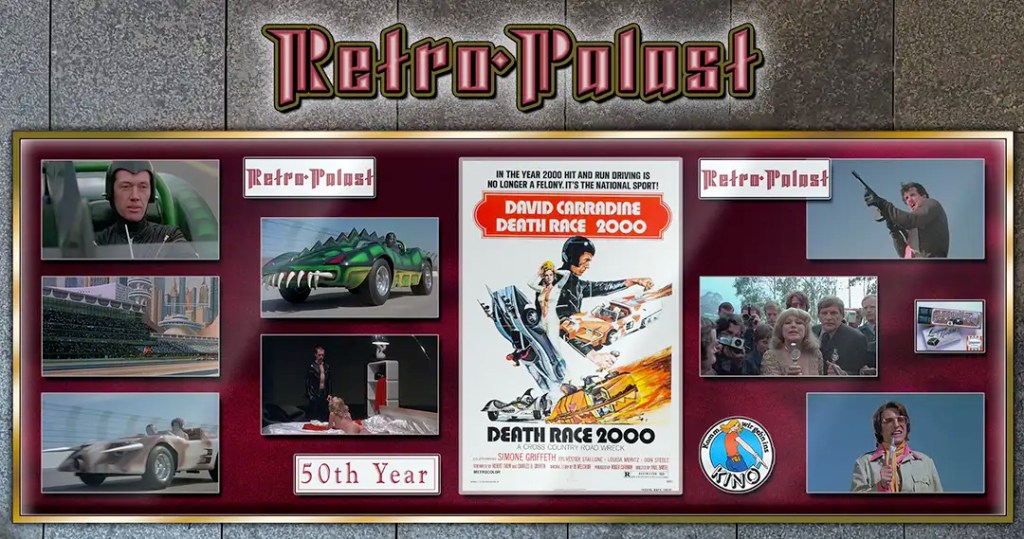
Exactly 50 years ago today, “Death Race 2000” premiered in US cinemas. The film is a satirical, dystopian science fiction action flick from 1975 that still enjoys cult status today.
The art of trash
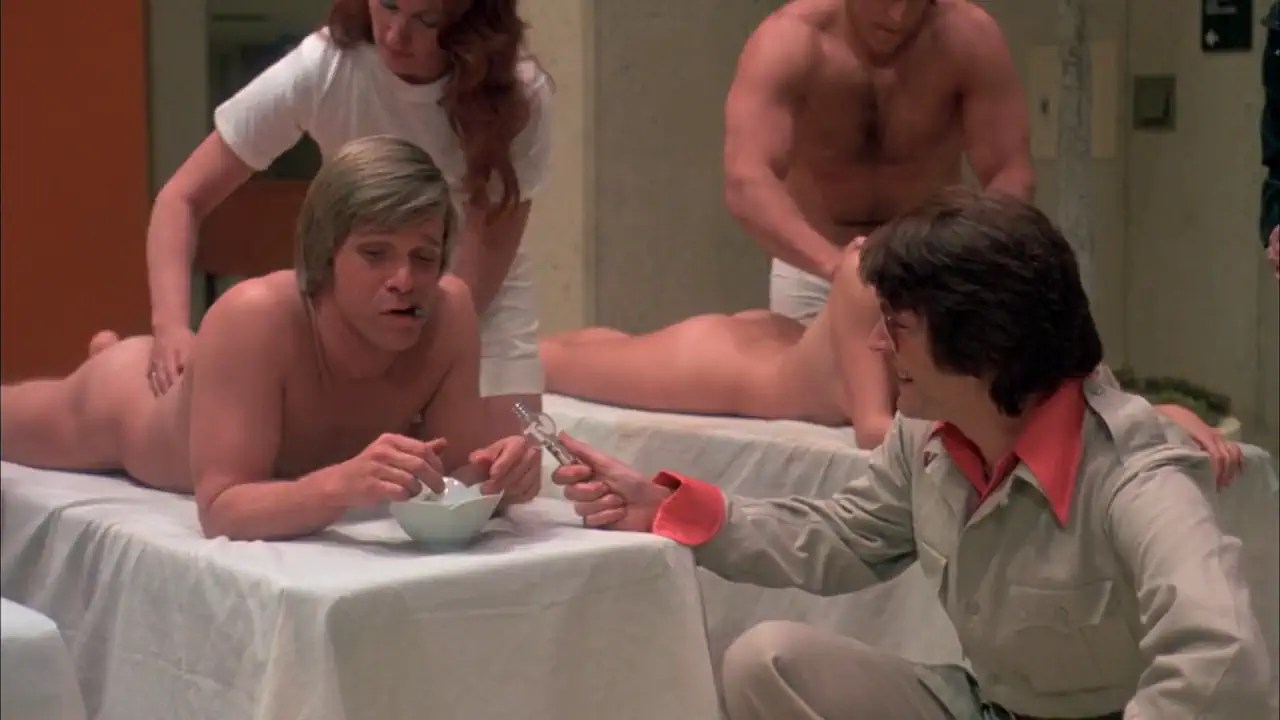
It is a classic production by Roger Corman, who is notorious in the film industry for his trash films. But trash here does not automatically mean poor quality. On the contrary: with Corman, trash stands for pure entertainment, shrill exaggeration, and merciless mockery, packaged in a clever and surprisingly profound story. The film offers everything you would expect from a cult classic of this era: satirical barbs; plenty of action; wild explosions; absurd amounts of gore and violence; risqué scenes; a dash of sex; and all of it exaggerated but executed with heart and soul. It is particularly noteworthy that Corman never skimped on the scripts – his films may look cheap visually, but narratively they often offer astonishing sophistication.
A dystopian vision
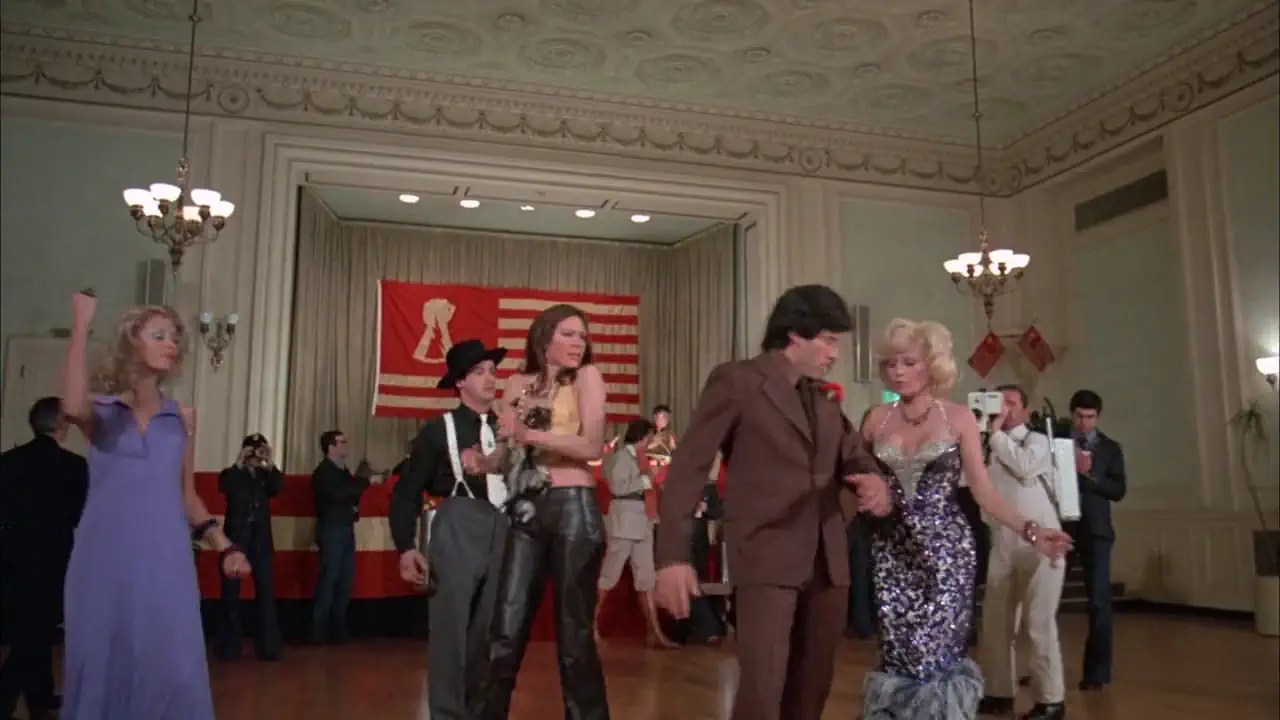
“Death Race 2000” in particular illustrates this perfectly and paints a downright frightening picture: The United States is portrayed here as a fascist dictatorship in which democracy and human rights have been reduced to mere empty phrases. The autocratic president, a symbol of total lust for power and control, resides in a magnificent summer palace in Beijing – an ironic reference to the global shift in power and the absurdity of imperial claims. To quell the growing discontent among the population and nip any rebellion in the bud, the regime relies on brutal mass entertainment as a modern opium for the people.
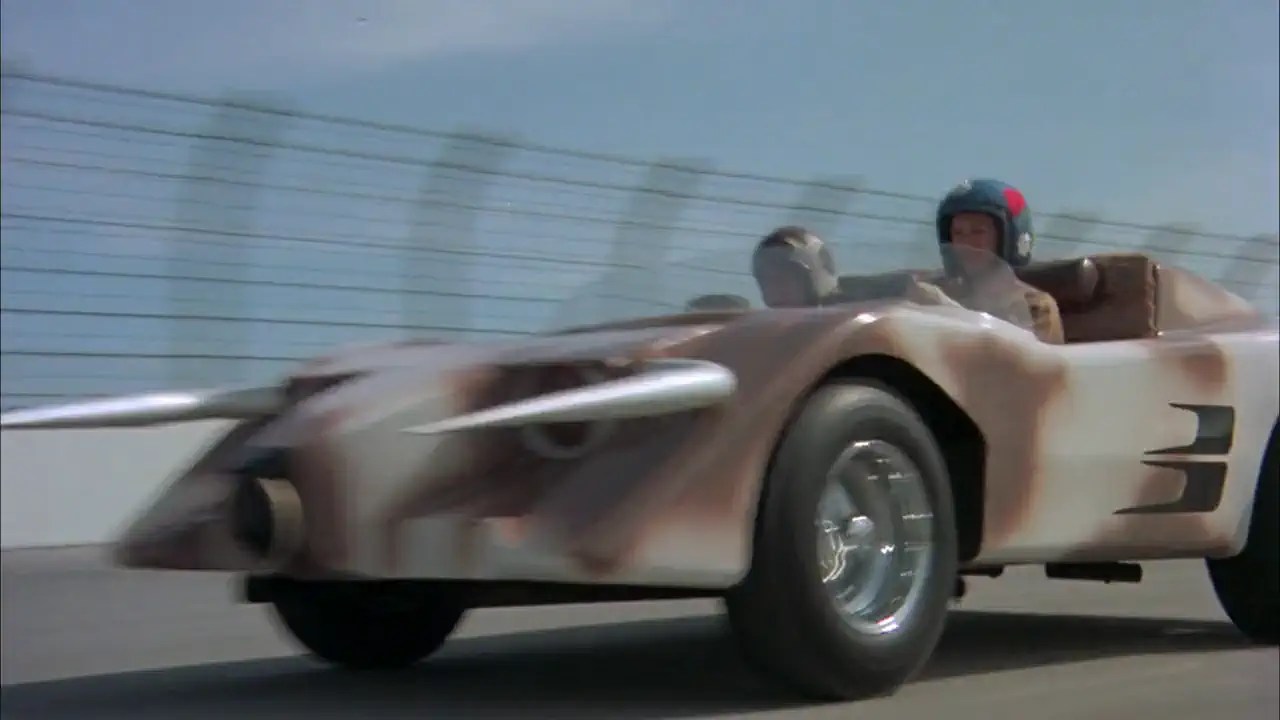
The biggest spectacle is the annual Transcontinental Road Race, which is at once a sporting event, a reality show, and a bloody manhunt. Drivers not only compete against each other in the race, but also compete to collect body points by running over unsuspecting civilians. Each person is evaluated according to their social “value”: old people and children earn the highest points because they are considered a “burden” or “unproductive members.” This cynical points system reflects a deeply dehumanizing ideology in which individual life no longer counts.





Forward-looking social criticism
This dystopian vision is eerily reminiscent of modern franchises such as “The Purge,” where the legitimization of violence through government programs is intended to relieve social tensions. “Death Race 2000” was way ahead of its time and reveals a fundamental truth: when violence is institutionalized, it does not serve to solve social problems, but to maintain a corrupt and inhumane order. The basic ideas of a system that not only allows systematic violence, but glorifies it in order to ensure survival and conformity, are already laid out here in an impressively clear form.
Acting highlights
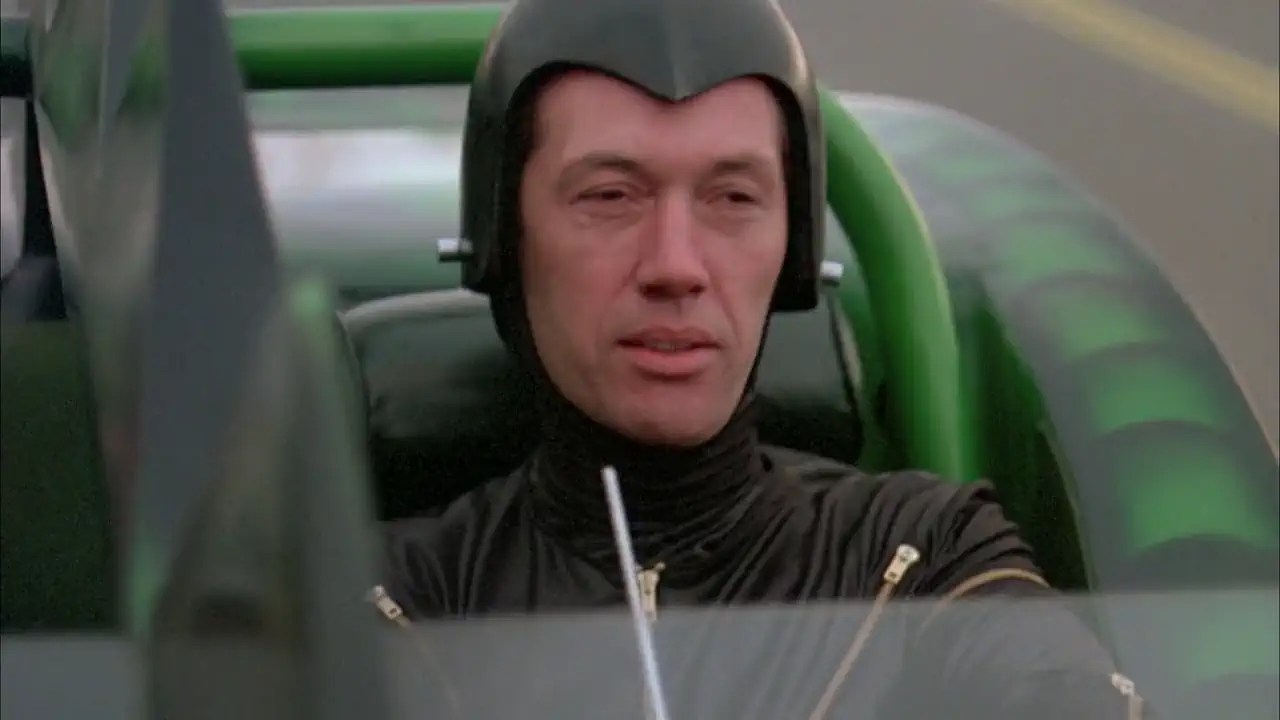
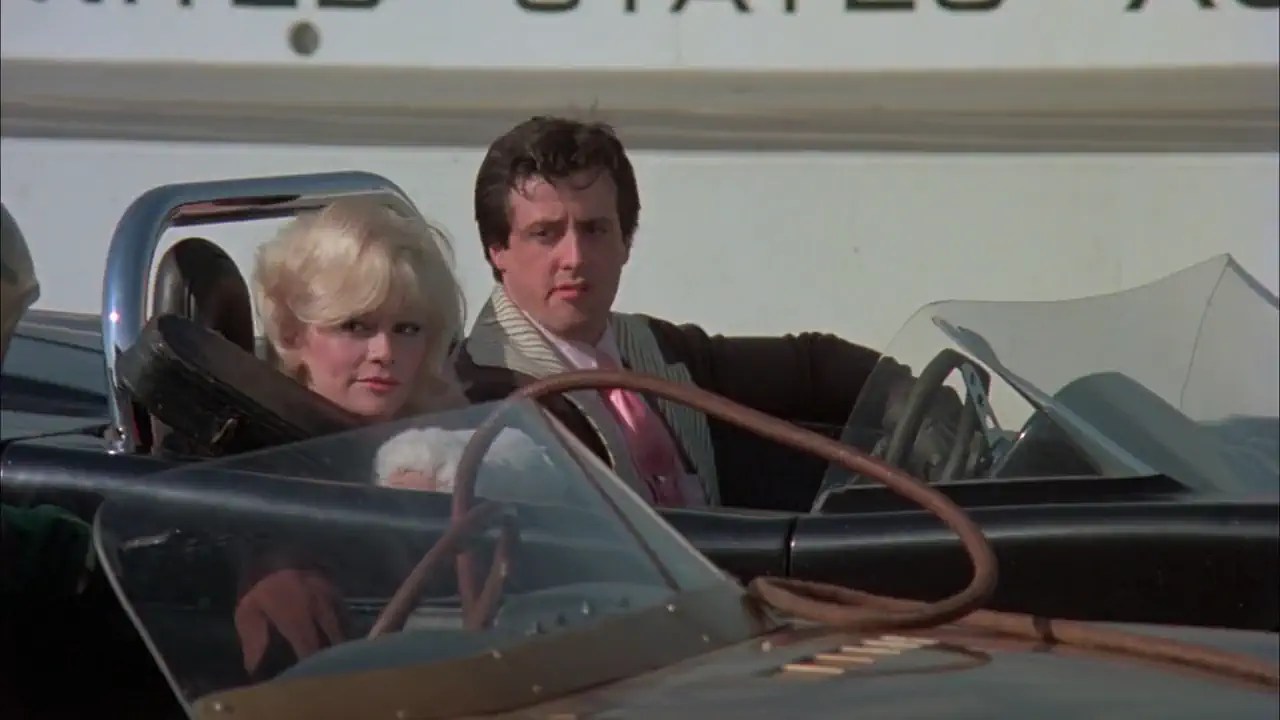
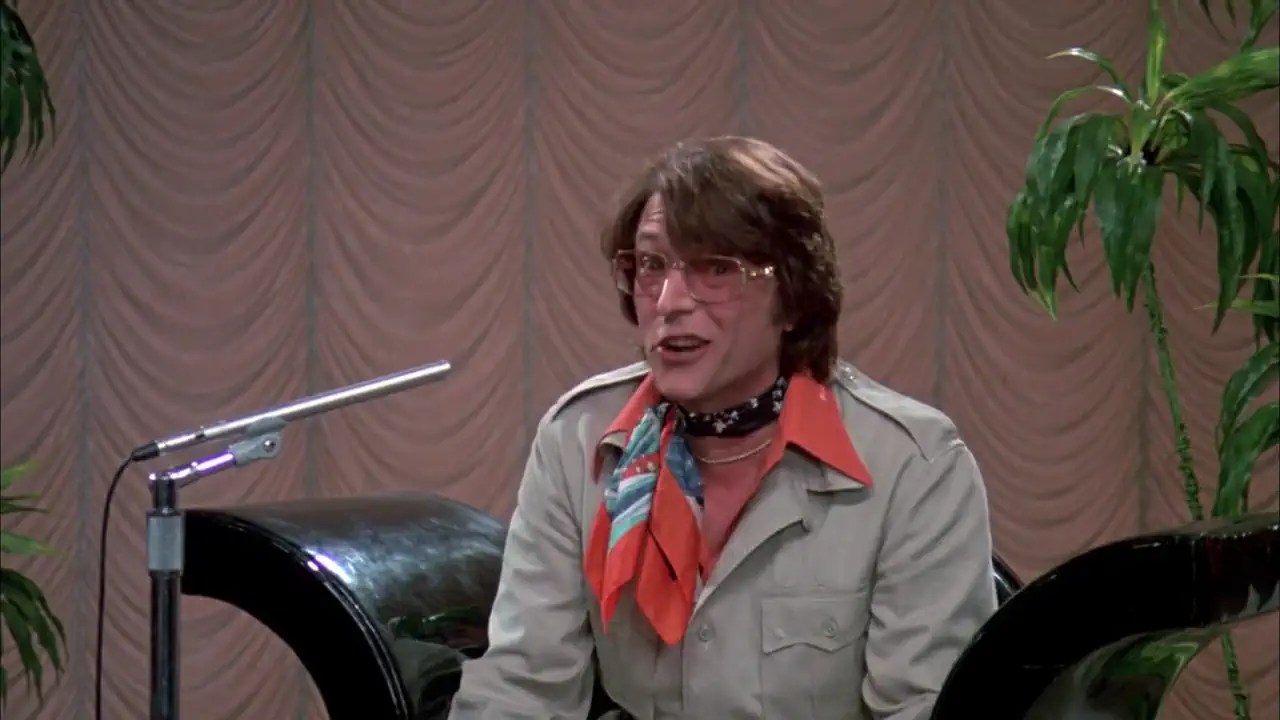
Although acting performances were never at the forefront of Corman’s films, “Death Race 2000” delivers two remarkable performances that leave a lasting impression: David Carradine shines as the mysterious and heroic Frankenstein, a cult figure in a leather outfit whose cool demeanor and understated charm thrill his fans. Carradine’s portrayal gives the character a fascinating mixture of aloofness and vulnerable humanity that captivates the audience. At his side is Sylvester Stallone, who appears here in an early role as the choleric and brutally ambitious adversary “Machine Gun” Joe Viterbo, a character he embodies with incredible intensity and a flair for exaggerated theatricality. Stallone’s performance already hints at his later star quality, even if his character is deliberately clumsy and exaggerated. Shortly afterwards, Stallone was to become world famous with “Rocky” – “Death Race 2000” thus offers an exciting glimpse of a rising superstar and at the same time documents an important moment in film history when two careers with very different dynamics collided.


Pure media satire
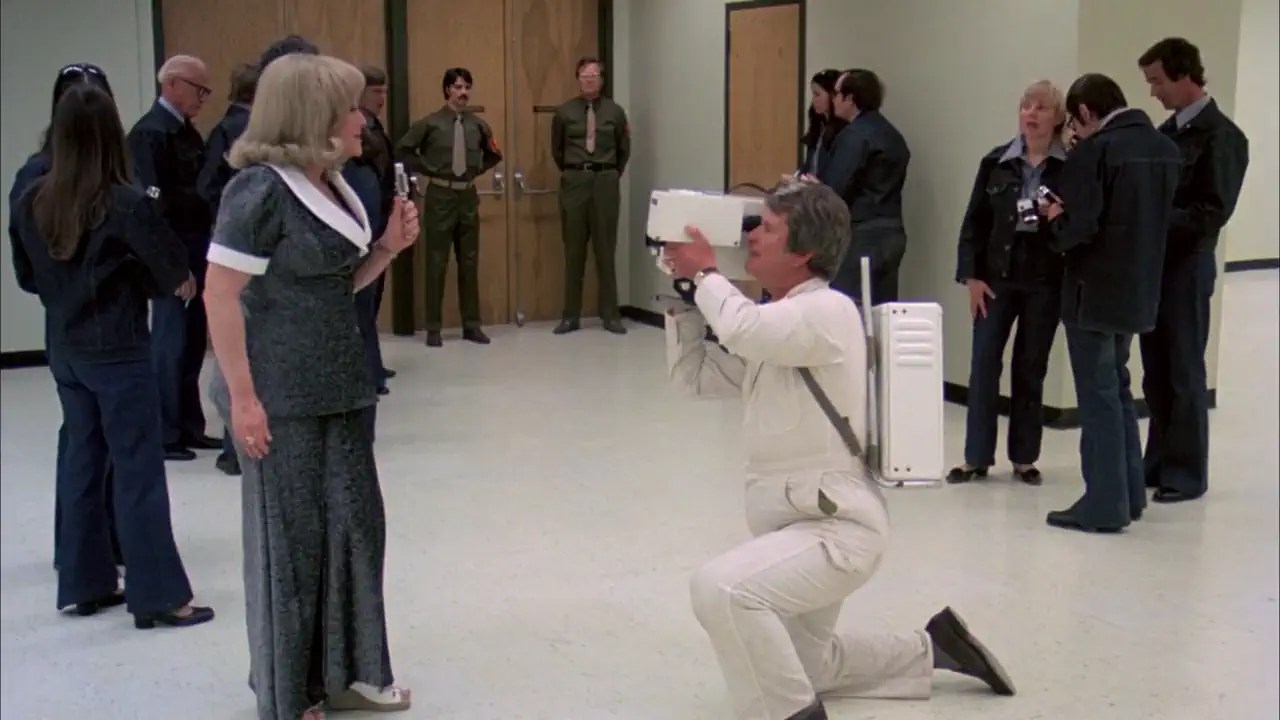
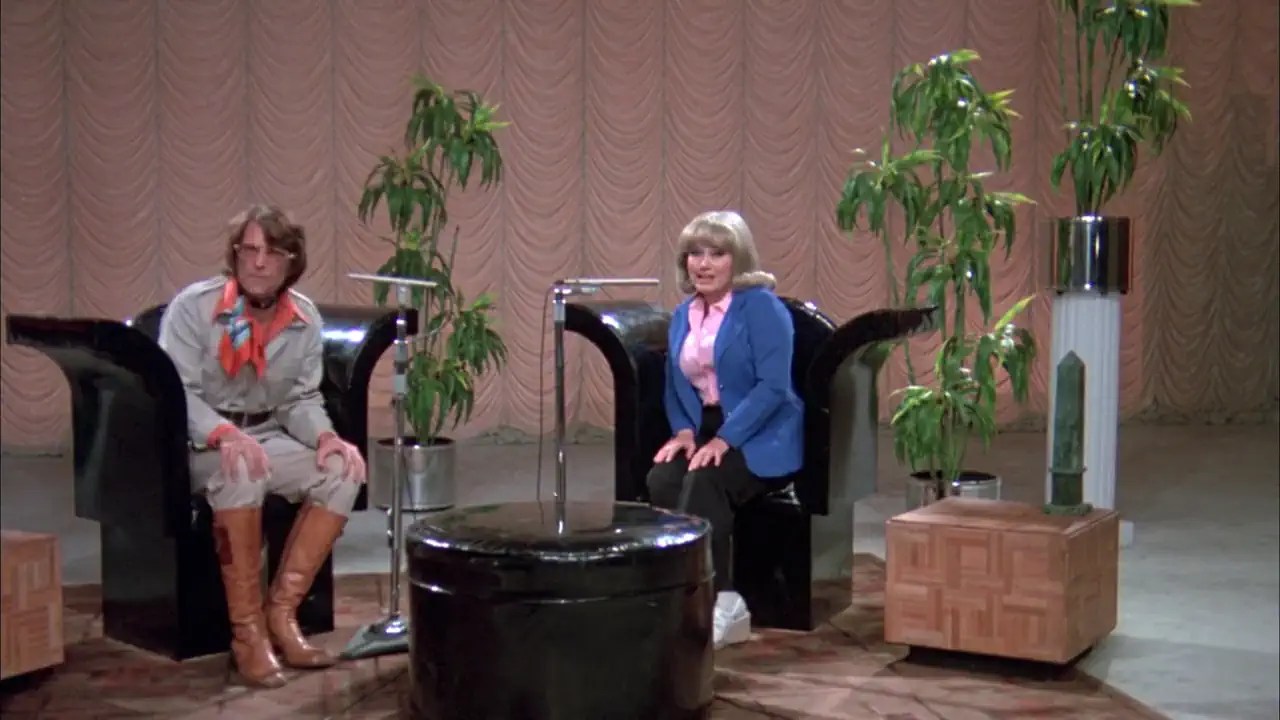
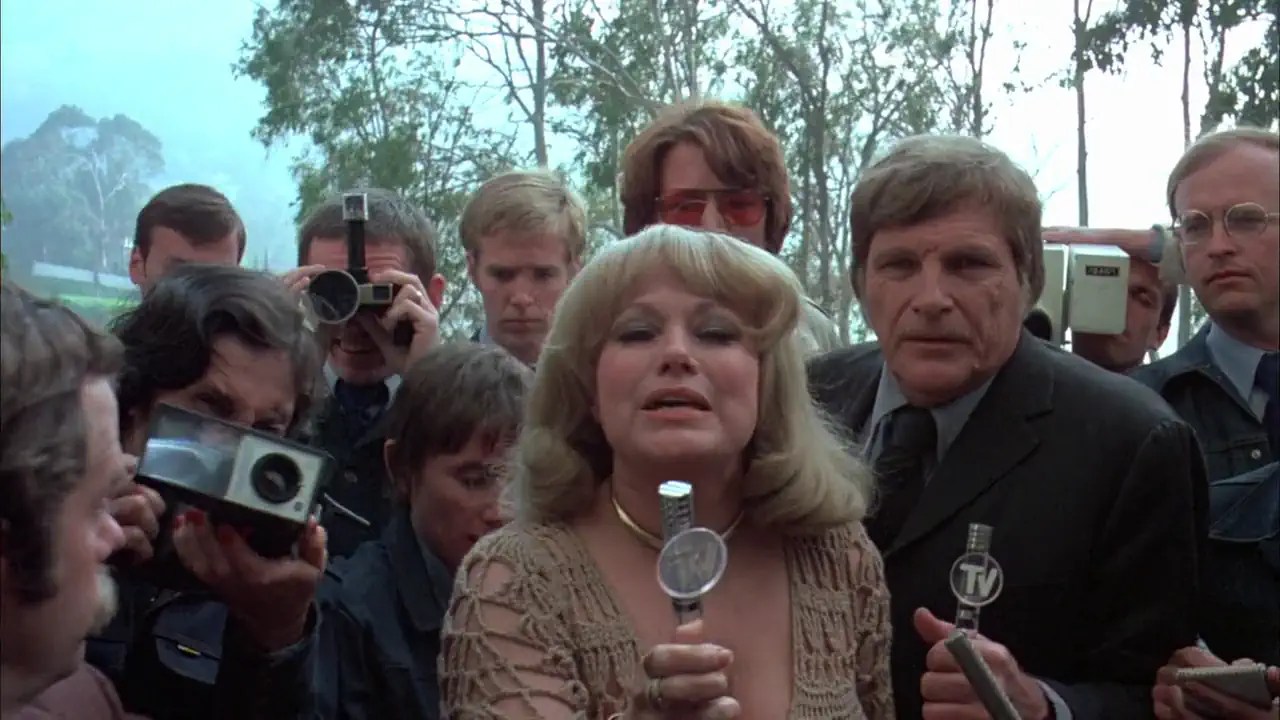
The satire in this film is particularly apt and is characterized by its relentless exaggeration of social ills. The absurd TV coverage of the race is a highlight in its own right: interviews with grieving widows, grotesquely staged and manipulated to support the image of the heroic drivers; euphoric commentators who praise the unrestrained killing in the highest terms and glorify it as an act of patriotic duty; and a propaganda machine that reinterprets even the greatest absurdities and atrocities as heroic deeds. The deliberately exaggerated portrayal of this media landscape serves as a bitter indictment of sensationalist journalism and the manipulation of public opinion. Particularly revealing are the president’s constant slogans about the alleged superiority of the “United Provinces” – a clear jab at nationalist rhetoric, political distortion of reality, and the instrumentalization of patriotism to conceal internal weaknesses. The fact that France is also used as a scapegoat for all mishaps and inconveniences underscores the film’s satirical brilliance and exposes the primitive tendency of authoritarian regimes to construct external enemies in order to cover up internal problems. The dense and exaggerated portrayal of these mechanisms makes the satire in “Death Race 2000” particularly effective and deliberately blurs the line between absurd fiction and social reality.




Bread and circuses
The principle of “bread and circuses,” which was used in ancient Rome to keep the population quiet through entertainment, is taken to the extreme here. “Death Race 2000” depicts a society that is so morally corrupt that it is almost beyond salvation. The political and social satire that emerges from this starting point is extremely biting and, unfortunately, still frighteningly relevant today. Issues such as media manipulation, dehumanization through entertainment, and the uncritical acceptance of authoritarian structures have lost none of their relevance.
Pure satire
All in all, “Death Race 2000” is an outstanding satire that has stood the test of time with flying colors. The film is not only a bloody, shrill action comedy, but also a sharp commentary on society and politics. Many of the themes touched upon here, such as the commercialization of violence and the power of the mass media, seem even more relevant today than they did then in light of current developments.
Reputation today
Another fascinating detail is how social perceptions have changed over the decades: “Death Race 2000” was on the index of media harmful to young people in Germany for a long time. It was only re-evaluated in 2002 and has since been released uncut with a rating of 16 and up – a process that seems almost ironic given today’s media landscape.
Summary
“Death Race 2000” remains a milestone in satirical cinema that both entertains and provokes thought – a true classic that has lost none of its impact even today.







 McHenry's Lair
Kommentar verfassen :