


One day you inserted your last coin at the arcade …
… and you didn’t even know it.
Insert the last coin …
The first arcade game I played was a clone of Pong in the spring of 1978. Later, throughout the entirety of the 80s, I invested a lot of time and money in the arcade. I often spent hours just for the fun – high scores were never important to me.
But there comes a time when you insert the last coin – only you don’t realize it at the time. It’s only years later that you realize that this was exactly that moment …
Unfortunately, I don’t remember exactly which game got my last coin. It was probably in early 1992 and there are some possible candidates for that honor – one of them is this game …
The futuristic arcade adventure
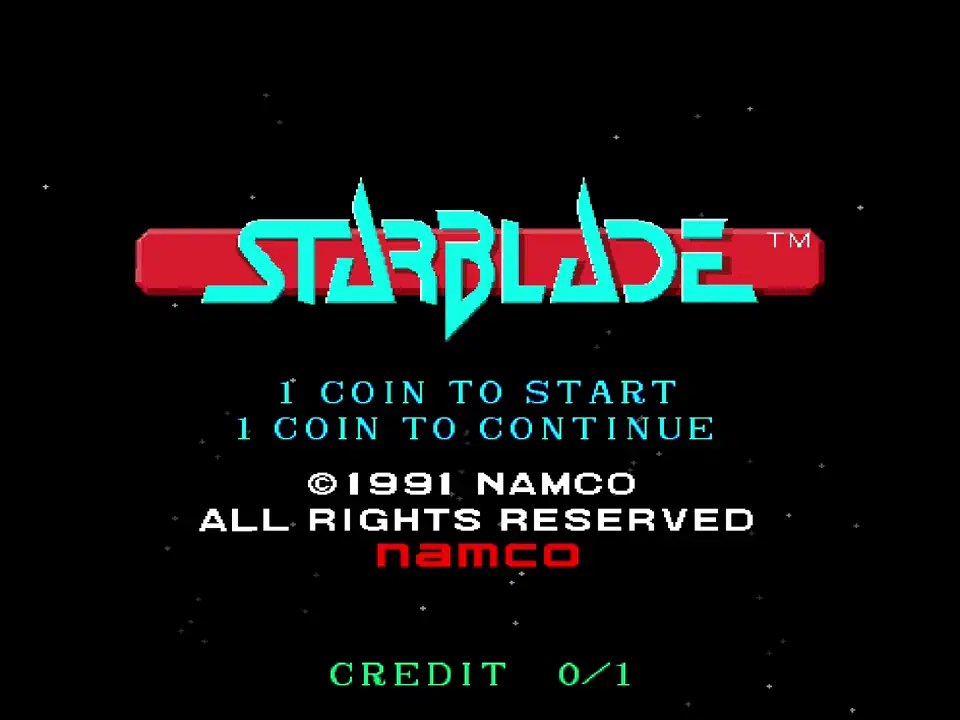
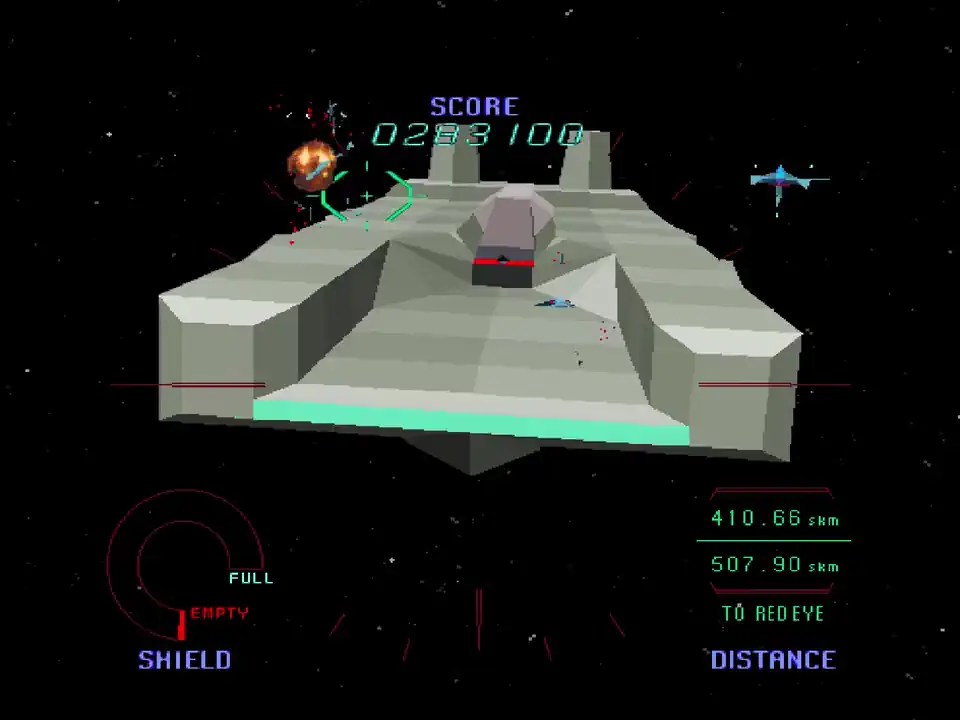
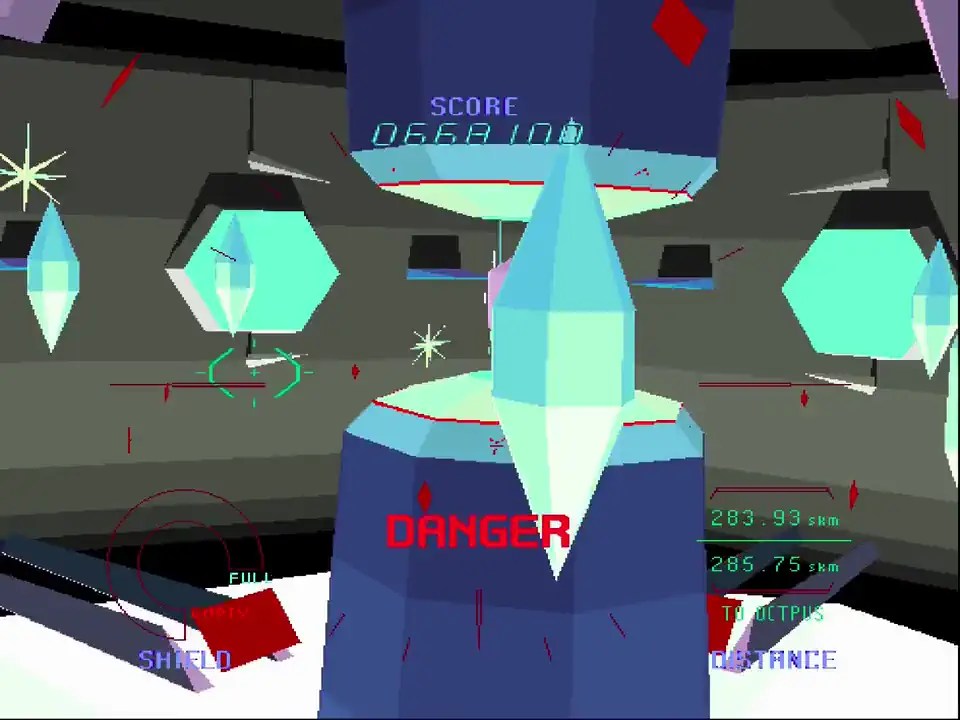
StarBlade, an arcade game developed by Namco, was released in 1991. It was a groundbreaking rail shooter that catapulted players into an intense sci-fi world. With its revolutionary 3D graphics and thrilling space battles, StarBlade stood out from other games of its time. The player took control of a fighter ship and fought against a powerful extraterrestrial threat that used highly developed technologies to threaten humanity.
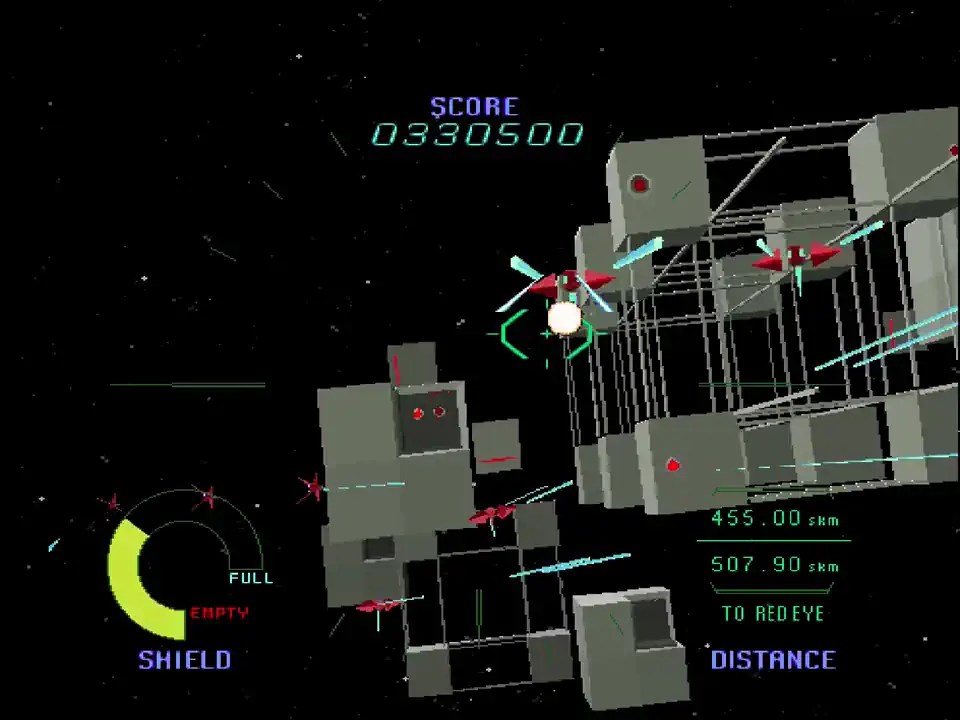
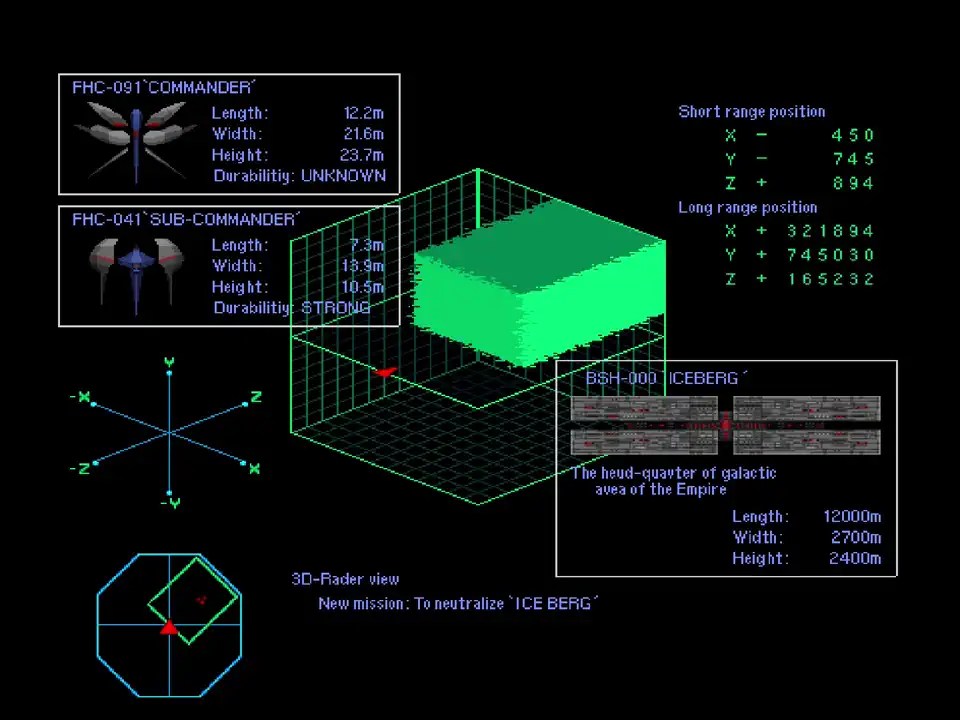
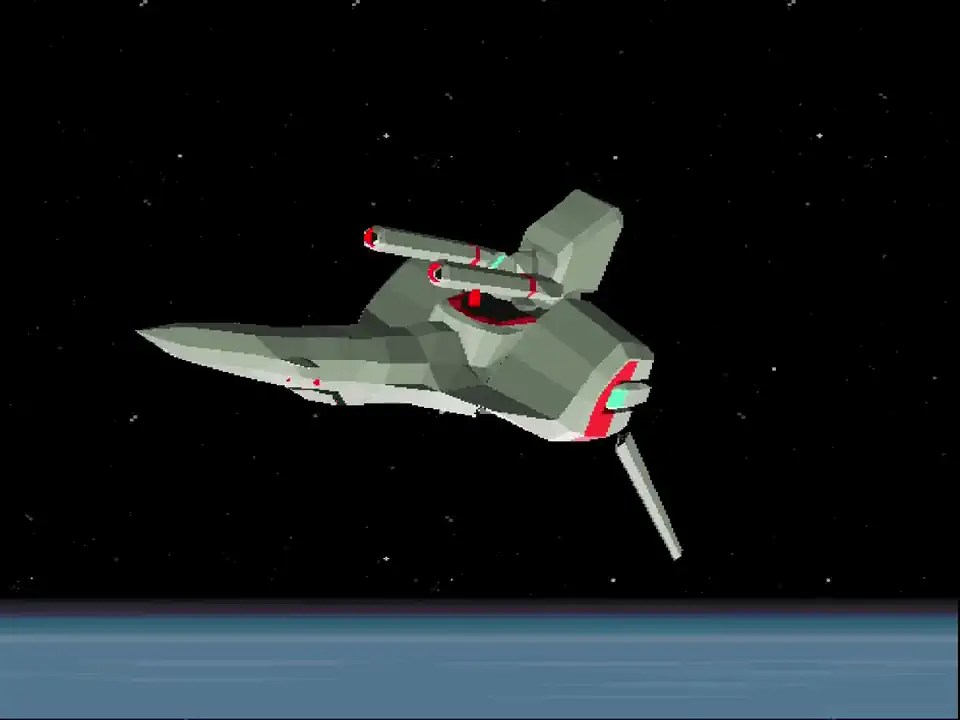
The plot revolved around humanity’s struggle against the dreaded Imperial Zeta Fleet Command, which had subjugated an entire galaxy. The player took on the role of an elite pilot who took to the skies in the powerful FX-01 space fighter in the fight against the enemy invaders. The aim was to break through the enemy forces, infiltrate a massive space fortress and destroy the enemy’s central core. Countless waves of enemy fighters, gigantic battleships and deadly defense turrets had to be overcome.
The thrilling staging, with cinematic camera work and a sound design that made the action even more intense, ensured that players felt right in the middle of the action. Controls were intuitive enough for beginners to pick up quickly, while still offering a challenge for more experienced players to hone their aim. Combining fast-paced gameplay, futuristic design, and immersive presentation, StarBlade quickly became one of the most popular arcade games of its time.
Gameplay
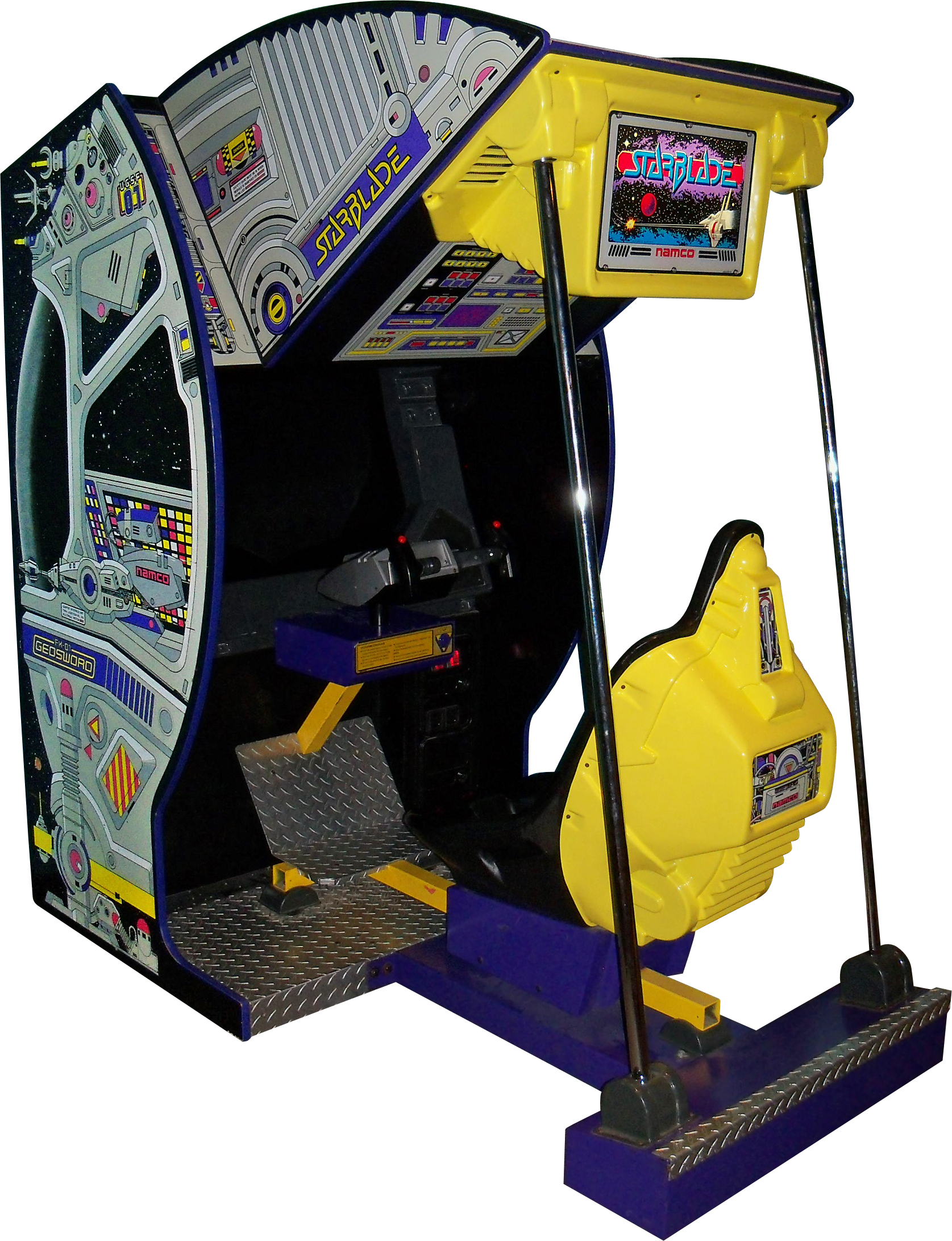
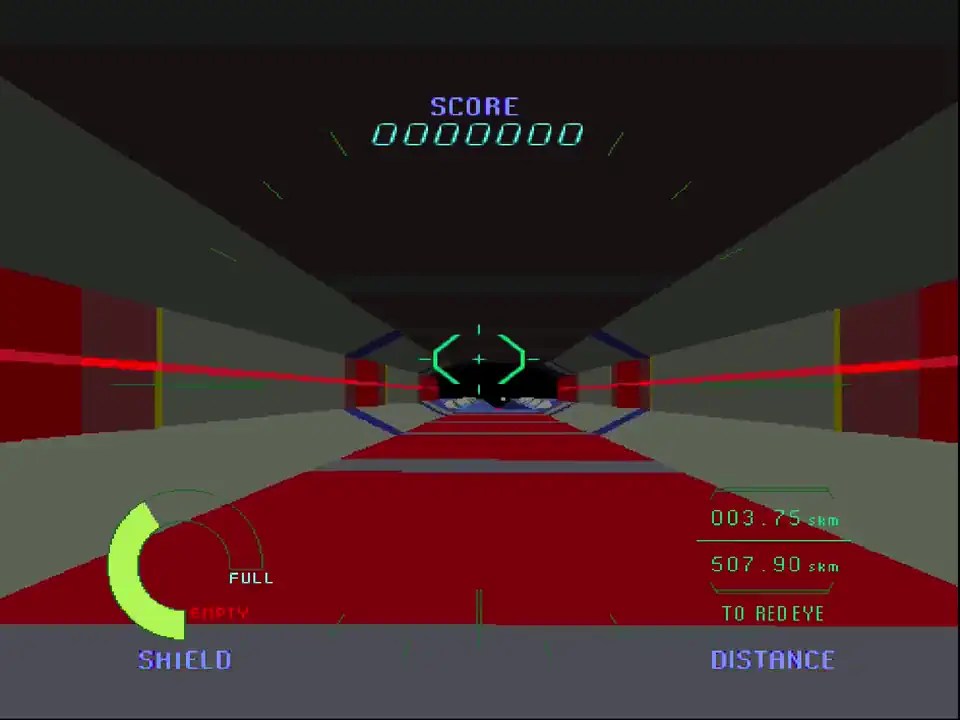
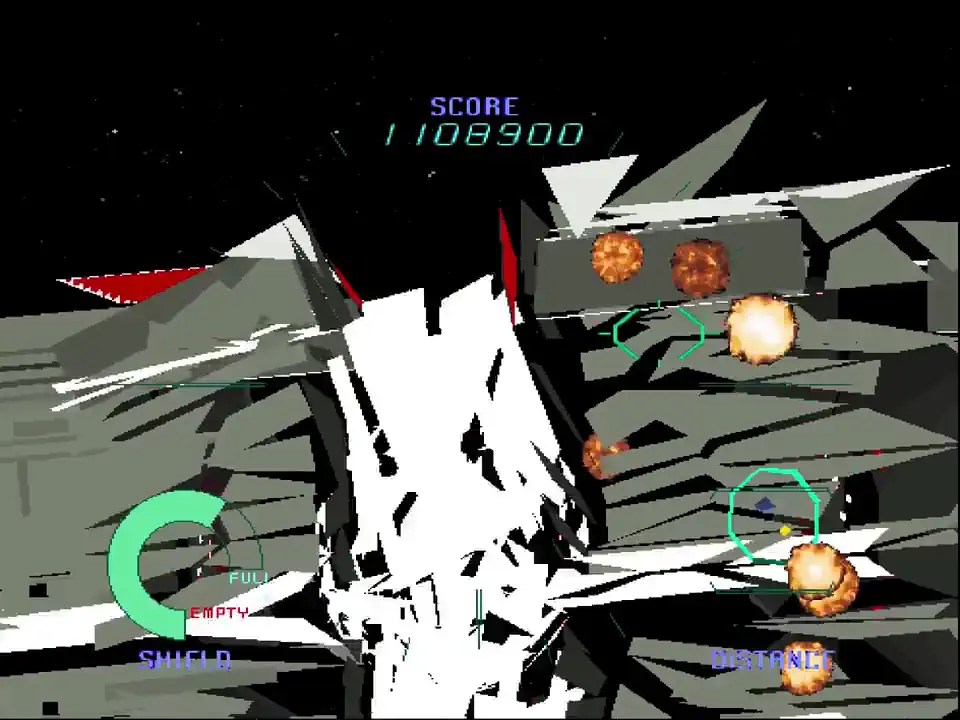
StarBlade was a classic on-rails shooter, which meant that the spaceship moved automatically on a fixed trajectory. The player had control over a crosshair that was used to target and destroy enemy ships and structures. It was crucial to react quickly and precisely to avoid being hit by enemy fire.
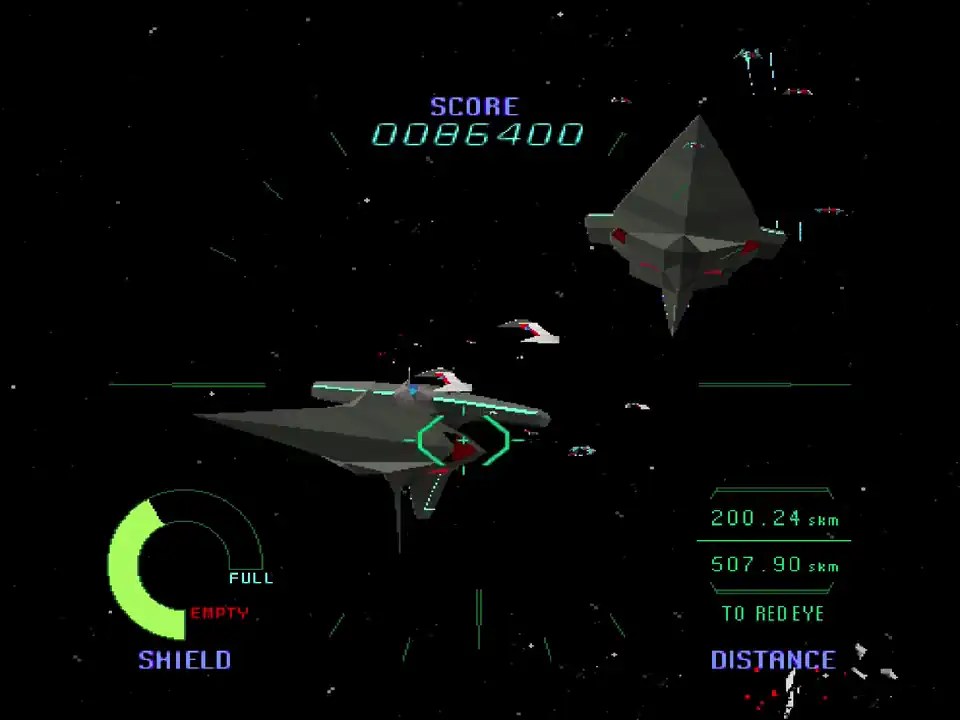
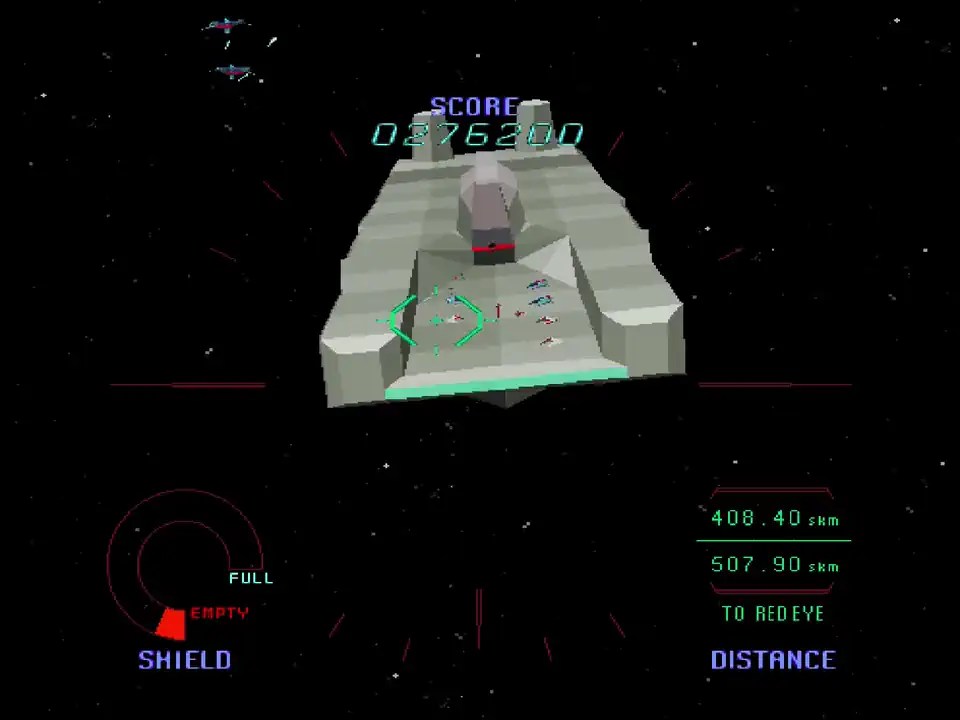
The game was characterized by its dense action, in which the player had to constantly evade enemy fire and fire precise shots. Different types of opponents, from fast fighters to heavily armored battleships, required different strategies. There were also huge boss enemies that appeared at the end of certain sections and tested the player’s skill with powerful weapons.
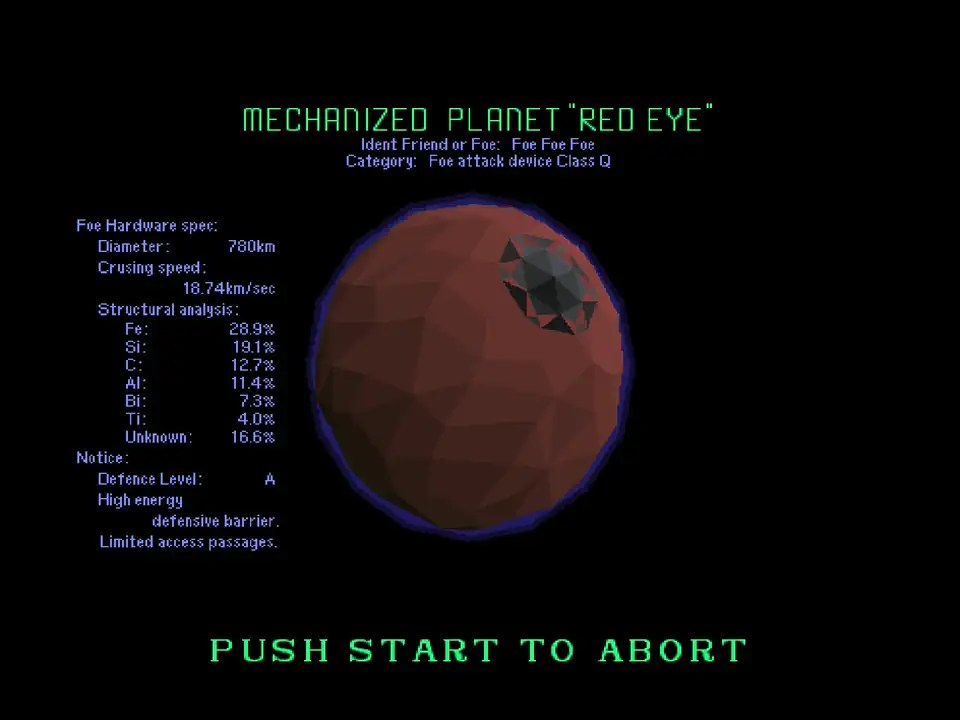
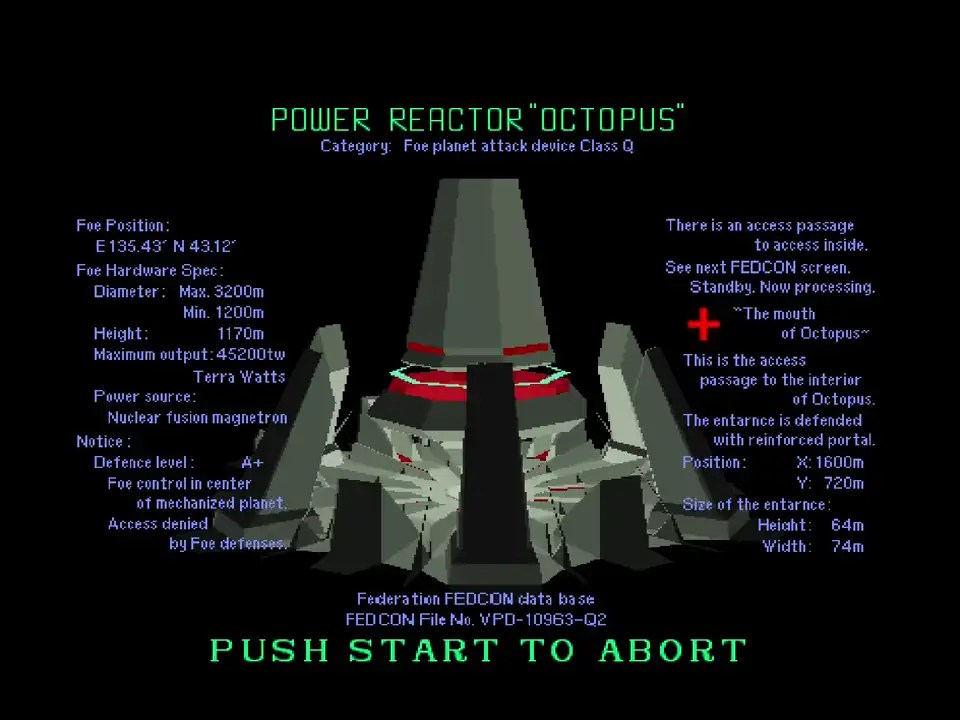
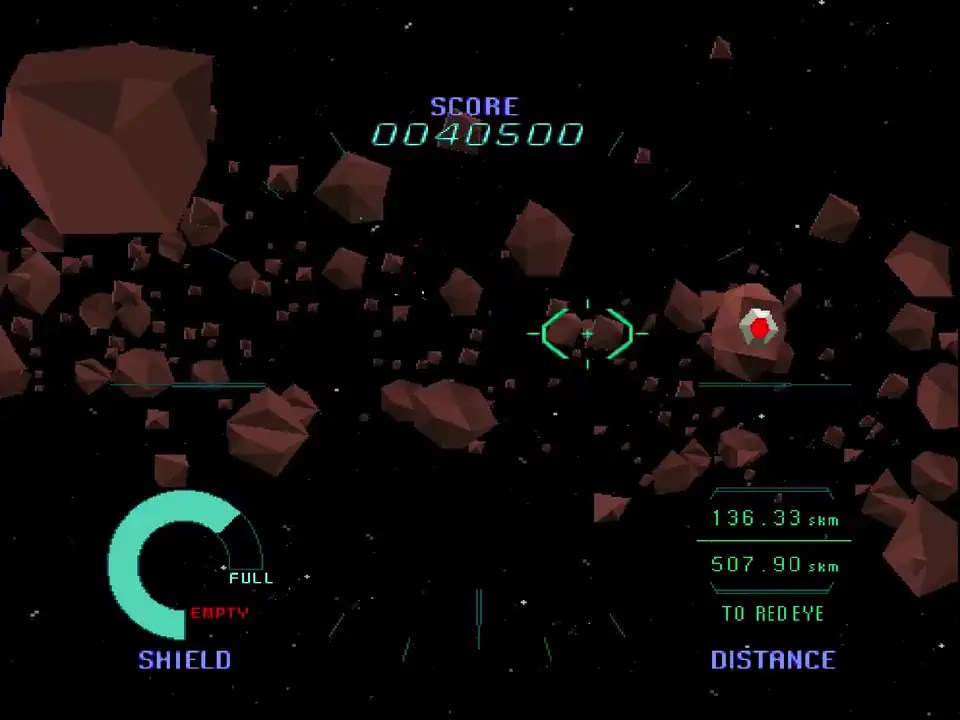
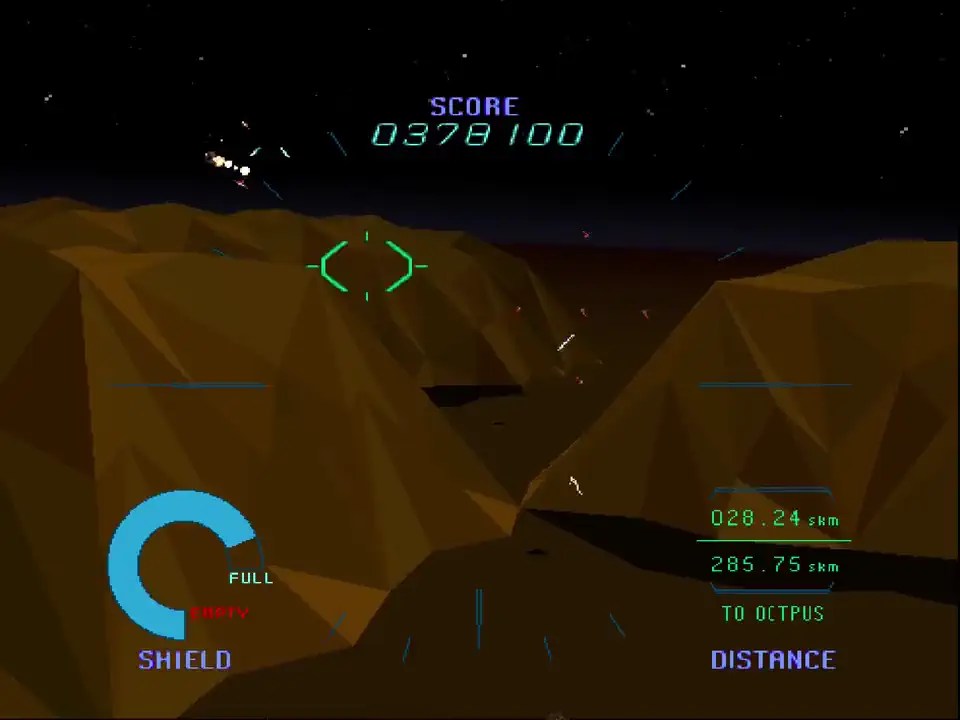
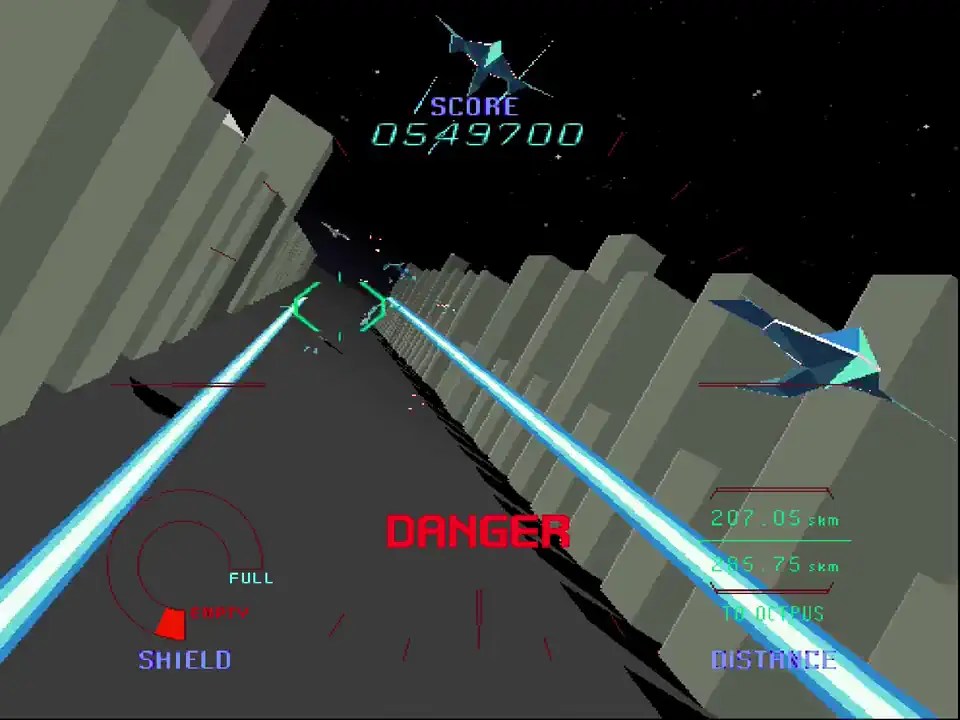
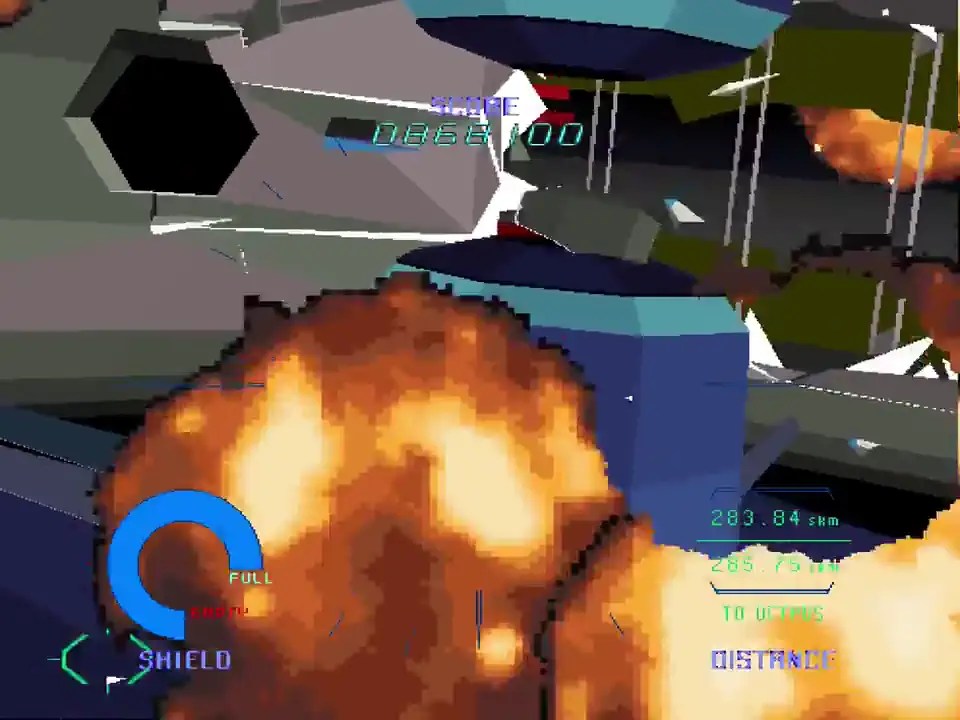
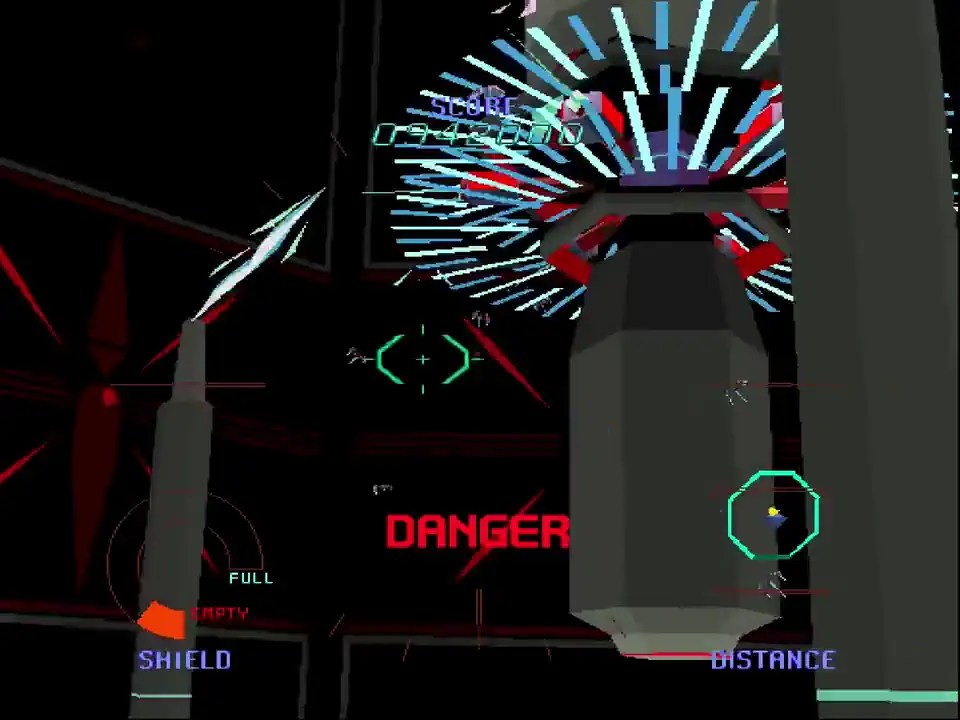
The mission led through various levels with impressive backdrops, including asteroid fields, huge enemy spaceships and the enemy home world. Each of these levels had its own atmosphere with unique challenges, such as sudden obstacles, massive explosions and changing environments. The final sections were particularly spectacular, with the game staging a breathtaking display of dramatic light and shadow effects. The combination of intense action and futuristic setting made StarBlade an unforgettable arcade experience.







Trivia
- StarBlade was one of the first games to use fully 3D polygon graphics instead of pre-rendered sprites. This technology was groundbreaking for its time and paved the way for many subsequent 3D games.
- A revised version was later released for the PlayStation under the name StarBlade Alpha, which offered improved graphics and optimized controls.
- The game inspired numerous sci-fi games, particularly in the rail shooter and space simulation genres. Titles such as Star Fox, Rez and Panzer Dragoon took many elements from StarBlade and developed them further.
- In Tekken 5, players can find StarBlade as a playable mini-game on an arcade machine in the background. This nod shows how important the game is to Namco’s history.
- StarBlade was one of the first games to feature cinematic staging and camera work that was later adopted in many 3D games.
- The arcade machine’s hardware was specially designed to meet the game’s requirements and used advanced 3D rendering techniques that were far ahead of their time.
- The game was re-released in several collector’s editions by Namco and remains a coveted collector’s item among arcade fans.
Technology
The technology behind StarBlade was far ahead of its time. Namco used powerful 3D rendering technology that produced remarkable visual effects for the time. The arcade machine featured a large screen and a special control system that made players feel as if they were sitting right in the cockpit of a futuristic battleship.
The combination of polygon graphics, dynamic lighting effects and a rousing soundtrack gave the game an extraordinary sense of immersion. Namco relied on a state-of-the-art hardware architecture that was specially optimized for the smooth display of 3D polygons. This not only allowed for an impressive visual presentation, but also for complex enemy movements and camera movements that made the gameplay even more intense.
Another technical highlight was the realistic display of explosions and light reflections, which were simulated as impressively as possible by the hardware of the time. The arcade hardware of StarBlade had a powerful CPU and a specially developed graphics engine that allowed many moving objects to be displayed on the screen at the same time without any jerking or delays.
In addition, the gaming experience was enhanced by high-quality audio. The sound effects were digitally generated, providing an immersive sound experience with powerful laser shots, exploding spaceships, and dramatic music that kept the excitement going throughout the missions. This combination of advanced graphics, responsive controls and immersive sound design made StarBlade one of the most technologically advanced arcade games of its time.
Reviews at the time
When StarBlade was released in 1991, it received high praise for its graphics and cinematic presentation. The press particularly emphasized how immersive the game was due to its large-scale 3D presentation. The way in which the game set itself apart from other arcade titles was seen as a step into the future of video games. Critics particularly praised the fluid movement of the camera, which conveyed the feeling of being on an intergalactic adventure.
However, gameplay was criticized for offering little freedom due to the on-rails principle, which some players found too monotonous. Nevertheless, many felt that the spectacular audiovisual experience more than made up for this limitation. The soundtrack, composed with epic, driving synthesizer sounds, was seen as another highlight of the game, enhancing the intensity of the battles.
Despite the mixed reception, StarBlade was considered a technical masterpiece that revolutionized the arcade world. It set a new standard for the graphical representation of 3D worlds in games and influenced subsequent generations of developers. Many magazines and game critics named it one of the most innovative arcade titles of its time and a pioneer for later 3D action games.
Cultural Influence and Reputation Today
Today, StarBlade is considered a pioneer of 3D arcade gaming. While it is quite simple in terms of gameplay, it remains an important piece of video game history that helped shape the transition from 2D to 3D gaming. The game is considered a blueprint for modern rail shooters and influenced numerous subsequent titles.
Retro gamers and arcade fans remember the game fondly, and it still has cult status today. Many players appreciate not only the groundbreaking gameplay, but also the unique art design and atmospheric staging. In the retrogaming community, StarBlade is often considered one of the most important arcade games of the early 90s, ushering in a new era of video game technology.
Modern rail shooters like Rez, Panzer Dragoon or even Star Fox have adopted and developed many elements of StarBlade. The cinematic presentation, which was revolutionary at the time, can also be found in today’s sci-fi shooters. Thanks to emulations and new releases, StarBlade still has a loyal fan base today, who can rediscover it on modern platforms. Collector’s markets are known to pay high prices for the arcade version, which highlights the game’s importance in the retrogaming scene.
Summery
StarBlade was a technical milestone that ushered in a new era in the world of video games. It represented a groundbreaking development by demonstrating the power of 3D graphics in arcade games. While many competitors continued to rely on two-dimensional sprites, StarBlade proved that full-fledged polygon graphics were not only feasible but also visually impressive.
Despite its simplistic gameplay, it remains an impressive example of early 3D polygon graphics and immersive arcade design. The game featured a captivating audiovisual presentation with fluid camera movements, a deep soundscape, and a menacing atmosphere that perfectly supported the sci-fi setting. The visual design of the enemies and environments created a unique gaming experience that stood out from other rail shooters of the time.
Anyone interested in retro gaming or the evolution of video games should definitely experience StarBlade. Not only because it is considered a technical masterpiece, but also because it offers a nostalgic journey back to a time when arcades were the center of the gaming world. The immersive staging, coupled with challenging yet accessible gameplay, makes it a unique and influential arcade game to this day.
Postscript
When I say insert the last coin … I’m referring to the end of the Golden Age of arcade games (mine, at least), which lasted from the late 1970s to the early 1990s. I consider my (much) later experiences with arcade games to be different experiences. These include, for example, visiting a modern arcade in the early 2000s or playing arcade games at Retro Gaming Fairs and Conventions, as well as playing on an arcade emulator like MAME.







 McHenry's Lair
Kommentar verfassen :