

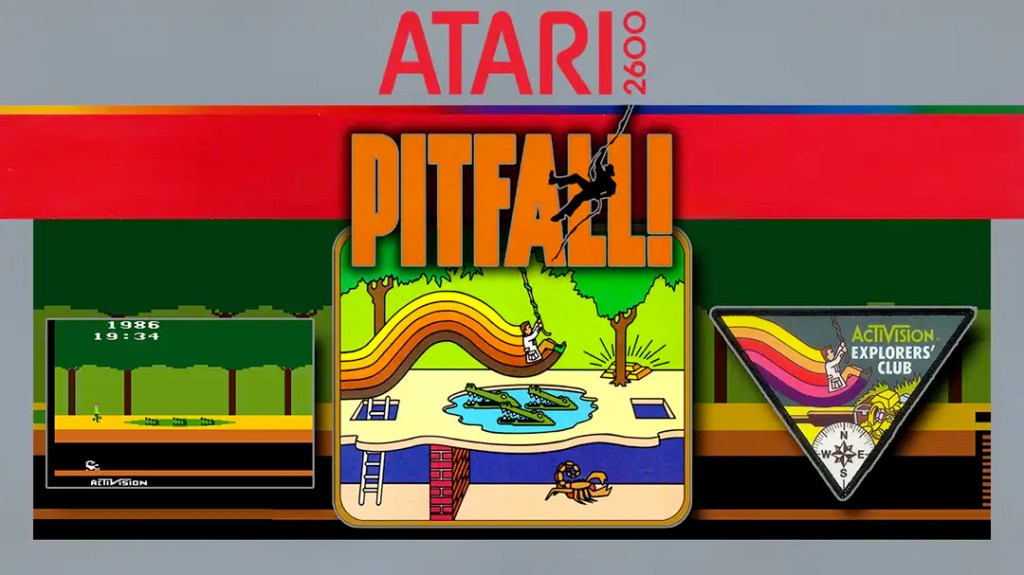
Activision’s Pitfall!
In 1982, one of the most influential video games was released for the Atari 2600, “Pitfall!”, which not only set a milestone in the history of video games, but also defined a new genre. Developed by David Crane and published by Activision, the game offered a unique gaming experience that was characterized by technical innovations and its iconic main character Pitfall Harry. The adventure in the digital jungle became the epitome of the action adventure game and inspired numerous imitators. With its innovative game mechanics and clever use of limited hardware, “Pitfall!” laid the foundation for modern adventure and exploration games. In this article, we take an in-depth look at “Pitfall!”, its storyline, technical features, cultural impact and long-lasting reputation.
Gameplay
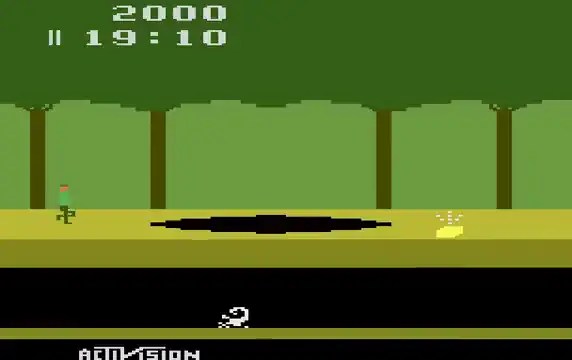
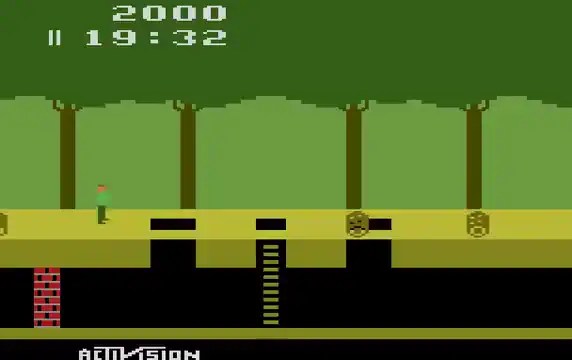
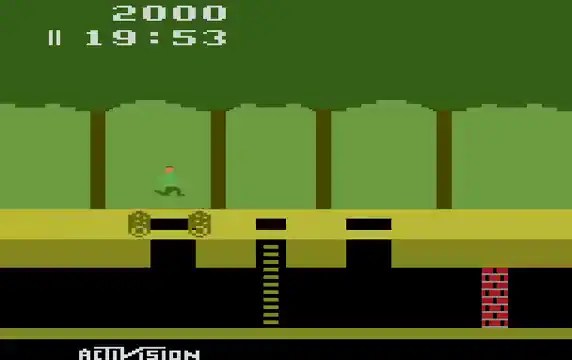
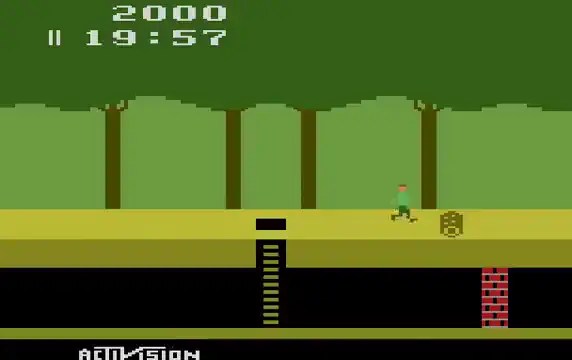
In “Pitfall!”, players take on the role of Pitfall Harry, a brave adventurer who embarks on a perilous journey through a pixelated jungle to recover valuable treasures such as gold bars, silver bars and diamonds. Players must avoid deadly dangers including crocodiles, snakes, rolling logs, sand pits and treacherous swamps. At the same time, they have to make clever use of ladders, ropes and underground tunnels to reach treasures and avoid obstacles. Strategic thinking is required to collect treasures efficiently without wasting precious time. The time limit of 20 minutes and the scoring system create a balance between speed and caution. Every mistake, such as touching obstacles or falling into a pit, costs valuable points and can put the goal of achieving a high score far out of reach.




Trivial
- “Pitfall!” was one of the first games to use a clearly defined main character, who later achieved cult status and is regarded as a forerunner of today’s video game heroes such as Mario or Lara Croft.
- David Crane developed the game in just three months, using a special technique to exploit the limited hardware capabilities of the Atari 2600.
- The game sold over 4 million copies worldwide, making it one of the most successful titles on the platform.
- “Pitfall!” was so popular that it was featured in an episode of the animated series “Saturday Supercade”, in which Pitfall Harry and his niece Rhonda had adventures.
- One of the most legendary marketing campaigns around “Pitfall!” was a commercial featuring a young Jack Black, long before he became a Hollywood star.
Level generation pseudo-random
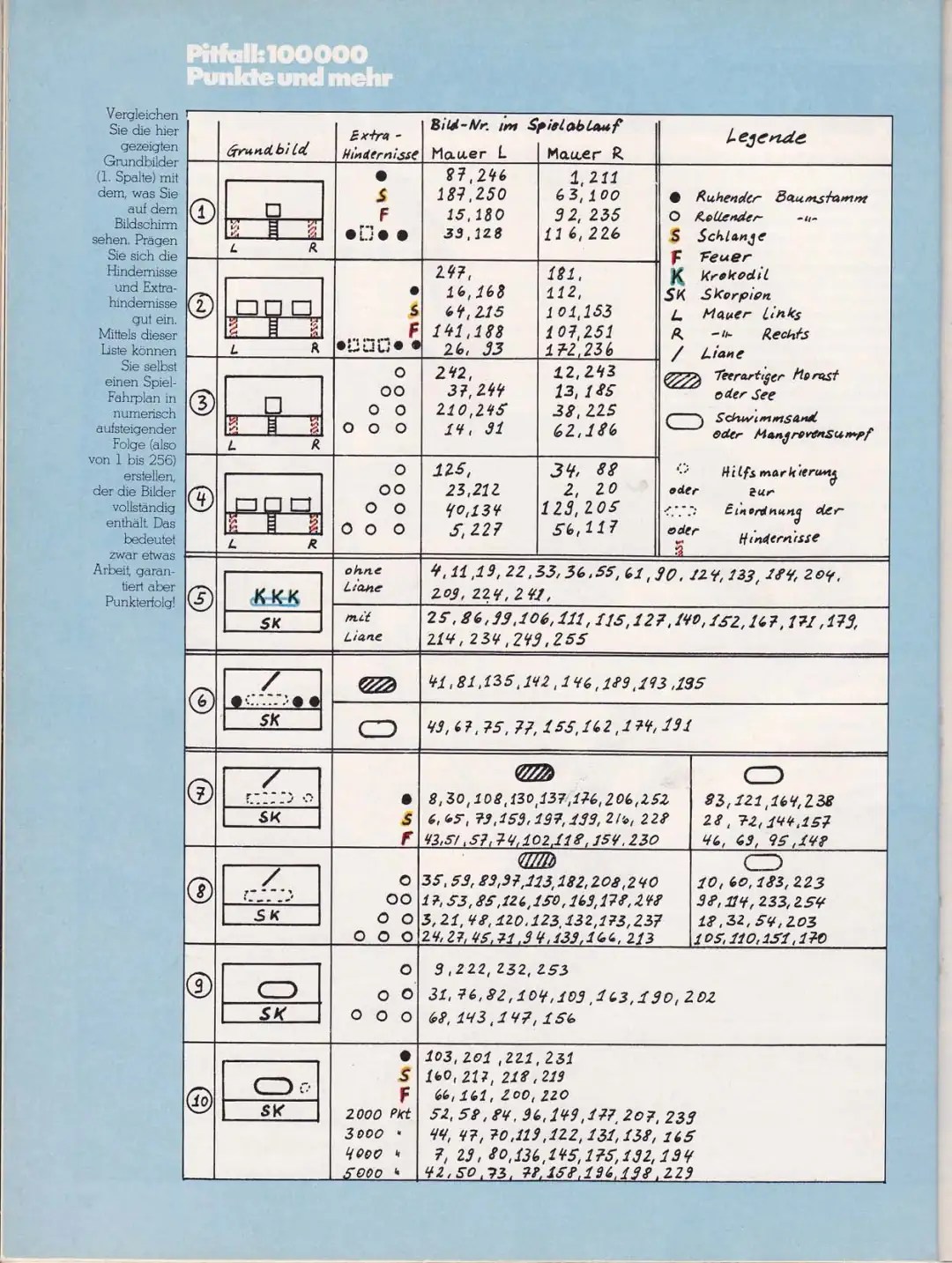
One of the most outstanding technical innovations of “Pitfall!” was its method of level generation. Instead of programming each section manually, the game used a pseudo-random number generator controlled by a fixed seed number. This made it possible to create a seemingly huge, interconnected world that still remained consistent and predictable with the limited resources of the Atari 2600. The generator created a total of 255 unique screens that were seamlessly linked together. This technique was groundbreaking as it created a rich and detailed world without overloading memory. Players could memorize and strategically plan the layout of the levels, adding a tactical dimension to the gameplay. David Crane’s innovation not only inspired other game developers, but also became a model for the efficient use of limited hardware resources in early video game development.
RightRandom SUBROUTINE
; generate new random scene on the right:
.loopRandom:
; random' = random << 1 | (bit3^bit4^bit5^bit7)
    lda    random           ; 3
    asl                     ; 2
    eor    random           ; 3
    asl                     ; 2
    eor    random           ; 3
    asl                     ; 2
    asl                     ; 2
    eor    random           ; 3
    asl                     ; 2
    rol    random           ; 5
    dex                     ; 2
    bpl    .loopRandom      ; 2³
    jmp    ContRandom       ; 3
; Scene generation:
; The 255 scenes are randomly generated through a "bidirecional" LFSR. This
; means, that the process of generating the next random number is reversible,
; which is necessary to allow traveling though the jungle in both directions.
; The random number defines the scene with the following bits:
; - 0..2: type of object(s) on the ground (logs, fire, cobra, treasure etc.)
; - 3..5: type of scene (holes, pits, crocdiles, treasures etc.)
; - 6..7: type of the tree pattern
; - 7   : position of the wall (left or right)
Cultural influence
“Pitfall!” not only shaped the genre of action-adventure games, but also had a profound cultural influence. Pitfall Harry became one of the first recognizable characters in the video game world, paving the way for characters like Sonic and Link. The combination of adventure, exploration and danger inspired games like “The Legend of Zelda”, “Tomb Raider” and “Uncharted”, which continued the legacy of “Pitfall!” on new platforms. The game was also a pioneer in presenting a coherent digital universe in which players could make decisions and explore a world. In addition, “Pitfall!” helped to establish video games as a serious entertainment medium, combining both technical and creative innovation. The popularity of the game helped change the perception of video games in the 1980s from simple pastimes to more complex forms of entertainment.
Sequels and arcade versions
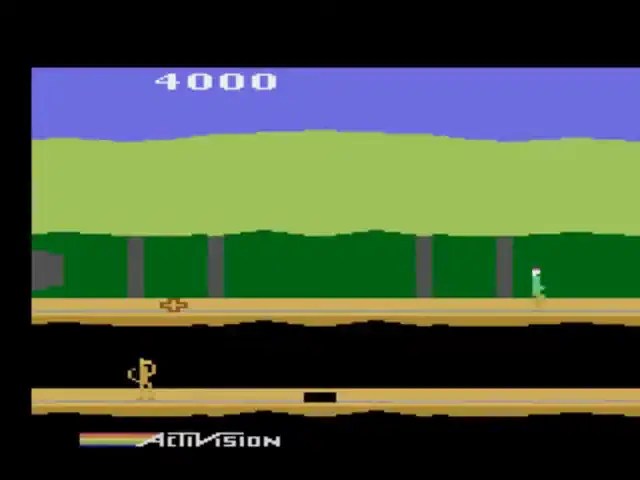
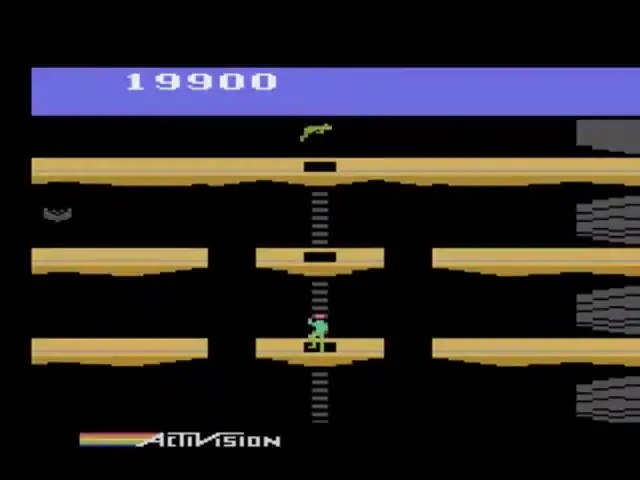
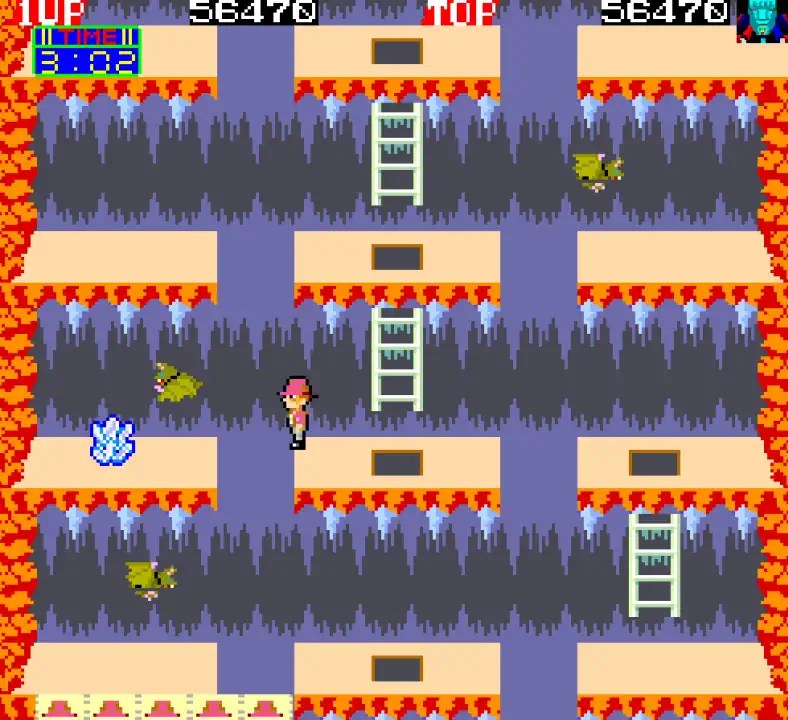
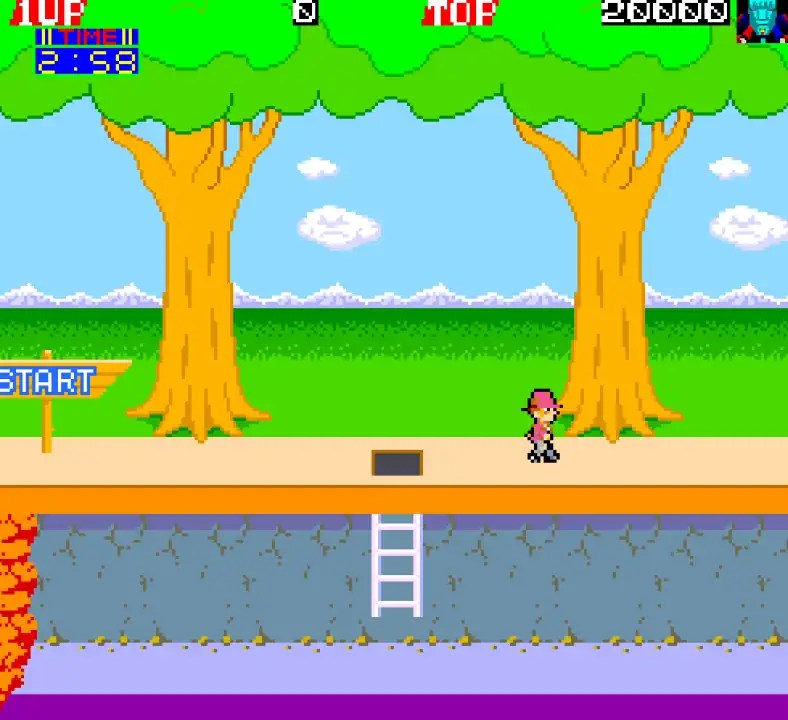
The success of “Pitfall!” was so great that Activision developed several sequels. “Pitfall II: Lost Caverns” was released in 1984 and featured an expanded game world, new enemies and an innovative checkpoint system that prevented frustrating restarts. This feature was groundbreaking for the time and made the game more accessible to a wider audience. It was ported to several platforms, including the Commodore 64 and Atari 5200, and set new standards in terms of level design and player friendliness. An arcade version of “Pitfall!” was also released and stood out with improved graphics, sound effects and more dynamic obstacles.


Reviews back then
When “Pitfall!” was released in 1982, it was an instant success with critics and gamers alike. The trade press praised the game for its innovation, smooth animations and strategic gameplay, which set it apart from other titles of its time. The technical feat of creating a cohesive and visually appealing game world on such limited hardware was particularly highlighted. Many publications described “Pitfall!” as a groundbreaking game that showed the potential of the video game industry. Activision was hailed as a visionary developer and David Crane was praised for his ingenuity and technical brilliance. The game was considered a must-buy for Atari 2600 owners and was one of the top-rated titles of its era.
Reputation today
Today, “Pitfall!” is considered a classic of video game history that has lost none of its significance even decades after its release. It is regularly listed in rankings of the best games of all time and is often cited as a pioneer of modern action adventure games. Retro gamers and historians appreciate the game for its innovative technology and timeless gameplay. The character Pitfall Harry remains an icon, and the game has an active fanbase that cherishes its cultural and historical value. Original copies of the game are now coveted collector’s items, and collectors‘ markets for retro gaming items record high prices for well-preserved copies. The game’s enduring popularity shows how much it has influenced the video game world and continues to serve as an inspiration.
Summery
“Pitfall!” is far more than just a game. It is a milestone in video game history that pushed the boundaries of what was possible on the Atari 2600 platform. With its innovative level generation, iconic main character and exciting gameplay, it set new standards and inspired generations of developers and gamers. Even after more than four decades, “Pitfall!” remains a shining example of the pioneering spirit and creative vision of the early video game era. It reminds us that big ideas are possible even on small platforms.
More
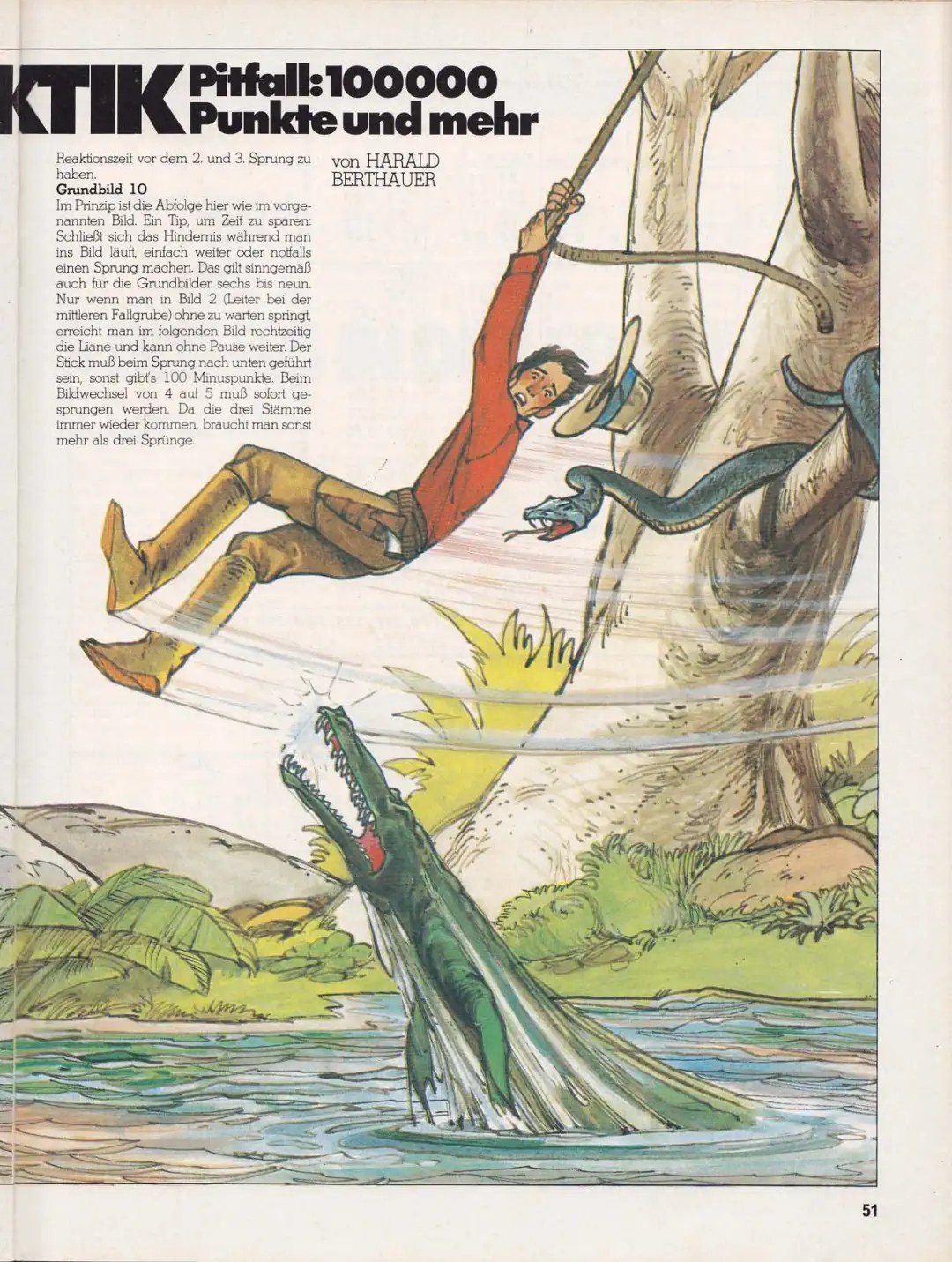
Magazine Scans
Electronic Games 10/1982

TeleMatch 10/1983

Longplay
External links
Keywords: Atari 2600, Pitfall!, David Crane, Activision, Retro gaming, Classic video games, Action-adventure games, Video game history, Pitfall Harry, 1980s video games, Game development, Gaming milestones, Pixelated jungle, Treasure hunting games, Video game sequels
Hashtags: #Atari2600 #Pitfall #DavidCrane #Activision #RetroGaming #ClassicGames #VideoGameHistory #GamingLegends #80sGaming #PixelArt #GameDevelopment #ActionAdventure #PitfallHarry #VintageGaming #GamingMilestones





 McHenry's Lair
Kommentar verfassen :