


The 80s – This was the Golden Age of the Commodore 64.
The undisputed ruler of home computing. It brought unforgettable games straight into homes worldwide.
Among its legendary titles was a true classic of its time:
Elite
Elite – A C64 legend
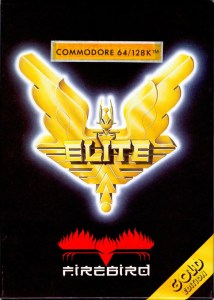
The Commodore 64 (C64) was one of the best-selling home computers in the 1980s and synonymous with the burgeoning home computer revolution. Numerous games characterized this era, but few were as groundbreaking as Elite, a title created in 1984 by British developers David Braben and Ian Bell. Elite combined technical innovations such as 3D vector graphics and procedural generation with unprecedented player freedom. It offered a gigantic open world in which the player could go his own way as a space pilot – a concept that went far beyond what had been common in video games up to that point. In this article, we look at the key elements of this groundbreaking game.
Plot
– The journey to the elite in a boundless universe
The storyline of Elite differs significantly from other games of the time, as it is not based on a fixed narrative structure. Instead, the player enters an open world in which he takes control of a spaceship named Cobra Mk III as an interstellar pilot. There is only one ultimate goal: to reach the rank of “Elite” – the highest level in the game, reserved for only the most skilled pilots. How to achieve this goal is completely up to the player. This was a fundamental departure from the linear structures of many other games of the time.
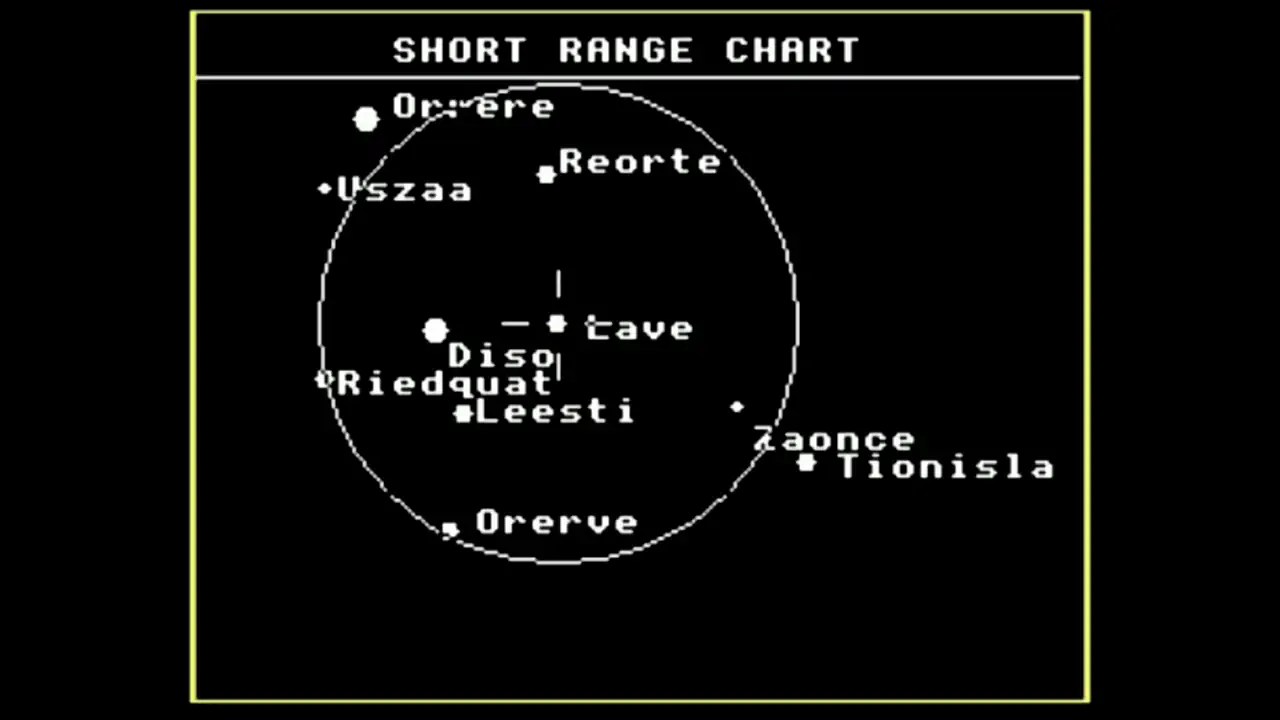
The plot itself is driven less by cutscenes or dialog and more by the player’s own experiences in the game. The player is free to trade, explore worlds, engage in space battles or even make the galaxies unsafe as a pirate. Elite offers a total of eight galaxies, each with 256 planets to discover. Each planet has its own economy, its own political system and different challenges. This non-linear approach to the story was a first and allowed each player to experience their own individual story in the Elite universe.
Gameplay
– A pioneer of open worlds and strategic depth
Elite’s gameplay was revolutionary and redefined the concept of the open-world game. At the beginning, the player only has a simple spaceship and a small amount of money. From here, it’s entirely up to them how they shape their adventure. The core of the game consists of trading, exploration and combat. In trade mode, the player travels between space stations, buying and selling goods such as food, metals, drugs or weapons. The success of trade depends on supply and demand on the various planets – a simple but profound economic system that rewards strategic thinking.

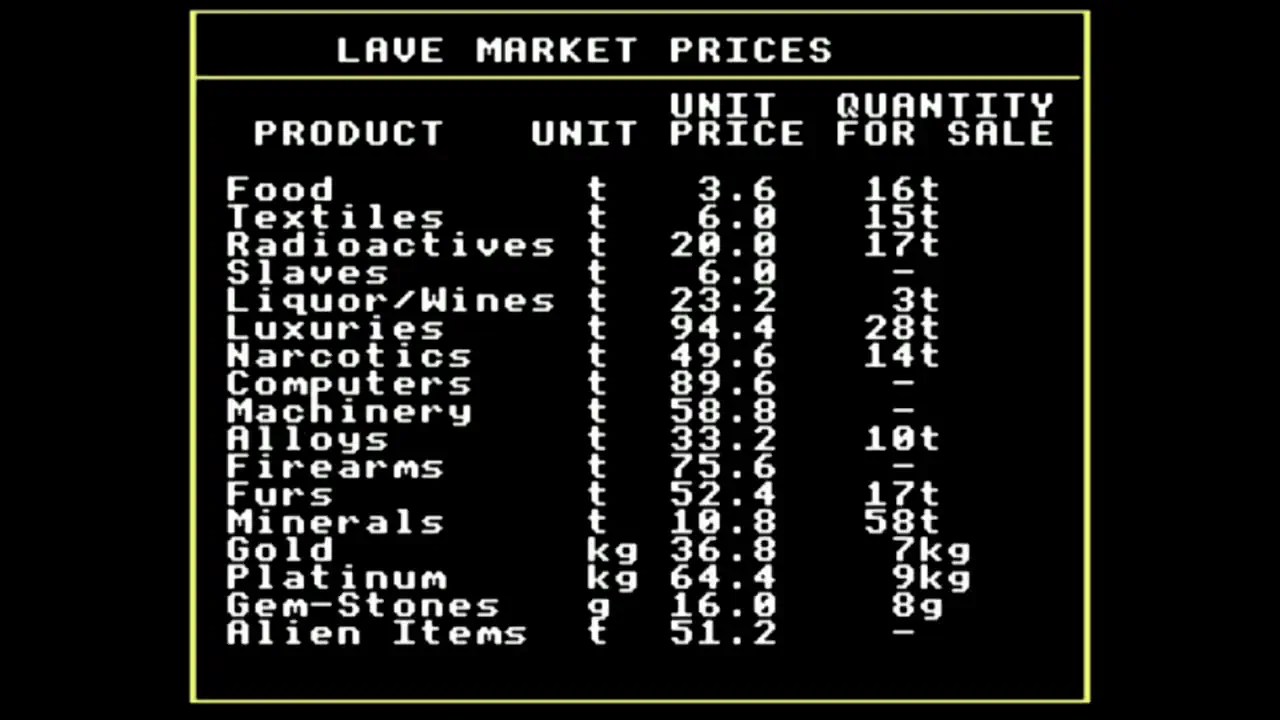
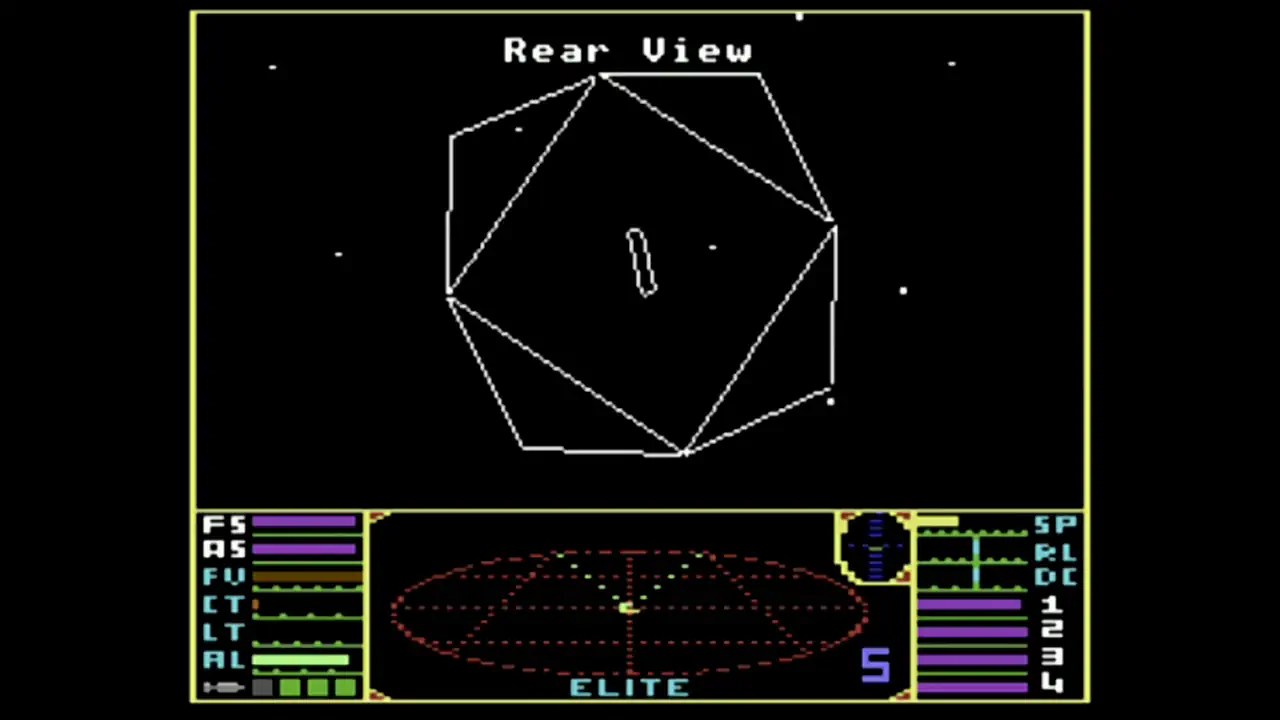
Battles in space also play a central role. Pirates, mercenaries and enemy factions attack regularly, and the player must skillfully maneuver his spaceship in hectic 3D battles in order to survive. The battles are in real time and require both tactical finesse and speed of reaction. Over time, weapons, shields and other equipment can be upgraded to survive against increasingly dangerous opponents.
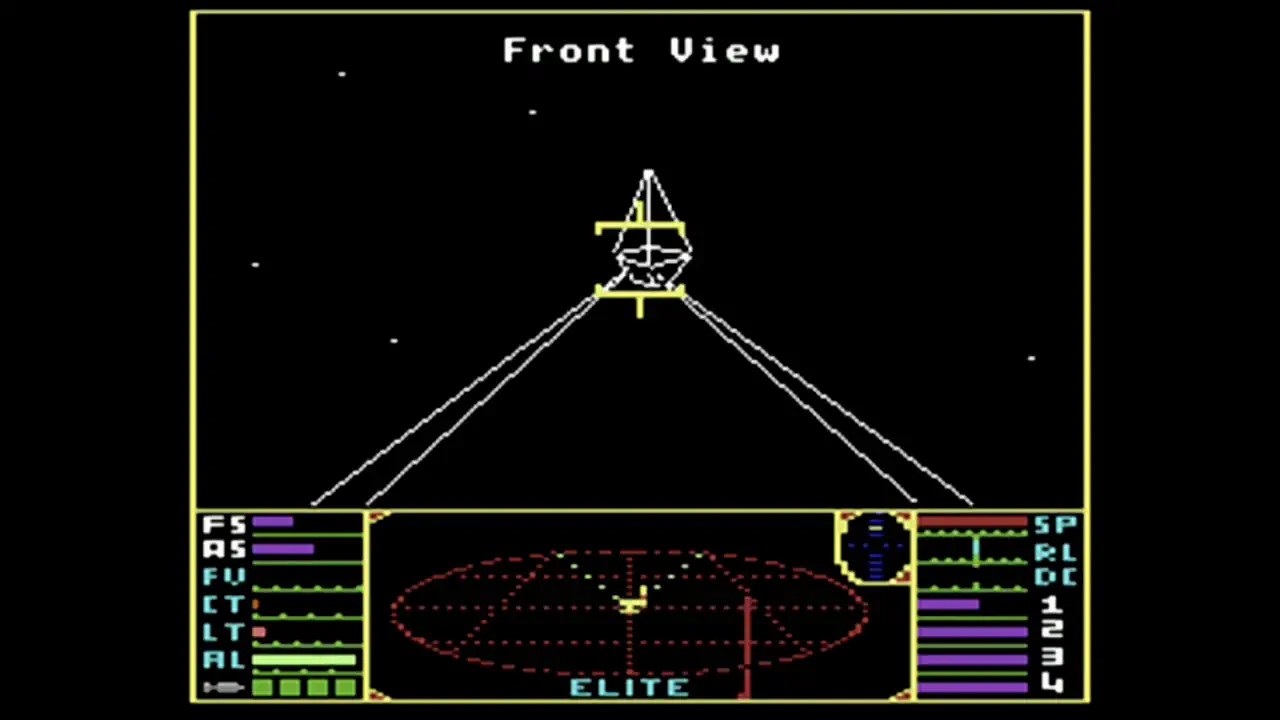
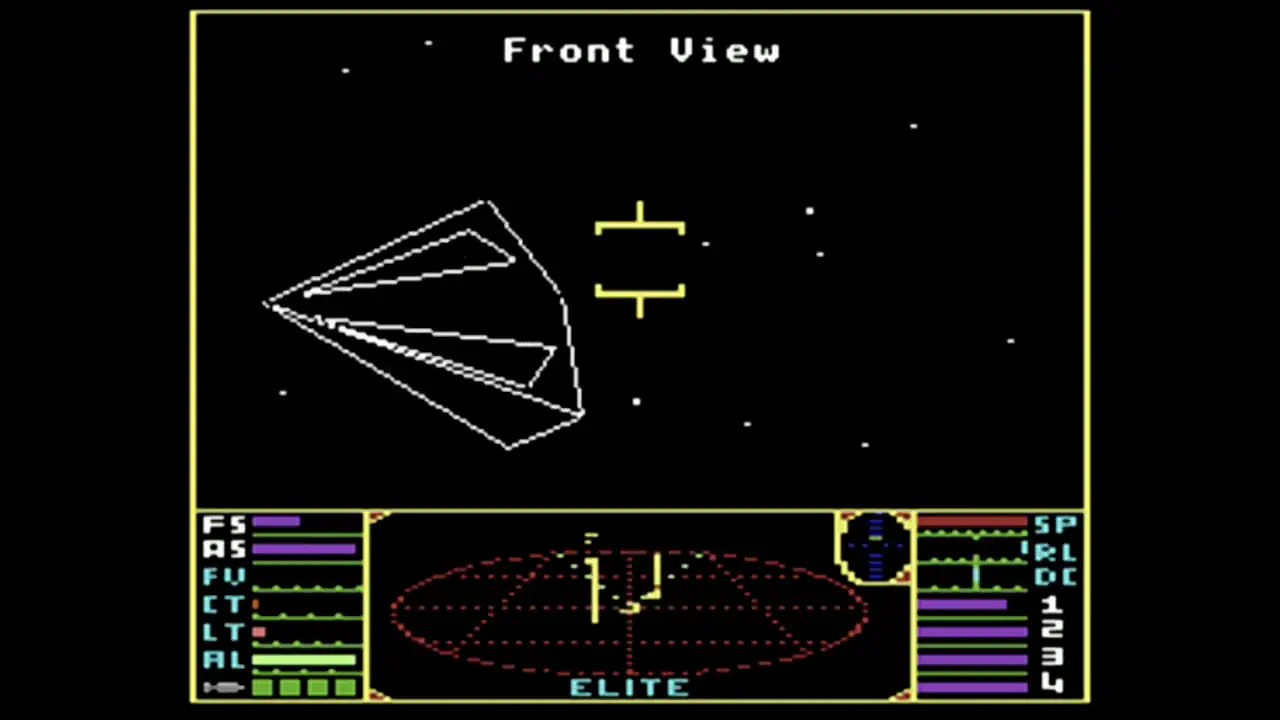
Another fascinating component of Elite was the navigation through space. The player had to fly to space stations, navigate them precisely in a rotating docking system and dock – a mechanical challenge that required a great deal of patience and dexterity. These elements made the gameplay a challenging but rewarding experience, which became known for its enormous depth of gameplay and strategic demands.
Special Features
– Technical masterpieces on the C64
What really made Elite stand out from the crowd of other games were its technological innovations. Perhaps most impressive was the procedural generation, a method by which the game’s code randomly generated planets, space stations and even economic systems. This allowed the developers to create a huge game world on the limited memory resources of the C64. There were a total of eight galaxies, each with 256 planets – a gigantic number for a game from the 1980s.
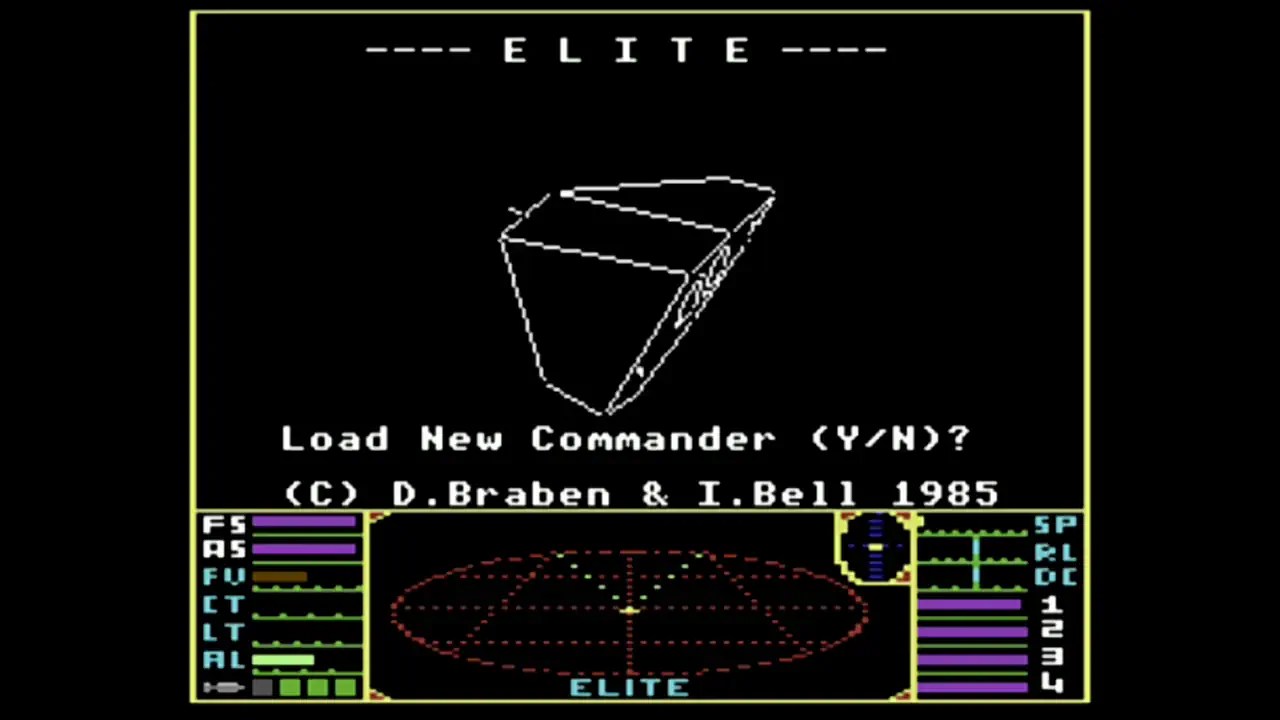
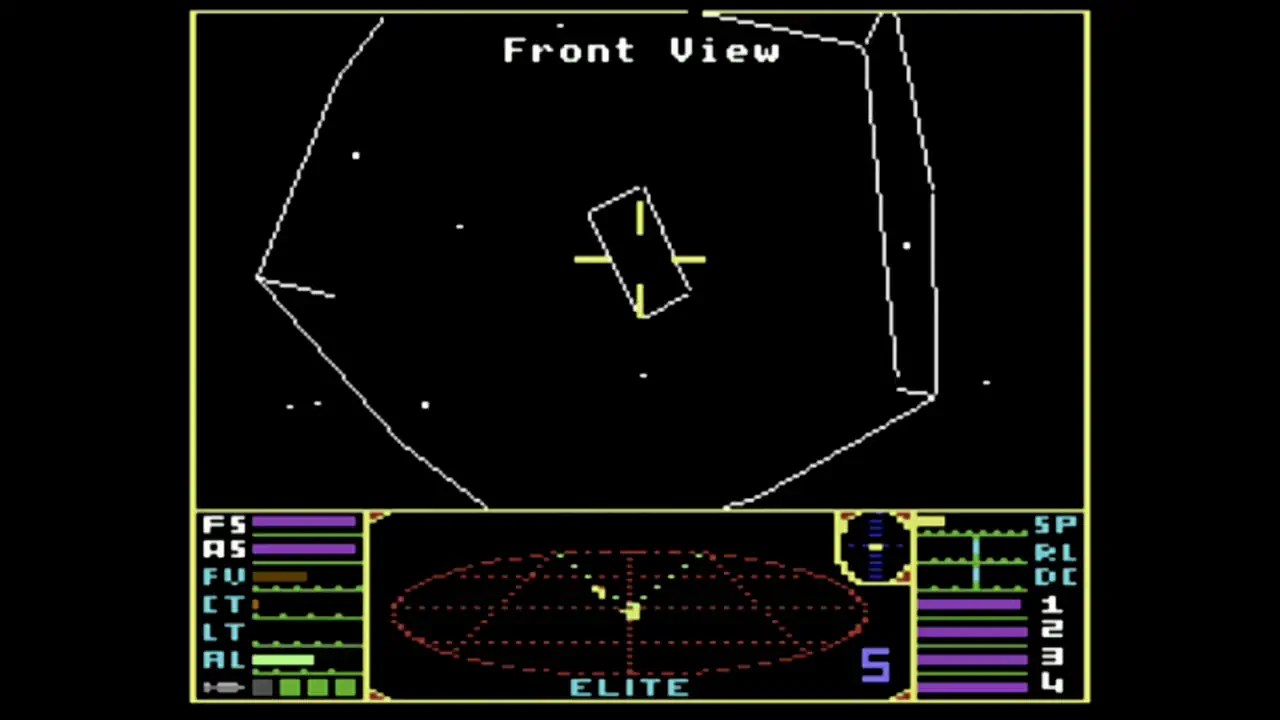
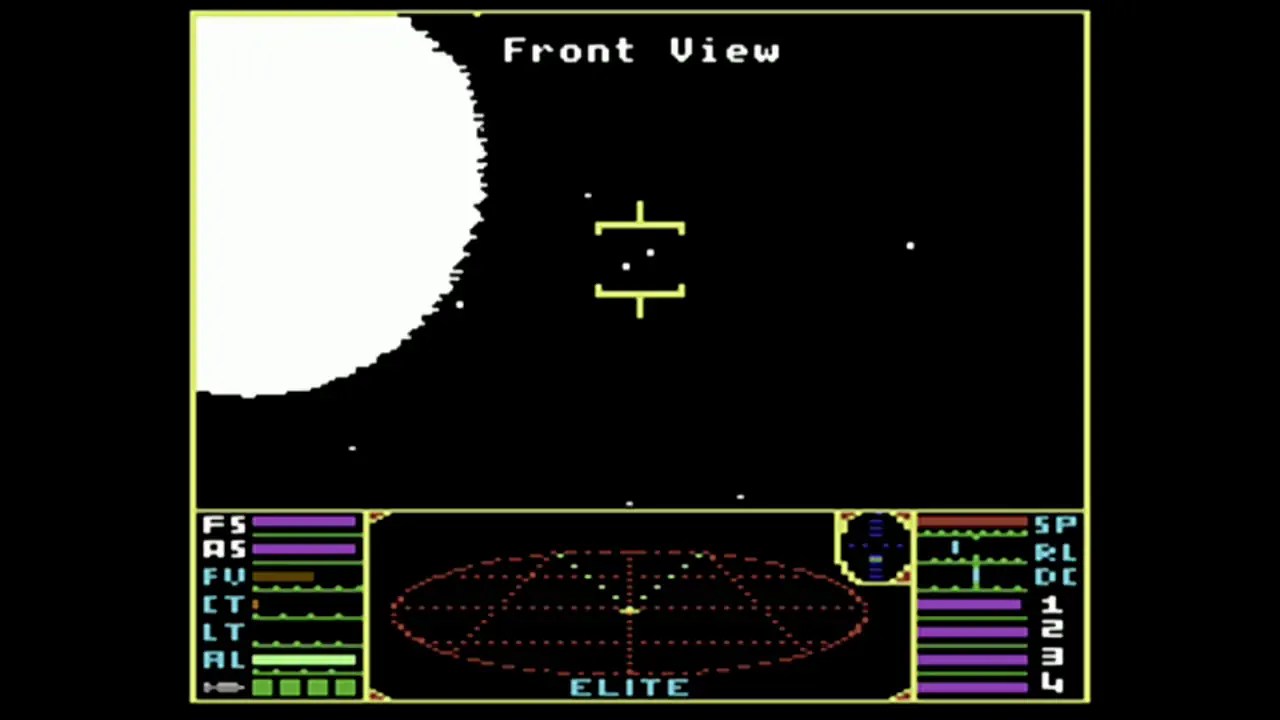
Another outstanding feature was the 3D vector graphics. While most games of the time relied on simple 2D sprites, Elite offered a three-dimensional representation of spaceships, planets and space stations. These vector graphics, which depicted ships as wireframe models, allowed for exceptional depth perception for the time and provided realistic space battles in which the player could maneuver in all directions. Although the graphics were minimalistic, they conveyed a realistic feeling of vastness and dynamism, allowing players to immerse themselves in the endless expanses of space.
Added to this was the ability to save saves – a particularly important feature in a game that offered an immense game world and in which progress was built up over many hours. At a time when many games did not offer a save feature, this was a great advantage that allowed players to continue their progress over longer periods of time.
Trivia
– Behind the scenes of a revolutionary game
There are some fascinating stories behind the creation of Elite. One of them is that the game was originally developed for the BBC Micro before being ported to other platforms such as the Commodore 64. The two developers, David Braben and Ian Bell, initially struggled to find a publisher for their ambitious project. Many publishers were unsure whether the concept of an open game world without a clear plot structure would appeal to players. It was only when the British publisher Acornsoft recognized the potential that the game was given the chance to be published – and quickly became a huge success.
A curious anecdote from the early days of the game is that the British government at times considered Elite to be possible spy software. The procedural algorithms and data techniques Bell and Braben used to compress such a large game world into such a small amount of memory seemed suspicious to the authorities. This shows how innovative and advanced the technology behind Elite was for the time.
Reviews at the time
– A new era of video games
On its release, Elite was highly praised by the press. The game received consistently excellent reviews, especially in terms of its technical innovation and the unprecedented freedom it offered players. Zzap!64, one of the leading games magazines of the 1980s, gave the game near-perfect scores, calling it “revolutionary” and “groundbreaking”. The ability to explore a vast galaxy with no predetermined objectives, choosing between trading, combat and exploration, was seen as something completely new and exciting.
The technical achievements were also celebrated. The 3D vector graphics and procedural generation were unique in their form and set new standards for video games. Many critics also praised the immense depth of gameplay and the strategic possibilities that Elite offered. It quickly became a game that captured the hearts not only of gamers but also of game developers and served as a model for many future projects.
Reputation today
– A timeless classic
Today, Elite is considered one of the most influential games of all time. It has cemented its place in video game history and is considered a pioneer of the open-world and sandbox genre. Games like No Man’s Sky, EVE Online or Star Citizen are clearly inspired by the mechanics and concepts that Elite first introduced. The huge open world, the freedom given to the player and the mix of trading, combat and exploration are central elements of many modern games today.
Elite’s successors, in particular Elite: Dangerous (2014), continue the legacy of the original. Elite: Dangerous took the core principles of the original and combined them with modern technology such as 4K graphics and virtual reality to appeal to the next generation of gamers. The core of the game – the freedom to experience your own adventure in an infinite galaxy – remained unchanged.
Influence
– The DNA of modern games
Elite’s influence on the gaming world is profound and can still be felt today. Elite was one of the first games to coin the term open world – a concept that blossomed in games like The Elder Scrolls or Grand Theft Auto. The freedom Elite offered players set a new standard and inspired generations of developers to create worlds that were more than just a backdrop.
The procedural generation used in Elite also influenced many modern games. Titles like Minecraft or No Man’s Sky use similar techniques to create huge, randomly generated worlds that offer players endless possibilities. Elite also laid the foundation for the space simulation genre, which was further developed in games such as EVE Online or Star Citizen.
Conclusion
– An eternal masterpiece
Elite was and is more than just a game – it is a monument in video game history. It tested technical boundaries and offered a gaming experience that was far ahead of its time. Its huge open world, procedural generation, 3D vector graphics and strategic depth made Elite one of the most influential and innovative games ever released.
Its influence on the games industry and the way we experience open worlds today is undeniable. Elite remains a classic that continues to inspire and fascinate players decades after its release. In an era where games often relied on linear stories and limited options, Elite offered an endless galaxy where everyone could write their own story – a legacy that is still felt in the video game world today.
More
Keywords : Art, c64, Computer, en, Englisch, Games, History, Journalismus, Life, The 80s, C64Games, commodore, Commodore 64 classic games, entertainment, Geek, GenX, History, Nerd, Open-world pioneer games, openworld, OpenWorldGames








 McHenry's Lair
Kommentar verfassen :