

Anál nathrach, orth’ bháis’s bethad, do chél dénmha
Introduction
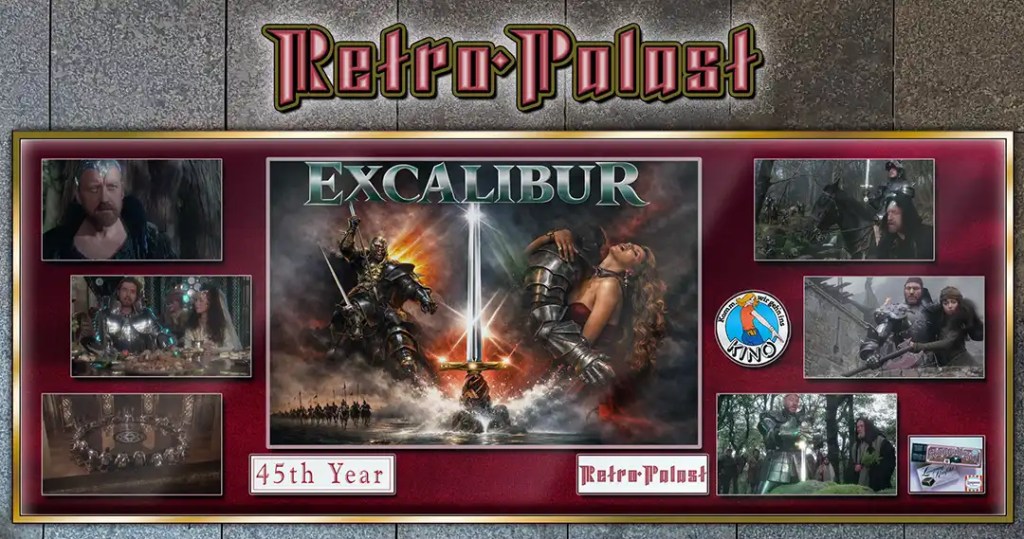
If one were allowed to name just one film that captures the Arthurian legend on the big screen in all its power, darkness, and magic, then John Boorman’s Excalibur (1981) would be the most obvious choice for many. To this day, the film is considered one of the most striking, uncompromising, and idiosyncratic adaptations of the Arthurian material. While other adaptations often attempt to present the legend either as a family adventure, a romantic knightly tale, or a somewhat realistic medieval narrative, Excalibur takes a completely different path. Boorman portrays Arthur not as a historical figure in the strict sense, but as part of a grand, dark, and almost sacred myth. From the very first frames, it becomes clear that this is not simply a retelling of a familiar legend, but the creation of an entire world of symbols, fate, and heightened atmosphere. As a result, Excalibur feels less like a conventional adventure film from the outset and more like a cinematic evocation of an ancient myth.
It is precisely this that sets the film apart to this day. It does not aim to appear modern, lighthearted, or psychologically overanalyzed, but rather ancient, heavy, and fateful. For many viewers, it is therefore even the best film about the Arthurian legend, because it does not shy away from being dramatic, visionary, and at times even operatic. Excalibur does not simply retell the familiar legend in a sober manner, but transforms it into a visual world filled with steel, mist, blood, forest, magic, and doom. This does not always make the film easily accessible, but it is precisely this that makes it so unique. Where other film adaptations seek to appear more understandable, friendly, or historically grounded, Boorman focuses on grandeur, stylistic ambition, and atmosphere. It is precisely this uncompromising stance that makes the film so fascinating to this day and explains why, for many, it has remained not just a good Arthurian adaptation, but the definitive one.
Plot
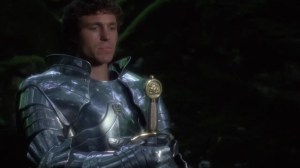
Boorman’s Excalibur does not merely recount a single chapter from the story of King Arthur, but nearly the entire arc of the myth. The film begins with Uther Pendragon, with war, political chaos, and the famous sword Excalibur, which grants power but is simultaneously bound to responsibility. Even in this early phase, the film makes it clear that rule in this world is never merely political, but always also magical, physical, and fateful. From Uther’s passionate and destructive relationship, Arthur is eventually born; he grows up seemingly ordinary and unaware of his true origins. Only when he pulls the sword from the stone does it become clear that he is the rightful king. This moment is not merely a surprise in the film, but a turning point at which a boy becomes a symbolic figure.
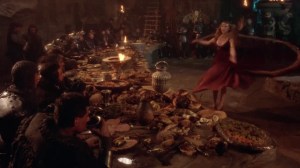
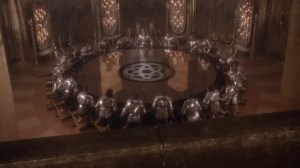
From there, the film unfolds the rise of Camelot. Arthur attempts to bring order to a torn country, to foster peace among rival forces, and to create a community with the Round Table that is based not only on power, but on honor, loyalty, and a higher ideal. At first, Camelot appears as the fulfillment of a hope: a place of unity, splendor, and moral integrity. Yet it is precisely in this that a certain fragility lies. For as in almost all great sagas, the seeds of decay are already present in the ascent. What initially seems like the birth of a golden age gradually proves to be a state that cannot be sustained indefinitely.
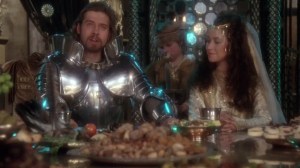
Particularly important to this development is the love triangle between Arthur, Lancelot, and Guinevere. The film portrays not only a political ruler but also a man whose kingdom crumbles under very human conflicts. The love between Lancelot and Guinevere is not confined to the private sphere but strikes at the heart of Camelot itself. Personal passion turns into political upheaval; inner guilt into public decay. At the same time, Morgana’s influence grows. Her ambition, her thirst for revenge, and her will to power make her an adversary who does not merely attack from the outside but deliberately exploits the weaknesses of the established order.
This is precisely what makes the plot interesting. Excalibur is not a simple heroic tale in which good and evil are neatly separated. Rather, the film shows how closely power, guilt, desire, betrayal, and sacrifice are intertwined. Almost every major decision here comes at a price, and almost every form of greatness already carries within it the risk of failure. This lends the plot a tragic quality. Arthur is not simply a victor who loses his kingdom, but a king whose own ideals are tested and damaged by reality.
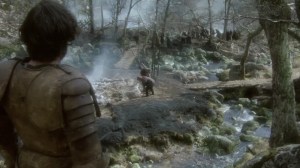
The quest for the Grail appears not only as an adventure but also as an attempt at spiritual healing. In many versions of the Arthurian legend, it is a religious climax; in Excalibur, it additionally becomes a sign that the kingdom’s crisis cannot be resolved by weapons alone. The land and the king are interconnected, and therefore the decline of Camelot is simultaneously an inner decline of the ruler. Arthur must learn that his kingdom cannot be saved by the sword alone. This is precisely where one of the film’s most powerful ideas lies: true salvation cannot be merely military or political, but must also be conceived in spiritual terms.
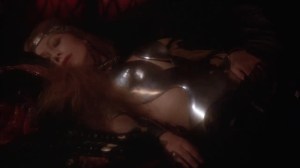
In the end, the film consistently moves toward downfall, farewell, and myth. The story does not head toward a neat happy ending, but toward a conclusion full of grandeur, sorrow, and the creation of legend. Arthur becomes a figure between man and myth, and his story does not simply end with death, but with a return to Avalon. Thus, the film comes full circle: what began with violence, desire, and power ends in memory, loss, and the idea of a possible return.
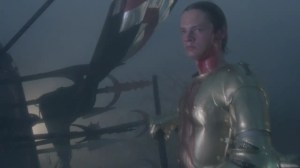
The film is thus less interested in psychological nuance in the modern sense than in fate, symbolism, and grand movements. Precisely because of this, it feels more like a saga told through monumental imagery than a classic historical adventure. Some viewers find this condensation overwhelming, others erratic. Some scenes feel almost like individual stations of a myth rather than the logically interlinked chapters of a realistic drama. But it is precisely this form that contributes to Excalibur looking so much like a myth and not like ordinary cinema. The plot therefore thrives less on sober rigor than on atmosphere, impact, and the feeling of watching an ancient, grand narrative unfold.
Actors
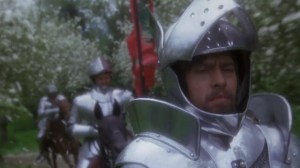
The cast is one of the film’s great strengths, even though many characters are deliberately portrayed as larger and more archetypal than in realistic dramas. Yet this fits surprisingly well with the tone of Excalibur. Here, the actors do not have to embody ordinary people, but rather figures who almost seem like mythological forces. Nevertheless, several performers succeed in giving these symbolic roles something human and vulnerable. Nigel Terry plays Arthur not as a flawless hero, but as a character who visibly changes: from an initially insecure young man to a charismatic ruler and finally to a weary, wounded king who carries his kingdom within himself. It is precisely this development that lends the film emotional depth, even where the dialogue sounds more solemn than natural. Terry manages to make Arthur appear both noble and exhausted. As a result, the character comes across not only as a king, but also as a human being weighed down by his own ideals.
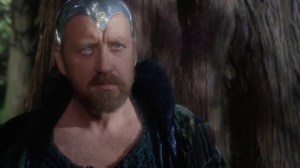
Nicol Williamson is particularly outstanding as Merlin. For many, his portrayal ranks among the most unforgettable wizard characters in cinema. This Merlin is not merely a friendly old advisor, but a contradictory, ironic, and otherworldly figure. He comes across as knowing, playful, menacing, and melancholic all at once. Many scenes retain their power primarily because of Williamson’s voice, facial expressions, and idiosyncratic presence. His character has a theatrical quality without ever seeming artificially hollow. On the contrary: Precisely because Williamson plays the role so uniquely, his Merlin remains more vividly in the memory than many smoother, more modern portrayals of wizards. He is not merely the king’s teacher, but almost the voice of the ancient, magical world itself.
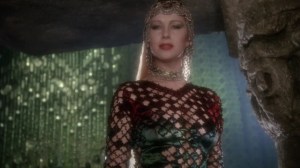
Helen Mirren also leaves a decisive mark on the film. Her Morgana is not simply “the villain,” but a character driven by ambition, hurt, sexuality, a will to power, and coldness. Mirren imbues her with both dignity and danger. She plays Morgana not as a one-dimensional villain, but as a woman whose hurt and desire for control turn into destructive energy. It is precisely this that makes her such a powerful antagonist. Nicholas Clay as Lancelot and Cherie Lunghi as Guenevere form the emotional center of the tragic love triangle that shakes Camelot to its core. In Clay’s portrayal, Lancelot appears not only as an ideal knight but also as a proud, internally torn man whose guilt is slowly destroying him. Lunghi, in turn, imbues Guenevere not merely with regal charisma but also with a palpable inner tension between love, duty, and personal desire. Together, these characters play a decisive role in making the downfall of Camelot palpable not only politically but also emotionally.
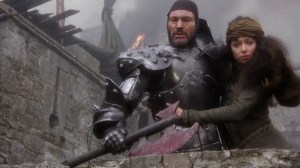
Looking back, it is also remarkable how many future stars appear here in early roles. Liam Neeson, Patrick Stewart, Gabriel Byrne, and Ciarán Hinds can be seen in smaller parts. From today’s perspective, this lends the film an added appeal. One recognizes in Excalibur not only a grand fantasy epic but also an early gathering place for acting careers that would later become highly significant. For today’s viewers, this creates almost a dual perspective: one sees the film’s characters and, at the same time, the beginnings of careers that would later help shape international cinema. This, too, makes the cast of Excalibur particularly interesting to this day.
Visuals
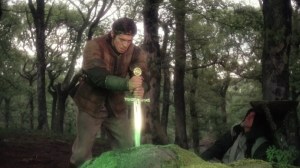
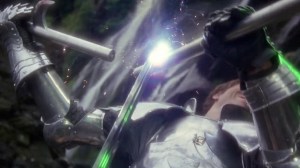
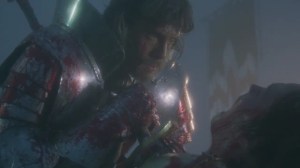
What sets Excalibur apart from almost all other Arthurian films to this day is its unmistakable visual style. Boorman does not stage the legend in a sober or historicizing manner, but as a glowing, humid, metallically shimmering dream. The images often seem as though they emerged directly from a collective medieval myth rather than from a documentary conception of history. The armor gleams almost unnaturally, the forest appears like an enchanted organism, and light does not simply fall realistically on the characters, but shapes mood, menace, and fate. This creates a world that looks less like a credible reconstruction of past reality than like a visual echo of ancient tales. It is precisely this deliberate artificiality that is crucial to the film’s impact. Excalibur does not pretend that the camera has stumbled upon historical Britain by chance; the film visibly constructs its world as a myth.
Particularly striking is the use of color. The famous green of the forest, the mist, and the magic runs through many scenes and gives the film an almost supernatural signature. This green stands not only for nature, but often also for enchantment, danger, and the lingering influence of ancient forces older than human order. Fire and blood provide stark contrasts, while the silver of the armor renders the knights as beings that are half-real, half-symbolic. Excalibur is not a gritty medieval film in the modern sense; it is far more artificial, far more stylized, and precisely for that reason, far more poetic. Its images are not primarily intended to document, but to impress, overwhelm, and enchant. Even the gleaming metal of the armor takes on an almost sacred quality in this context. As a result, the knights do not simply appear as flesh-and-blood warriors, but as bearers of an idea that oscillates between heroism and doom.
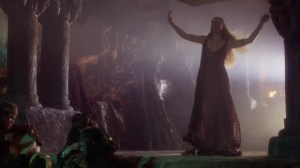
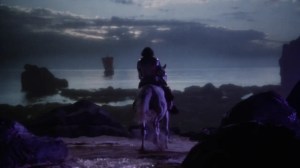
Added to this is the fact that Boorman does not use spaces merely as backdrops. The forest, the water, the mist, and the light take on almost a life of their own in Excalibur. When characters ride, fight, love, or die, it never happens against a neutral background. Nature seems to resonate and react to the state of the kingdom. It is precisely this that gives the film a dense atmosphere that goes far beyond beautiful set design. One often has the feeling that Camelot and its surroundings are not simply places, but states of a spiritual and mythical world. In powerful moments, one sees not just a scene, but literally a vision.
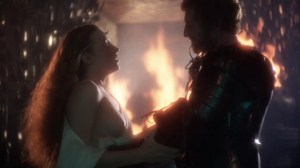
The visual composition also contributes greatly to this. Boorman loves to place characters in strong, almost iconic shots. Many scenes seem as though they could just as easily be illustrations of an ancient legend. Bodies, armor, weapons, trees, and light are arranged in such a way that not only the action becomes visible, but also its meaning. This lends even simpler moments a solemn weight. The film relies less on sober everyday realism than on tableaux designed to leave a lasting impression. This explains why many viewers retain images from Excalibur in their minds even when they no longer remember every detail of the plot.
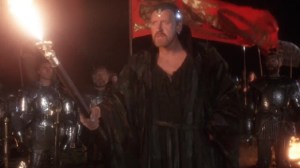
Added to this is the music, which gives the film its solemn, almost operatic power. Boorman works with a soundscape that does not merely accompany the images but actually elevates them. The music not only amplifies emotions but also makes many scenes larger, heavier, and more meaningful. As a result, battles, encounters, and visions often feel less like ordinary film scenes and more like milestones in a great legend. Image and sound intertwine, creating a style that clearly departs from sober storytelling. Especially in the film’s decisive moments, this creates an effect that is both overwhelming and ethereal.
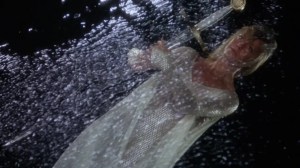
It is the music in particular that contributes greatly to making Excalibur feel not like an ordinary adventure film, but like an ancient, almost sacred legend. It creates not only tension, but also dignity, melancholy, and a sense of the weight of destiny. Many scenes only achieve their true grandeur through the sound, because the music lends them a sense of solemnity and inevitability. It makes battles seem more significant, love scenes more tragic, and visions more mysterious. Thus, the film’s sound is not merely a complement to the visuals, but an essential part of its impact. Without this musical force, Excalibur would seem significantly less mythical and less overwhelming.
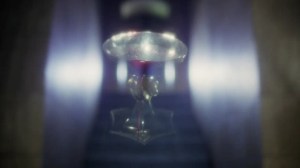
The visual design, in particular, is one of the main reasons why Excalibur has remained so vividly in people’s memories to this day. Even viewers who view individual plot elements critically often still recall specific images decades later: the hand rising from the water, the glowing armor in the forest, Merlin’s appearances, or the king’s final gesture. These scenes linger not merely because they look beautiful, but because they feel like distillations of the entire myth. They reveal what makes Excalibur so special: The film doesn’t simply tell the Arthurian legend; it transforms it into a sequence of images that appear simultaneously as memory, dream, and legend.
Trivia
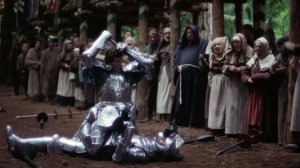
Excalibur is fascinating even beyond the film itself. It was shot entirely in Ireland, which lends the film its distinctive landscape, its dampness, its rich shades of green, and its often almost fairy-tale-like natural setting. This decision was not only practical but aesthetically central. In Excalibur, the landscape is not merely a backdrop but part of the myth itself. It is precisely the combination of forest, fog, water, and light that gives the film an atmosphere that is almost inseparable from its content. One could almost say that the setting not only provides the framework but is itself a kind of silent narrator of the legend.
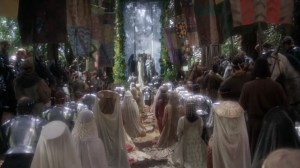
Furthermore, looking back, it is fascinating to see how many later famous actors appear here in small or early roles. For film fans, this is almost a unique appeal of the work: one discovers familiar faces at a time before they became world-famous. In retrospect, this also makes Excalibur a kind of time capsule. Added to this is the fact that the film occupies a unique position with its blend of fantasy, historical material, and artistic ambition. It is neither a pure mainstream adventure nor a pure auteur film, but something in between. It is precisely this hard-to-categorize blend that makes it so interesting to this day, because it cannot be neatly squeezed into a single category.
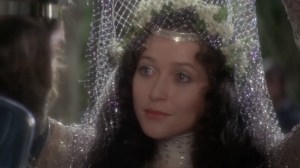
It is also interesting that John Boorman never intended to make a historically accurate film from the start. He wasn’t interested in what early medieval Britain actually looked like in detail, but rather in how the Arthurian legend feels. He wanted to show a mythical truth, not a historically precise reconstruction. This explains why Excalibur feels less like a realistic medieval film and more like a dream about power, magic, sexuality, and doom. It is precisely in this that part of its idiosyncrasy lies: the film obeys the logic of legend, symbol, and vision rather than the logic of historical drama. This may seem unwieldy to some viewers, but it also gives the work its peculiar power.
This is precisely why the film sometimes feels timeless and yet completely out of step with its time. It clearly belongs to the cinema of the early 1980s, yet in its theatricality and symbolism, it feels almost like a work from another era. This is part of what accounts for its cult status. Excalibur is thus not only a film about Arthur, but also an example of how powerfully a director can reshape an old story through style, atmosphere, and attitude. Perhaps that is precisely why the film is not only remembered to this day, but is continually rediscovered.
Reviews at the Time
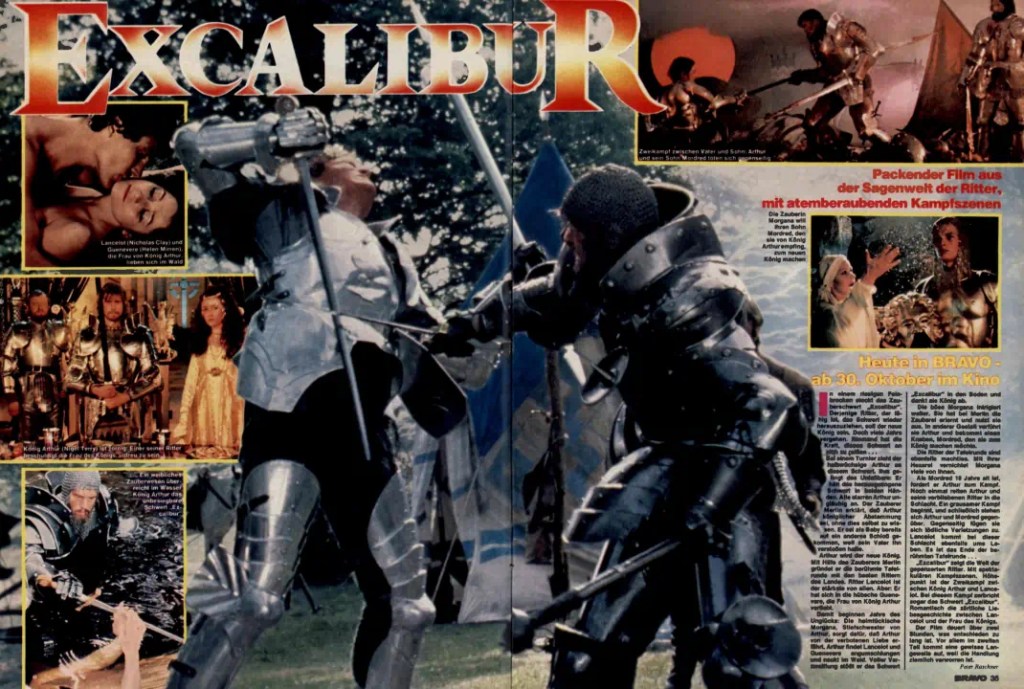
Reactions upon its release were divided, but never indifferent. Many critics praised the visuals, the atmosphere, the boldness of the project, and the impact of the production. Above all, the film’s visual power was recognized early on as extraordinary. Excalibur felt different from almost everything else in fantasy cinema at the time: harder, more erotic, more mature, and stylistically far more uncompromising. It was precisely this originality that made the film interesting to many reviewers. It did not come across as a carefully calculated entertainment film, but as a work with a distinct signature, bringing an old story to the screen with great seriousness and a passion for imagery.
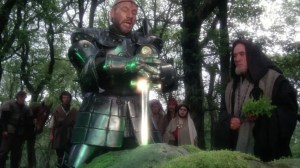
At the same time, the film was criticized for sometimes feeling narratively overloaded. The plot jumps across vast spans of time, important developments are asserted rather than played out in detail, and some characters appear more as symbols than as lifelike people. Some critics found precisely this solemnity and seriousness fascinating, while others considered it melodramatic or pretentious. The dialogue was not universally loved either, as it often comes across as deliberately lofty and artificial. Furthermore, while some admirers praised the film, they nevertheless maintained a certain distance from it: they recognized its grandeur but also sensed that Excalibur does not always readily open itself up to the audience. It is precisely this mix of fascination and reservation that continues to shape many assessments to this day.
It is precisely this tension that continues to define Excalibur to this day. Many consider it magnificent, others over-the-top. Some see it as a masterpiece of mythological cinema, others as a fascinating but unwieldy cult film. In any case, it is unmistakable. Perhaps this very polarization is a sign of its strength: Excalibur does not seek to please everyone, but rather to create a world of its own. And it does so with great consistency. In retrospect, the criticism at the time therefore almost seems like a confirmation of what defines the film: It is not a work of moderation, but a film of exaggeration, style, and deliberate grandeur. For many, this is precisely its weakness, but for others, its true class.
Cultural Influence
The film’s cultural influence is greater than its reputation as a mere cult film might initially suggest. Excalibur shaped the idea of what “adult” fantasy can look like in cinema: dark, physical, magical, serious, and full of religious or symbolic significance. While many fantasy films rely more on escapism or fairy-tale-like lightness, Excalibur depicts a world of power struggles, desire, vulnerability, visions, and decay. It is precisely through this that the film made it clear that fantasy cinema need not consist solely of fairy-tale wonder or childlike a thirst for adventure, but also of gravity, pathos, and tragedy. This approach has secured it a permanent place in film history.
The film influenced later fantasy and medieval films not necessarily through direct imitation of individual scenes, but through its approach. It made it clear that legendary material need not be merely colorful adventure, but can also be told in a dark, sensual, and tragic manner. It is precisely the combination of nature mysticism, the pathos of armor, magic, and physicality that continues to resonate in many later productions. Excalibur demonstrated that mythical material can be particularly compelling when it is not smoothed over, simplified, or modernized, but is allowed to retain its strangeness and grandeur. The film thus left behind not so much a concrete stylistic formula as the permission to tell fantasy in a serious, weighty, and almost solemn manner.
Excalibur also remained important for the perception of the Arthurian material itself. When people today discuss the strongest film adaptations of the Arthurian legend, its name almost always comes up. It continues to serve as a point of reference: either as a model or as a counter-model. Even those who do not consider it the best Arthurian film usually have to acknowledge that it is one of the most influential. Precisely because the film relies so uncompromisingly on myth, symbolism, and atmosphere, it has permanently shaped the image of Arthur in cinema. Many later adaptations had to consciously or unconsciously take a stance toward it, whether by drawing closer or by clearly distancing themselves.
Furthermore, Excalibur helped several actors who later became famous get an early career boost, which further amplifies its lasting impact. This is another reason why its influence lives on not only in images and motifs, but also in the memory of a work that touched entire acting careers and redefined an old story for modern cinema. Thus, Excalibur remains culturally significant because it is not merely a cult film, but a film that demonstrated just how grand, dark, and serious fantasy can be on the big screen.
Conclusion

Excalibur is indeed, for many, the best film about the Arthurian legend—not because it is particularly smoothly told, historically accurate, or realistic, but because it takes the myth seriously. It portrays Arthur not as a dry textbook figure, nor as a mere pop culture icon, but as a shimmering, dark, and grand legend. This is precisely where its enduring power lies. The film does not attempt to reduce the legend to a convenient adventure, but takes its grandeur, its strangeness, and its tragic weight seriously. It is precisely this that makes Excalibur still feel like something unique today: not a pleasing retelling, but a work that truly believes in the power of myths.
Historically accurate? No. And that is not simply a shortcoming, but almost part of the concept. The film does not seek to reconstruct history, provide a scientifically accurate depiction of the early Middle Ages, or claim archaeological truth. It seeks to evoke myth. It seeks to show what the Arthurian legend feels like when it is not demystified, but brought to the screen with full seriousness, with magic, pathos, and a sense of doom. Especially in an era when many historical films or fantasy productions seek to make their material more accessible through realism, irony, or psychological modernization, Excalibur comes across as almost defiant. The film insists that legends do not always have to be explained, deconstructed, or adapted to today’s viewing habits. They are allowed to remain strange, solemn, and larger than life.
That is precisely why Excalibur still works so well today. It is grand, wild, sometimes unwieldy, sometimes melodramatic, but often beautiful fantasy cinema. Perhaps it is not the most accessible film about Arthur. Perhaps it is even too much in some places. But it is precisely this “too much” that makes it unforgettable for many. Its imagery, its characters, and its tone carry a determination rarely found in cinema. Excalibur does not aim to please casually, but to impress, overwhelm, and draw the viewer into a mythical world. This is precisely where its special quality lies.
And that is why, for many viewers, it remains not just an important Arthurian film, but the best film about the Arthurian saga. Even those who see individual flaws must usually acknowledge that hardly any other film grasps the material so consistently as myth, as tragedy, and as a grand visual vision. Excalibur is not perfect, but it is precisely its excess, its weight, and its uncompromising stylization that make it unmistakable. Perhaps that is precisely why, to this day, it remains the benchmark against which many other Arthurian film adaptations must measure themselves.





 McHenry's Lair
Kommentar verfassen :