


An arcade classic
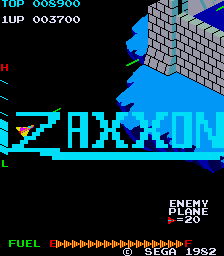
When Zaxxon was launched by Sega in arcades in 1982, it was much more than just another shoot-‚em-up among many. In an era dominated by simple two-dimensional game concepts, Zaxxon presented itself as a technically ambitious and visually striking title. The isometric 3D perspective, which simulated depth and height, attracted particular attention. For the first time, players had the feeling of really moving through a three-dimensional space, even though the underlying technology was still two-dimensional.
This novel presentation gave the game a futuristic character and clearly set it apart from the competition. Zaxxon quickly became an eye-catcher in arcades and developed into a crowd-puller. Looking back, it is now considered one of the most important milestones in early video game history and a symbol of the innovative spirit of the arcade era.
Gameplay
At its core, Zaxxon is a shoot-‚em-up game in which the player controls a spaceship that automatically moves forward through enemy territory. This constant forward movement creates a constant pressure to act and leaves the player little time to hesitate. Unlike classic vertical or horizontal shooters, however, the action takes place from a slanted, isometric perspective, which gives the game a special spatial depth. This creates a new gameplay challenge: players must not only dodge left and right, but also precisely control the altitude of their ship and constantly adapt to the environment.
Altitude control is a central element of the gameplay and clearly distinguishes Zaxxon from comparable arcade titles of its time. While many other shooters relied primarily on quick reflexes, Zaxxon also required spatial thinking and forward planning. Players must estimate distances, recognize obstacles early on, and time their movements precisely to avoid unwanted collisions or enemy fire.
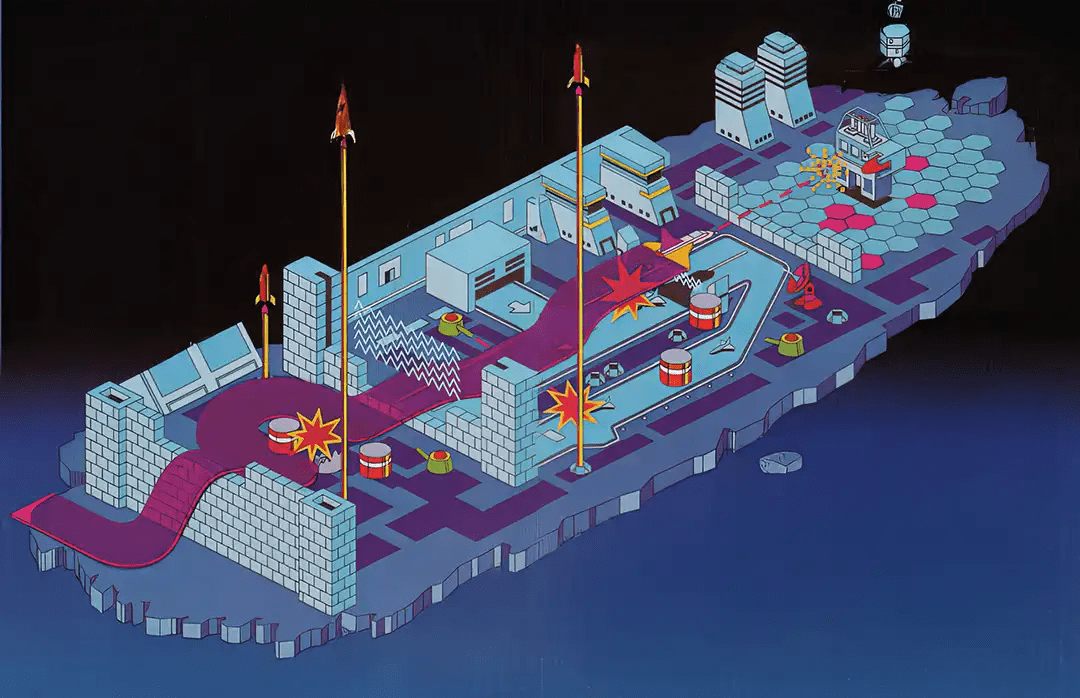
The aim of the game is to destroy enemy bases, turrets, missile launchers, and enemy spaceships, or to skillfully evade them. The levels are structured like fortified strongholds, which the player fights their way through section by section. Walls, energy barriers, and other obstacles of varying heights are particularly challenging and require precise flying. If you fly too low, you collide with them; if you fly too high, you enter the range of enemy air defenses or are more easily hit by enemy units.
This game principle is complemented by a fuel system that adds an additional strategic layer to the gameplay. Fuel is limited, forcing players to proceed quickly and efficiently without acting rashly. Every mistake costs valuable resources and can mean the premature end of the game. This combination of action, precision, and resource management makes Zaxxon’s gameplay challenging but also particularly captivating.
Technology
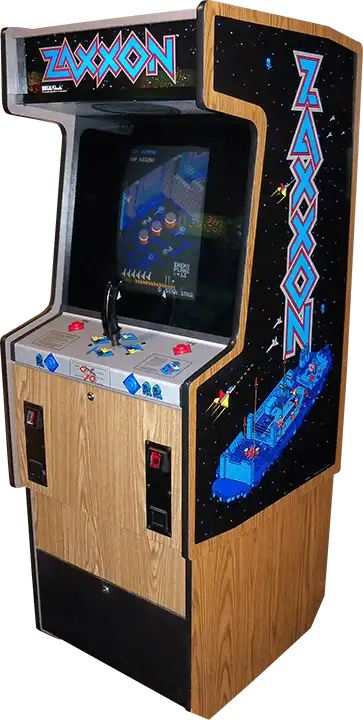
Technically, Zaxxon was extremely impressive for its time and clearly ahead of its competition. The game used isometric rendering to create the impression of a three-dimensional game world, even though the arcade hardware could only display 2D graphics. This visual illusion of depth was new to many players and required a rethinking of conventional arcade games. One particularly clever detail was the shadow under the spaceship, which helped the player to better estimate the current altitude and visually gauge distances in space. This simple but effective trick was later adopted by numerous other games and is still considered a classic example of intelligent game design today.
The hardware itself was also pushed to its limits. Large, detailed sprites, smooth animations, and a comparatively complex level architecture made Zaxxon a technical showcase project for Sega. Particularly noteworthy was the large number of objects displayed on the screen at the same time without any noticeable impact on the game speed. The combination of graphics, sound effects, and game mechanics created an intense arcade experience that clearly set it apart from contemporary titles and earned Zaxxon a reputation as a technologically advanced game.
Trivia
The game enjoyed great popularity and was therefore ported to numerous home computers and consoles. These include versions for the Atari 2600, Commodore 64, ZX Spectrum, and ColecoVision.
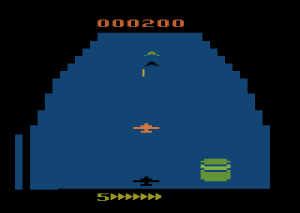
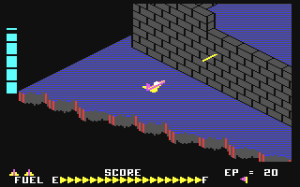
However, the quality of these conversions varied greatly. While versions for more powerful systems such as the Commodore 64 or ColecoVision were able to retain the isometric perspective to some extent, the Atari 2600 version is still considered a particularly poor conversion. Due to the severely limited hardware, the characteristic 3D graphics had to be completely abandoned. Instead, the game presented itself in a greatly simplified, two-dimensional view with crude graphics, reduced game mechanics, and limited controls. Many central elements of the arcade original were lost in the process, which caused disappointment among players and critics alike.
In addition, Zaxxon was one of the first games to establish an early form of boss combat. At the end of each level, a heavily fortified stronghold awaits, which can only be defeated with precise maneuvering, good timing, and a thorough knowledge of the game mechanics. This concept was still unusual at the time and added extra excitement to the game. It would later become a staple of many action and shooter games.
Criticism at the time
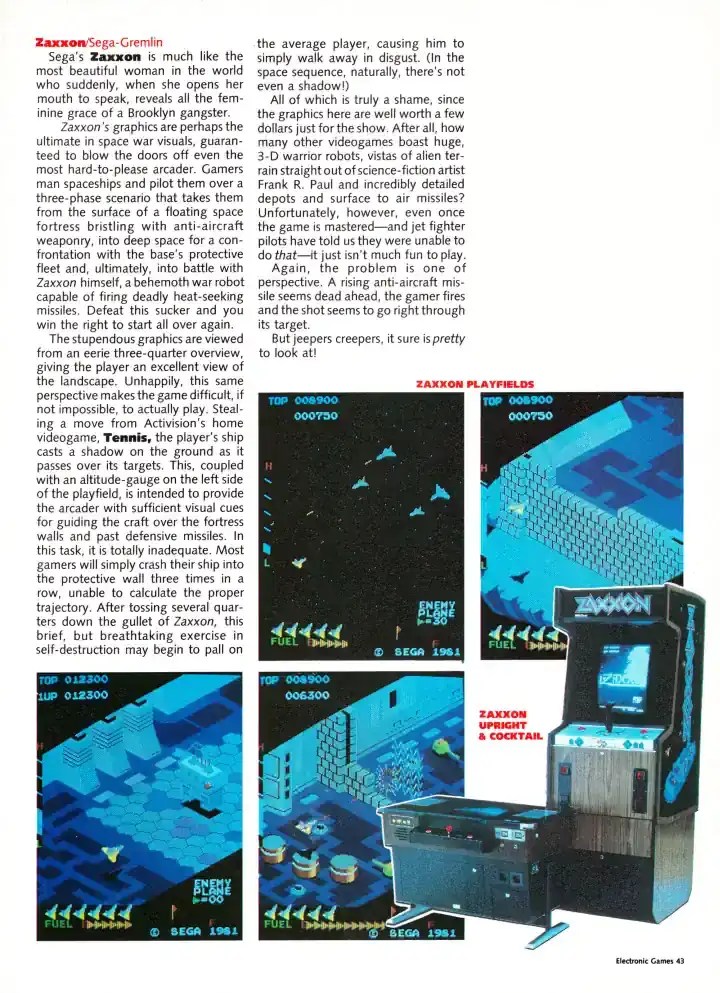
At the time of its release, Zaxxon was received very positively overall. Trade magazines particularly praised the innovative graphics, the unusual isometric perspective, and the high technical standards of the game. It was repeatedly emphasized that Zaxxon clearly stood out from the crowd of arcade titles common at the time and set a new visual standard. Many critics saw the game as an important step towards more complex, spatial game worlds and attested to Sega’s remarkable spirit of innovation.
At the same time, there was also criticism. Some players found the controls, especially the altitude control, unfamiliar and difficult to master, as they required a high degree of precision and familiarization. The overall high level of difficulty could be frustrating, especially for casual players looking for quick success. On the other hand, it was precisely this challenge that kept motivated and experienced players coming back for more. In arcades, this led to a steady supply of coins, as many players wanted to improve their skills. It was precisely this combination of technical fascination, playful challenge, and high replay value that contributed significantly to the lasting success of Zaxxon.
Cultural influence
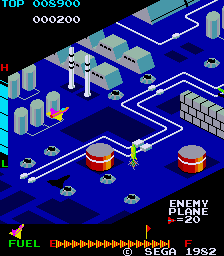
The influence of Zaxxon on video game culture should not be underestimated. The game impressively demonstrated that spatial depth can be convincingly represented even without true 3D graphics, opening up new design possibilities for developers. The isometric representation conveyed a sense of space and height that had previously hardly existed in this form and permanently changed the perception of what was possible with limited hardware. In the following years, numerous developers took up this perspective and integrated it into action, strategy, and role-playing games in which overview and spatial orientation played a central role.
Zaxxon also played a key role in establishing Sega as an innovative developer and publisher. The commercial and technical success of the game cemented the company’s reputation as a creative pioneer in the arcade industry and strengthened its position in international competition. This paved the way for further experimental and technically ambitious titles with which Sega underlined its claim to innovation. Zaxxon itself became a well-known brand, inspired sequels and spiritual successors, and is still considered a benchmark when it comes to early attempts at three-dimensional representation in video games.
Conclusion
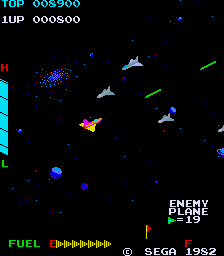
Zaxxon is much more than just an arcade game from the early 1980s. It exemplifies a time of technical breakthroughs and creative experimentation in the video game industry, when developers were looking for new ways to surprise players and push the limits of existing hardware. With its innovative perspective, challenging gameplay mechanics, and impressive presentation, Zaxxon set new standards and impressively demonstrated how bold design decisions could set games apart from the competition.
Despite – or perhaps because of – its high level of difficulty, Zaxxon remains a fascinating example of how developers were able to push the limits of the hardware of the time with clever ideas and technical tricks. The game demands concentration, precision, and perseverance, rewarding players with an intense and distinctive experience. For retro fans, arcade enthusiasts, and video game historians, Zaxxon remains a title of great significance to this day, symbolizing the innovative spirit of the early arcade era.







 McHenry's Lair
Kommentar verfassen :