

… and lo, a mighty warrior shall come from the frozen wastelands of the north,
and he will stand alone against the forces of darkness…
Steel, Blood, and Pixel Glory
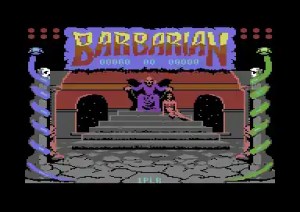
The wind whipped across a deserted arena of stone and dust, carrying with it the smell of blood, iron, and ancient hatred. A heaviness lay over the land, as if countless battles had left their mark on the stones themselves. In a world where magic existed only in whispers and gods had long since fallen silent, steel remained the ultimate truth. There, the barbarian rose. No king, no savior, no chosen one from ancient prophecies—just a warrior with a bare chest, scarred skin, and a heavy sword whose blade knew more stories than any book.
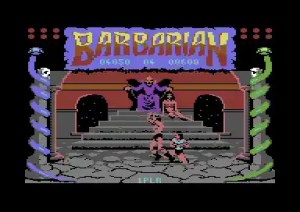
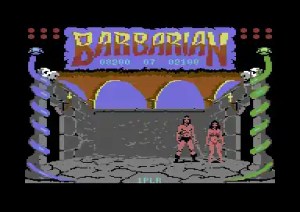
This is how Barbarian began on the Commodore 64: not as a courtly tournament with rules and a code of honor, but as an archaic duel, raw, direct, and merciless. Every fight was a fight for survival, every victory just a brief respite before the next test. Those who won here did so not through cunning or diplomatic finesse, but through strength, perfect timing, and the courage to come closer to death than their opponent.
The Way of the Sword
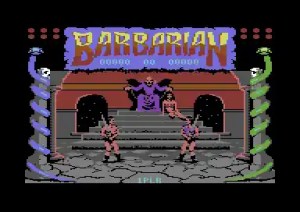
What previously sounded like a song of steel and blood now becomes reality. The myth takes shape, becomes tangible in movement and reaction, in the grip of the joystick and the rhythm of the blows – here, legend becomes mechanics.
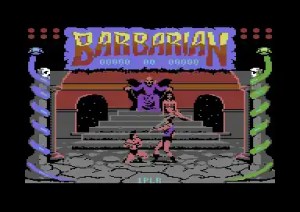
Two warriors enter the arena. No cheers, no fanfare, no mercy. Only the soft crunch of the ground beneath bare feet and the distant roar of a crowd thirsty for blood. The sword rises, falls, describes deadly arcs through the dusty air. Every blow is a promise to the gods, every step a calculated risk between victory and destruction.
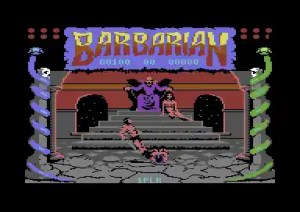
In Barbarian, it’s all about timing: strike too early and your opponent dodges, laughing in your face; react too late and your own head rolls in the dust of the arena. Attack and defense merge into a merciless dance where there is no room for error. The decapitating blow is legendary – a moment when time and breath seem to stand still. If it hits, the head falls, and a piercing scream from the throats of the spectators accompanies the triumph. It is a final victory, without discussion, without a second chance.
But the barbarian’s path does not end in combat. Between battles, death lurks in other forms: monsters from dark dungeons, traps from forgotten ages, creatures that seem to have sprung from nightmares rather than reality. The barbarian presses on, for standing still means doom, and hesitation is just another form of death.
Technology
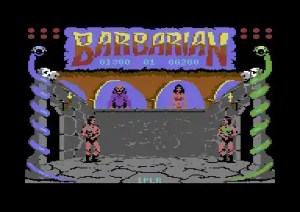
Technically, Barbarian was solid for the C64, if not revolutionary. The developers relied on comparatively large and detailed sprites, which conveyed the powerful nature of the fights well. The fight animations in particular seemed fluid and direct for the time, which contributed significantly to the intensity of the gaming experience.
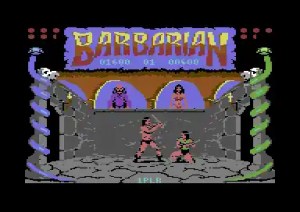
The controls were based on joystick combinations that triggered various strikes, blocking movements, and the famous finishing move. This required practice, but rewarded players who were willing to invest time in learning the mechanics. The sound effects remained simple overall: the metallic clang of blades, the cries of the fighters, short acoustic signals when hits landed. The music was used sparingly, but it supported the dark, brutal atmosphere. Overall, the game impressively demonstrated how much could be squeezed out of the limited hardware of the C64 with clever design.
Trivial
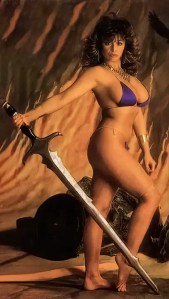
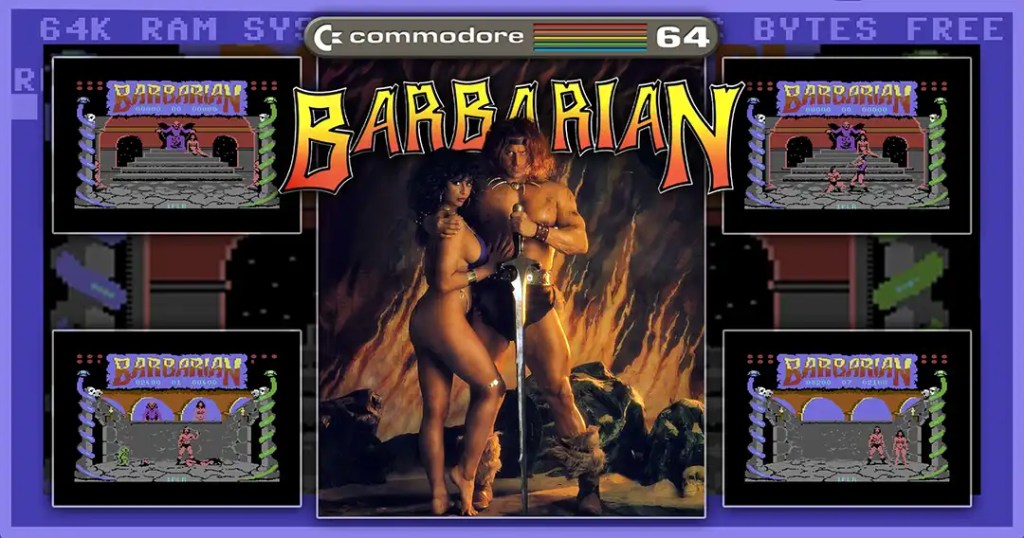
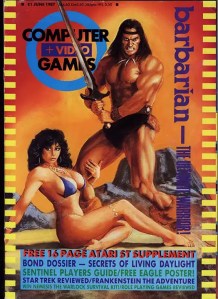
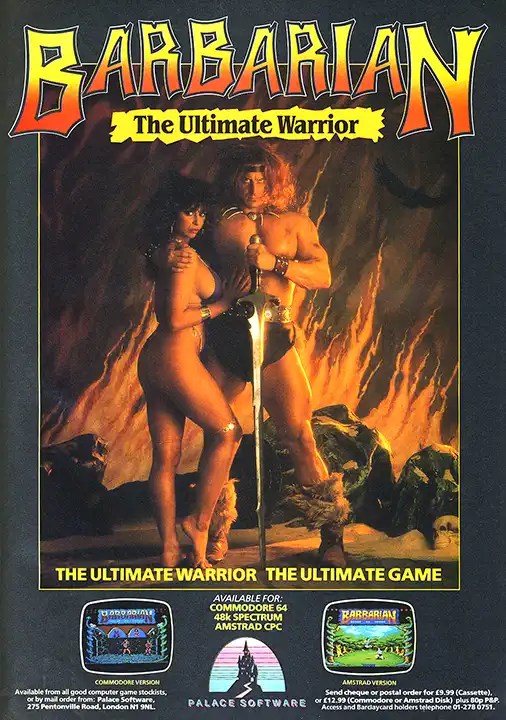
Barbarian became famous – or infamous – not only for its gameplay, but also for its cover artwork, which stood in stark contrast to the actual gaming experience and drew the public’s attention more to provocation than to game mechanics, deliberately eschewing any restraint. The provocative depiction of a scantily clad warrior (portrayed by British model Maria Whittaker) sparked heated discussions, outraged parents, and widespread media attention. At a time when computer games were still largely considered children’s toys, the motif seemed to break a taboo. Newspapers reported on it, television shows picked up on the topic, and Barbarian suddenly gained recognition outside the gaming scene.
For Palace Software, however, this controversy was no accident, but part of a calculated strategy: attention meant sales, and outrage was an effective marketing tool. The game was deliberately marketed as a mature, shocking product, setting it apart from its often family-friendly competitors. In many households, it was precisely because of this reputation that Barbarian was secretly tucked away in the disk box – a forbidden pleasure for young people, which drew its appeal precisely from the rejection and outrage of adults, thus further cementing its legendary reputation.
Criticism at the time
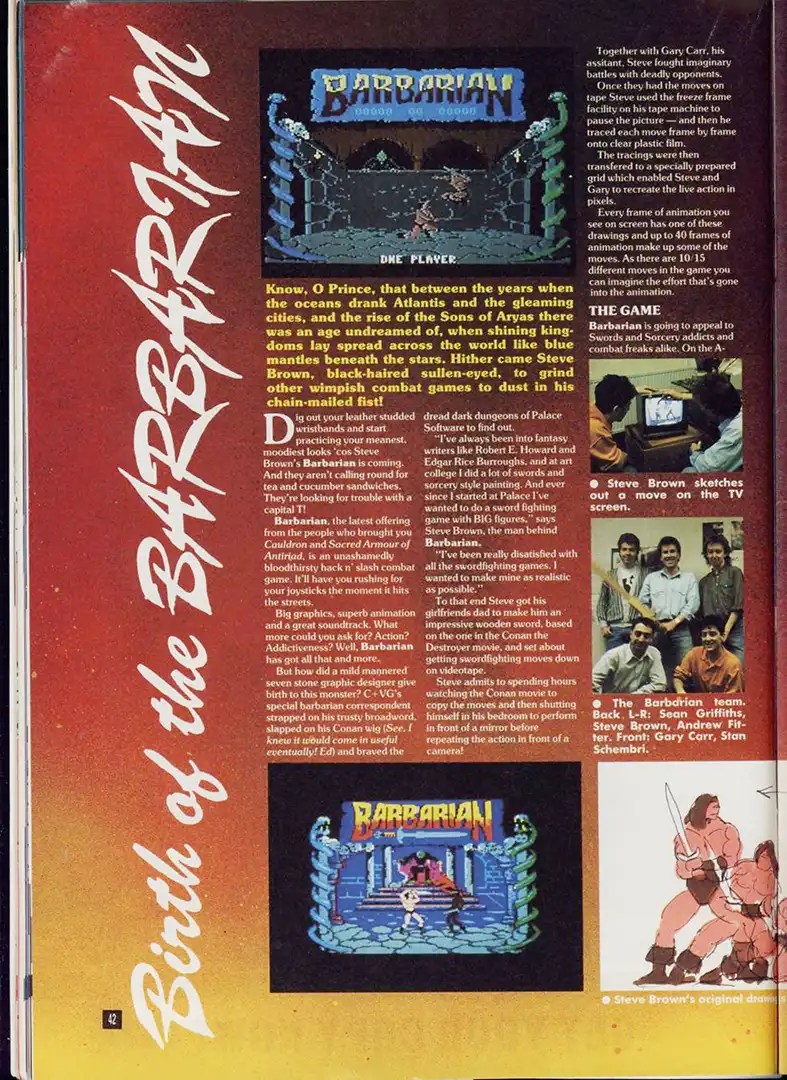
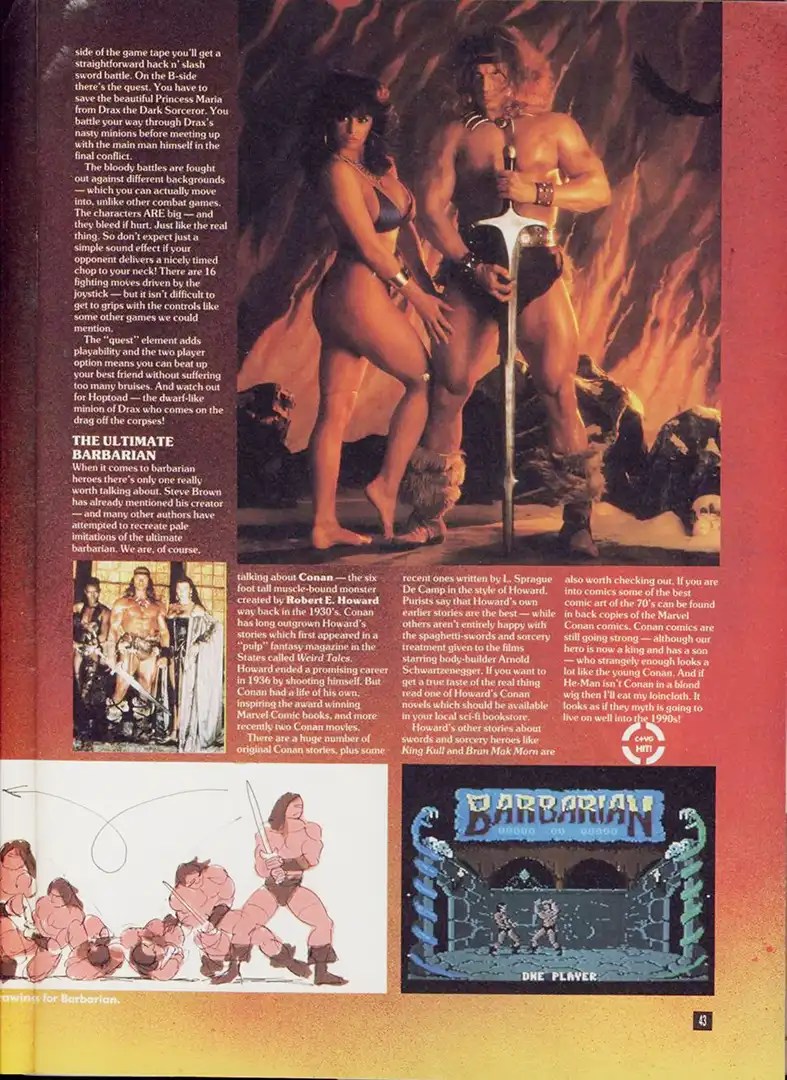
Contemporary reviews praised above all the immediate action and the exceptionally brutal nature of the fights, which was unusual for the time. Many editors emphasized how direct and uncompromising the gameplay was and how much Barbarian stood out from the often playful or cartoonish titles of the time. The decapitation blow in particular was frequently mentioned – with equal parts fascination and shock – as it brought a previously unheard-of finality to the game. For some testers, this moment was the epitome of what Barbarian was all about: a game without a safety net, in which mistakes were punished mercilessly. The multiplayer mode, which enabled intense duels between two human players and quickly became the heart of the game, was also praised.
On the other hand, the comparatively small scope and limited depth of gameplay in single-player mode were criticized. Several magazines noted that the sequence of fights became predictable over time and lacked long-term motivation. The artificial intelligence of the computer opponents was also occasionally described as too predictable. Nevertheless, many editors agreed that Barbarian revealed its true strength in direct duels. It was there, in the tense showdown between two players in front of the screen, that those unforgettable moments arose that secured the game’s lasting reputation.
Cultural influence
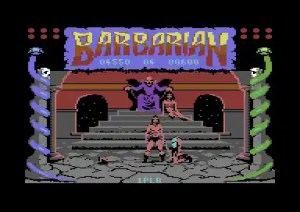
Barbarian had a lasting impact on early fighting games on home computers and set standards for a directness that was unprecedented at the time. The explicit depiction of violence was an early harbinger of later controversies, such as those that flared up again years later with games like Mortal Kombat. At a time when many games still relied on fantasy characters or abstract representations, Barbarian seemed shockingly real and uncompromising. It showed that computer games could not only entertain, but also provoke strong emotions and trigger social debates.
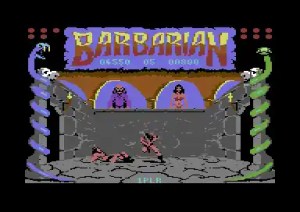
Barbarian also had a lasting influence on the self-image of many players. Games did not necessarily have to be cute, colorful, or harmless—they could be raw, brutal, and uncompromising, and aimed at an older audience. On the C64, Barbarian became an integral part of schoolyard legends, heated discussions, and long nights in front of the screen. Even those who never owned the game knew its reputation, talking about decapitations, covers, and banned disk copies. Barbarian thus became less than just a game and more of a cultural topic of conversation within the home computer scene of the time.
Conclusion
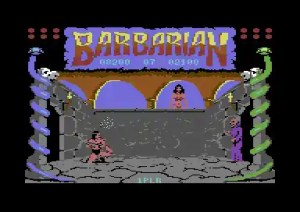
When the sun sinks blood-red behind the hills and the sword is dull from much striking, only the memory of the battle remains. Dust hangs heavy in the air, and the smell of iron still clings to the warrior’s hands. Barbarian was not a game of fine arts, nor was it a work of restraint. It was a game of raw truths, direct confrontation, and an unrelenting will to win, born out of a time when computer games were beginning to shed their innocence.
It demanded determination, punished hesitation, and rewarded courage without false promises. Every victory felt deserved, every loss final. Like the legends of ancient warriors, Barbarian thrives not on perfection, balance, or elegance, but on force, resonance, and the feeling of having survived a battle. And so its name still echoes through the halls of retro history today – like the echo of a battle cry that never quite fades away, carried by memories of flickering screens, clattering joysticks, and the triumph of the final blow.





 McHenry's Lair
Kommentar verfassen :