

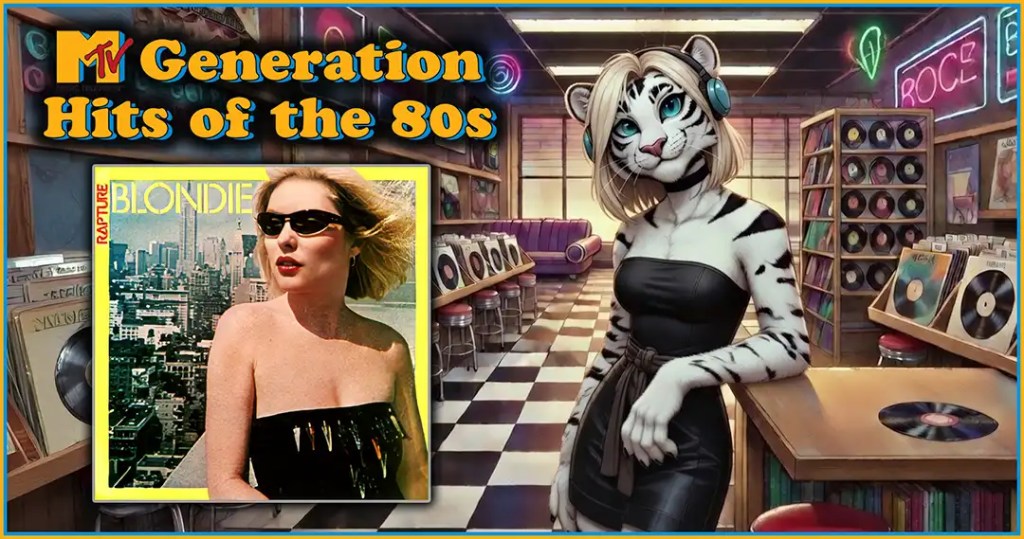
Hang each night in rapture
Catapulted rap into the mainstream
Rapture is an iconic song by American rock band Blondie, which appeared on their fifth studio album Autoamerican in 1980 and is considered one of the band’s boldest stylistic moves. Written by band members Debbie Harry and Chris Stein and produced by Mike Chapman, the track was released as a single on January 12, 1981, and quickly became an international hit. Musically, Rapture innovatively combines elements of new wave, disco, and hip-hop, deliberately breaking the genre boundaries of pop music at the time. Particularly striking is the extended rap section at the end of the song, which acts as a coda and gives Rapture its unmistakable character. This combination was highly unusual in the early 1980s and reflected Blondie’s close connection to the New York club and art scene. As the first song with rap elements to reach number one on the US Billboard Hot 100, Rapture marked a historic turning point in music history and played a major role in bringing hip-hop to a broad mainstream audience. Its commercial success further underscored its significance: the song sold over a million copies in the US, went gold, and cemented Blondie’s reputation as one of the most influential and experimental bands of their time.
Lyrics
The lyrics of Rapture are a multi-layered mixture of hypnotic dance descriptions and surreal, sci-fi-inspired rap parts that deliberately play with images, fragments, and free associations instead of following a classic linear narrative structure. This creates an open, almost collage-like text that focuses less on content stringency and more on atmosphere and rhythm. The words act as another instrument in the song, reinforcing the driving groove and the repetitive, almost mantra-like effect of the music. The lyrics create a trance-like mood that immediately transports the listener to the dance floor and immerses them in a state between observation and active participation, conveying feelings and impressions rather than concrete stories.
In terms of content, the lyrics take up themes such as ecstasy, movement, and collective experience in nightlife and combine them with humorous, sometimes deliberately absurd motifs that defy any clear interpretation. Particularly striking is the figure of the car-eating Martian who later devours guitars—an image that is equally comic, ironic, and slightly disturbing, deliberately breaking with the audience’s expectations. These surreal interludes lighten up the song, giving it a playful lightness while emphasizing the band’s experimental approach. At the same time, they reflect the strong influence of science fiction, B-movies, and pop art that was typical of Blondie’s aesthetic at the time and firmly anchors the lyrics in the cultural context of the early 1980s.
History
The creation of Rapture is closely linked to the burgeoning hip-hop scene in New York in the late 1970s, a time when rap, DJing, and graffiti were developing primarily in clubs, at block parties, and in the Bronx. Debbie Harry and Chris Stein, the founders of Blondie, were regulars in this urban environment, befriending artists such as Fab 5 Freddy and attending numerous rap events and underground parties. Impressed by the energy of the MCs, the spontaneous freestyle raps, and the immediate audience reaction, they began to process these impressions musically and put them into song form as early as 1979. Stein was heavily inspired by B-movies, science fiction films, and pulp pop culture motifs, while Harry filled the rap part with deliberately surreal, sometimes humorous images that were intended to create atmosphere rather than realism. Keyboardist Jimmy Destri also contributed to the slightly eerie, futuristic sound that set the song apart from other pop productions of the time with his use of tubular bells. The track was finally recorded in 1980 at United Western Recorders in Hollywood, where an earlier, slower version was fundamentally reworked and made more dynamic. In addition, there was a direct collaboration with Fab 5 Freddy for a British flexi disc version called “Yuletide Throwdown,” which documents the close exchange between Blondie and the hip-hop scene. In retrospect, the band’s first encounter with Fab 5 Freddy in a club proved to be a key moment, as it contributed significantly to the authentic integration of hip-hop elements into Rapture.
Music video
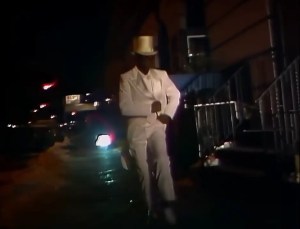
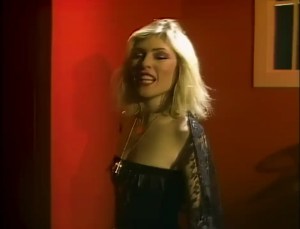
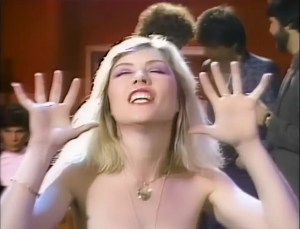
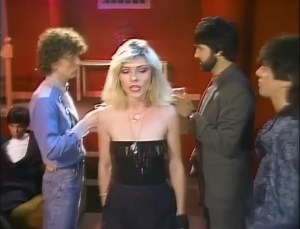
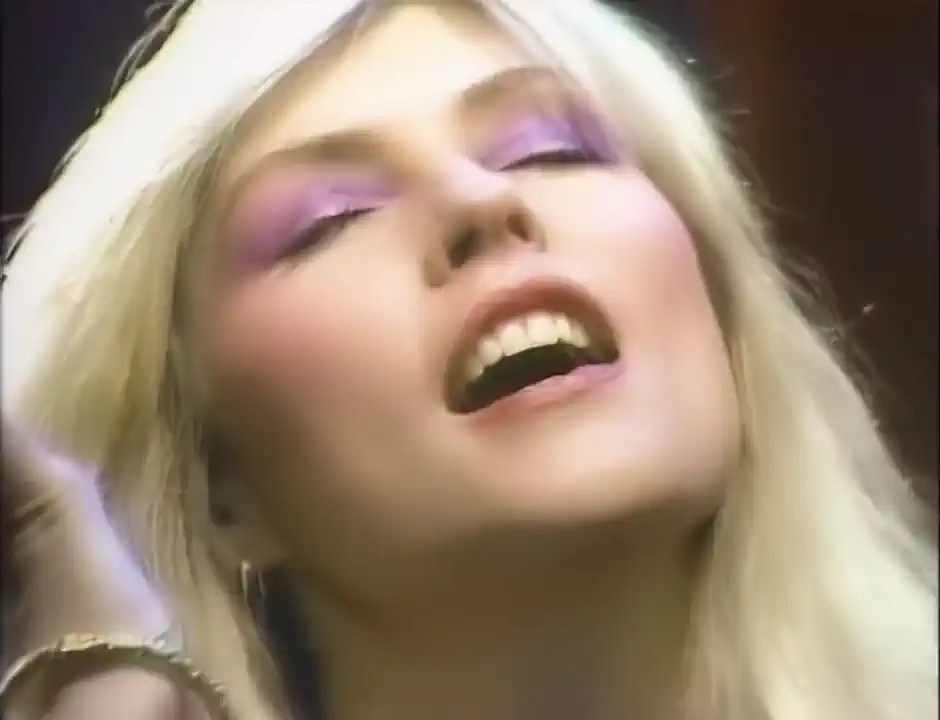
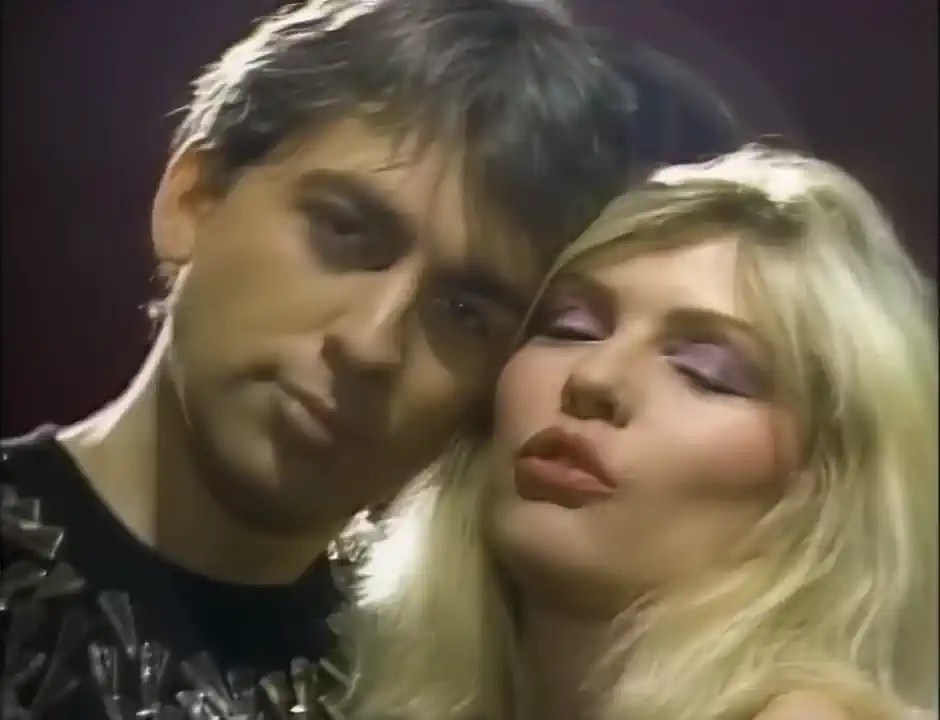
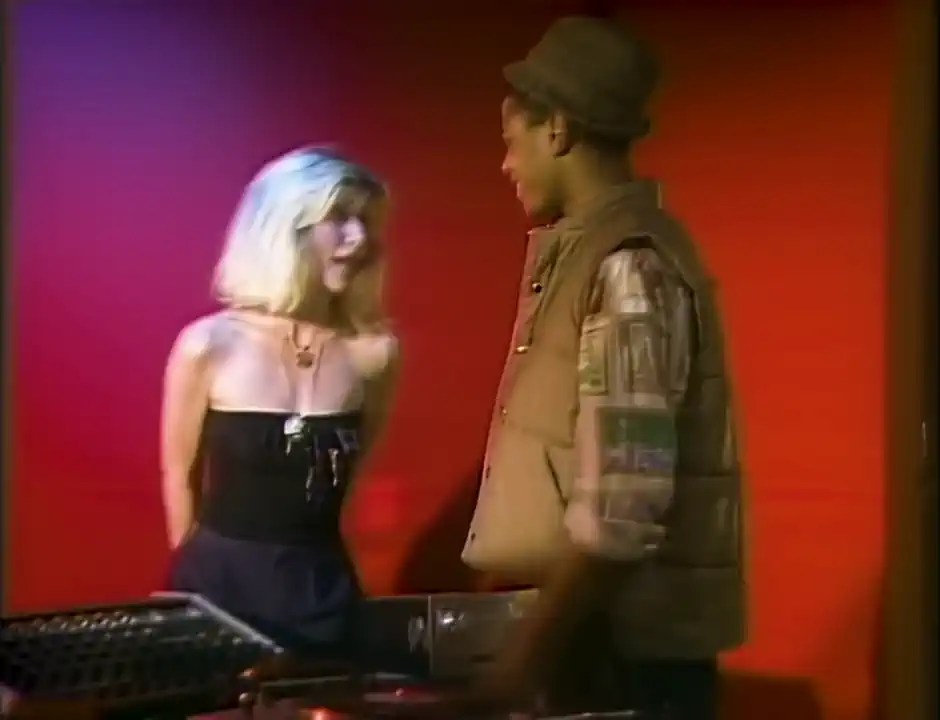
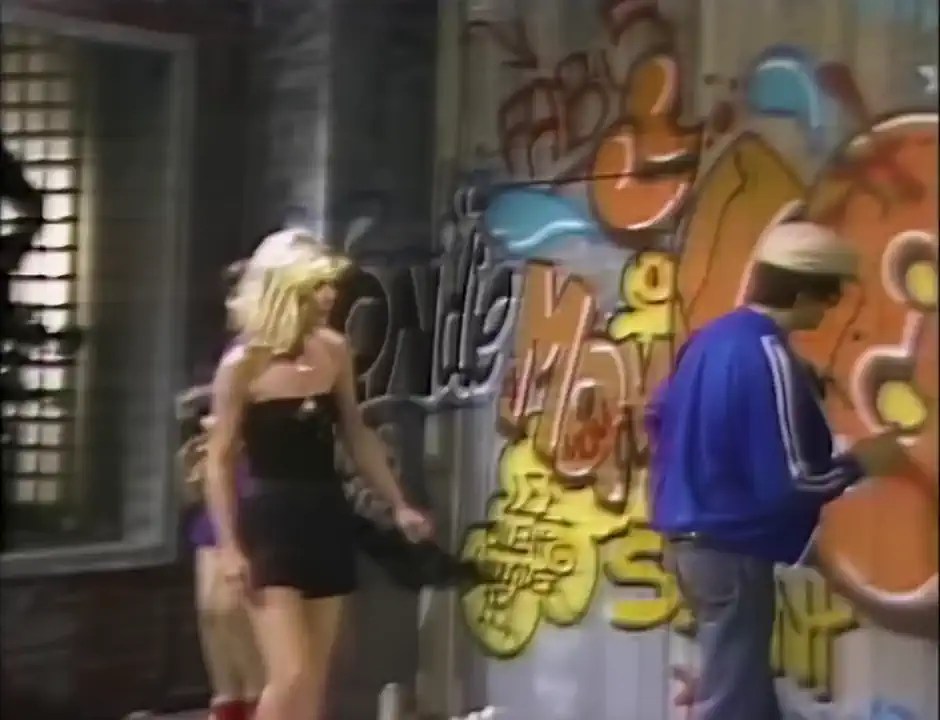
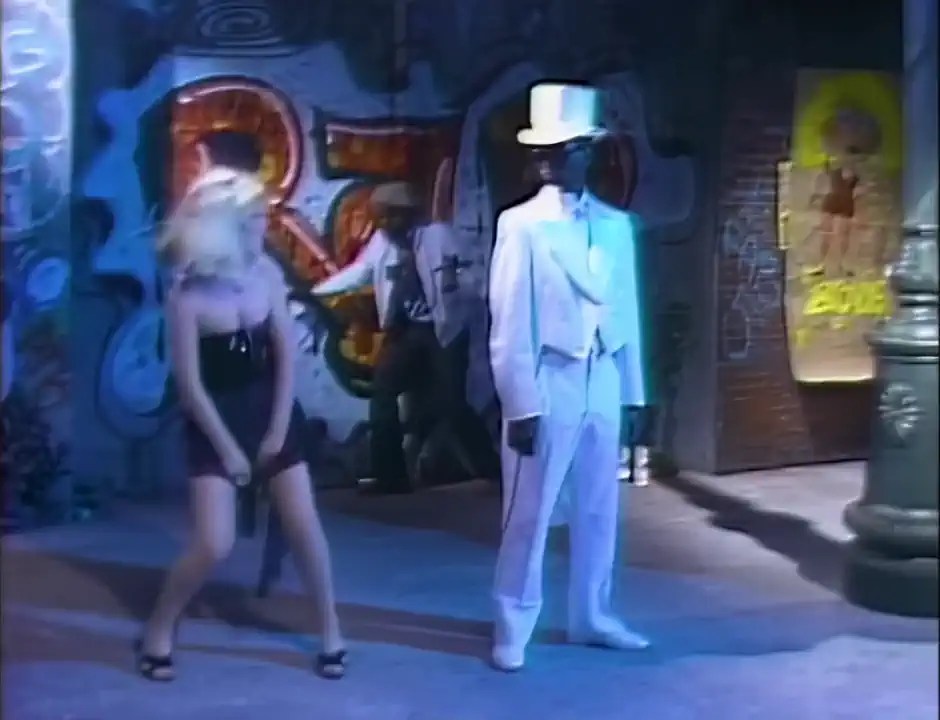
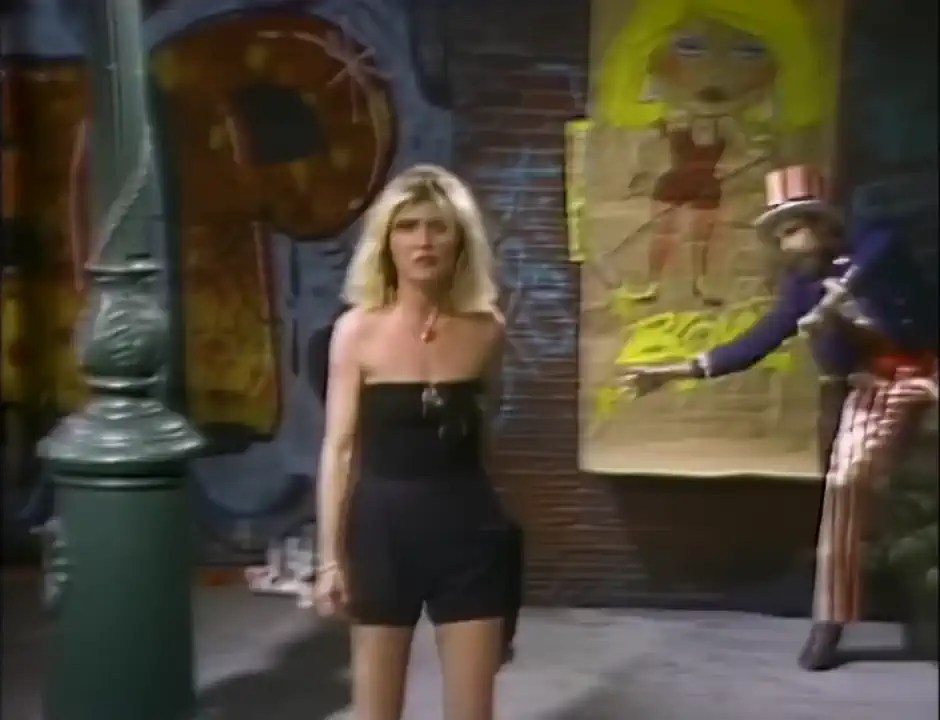
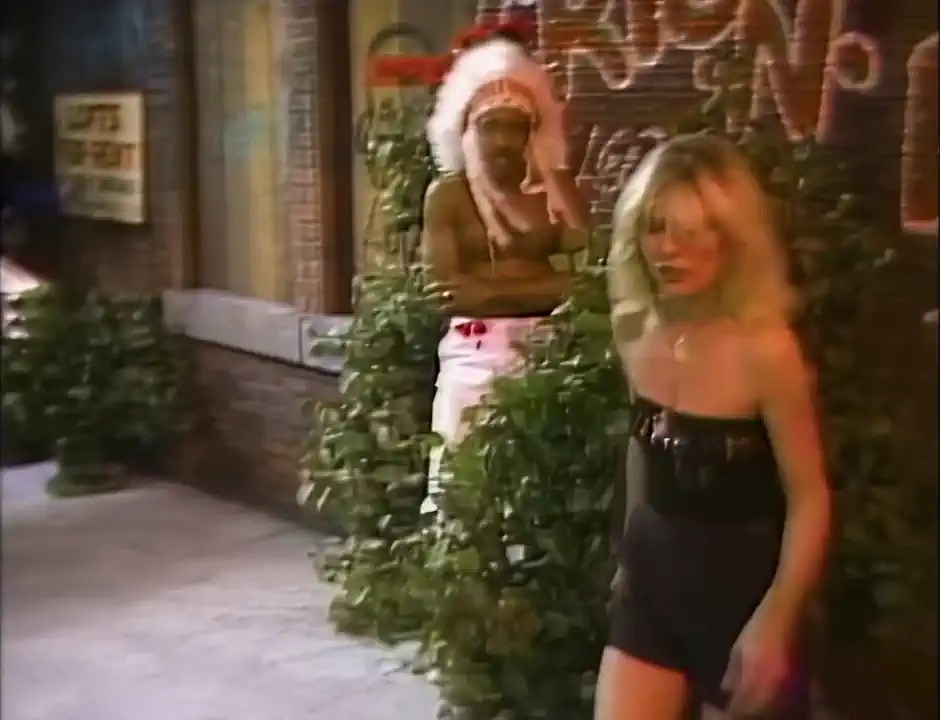
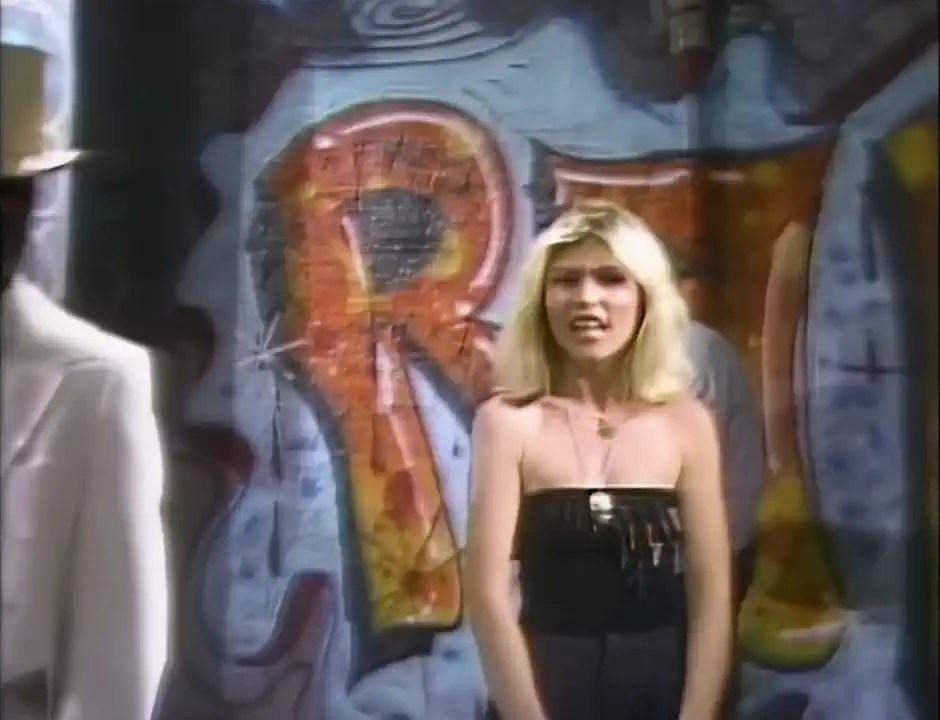
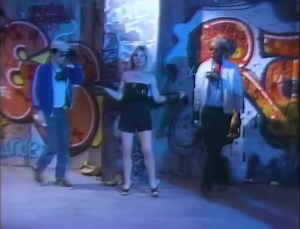
The music video for Rapture premiered on January 31, 1981, on the US television show Solid Gold and was one of the first rap videos to be regularly broadcast on MTV. Filmed in Manhattan’s East Village, it authentically captures the urban atmosphere of the neighborhood, which at the time was considered a creative hub for artists, musicians, and the emerging hip-hop culture. The video shows Debbie Harry in an apparent one-take dance through the street, passing a wide variety of characters, including graffiti artists, an Uncle Sam figure, a Native American, a ballet dancer, and even a goat. This loose sequence of images is deliberately fragmentary, reflecting the diversity and playful character of New York’s subculture.
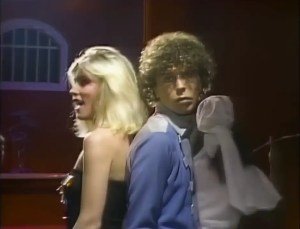
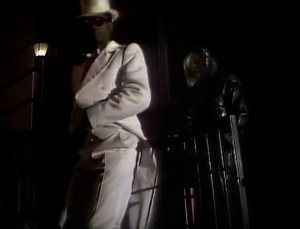
The so-called “Man from Mars” is portrayed by dancer William Barnes, who was also responsible for the choreography and gave the video its slightly bizarre, almost theatrical touch. In addition, the video features numerous cameo appearances by key figures from the art and hip-hop scene of the time, including Fab 5 Freddy, graffiti artist Lee Quiñones, and Jean-Michel Basquiat, who stepped in as a DJ at short notice when Grandmaster Flash failed to show up. In retrospect, Basquiat’s appearance is considered a particular highlight of the production and underscores the video’s close connection to the contemporary art scene as well as its documentary value for pop and cultural history.
Trivia
- Rapture was not the first commercially successful rap song, but it was the first track with clear rap elements to reach number 1 in the US charts. This gave the song a special status, as it brought hip-hop to the most visible stage of pop music for the first time and anchored it in the mainstream in a statistically measurable way.
- Over the years, the song’s iconic bass line has become a much-cited motif that has been sampled, replayed, or stylistically appropriated by later artists. It is considered one of the most distinctive rhythmic elements in Blondie’s catalog and contributed significantly to the recognizability of Rapture.
- Debbie Harry’s rap part was intensely discussed by the public and music critics. On the one hand, it was seen as a bold experiment and a boundary-pushing move, and on the other, it was understood as a conscious homage to the then-young hip-hop culture, which Harry approached with respect and curiosity.
- The song celebrates graffiti, DJ culture, and rap not only musically, but also visually and lyrically. Through Blondie’s music video, lyrics, and public appearances, these elements were brought to the attention of a global audience that had previously had little contact with New York’s hip-hop subculture.
Criticism at the time
Upon its release, “Rapture” received mixed reviews, reflecting the uncertainty of many critics in dealing with the unusual genre mix. The music magazine Record World explicitly praised the song as “infectious” and highlighted its ‘hypnotic’ rhythm, with particular praise for Debbie Harry’s confident transition to a so-called “streetwise jam.” Numerous contemporary critics recognized the innovative power of the piece and praised the courage to combine elements of rap and new wave. At the same time, others expressed reservations about the rap part, which they felt was not serious or authentic enough. One critical comment from the early 1980s even described the rap as “bad,” making it clear that rap by white artists was often not taken seriously or viewed with fundamental skepticism at the time. Despite these objections, the view that “Rapture” was a groundbreaking song increasingly gained acceptance, as it introduced rap to a broad mainstream audience for the first time and created new listening habits. In later retrospectives, the track is therefore often described as fun, experimental, and comparatively harmless—but always with the important caveat that Blondie should not be understood as the inventors of rap, but rather as mediators between subculture and pop mainstream.
Cultural influence
“Rapture” had an enormous cultural influence by integrating hip-hop, rap, and graffiti into the global pop mainstream in a visible and audible way for the first time. As the first number one hit with clearly recognizable rap vocals, the song paved the way for later crossover genres such as rap rock, alternative hip-hop, and genre-spanning pop experiments. The music video in particular played a key role in popularizing street art, breakdance aesthetics, and hip-hop elements worldwide and making them accessible to an audience that had previously had little contact with this subculture. The influence of “Rapture” is also evident in its reception by other artists, such as cover versions by bands like Erasure, who transferred the song into a new stylistic context. In terms of content, the title is often interpreted as a celebration of ecstasy and collective experience in modern society, drawing references from spiritual rituals such as voodoo to contemporary club and party culture. To this day, “Rapture” regularly ranks high on lists of Blondie’s best songs and is considered a lasting symbol of the successful fusion of rock, pop, and rap in pop music history.
Conclusion
“Rapture” remains a milestone in music history: a song that transcended musical, cultural, and aesthetic boundaries and played a key role in bringing hip-hop to a global mainstream audience. At a time when pop music was still strongly divided into clearly defined genres, the track opened up new ways of thinking and listening and proved that stylistic openness can be a creative driving force. With this track, Blondie demonstrated not only their extraordinary innovative power, but also their ability to respectfully connect different subcultures and establish new forms of expression in pop. The resulting legacy extends far beyond the early 1980s and can still be felt today in music, fashion, and visual culture, where cross-genre approaches have long been part of everyday artistic life. Whether as a rousing dance anthem, historical document, or cultural artifact, “Rapture” captures the ecstasy, experimentalism, and openness of the 1980s and continues to inspire artists and listeners around the world decades later.





 McHenry's Lair
Kommentar verfassen :