


Now that ain’t workin‘ that’s the way you do it
You play the guitar on the MTV
That ain’t workin‘, that’s the way you do it
Money for nothin‘ and the chicks for free
Money for nothin‘ and the chicks for free
Blatant materialism, eccentric celebrity culture, and the ubiquitous greed for fame and fortune shaped the attitude toward life in the 1980s. It was a decade of excess: yuppie culture, non-stop music videos, and stars who were portrayed as larger-than-life icons.
It was precisely this image that Dire Straits‘ song “Money for Nothing” struck in 1985 – like an ironic commentary right at the heart of the MTV generation.
On June 28, 1985, Dire Straits released their song – a song that made history not only musically, but also in the media. On its 40th anniversary, we take a look at one of the most iconic rock songs of the 1980s, which was accompanied by criticism, admiration, and controversy.
The Lyrics
“Money for Nothing” is told from the perspective of a simple worker who mocks what he sees as the undeserved privileges of rock stars. The line “That ain’t workin‘, that’s the way you do it / You play the guitar on MTV” quickly became a catchphrase and a symbol of the critical examination of the music business in the 1980s. Equally striking is the line “Get your money for nothin‘ and the chicks for free,” which sums up the narrator’s envy and mockery of the supposedly effortless life of music stars. This statement has often been interpreted as the epitome of criticism of superficial celebrity culture and material excess.
Mark Knopfler allegedly wrote the lyrics after a conversation in an electronics store in New York, where an employee loudly expressed his opinion about the stars on television. Knopfler wrote down these statements almost word for word and turned them into lyrics full of irony and sharp observations. The perspective of the worker lends the song a certain authenticity, although it remains unclear to what extent Knopfler is commenting on the statements or merely documenting them. The lyrics are biting, ironic, and reflect the social debate about fame, success, and class differences.
They highlight the growing gap between the working class and the world of celebrities, while also addressing the fascination and aversion that many people feel toward sudden wealth and fame. It is particularly remarkable how the song manages to combine this social criticism with a catchy chorus and humorous barbs without losing its musical lightness.
The Musicvideo
The music video for “Money for Nothing” was a milestone: one of the first to use computer-generated 3D animation, it became a pioneer of the digital age in music television. The animated characters, which poked fun at the music business, perfectly matched the satirical mood of the song. The video became a long-running hit on MTV and contributed significantly to the song’s popularity. In addition to its technical innovation, the video also impressed with its visual humor and media-critical message, which was deliberately aimed at an audience that was increasingly shaped by screen culture.

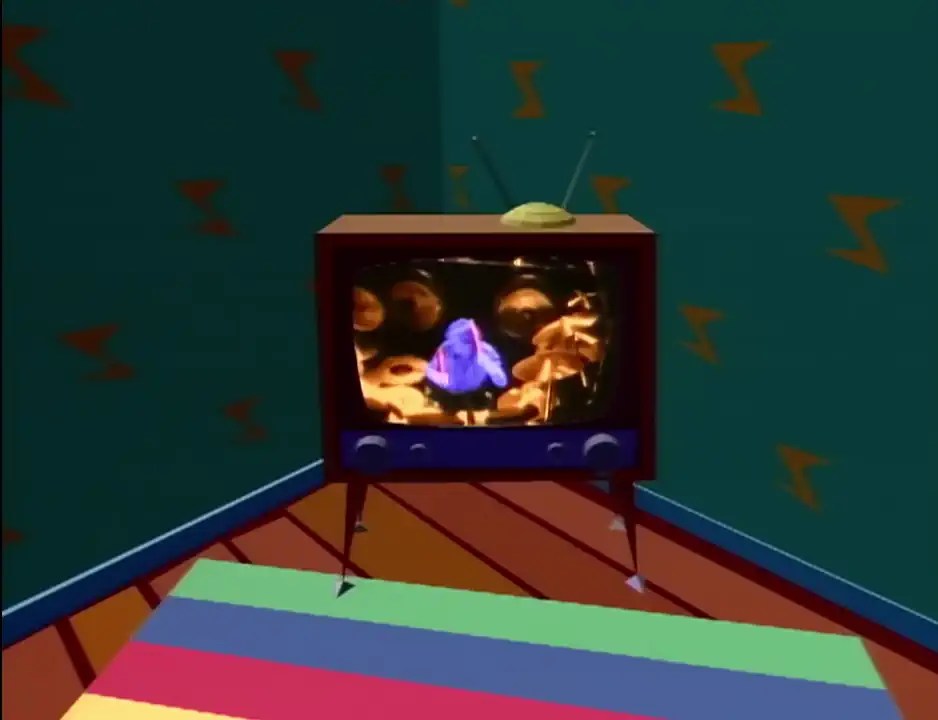



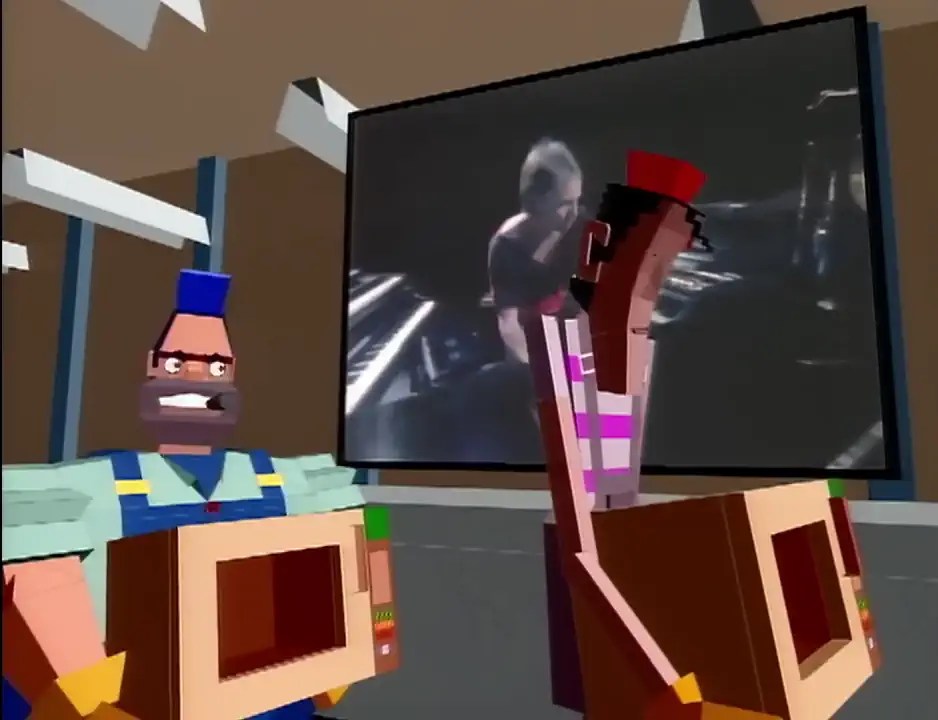

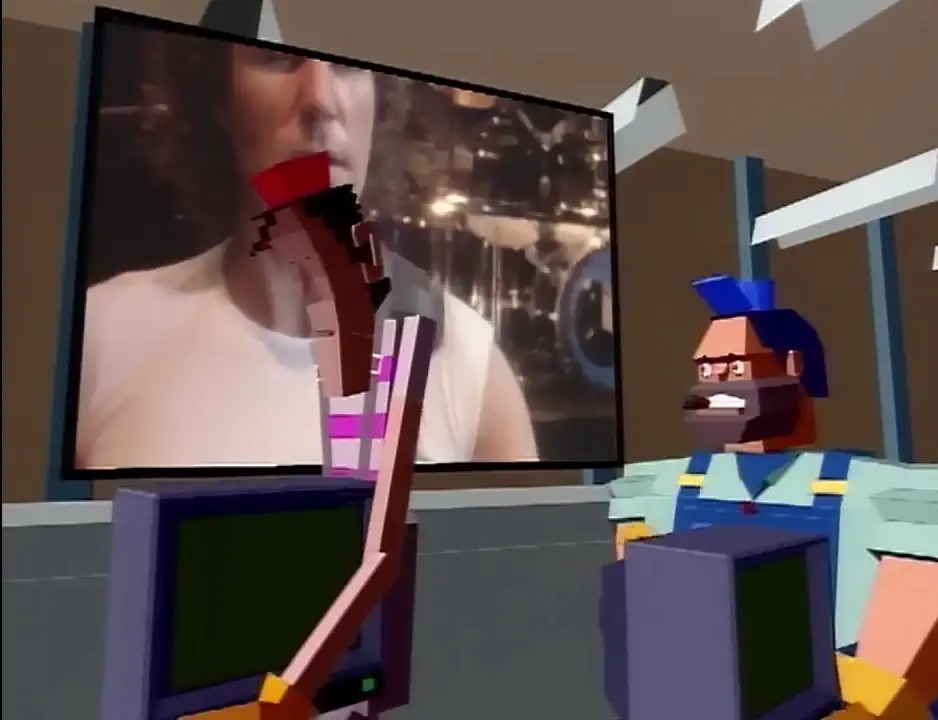



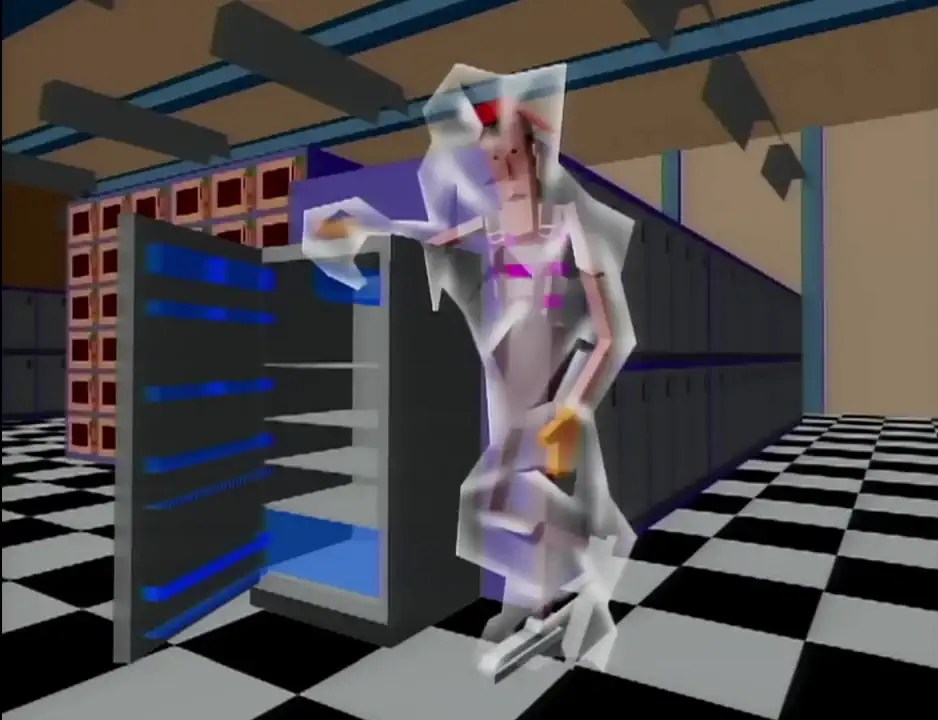



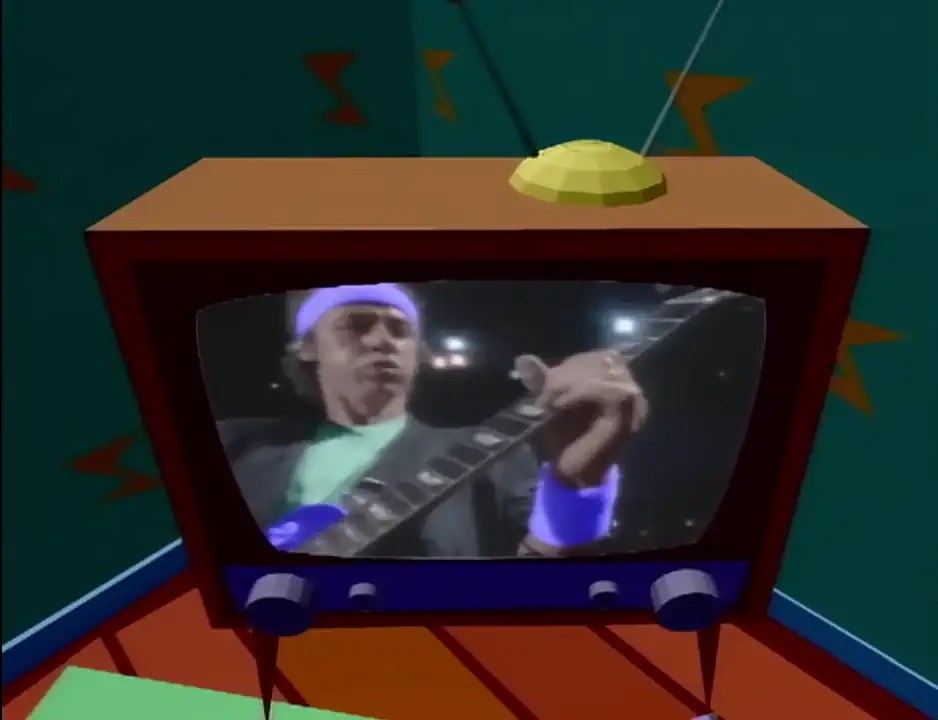
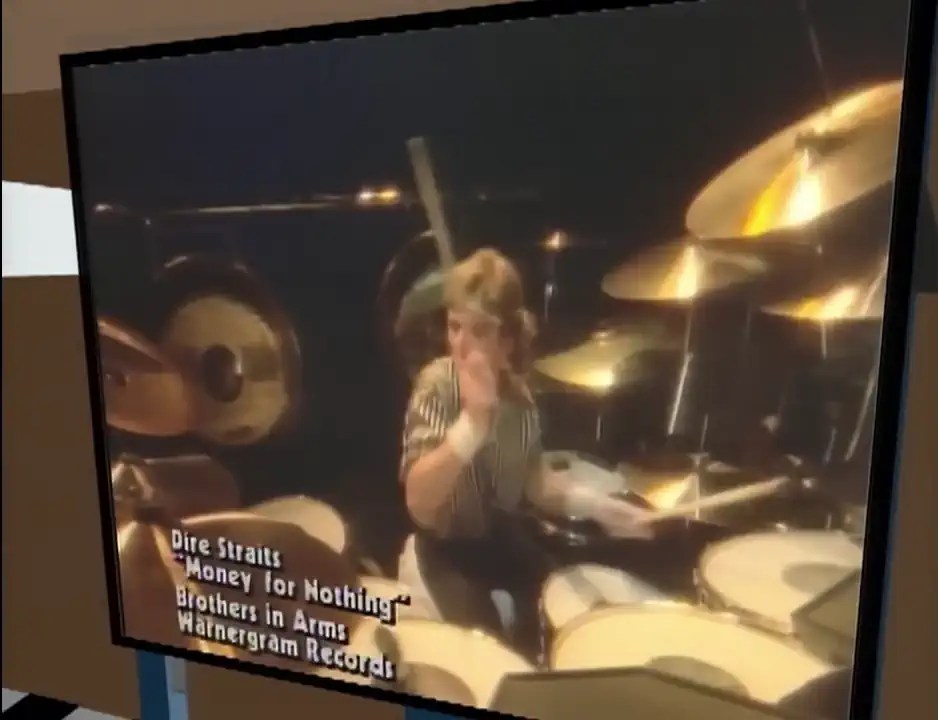
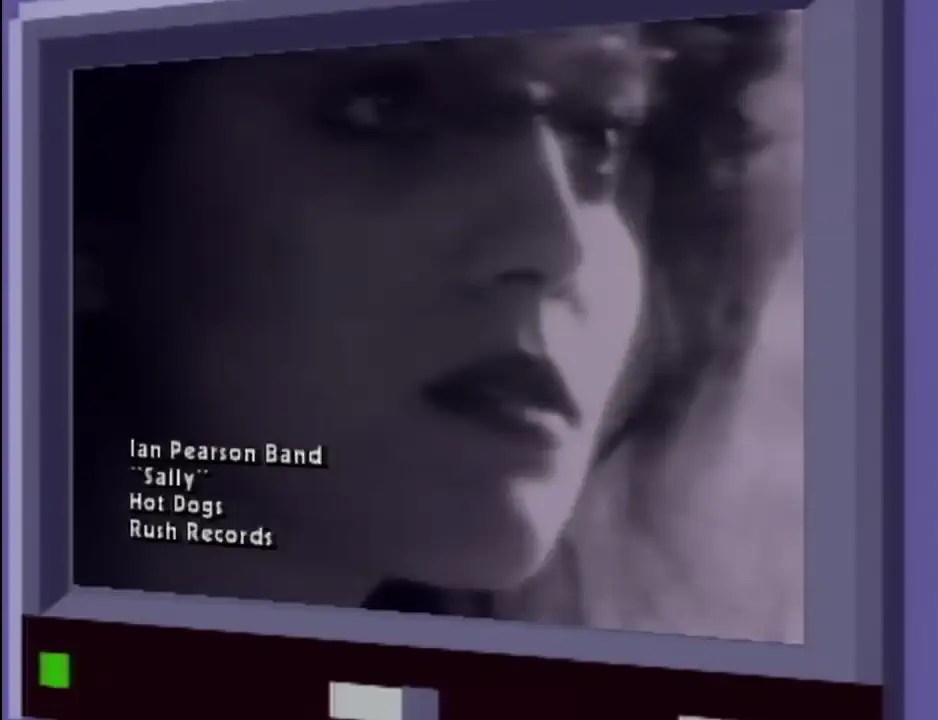
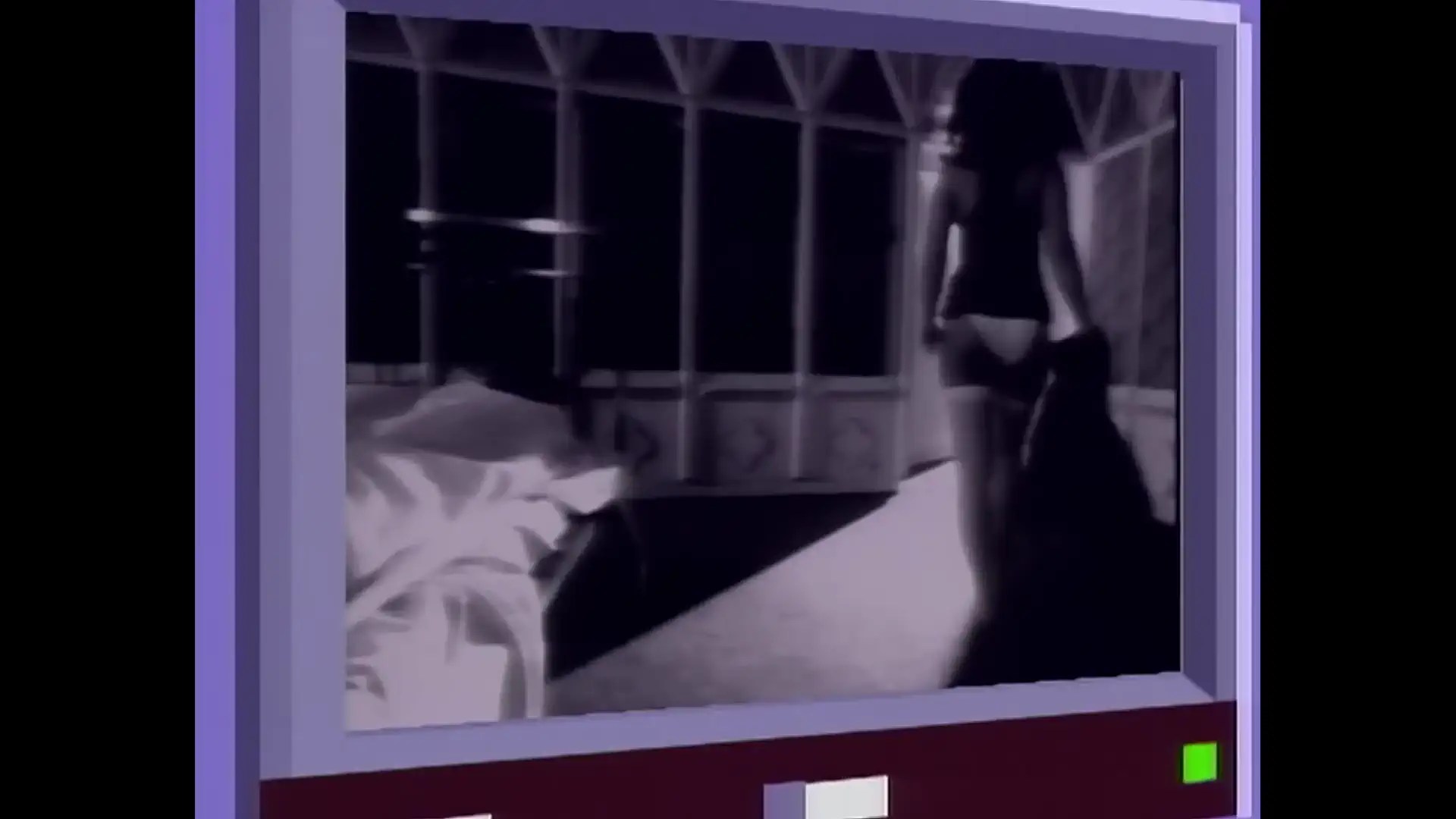
Particularly striking is the depiction of fictional music clips in the video: The animated workers comment on exaggerated, cliché-laden pop videos that were staged specifically for the music video for “Money for Nothing.” These ‘fake’ songs, such as the stylized parody of a glam rock duo with the chorus “Baby, Baby, Baby,” caricature the MTV standards of the time and underscore the criticism of superficial celebrity culture. Other scenes show absurd stage performances with artificially smiling artists, exaggerated lighting effects, and stereotypical poses that were omnipresent on music television at the time. This exaggerated portrayal further emphasizes the contrast between hard physical labor and the seemingly effortless life of a pop star.
The garish colors, exaggerated outfits, and stylized dance moves of these fictional bands illustrate how much the clip pokes fun at music television—in keeping with the lyrics. At the same time, the video functions as a media-critical work of art that not only entertains but also provides a reflection on the mechanisms of the music market. The interplay of image and sound makes “Money for Nothing” an early example of multimedia pop criticism.



Trivia
An interesting fact: the distinctive guitar riff was created by combining a Gibson Les Paul, a Laney amplifier, and a special microphone angle. This unmistakable sound was the result of random studio experiments that were later almost impossible to reproduce exactly. The guitar sound is now considered a prime example of Mark Knopfler’s signature style and is a frequently analyzed topic among guitarists worldwide.
In addition, Sting, lead singer of The Police, had a brief but memorable vocal contribution in the chorus (“I want my MTV”) and received a co-writing credit for it. Interestingly, this part of the song was created spontaneously after Sting happened to be in the same studio and Knopfler invited him to contribute to the song. The phrase not only became a catchy hook, but also the unofficial anthem of the music channel MTV, which was at its peak at the time.
The song won the Grammy for “Best Rock Performance by a Duo or Group with Vocal” in 1986 and was also nominated for several MTV Video Music Awards. In addition, “Money for Nothing” was later used in numerous films, series, and commercials and is an integral part of many rock playlists. The single was not only a commercial success, but also became a pop culture phenomenon that significantly shaped the music landscape of the 1980s.
Critical reception at the time
Upon its release, “Money for Nothing” was celebrated – especially for its innovative production and memorable guitar sound, which was characterized by its raw directness and technical sophistication. Many music journalists praised Mark Knopfler’s clear signature style and saw the song as a successful synthesis of mainstream rock and social commentary. The interplay with Sting was also described as unexpected but effective.
However, there was also criticism of certain lyrics that were perceived as homophobic. In particular, the use of a slur—specifically the word “faggot” in the line “That little faggot with the earring and the makeup”—led to controversy. The word is considered highly offensive and was perceived by many as unnecessarily provocative, even when used in the context of the fictional narrative perspective of a sarcastic worker. The controversy led radio stations in several countries to broadcast censored versions of the song in which the line in question was removed or replaced.
Some stations refused to play the song in its entirety, sparking debates about artistic freedom versus social responsibility. In Canada, the song was even temporarily removed from radio playlists. Critics accused Knopfler of hiding behind the satirical perspective, while supporters of the song defended it as realistic and poignant.
Nevertheless, success prevailed: The song reached number 1 on the Billboard Hot 100, remained in the international charts for weeks and sold millions worldwide. “Money for Nothing” was not only considered a musical hit, but also a symbol of the power and influence of the emerging music television. The controversies did little to harm its commercial success, but rather ensured that the song remained a topic of conversation for a long time.
Reputation today
Today, “Money for Nothing” is considered a classic of the rock genre. Musically, it is celebrated for its influence on guitar playing and music video culture. The characteristic riff, the interplay of electric guitar and synthesizer, and the clear, dry sound have influenced many guitarists and producers of subsequent generations. In retrospect, the song’s media-critical component is also repeatedly highlighted, especially in the context of the emergence of MTV as a leading cultural medium.
The lyrics remain controversial, but many listeners recognize the satirical intention behind the lines. While some continue to view the problematic terms in the lyrics critically, others point to the ironic narrative level and the zeitgeist of the 1980s. Music historians and critics emphasize that “Money for Nothing” is a unique example of how pop music not only entertains, but also addresses and reflects social debates.
The song is emblematic of 1980s pop culture and is a fixture on many “best of” lists. In addition to its musical significance, it is also considered an early example of the symbiosis between music and visual storytelling—an influence that continues to resonate in music video production today.
Summery
Forty years after its release, “Money for Nothing” remains a fascinating document of its time. The song combines innovative technology with social criticism and marks a turning point in the history of pop music. It symbolizes not only a musical era, but also a cultural upheaval in which music videos, mass media, and pop icons took on a new role in people’s everyday lives.
The directness of the lyrics, coupled with an iconic guitar sound, creates a piece of music history that remains memorable to this day. Despite (or because of) its contradictions, the song is still a topic of conversation today—a sign of its enduring relevance. It is constantly being reevaluated, reinterpreted, and discussed, underscoring its deep roots in the collective pop cultural memory.
“Money for Nothing” thus remains not only a musical milestone, but also a mirror of the time in which it was created – with all its ideals, contradictions, and innovations.
Especially when compared to today’s influencer culture, the song seems like a bitter premonition. What was once the overpaid rock star with lip gloss and MTV airtime is now the content creator with ring lights and affiliate links. The slogan “Money for nothing and the chicks for free” could be used almost unchanged in TikTok videos or Instagram reels – except that today’s self-promotion is even more direct and uninhibited. The ironic bite of 1985 still hits home in 2025 – and makes it clear that little has changed in the greed for fame without substance.





 McHenry's Lair
Kommentar verfassen :